More Churches of London and a Concert to Remember

As I mentioned in my last blog, I had visited a few churches prior to the passing of Queen Elizabeth. I visited another today. I will discuss them in historical order and then move on to a concert that took place on September 11, 2022.

Saint Ethelreda’s is a Catholic Church with a history dating back to the 1200s. Some say it is the oldest Catholic Church in London. I leave that debate to others. It sits in a now modern court of townhouses not far from Farringdon Underground Station and London’s jewelry district. It started as a larger, grander structure and a property with a Bishop’s mansion and gardens, but history, the English Reformation and World War II were not kind to it. The Church passed from Anglican back to Roman Catholic hands in the 19th Century and today’s church is a small but peaceful haven in the middle of the city. These first three
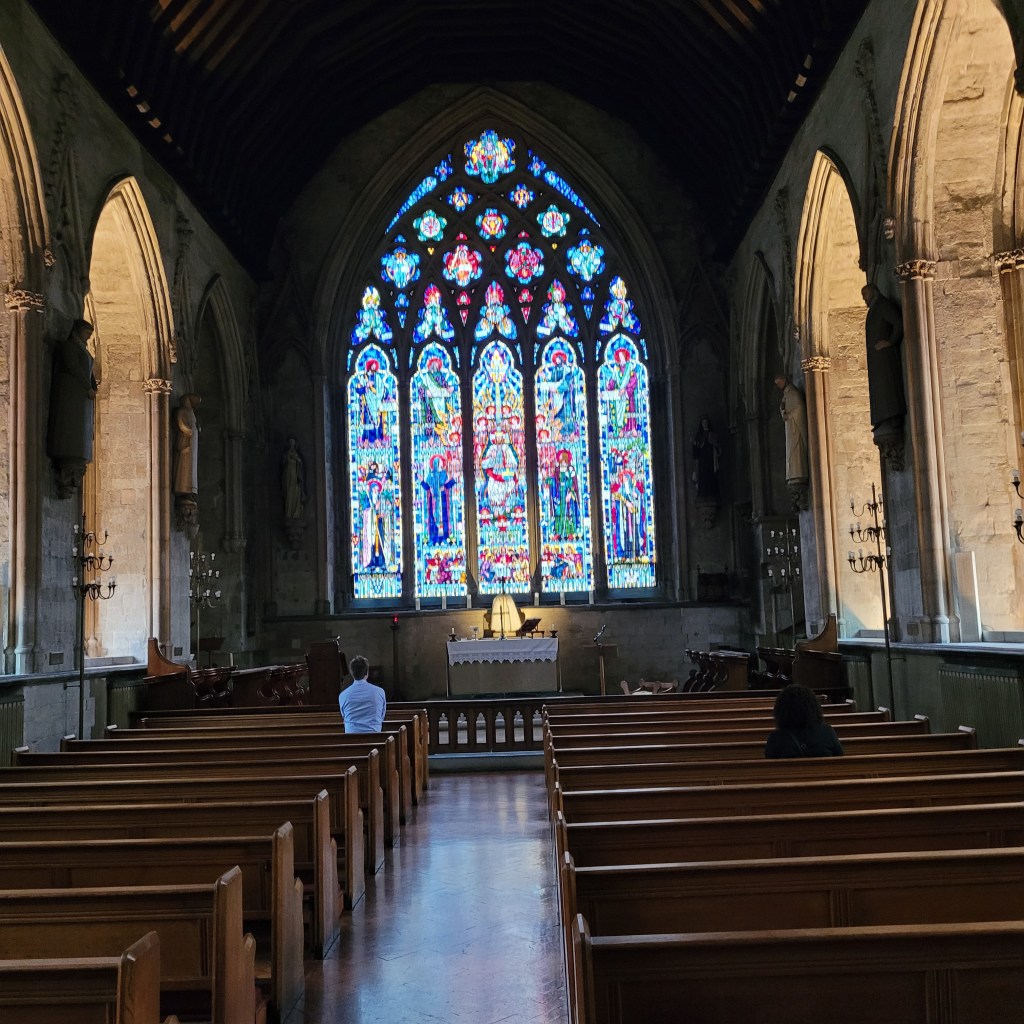
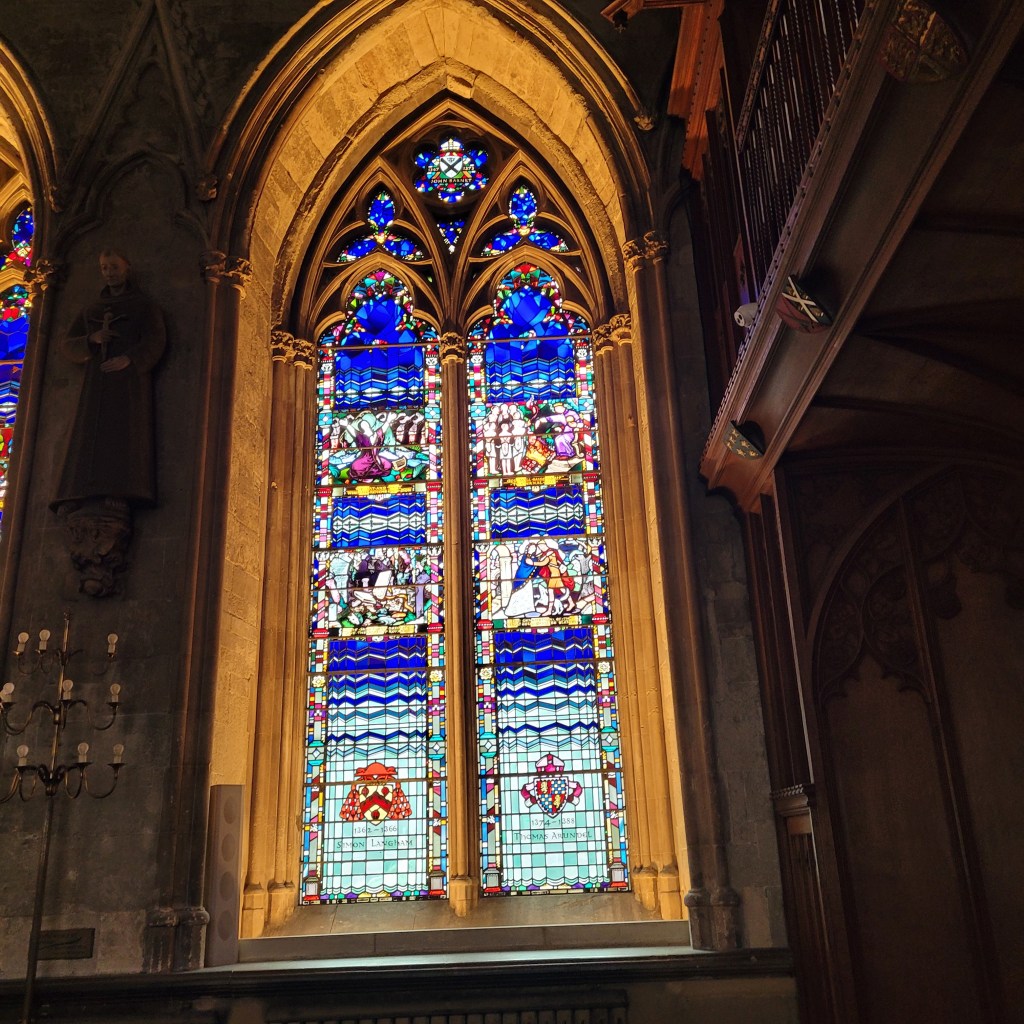
pictures show the upper church with a few of its lovely stained-glass windows. I am sure that the many people working nearby at the Inns of Court have taken comfort here over the centuries. The church also has an ancient crypt on its lower level, which like many churches is used for different purposes today. It retains religious symbols of old, while bringing opportunities for community to gather outside of the space set aside for worship and contemplation.
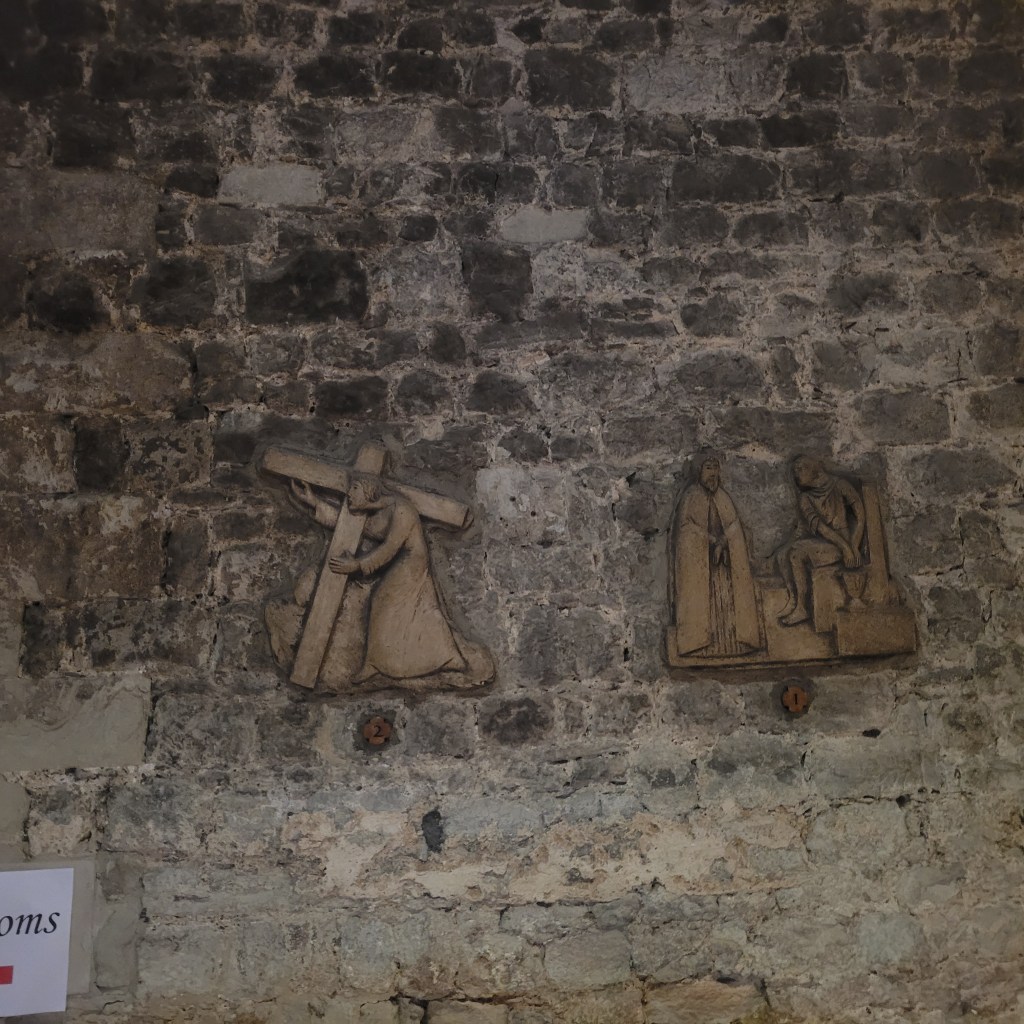
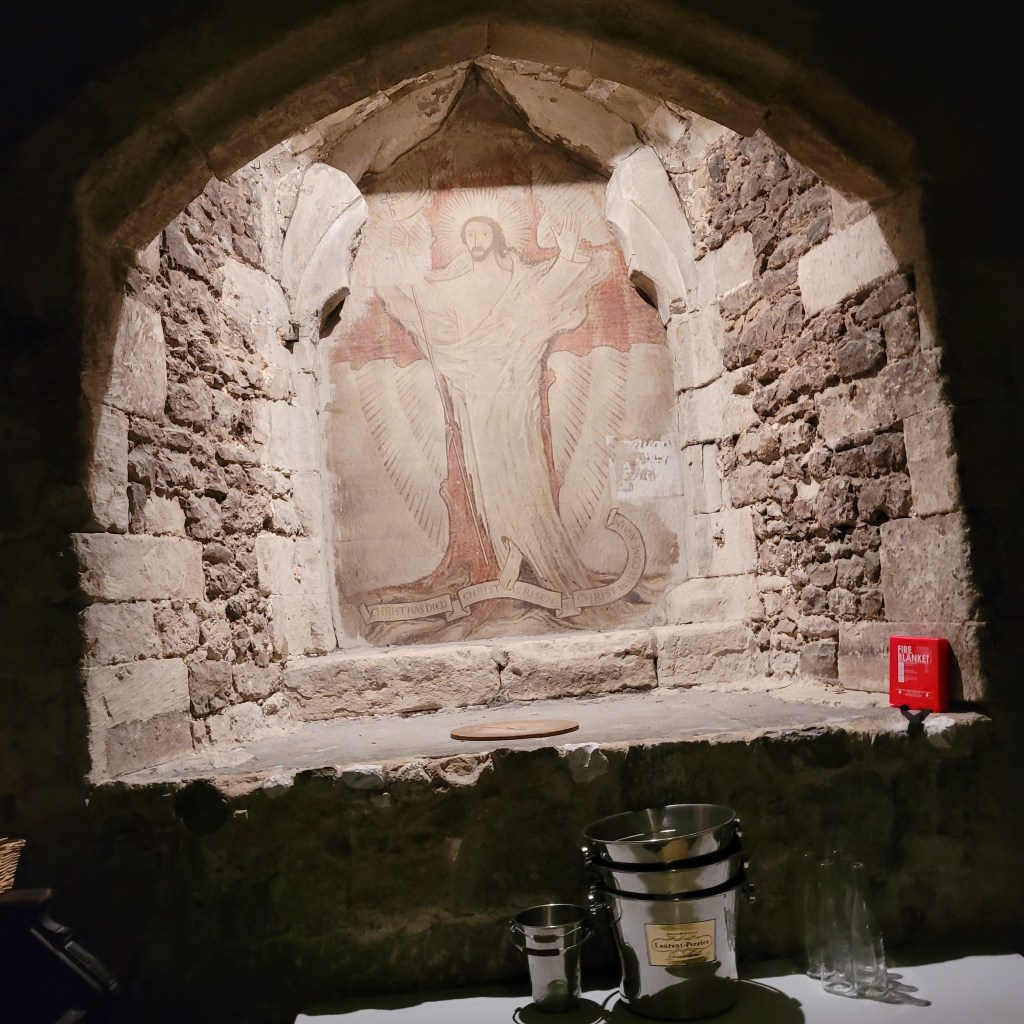
On the left, two of the lovely “Stations of the Cross” placed along the walls of this ancient space. On the right, a fresco depicting Christ Triumphant, after His resurrection, is relatively recent, but is made to fit with the ancient walls.

The next oldest church in this group is St Botolph without Aldgate meaning that it is outside the old City of London Wall, built in Roman times and basically marking the square mile of the City of London. The Church was joined with the Church of Holy Trinity Minories back in 1899 and is now known as St Botolph without Aldgate and Holy Trinity Minories. The earliest written record of St. Botolph’s Church dates back to 1115! However, the church, which survived the great fire in London, was rebuilt several times, the last being from 1741-44. Like St. Ethelreda’s it was damaged by bombing during World War II and restored, then damaged by a fire in 1965 and restored again! Today, it sits in an area that has been built up with skyscraper style office buildings. But it has a beautiful powerful organ, and it too is a place of refuge from the hustle and bustle of this metropolis. It sits just a few meters from the Aldgate Tube station, if you want to stop by for a quick visit, or if you are on your way to the Spitalfields Market, a few streets away.

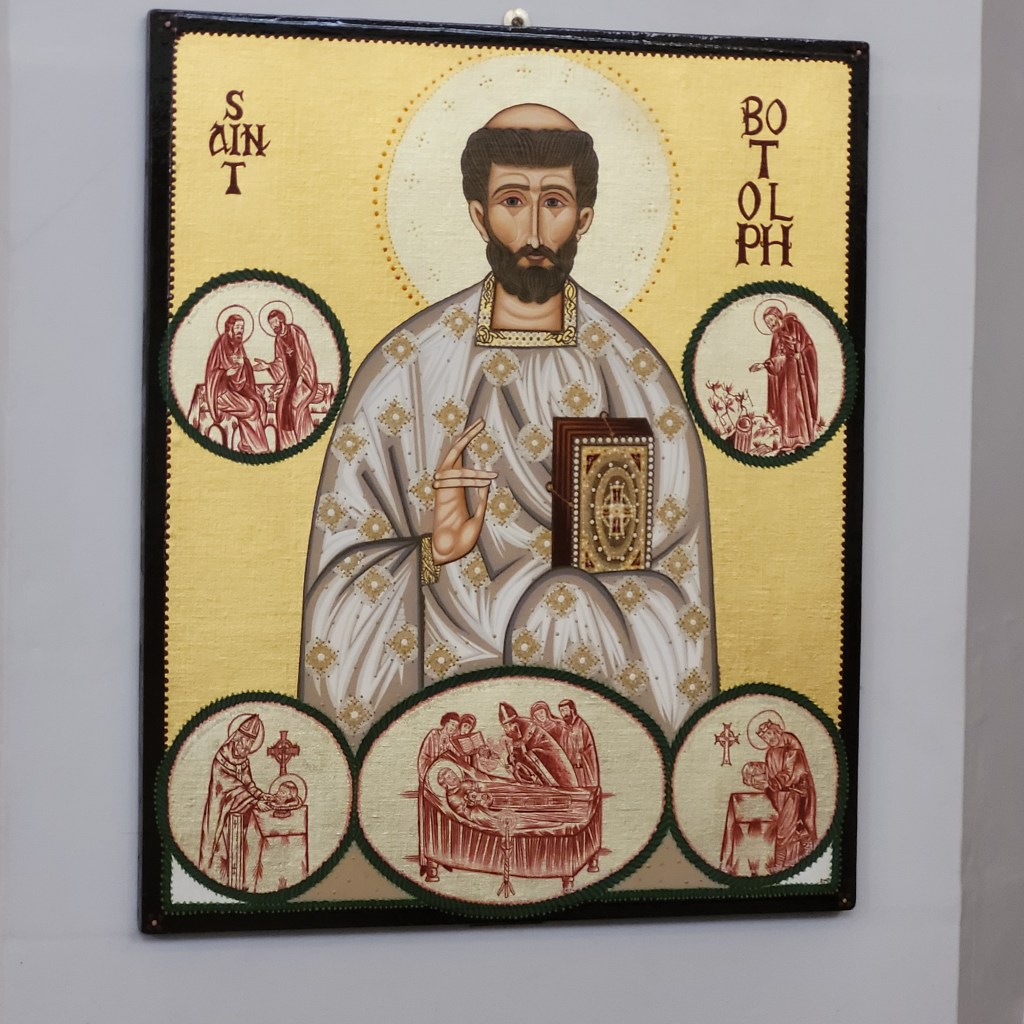
The first picture below is “the man” himself, St. Botolph. Wikipedia tells us that he died around 680 and that he was an English abbot and saint He is regarded as the patron saint of boundaries, and by extension, of trade and travel, as well as various aspects of farming.
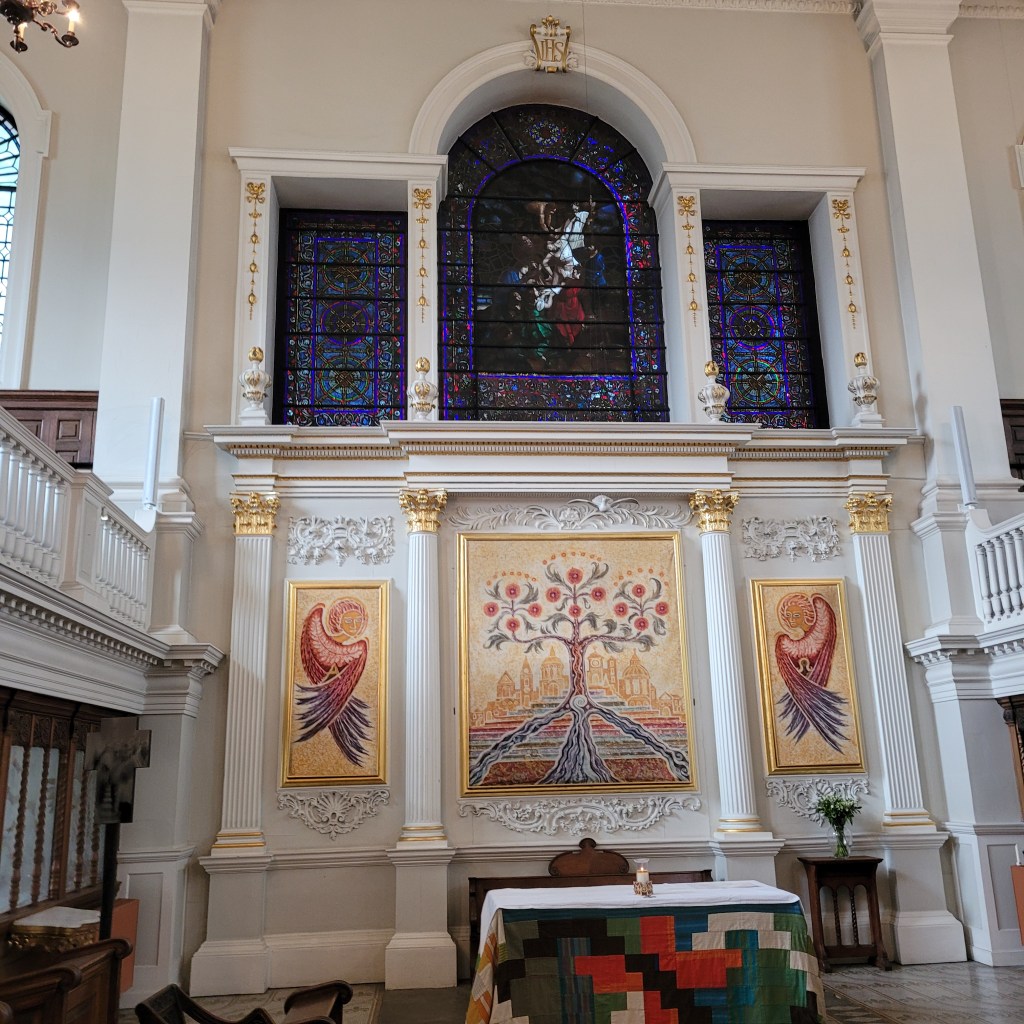
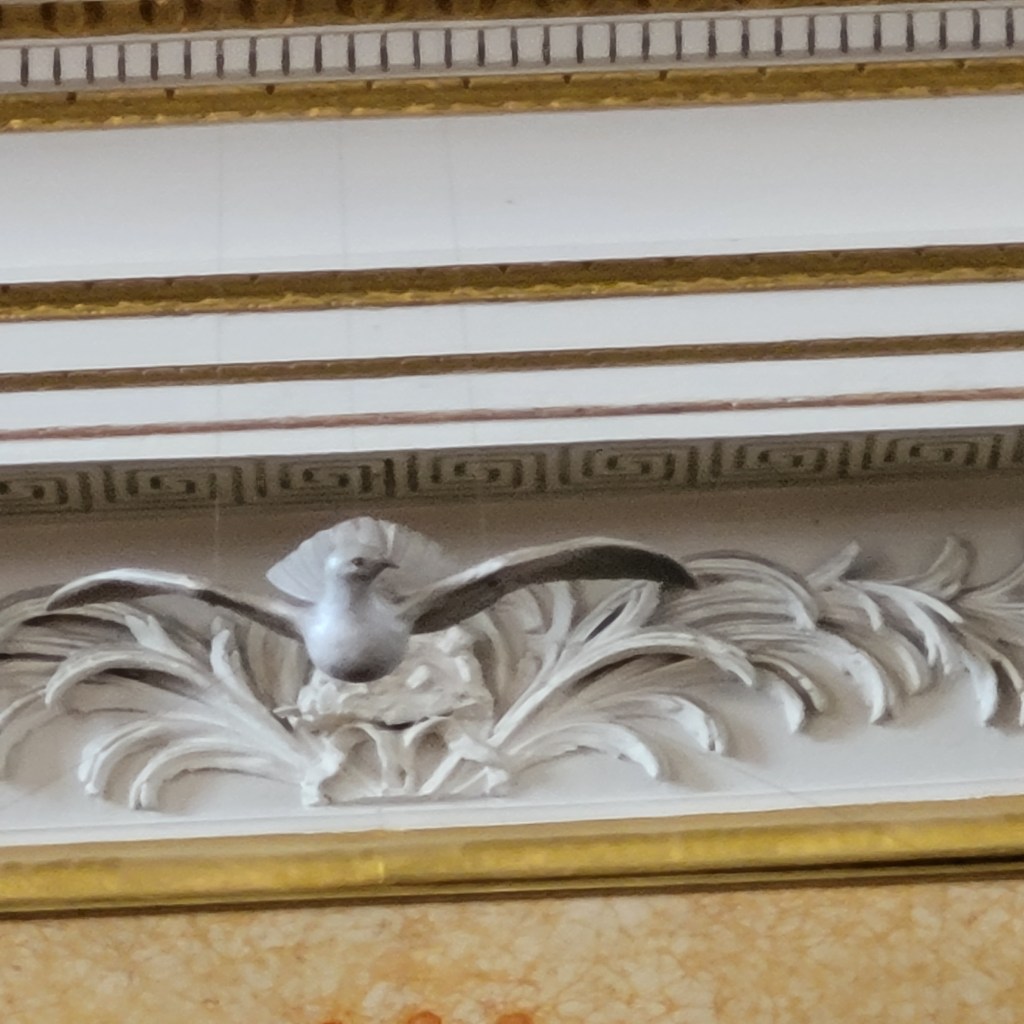
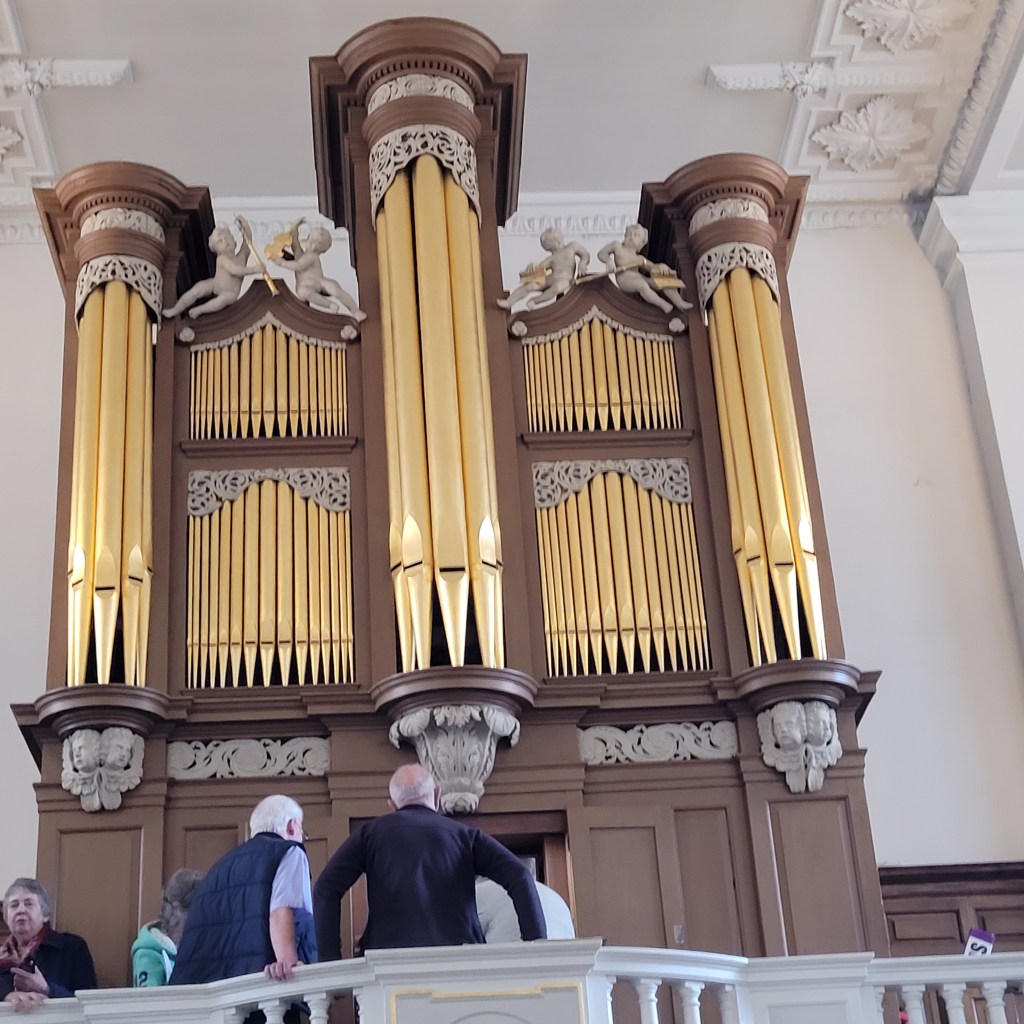
The second picture above is the altar, the third is particularly interesting. The dove that soars above the altar is where the Eucharist is reserved. The fourth picture is the beautiful organ. The reason people are gathered around it is that there was a midday organ concert that ended just a few minutes before. The fourth picture shows how the cherub theme on the organ is carried around the ceiling of the second-floor gallery.

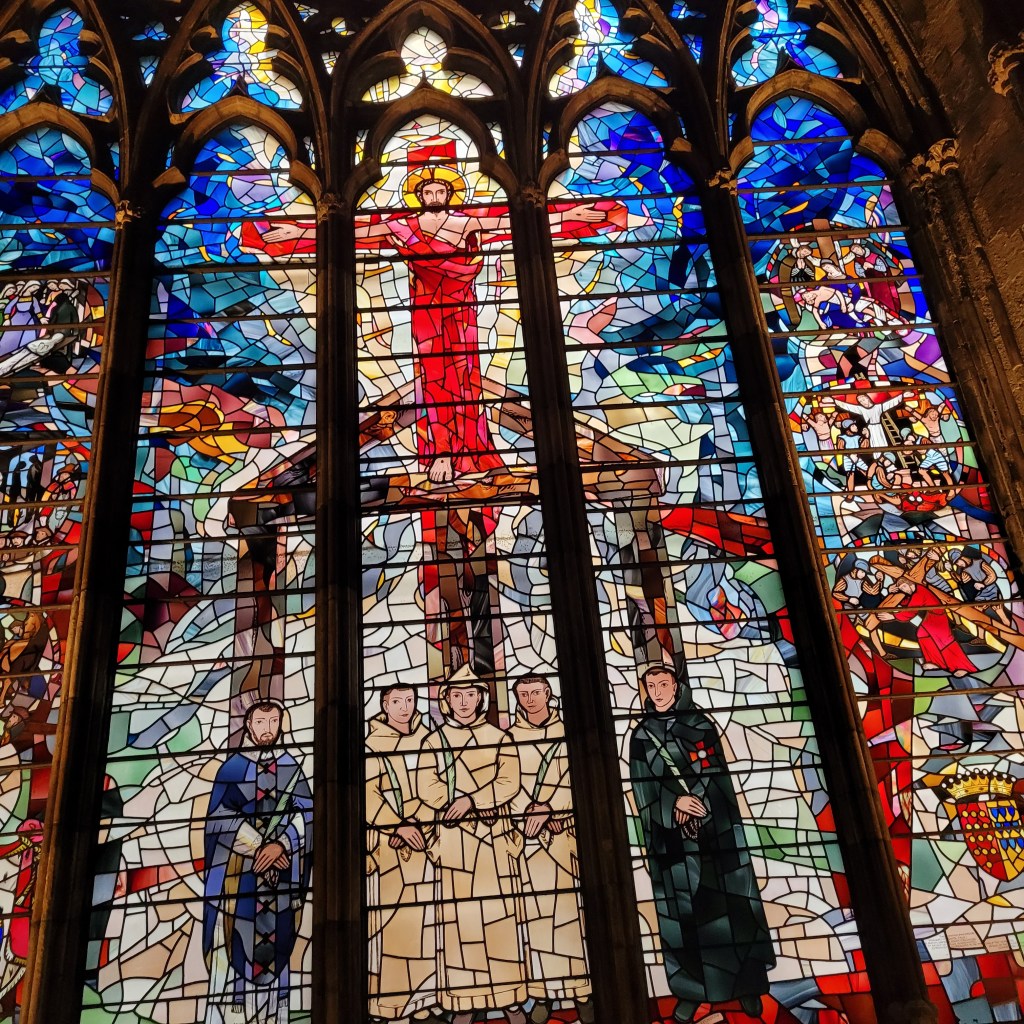
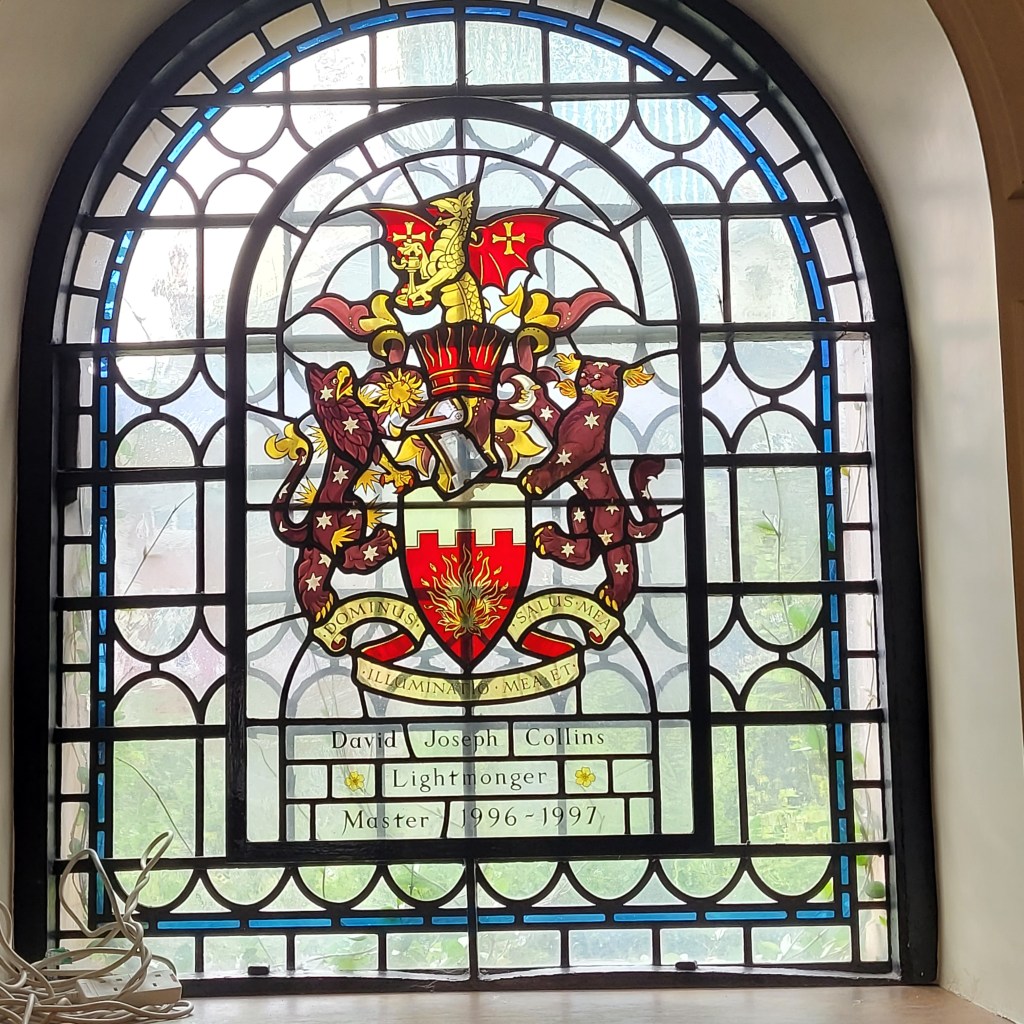
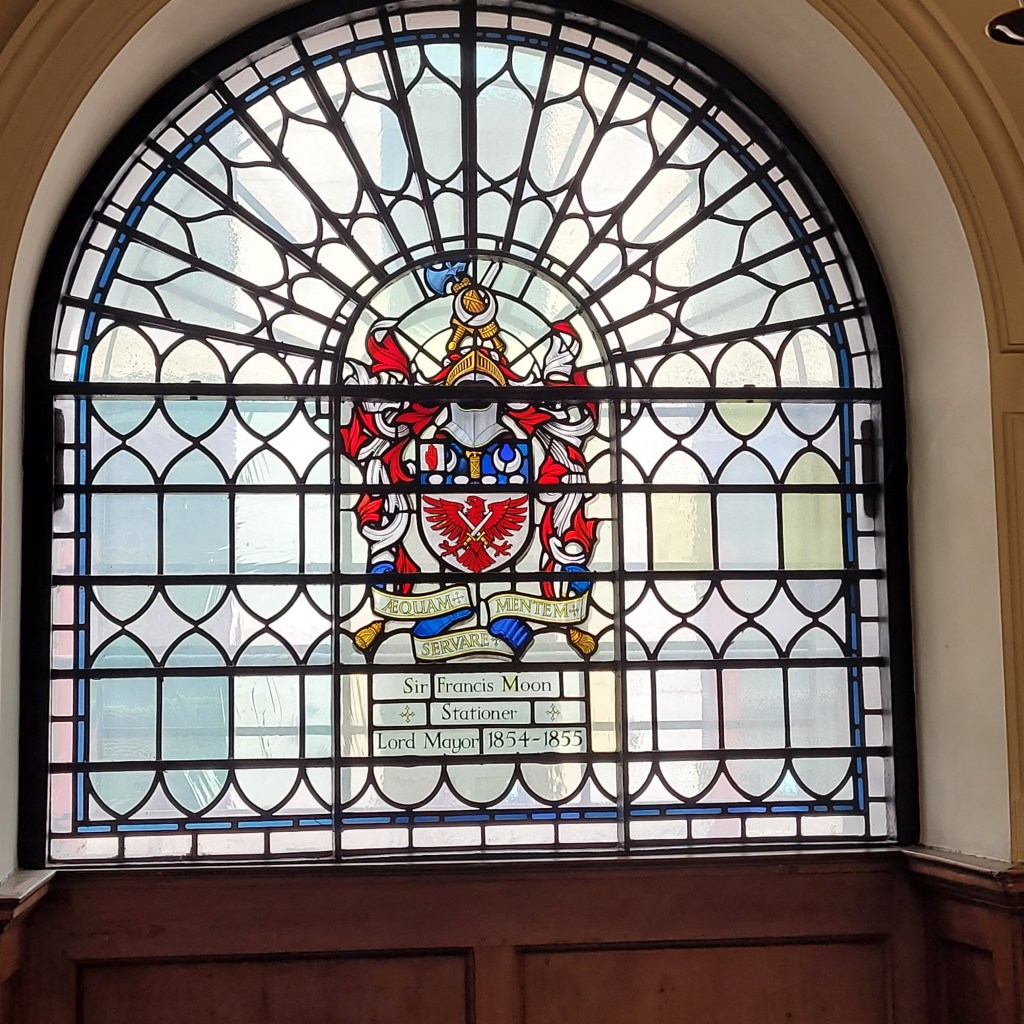
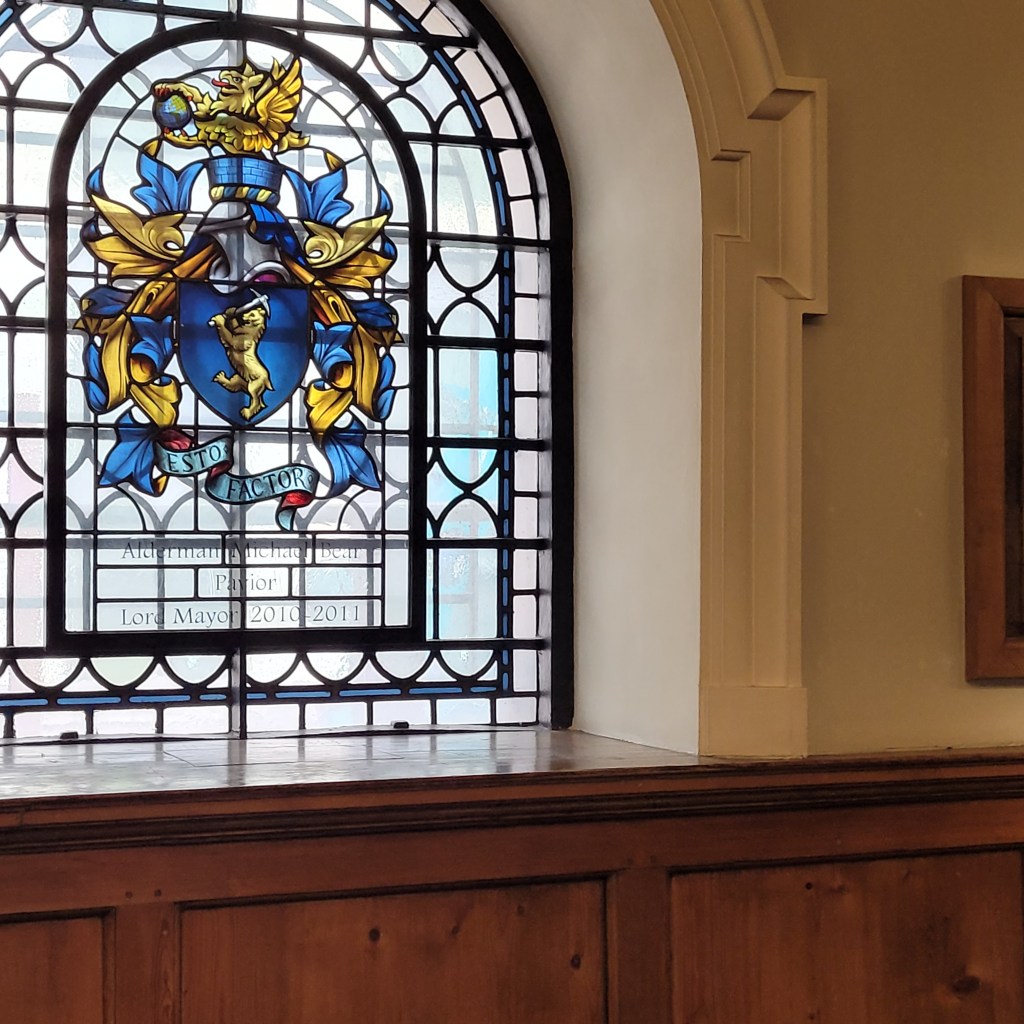
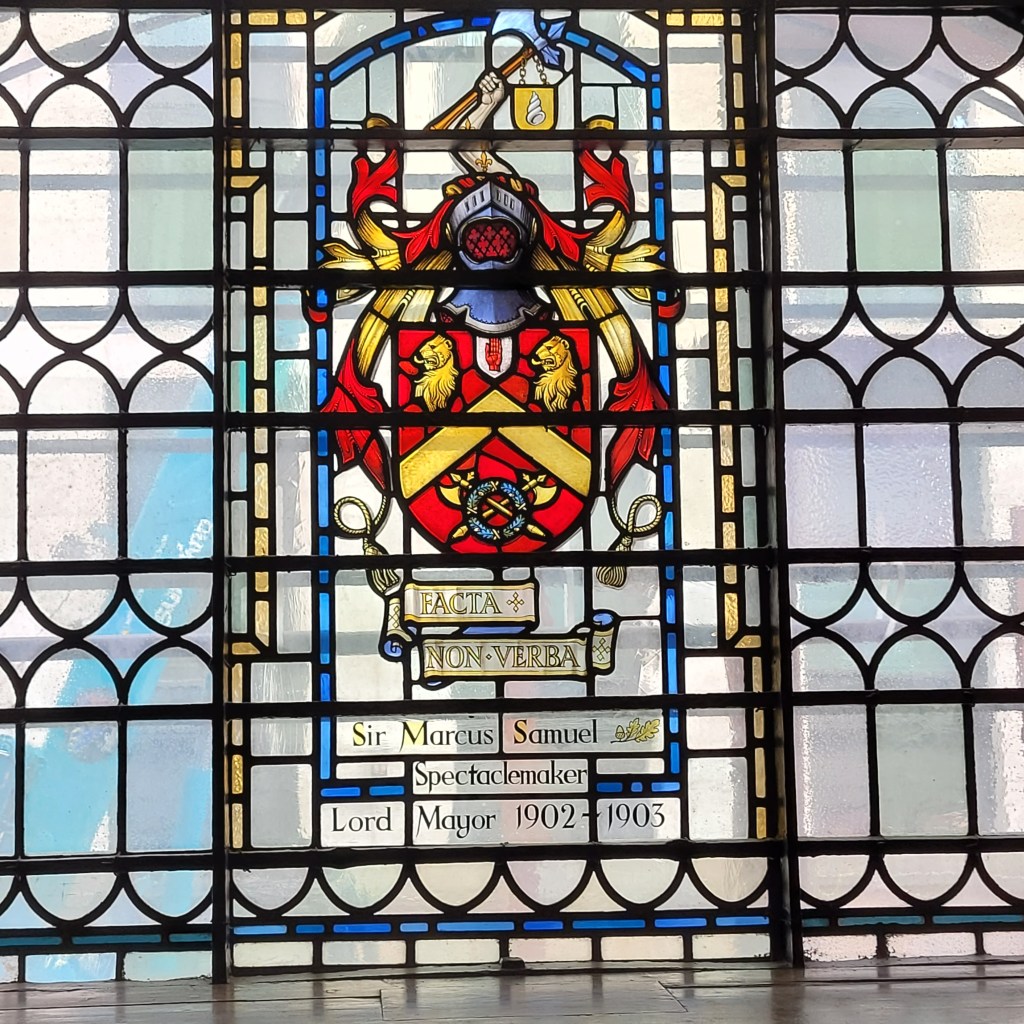
Below is a selection of pictures of the stained-glass windows in Saint Botolph’s.
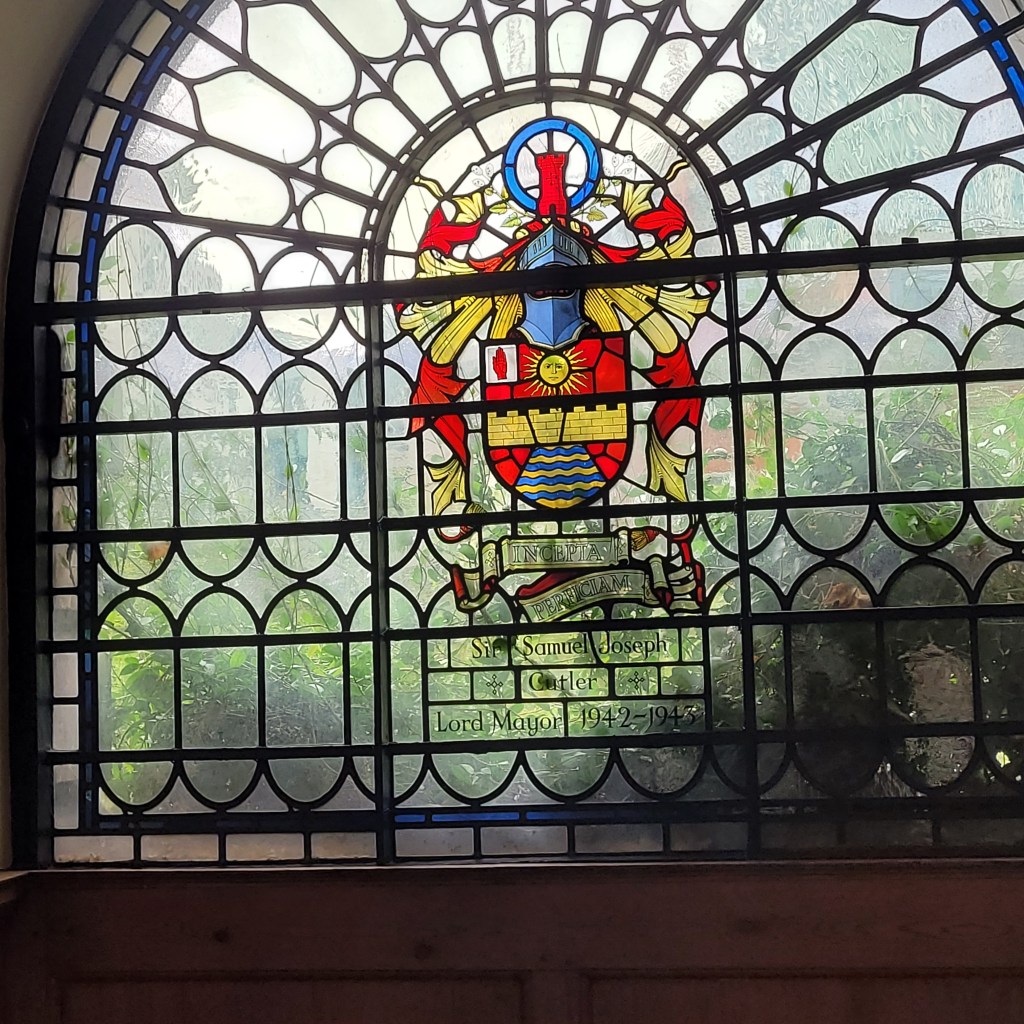
As you can see, these are dedicated to individuals, rather than as teaching tools, with biblical themes as traditional stained-glass in older churches were. Still, these show craftmanship and are interesting to view.

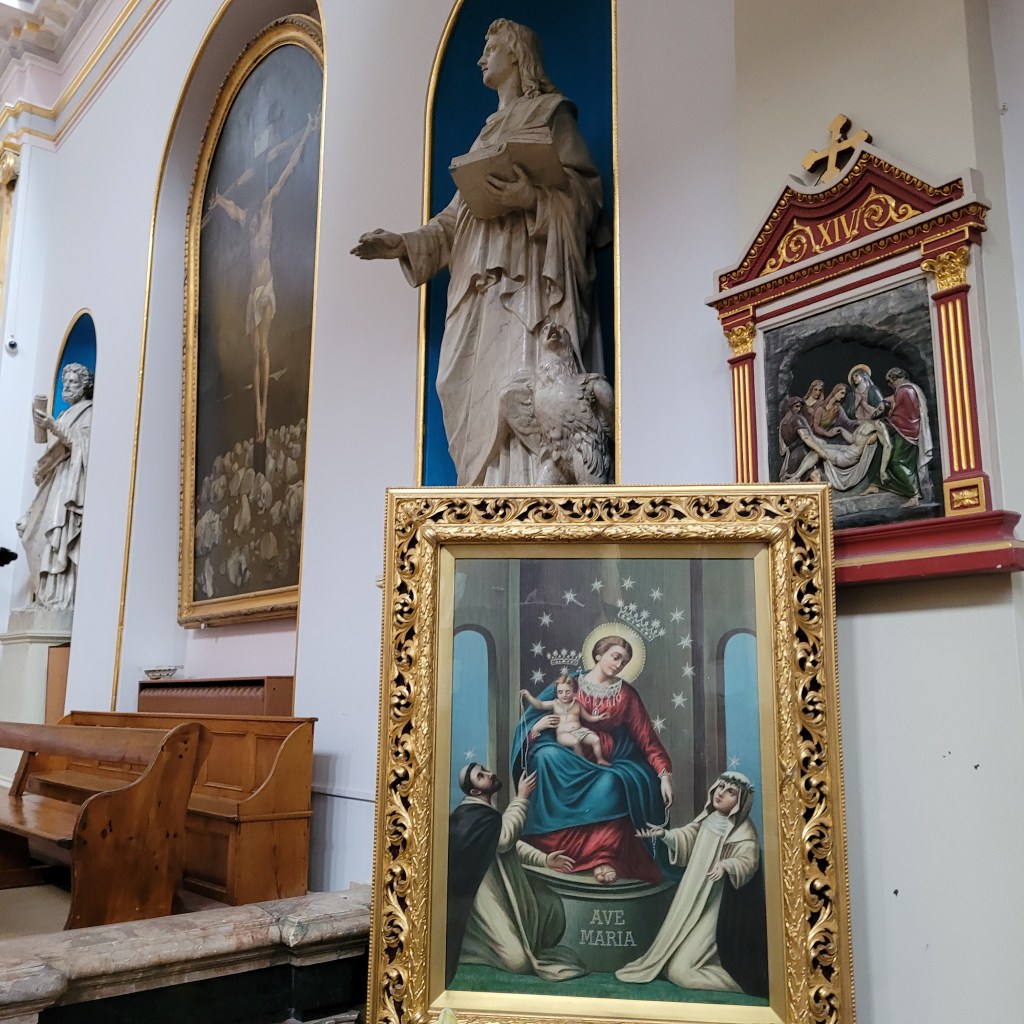
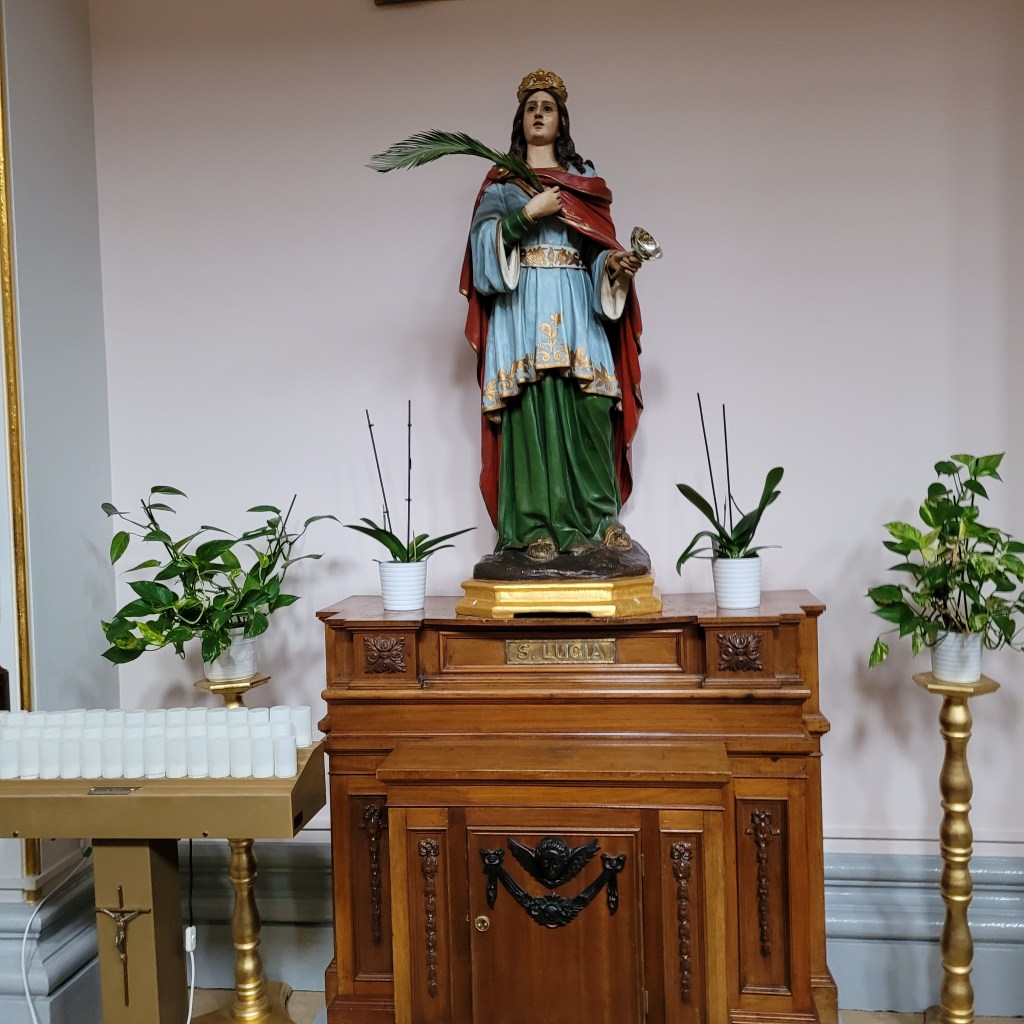
Finally, a delightful favorite of mine, a church known as “the Italian church.” Its formal name is “St. Peter’s Italian Catholic Church.
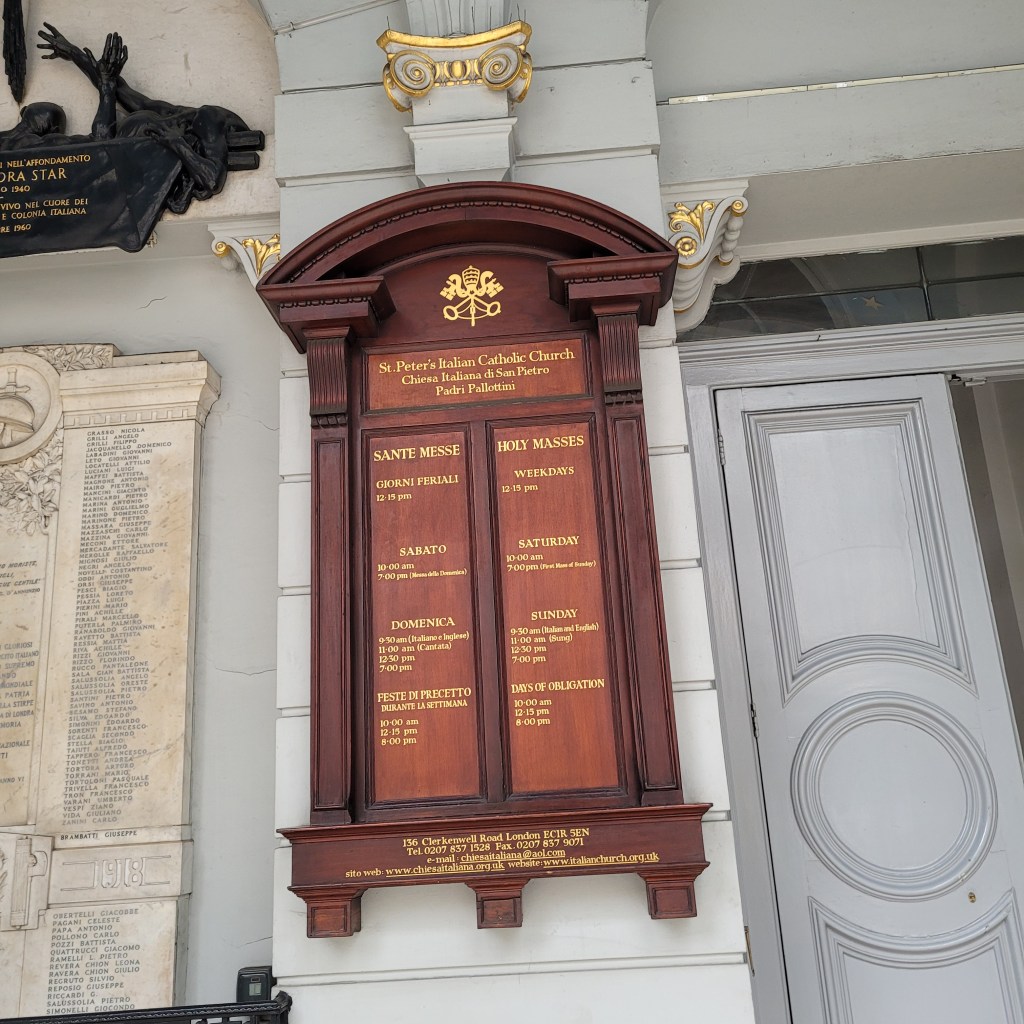
Saint Peter’s is one of the few remaining symbols of the once thriving Italian immigrant community, a second or third wave of Italians (not counting the Romans ones that encountered a lady named Boadicea, quite a while back). The group that built this church came to London at the same time as the great Italian diaspora that saw thousands of their fellow citizens leave for America, as well. Walking into this church gave me a feeling of immediate familiarity. The paintings reminded me of those found in churches in America in my youth if a parish had a large Italian American component.
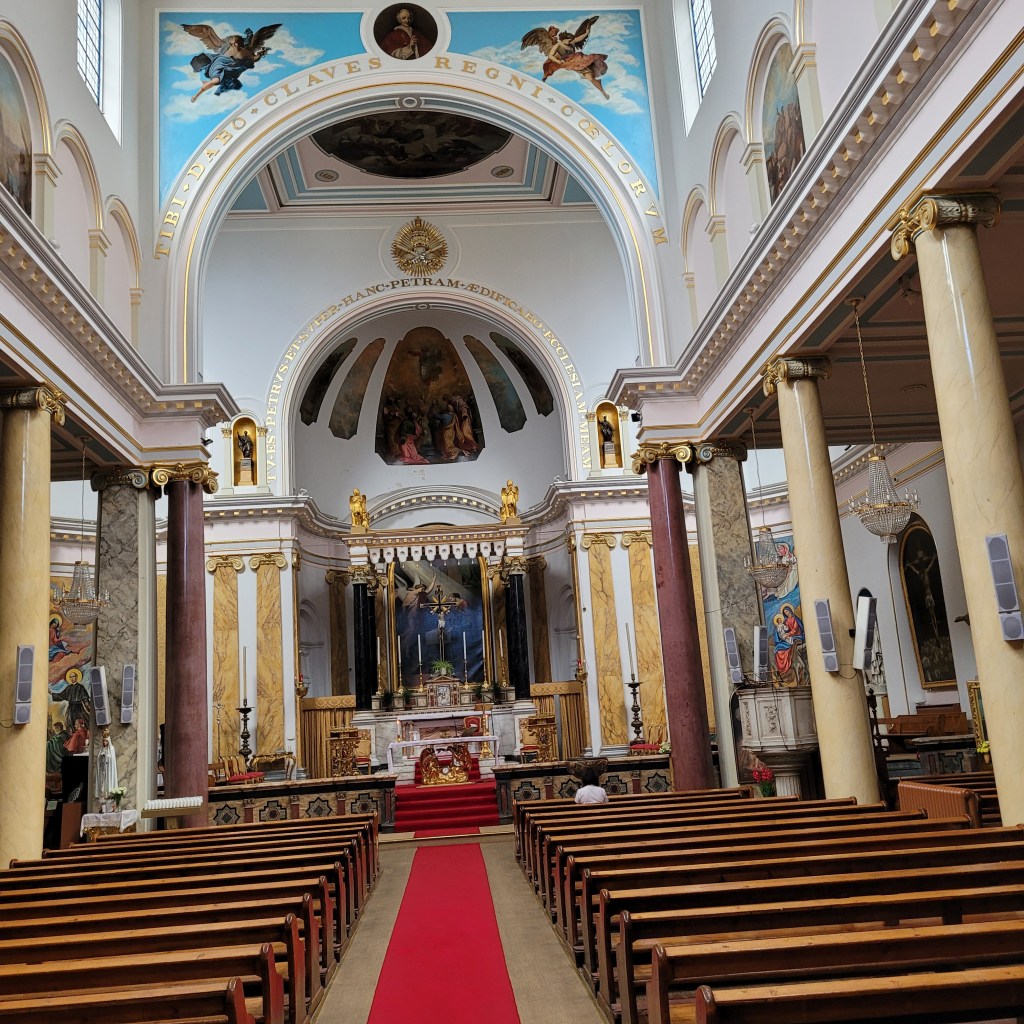
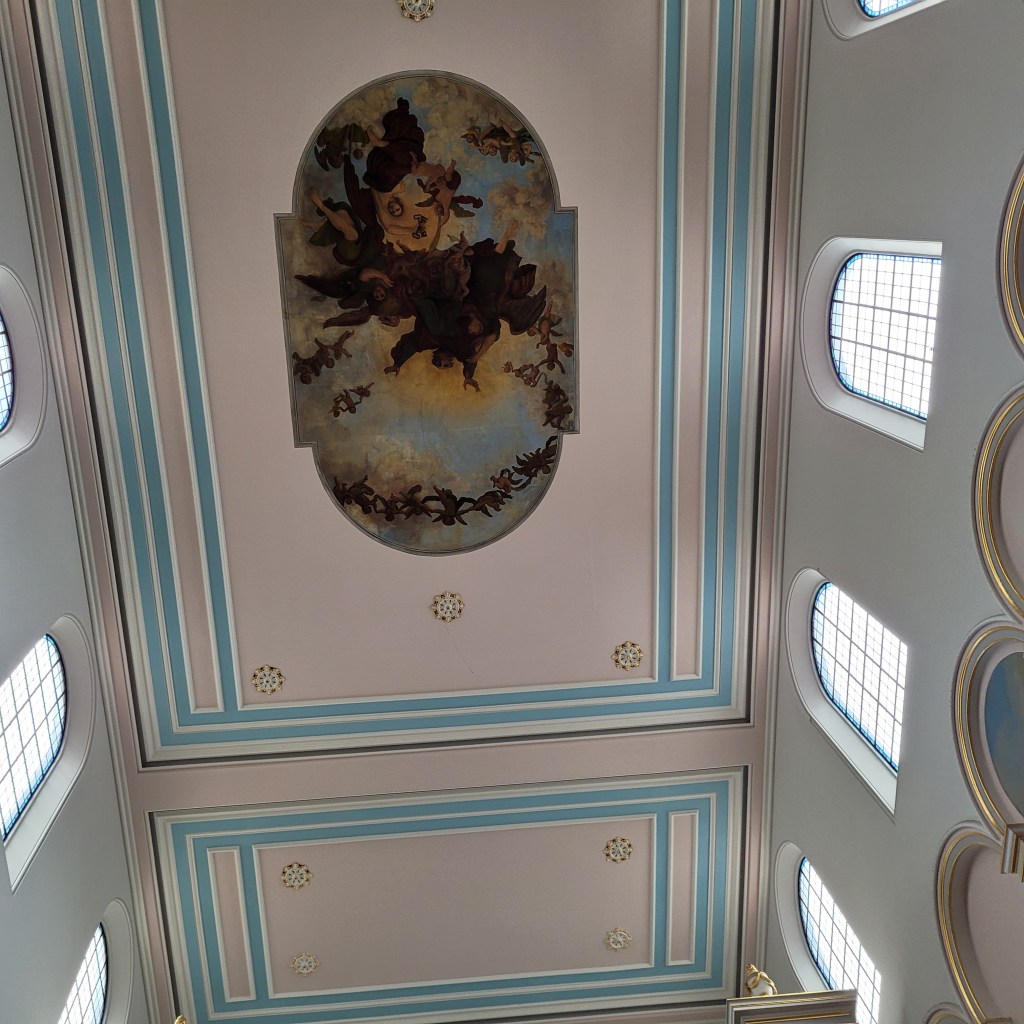
A local friend tells me that even though the Italian community has largely left the area, this church thrives with families returning for weddings and to celebrate other special occasions and its Sunday schedule still includes an Italian bi-lingual mass.

And finally, the Sunday after I visited the Italian Church, I paid my first visit to Wigmore Hall for one of the
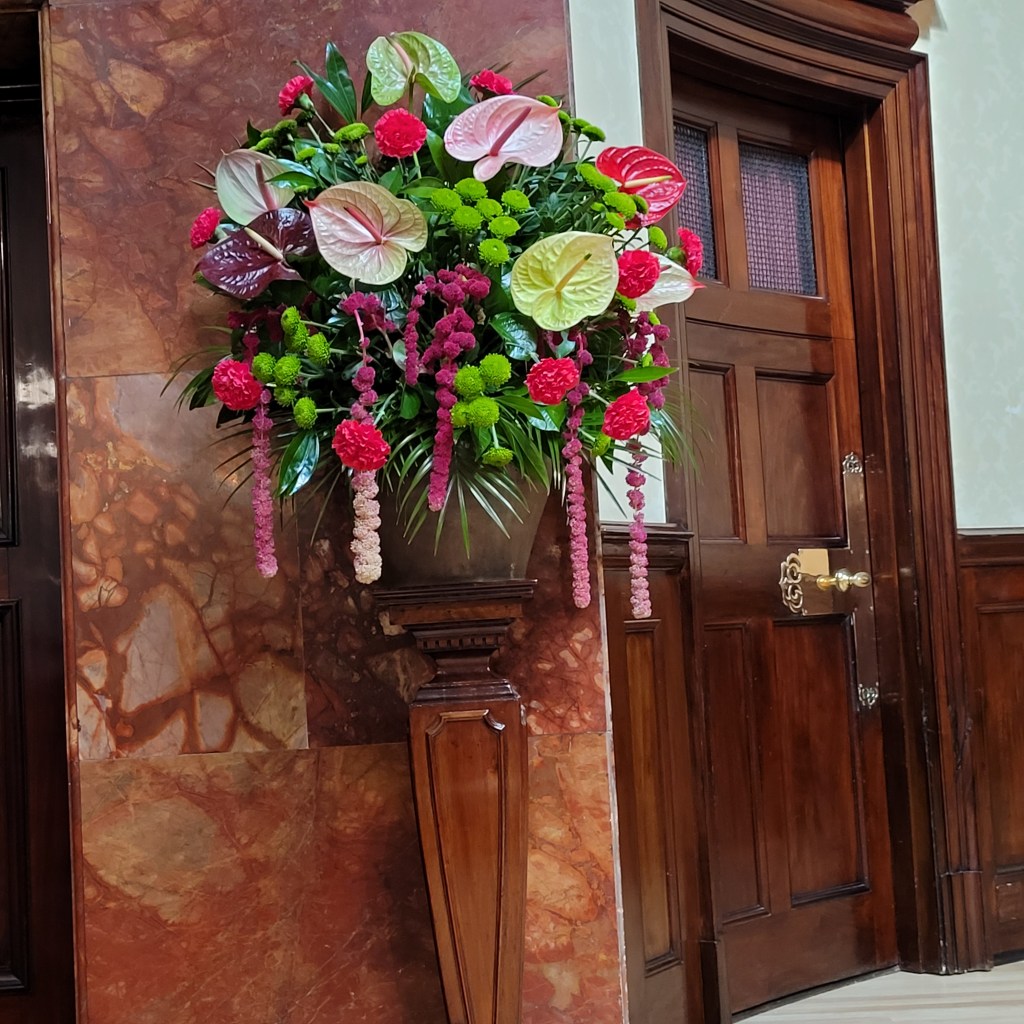
always special Sunday morning concerts. This one featured the Heath Quartet. Above is one of the incredible bouquets that always adorn the sides of the stage at Wigmore Hall. The Heath Quartet, two violins, a viola, and a cello, played Benjamin Britten’s String Quartet No. 3 Opus 94 and Fannie Mendelssohn’s String Quartet in E flat.

The music was sublime. The crowd at Wigmore Hall is always composed of classical music lovers and the crowd went wild. This quartet deservedly received three call backs to the stage (there is no curtain, so I really couldn’t call them curtain calls.) I recommend Wigmore Hall’s program of Sunday and Monday afternoon concerts as well as their evening programs.
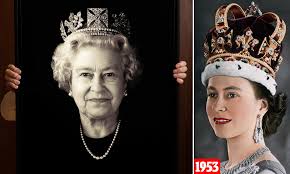
She Was The Only Queen We Ever Knew

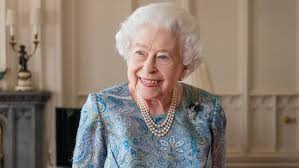
September 8th, 2022, started like any other morning for me in London. I had planned to visit a couple of churches and take some pictures and possibly take care of a legal errand in the afternoon. I got to the two churches and returned to my flat to change because the tube had been very warm. I had the TV on and was watching the news when Huw Edwards, one of the BBC’s most distinguished news readers and reporters, completed an update on the Queen’s health and his face gave the news before the words came out of his mouth. “Her Majesty, Queen Elizabeth had died at Balmoral Castle”. For the first time in 70 years the words, “the King and the Queen Consort” were spoken with regard to Britain’s reigning sovereign and spouse. Operation London Bridge, the long discussed and oft revised plan for this eventuality had begun.

Like the majority of people in the UK and the Commonwealth, this American blogger assumed that Her Late Majesty, as the reports began referring to her, would have lived to at least 100, and probably outlive her mother who died just months short of her 102nd birthday. But it was not to be. Many of us had been shocked to see how frail the Queen had looked a few days before her death when she had received the outgoing and incoming British Prime Ministers at Balmoral. But both had commented about how sharp and engaged she was, so everyone just assumed that all was better than it was.

And so, a stunned United Kingdom, the British Overseas Territories, the Crown Dependencies, the sovereign states where she remained Head of State, and many of the Commonwealth nations that continue to hold her in high esteem, began to mourn the loss of this remarkable woman who on her twenty first birthday made a speech that included these words: “I declare before you all that my whole life whether it be long or short shall be devoted to your service and the service of our great imperial family to which we all belong.” While the empire is long gone, the Queen did devote her life to the service of the citizens of the UK and of the countries of the former empire.

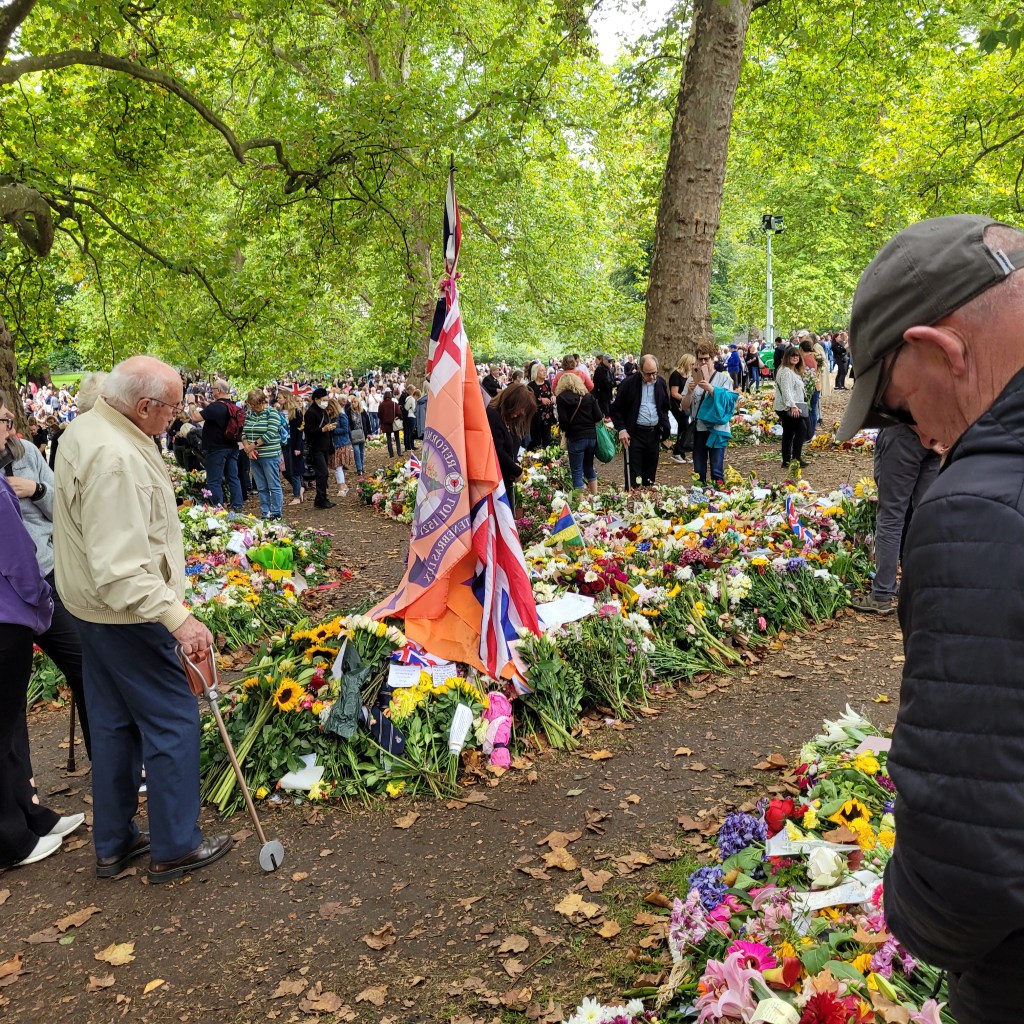
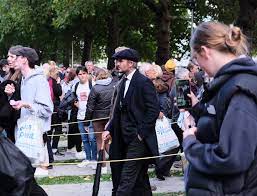
Almost immediately, the floral tributes began to arrive at Balmoral, Windsor Palace, just outside London, and at Buckingham Palace. The first bouquets arrived at Balmoral before the Queen’s younger children and grandchildren did. Only King Charles and Princess Anne, the Princess Royal were with the Queen when she died. By the second day after the Queen’s death, the decision was made to move the flowers from Buckingham Palace at the end of each day to Green Park, a huge park adjacent to Buckingham Palace and St. James’ Palace. The sheer number of bouquets, Paddington bears, notes, cards, children’s drawings, flags from organizations she was a patron for, were staggering, yet touching and beautiful.

Over the days following the Queen’s death, two parallel processes were happening, the installation, for lack of a better word, of the new sovereign and the official mourning process and funeral of the Queen.

The United Kingdom is a constitutional monarchy. While Prince Charles immediately ascended to the title of King and ceased being Prince of Wales, upon his mother’s death, there are numerous legal steps that had to be taken to formalize his role as head of state of the United Kingdom. Most governmental power resides in the UK Parliament and in the devolved parliaments in Scotland, Wales, and Northern Ireland for certain local matters. But the sovereign serves as the symbol of the State and as the leader who is above politics can give advice to the Prime Minister and can, as the Queen did for 70 years, and as her father, King George VI did during World War II. In the United Kingdom, the sovereign, is also Governor General of the Church of England and has the title of Protector of the Faith. But not in Scotland. History going back to the time of the union of England and Scotland in 1707. The Scottish Presbyterian Church is independent. Therefore, days after his mother’s death, at another political process unique to the United Kingdom, the Accession Council, the King signed a document guaranteeing the continued freedom of the Scottish church. His formal coronation will not take place for months.

The UK, with a new Prime Minister, faces a very dangerous winter because of potential heating fuel shortage. Because King Charles is an ardent environmentalist and, at 74 years old, he has been at his mother’s side for many years. He knows many of the energy executives and the international leaders who the political leaders with have to work with to resolve the problems they face. He could provide valuable advice to his new Prime Minister. This can be the strength of a constitutional monarchy, the stability that the sovereign provides.

I have British friends who would like to see the UK become a republic, but few of them can tell me how they would like to see it happen. I do not find that hard to understand because I believe it would be a process akin to the United States trying to fix our legislative system or our electoral system. Each system is intertwined with the historical fabric of our way of life and our governmental structure. I have American friends too, who think it is all a bit archaic and a waste of time and money. I like to remind my American friends that it was only some thirty years ago that an American politician whose party had not been able to gain a majority in the Congress created a false “gridlock” to gain the position of Speaker of the House of Representatives, in an attempt to turn the US into a parliamentary democracy. Instead, he managed to destroy a successful system of bipartisan cooperation that had helped make America a successful economic power that had gone to the moon and made progress on intractable social problems. Look at where that “contract ‘on’ America” has left us today.
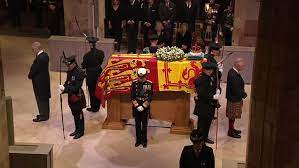
The formal mourning and funeral process that took place must have been extremely difficult for all the Royal Family, but especially for the King and Queen Consort. King Charles and Queen Camilla, the Queen Consort travelled, not only back to London, but then made trips to the Welsh, Northern Irish, and Scottish capitals to show each constituent country of the United Kingdom his respect and to thank them for their support and love for the Queen. In addition, the King, with his consort by his side, was carrying the procedural duties I mentioned above. I will assume that most readers saw the incredible stories of the lines that thousands of people queued in to walk past the Queen’s coffin, first in Edinburgh, then in London, where the lines were many miles long and lasted over 21 hours in some cases. The rich and famous, like former Prime Minister Theresa May and football star Davide Beckham queued alongside ordinary citizens. The scenes in Westminster Hall where the Queen’s children and later her grandchildren stood vigil around her coffin touched every heart. Of course, the religious ceremonies and the processions were profoundly moving. The armed forces of Great Britain pledged an oath to serve the Queen, as we in the American Civil Service and Armed Forces pledge an oath to uphold our Constitution and laws. I know how deeply such an oath becomes a part of one’s soul and I understand the emotion and care that soldiers, young and old took in being part of this process.

Let me close this segment by saying that Queen Elizabeth should be looked at for the way she carried out her responsibilities as head of state and head of the Commonwealth. She lived her life guided by her faith. I admired her. Rest in Peace.

A Visit to the Tate Britain, Another Cabby Chat

A Visit to the Tate Britain, Another Cabby Chat

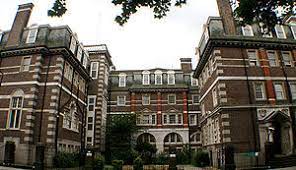
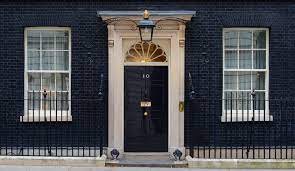
After the excitement of Boris Johnson leaving 10 Downing Street for the final time as PM and the flights to Scotland for him and new PM Liz Truss, I had to find something that would equal or top that excitement on the cultural front. I thought that the Tate Britain might be just the thing, so I walked up to King Cross Tube Station and headed down to the Pimlico stop on the Victoria line. While the day was quite pleasantly cool, the Tube was unpleasantly warm, and I was glad to arrive at Pimlico station and get back out into the sunshine and cool air. The streets between Pimlico Station and the gallery are always pleasant to pass through. There are lovely white fronted townhouses and then the scenery changes as you near the Tate with the appearance of the red brick Millbank Estate, built at the end of the 19th century. It is now a grade II listed building in the arts and crafts style of architecture and very pleasant to look at. Just across perpendicular roads from the Millbank Estate and the Tate is the Chelsea College of Art in buildings that used to house the Royal Army Medical College. Below are photos of the Millbank Estate on the left and one of the buildings of the Chelsea College of Art on the Right.

It has been almost twenty years since the old Medical College closed but I still think of it when I pass by. It is another example of London constantly reinventing itself. In fact, I believe the Tate Britain is housed in a building that was once a prison.

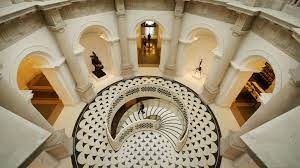
Once I made my way into the Tate, I first checked to see if there were any special exhibitions of interest and was able to determine that I could spend my time visiting the permanent collections that seemed to have been “re-curated” since my last visit. However, I thought I would start by having a cold drink in the Member’s Room. As you do when you reach a certain age and it’s a damp kind of day, I headed for the elevator that would allow me to avoid the long spiral staircase to the member’s room. As has been the case on almost every visit to this Tate venue since they moved the Member’s Room to this location high in the building’s dome, the elevator was not working. I did the survival challenge, then and took the steps. After a refreshing drink, I took the somewhat vertiginous steps back down and began my tour of the rooms that looked to be of the most interest to me.

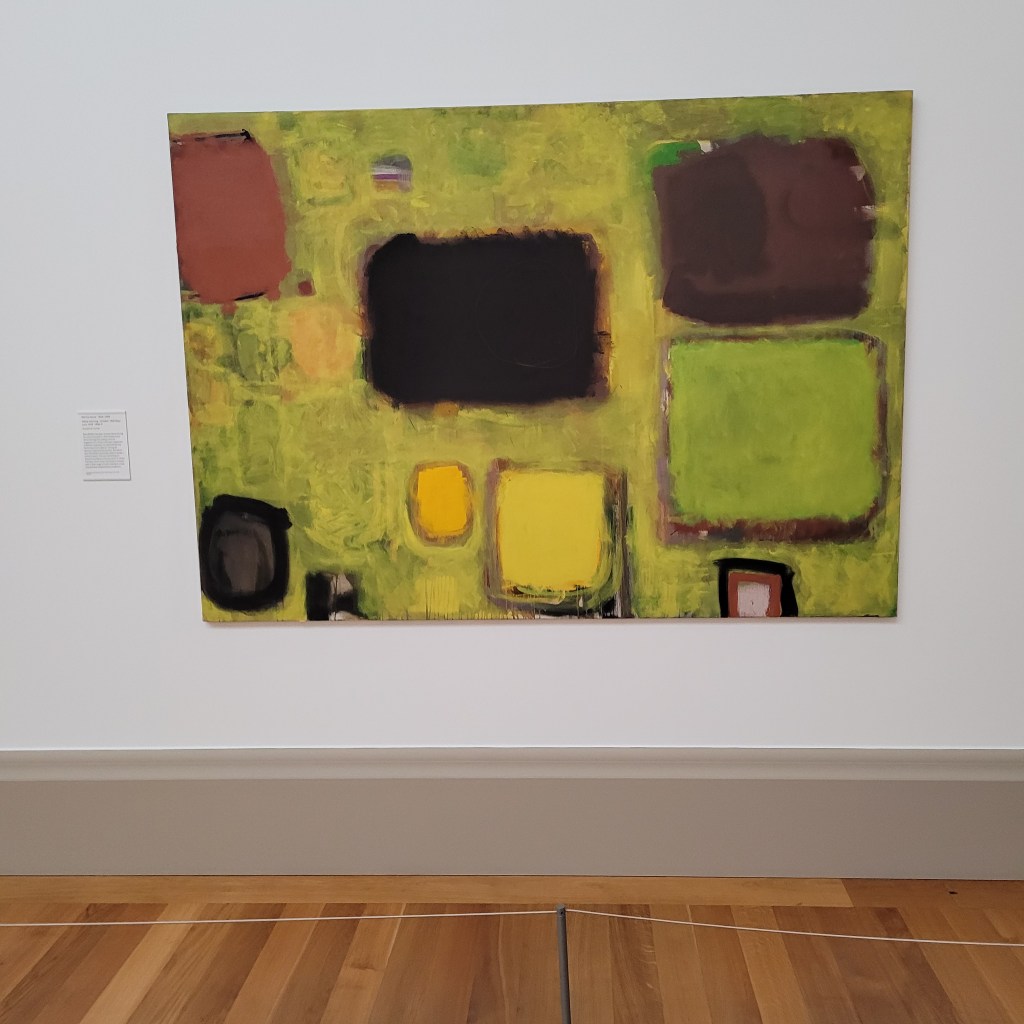
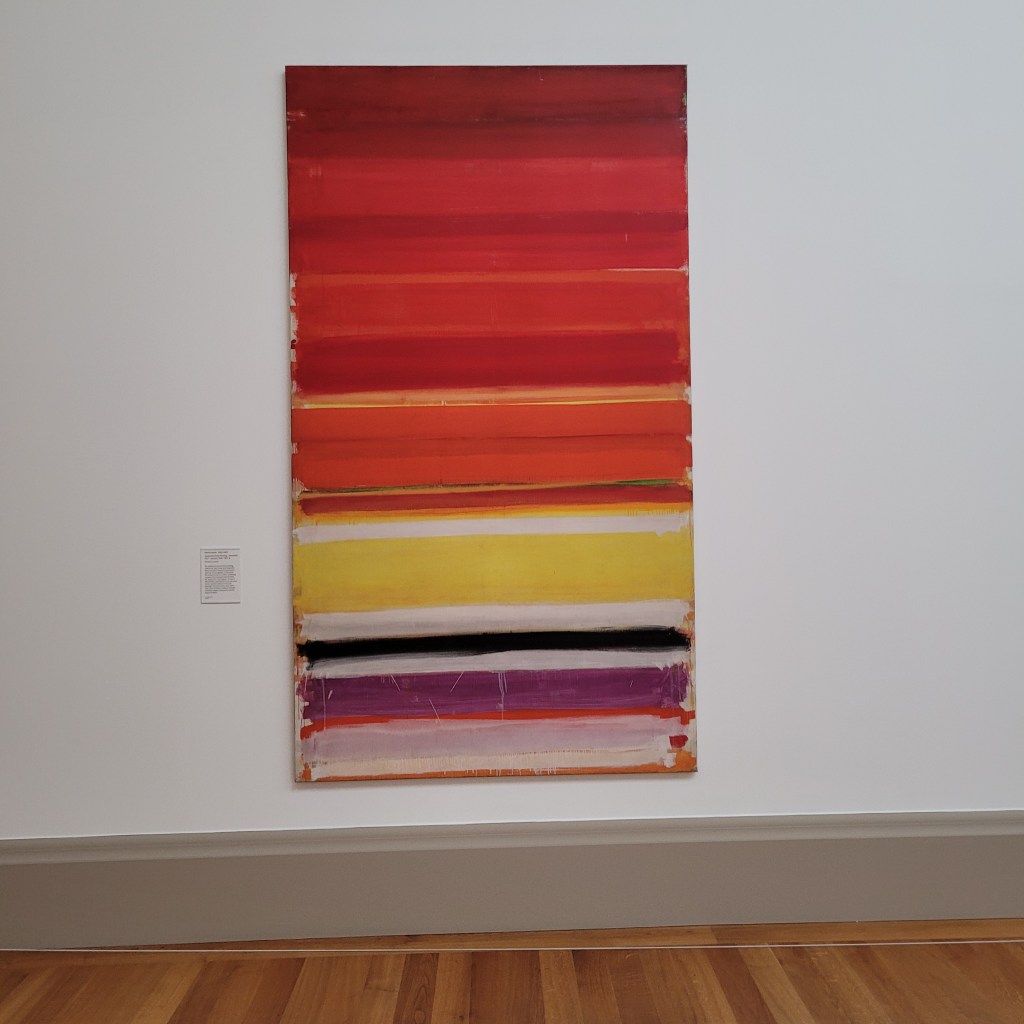
Low and behold, I struck gold very quickly when I stepped into a room dedicated to St. Ives school of modern and abstract British art that flourished from the 1940s to the 1960s. This included one of my favorite artists, Patrick Heron, three of whose works appeared in this one room. Heron’s use of color has captivated me in a way that I find hard to describe. I can get lost in his work and spend long periods of time simply admiring a piece of it in the silence of the gallery. I thought that this would be such an occasion. Then suddenly, a sound of loud offkey children’s singing infiltrated the room I was in from an adjoining one. Its source was an audio-visual display in the corner of the adjacent room. The singing destroyed the serenity of the moment for everyone in the general area and went on far too long. Finally, it ceased, and I was able to have a few more moments of peace with works of the great English artist. Below are the three Heron works, with me ecstatically enjoying thrm.

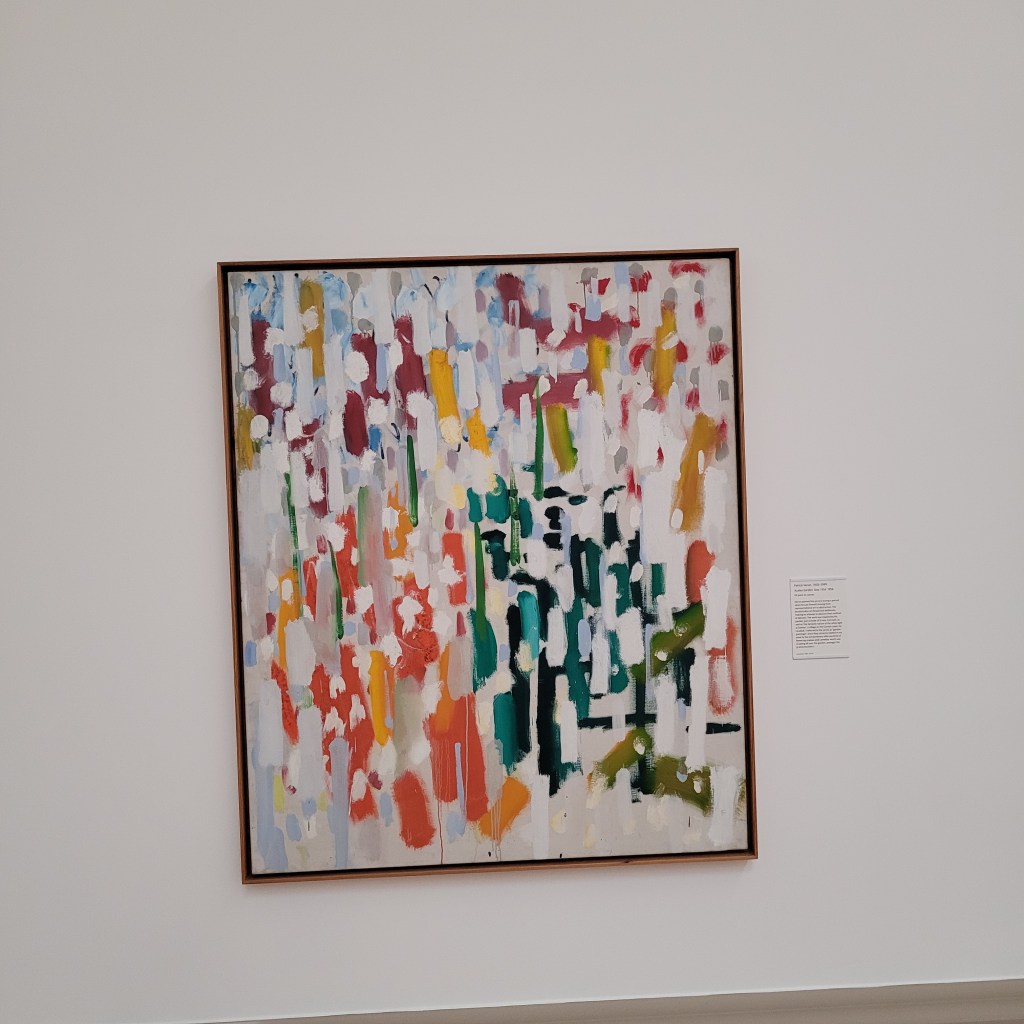
There was much more to see, of course. Here are two more colorful pieces that I really enjoyed seeing during my visit. The first piece below is by Jeremy Moon who used the grid to explore the relationship between flat surfaces and three-dimensional ones. The second one is By Howard Hodgkins and is also one where lines and dimensions are important, but a figure appears, as well. I am also drawn to the colors.

There was so much more to enjoy. Before I move on to sculpture, I’ll mention, in passing, Mark Rothko’s Seagram Murals. Originally painted for the Four Seasons Restaurant in the Seagram Building in New York City, the artist gave them to the Tate. Because of their fragility, they are kept in a special low-light gallery, and I am never terribly satisfied with photos of them. Do go to see them if you have the chance. Of course, one can’t speak of the Tate Britain without saying “the T word,” (Turner). The gallery’s J.M.W. Turner collection is world renowned. Turner’s paintings are beautiful and should be seen and admired. The way he brought sunshine and light into his seascape is breathtaking.

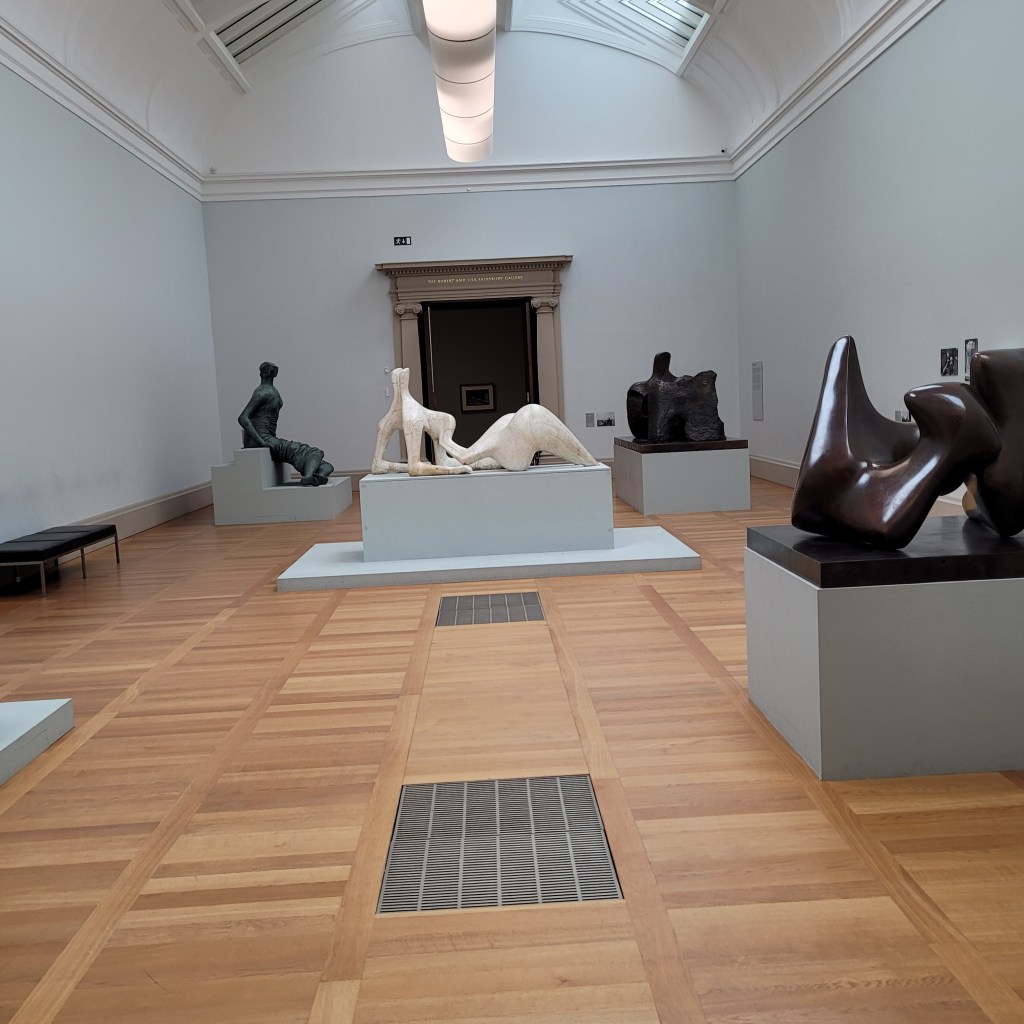
Another major collection in the Tate is the sculpture of Henry Moore. His large pieces have always delighted me and are another example of art that opens my mind to thought and fancy. As I continued my walk through the 20th century galleries, I walked into a room filled with Moore sculptures! See below. It was almost comical, at first, but they were well spaced, and the room was not crowded with people, so it worked well enough.

Finally, at the other end of the sculptural size spectrum, I found these two small sculptures by Alberto Giacometti. The Tate described him this way in material for a 2017 exhibit that I remember fondly, “Giacometti was an artist both rooted in the exact and transported by the visionary. He was both a maker and a seer, both a craftsman and an alchemist. He was interested in the deepest and most precise contours of the face, but had no interest in making mere representations of those who sat for him. His drawings, which are exquisite, do not read like preparations for his sculpture or his paintings; it was as though everything he touched he sought to perfect, knowing all the time that he would fall short.”

These two works, ‘Walking Woman and Woman of Venice are good examples of his work, direct and eloquent.

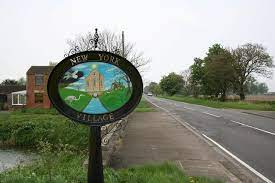
After an immersion like that in the world of art, I treated myself to a Black Cab ride home and “struck gold” again with a chatty cab driver. This fellow prided himself on knowing American State capitals and had visited many American States. He was also heading off to a wedding in Minnesota, where he had family, this weekend. I told him about the casino in Welch, MN, about an hour outside of the twin cities of Minneapolis and Saint Paul. The casino is owned and operated by the Prairie Island Dakota Indian Community. He was a wealth of information on local history, telling me about the poverty in the Elephant and Castle area in days gone by, how the rich would go to the old St. Mary’s Bethlehem (corrupted and shortened to Bedlam) psychiatric hospital and taunt and abuse the inmates there. He also talked of historic sites associated with early English people who left for America in various places. He was quite interested with the British city of Boston and that he believed that there was a village near it called “New York.” And there is in Lincolnshire. Below, a sign from the Elephant and Castle Tube Station, a black engraving of the Bedlam Hospital, the church in Boston Lincolnshire, as large as many cathedrals, the cab driver told me. And, finally, a sign for New York, Lincolnshire.

We also had a rather fun discussion of how school discipline had changed since our school days. It seemed that UK teachers, like their American counterparts, had pretty good arms and could hit a misbehaving student with an eraser, chalk or other handy non-lethal weapon quite well on either side of the Atlantic in the old days. Our PE teachers in American and their “games” teachers had some extra leeway too. My how times have changed!

Wait A Minute, Did They Have An Election?

Wait A Minute, Did They Have An Election?

This entry is really for my American readers who woke up this morning to find that that the United Kingdom (UK) has a new Prime Minister, Liz Truss (more formally, Mary Elizabeth Truss). She replaces Boris Johnson. The answer to my title question is, no, and yes. The U.K. did not have a national parliamentary election. But yes, the Conservative Party did vote, twice. First, a majority of the Conservative (or Tory) Party, Members of Parliament (M.P.’s) voted in the House of Commons that they no longer had confidence in the leadership of Boris Johnson as Prime Minister. This ended Mr. Johnson’s term as leader of the party and thus he would have to tender his resignation to the Queen. But because the Tories were clearly the majority party and were going to stay in power, Mr. Johnson remained as Prime Minister from June 6th until today, when Boris flew to Scotland and offered his resignation to the Queen. Her Majesty asked Ms. Truss to form a government during Ms. Truss’s audience with her at Balmoral Castle in Scotland. These audiences would normally happen in London at Buckingham Palace. But due the Queen’s mobility issues, she has elected to stay at Balmoral her summer residence longer this year.

How does this whole thing work? (Remembering that this is what Newt Gingrich wanted to do to America when he took that contract out on us). Wikipedia provides this fairly concise description of the UK governmental system: “The United Kingdom is a constitutional monarchy in which the reigning monarch (that is, the king or queen who is the head of state at any given time) does not make any open political decisions. All political decisions are taken by the government and Parliament. This constitutional state of affairs is the result of a long history of constraining and reducing the political power of the monarch, beginning with Magna Carta in 1215.” In reality, this means that while the sovereign does have defined powers, the majority of day-to-day governance to governance takes place in the House of Commons in the Parliament. The head of the majority party is asked by the sovereign to form a government and becomes the Prime Minister. Unlike the US, rather than the head of government choosing the heads of the “cabinet” departments, the PM appoints other members of her or his party to these positions. If there is a coalition with smaller parties, as there was several years ago, when neither major party had a majority, then the smaller party(ies) members may receive appointment to head a ministry.

To go back to Newt Gingrich’s dream of being America’s Prime Minister and making the US President something of a figurehead, in parliamentary democracies the opposition has no real power. If you have ever watched “Question Time” from the UK, you see the one opportunity the opposition has to remind the country that it is there. The questioning of the PM is done by the Opposition Leader. When there is no need for bipartisanship, this may be a way of developing debating skills. In the pre-Newt era, in America’s Congress, the two parties’ leaders regularly met and worked together to find ways to best serve their nation. This is why when former House Minority Leader Gerald R. Ford, America’s only President to have been appointed Vice President, and then became President (when Richard M. Nixon resigned) without ever being elected by the people of the US, his first night in the White House, his first dinner guest was House Majority Leader Thomas P. “Tip” O’Neil, one of his closest friends. In the US Senate, there were many “across the aisle friendships, like the very liberal Edward Kennedy and the very conservative Oren Hatch. This was how American democracy worked in the pre-Gingrich era.

Now you are thinking, there you go, Mark, off on one of your tangents. Let’s get back to the UK. What about the House of Lords, did they get rid of them? No, they are still around, but they have “been reformed.” Until the reforms of recent years, the House of Lords was composed of Hereditary Peers (titled men, and Bishops of the Church of England) and from the 1950’s Life Peers who could be men or women, appointed by the sovereign at the recommendation of the PM. Various reforms have been proposed in recent years with the goal that the upper house of the British parliament eventually being elected.

A session of Parliament can last 5 years. The last national election took place in 2019. While Boris Johnson could have asked the Queen to dissolve Parliament and call an election when he lost the “no confidence vote” in June, his party most likely did not want to risk the chance of losing the election and perhaps Labour did not mind waiting either. So, the only people in the UK that had any say in choosing Johnson’s successor were Conservative Party members who voted around the country for their new leader. There had been 8 members of Parliament who were initial candidates. These were quickly brought down to two, Ms. Truss and Rishi Sunak. Rishi has said he will remain in Parliament, but some say he may return to Silicon Valley where he made his fortune.

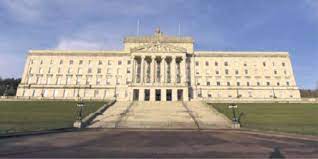
What else might you need to know about the UK Government? Well, by now you must have heard that the UK left the EU. That means that many powers that they had given to the European Parliament came back to them. I suspect this has really just meant more work for civil servants (some things are the same all over the world, says this former American civil servant.) And I should mention devolution. The last Labour government introduced, devolved legislatures to the UK’s component countries. The Scottish Parliament is perhaps the best known of these with its stunning new building near the Palace of Holy Rood in Edinburgh, and the Welsh Senedd Cymru has also been successful. The Northern Ireland Assembly has had more issues seemingly due to leftover sectarian power sharing problems that have plagued that province for so long. Each of these has specified control over certain specific local issues.

In order above, Scottish Parliament, Senedd Cymru, Northern Ireland Assembly.

Prime Minister Liz Truss has some big problems to deal with, the biggest is probably the coming fuel crisis that her country is facing. I hope that the men and women of all parties can work together with the energy companies and find a solution to keep the lights on, keep businesses running and keep UK homes warm this winter.