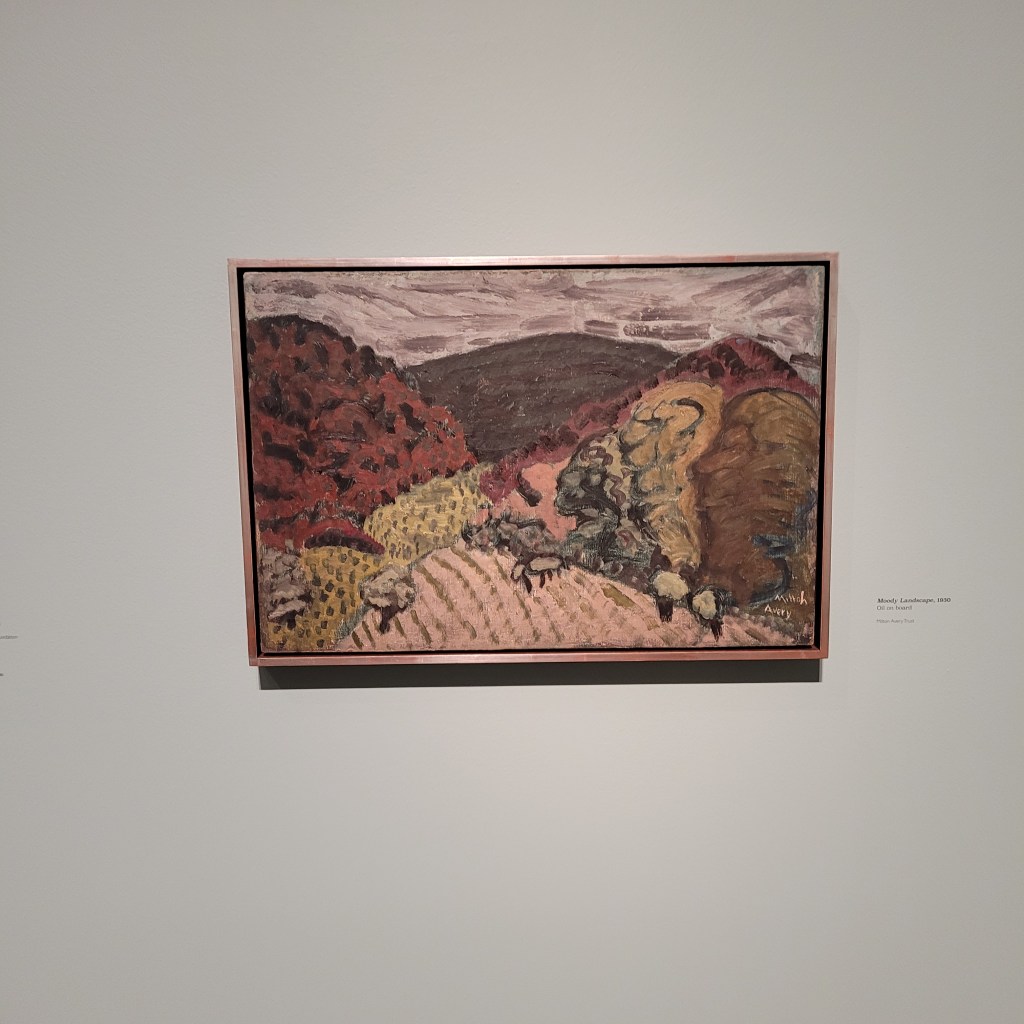
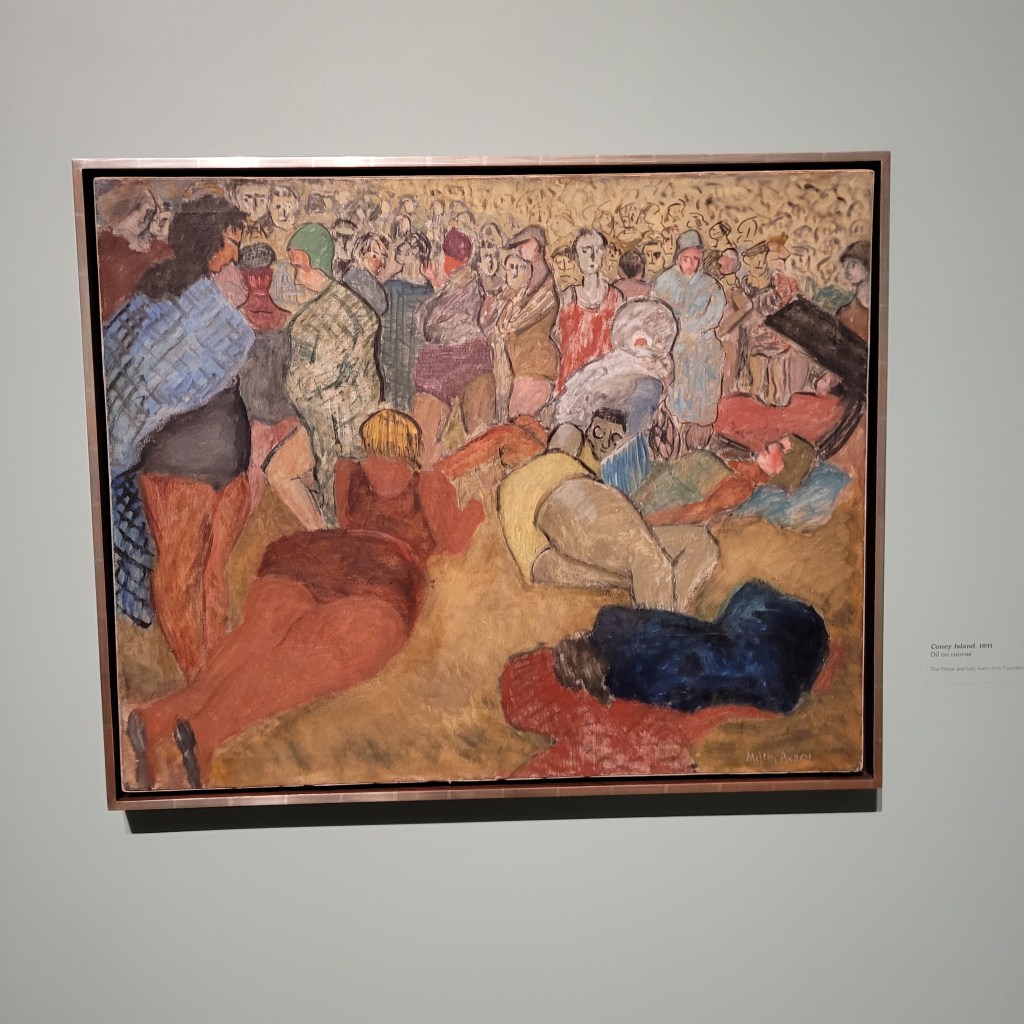
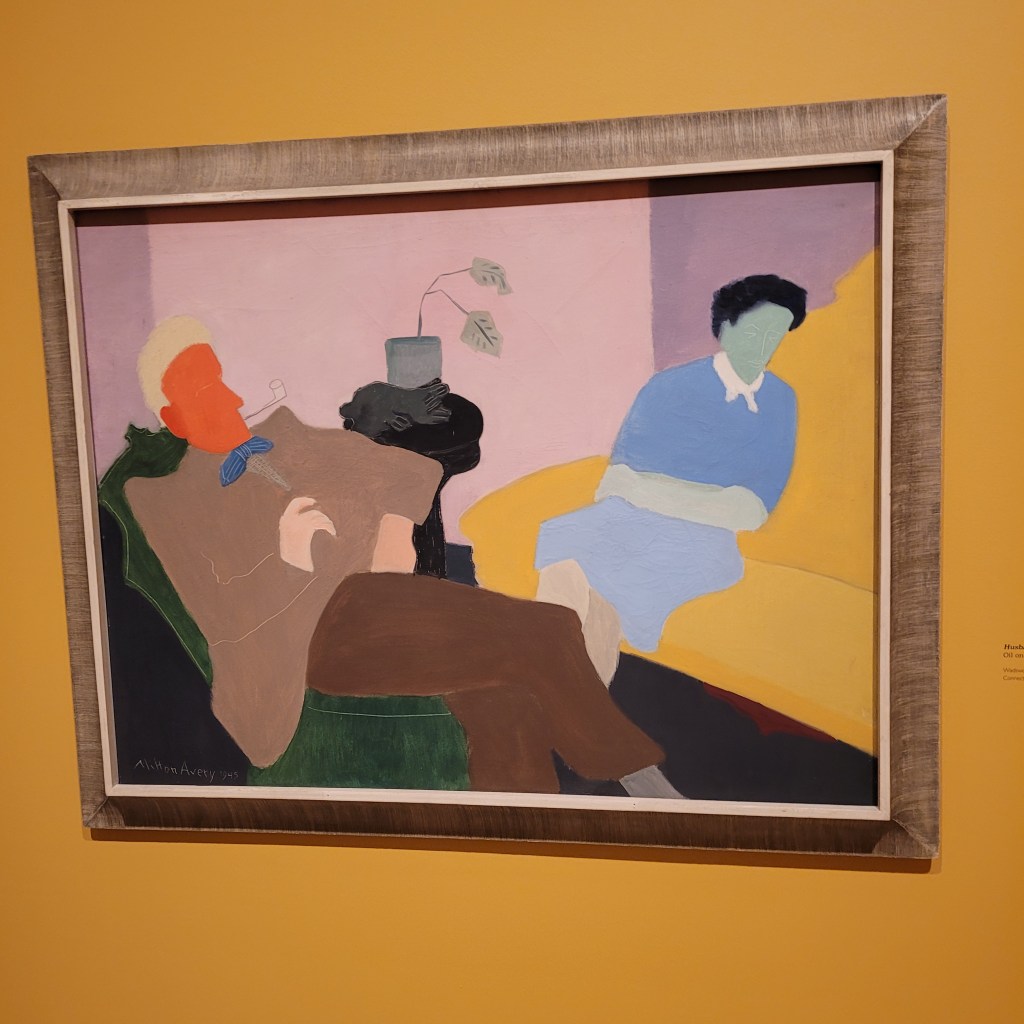
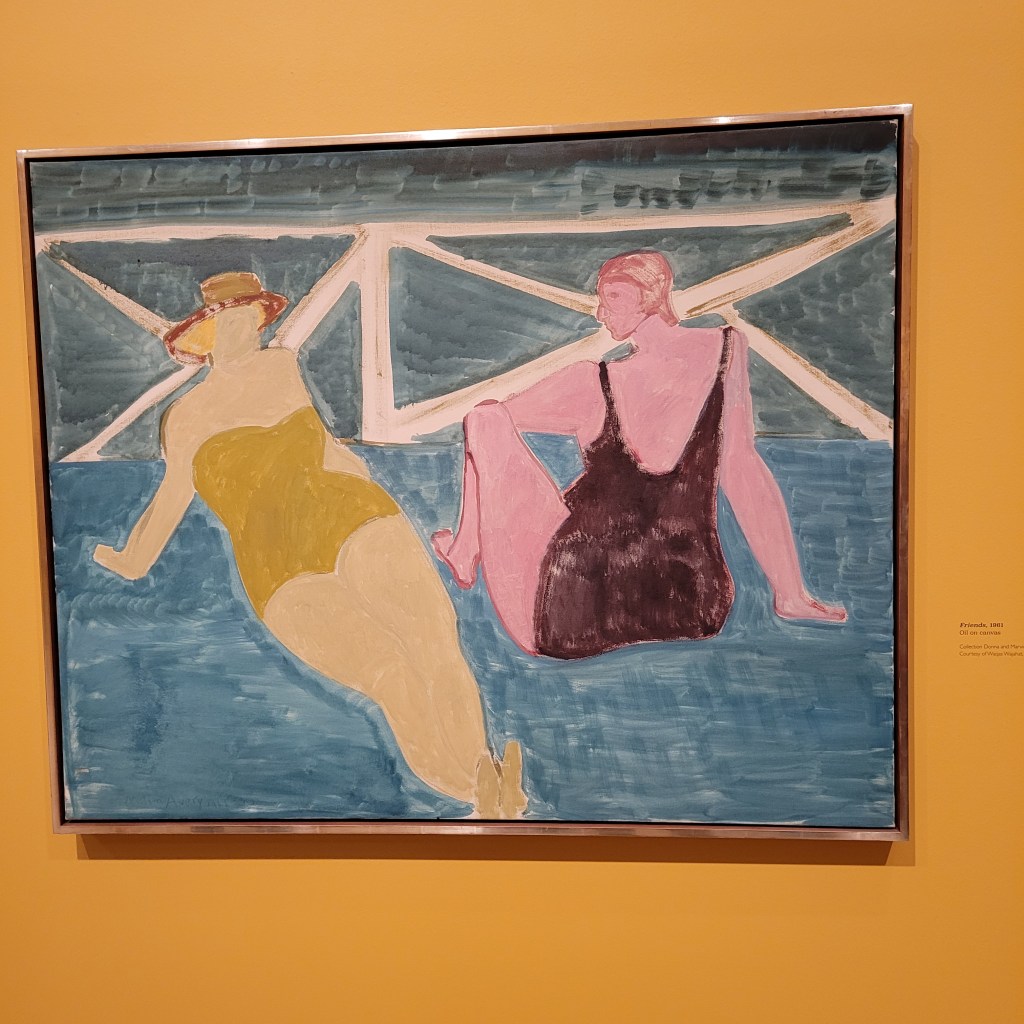
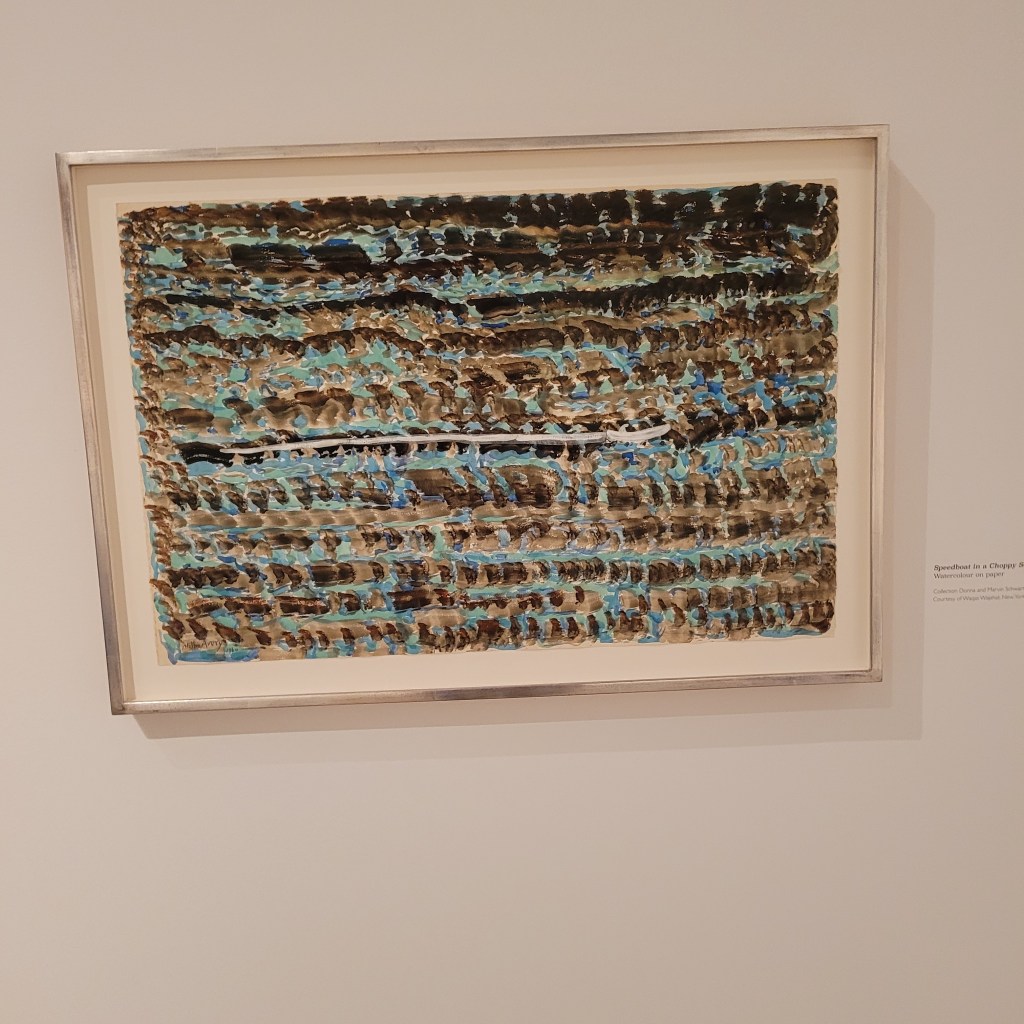
Well, obviously, I did. I guess an alternative definition for IBS must be “I be stupid,” because I completely forgot about the incredible visit that I had to the venerable “RA” in London the morning before things took a turn for the unpleasant in my inner regions. But, happily, the memory of a wonderful and amazingly well curated exhibit of the works of “Milton Avery, American Colorist” returned. The exhibition covered his work from the 1930s to the 1960s. His early days were certainly influenced by the American Impressionists, but his later works showed his close relationship with Rothko and other of the Abstract Impressionists. As I hope you will see in the selection of works that I show, his growth is clearly phenomenal, as is the expansive increase in color and the way he experimented with form.
Early Landscape
Coney Island, shortly after family move to New York City.
In person, these two still life studies showed a beginning of enhanced use of color and more of a use of three-dimensional depth.
Portrait showing a use of color and form with little concern for facial features.
Friends The colors catch the eye and seem to leave room for stories to be formed by each who view the painting or for one to simply enjoy the color play.
These final three images above all reflect the time Avery spent with the Abstract Expressionists, living and working with them. For me, a certain joy comes from viewing these paintings where the artist seems freed from any constraint of convention.
Over the years of my travels, I have seen some incredible art in large and small museums and galleries. Those that often surprised me most were artists I never knew before I took a chance on visiting their exhibition. Patrick Heron, the great English colorist comes to mind. I cannot imagine my life without the moments of joy that seeing his work have given to me. I now Milton Avery to this list. Great art, great music, great drama, great athletic performances, great literature. Seek them out. Make them part of your life.
I had planned another adventure for this week, and I had a Whisky event to attend, but as the old saying goes, “man plans, God laughs. So, while my friends in Florida prepared for the devastation of Hurricane Ian, I had no way of knowing that I would have a visit from a nasty old friend too. My doctor calls it IBS, and let’s just say when it decides to challenge a hurricane for my attention, it wins. So, I have been out of commission for most of this week but am starting to feel a bit like myself again, thank goodness. From what I have been able to garner from the news out of Southwest Florida, my little piece of paradise does not seem to have been hit as hard as those right along the coastline. It appears that my house was far enough east and north to avoid the storm surge, which did make its way up Naples’ Fifth Avenue shopping district and apparently took out half of the just renovated fishing pier on the Gulf.
Above are two examples of the damage wrought by the hurricane to this usually idyllic city on Florida’s Gulf Coast. For many years, Naples was a small city that catered mostly to retirees from the Midwest of the US, New England, and Canada. As a Virginian/New Yorker of Pennsylvanian descent, I was a rarity. But since my grandparents were Napolitano from the original Naples and my parents before me had found retirement happiness here, I thought it a good place to relocate. In normal times its warm and friendly. In recent years, we have been found out and the real estate boom has hit us. Over development has followed. I suspect that many more will have been affected, not only by the strength of this storm, but by the density of the population. I pray for the doctors, nurses, and first responders in Naples and Collier County-police, fire fighters, EMS, and all those long-suffering technicians who will be working countless hours getting cables, satellite connections, mobile phone towers, etc. operational again.
I hope to be out and about again next week with something more enjoyable and positive to write about.
Another Sunday morning concert at Wigmore Hall. As I arrived, it occurred to me, as it has before, how
unprepossessing it is from outside. It’s almost easy to miss among the porticos and fancy fronts of the buildings nearby. The world inside, especially for these morning concerts, though, reminds me of how special it is.
This Sunday’s performers were the Zemlinsky Quartet. They are a Czech quartet who met as students in
Prague. Their website explains their name with these words, “Zemlinsky Quartet is named after the Austrian composer, conductor and teacher Alexander Zemlinsky (1871-1942), whose enormous contribution to Czech, German and Jewish culture during his 16-year residence in Prague had been underrated until recently. His four string quartets (the second one being dedicated to his student and brother-in-law Arnold Schönberg) belong to the basic repertoire of the ensemble. Since 2005, the quartet has maintained a special relationship with the Alexander Zemlinsky Foundation in Vienna.”
The program on Sunday was Mozart’s String Quartet No. 18 in C andDvořák’s String Quartet in E flat. Each work was performed to perfection. The Mozart was more familiar to me and so it was easier to get lost in the music and enjoy the flow of stringed instruments. The Dvořák work was great. It was new to me, but I enjoyed it from beginning to end.
It was a chilly day and surprisingly cooler after the concert than before. I did catch up with two of my local friends in the afternoon at Caffe Tropea. One of my luckiest accomplishments this trip has been connecting with this group of folks of regulars. These two ladies are delightfully forthright and love to tease me about American views. I love to tease them about the outlandish things that the British press say about the Duke and Duchess of Sussex (aka Harry and Megan). The more we talked and laughed, the more I learned about our similarities and differences. Their country is a constitutional monarchy with its unwritten constitution and its social democracy that has been controlled by the Conservative Party (the Tories) for much of the last 50 years. We live in a democratic republic with a written constitution and a capitalist economy with aspects of social welfare programs at a much lower level of coverage than theirs. Our national government has been split between the two major political parties for much of the last 50 years and the 50 State governments are split, as well. I don’t think it is easy for either Americans or British to fully appreciate how different our two societies are in terms of how basic rights of citizenship are defined, exercised and accepted. The postwar generations also encountered vastly different lives. We in America were not rebuilding a bomb-ravaged infrastructure or playing in bomb craters or bombed out buildings for years after the war. We were living a different life. As I found in my years with Sister Cities in Alexandria, Virginia and Caen, France, there is no better way to understand people’s lives than to spend time with them in their own space. It is always time well-spent.
Monday was another chance for me to learn more about the United Kingdom from other friends and then to see a preview performance of a wonderful new musical play. But the day started with a quick Tube trip to the Victoria and Albert Museum in South Kensington. I’ve mentioned it before as my favorite museum and sometimes a just need a little “V&A” fix. It never fails. Upon entering the Exhibition Road Entrance, I was looking over the schematic layout on the wall. One of the outstanding volunteers asked if I needed help and we ended up having a delightful ten-minute chat covering the recent funeral of Her Late Majesty to favorite pieces in the museum and, of course, the perennial topic, the London weather. I then spent some time enjoying some galleries before going to my “happy place,” the Cast Courts that, as Wikipedia describes them, contain “reproductions of some of the most famous sculptures in the world. Most of the copies were made in the 19th century and in many cases, they have better resisted the ravages of time, 20th-century pollution and over-zealous conservation than the originals.” Afterwords, I returned home and caught up with two other friends for coffee at Caffe Tropea. These two, are politically aware and astute and gave me a great tutorial on The Labour Party from the second half of the 20th to now, and the beginning of their annual conference. We have had many great discussions on the subject of our two political systems over these two months. What a great addition, they too have made to my life.
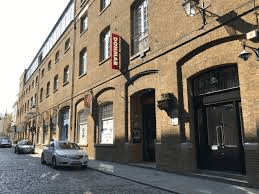
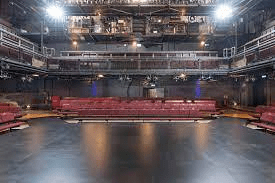
The evening took me to a great theatre in Covent Garden, the Donmar Warehouse. Where the audience sits around three sides of the stage and there is no proscenium arch or curtain. I joke that this is the theatre where I made my West End debut. I was asked to hold up one end of a banner unfurled by an
You would never know it was a world class theatre.
View from the back of the stage.
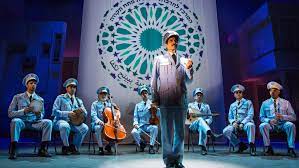
an actor during a production of a Shakespeare play here. The preview I was here to see was “The Band’s Visit.” It is a simple sounding story of an Egyptian police department’s concert band, invited to play at the opening of an Arab cultural center in an Israeli city. A miscommunication causes them to travel to a tiny desert town with a name one letter different from the big city. The cast was wonderful, the music was incredible.
Alon Moni Aboutboul and Miri Mesika lead a cast that turn the stage into that tiny desert village. Ms. Mesika, an Israeli singer and actor has a voice that evokes the mood of the songs in a way that is heartbreaking and bittersweet. Mr. Aboutboul is the leader of this group of musicians, but also a police officer first, conflicted in his roles, and shows it perfectly as his performance continues. The musicians who are on stage much of time must, and do, have some acting talent and some of the actors must play instruments. The success of all is a credit to them. This was a truly delightful evening at the theater. The Donmar also always manages to have a very friendly and personable staff which adds to the ambience of the evening. I understand this show started as a movie. Definitely worth seeing.
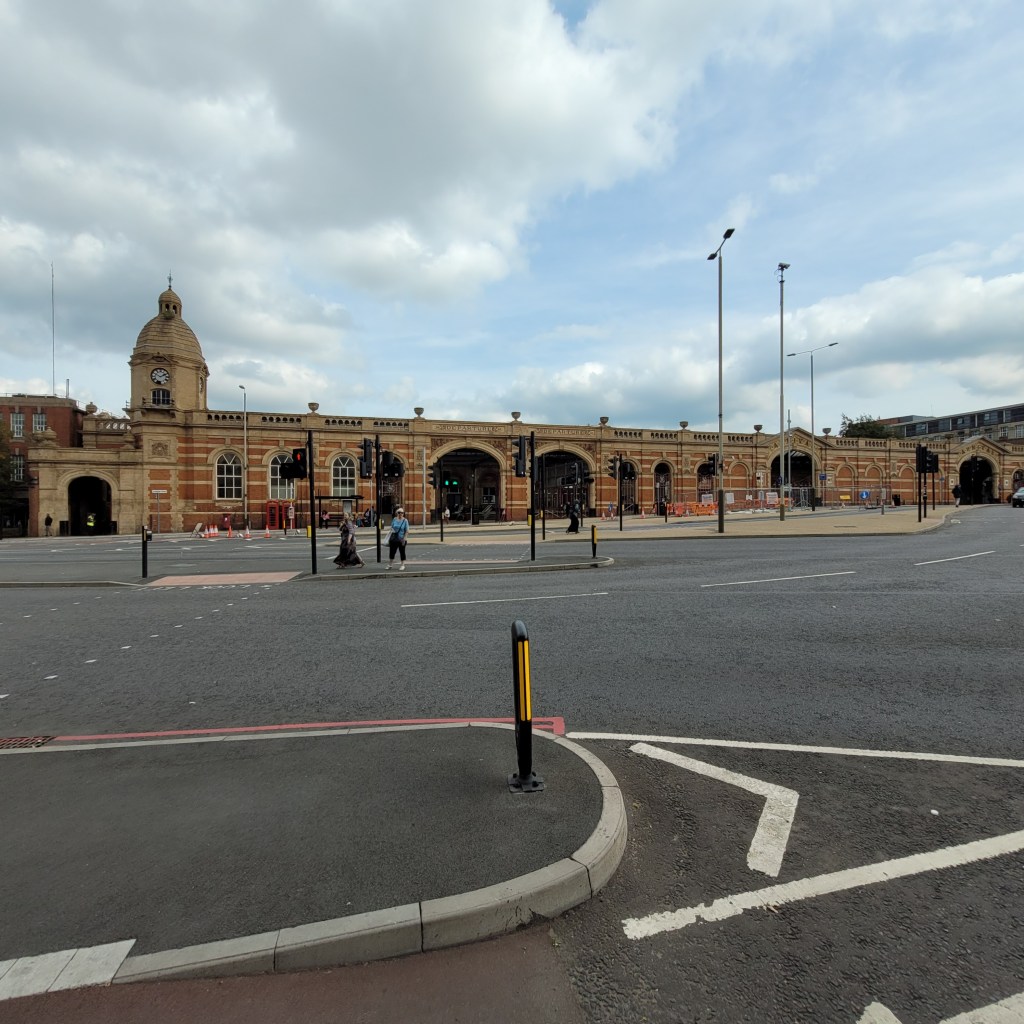
Leicester Cathedral has been on my list of English Cathedrals to visit since the remains of King Richard III, the last English King killed in battle, were found in a car park in Leicester on the site where Greyfriars Church had once stood. Richard was buried in the church after he was killed in the Battle of Bosworth in 1485. In 2012, the remains were discovered and reburied in Leicester Cathedral in 2015. To my surprise, upon arriving at Leicester Train Station, I discovered that the Cathedral was closed for renovations until 2023!
Leicester Train Station-An Impressive Looking Building
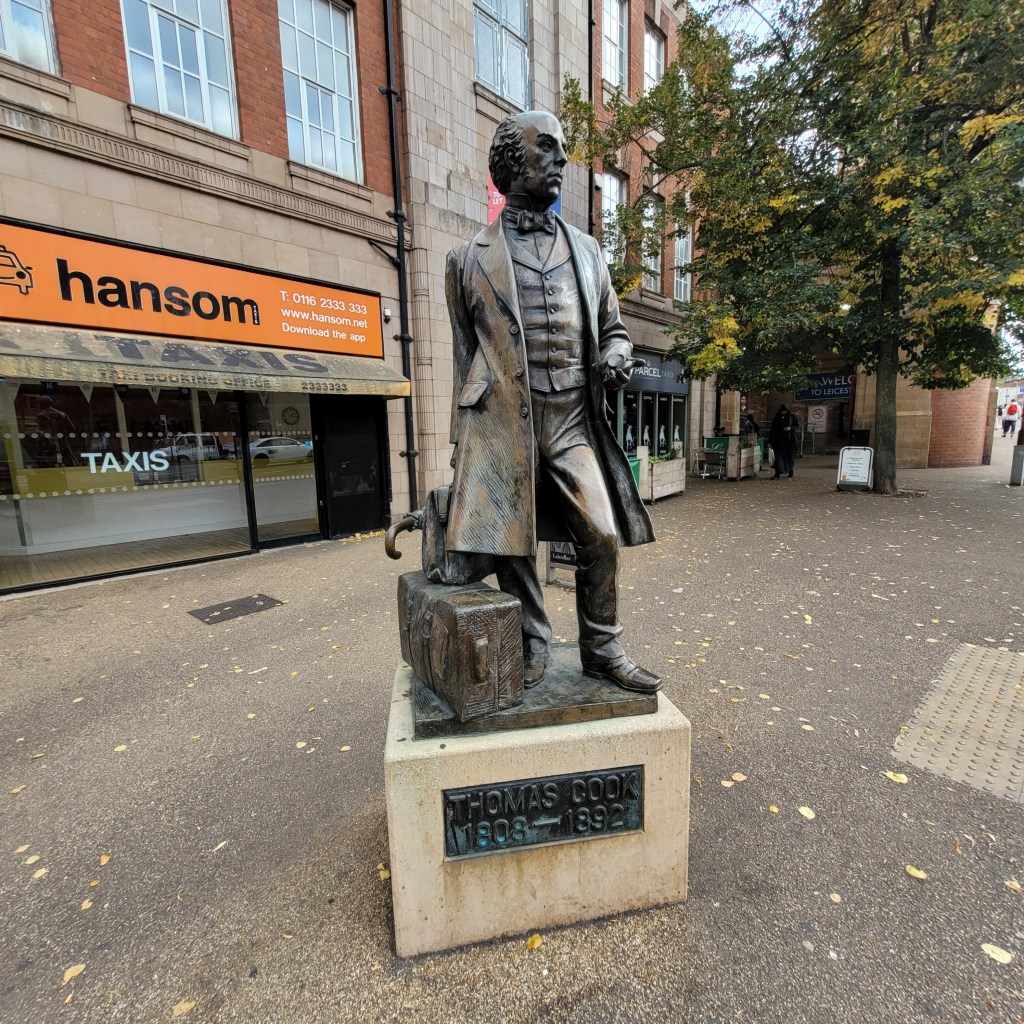
Now, what was I going to do in Leicester on a pleasant late September afternoon? I figured Jannick Vestergaard from Leicester City FC might not take my call, so I’d have to improvise. Luckily for any tourist finding themselves in Leicester it is a city that is easy to navigate, filled with lovely buildings and lovely folks speaking with a distinctive English Midlands accent. A quick google check showed that the Leicester Museum and Art Gallery was just a short walk away. On my way there, I did pass a couple of interesting statues and a nice Methodist Church. The first was a statue of Thomas Cook who founded a famous English travel company. It is just a few steps away from the train station.
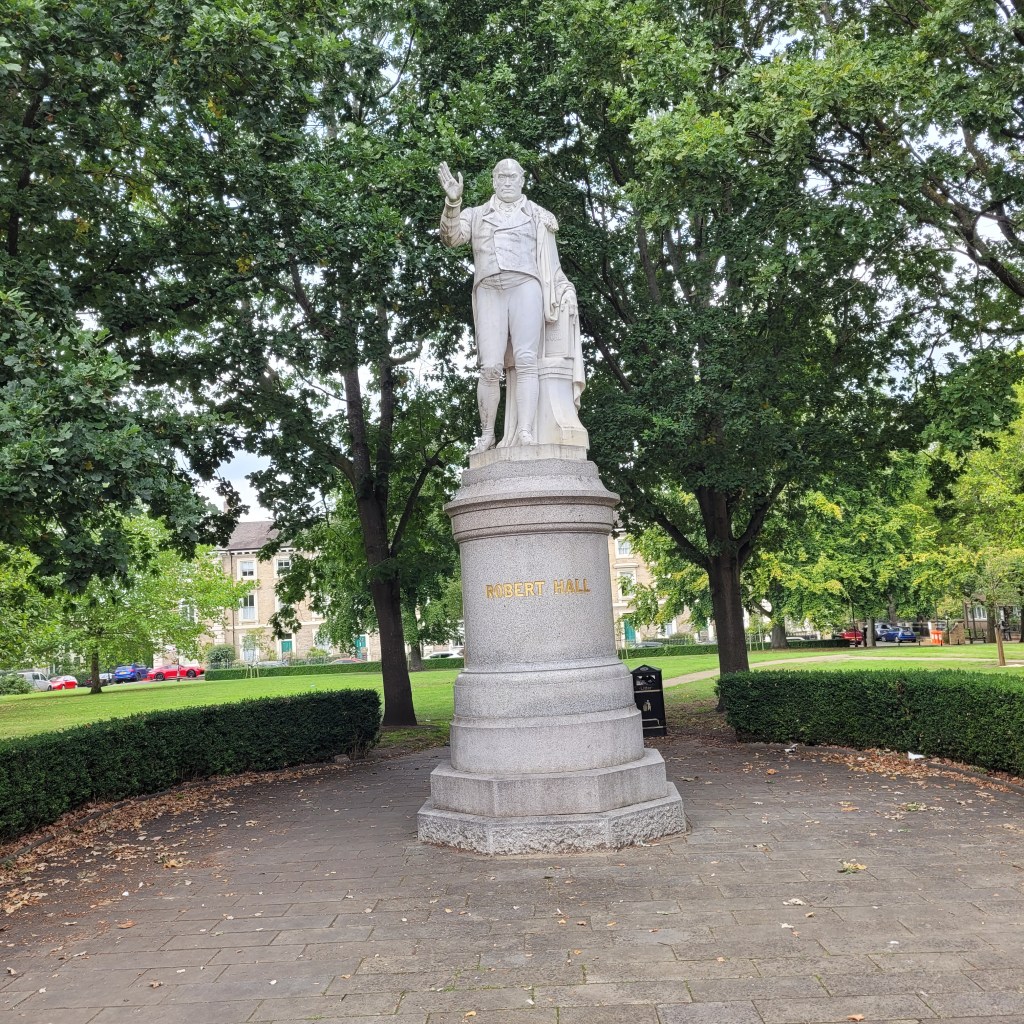
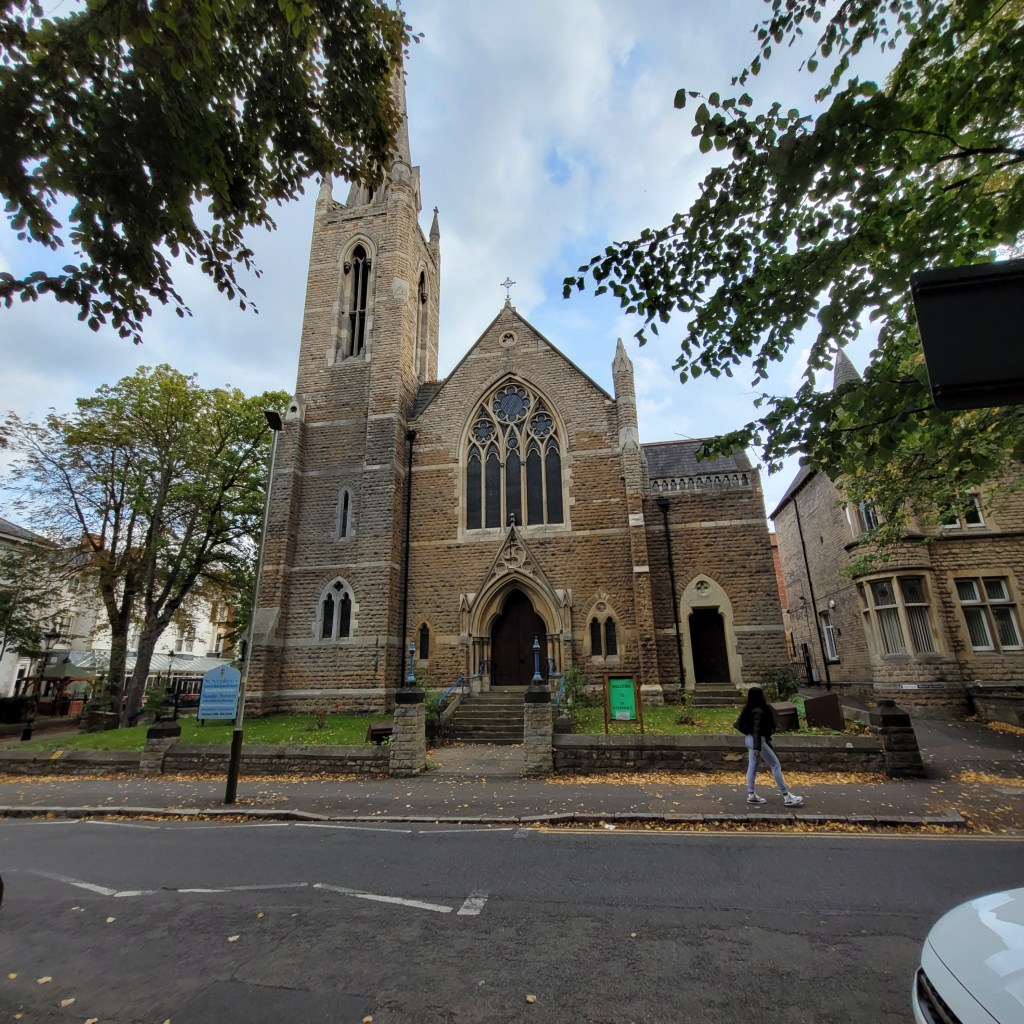
Thomas Cook, Patron Saint of TravellersRobert Hall, Patron Saint of American Back to School ClothesMethodist Church on a beautiful Leicester City Square
After walking around De Montfort Square, the location of the statue of Robert Hall who was an 18th Century Baptist Minister, and the Methodist Church pictured above, I continued down the New Walk to the Leicester Museum and Art Gallery. This Robert Hall had nothing to do with the fondly remembered American eponymous discount clothing retailer of days gone by.
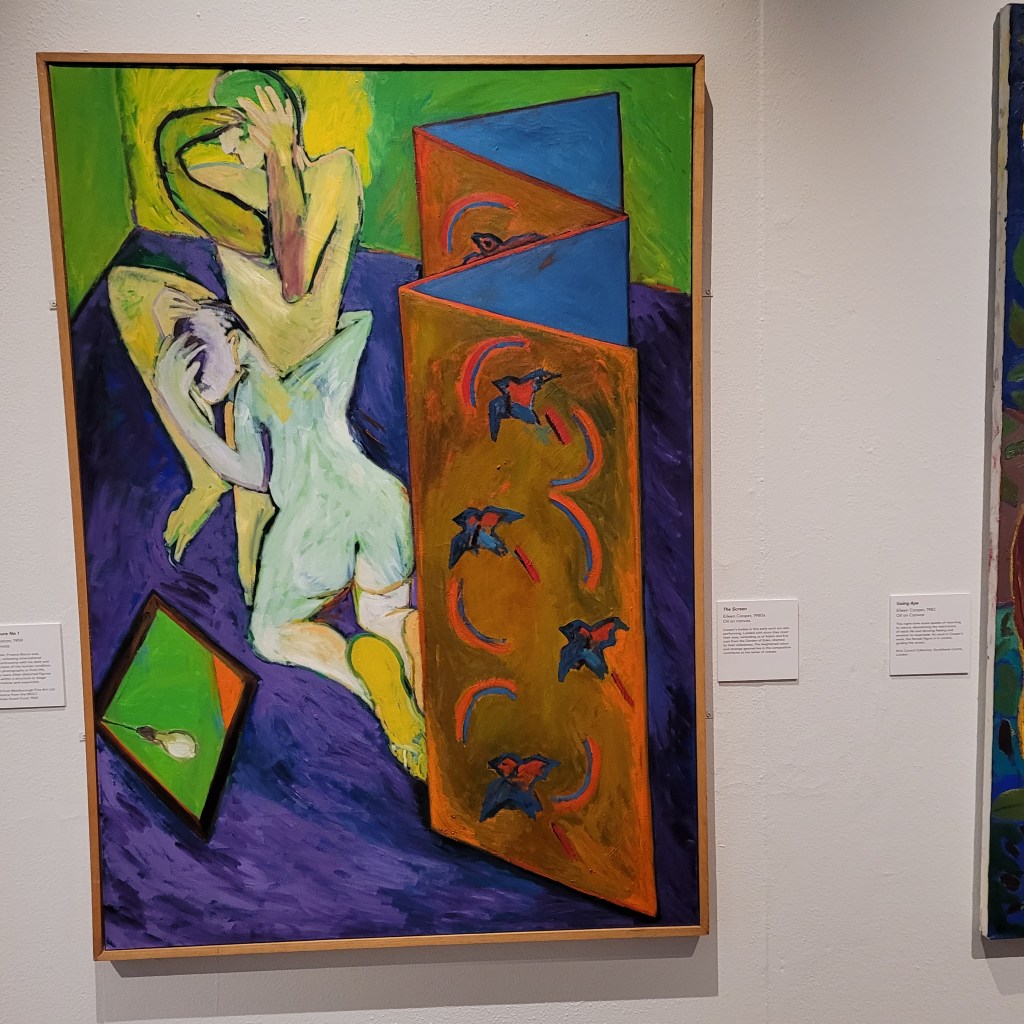
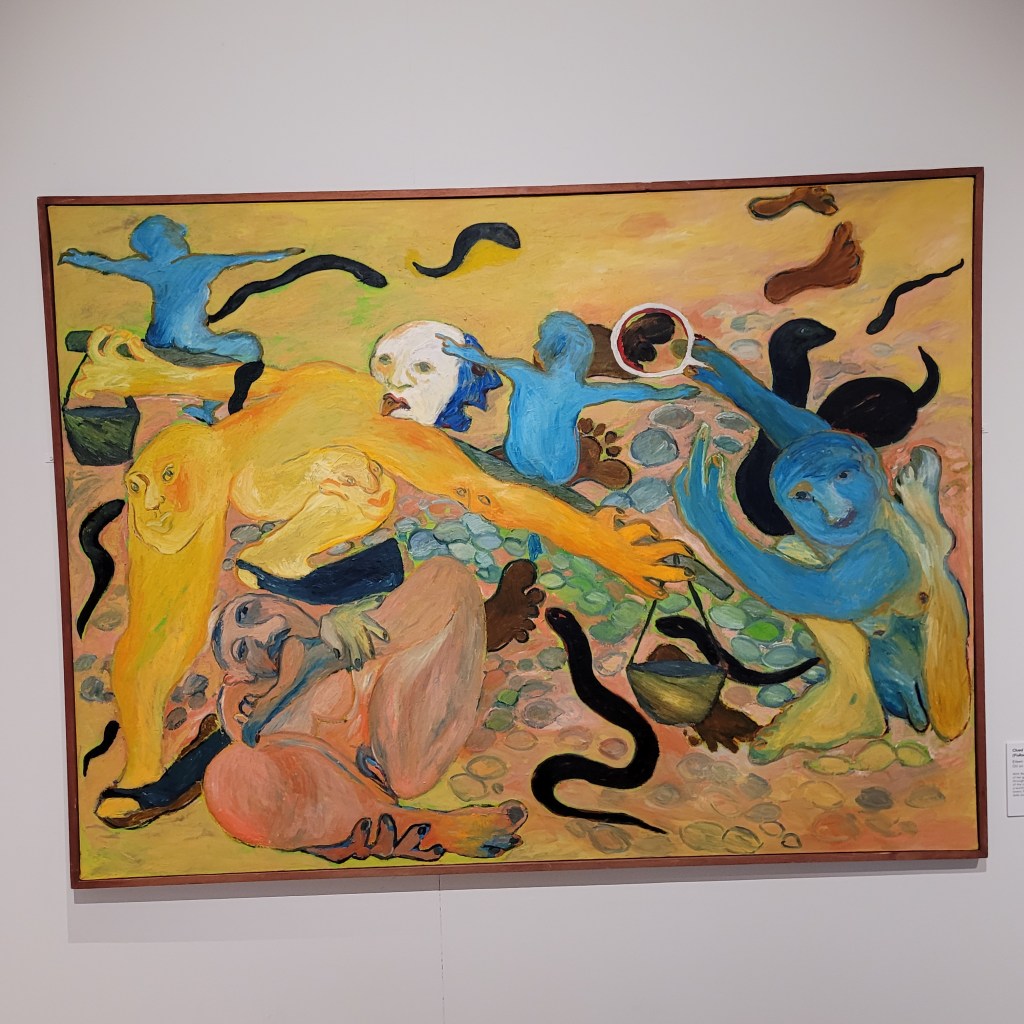
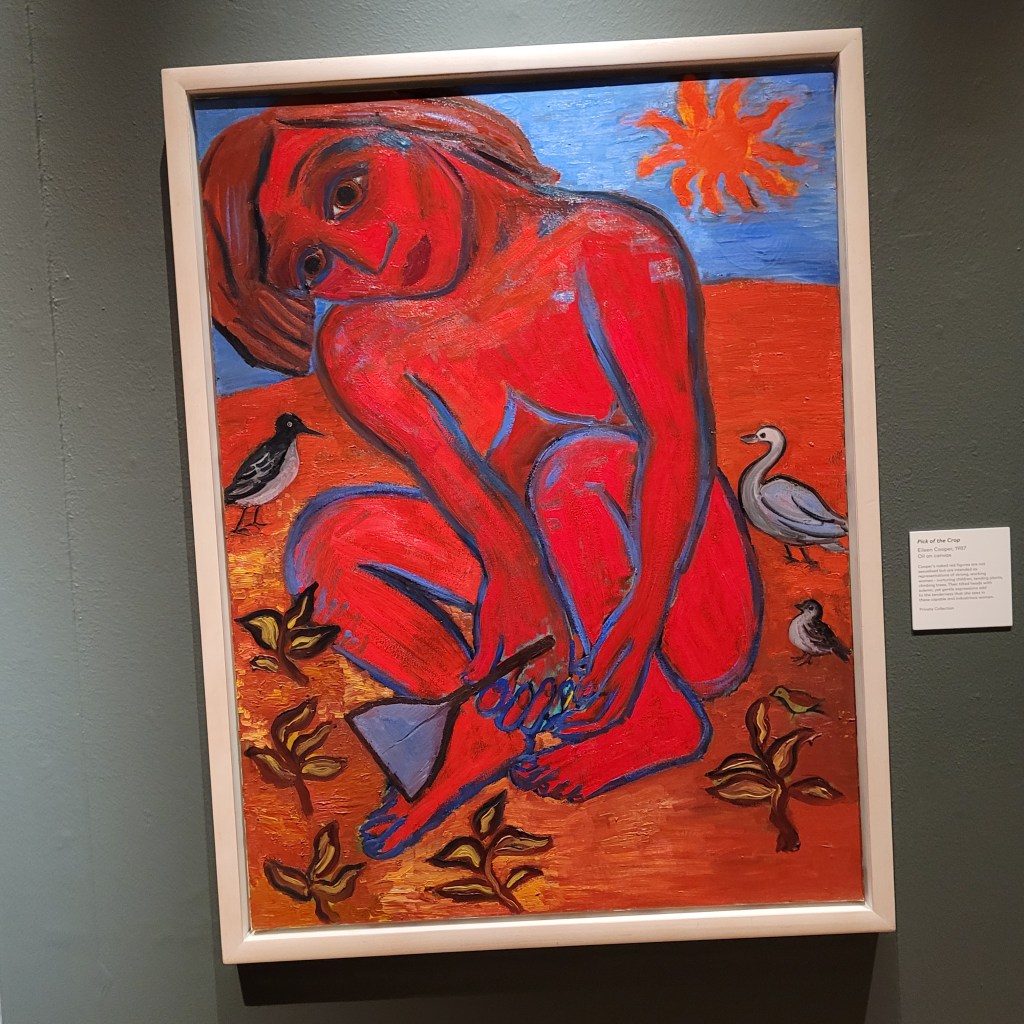
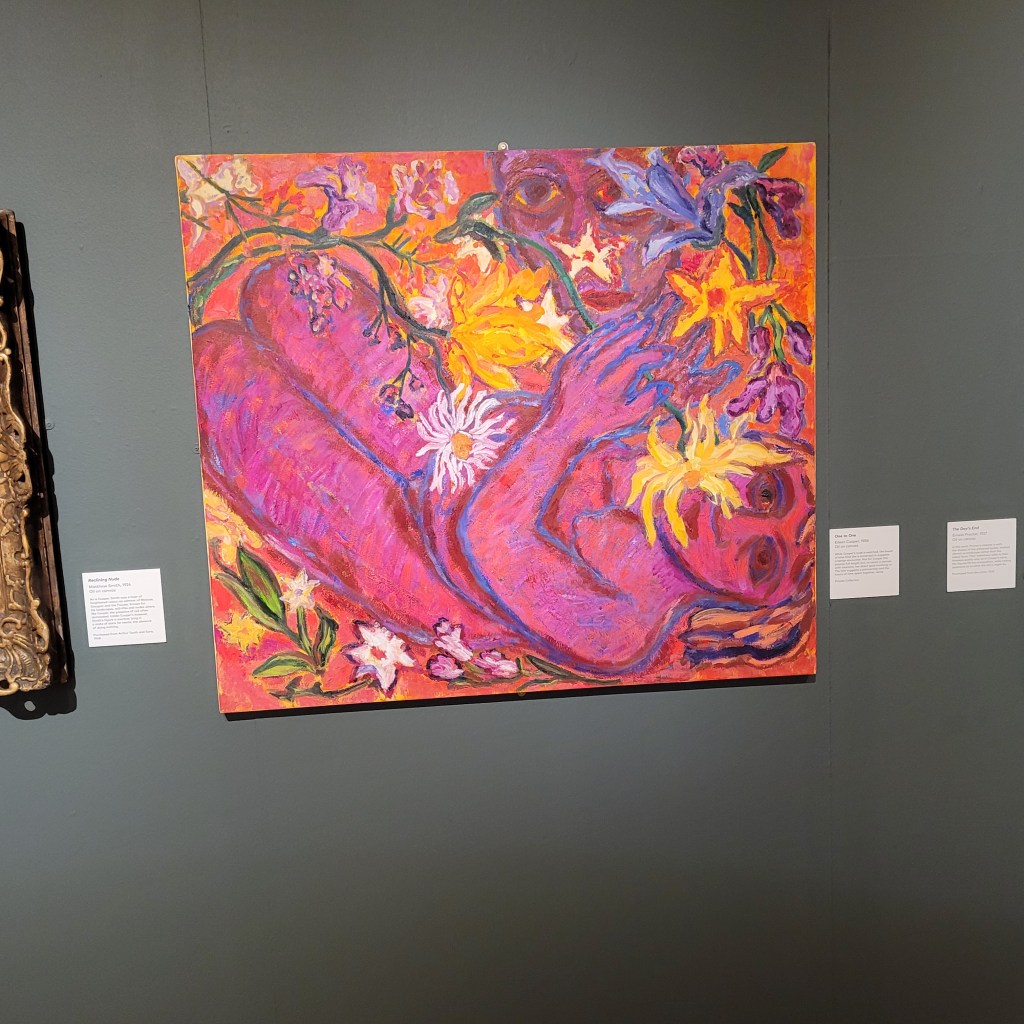
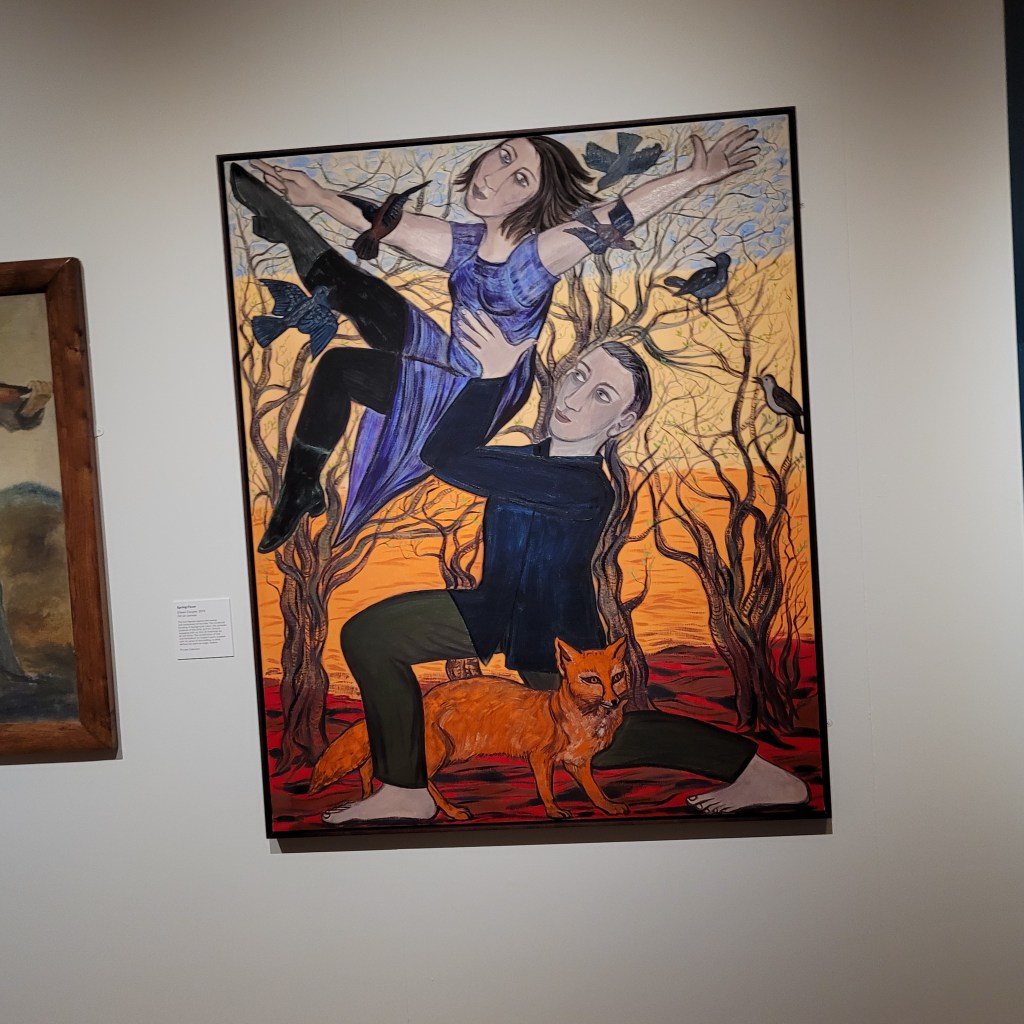
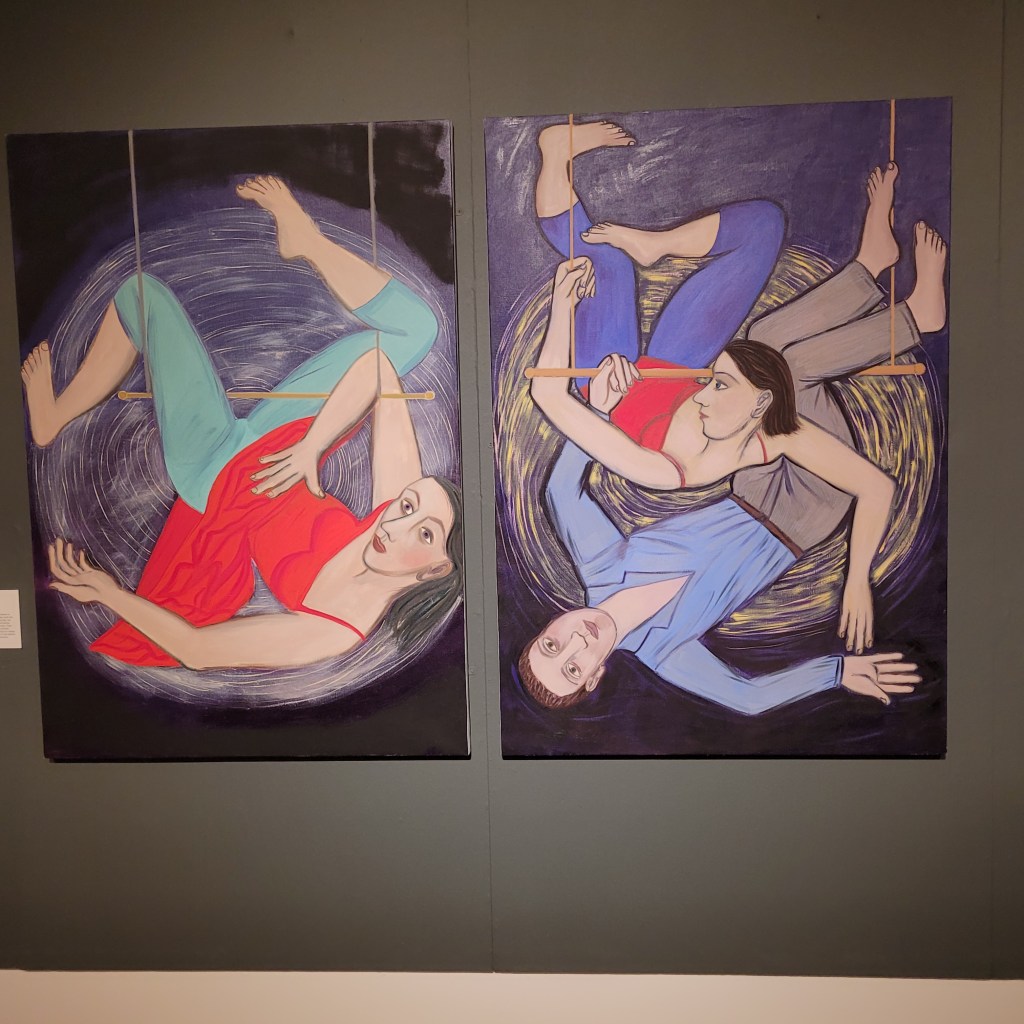
I can’t say enough positive things about the Leicester Museum and Art Gallery. From the charming young woman who greeted me when I entered through every docent and other staffer, there was a smile and a kind word. The museum has an interesting permanent collection of Victorian period art that, in my eyes was of as good a quality as the similar collection at London’s Guild Hall Art Gallery. The museum has an interesting collection of German Expressionism. The paintings were dark, using muted colors and to me seemed to presage the horrifying events to come in World War II. Happily, featured exhibition artist Eillen Cooper, (English, born 1953) seems to have a more energetic and brighter view of life and expression. I hope you enjoy these works as much as I did”
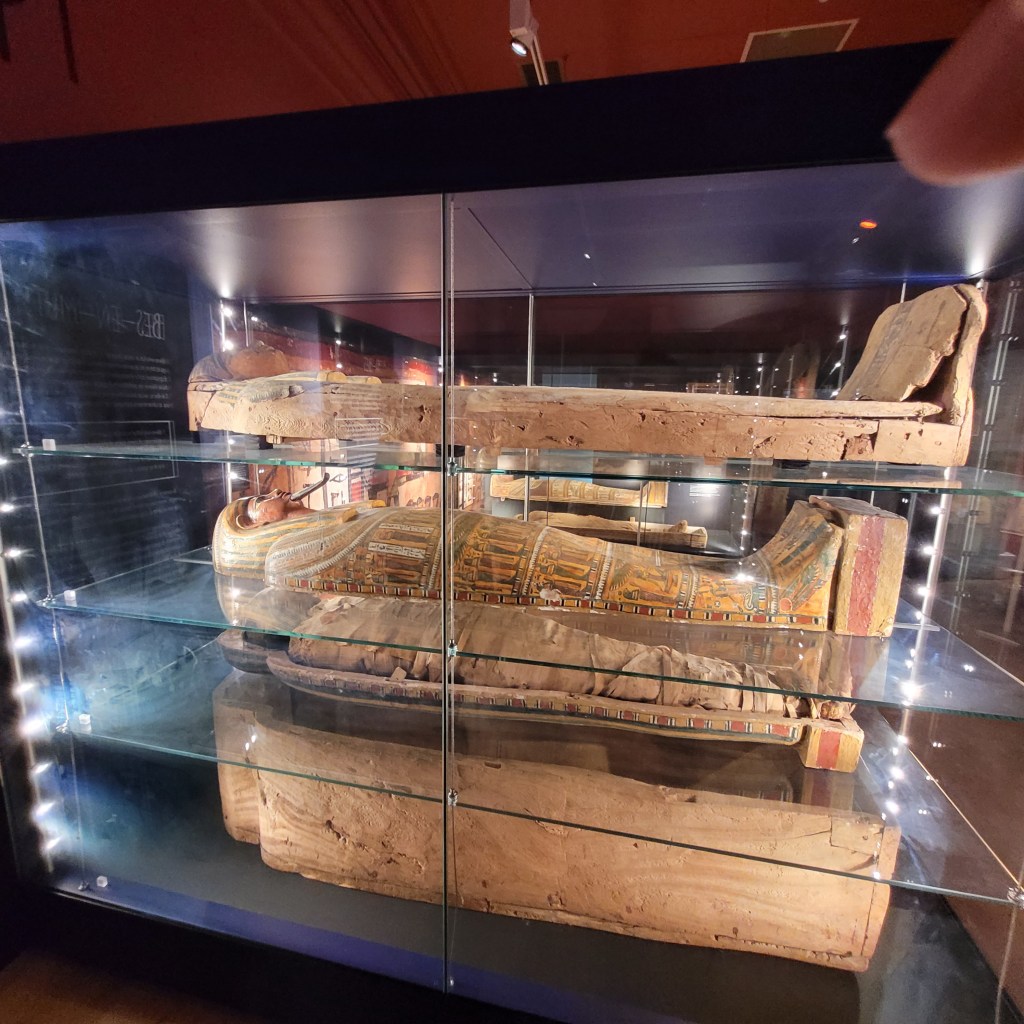
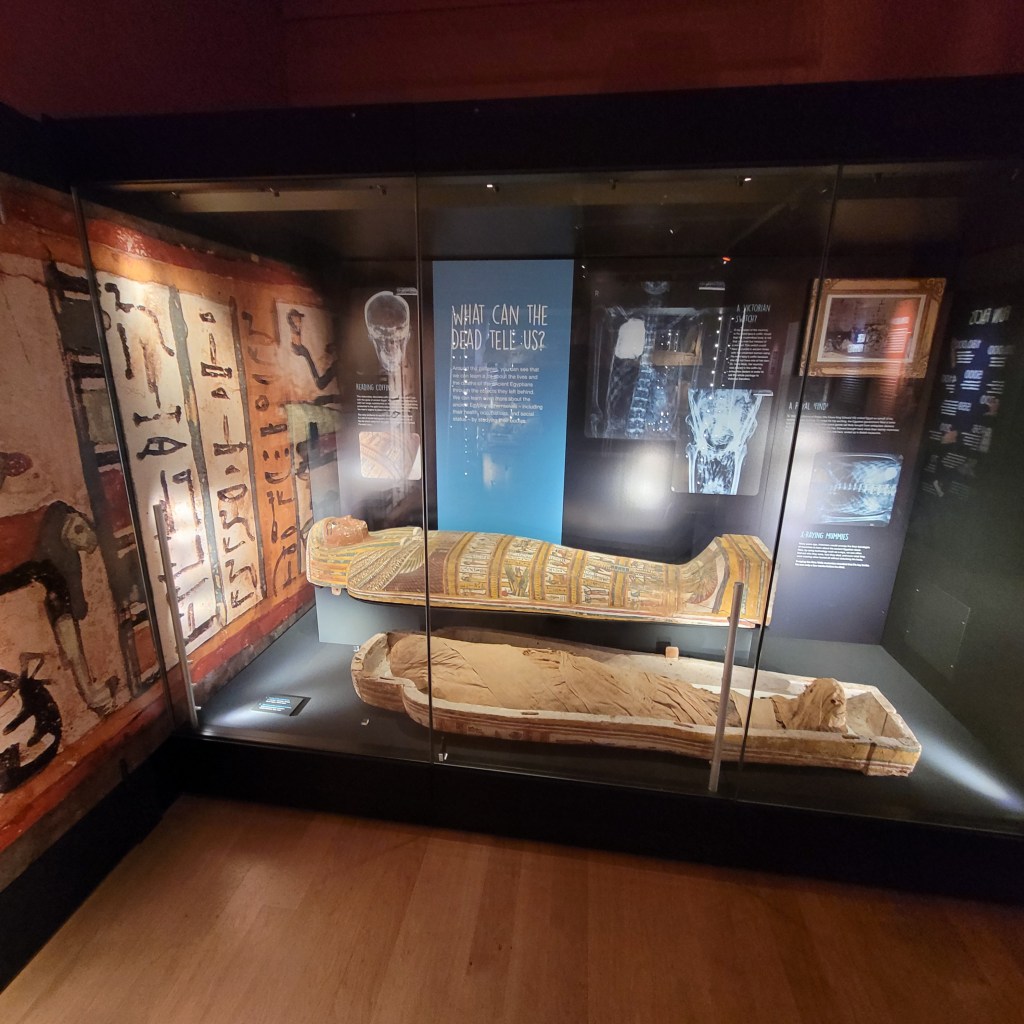
After a blissfully quiet and reflective time enjoying the Cooper exhibit, I went through the glass doors and down the hall into a world of energy and noise that can only be made by elementary school children. They were in a crafts room and transitioning into the Egyptian Mummy exhibit. The kids were amazing, though and when I crossed with them later, as they were leaving, they all thanked the staff member who had supervised the room I was in while they were visiting.
Above two examples of mummified remains on display.
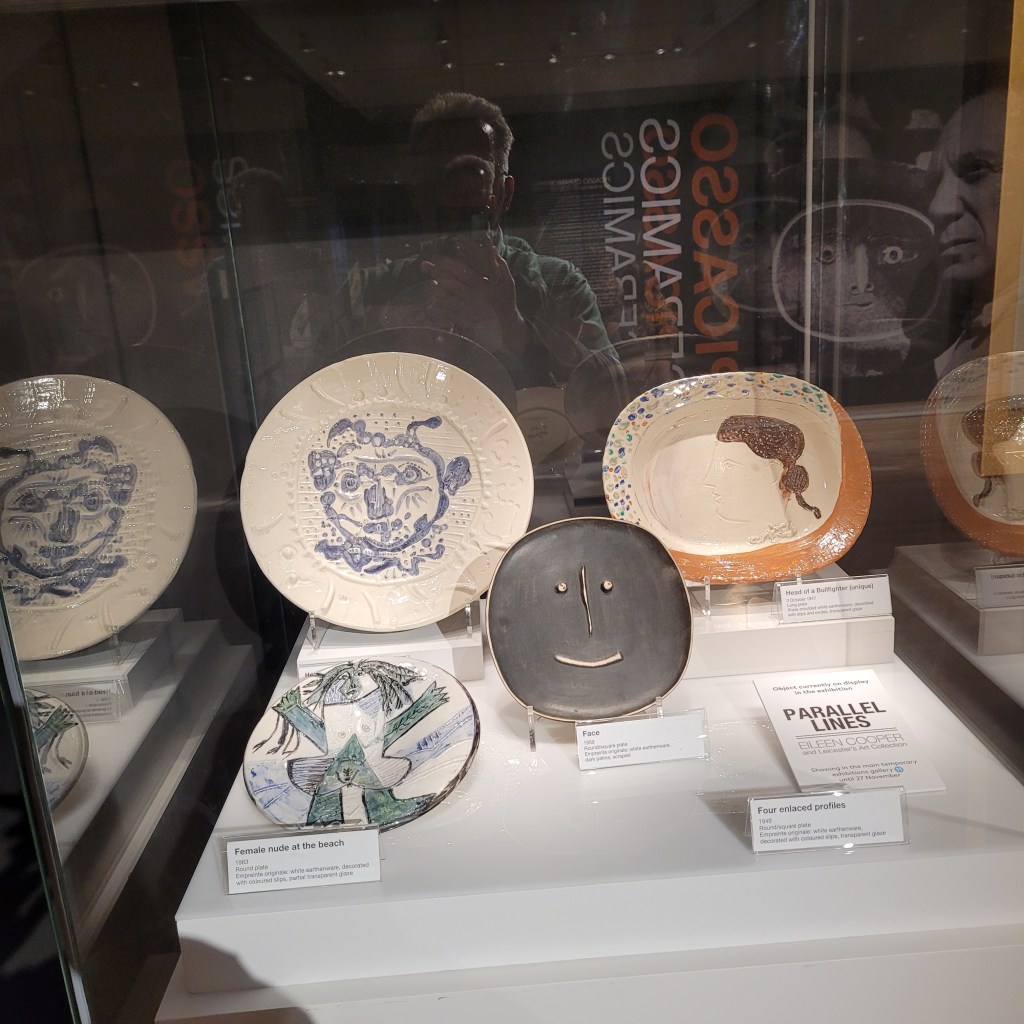
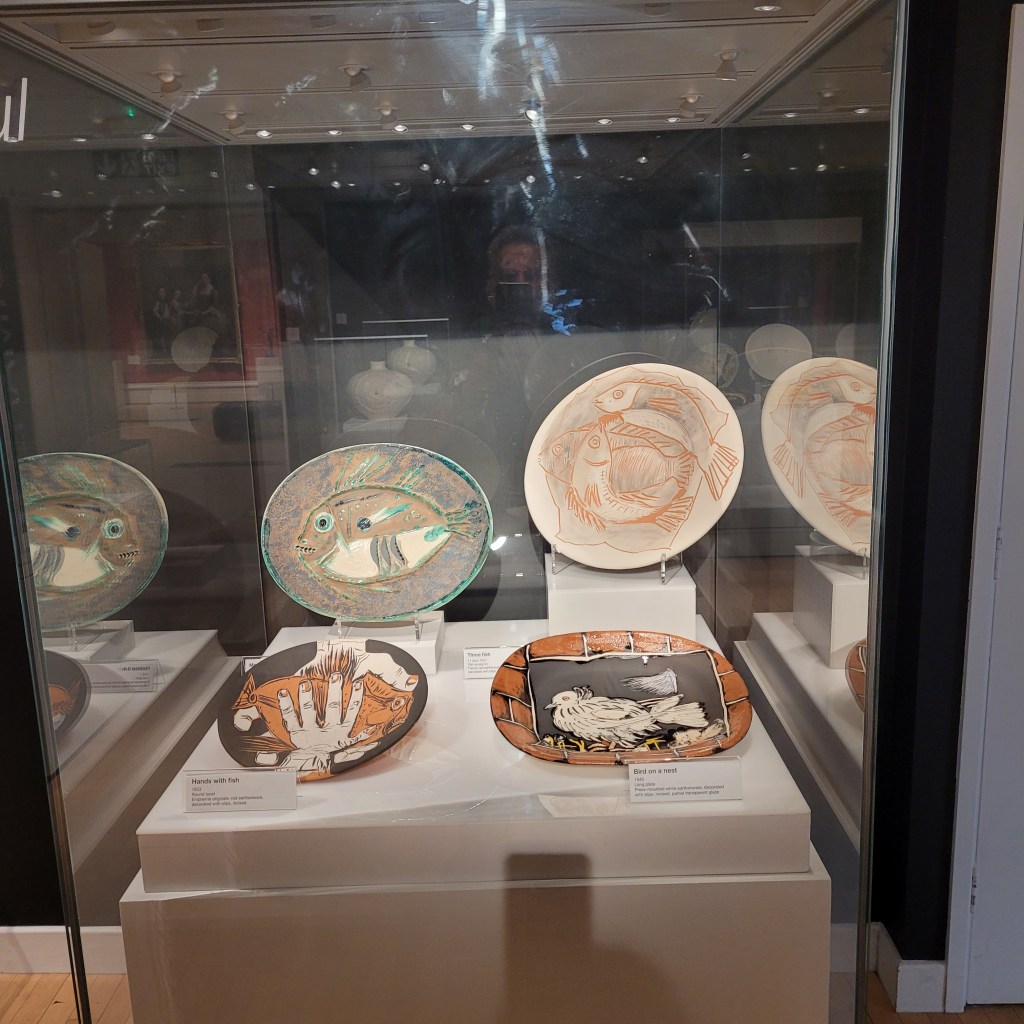
Another surprise was a display of Picasso ceramics that were donated by Lord and Lady Attenborough (Richard Attenborough, the renowned British actor and his wife, actress Sylvia Sim) in memory of their daughter and granddaughter who were killed in the Tsunami in Malaysia.
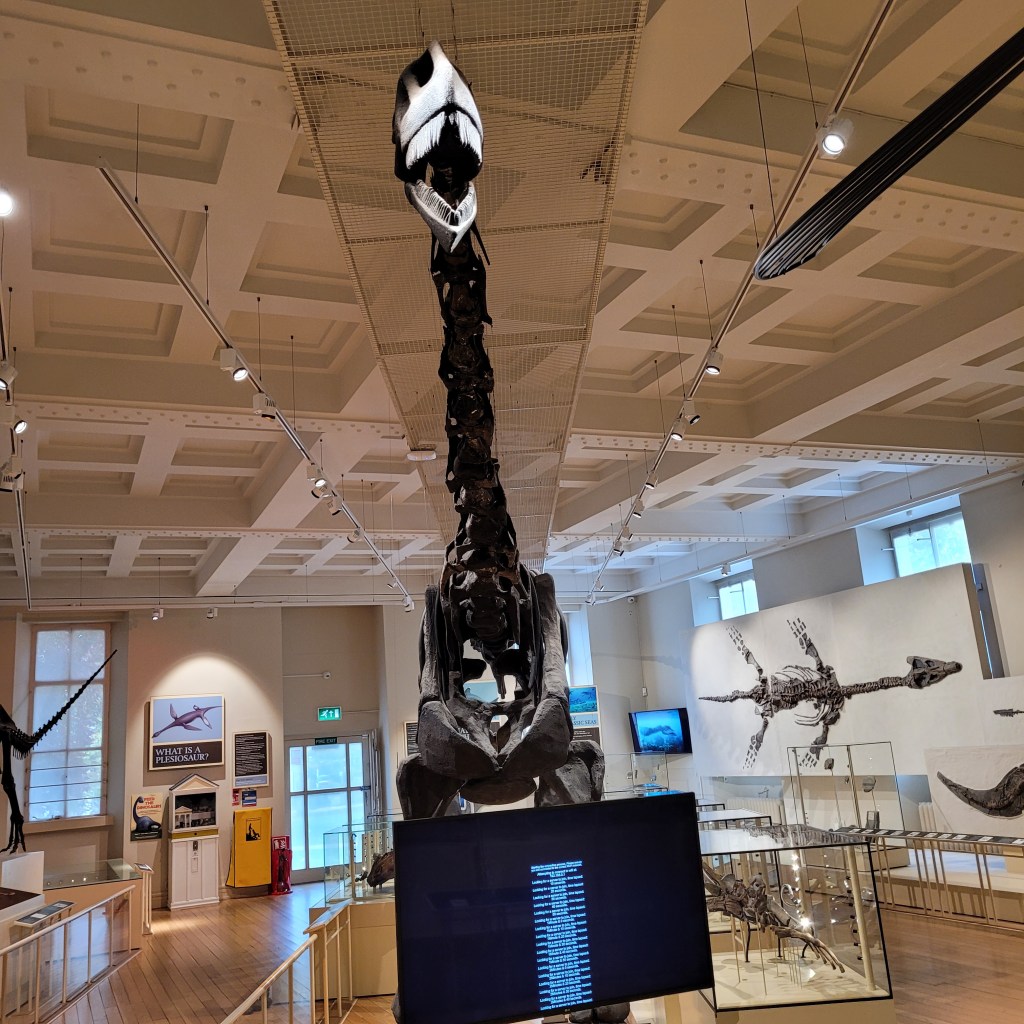
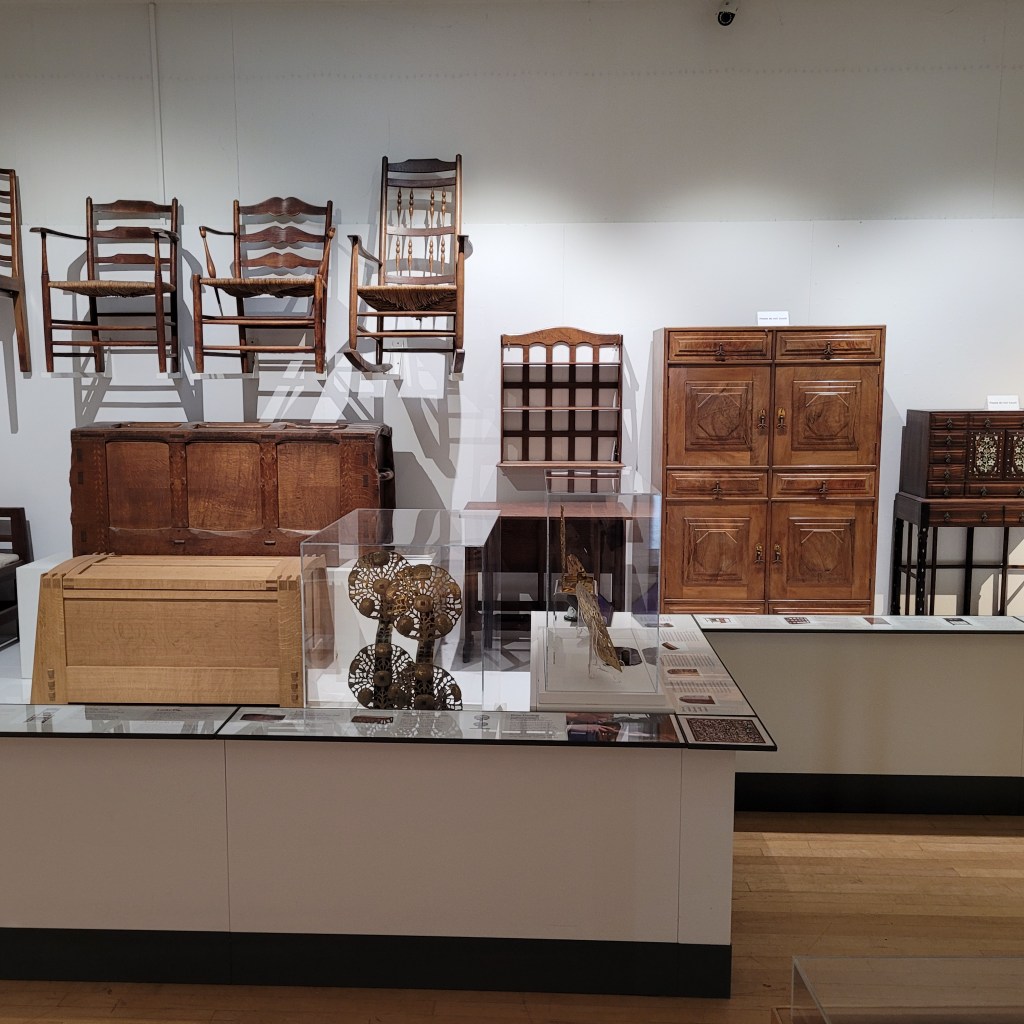
Two other excellent exhibits are the Dinasaur exhibit that included the Rutland Dinasaur, pictured below and an interesting display of Arts and Crafts period furniture.
I will certainly return to Leicester to see the Cathedral, perhaps for the football match, or just to enjoy this lovely small city. The last Leicesterian I spoke to was the gentleman working the Costa Coffee stand on the platform of the train station while I was waiting for the train back to Saint Pancras Station, London. He was as friendly and kind as everyone I met that day.