Category: Uncategorized

Music, Music, Music! Last Night of the Proms First Morning at Wigmore Hall

The Proms

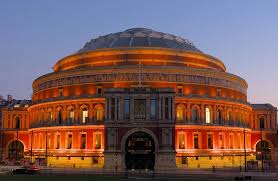
I don’t always manage to get a ticket to one of the Proms, the BBC annual summer celebration of (mostly) classical music at Royal Albert Hall, but I try never to miss the last night, even if it is only watching it on TV. What is so special about the last night of the Proms? First of all, the BBC Symphony Orchstra, Chorus, and Singers, conducted by by great conductors (this year, American, Marin Alsop) are joined by renowned soloists for an evening filled with old and new music. There is always a male or female voice who tends to bring down the house with their incredible vocal performances and another who does the same with their virtuoso instrumental performance. This year the singer was Norwegian Lise Davidsen whose voice filled the hall with such clarity and fullness that I was left stunned. She sang in several languages and was perfect in each one. Sheku Kaneh-Mason performed on the Cello. His work was brilliant. The two of them, alone, along with the rest of the classical program of Strauss and other pieces would have been a fine evening for any music lover.


But the last night of the Proms is about singing songs from each of the United Kingdom’s constituent nations, and singing silly old songs, singing patriotic songs, some of which need to be adapted to modern times and some of which need to be accepted for what they are-songs written long ago by an island nation that had fought with its neighbors and had survived, a nation that had been majority Christian nation, whose monarch to this day has the title “Protector of the Faith”. The song “Jerusalem,” after all, was written as much about social reform (remember those satanic mills), as it was a hymn. It is this last part of the prom with penny whistles and Union Jacks, as well as the flags of every other nation which has a citizen or a former citizen present are waved as songs like “Jack the Lad” and other British sea shanties are played by the orchestra, and Rule Britannia (led by Lise Davidsen), Land of Hope and Glory, and Jerusalem are all sung. Then a more solemn singing of the national anthem, (this year, of course, God Save the King, for the first time at the Proms since last year’s Last Night was cancelled out of respect for the passing of the late Queen Elizabeth II). Finally, all of those present cross their arms and join hands, singing Auld Lang Syne to conclude the celebration. I always feel the way I do at the end of a July 4th fireworks display or when I watch a military band play a Sousa march at home. Somehow, it just lifts the spirits and so it did for me that night.

Wigging Out at Wigmore Hall
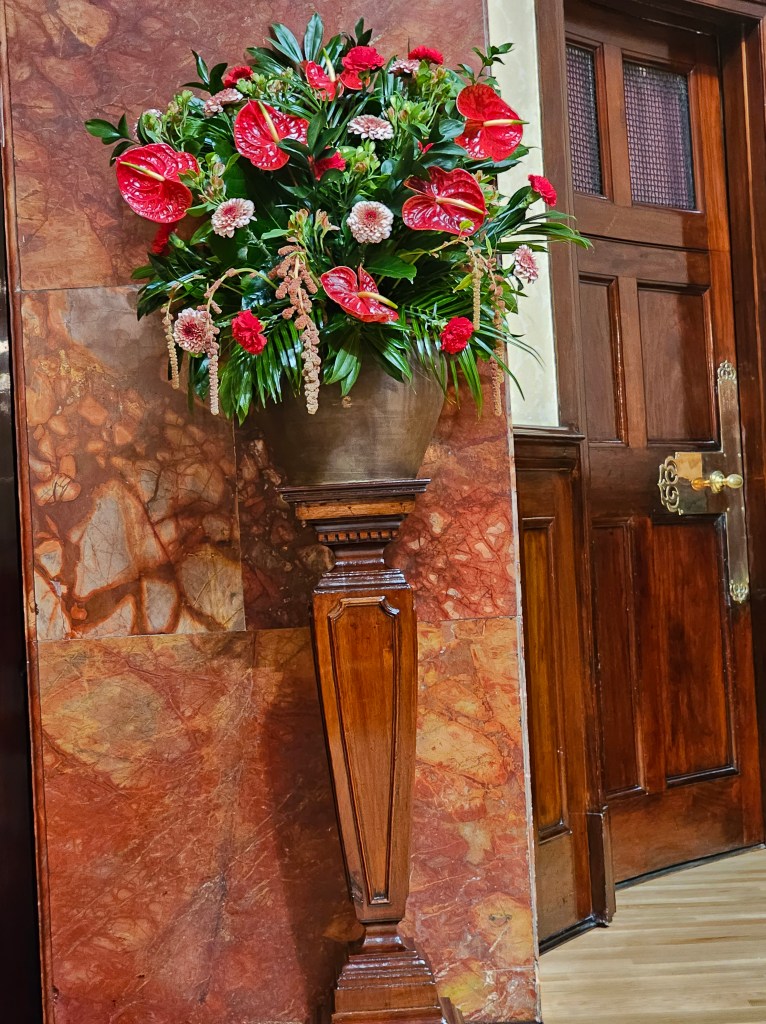
There was little traffic that morning, so I arrived with plenty of time to get a coffee downstairs in the little coffee bar. As this was the first of these Sunday morning concerts of the season, the staff was still getting their routines down. But some of my fellow concert goers were less than happy with the service. I had ordered at the same time as a gentleman who was obviously used to white glove service and was already disturbed that he would have to carry his own coffee to the other lounge.
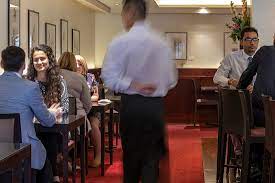
As I was about to sit down at one of the few remaining tables, he sat there first and turned to me and said, “you don’t mind if I squat here while I wait.” Never passing up an opportunity to hear a person grumble, I quickly sat at the other seat. In the minute or two we waited, my latte came before his flat white, and he continued to be amazed at the lack of coordination and preparedness. I didn’t have the heart to tell him, in case this was his first visit that this was status quo here. Over the years, I had come to believe that many of the staff had probably worked a night event several hours before and were probably the unlucky ones chosen to come back in for this shift. They were always understaffed and never had enough of anything that the mostly older crowd wanted. In any case, he soon got his coffee and moved on. I enjoyed mine, thanked the staff and was soon upstairs in my seat and waiting for the arrival of the Doric String Quartet whose name always reminds me of an ancient Steve Martin skit on Saturday Night Live “Theodoric of York, Medieval Barber.”


The Doric String Quartet, now featuring Alexi Kenney, violin; Ying Xue; violin; Helene Clement, viola; and John Myerscough, cello performed Franz Schubert’s String Quartet No. 15 in G D887, written in 1826. However, it was not published until after his death. It was also last string quartet he wrote. It is described as hauntingly transcendent, moving into strange, mysterious territory. Another describes its first movement as “an exploration, an opening of space. Still another says it focuses on “lyrical ideas.” It is a work that allows your mind to go to the places it needs to go to ask the questions that need to be answered. Perhaps as Schubert neared the end of his life, he too was doing this. It is a work that takes about 45 minutes to complete and the artists work hard throughout that time. There is so much in the work, so many different places that it takes you that by the end, you might feel, as I did, that you had been on a voyage and yet you also might feel that you now had another journey ahead, a journey of self discovery and self-enhancement.

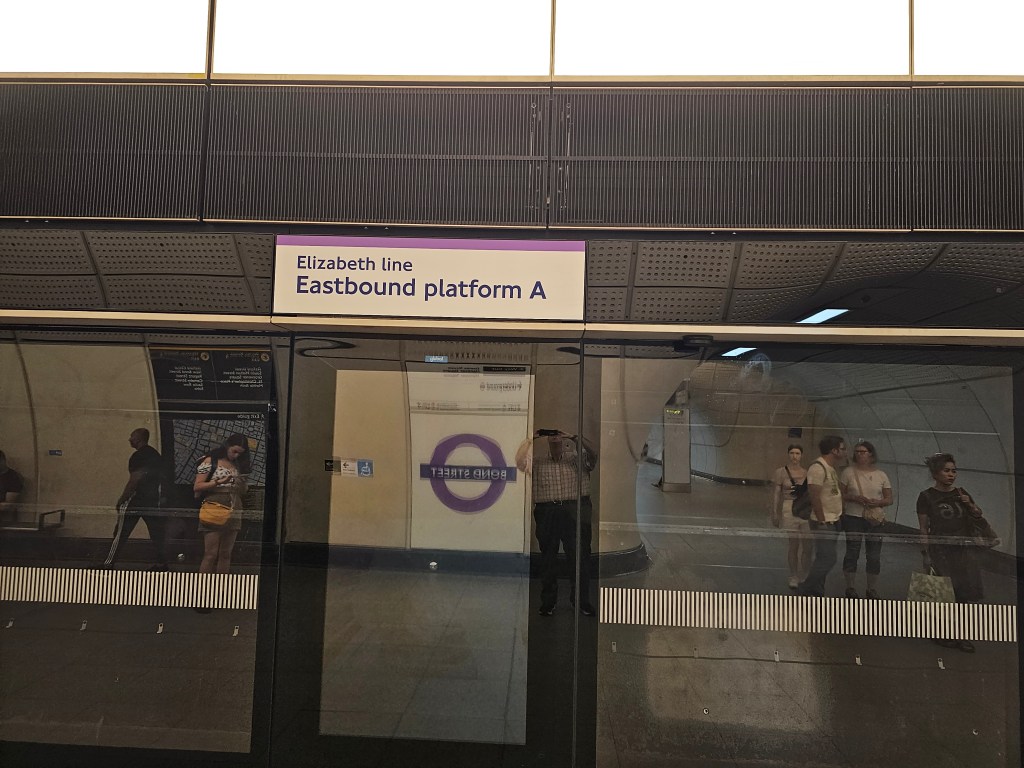
I love these morning concerts at Wigmore Hall, they are truly a great way to start a day. When I left the Hall, I decided that the weather had settled down some and I would try walking to a Tube station, at least. This ended up being a very positive move as the station I chose was on the new Elizabeth Line (named for the late Queen). My friends who have ridden it have all marveled at its cleanliness, the airconditioned cars, and how quiet it is. It could only take me two stops, before I had to transfer back to reality, but it was still a nice ride.
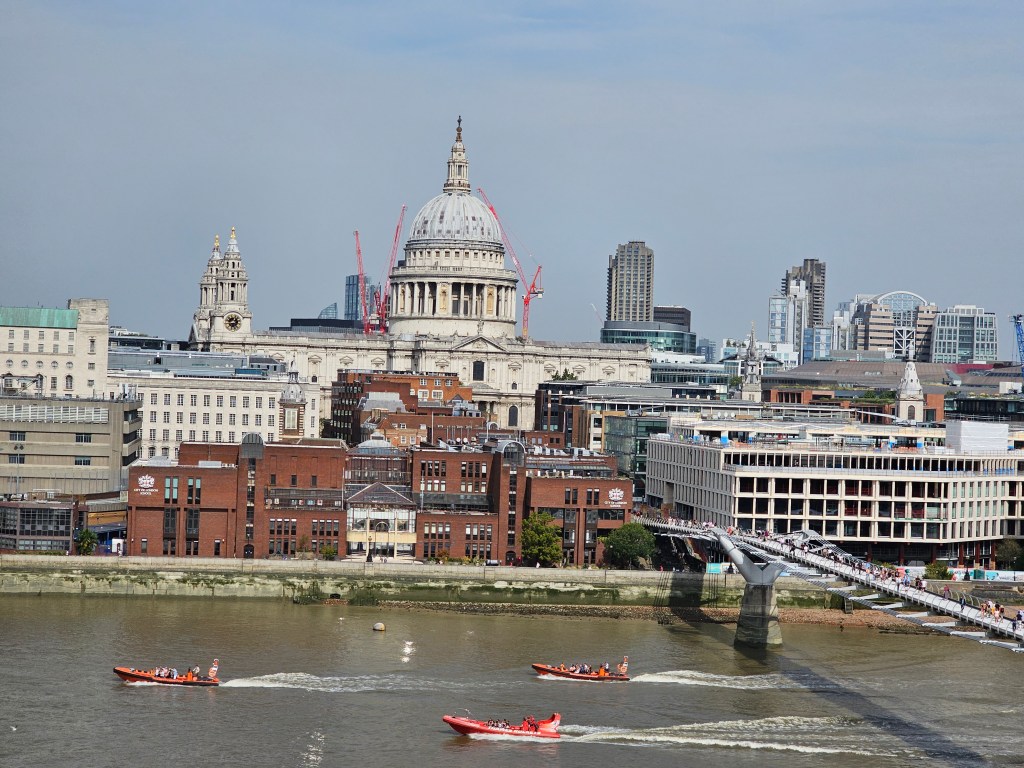
Returning to the Tate Modern

Above, the obligatory photographs across the Thames from the Tate Modern’s Member’s Bar Balcony.

I Never Know What to Expect

I have an unusual relationship with the Tate Modern Art Gallery. I love modern art. I am always willing to dive into something new and controversial. My heart sings at colors, the most abstract use of colors tells me things that others do not understand. Joao Miro and I share a birthday, I think that that, somehow, has made me a lover of art that is different and sometimes difficult. I recall the time I was introduced to Patrick Heron’s work at the Tate Modern, I didn’t know what to do. I felt like Jim Valvano after North Carolina State won the NCAA Championship in 1983, I wanted somebody to hug. I remember one of the guard/docents at the museum saying that she never saw anybody so excited by an art exhibit before. But, then there have been the other times. Times when, on an apparent whim, the collection has been moved around so that I can’t find my favorites anymore. Or worse, the dreaded news that something dear to me has been put in storage to make room or “is on loan.” But, to quote Maya Angelou, “still I rise.” Although, in this case, it is up the escalators to walk through the galleries and see what I can find.
Did The UK once own the Dominican Republic?

The first picture I saw was this one: Untitled (A Map of the British Empire in America) by Firelei Baez, a Dominican artist.

I love so much about this picture, but I have no idea what a ciguapa, a mythological creature from Domican myths has to do with the British Empire and I do not know why this painting was the first one that I saw. There was nobody there to explain it and the notes on the painting didn’t help. Keep reading to understand how this relates.

This was an enjoyable stroll through the galleries. Among the pieces I particularly enjoyed were:

Ardek by Olle Baertling who lived and worked in Sweden. His work was about spaces, contrasts and colors.

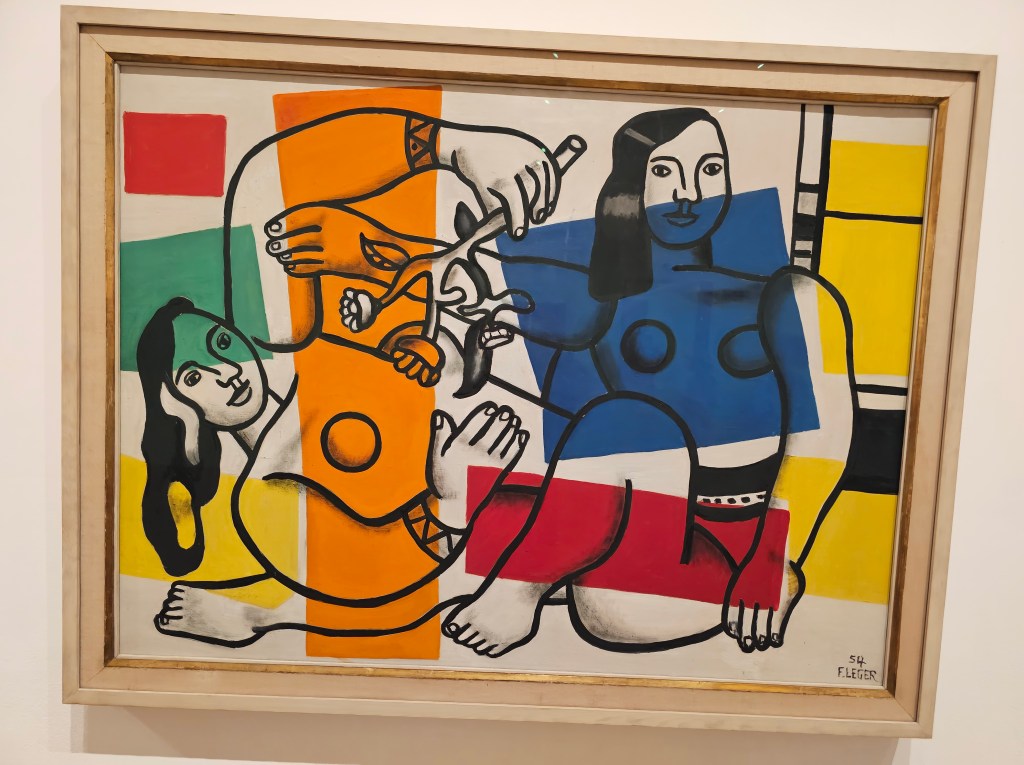
This is Fernan Léger’s Two Women Holding Flowers. Leger was French.

And

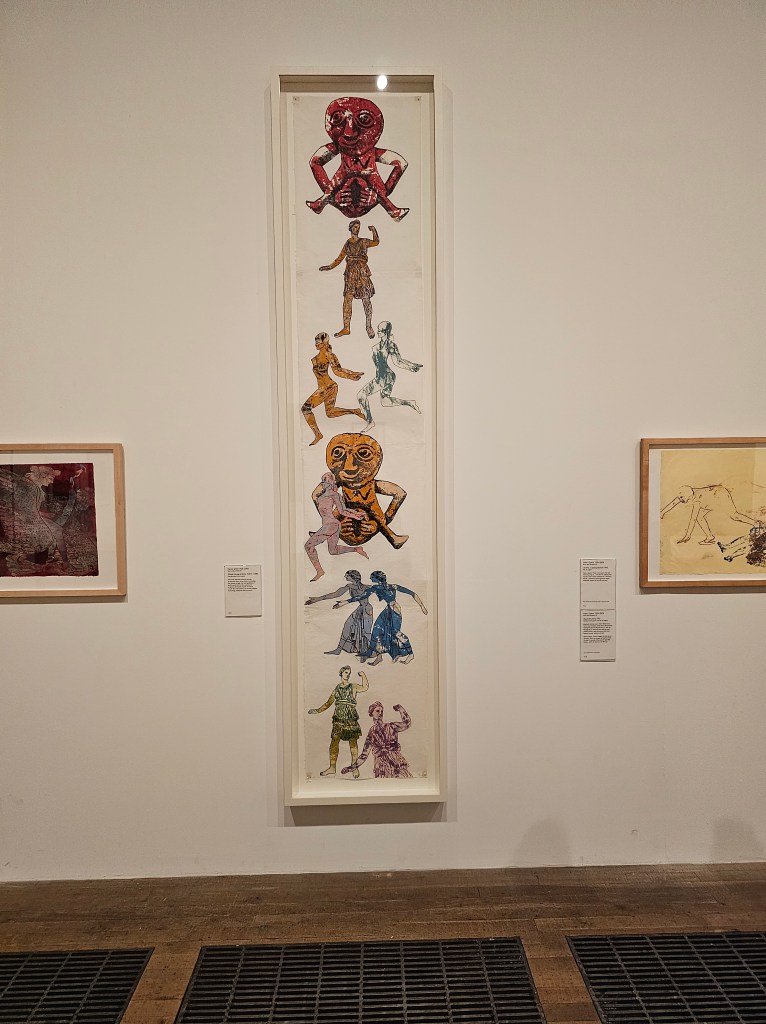
And then, this Nancy Spero (American) Sheel-la-na-gig/Artemis Totem 1. It, to me, is so reminiscent of the British Museum’s outstanding exhibition from 2022 on Feminine Power.

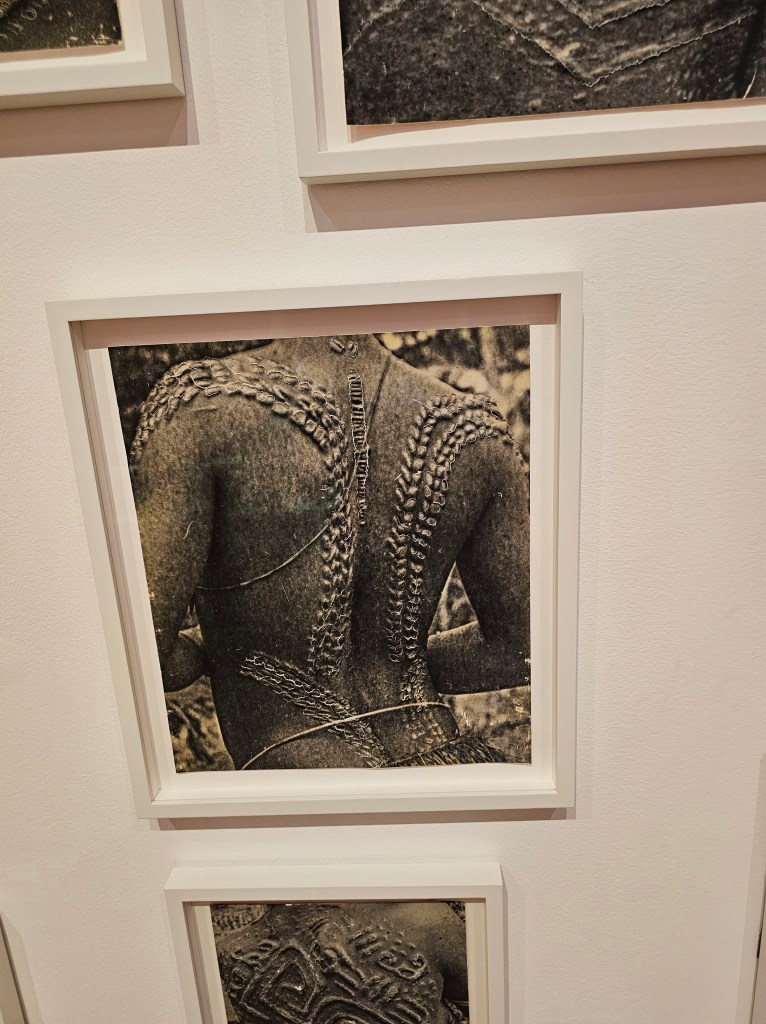
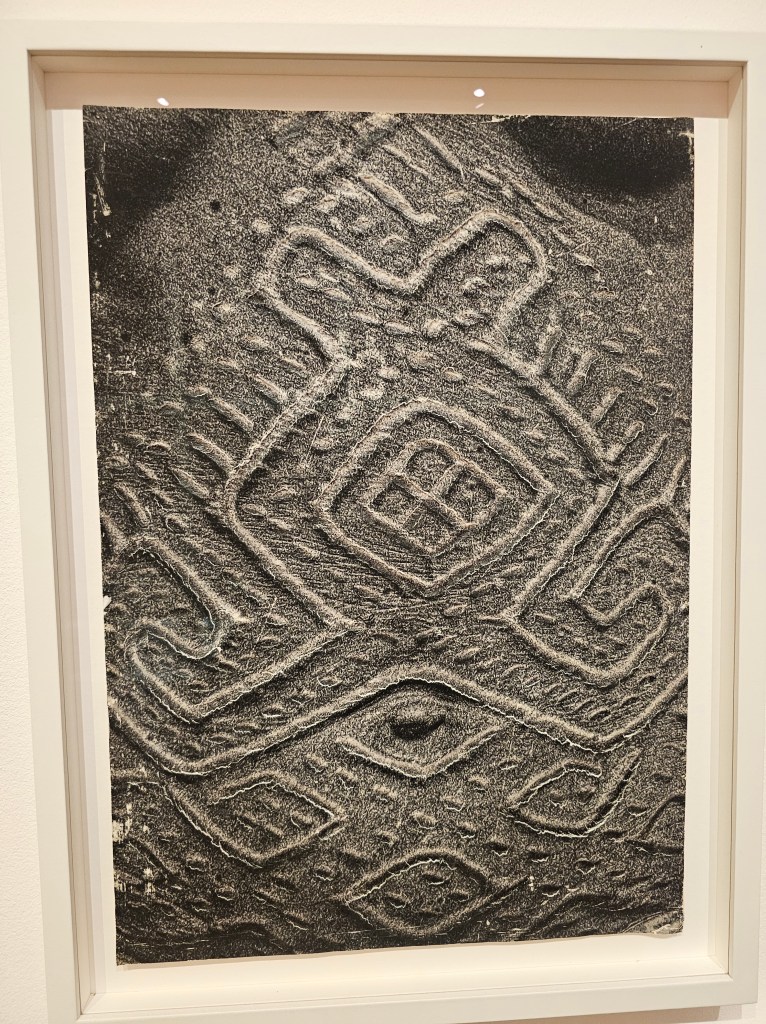
An Unexpected Encounter with the Art and History of the Former Belgian Congo

They Called it Capturing the Moment, I Captured a Better One Later

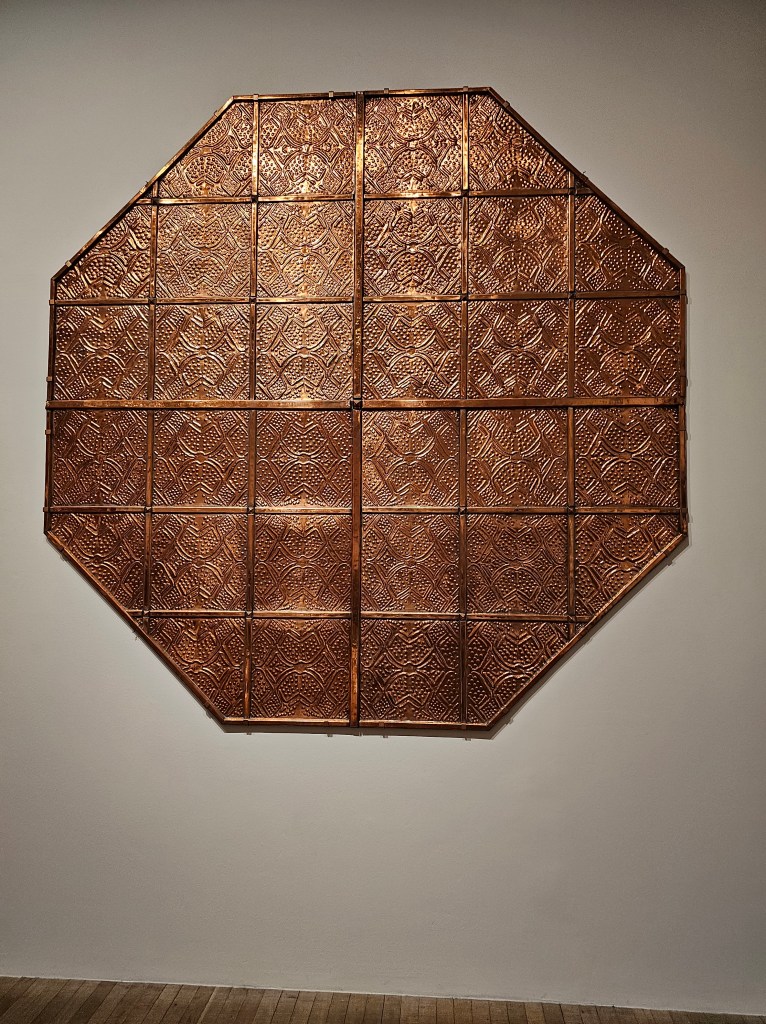
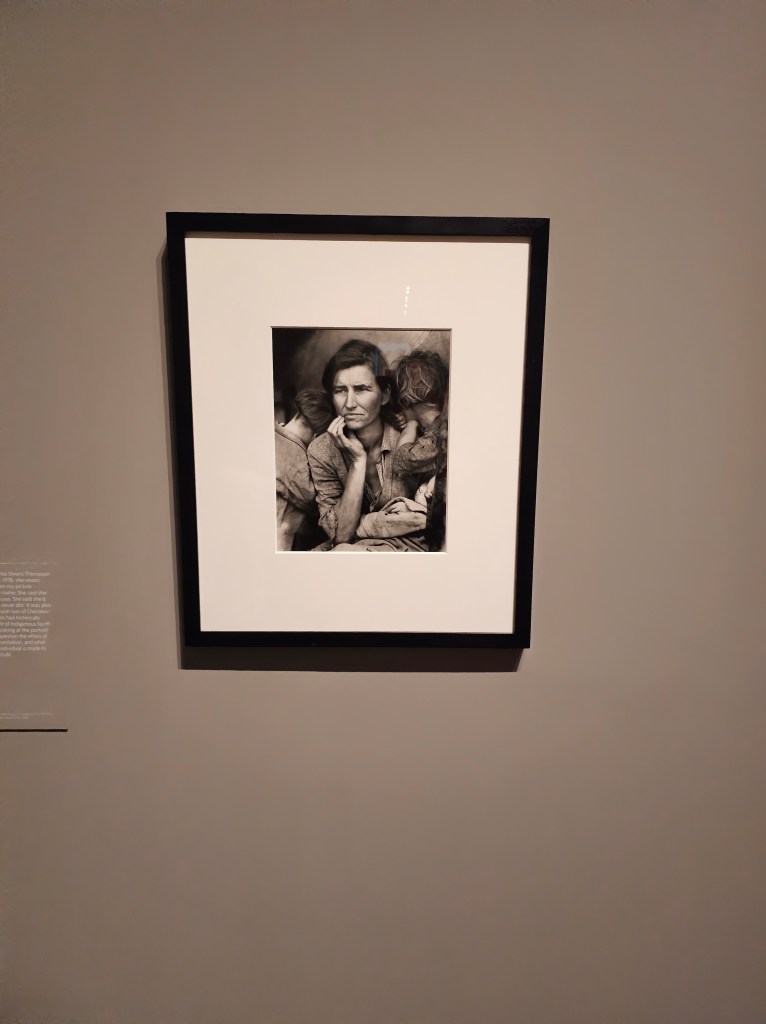
As a Tate Member, one can visit all the exhibits for free. So, since I was already there (and it was hot out), I decided I would take a chance on the “Capturing the Moment-journey through painting and photography” exhibition. The idea was an interesting and perhaps even provocative one to look at how the artist captures a moment in time through the lens or the brush. There were a few places where it worked, in the exhibit, but sometimes the pieces they had available from particular artists were not their best work and so the idea seem a bit banal. Here are a few of the ones I thought were worth sharing.

I thought these three were representative of the best of the collection. Ms. Riley being a beloved artist, Ms. Lange’s work being iconic and Ms. Crosby’ 2013 work pointing toward the future. I will always recommend the Tate Modern, its sister, the Tate Britain and the other Tate Museums around the UK. But you never know what to expect.

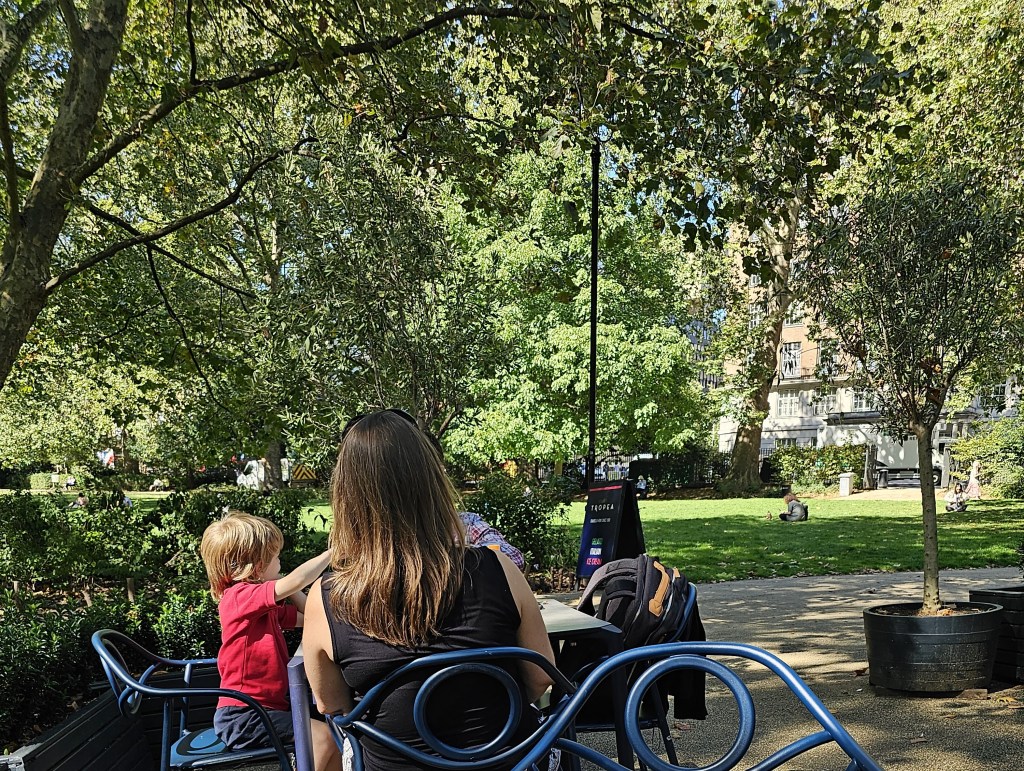
When I got back to Bloomsbury and checked in with my friends at Caffe Tropea, they were anxious to see me because they had found a lady from Florida who had sat down at the table next to them. She lived on the east coast, while my home is on the west coast. In another example however, of capturing a moment, it turned out that she was the next-door neighbor of the parents of a former colleague and good friend of mine. It is a small world after all!

With September Comes the Sun and Church Hunt Returns

Lunch with Nigel without his photo.

I arrived a bit early at Caffe Nero and grabbed a coffee and a table and waited for my good friend Nigel to arrive for an afternoon chat session. Nigel had been away on holiday with his family and I waiting to hear all the news of time spent with his lovely wife Gwynne, two sons and daughters-in-law and four grandchildren who he and Gwynne love spending time with. While waiting for him, I took this picture and sent it to him and to keep as a memento of the first cay of what has become a week of summer weather for the beginning of September in London. We had a great afternoon solving the world’s problems. It ended with us sharing a good walk to the Tottenham Court Tube Station where he started his journey home.

Searches for Churches (aka “At least I’m Getting My Steps In”)

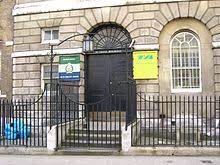
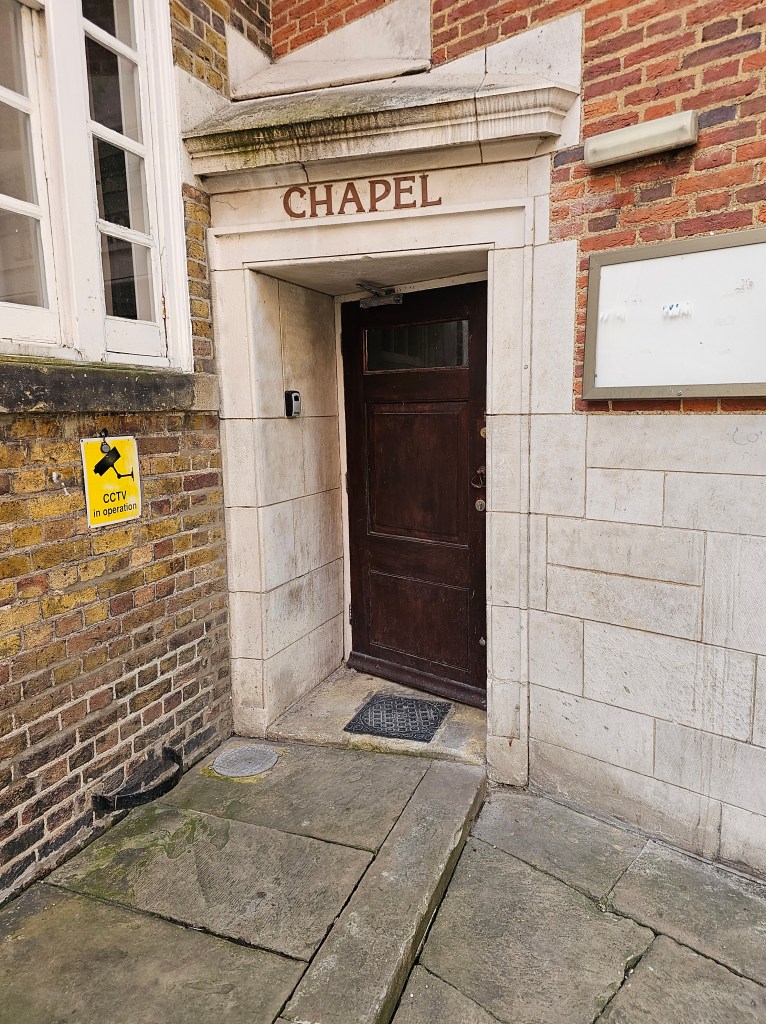
My plan was to start with a chapel and a church, easy peasy, as one of my NRC colleagues used to say. So, I loaded the Google Maps directions into trusty phone and headed off to find “The Chapel,” somewhere in Fitzrovia, a neighborhood bordering my own Bloomsbury. It was the first day of London’s September 2023 heatwave and I must admit to being quite disappointed to arrive at the interesting sounding address of 1 Old Buildings, London and not finding a chapel, but finding a Territorial Army (equivalent to the Reserves in the US) with a locked gate. See below. After circling the block, a few times, I did find an

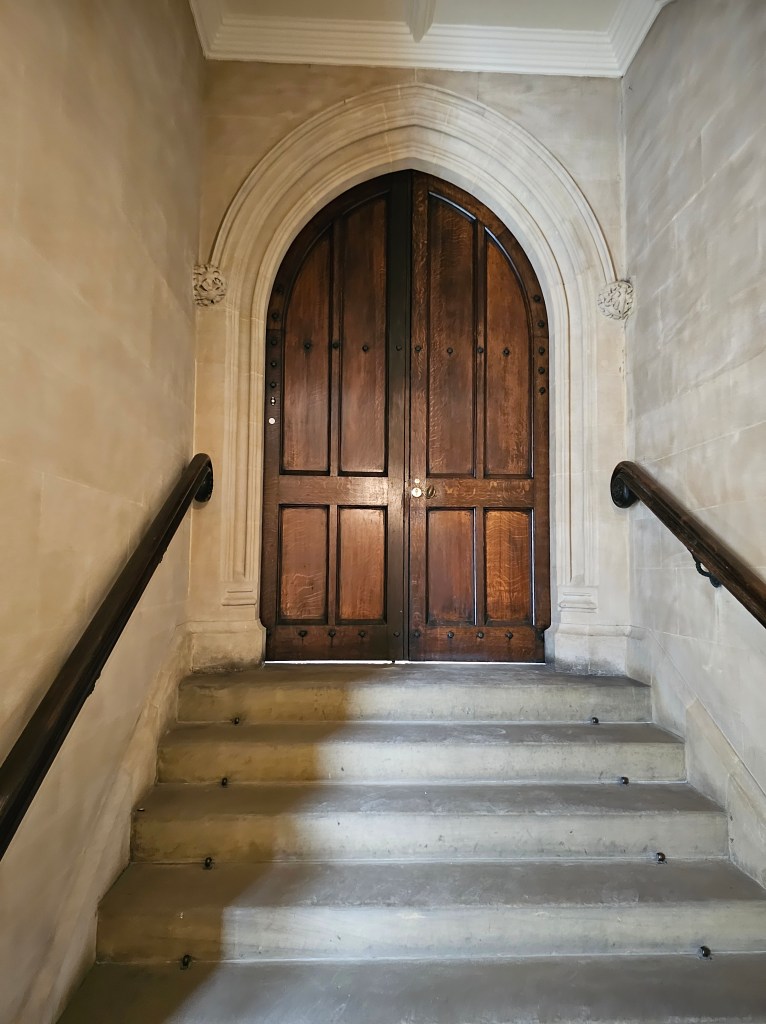
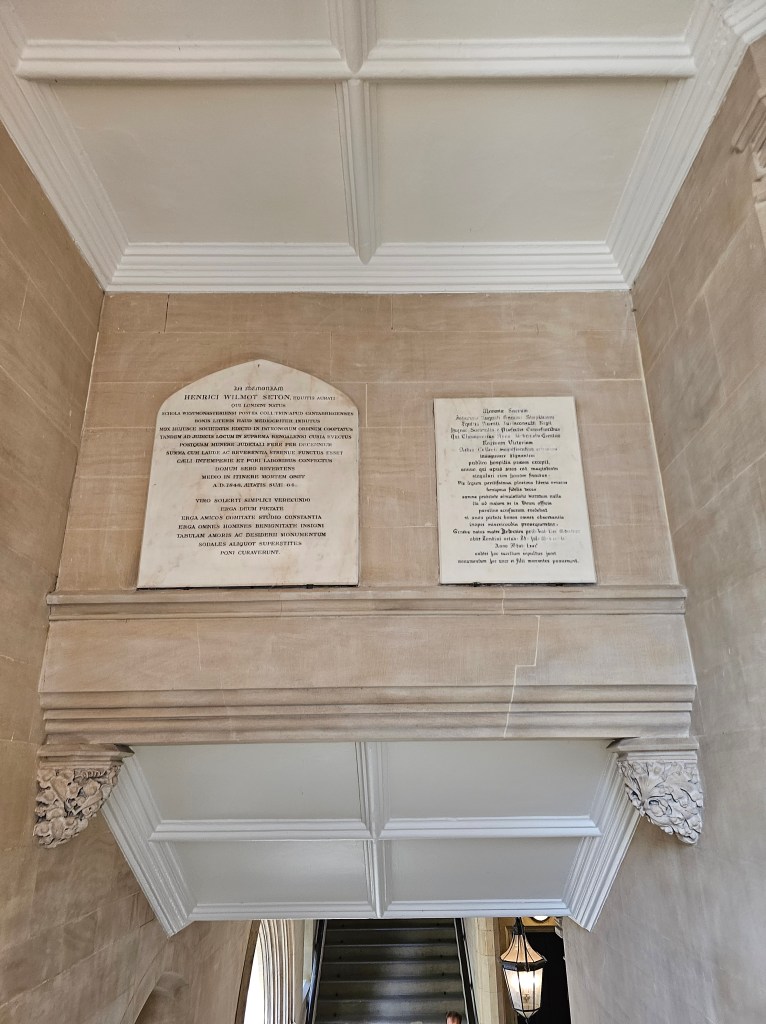
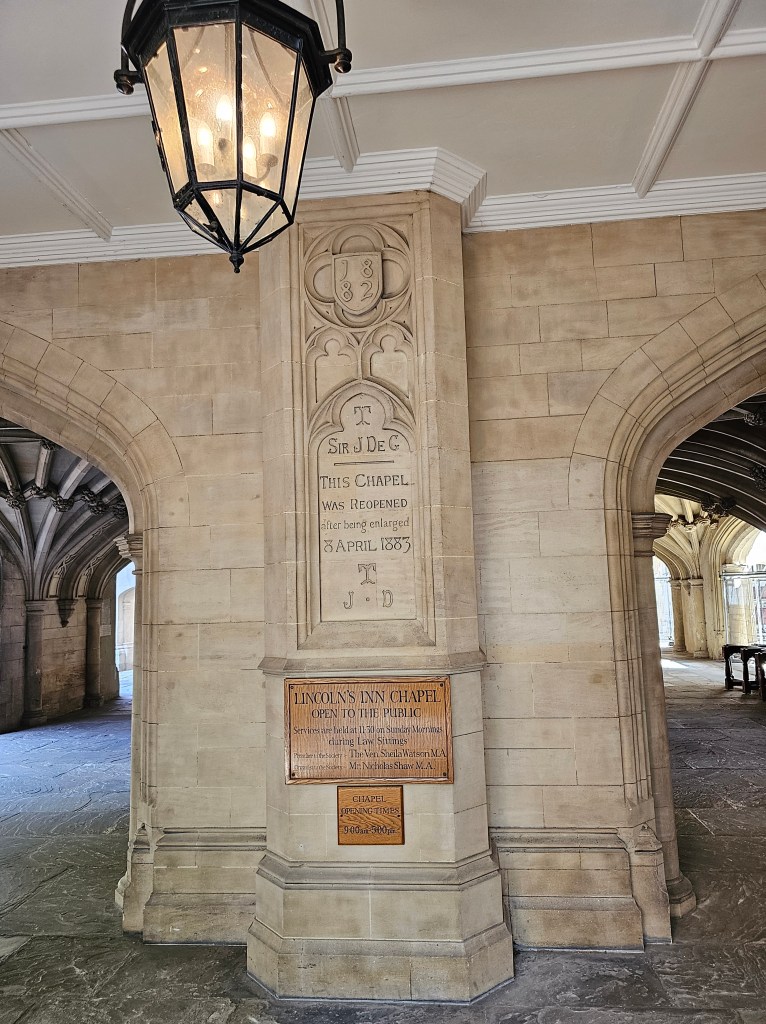
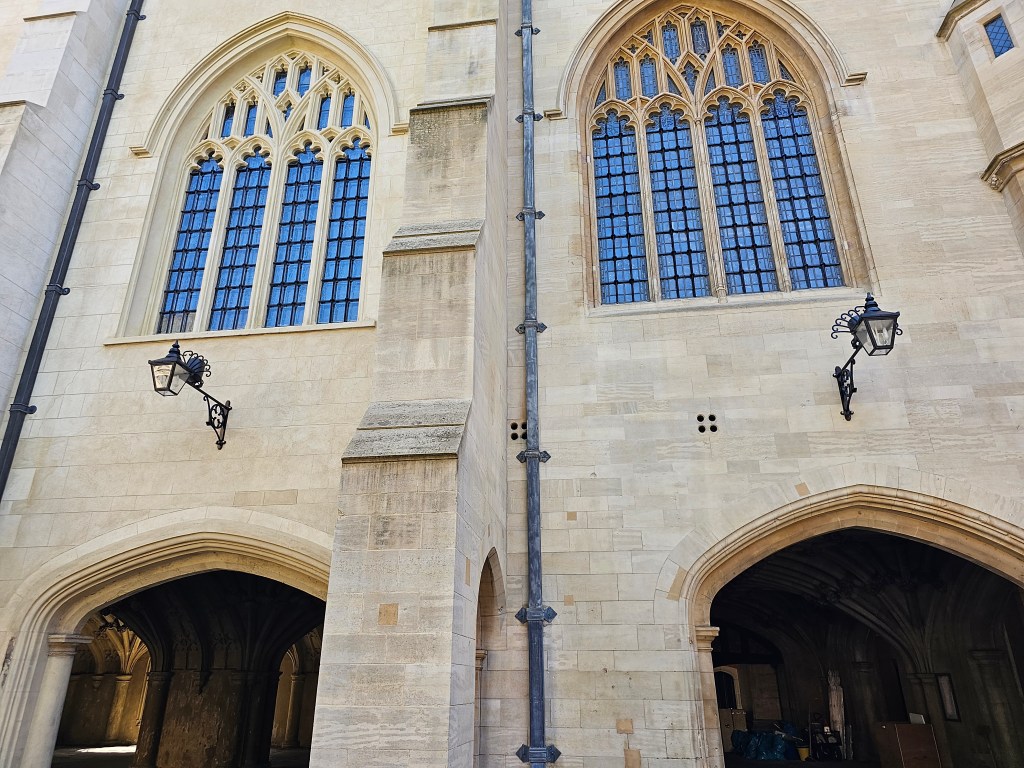
an entrance to a hidden internal courtyard that led me to “Lincoln’s Inn Chapel,” a rather elaborate two story building that I believe I have visited before. It has a lower level which is open with an interesting vaulted ceiling and stairways on either side that lead to massive doors that were locked because the chapel is temporarily closed. I assume the good lawyers of Lincoln’s Inn do not need the Lord’s guidance at this particular time of year. Here are a few images of the parts I could see.

So, with one down, I figured I would head back up to Bloomsbury and check out Saint George the Martyr Anglican Church on Queen Square. I figured since it was right near a hospital, it had to be open in case people wanted to go over and “storm the heavens,” as my mother used to say. Well, mom, if you were still with us in this vail of tears, you would have been as disappointed as I was to find St. George’s doors padlocked too. But here is a picture of it, in case you are ever in the neighborhood of Queen’s Square.

Another Day, and More Church and Chapel Adventures.

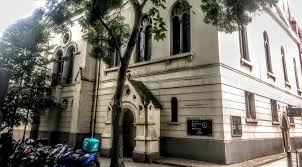
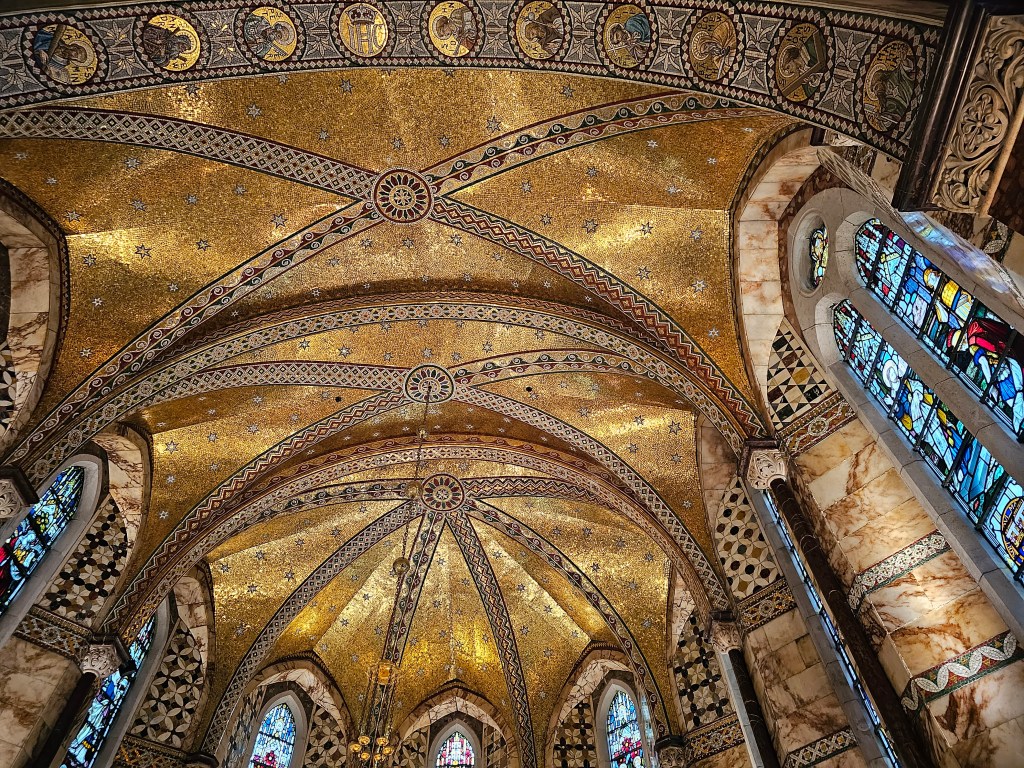
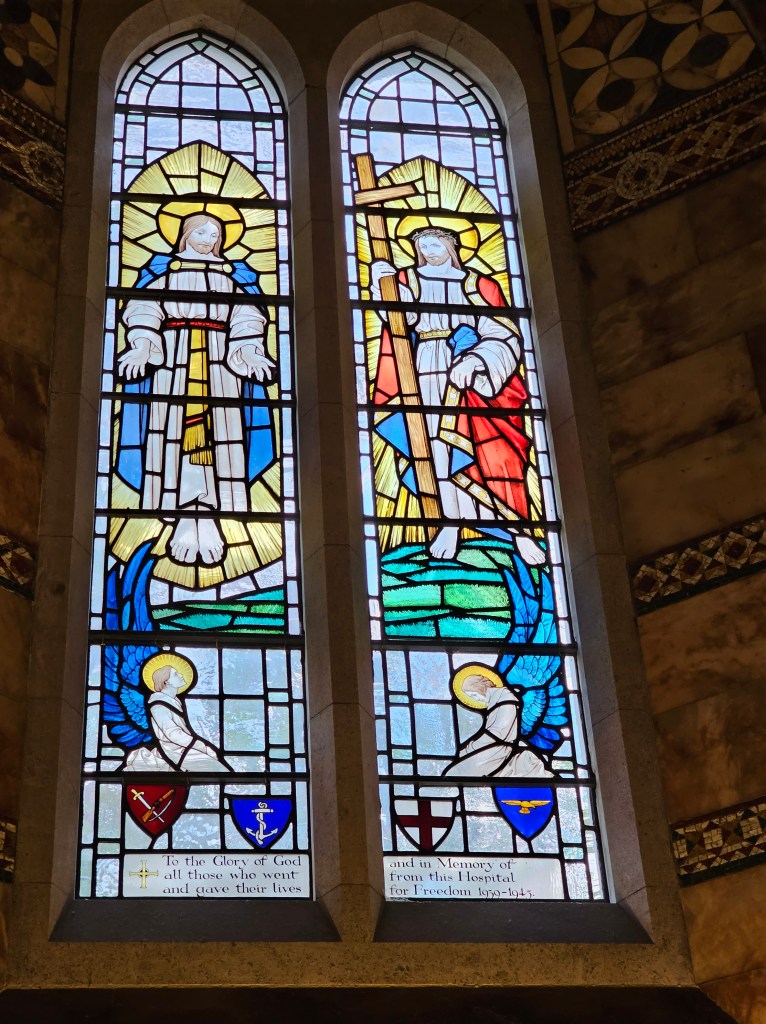
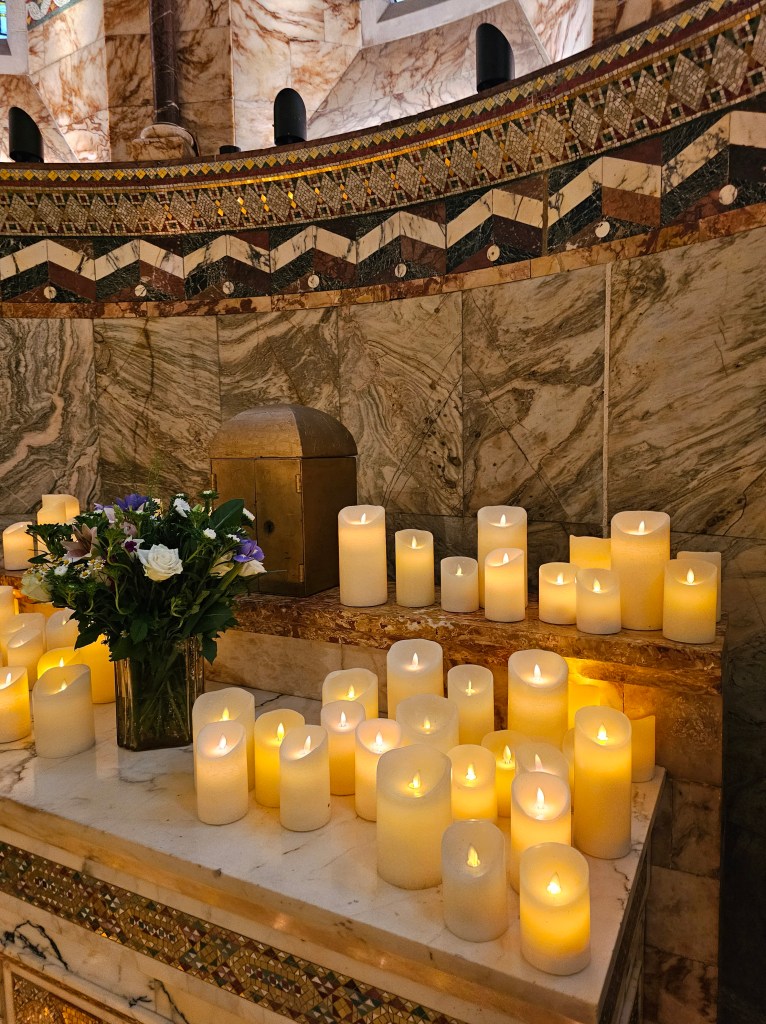
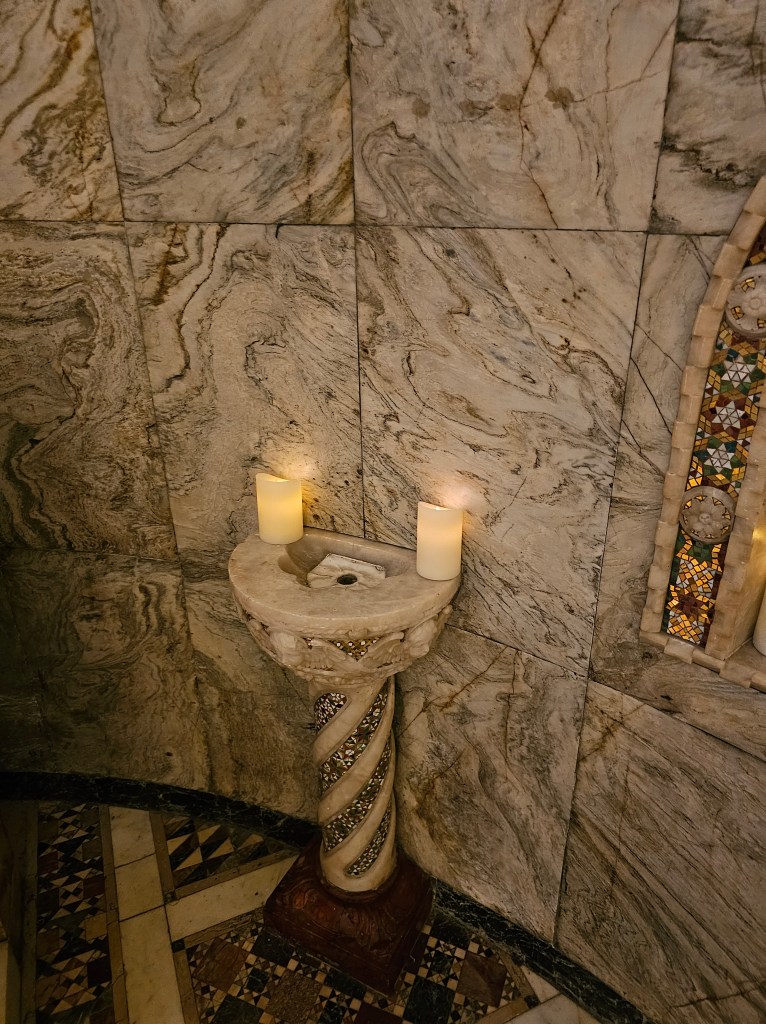
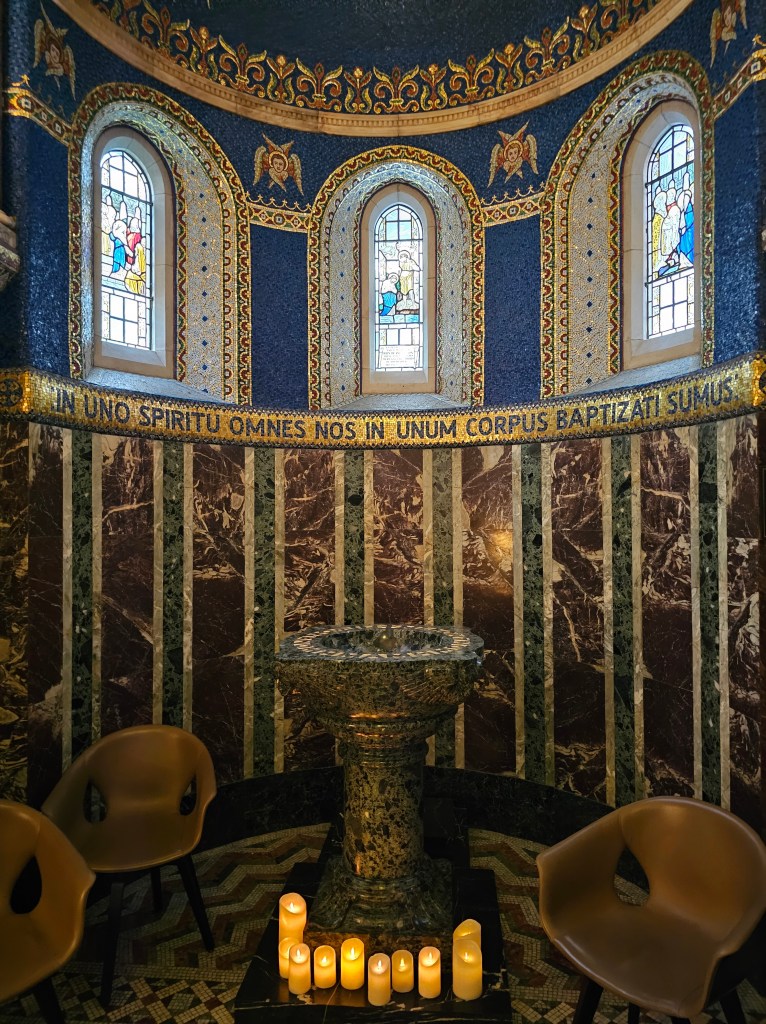
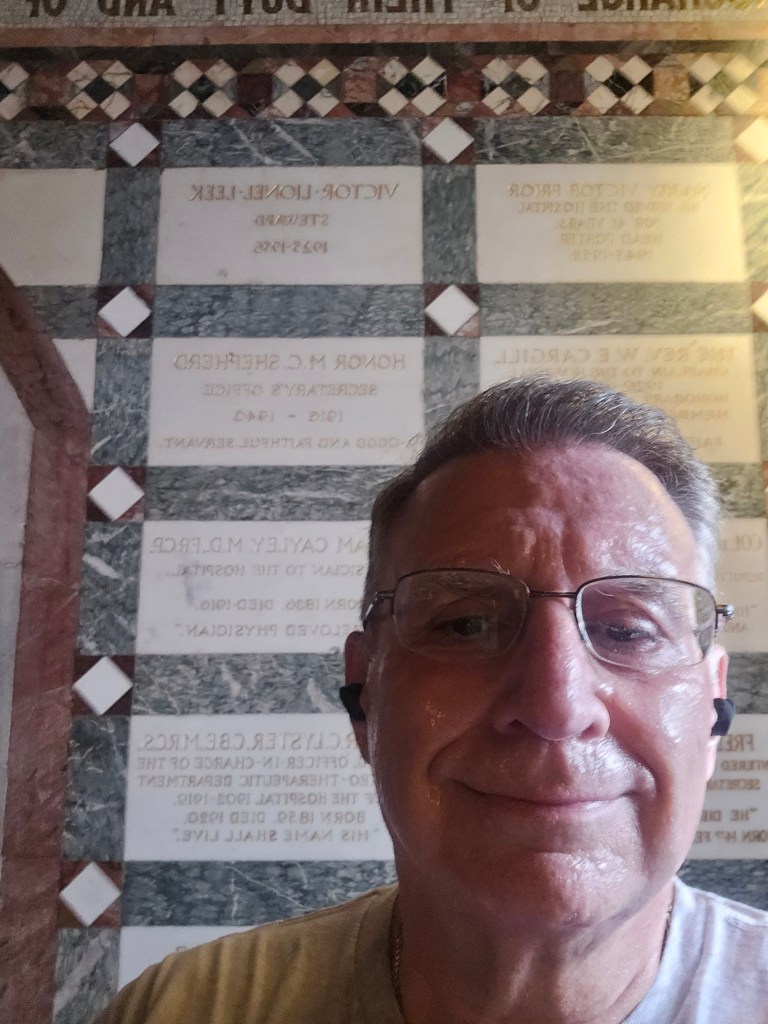
I was on a roll now and decided that, since it was the one day of the week that the “Middlesex Hospital Chapel,” now formally know as the Fitzrovia Chapel, was open to the public, I would visit it and another church that was in the area. My friend Ellain had told me about this chapel that was designed by John Loughborough Pearson as the chapel for the Middlesex Hospital complex which formerly stood on the site where the chapel, a grade II listed building now is the only remaining part, having survived the demolition of the hospital and the redevelopment of the site. The chapel is built in1891-92 in a Gothic Revival style architecture. It originally stood in a courtyard of the hospital complex and still does stand in the courtyard of the new development. As you will see from the pictures, I hope, the interior is quite ornate and beautiful. The onsite literature notes that the chapel was never formally consecrated, yet it has a stunning baptismal font, made of a single piece of marble. And its altar area includes two items associated strongly with Roman Catholic liturgies, a tabernacle for reserving consecrated hosts and a sink (presumably going directly into the ground) for rinsing any vessel that contained the remains of the consecrated bread or wine. I hope to dig further into this anomaly. The chapel’s current charitable foundation owners call it a secular chapel for non-religious ceremonies.

After the chapel visit, I had a very short walk to find the next church on my list to All Saints Church on Margaret Street, but, unfortunately, both church and chapel were locked up tight!

I took the hint and headed back up to Bloomsbury for some tea and sympathy from my friends at Caffe Tropea.

The Dog Days of August in Normandie, France

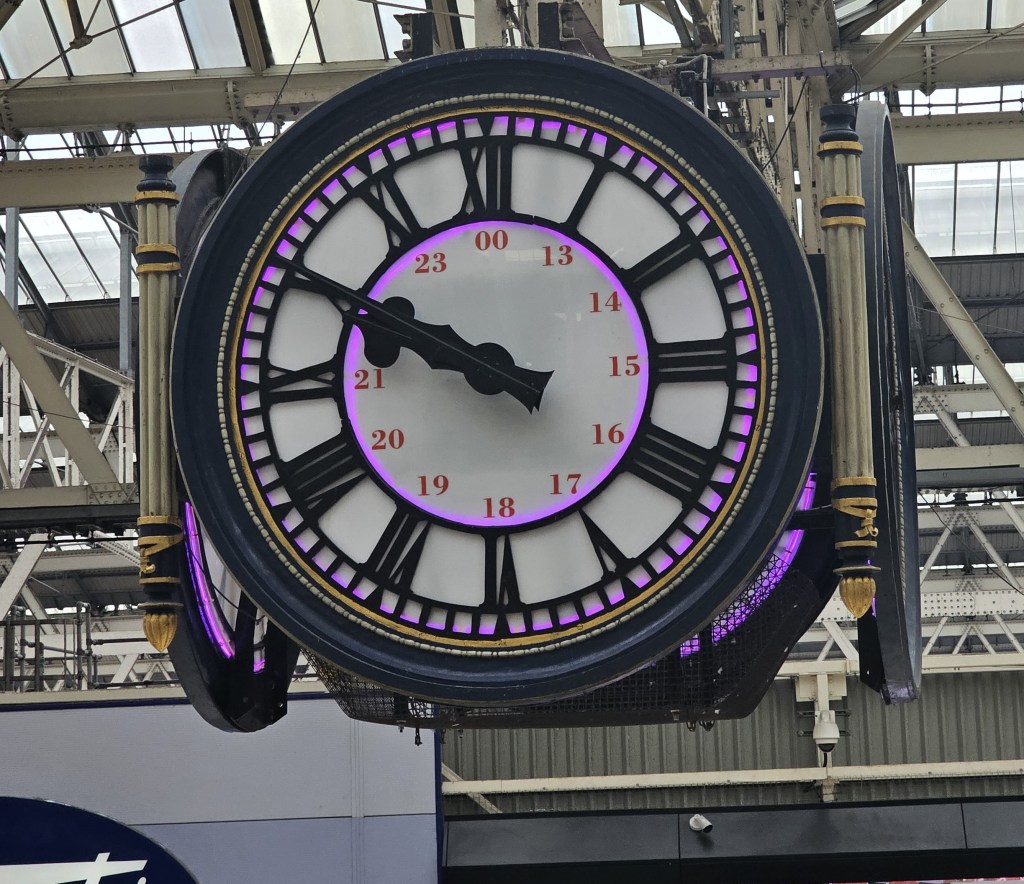
As the clock in Waterloo Train Station ticked on, the time of my train to Portsmouth Harbour to meet the ferry that would take me to Normandie grew near. I knew I was close to the platform and gate, my electronic ticket was in my email on my phone and….my phone, for reasons best known to it, had locked me out of all password-protected apps and, thus would not let me access my email or my e-ticket. The available WIFI was not passing on the instant message to my phone with the code to reset my password, and there went my train. A kind Southwest Train employee pointed me to the humans at the ticket office after the machine insisted that there were no further trains to my destination that day. Another kind staff member got me on the next train out and I was in time to meet my Normandie hosts Lesley and Olivier at Gunwharf Mall in Portsmouth and board the ferry to Ouistreham with them.

Leaving Portsmouth on the Ferry “Mont St. Michel.”

Why Normandie?

I was, for many years, a member, and later chair, of the Alexandria, Virginia-Caen, France Sister City Committee, part of Sister Cities International (https://sistercities.org/). Through this great organization, I had the opportunity to visit the city of Caen and the region of Normandie, France many times. I have made friendships there that I will have for the rest of my life. And, I have come to love that part of France. There is, of course, the history, not only the World War II history, made popular by movies like “The Longest Day,” and “Saving Private Ryan,” but history going back to the time of William the Conqueror, who crossed “la Manche,” (the Channel) to England from Normandy and was crowned the first Norman King of England in 1066. The people of Normandy are warm, kind, and friendly. The cuisine is incredible. So, when I had this chance to return and stay with my dear friend Lesley and her partner Olivier, I was thrilled to return.

Olivier and Lesley relaxing on the Ferry.

Back Home in Hérouvillette

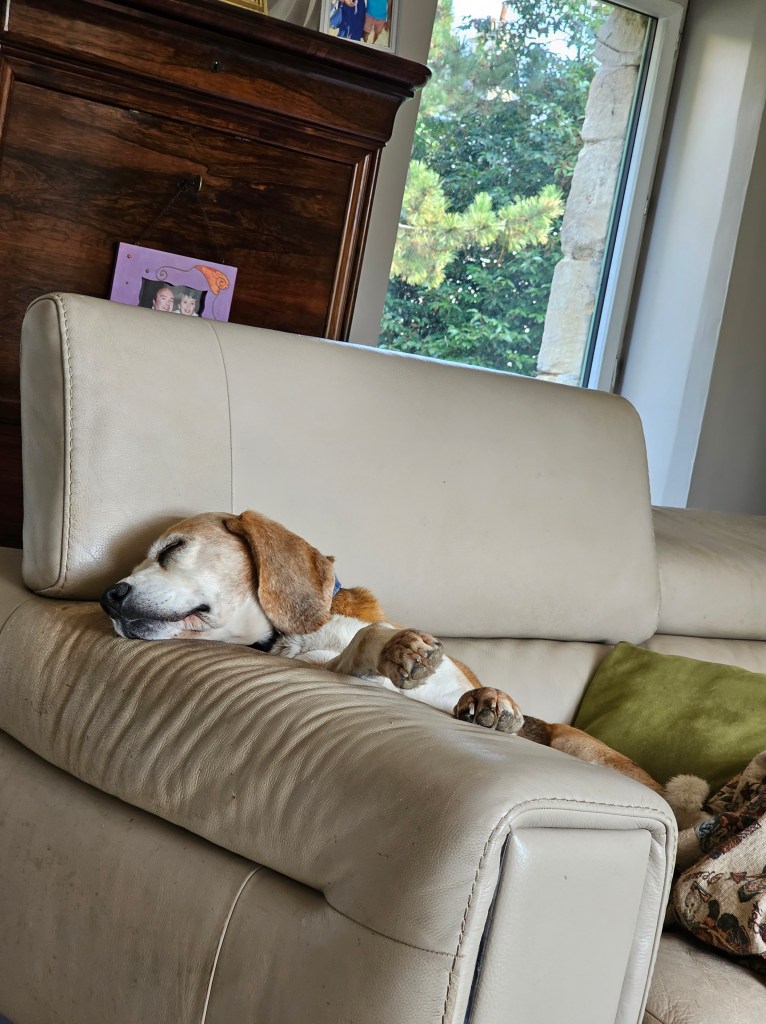
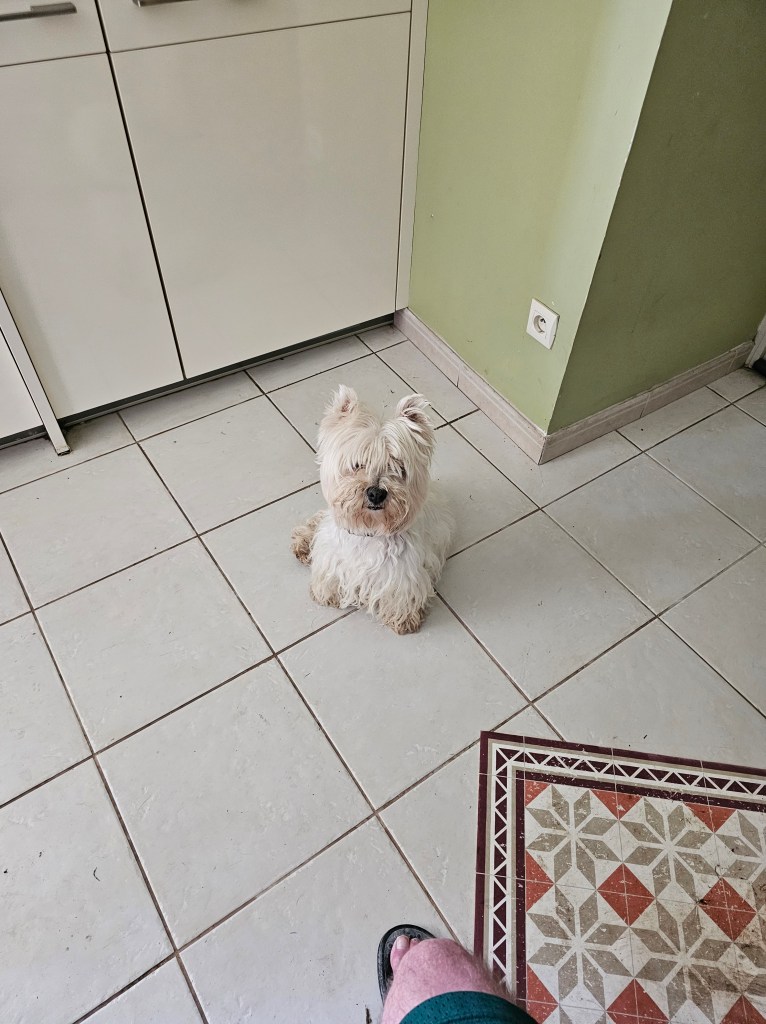
Herouvillette is a small community where Lesley raised her daughters in an old farmhouse that she renovated herself! I have been a guest there several times over the years. Now that her daughters are off living interesting lives elsewhere, Lesley and Olivier share the home with an ancient brindle cat and two dogs that literally changed my life, Golfie, a beagle, and Skye, a highland terrier. Until a visit with Lesley several years ago, I had a lifelong fear of dogs-big dogs, small dogs, basically all dogs. Skye and Golfie miraculously cured me of this fear and have become beloved companions whenever I visit Lesley’s home.

Lunch in Merville-Franceville and a Visit to “la plage” with the dogs

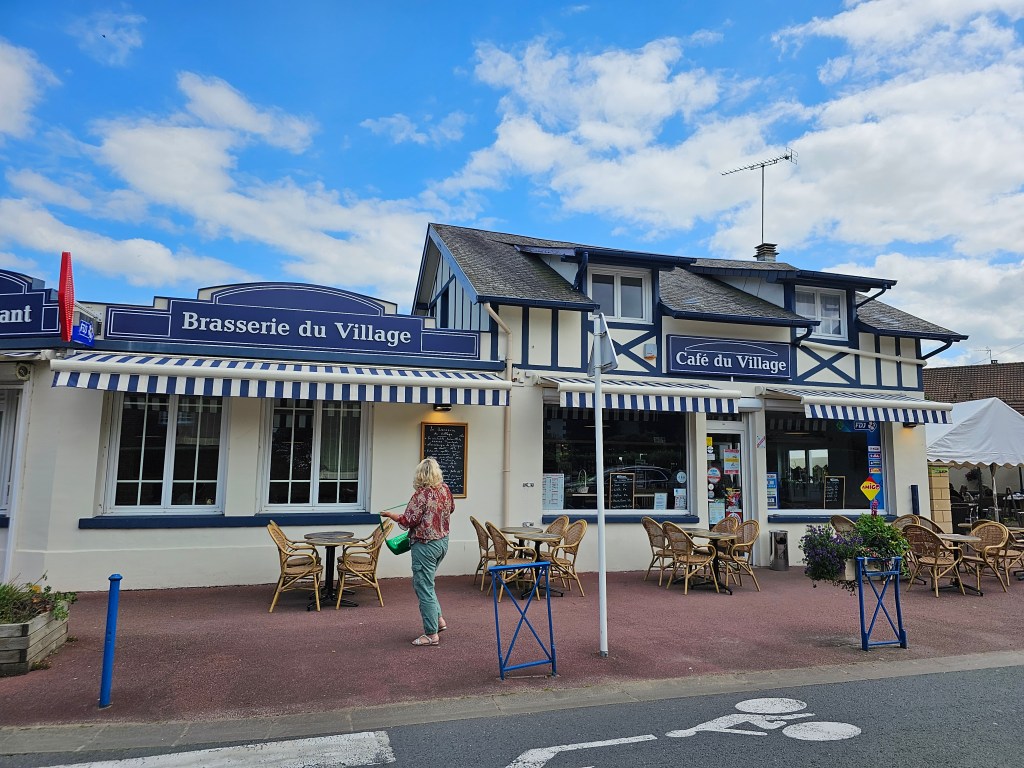
It seems that you cannot have a bad meal in Normandy, at least I never have. Our first meal out was in a lovely little place that served wonderful “moules frites ala mode de caen.” I don’t think I had ever eaten mussels before coming to Caen, but now, I never miss the chance to have them.

We had lunch outside under the canopy to the right in the photo.

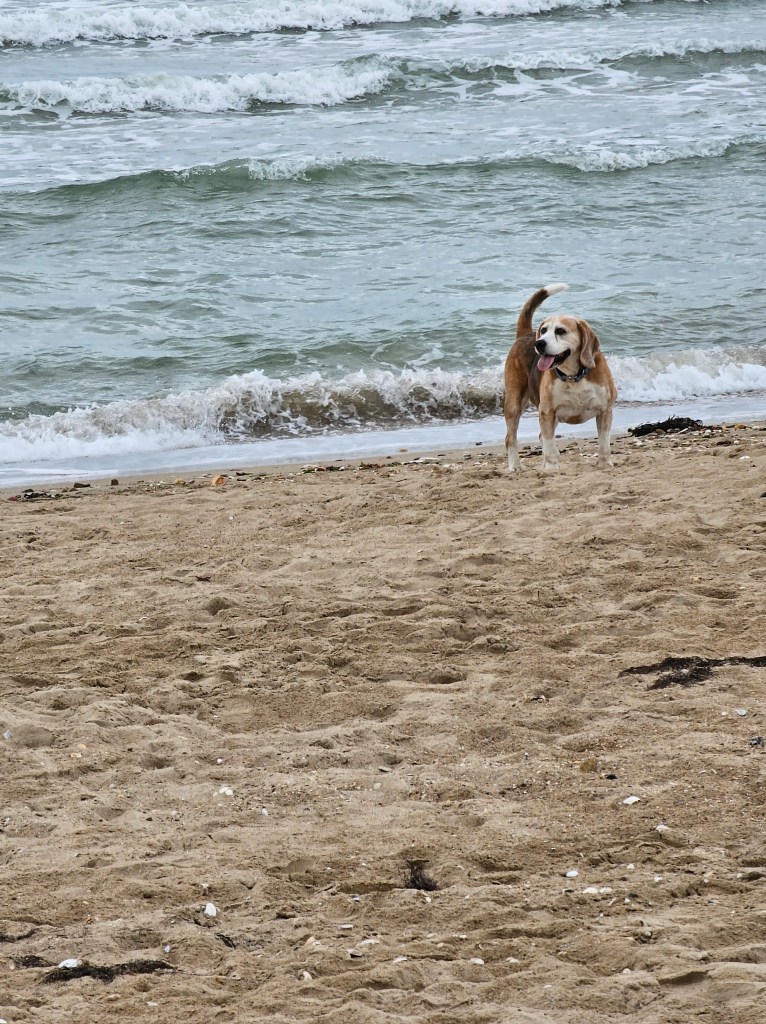
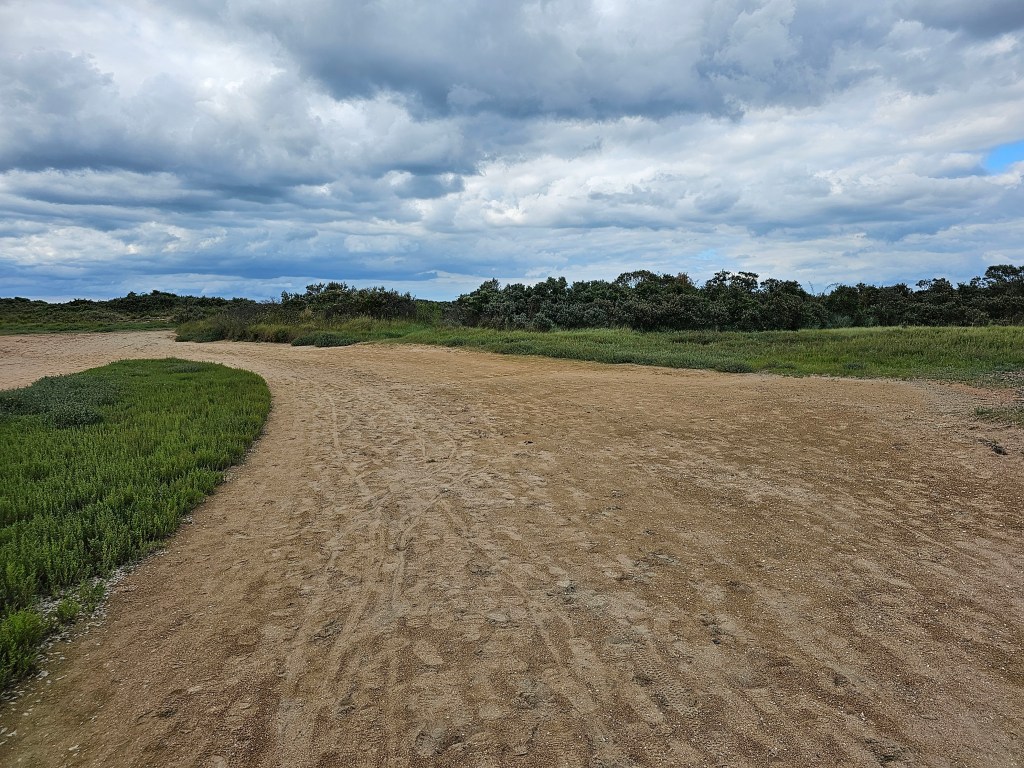
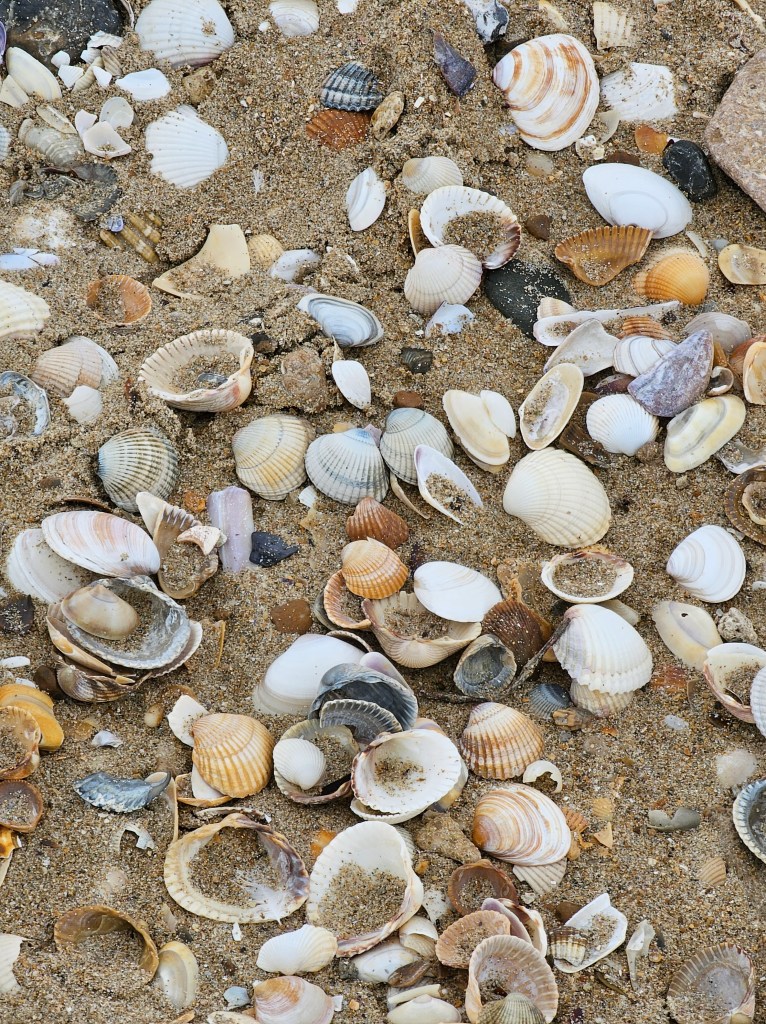
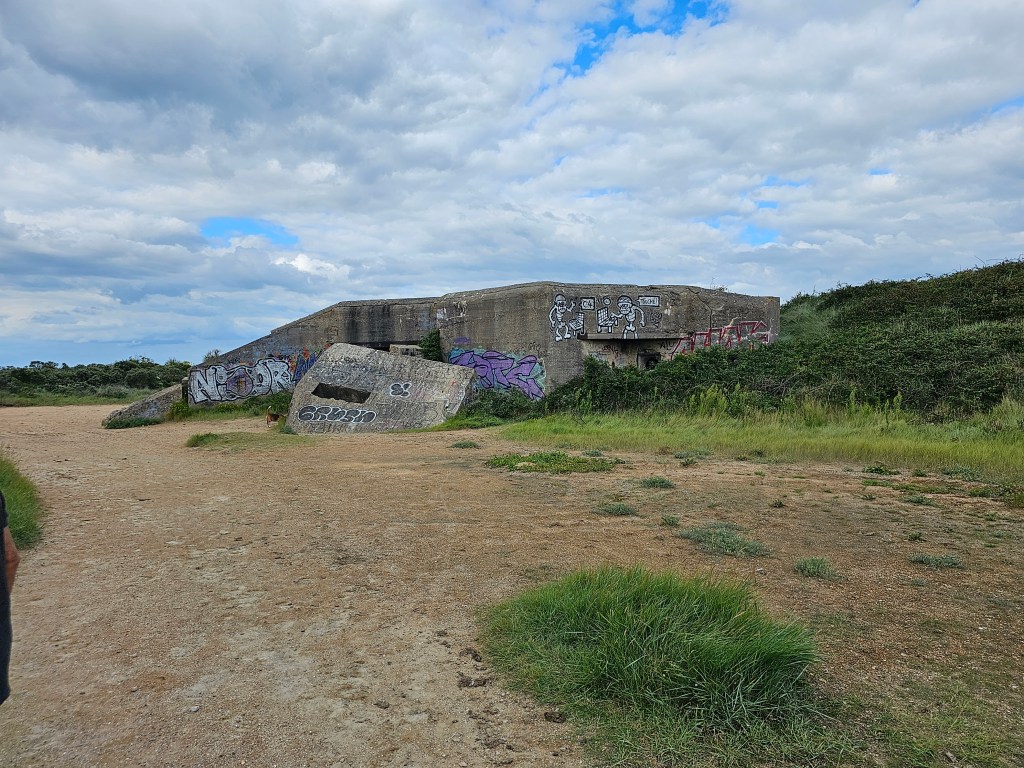
After lunch we made a quick trip to pick up the dogs and then returned to Merville-Franceville to the “Gros Banc Ornithological Reserve,” a large area along the beach and dunes where local flora and fauna grow wild and birds nest. Families visit and picnic and enjoy the beach area. Golfy, in particular, loves the water. Both he and Skye enjoyed the many scents they encountered along the paths and trails.

The Port of Ouistreham

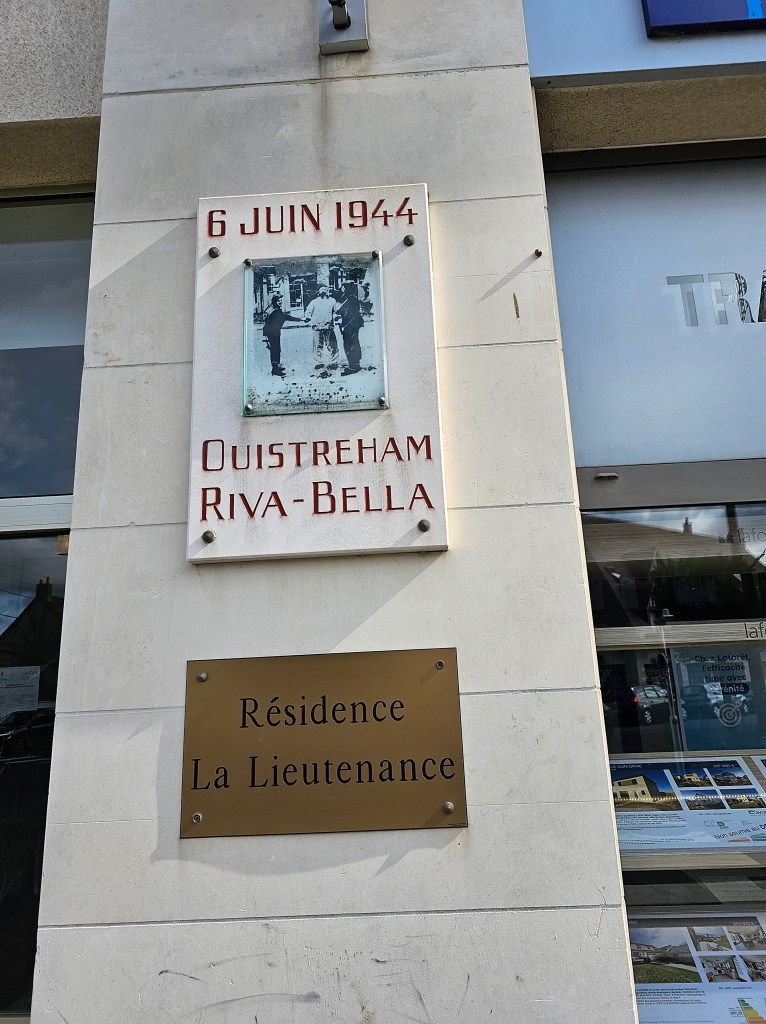
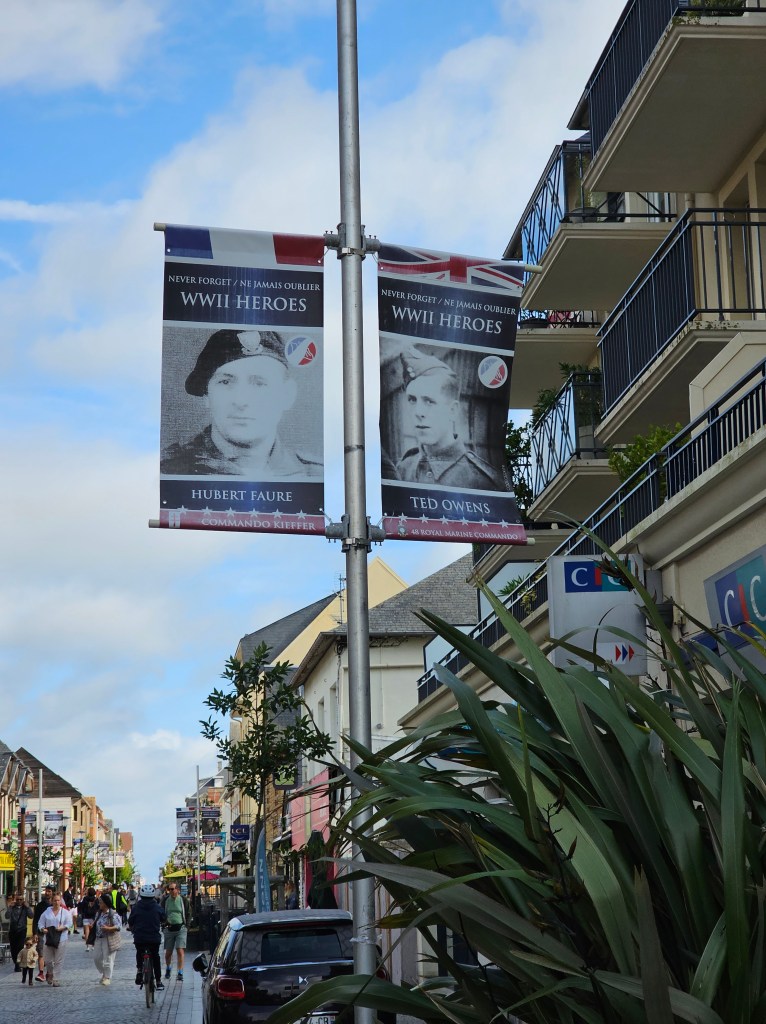
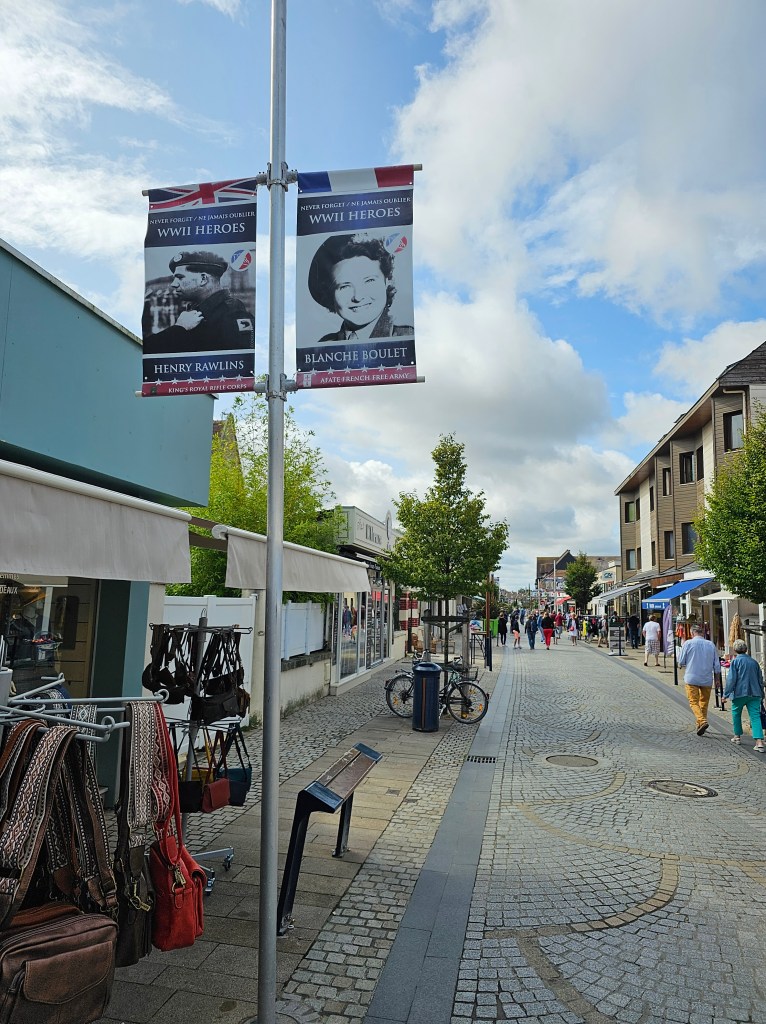
Ferries from Portsmouth dock in Ouistreham but I have never really spent much time there, other than in the ferry terminal. Ouistreham is the site of Sword Beach, one of the D-Day Landing sites. This one is where the British landed. Lesley and Olivier had appointments in the town, one morning, so I had time to explore the pedestrianized main street and the main beach/amusements area before meeting them for a demi-tasse. As this was still the summer tourist season, the banners honoring the D-Day heroes still hung from lampposts and this first, rather striking picture that I have shared on my Facebook account was posted on a building at the entrance to the business district.

On D-Day, the member of the French Resistance was taken from his prison cell by the Nazis and shot. The picture is a reminder of the cruelty of authoritarian governments and to danger of extremism. I think it also reminds us that, even under the oppressive occupation that they lived with, many brave French citizens did their part too as they waited for D-Day and the eventual liberation of their country.

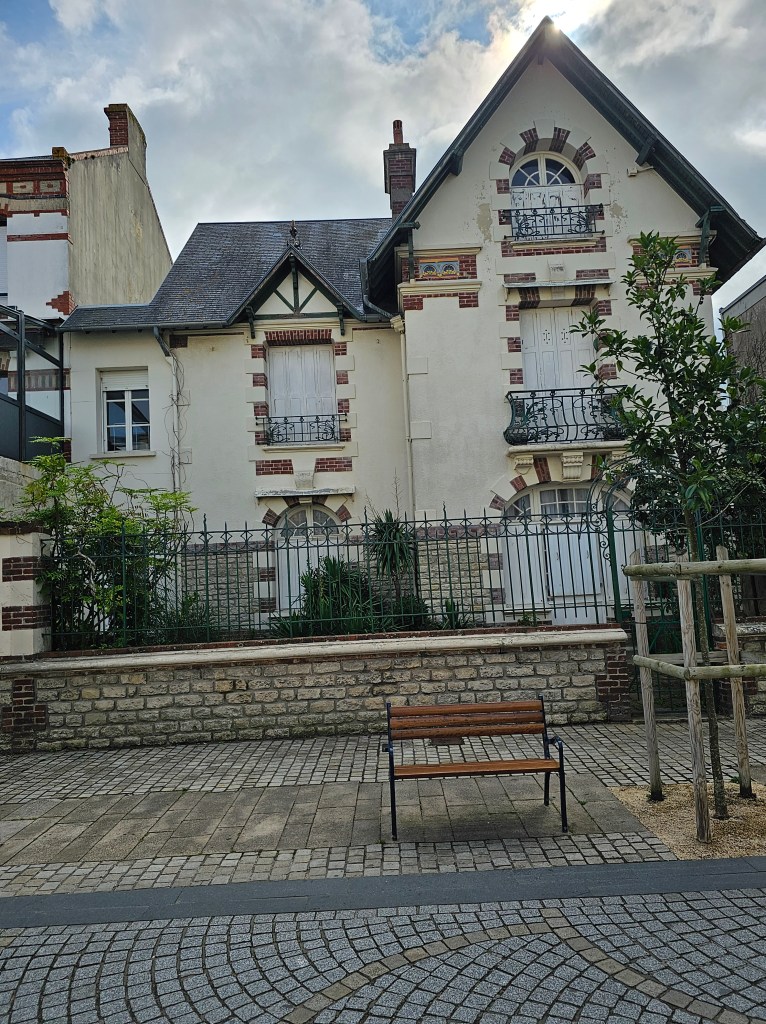
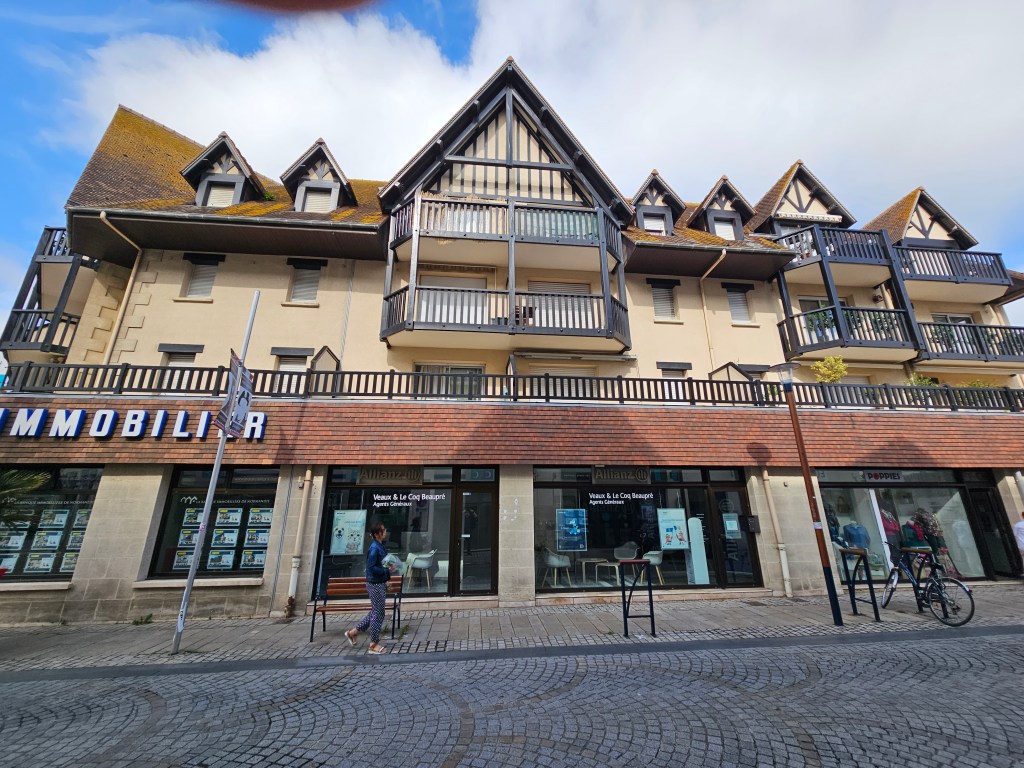
The buildings that survived the war and those that were built since all reflect the Norman style, making this part of the city a pleasant place to visit. The many small shops, offering locally made products remind one of a time when all towns had unique stores to shop in.

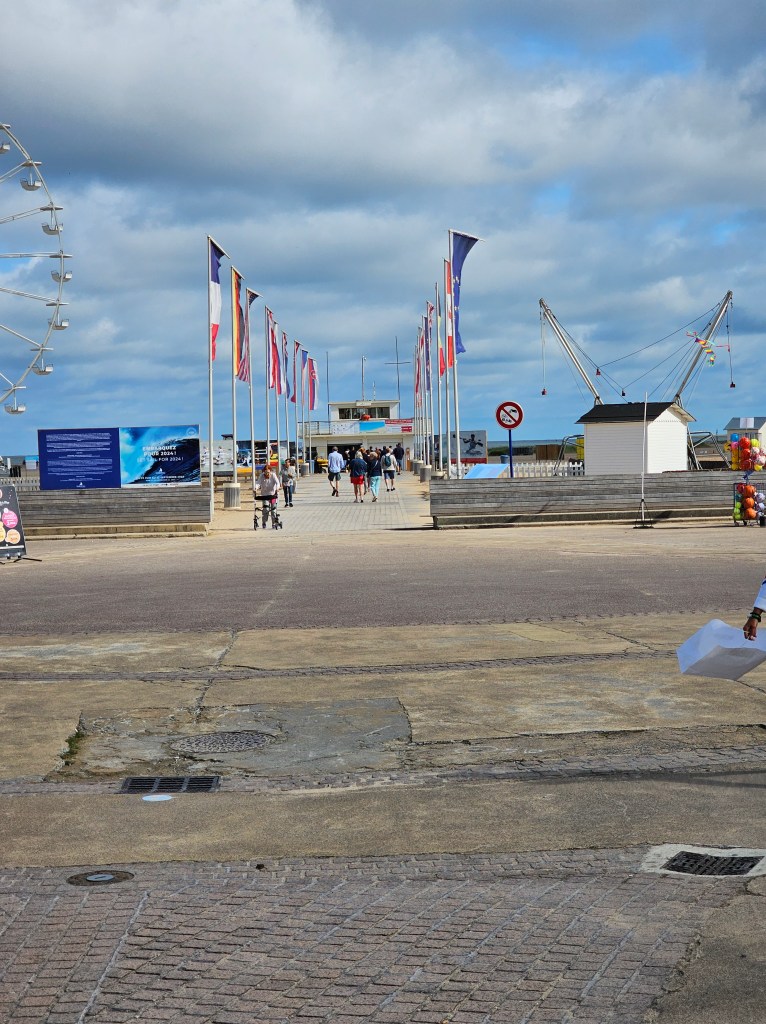
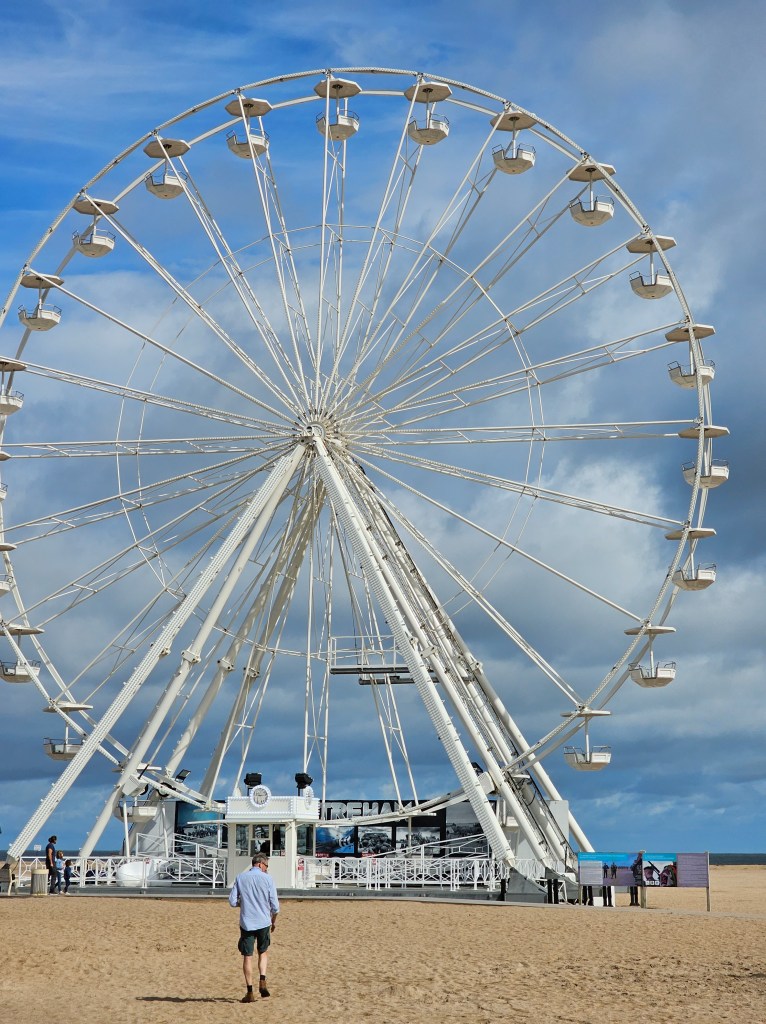
The pedestrianized shopping area ends at the beach. A charming entryway is created there, and a large Ferris wheel sits close to the sea. I am told that this is a favorite destination for folk from the larger cities like Caen and Rennes to visit on a weekend to get away from the urban lifestyle for a few hours.

A Return to Caen for the Sunday Market

No visit to Normandie would be complete if Lesley and I did not visit Caen together. After all, it was in Caen where she was Director of International Relations for the City, that she and I first met as colleagues and quickly became friends. During my years representing Alexandria at events in Caen, particularly, the annual foire de Caen, (Caen’s International Fair) that was held in September, I was often the City of Alexandria’s official representative and Lesley would provide translation services for me when I spoke officially at the fair to Caen’s mayor and official delegation.

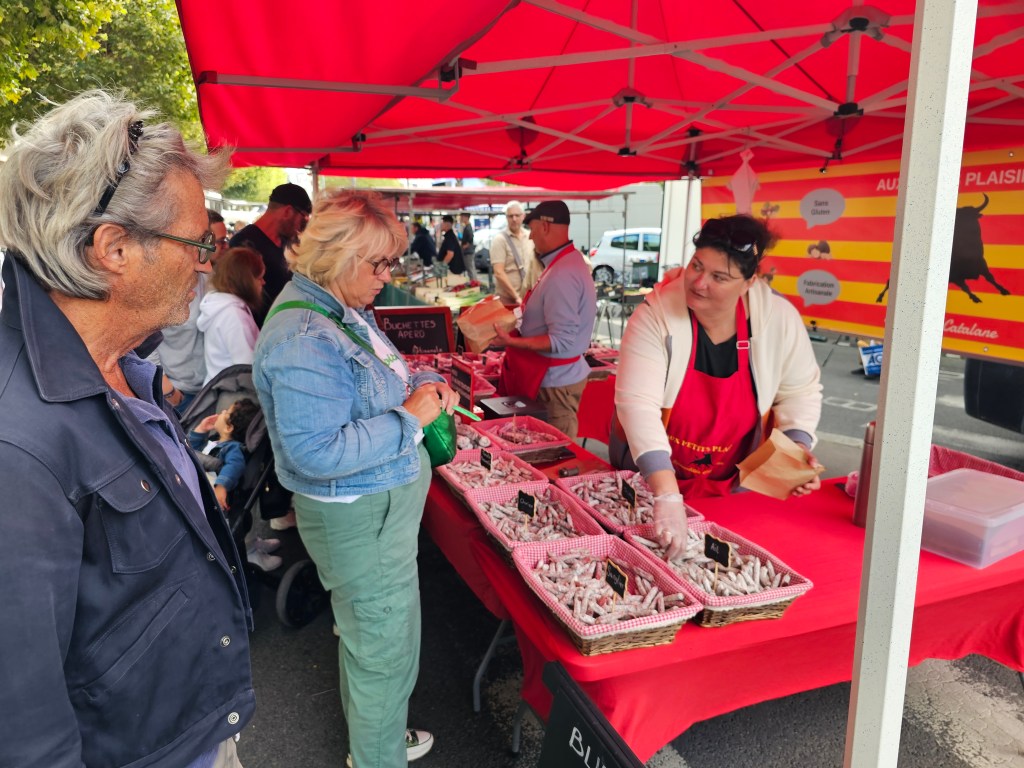
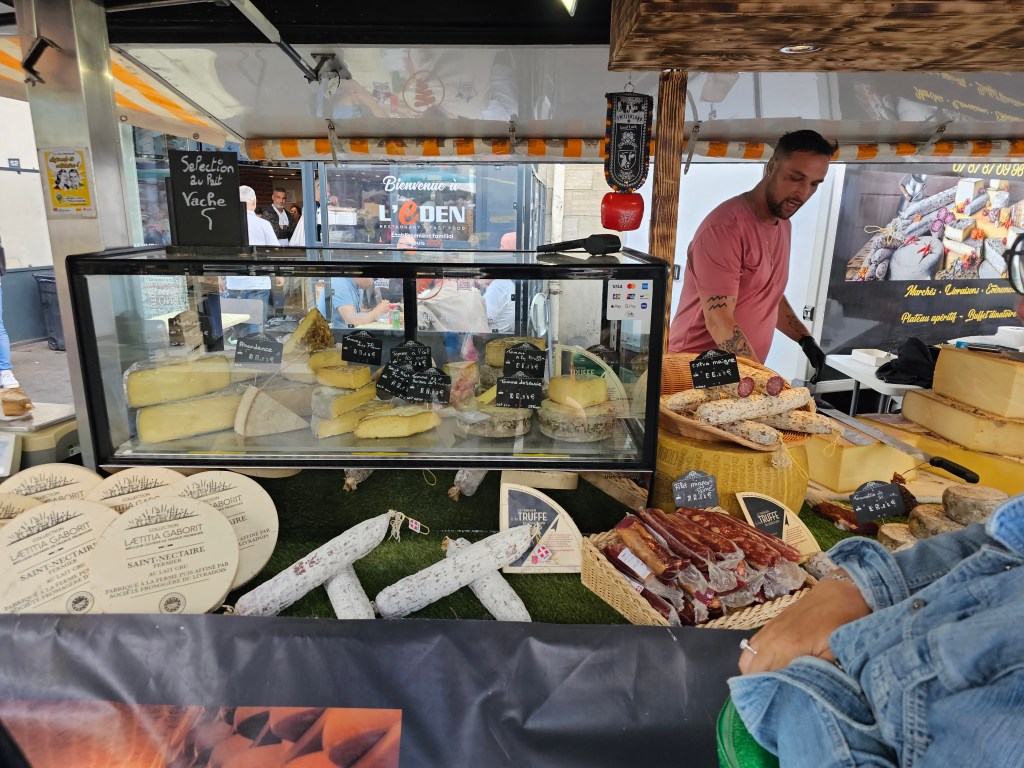
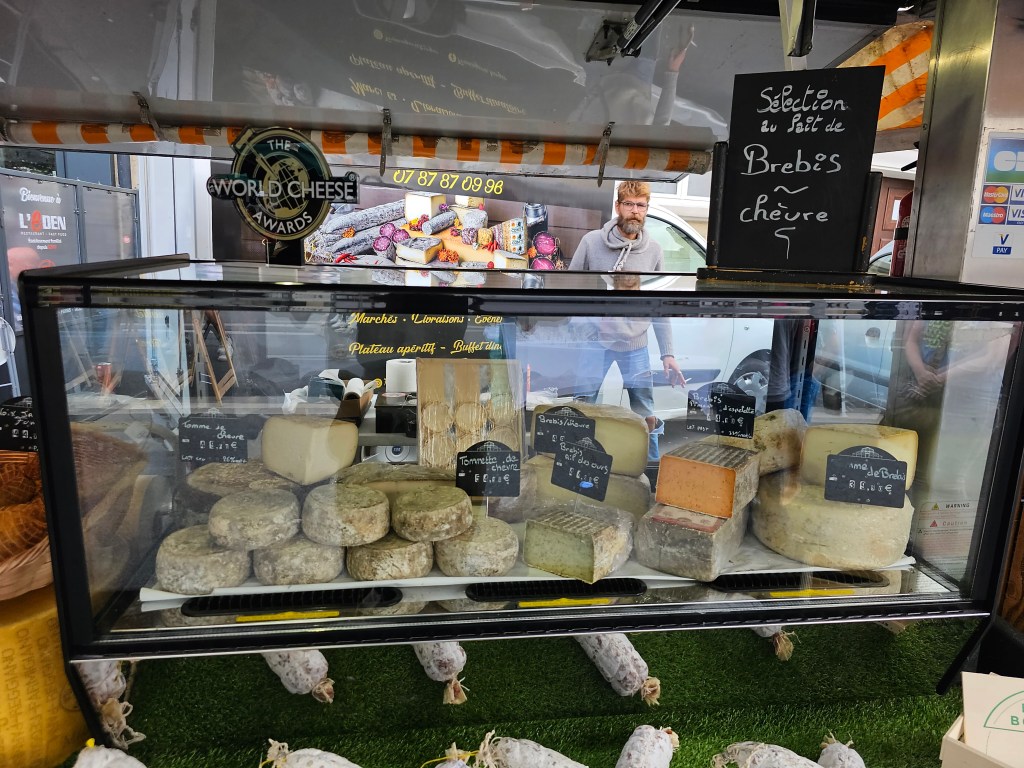
Each Sunday, morning, Caen’s Inner Harbor area is filled with stalls and booths of merchants selling an array of foods and goods. We had a wonderful time seeing all that was on offer. Below are just three examples of the kinds of delights that were on display at the market.

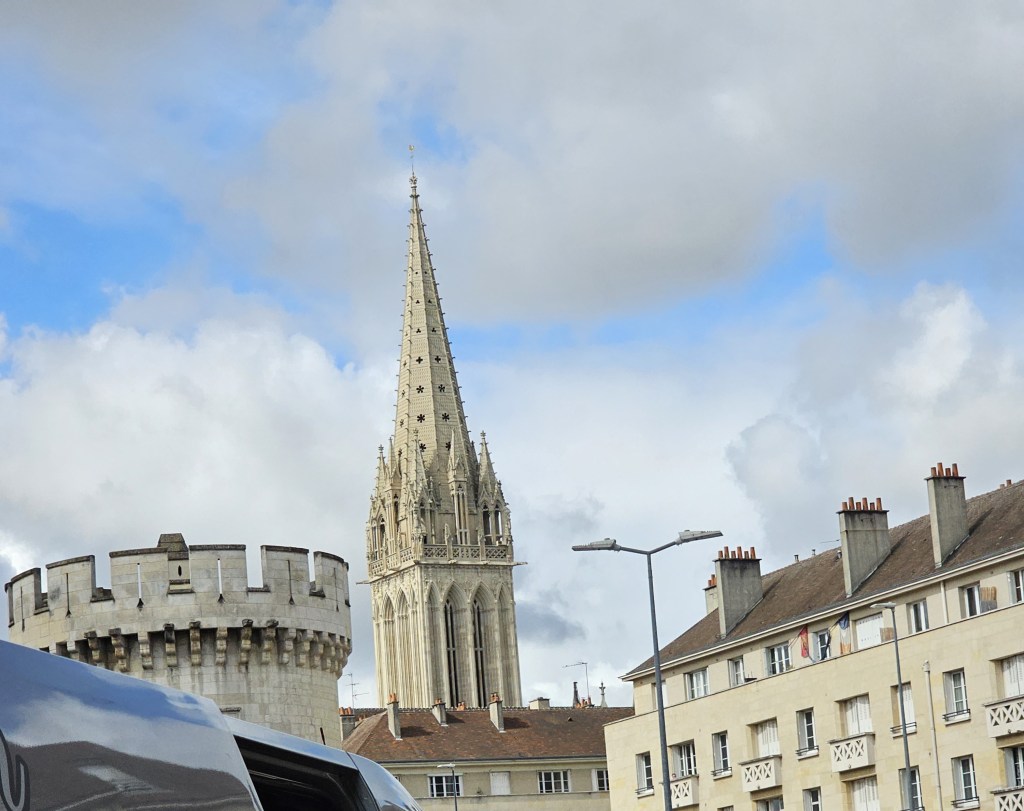
After we finished our shopping, we stopped, as you do, for a coffee and a tart. While we were sitting outside at the cafe, just a stone’s throw from St. Etienne Cathedral, the cathedral bells began a full peel!

As I looked at the church, (above, you can only see the steeple) I notice how incredible the cleaning of the stone, the famed “pierre de Caen” (Caen stone) that was used to build the Cathedral (and most of the ancient historic buildings in Caen) had gone. When I first visited the city over 20 years ago, the Cathedral had a dirty dark brown color, like many old European buildings. But, painfully slowly, as funds allowed, this lovely old building is being restored to its original color. If you ever go to York Minster, you will notice that it is the same color and, indeed, the stone is the geologically the same. When they need to make repairs to the Minster, they sought “pierre de Caen.” I don’t know which of us was more surprised when I mentioned to a docent at York Minster that its stone looked remarkably like “pierre de Caen” and he replied that that was the stone they sought for repairs. We had a good laugh when I explained my connection to Caen.

The evening after our visit to the market, Lesley and Olivier had several friends over to enjoy the bounty of our shopping. It was a jovial night, though we spent much of it keeping the ever-voracious Golfie and Lesley’s cat and a visiting feline away from the food. Still, with good wine, good whisky, good food, and good conversation, some of which I could even understand, it was a great time. And in the end, when the guests had gone, Golfie and Skye did receive some treats. The cat had taken himself off in a snit.

Let’s Go to Cabourg

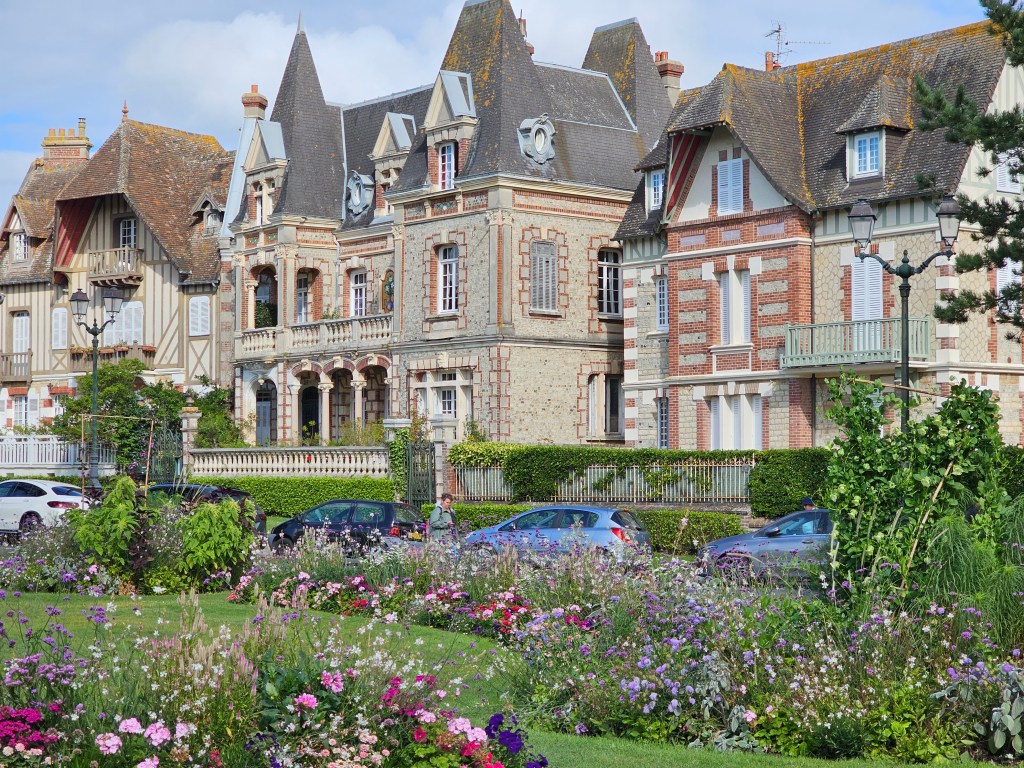
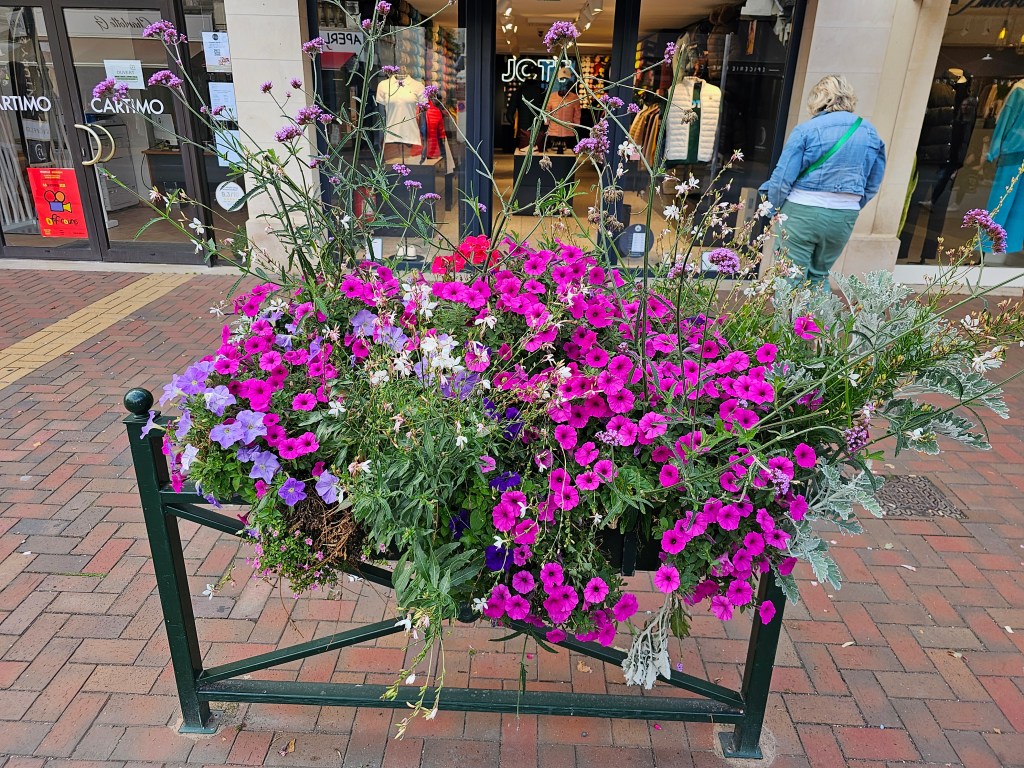
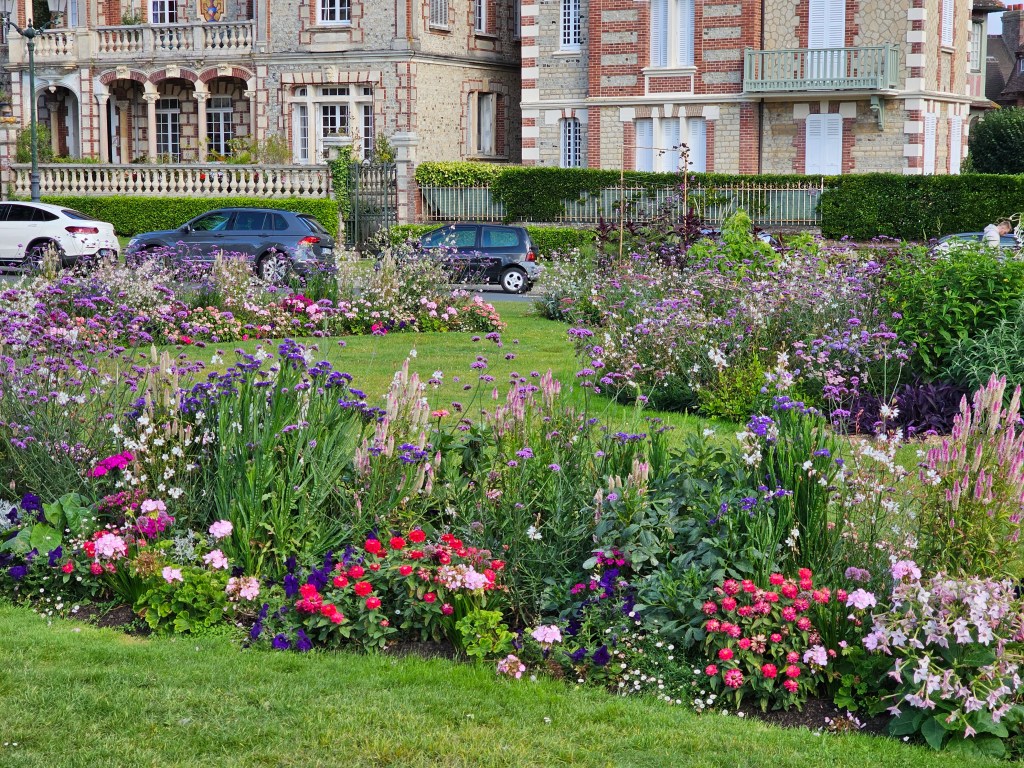
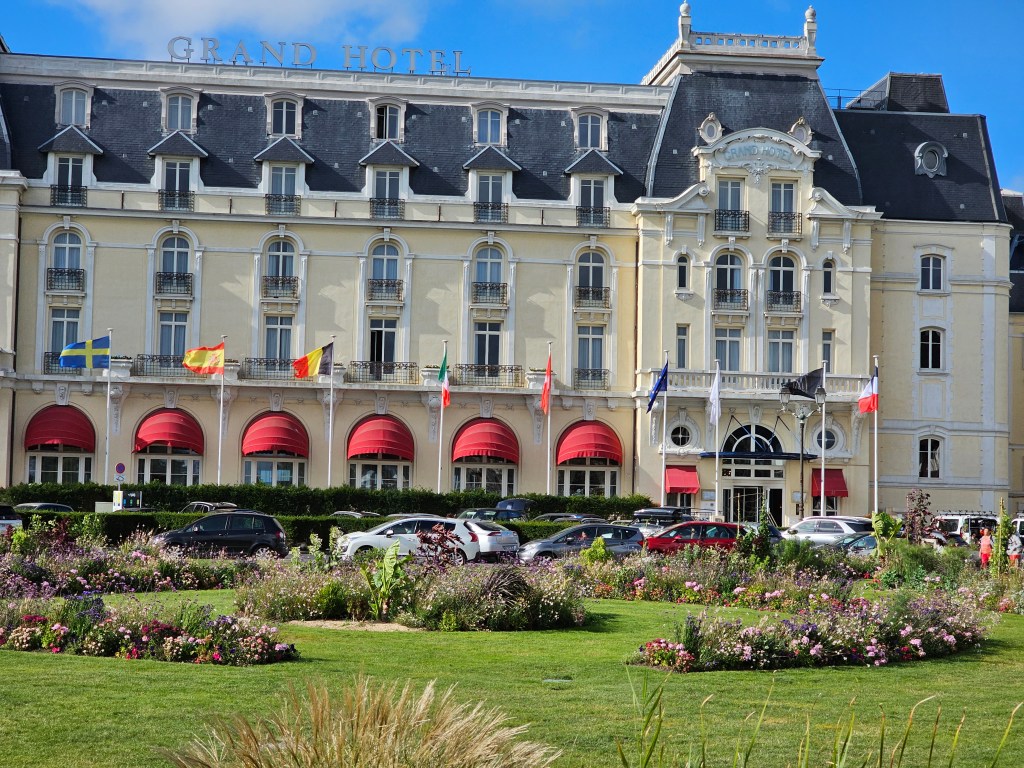
It was my last day in Normandie and Lesley wanted to take me somewhere fun, so we headed to Cabourg. We were having dinner with another Sister Cities friend that evening, my counterpart the former head of the Caen-Alexandria Sister City Committee, Marie Coquelin, an outstanding tour guide, should anyone be visiting Normandie. So, a brief local trip was perfect. Cabourg is another lovely little city right on the water. It has a beautiful and historic casino that really was the reason the city came to life. Now, the city is forcing the casino to move from its stunning waterfront location. Go figure! Below, three images of the lovely flowers in the town center and then the larger photo of the Grand Hotel.

And then, of course, there is Proust. Marcel Proust is inextricably intertwined with Cabourg. One of its main streets is named for him. He fictionalizes it into a town he calls Balbec. So, of course, he is memorialized with a statue.

Proust, with lovely flowers around him.

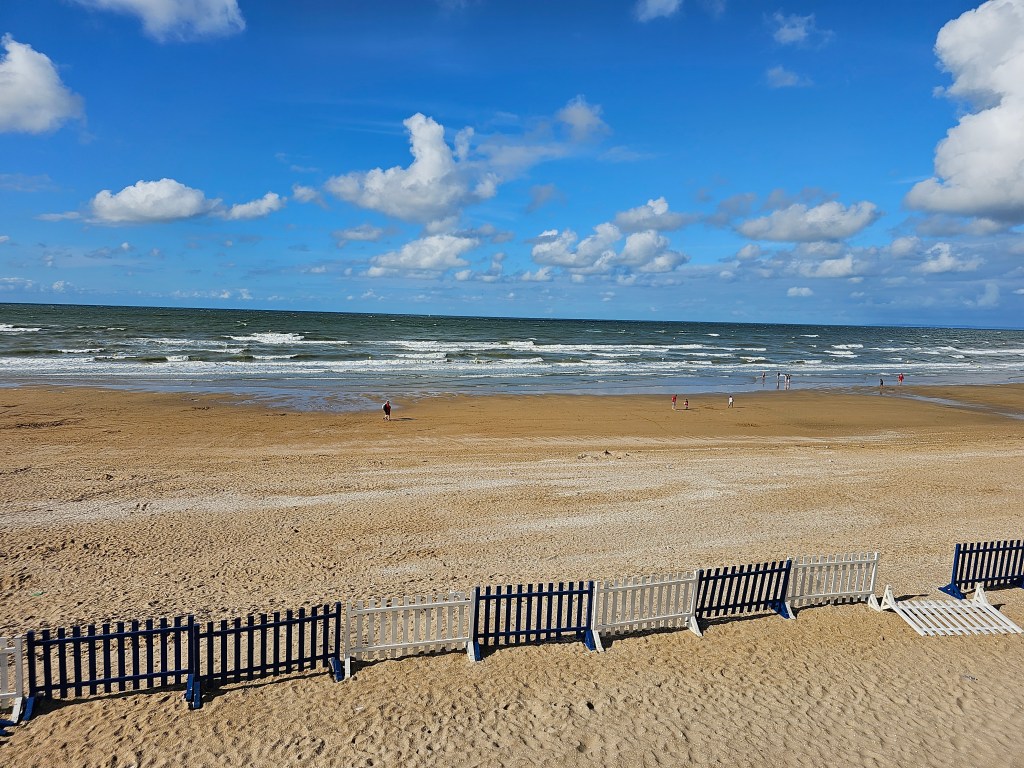
Before we left, Lesley and I took a bracing walk along the beach promenade in what was nearly a gale force wind (I’m exaggerating). But it was bracing.

The wind was so strong it knocked that fence over.

That summarizes my trip to Normandie. We did have a lovely dinner with Marie on my last night. She caught me up on all her family news which was great to hear as I have known her children since they were kids and now they have given her and Christophe 6 grandkids! I regret not seeing Christophe as we have had a great bilingual relationship. I speak English to him, that he understands, and he speaks French to me that I understand. I think that it’s some kind of “Vulcan mind meld” that Marie has made happen.

Anyway, Lesley and Olivier took me out for a nice farewell lunch the next day on the way to the Ferry terminal. The only real glitch in the whole trip, since the train screw up at the beginning was a three-hour delay in the ferry sailing to Portsmouth! But we did eventually leave Ouistreham and arrived in Portsmouth around Midnight. The folks at the Holiday Inn Express Guwharf in Portsmouth were great and had a room waiting for me.

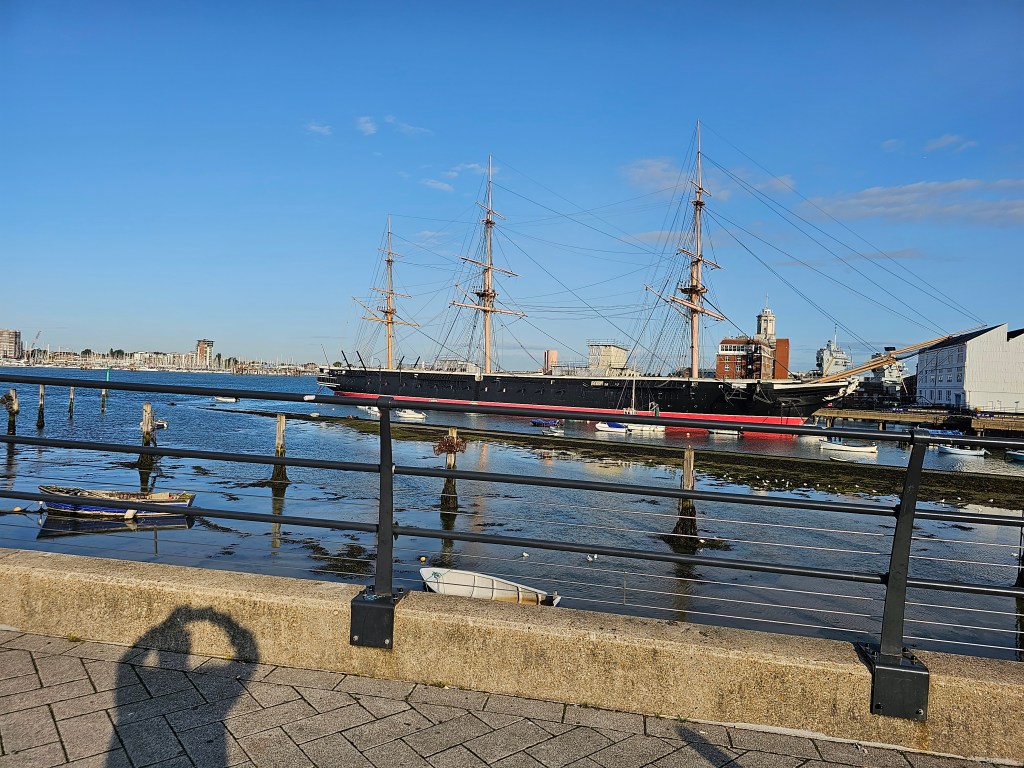
The next morning, it was just a five-minute walk across the road to the Portsmouth Harbor train station and my train back to London. This beauty was in the harbor as I prepared to enter the station.

I would have had this up sooner, but it was eaten up by the ether twice. Here’s hoping you all get to see this version.