Rain, Vaccinations, Banksy and a Red Dragon Lunch

Sunday in the Park in the Rain

Sunday morning started to look like we might miss the predicted rain. Not that I got out into the morning sun, I had a few hours of blog work to do, so I cracked on with it…well after BBC’s “Match of the Day” ended. I had to watch until the end because Fulham was the last match covered. I had been there and

Match of the Day

wanted to see if I had made it on to the broadcast when one of the plays took place in front of my second-row seat. I did.

When I went outside, the rain had started and then stopped but I was glad to find friends Tom and Jacquie under the overhanging roof of Caffe Tropea in Russell Square Park. We were finally able to have a chat about the program I attended at the British Library about the anniversary of the coup in Chile; and to have a general catchup on what we had each been up to. We also had some fun with our neighbors at the next table who had a sweet Dalmatian puppy on his first outing after receiving all his shots.

Speaking of Shots

What a difference a year makes. Last year, getting my flu and Covid booster shots in London was something of a production. Two years ago, it had been pretty simple, a little pharmacy across the street from the barbershop I use on Lambs Conduit Street offered the flu to me for free. And, after signing up as a part year UK resident with the UK National Health Service, I made an appointment for my Covid booster at my local “GP Practice.” Last year, there were only a few pharmacies giving a limited supply of flu shots and I chased all over before finding one, virtually on my doorstep, at the Boots pharmacy branch at Saint Pancras Train Station. The Covid shots for part year residents, I learned, after many false starts on the phone and using the NHS app on the computer, were consolidated in an ancient Victorian hospital that was mostly closed. It did have a polio vaccination clinic too and a Senior Citizens facility. Oh, and it was surrounded by a high iron-barred fence, but I got the shots. This time, my GPs office told me I would have to call a special number, but the receptionist did not ask my age or really seem to know what was going on. So, once the vaccine campaign opened, I checked the NHS website and found that people “of a certain age” just had to input their NHS number and Post Code to make an appointment at the closest pharmacy. In my case that turned out to be the one on Lamb’s Condiuit Street again. So, the next day,, I was back with a bunch of folks who did the British queueing thing and got both shots.see if I had any messages on the NIH website and found that all I

Banksy!

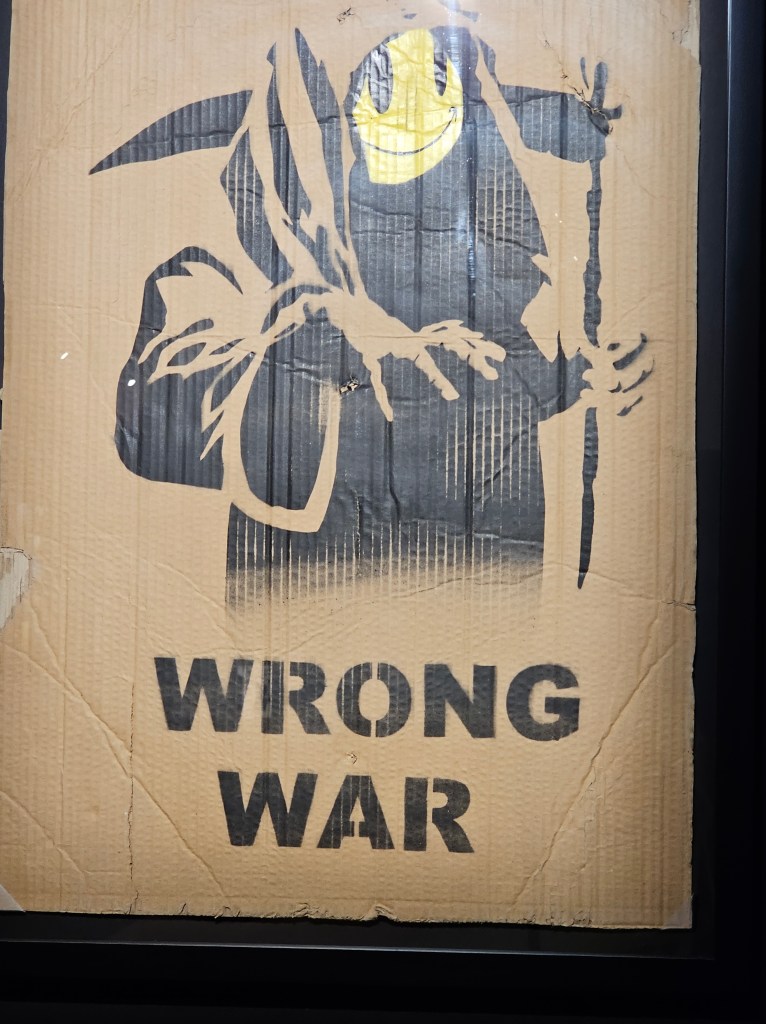
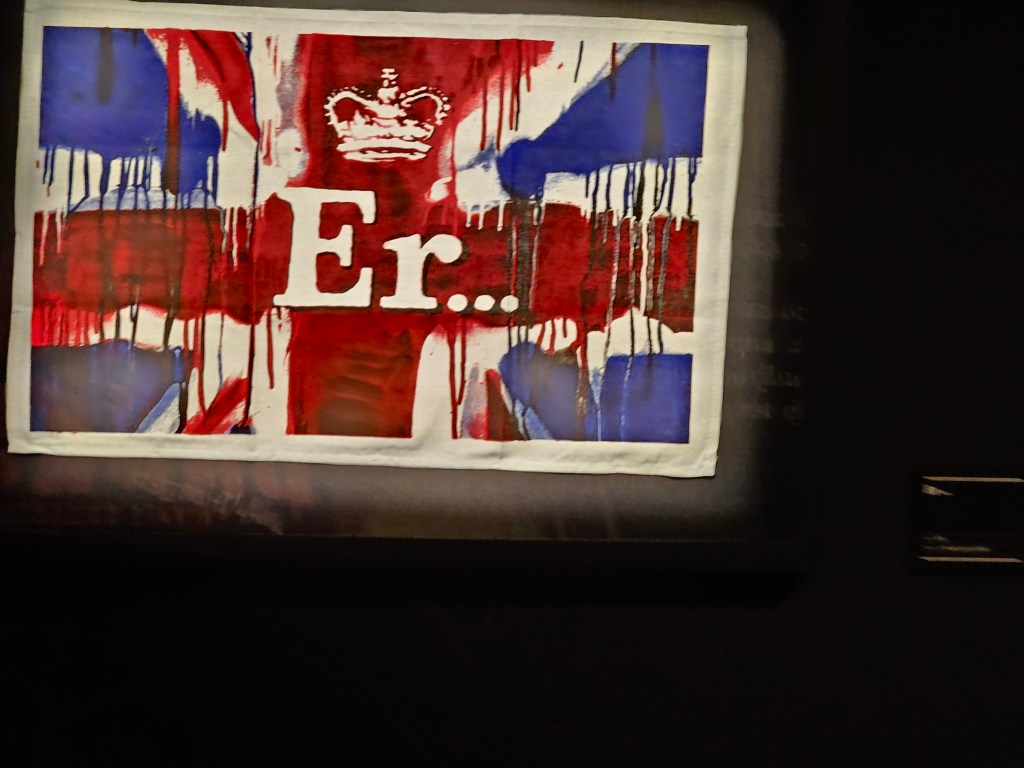
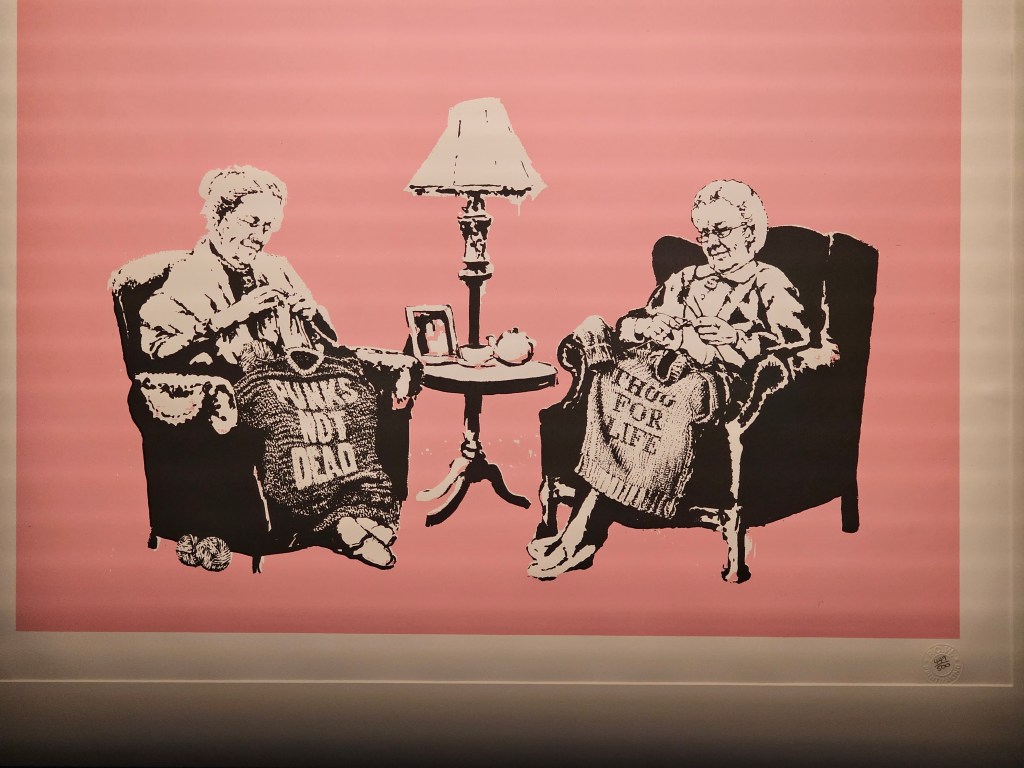
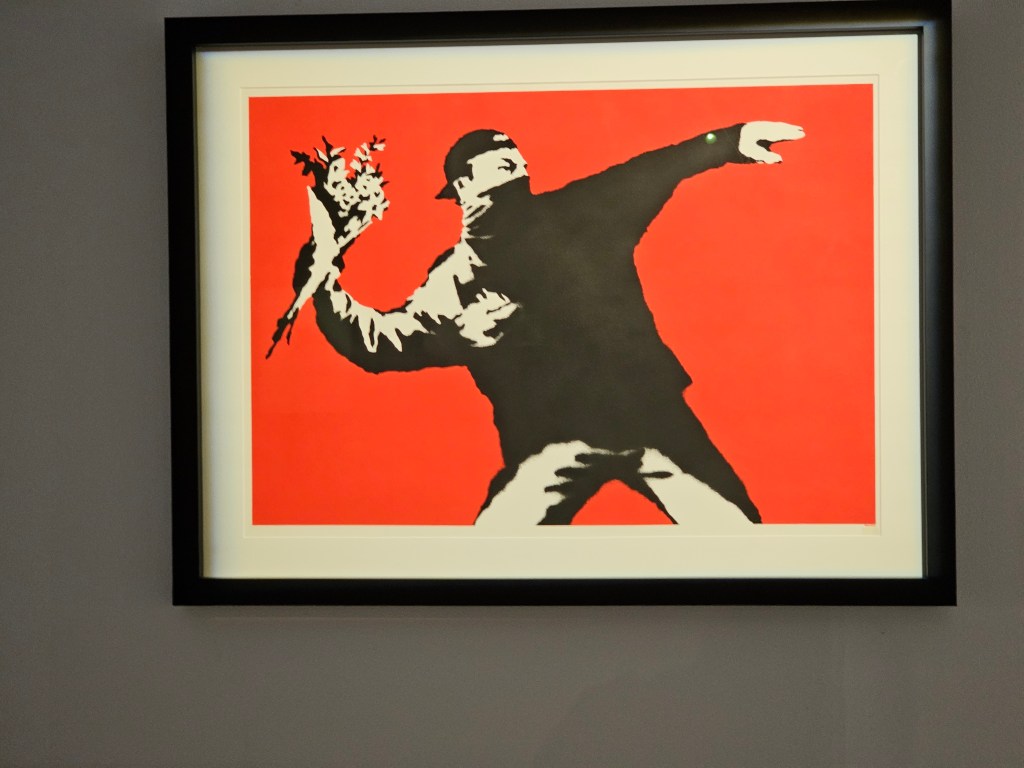
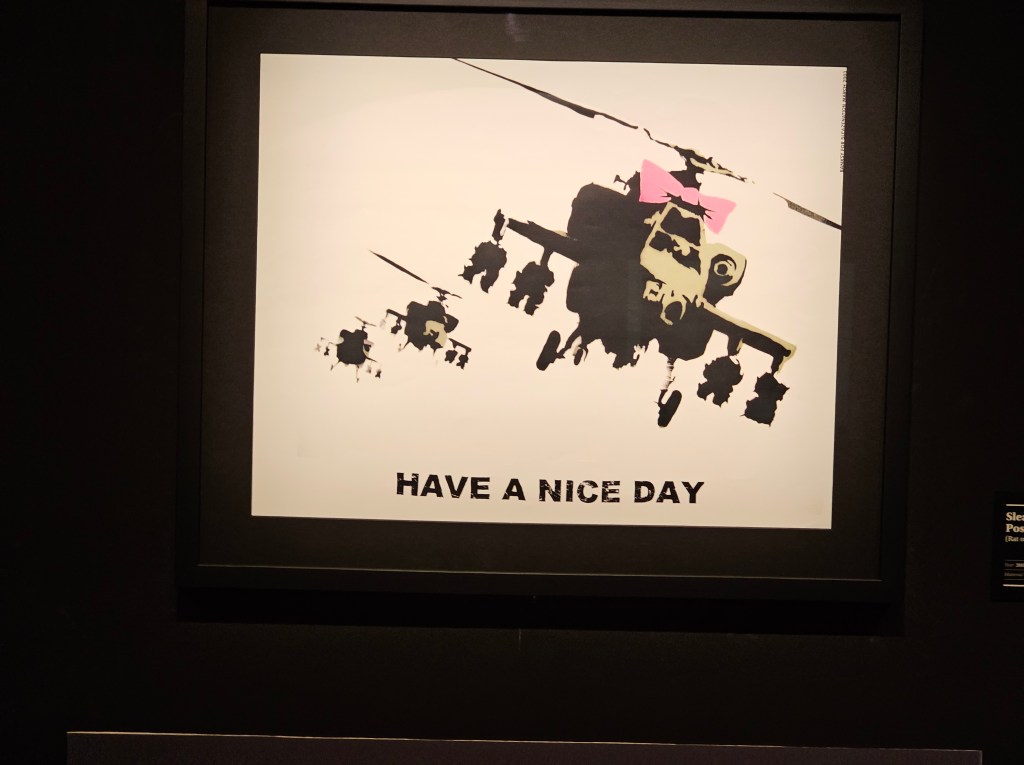
Banksy is the well-known British street/graffiti artist and political activist who has been active since around1990. His identity has never been definitively confirmed. He seems to be more popular than ever at the moment. There are several exhibitions of his art on concurrently. The one I visited on Regents Street in London is showing mostly his political art. Walking into the exhibition space, and seeing the young staff, my immediate thought was, “punk lives.” The exhibition was well-curated and thought provoking. Banksie is not partisan in any discernable way. Clearly, his beliefs are with “the people,” but he is not blinded to any one side’s ideology. He abhors war and violence as well as the unfair distribution of wealth in the world, that is clear. But his art and his anarchic ideas together make statements that I believe make him a phenomenon unlike others who worked only in the graffiti or street art arenas. For instance, when socialite Paris Hilton recorded a CD of her music, Banksy, in collaboration with Danger Mouse, before the release of the CD, replaced about 500 copies of the CD, with one that included his rewrite of the booklet and insert and a Danger Mouse remix of the music. These were placed in music stores around the UK.

Banksy Revision of Hilton Album

Below are a selection of the images shown at the exhibition.
Red Dragon Lunch

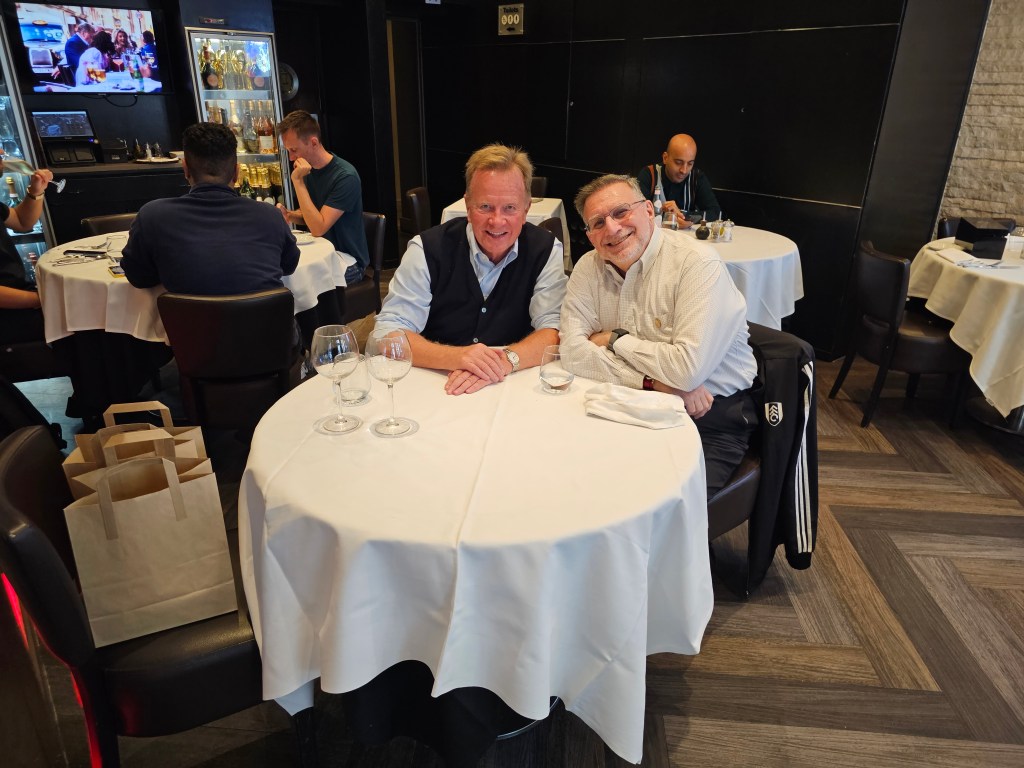
One of my great pleasures during my annual sojourn in the United Kingdom is meeting fellow alumni and sometimes current students from Oneonta University-State University of New York. One of the people I try to see when his busy schedule allows is Chairman of the Board of Frasers Group and Non-Executive Board Member of Fulham Football Club, David Daly. David was one of the players recruited by the legendary soccer coach Garth Stam to play at the then SUNY College at Oneonta during the golden era when the school played in NCAA Division I. I attended the college during those years, but Dave and I missed each other by about a year. I did have the chance to see other Stam recruits like English standouts Joe Howarth, David North, and North American Soccer League 1974 Number One Draft Pick, Farrukh Quraishi play. Dave introduced me to Fulham football several years ago and I have become a staunch fan ever since. Dave and I share a great appreciation for Oneonta University, our education and the particular character formation and life lessons we took away from that beautiful campus nestled in the upper Catskill Mountains.

We enjoyed an excellent lunch at Little Italy, a restaurant in London’s vibrant Soho neighborhood.
Chile’s Past, A Meet-Up With a Friend, And Fulham FC!

Chile 50 Years After the Coup

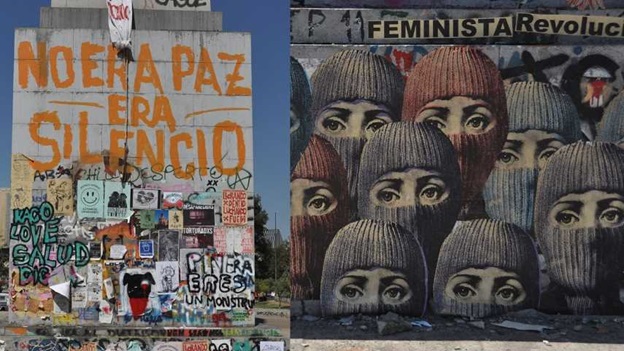
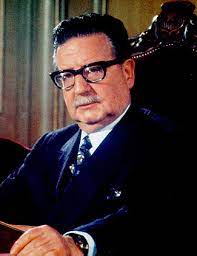
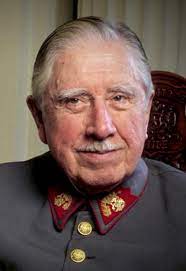
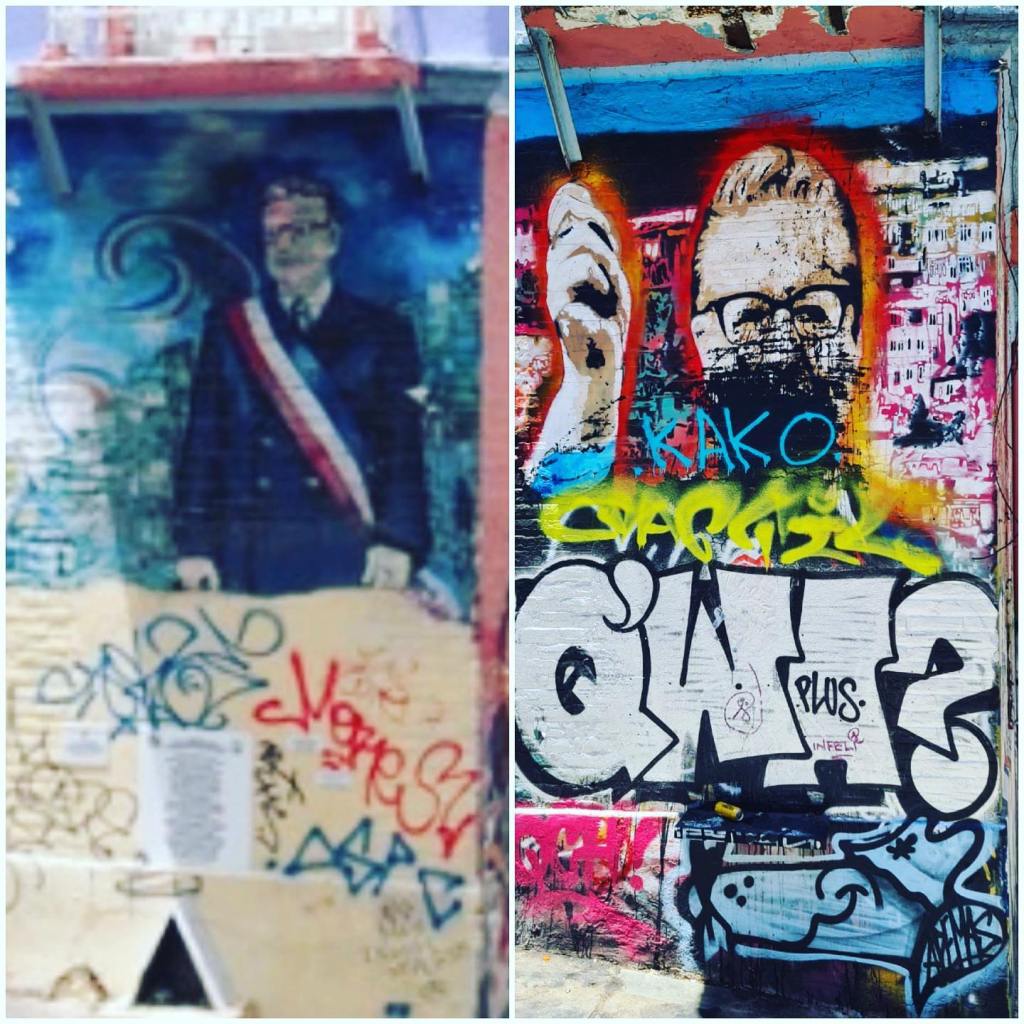
When I arrived in London, I heard about a lecture at the nearby British National Library. The lecture’s title, “Chile 50 Years After the Coup” intrigued me, so I signed up for a ticket. The weeks quickly passed, as they always do during my three-month sojourns, and I found myself in the first soaking downpour of my stay splashing my way across the Euston Road to the library one evening. Names from long ago came forward in my head Eduardo Frei, Salvador Allende, Augusto Pinochet. Orlando Letelier.

This evening’s discussion centered on the coup by Pinochet and the Chilean military that overthrew the elected socialist President Allende. The story was told completely from the view of the political left which had suffered greatly under the dictator Pinochet, including exiles, “disappearances,” murders, loss of livelihoods, etc. There was an elected Congress that had supported many of Allende’s reforms, including

nationalization of mining industries. However, the extent to which his intentions to move further from a social democracy to a communist system was not fully understood. What was known was that the poor and landless were pushing ahead of the legal reforms and outside groups, now acknowledged by the CIA, for instance, were involved in helping to destabilizing the political situation that led to the coup. The aftermath of coup, besides the repressive regime of Allende, was the growth of an underground music and artistic scene during and after the coup and then an exile culture that remains alive today. With children of the political exiles now becoming the new voices of the Chilean cultural diaspora. The wonderful Chilean historian who lead the discussion, is at least two decades my junior. It is both exciting

and daunting to see one so full of knowledge and so ready to defend her subject. The two “survivors, shall we say, were a few years my senior, I like to think and were remarkably resilient and positive in their discussion of the times of the Allende Presidency and their lives since. It was an expectedly great evening. It reminded me of my very first political science class at SUNY Oneonta during the time of Allende’s presidency. I was unable to get into any of the introductory courses and Professor Kathleen Kenney allowed me to take her course on Cuba and Chile. Our next-door neighbors in Rockville Centre, NY, for several years had been exiles from Castro’s Cuba, so I had a first-hand view of a middle-class Cuban family who had to start over in America and I was interested in learning about the developing situation in Chile where Eduardo Frei had been the President and represented a significant period of stable Presidential governance in Chile. In fact, my neighbor wrote me a letter documenting his experiences in

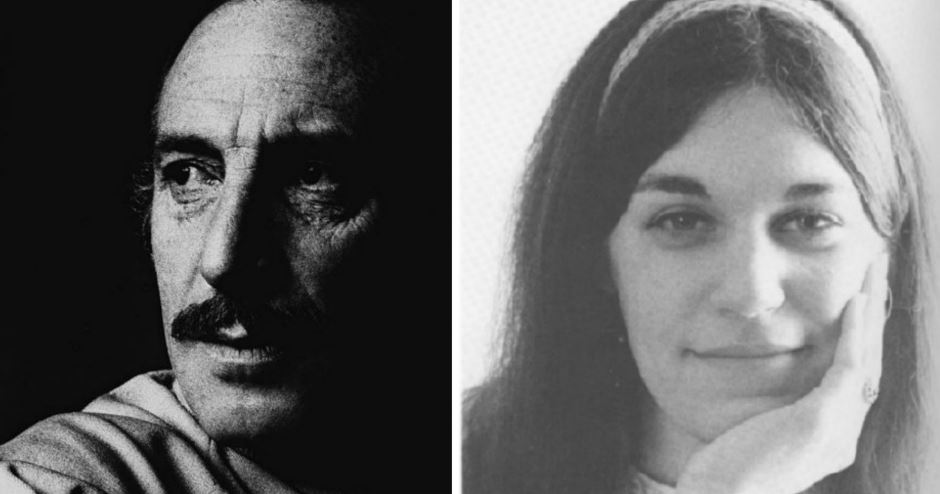
Orlando Letelier and Ronni K. Moffit-Victims of Car Bomb in Washington Ordered by Pinochet

Cuba and in Florida when the Family started over. It was helpful to me in that college class.

A few years later, after the coup in Chile, Orlando Letelier, the exiled Chilean Ambassador to Washington during the Allende presidency, and his associate Ronni Karpen Moffitt were killed in a car-bombing in Washington, DC, where I was attending graduate school. A colleague in the office where I was serving an internship, was a friend of Ambassador Letelier and spoke very highly of him. The murders were traced back to Pinochet. And so, a cycle of history and events in my own life sort of came full circle with the presentation at the library. As an American living through these years where we are a nation divided with such different views on what our national values are and to whom (a person) or what (the Constitution) we owe allegiance, I look back on Cuba, Chile, and look at Ukraine and Russia. I hope our great experiment with democracy survives and that we do not sink into the chaos of authoritarianism that so many nations have faced. Now on to happier topics.
A Night Out With James

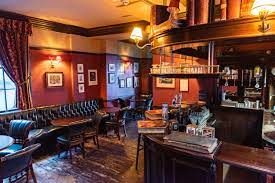
Regular readers may be familiar with tales of my friendship with the Grant family. This started with Nigel and Gwynne and bloomed to include much of their family. A particularly warm friendship has grown between their son James and me who enjoy many of the same kinds of pursuits, one of which is drinking good ales in interesting pubs as we argue the finer points of politics, environmental policy, housing, and immigration (I know, right, a couple wild and crazy guys). This trip started at the Black Friar.

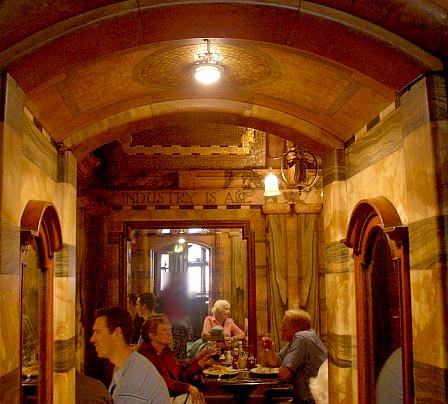
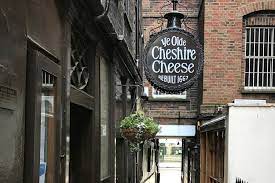
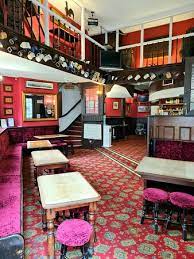
The pub is across the street from Black Friars Tube Station which gave me a chance to try the Thameslink rail service to Black Friars, saving much time from the comparable tube journey. Unfortunately, Thursday is the new Friday for the Tuesday, Wednesday, Thursday office workers (TWT ), known by a crude acronym with an “A” strategically placed between the ‘w’ and the second ‘t,’ according to my barber. So, the place was heaving with drinkers and we moved on, checking out several places locally, before James braved the crowd in “Ye Olde Cheshire Cheese and found us a small table in the cellar bar. It is a place we had met at

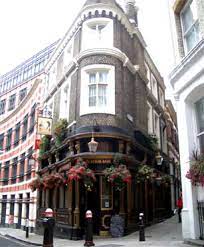
on one of our first drinking excursions, to use a phrase from the late great Jesse Winchester, “as somewhat younger men.” After a pint an James explaining to me the latest permutations in the world of cricket and how cricket can be seen as a paradigm for the change in the class system and the movement of wealth from the former colonial powers to the now independent colonies, we decided to head back above ground and give the Black Friar another try. It was still bursting, so we made our way a few blocks to another 19th century gem, the Cockpit. This was a smaller venue, but great for conversing and for drinking.

We finished off solving most of London’s problems and enjoying some very nice ale along the way. I am looking forward to seeing the rest of James’ family before too long.

Fulham Wins, Fulham Wins, Fulham Wins

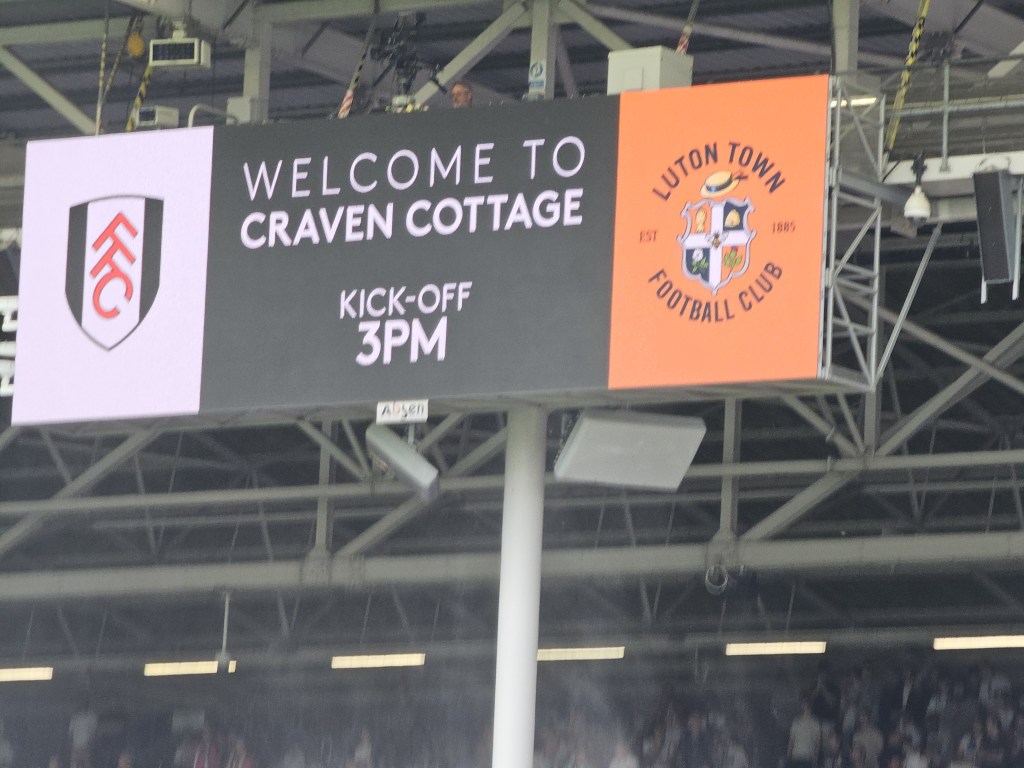
OK, it was just a 1-0 win over the newly promoted Luton Town, but it was sweet none-the-less. First, though, it was a beautiful day, in spite of the crazy Transport for London Tube closures “for essential works” that had tourists scratching their heads trying to figure out how to get to their destinations. The walk through Bishopsgate Park to get to Craven Cottage where Fulham plays was lovely. The rose gardens still looked pretty good for mid-September and there were boat races on the Thames.

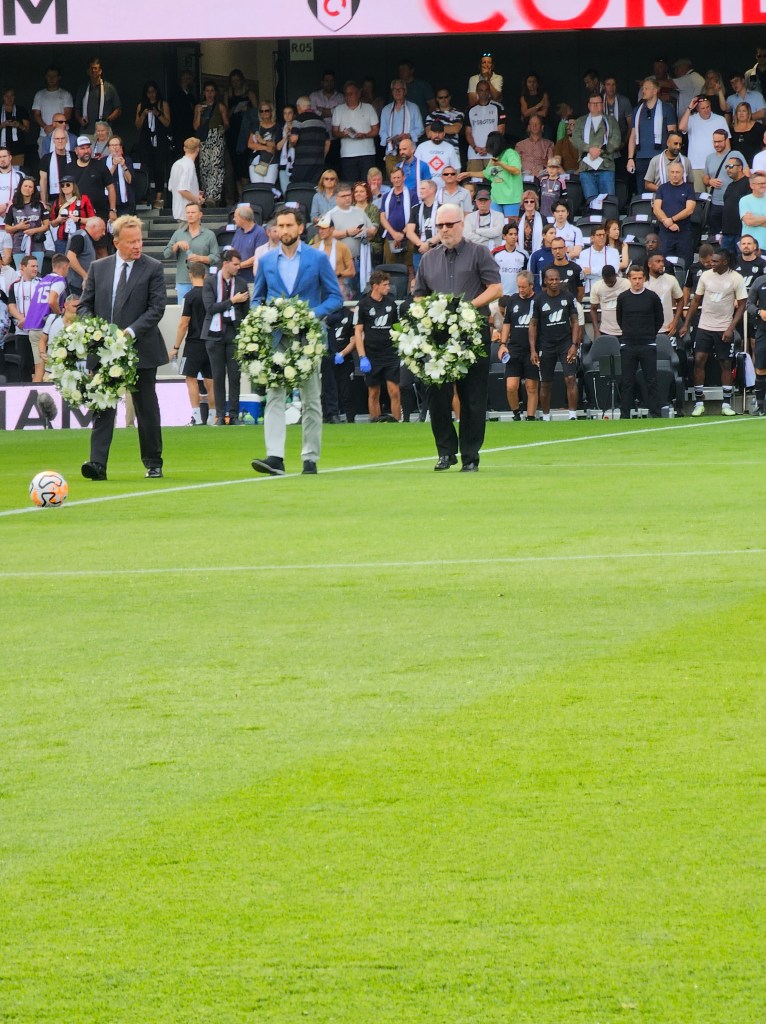
Before the match began wreaths were laid on the field by SUNY Oneonta alumnus David Daly, representing Fulham FC, one Mr. Al Fayed’s sons, and a member of the Fulham Supporters Association, honoring the late Mohammed Al Fayed who bought Fulham FC in the 90s and brought it from the 3rd division of British Football to contention. He was well loved by Fulham fans. If his name sounds familiar,

he was the father of Dodi Al Fayed who died in the car crash in paris, along with Diana, Princess of Wales. He was also the owner of Harrods Department Store in London. The wreath-laying was followed by a moment of silence.

The match was somewhat harrowing, with Fulham’s one goal not coming until the 65th minute of play. The goal was by Carlos Vinicius coming in as a substitute. 38-year-old American Tim Ream was chosen as Fulham Player of the Match.

Fulham FC presents the Fulham Forever award to players and staff who exemplify the standard of excellence that the club seeks to represent. Below, we see this week’s awardee was Paul Konchesky (right). He was escorted by Dave Daly, once again, making SUNY Oneonta proud.

Finally, below is an interesting building I saw this week while walking up to the Camden from Bloomsbury. Thought you might enjoy it.

It was once a music venue where the Beatles, the Stones and many other famous groups performed.

Music, Music, Music! Last Night of the Proms First Morning at Wigmore Hall

The Proms

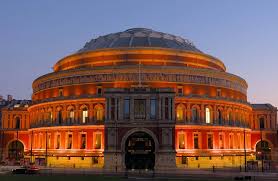
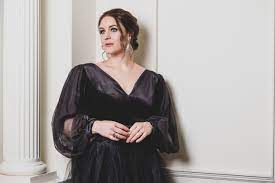
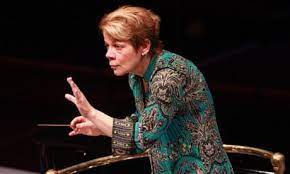
I don’t always manage to get a ticket to one of the Proms, the BBC annual summer celebration of (mostly) classical music at Royal Albert Hall, but I try never to miss the last night, even if it is only watching it on TV. What is so special about the last night of the Proms? First of all, the BBC Symphony Orchstra, Chorus, and Singers, conducted by by great conductors (this year, American, Marin Alsop) are joined by renowned soloists for an evening filled with old and new music. There is always a male or female voice who tends to bring down the house with their incredible vocal performances and another who does the same with their virtuoso instrumental performance. This year the singer was Norwegian Lise Davidsen whose voice filled the hall with such clarity and fullness that I was left stunned. She sang in several languages and was perfect in each one. Sheku Kaneh-Mason performed on the Cello. His work was brilliant. The two of them, alone, along with the rest of the classical program of Strauss and other pieces would have been a fine evening for any music lover.

But the last night of the Proms is about singing songs from each of the United Kingdom’s constituent nations, and singing silly old songs, singing patriotic songs, some of which need to be adapted to modern times and some of which need to be accepted for what they are-songs written long ago by an island nation that had fought with its neighbors and had survived, a nation that had been majority Christian nation, whose monarch to this day has the title “Protector of the Faith”. The song “Jerusalem,” after all, was written as much about social reform (remember those satanic mills), as it was a hymn. It is this last part of the prom with penny whistles and Union Jacks, as well as the flags of every other nation which has a citizen or a former citizen present are waved as songs like “Jack the Lad” and other British sea shanties are played by the orchestra, and Rule Britannia (led by Lise Davidsen), Land of Hope and Glory, and Jerusalem are all sung. Then a more solemn singing of the national anthem, (this year, of course, God Save the King, for the first time at the Proms since last year’s Last Night was cancelled out of respect for the passing of the late Queen Elizabeth II). Finally, all of those present cross their arms and join hands, singing Auld Lang Syne to conclude the celebration. I always feel the way I do at the end of a July 4th fireworks display or when I watch a military band play a Sousa march at home. Somehow, it just lifts the spirits and so it did for me that night.

Wigging Out at Wigmore Hall

There was little traffic that morning, so I arrived with plenty of time to get a coffee downstairs in the little coffee bar. As this was the first of these Sunday morning concerts of the season, the staff was still getting their routines down. But some of my fellow concert goers were less than happy with the service. I had ordered at the same time as a gentleman who was obviously used to white glove service and was already disturbed that he would have to carry his own coffee to the other lounge.

As I was about to sit down at one of the few remaining tables, he sat there first and turned to me and said, “you don’t mind if I squat here while I wait.” Never passing up an opportunity to hear a person grumble, I quickly sat at the other seat. In the minute or two we waited, my latte came before his flat white, and he continued to be amazed at the lack of coordination and preparedness. I didn’t have the heart to tell him, in case this was his first visit that this was status quo here. Over the years, I had come to believe that many of the staff had probably worked a night event several hours before and were probably the unlucky ones chosen to come back in for this shift. They were always understaffed and never had enough of anything that the mostly older crowd wanted. In any case, he soon got his coffee and moved on. I enjoyed mine, thanked the staff and was soon upstairs in my seat and waiting for the arrival of the Doric String Quartet whose name always reminds me of an ancient Steve Martin skit on Saturday Night Live “Theodoric of York, Medieval Barber.”

The Doric String Quartet, now featuring Alexi Kenney, violin; Ying Xue; violin; Helene Clement, viola; and John Myerscough, cello performed Franz Schubert’s String Quartet No. 15 in G D887, written in 1826. However, it was not published until after his death. It was also last string quartet he wrote. It is described as hauntingly transcendent, moving into strange, mysterious territory. Another describes its first movement as “an exploration, an opening of space. Still another says it focuses on “lyrical ideas.” It is a work that allows your mind to go to the places it needs to go to ask the questions that need to be answered. Perhaps as Schubert neared the end of his life, he too was doing this. It is a work that takes about 45 minutes to complete and the artists work hard throughout that time. There is so much in the work, so many different places that it takes you that by the end, you might feel, as I did, that you had been on a voyage and yet you also might feel that you now had another journey ahead, a journey of self discovery and self-enhancement.

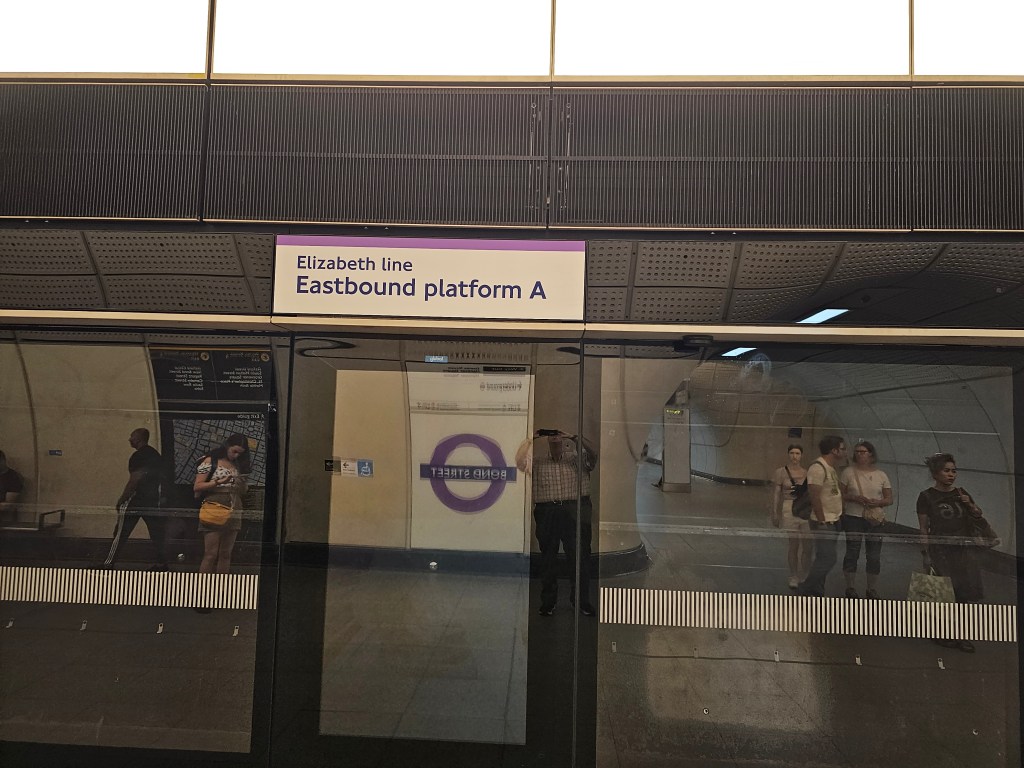
I love these morning concerts at Wigmore Hall, they are truly a great way to start a day. When I left the Hall, I decided that the weather had settled down some and I would try walking to a Tube station, at least. This ended up being a very positive move as the station I chose was on the new Elizabeth Line (named for the late Queen). My friends who have ridden it have all marveled at its cleanliness, the airconditioned cars, and how quiet it is. It could only take me two stops, before I had to transfer back to reality, but it was still a nice ride.

Returning to the Tate Modern

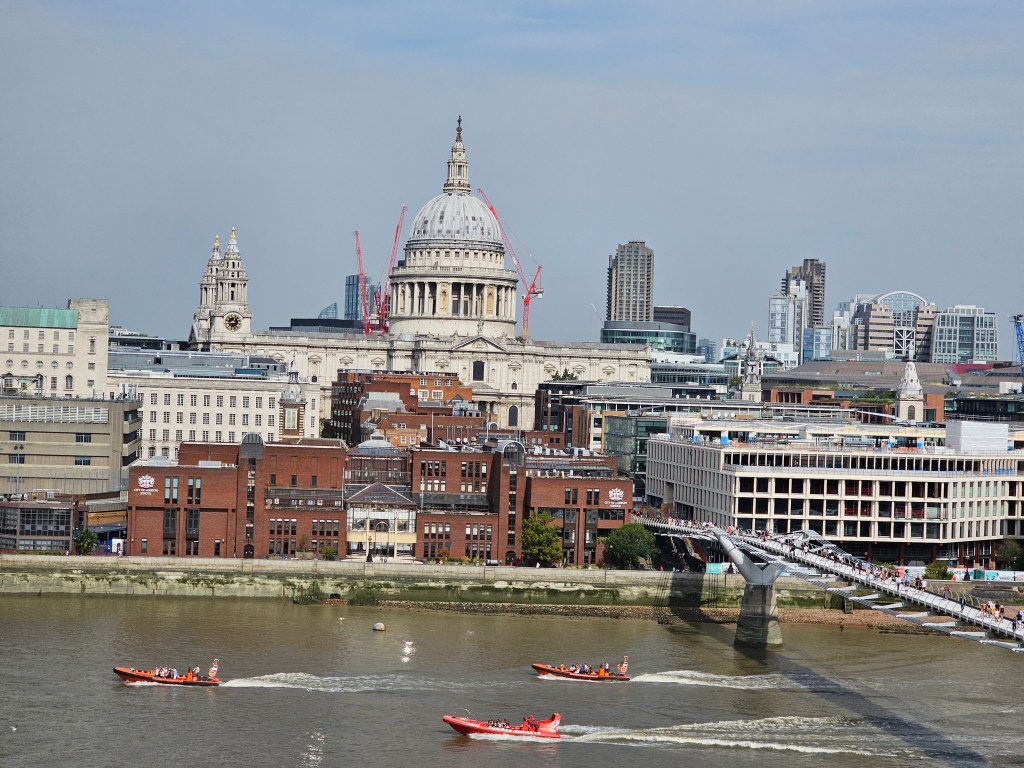
Above, the obligatory photographs across the Thames from the Tate Modern’s Member’s Bar Balcony.

I Never Know What to Expect

I have an unusual relationship with the Tate Modern Art Gallery. I love modern art. I am always willing to dive into something new and controversial. My heart sings at colors, the most abstract use of colors tells me things that others do not understand. Joao Miro and I share a birthday, I think that that, somehow, has made me a lover of art that is different and sometimes difficult. I recall the time I was introduced to Patrick Heron’s work at the Tate Modern, I didn’t know what to do. I felt like Jim Valvano after North Carolina State won the NCAA Championship in 1983, I wanted somebody to hug. I remember one of the guard/docents at the museum saying that she never saw anybody so excited by an art exhibit before. But, then there have been the other times. Times when, on an apparent whim, the collection has been moved around so that I can’t find my favorites anymore. Or worse, the dreaded news that something dear to me has been put in storage to make room or “is on loan.” But, to quote Maya Angelou, “still I rise.” Although, in this case, it is up the escalators to walk through the galleries and see what I can find.

Did The UK once own the Dominican Republic?

The first picture I saw was this one: Untitled (A Map of the British Empire in America) by Firelei Baez, a Dominican artist.

I love so much about this picture, but I have no idea what a ciguapa, a mythological creature from Domican myths has to do with the British Empire and I do not know why this painting was the first one that I saw. There was nobody there to explain it and the notes on the painting didn’t help. Keep reading to understand how this relates.

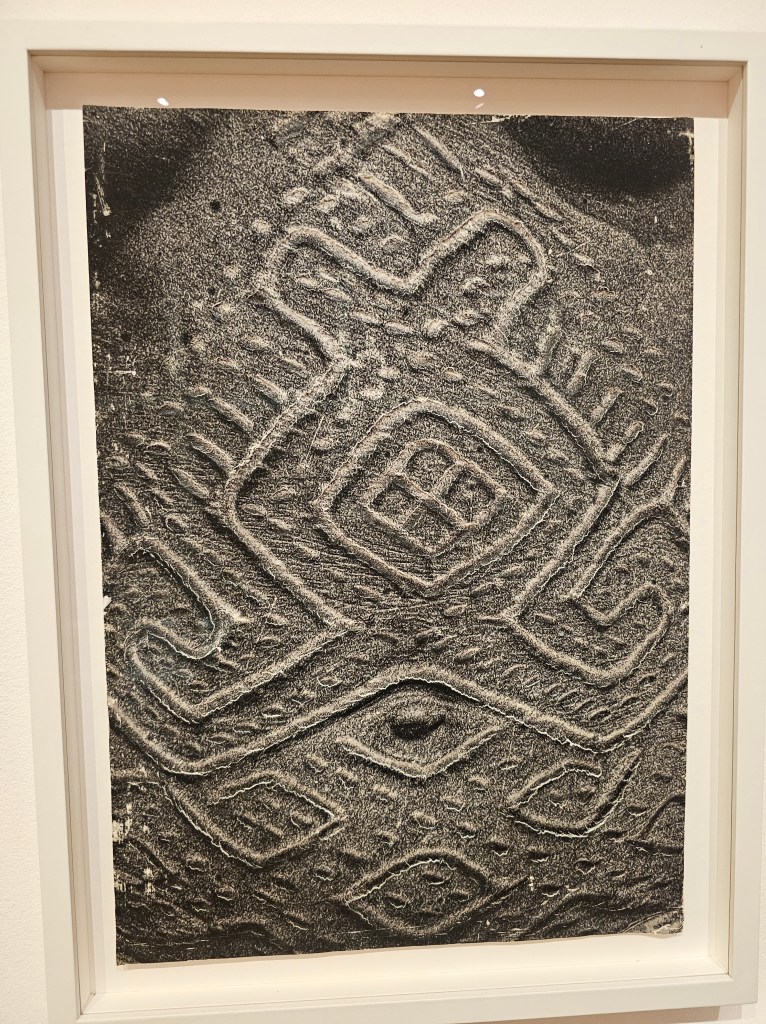
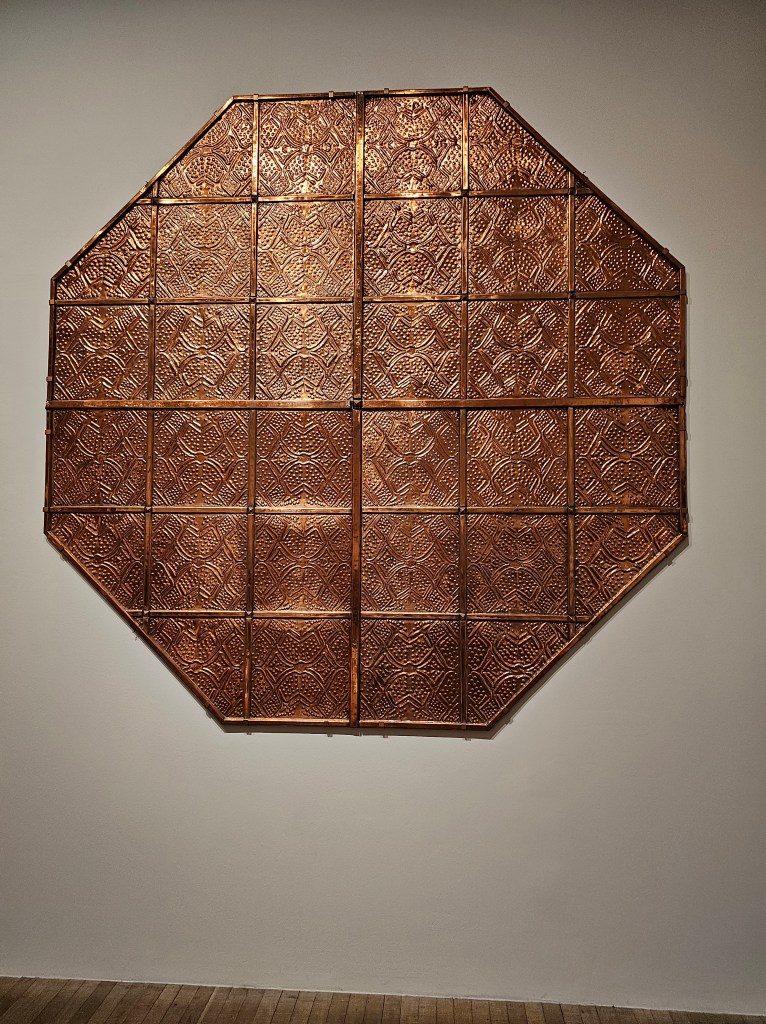
This was an enjoyable stroll through the galleries. Among the pieces I particularly enjoyed were:

Ardek by Olle Baertling who lived and worked in Sweden. His work was about spaces, contrasts and colors.

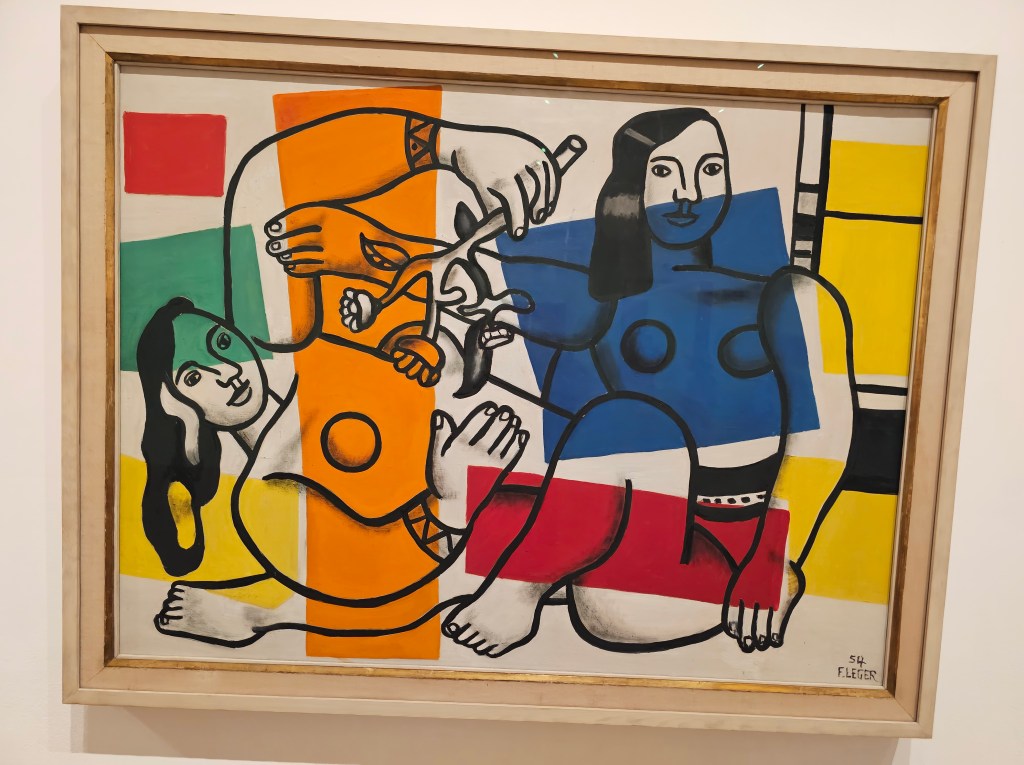
This is Fernan Léger’s Two Women Holding Flowers. Leger was French.

And

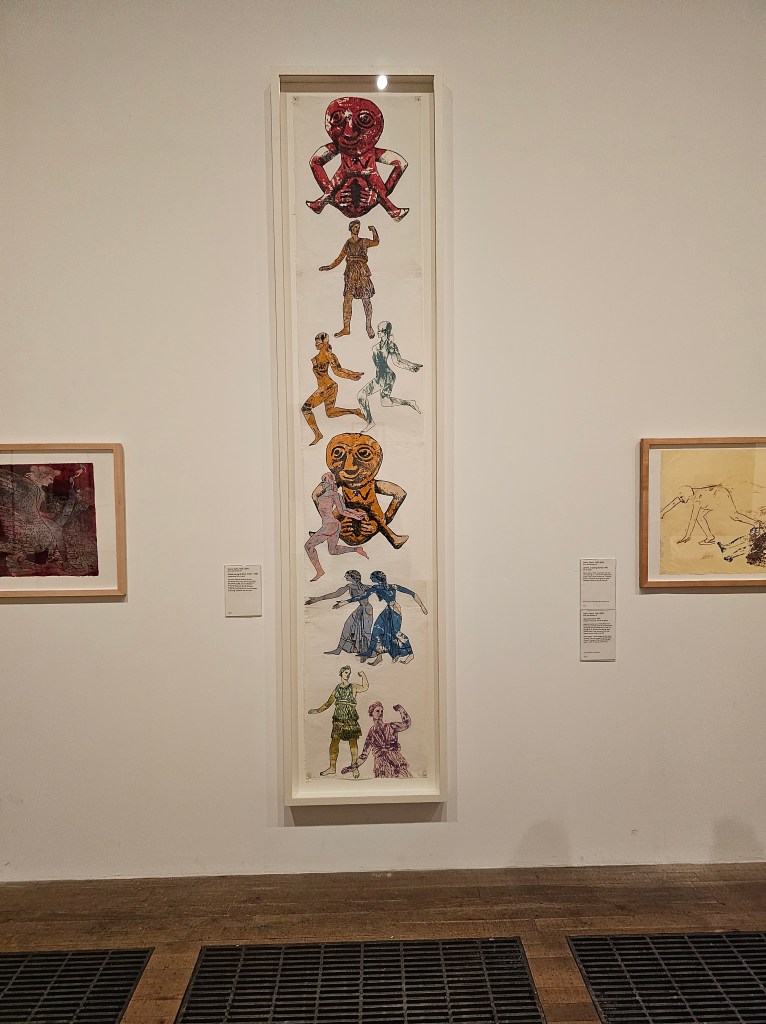
And then, this Nancy Spero (American) Sheel-la-na-gig/Artemis Totem 1. It, to me, is so reminiscent of the British Museum’s outstanding exhibition from 2022 on Feminine Power.

An Unexpected Encounter with the Art and History of the Former Belgian Congo

They Called it Capturing the Moment, I Captured a Better One Later

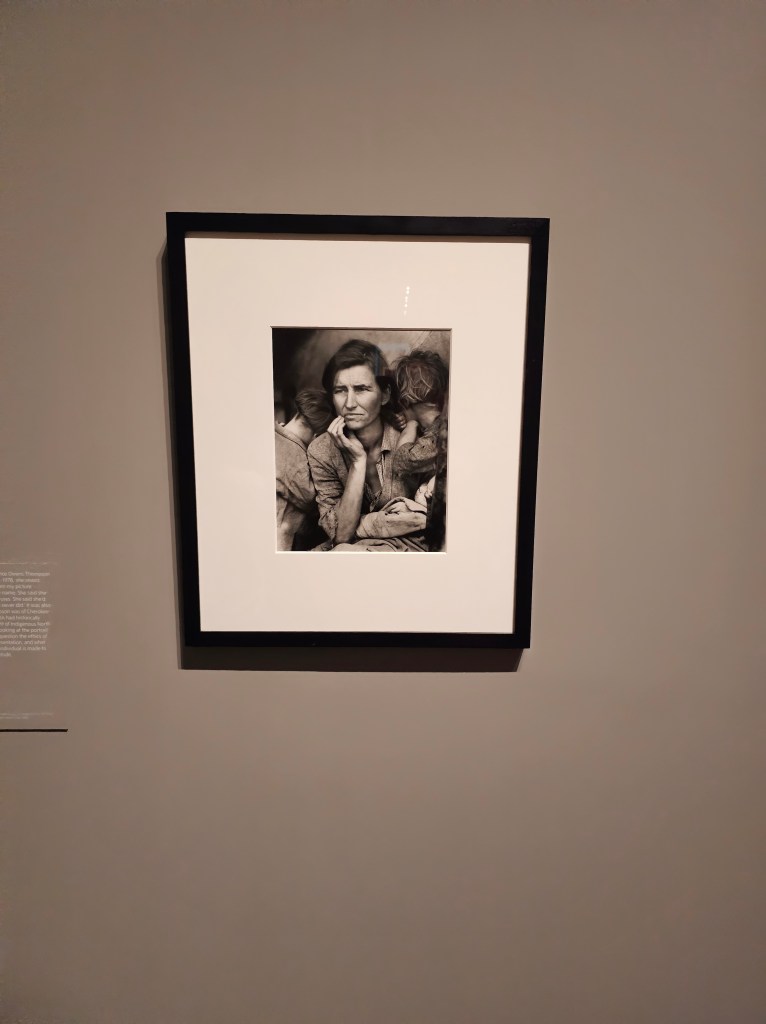
As a Tate Member, one can visit all the exhibits for free. So, since I was already there (and it was hot out), I decided I would take a chance on the “Capturing the Moment-journey through painting and photography” exhibition. The idea was an interesting and perhaps even provocative one to look at how the artist captures a moment in time through the lens or the brush. There were a few places where it worked, in the exhibit, but sometimes the pieces they had available from particular artists were not their best work and so the idea seem a bit banal. Here are a few of the ones I thought were worth sharing.

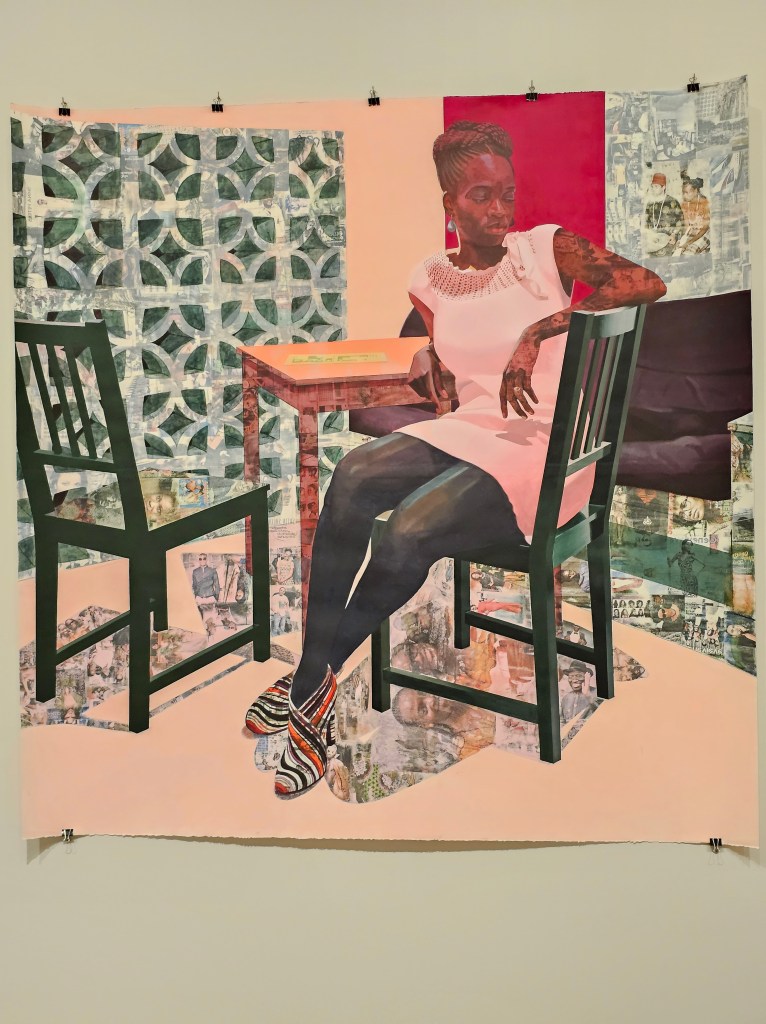
I thought these three were representative of the best of the collection. Ms. Riley being a beloved artist, Ms. Lange’s work being iconic and Ms. Crosby’ 2013 work pointing toward the future. I will always recommend the Tate Modern, its sister, the Tate Britain and the other Tate Museums around the UK. But you never know what to expect.

When I got back to Bloomsbury and checked in with my friends at Caffe Tropea, they were anxious to see me because they had found a lady from Florida who had sat down at the table next to them. She lived on the east coast, while my home is on the west coast. In another example however, of capturing a moment, it turned out that she was the next-door neighbor of the parents of a former colleague and good friend of mine. It is a small world after all!