The Wigmore Hall Sunday Concert Season has begun. These are the delightful hour long concerts by, generally young artists, often string quartets, that are something I look forward to each year. There are also Monday afternoon concerts on my schedule at this same wonderful venue. Above the beautiful bouquet which has twin on the other side of the stage.
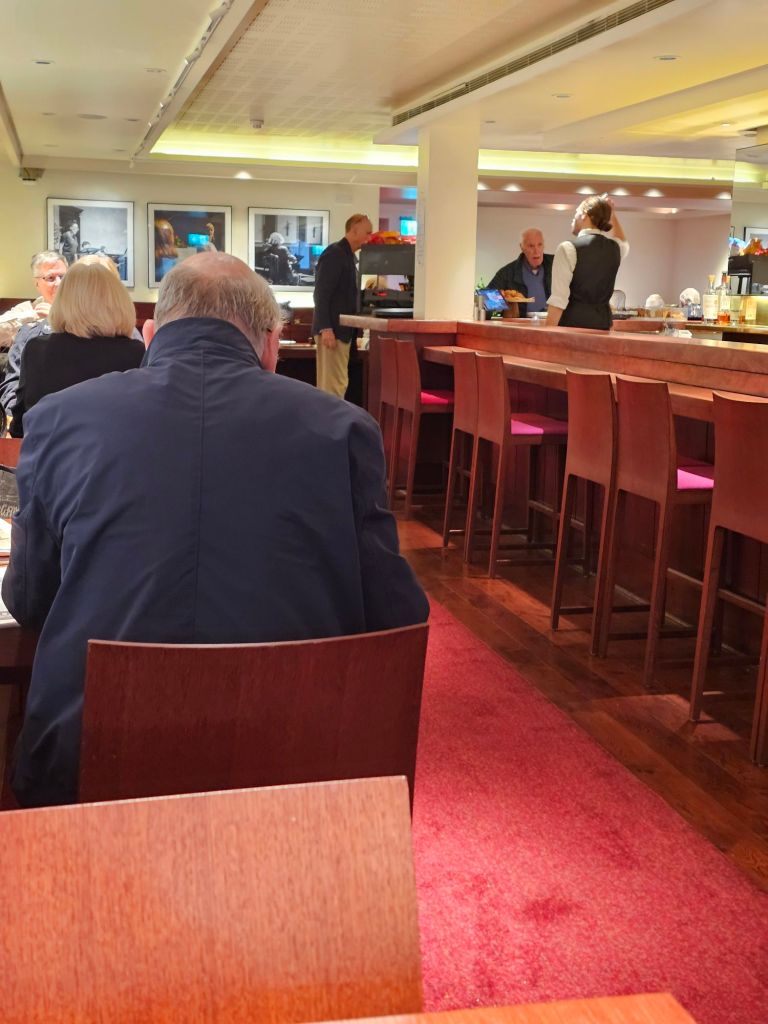
No Sunday concert at Wigmore should start without a coffee and croissant at the restaurant on the Hall’s lower level.
This week’s performers were the Quartetto Indaco, an Italian String Quartet that played three pieces on the programme, Hayden’s String Quartet in C, Opus 33 No. 3 (The Bird); Webern’s Langsamer Saltz; and Mendelssohn’s String Quartet Number 4 in E Minor, Opus 44 No. 2. All were played to perfection and received very warmly by the sold out crowd. They finished with an encore of a Sardinian love song that them sung. It was so beautiful that it brought tears to my eyes.
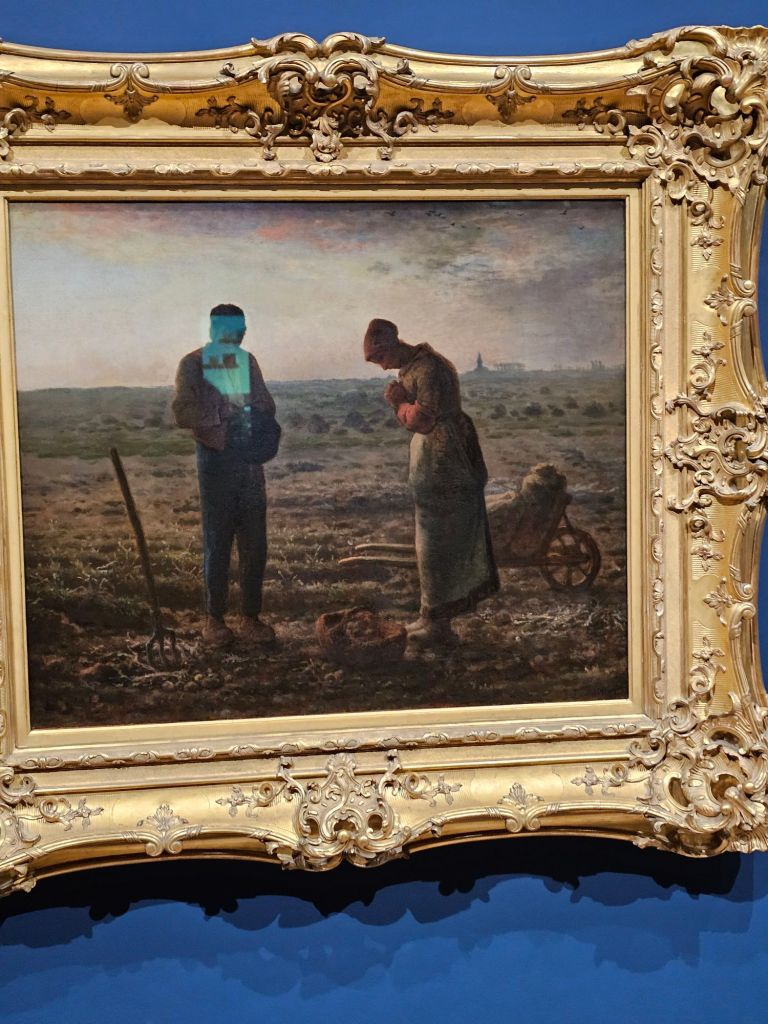
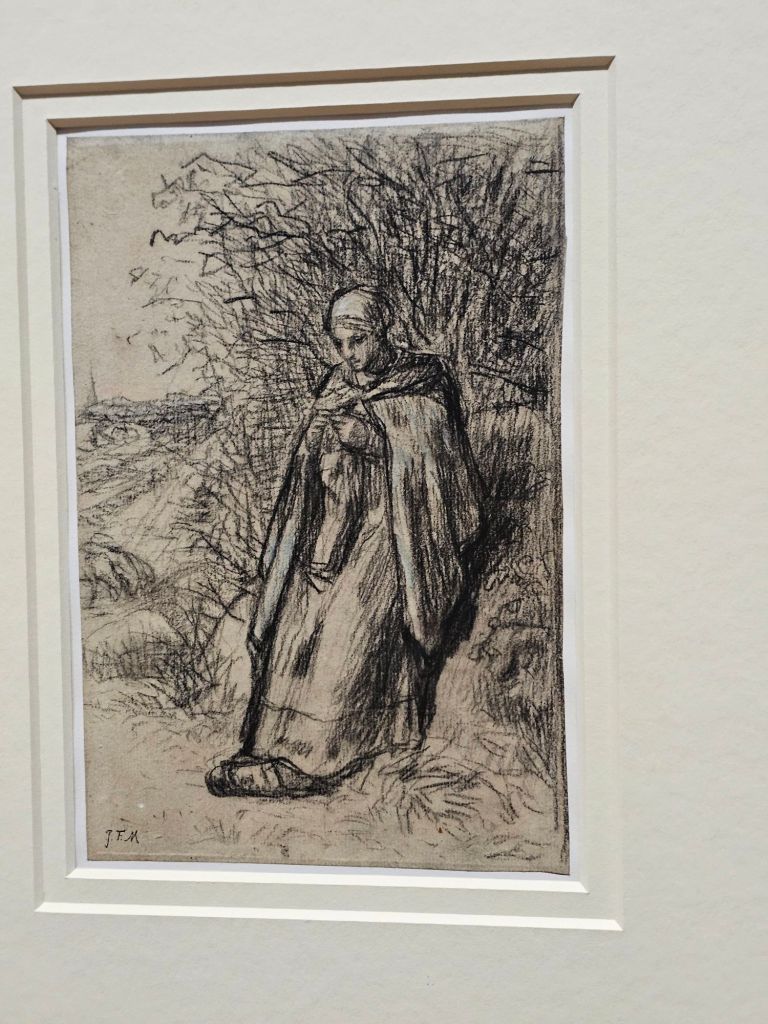
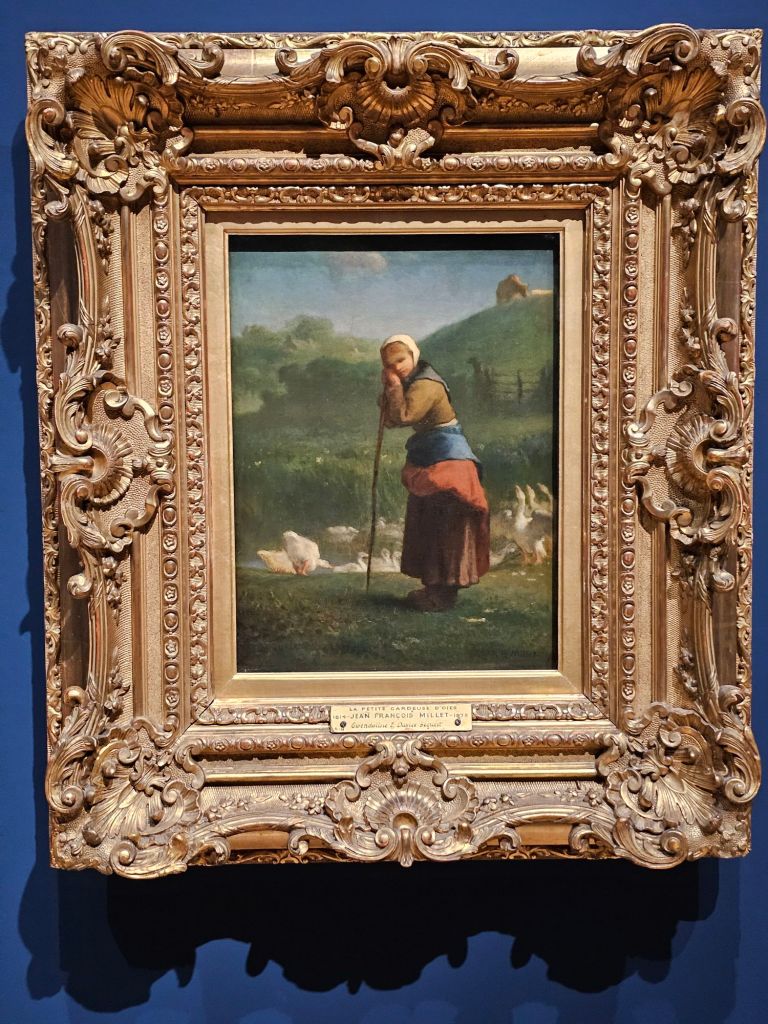
Life on the Earth-Millet at the National Gallery
This show coincided with the 150th anniversary of the Normandy, France born artist. This collection focuses on the work of peasants on the land during his lifetime.
Jean Francois Millet came from the village of Gruchy where his family were farmers. He paid particular attention to women’s work. This gives us an insight into their lives.
The AngelusA ShepherdessThe Goose Girl At GruchyThe Faggot GatherersThe Wood Sawyers
Happily, this was a free exhibit and well-worth the visit.
The British Library, as I have mentioned is a neighbor of mine during this London Sojourn (and the past two). This wonderful institution offers evening programs that cover difficult subjects. I previously attended a presentation on Chilean politics on the 50th anniversary of the coup that ended the Allende government and plunged Chile into a period of authoritarian rule. The presentation that is the subject of this discussion was an oral history project to gather the stories of British personnel who were involved in the development and testing of Britain’s nuclear weapons on Christmas Island and off Australia’s coast.
As a retired member of the staff of the U.S. Nuclear Regulatory Commission (responsible for assuring the safety, security and the environment in civilian use of nuclear material), I was very interested in this project. In the course of my career I had met American “downwinders” who had been exposed to radiation in the American above ground nuclear testing in the Nevada desert and had many discussions in public forums with citizens concerned about the safety of nuclear power plants, storage facilities, and the transportation of nuclear materials.
If you are interested in this topic, you can find more about the oral history project on the British Library’s website. The centerpiece of the evening, in addition to hearing from some of the veterans in person was the London premier of a short film “The Greatest Force on Earth,”
that told both an overview of the program and the men who, often unwittingly, were onsite when the tests took place, while focusing on the story of one man, Frank Bools, and his family. Mr. Bools ponted out a very salient point. Those that create government policy, without an understanding of the science or technology direct military or civilian engineers, scientists, and others to carry it out. There is often not full and frank communication to the implementors who also do not have the chance to communicate back to those who create the policies. In this case, Mr. Bools and his colleagues were there to carry out their jobs but were also there when the above ground tests occured. Experiencing this had life changing effects on them, including early deaths of many. I would recommend this film to anyone involved in government scientific or technical projects.
The Happier Part of this Entry
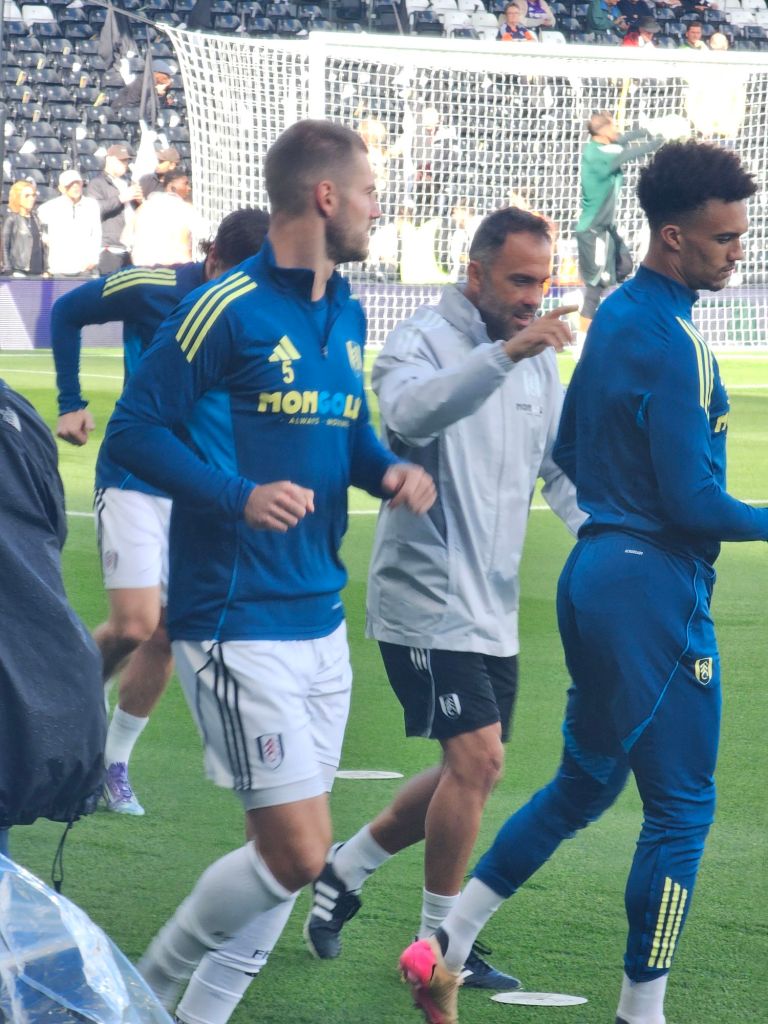
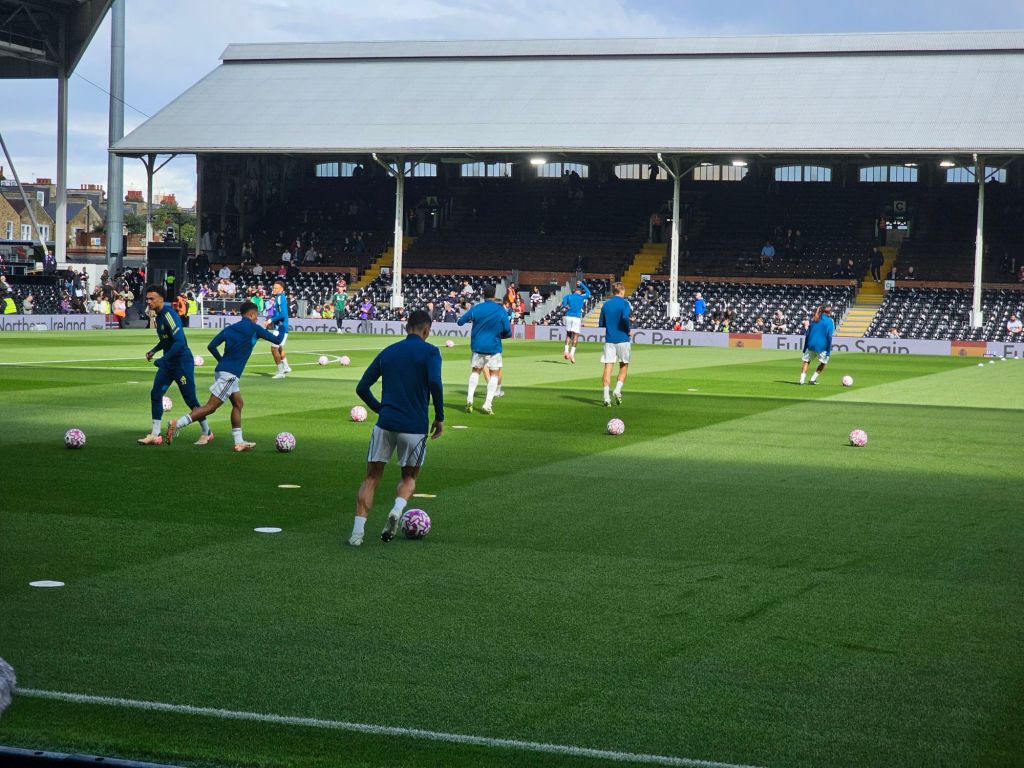
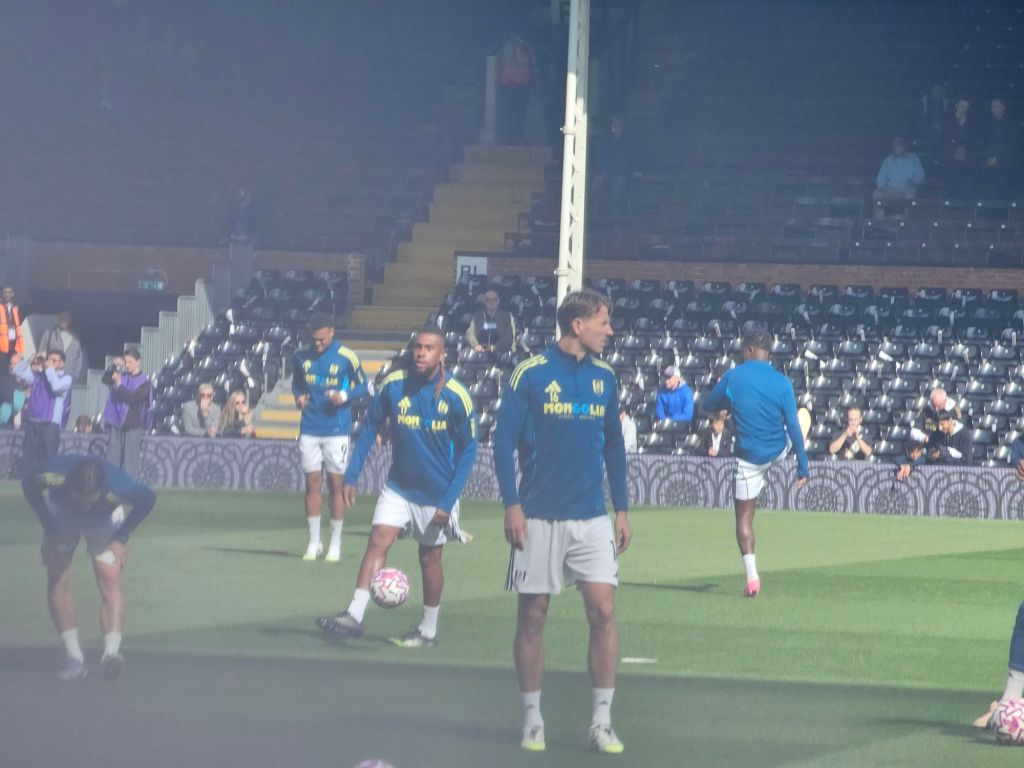
Fulham wins 1-0 in a heart stopping end to it match with Leeds. To set the stage, it was another partly cloudy, partly sunny day in London, still dry when I got on the Tube for the long ride to Putney Bridge, the closest station to Fulham F.C.’s home at Craven Cottage. When I arrived, one transfer later and started the 20 minute walk to the stadium, the rain started sprinkly lightly, by the time I crossed into Bishop’s Park, the rain got heavier. I was pretty wet when I arrived. Luckily, only my hat and outerlayer were really damp and I was able to remove them and enjoy the match that was played mostly in the sunshine. The one goal scored in the additional time of the second half (after the 90 minutes of regulation had been played) was deemed a Leeds “own goal” by the referees, but Fulham got the needed 3 points. As always, a match in Craven Cottage is a fun filled experience. Fulham fans are generally a friendly lot and there is always some great sharing of conversations over the course of the game.
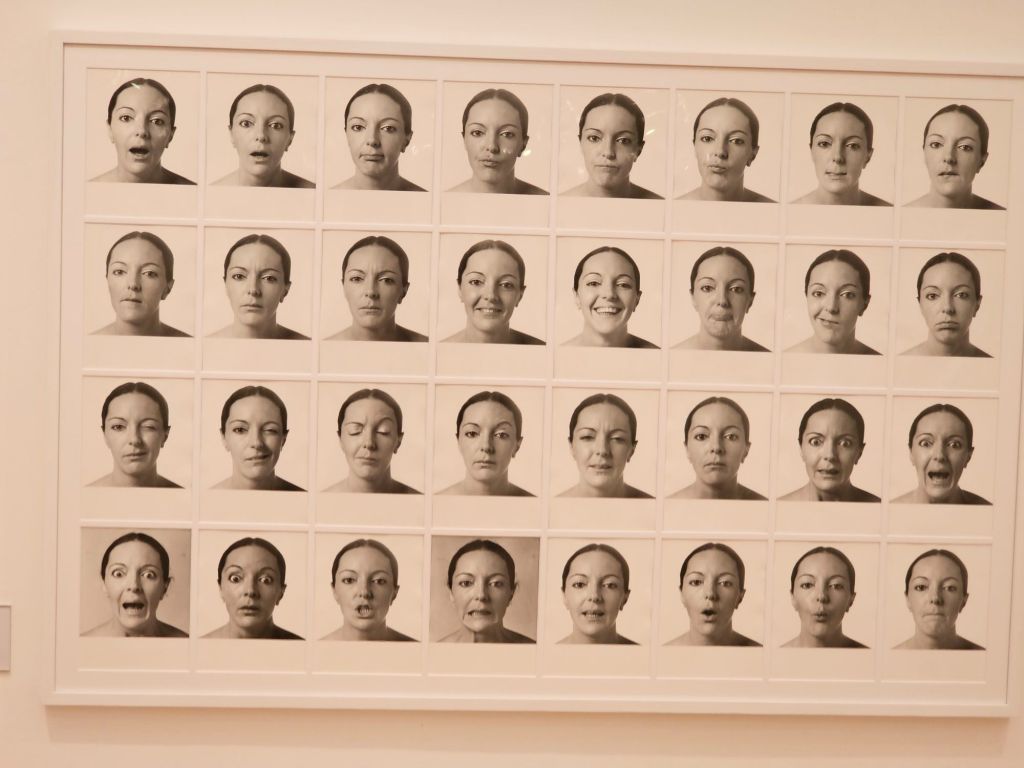
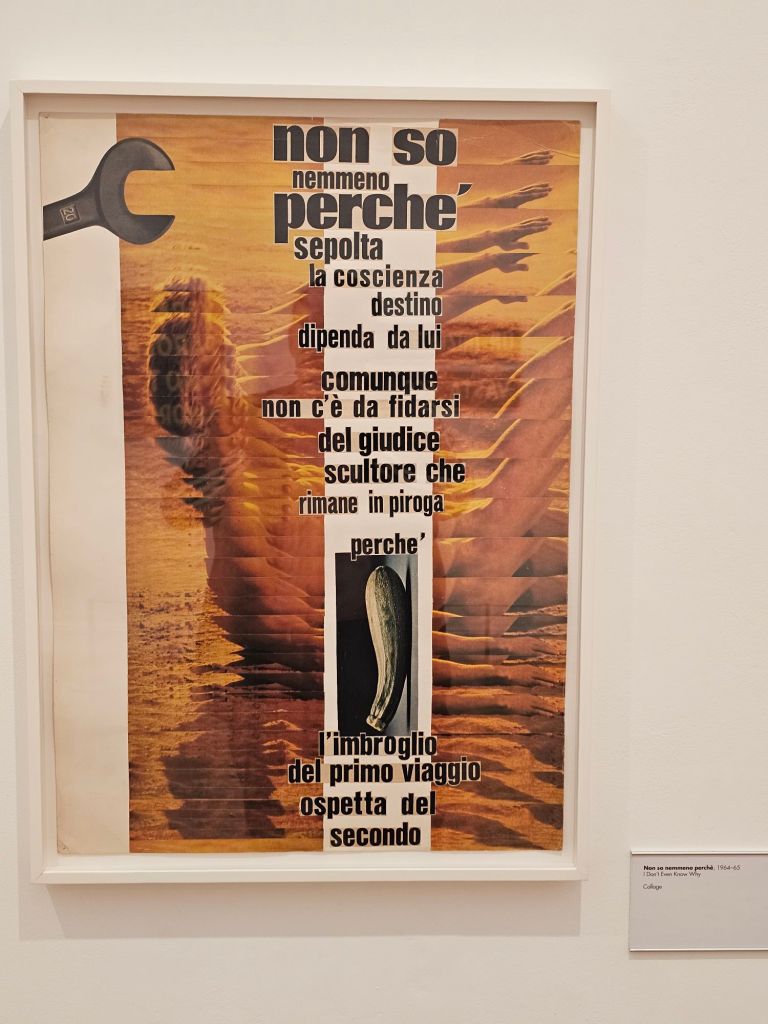
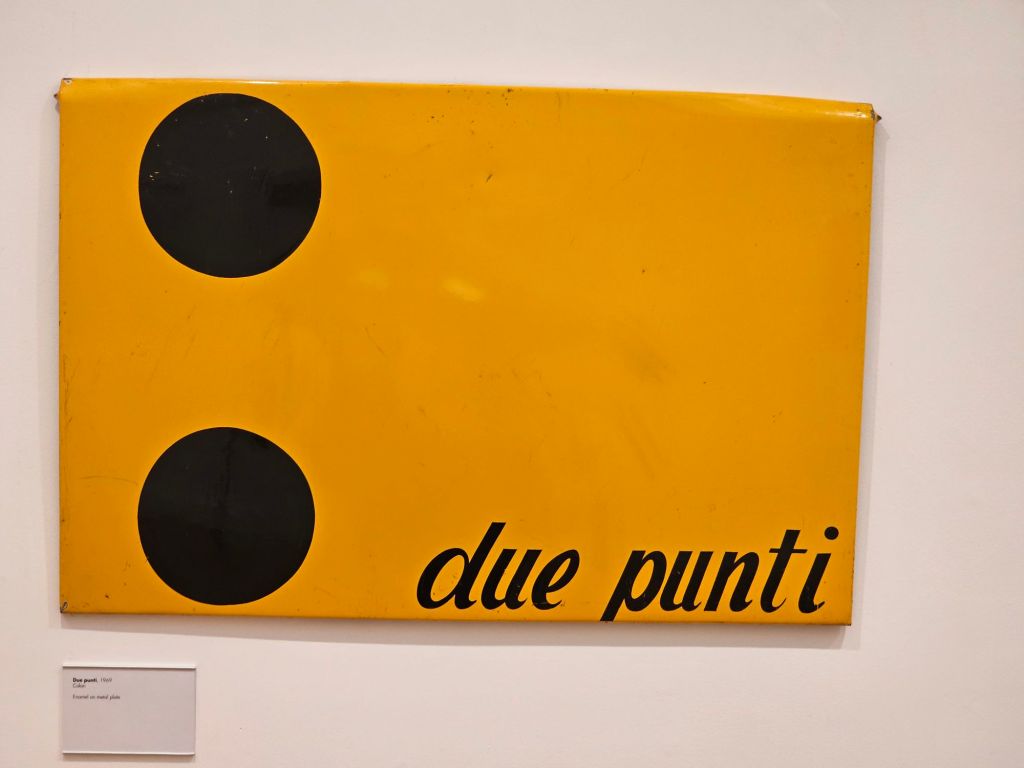
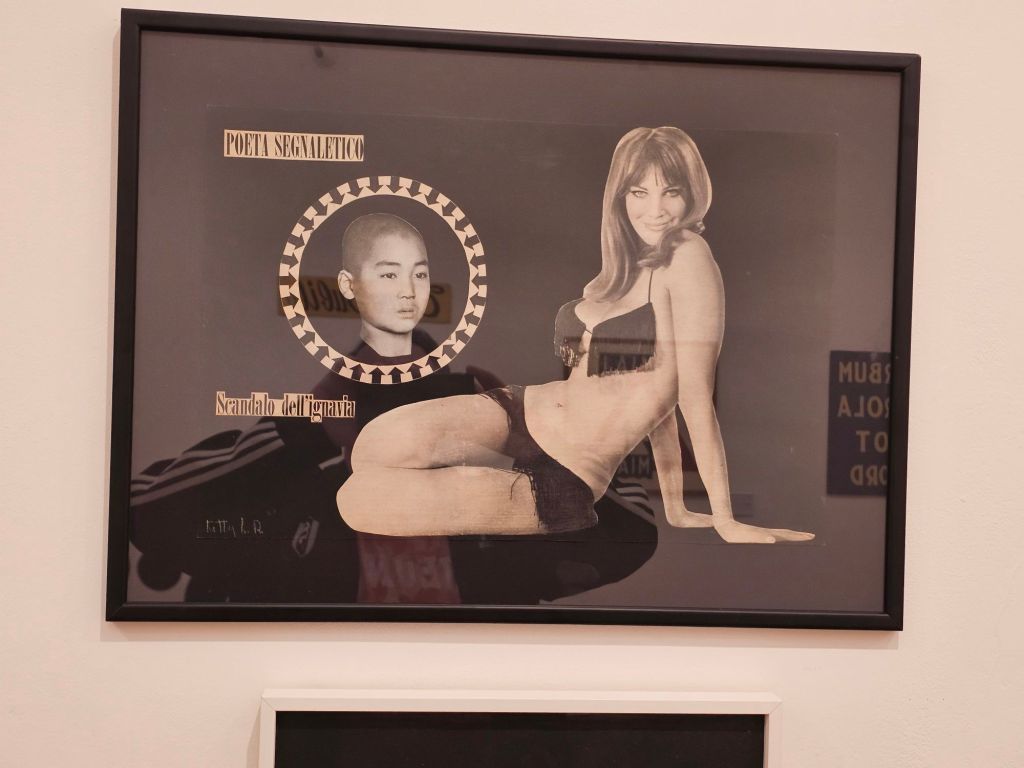
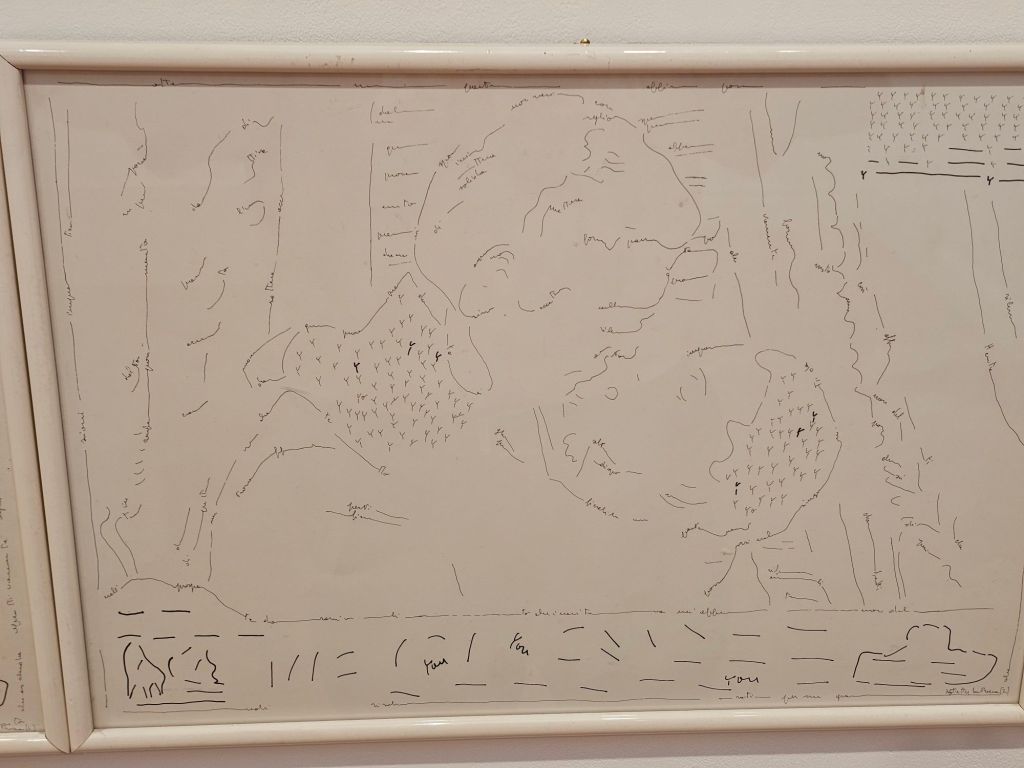
I was excited to read that a new exhibition had been opened at the Esoterik Collection. This time the featured artist and her work is Ketty La Rocca (1938-1976), who is described as a trailblazing figure of Italian conceptual art. Her work has been called subversive, witty, and thought provoking.
The above examples show her clever use of various media to create art, signs, posters which could be provocative and fun.
She also explored the concept of ‘reductions,’ taking an image and continually reducing it to a very basic level. Some of the reductions may not be too clear, below, but this example of an Italian poster for the classic American movie, “Gone With the Wind” illustrates the process.
A Taste of Islington
The Esoterik Collection is located in the Borough of Islington. When one leaves the Highbury and Islington Underground Station, it might feel like you have been dropped into a rather typical London high street with fast food shops and pubs next to empty shop fronts. But cross a road and turn a corner and you see a very different Islington. Here are a few picutres of leafy suburban life, just across from the Esoterik.
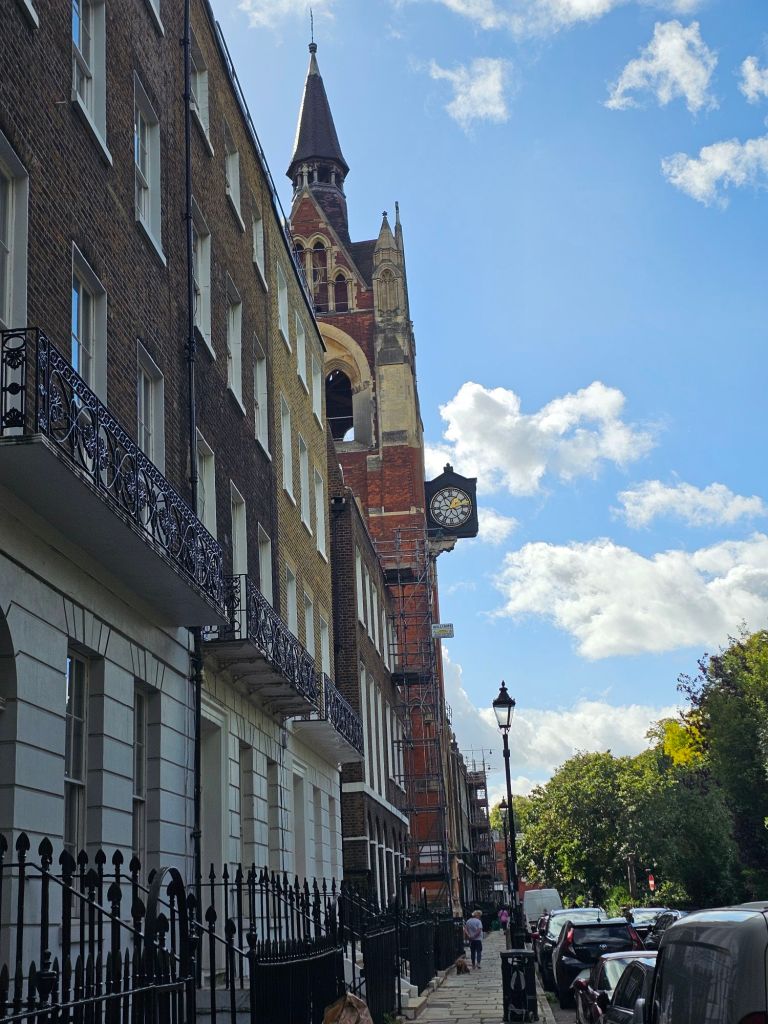
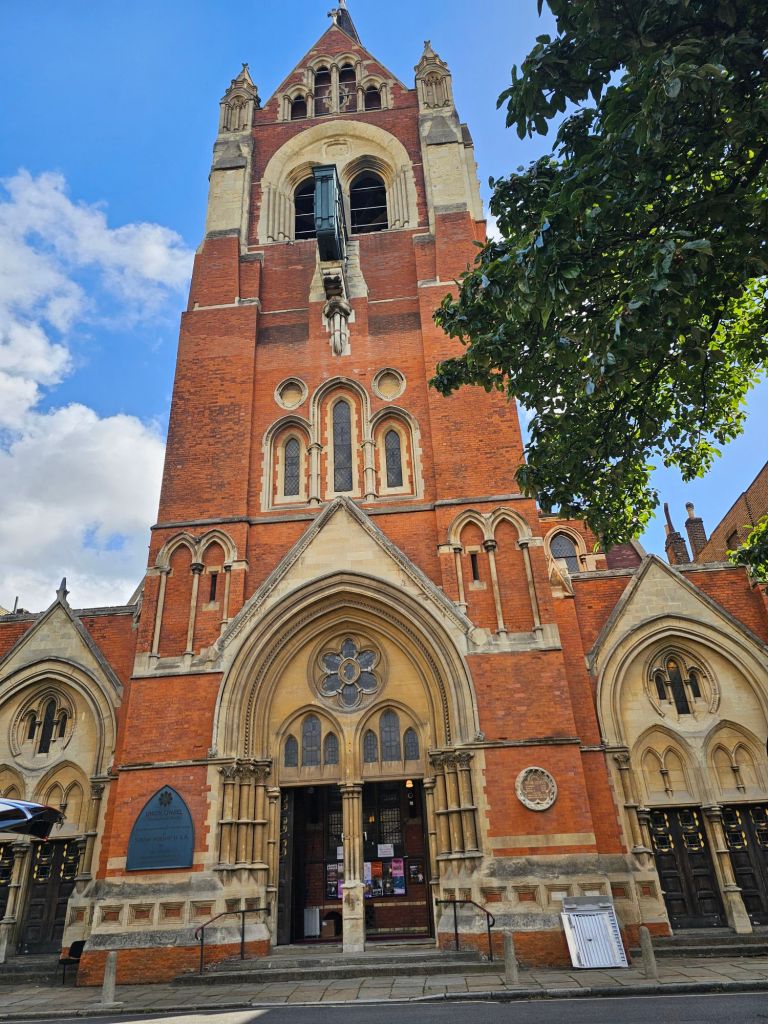
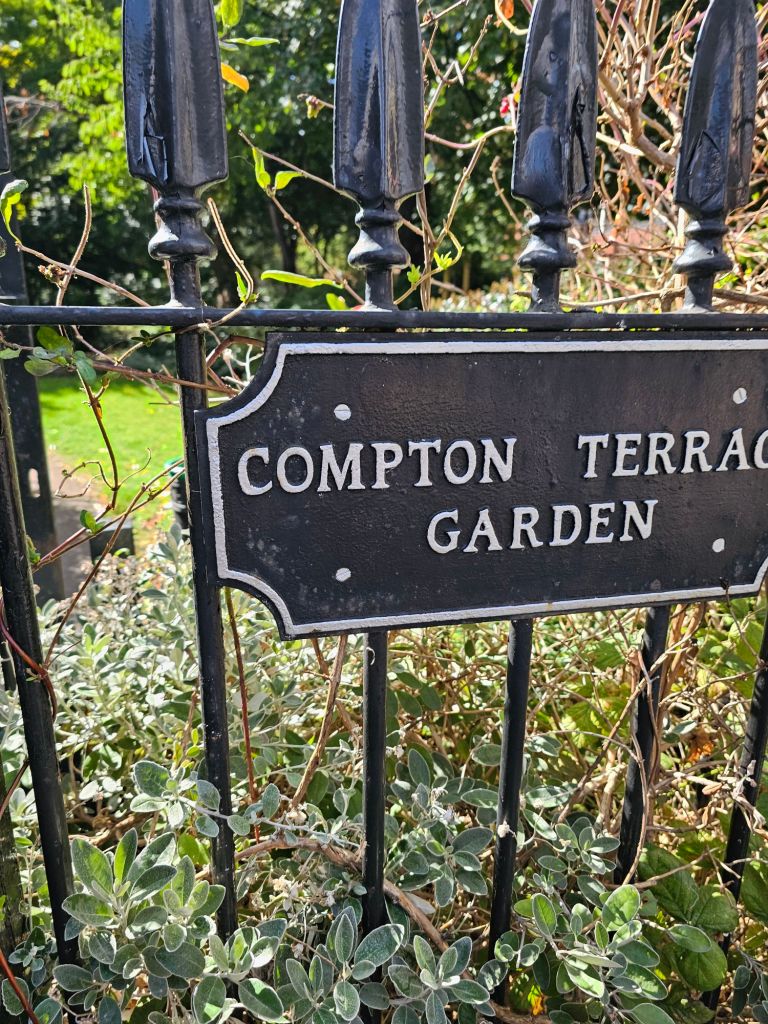
Within a minute of the Underground Station is Compton Terrace, a group of townhouses and a Congregational Church, plus a lovely garden that shelters the Terrace from the hustle and bustle of urban life beyond it.
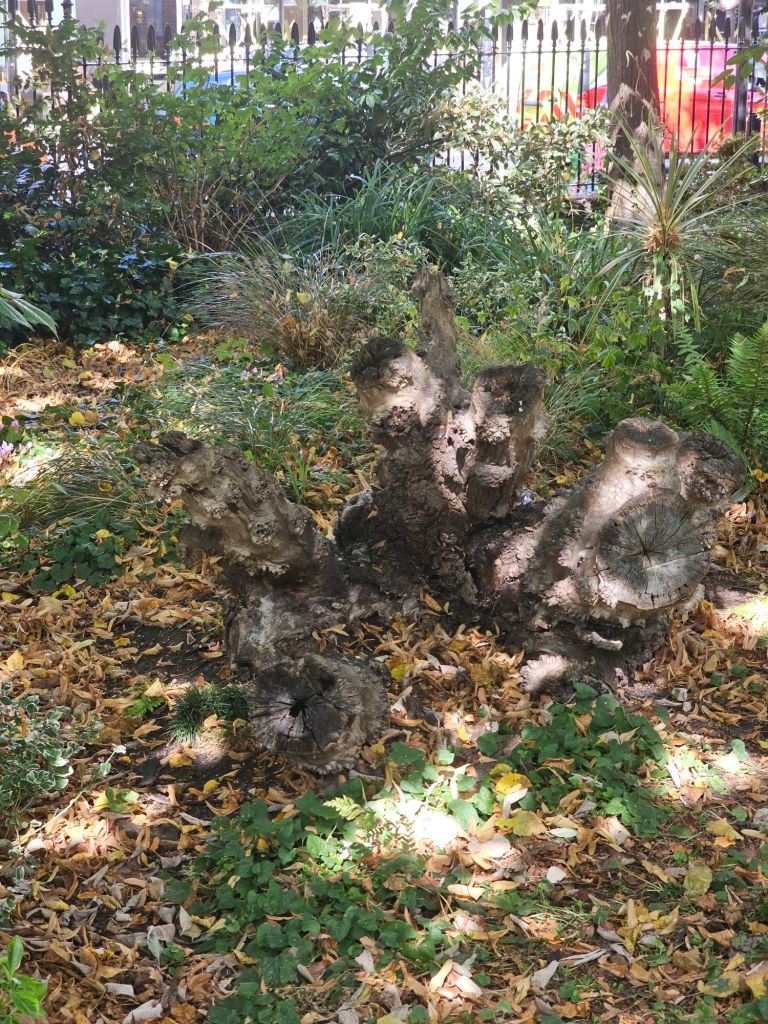
There was a funeral in the Church, so I could not go inside, but the garden was charming with several small private corners to enjoy.
A couple of years back, I set off from London to Leicester to see the tomb of King Richard III, the last Plantagenet king of England who died from wounds suffered at the Battle of Bosworth Field in 1485.
For those who came in late, King Richard’s mortal remains were found under a parking lot in 2012 on ground that had once been the Grey Friars Friary where Richard had been interred. Then came the dissolution of the monastaries and the Reformation and the King’s remains were lost until 2012.
When I got to Leicester, I found out that the cathedral (which is dedicated to Saint Martin of Tours) was closed for renovations. See my blog post from 2022, “A Visit to Leicester but No Parking Lot King.”
I had been captivated by the story since the discovery of “the King in the parking lot.”
It Was Worth the Wait
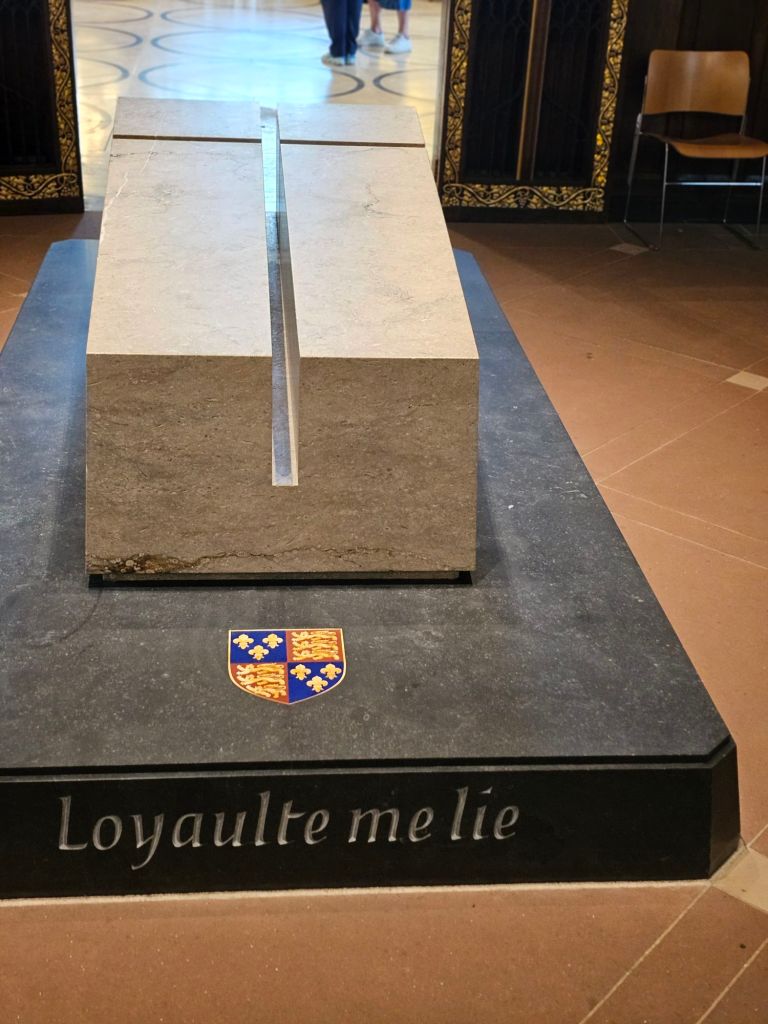
The cathedral, seen above is, perhaps, not as grand as some I have visited. It is, however, a warm and welcoming place. The new tomb of King Richard is simple but elegant.
When the King laid in rest before his reinterment, this cloth covered the casket.
On the left, you see historic figures from his reign. On the right are important people who were involved in finding his remains and working to assure he was laid to rest in the cathedral. The fabrics used are beautiful and give an almost three dimensional feel to the figures. A docent told me that the depictions of the modern figures were true likenesses of them. She knew them all.
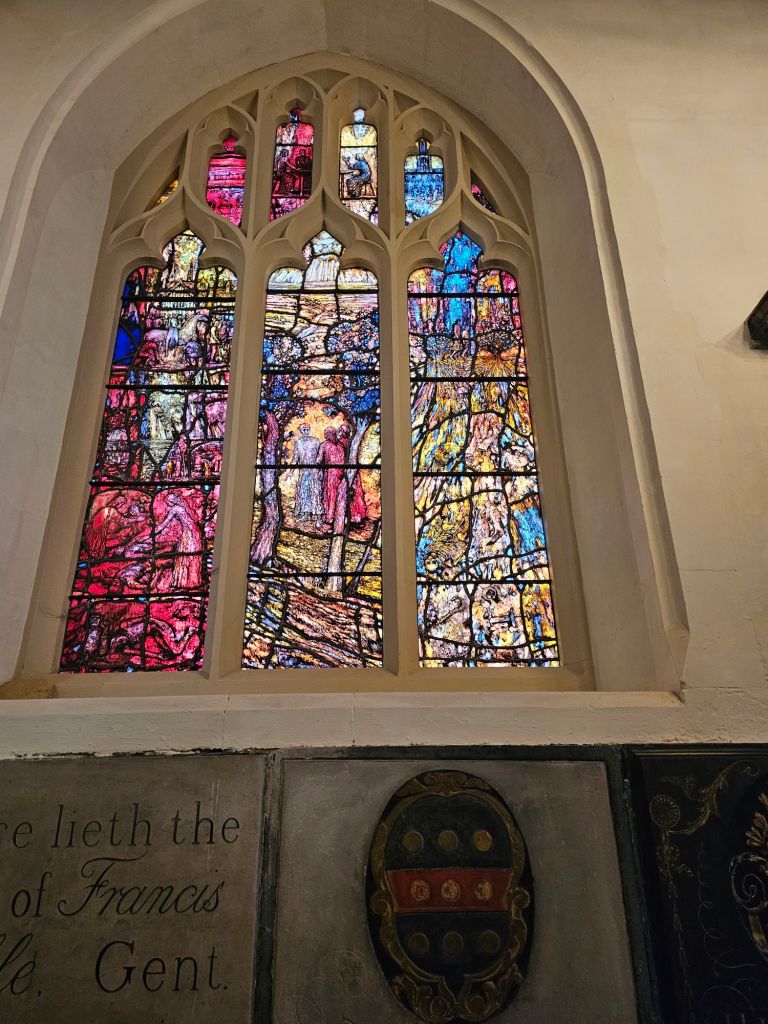
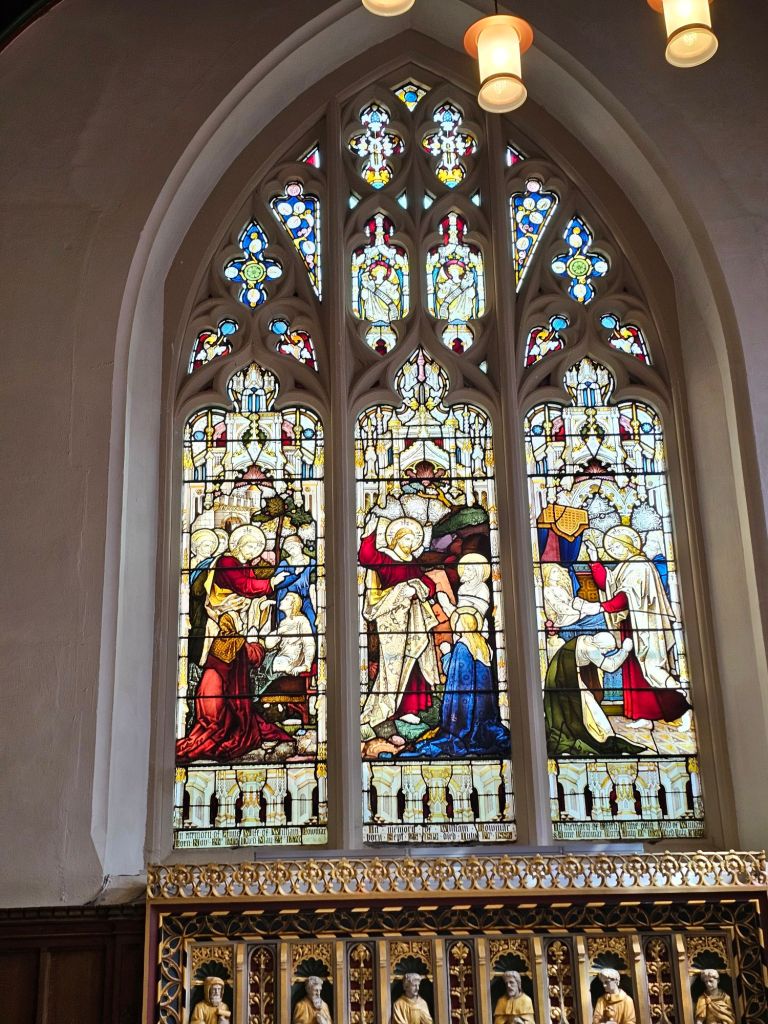
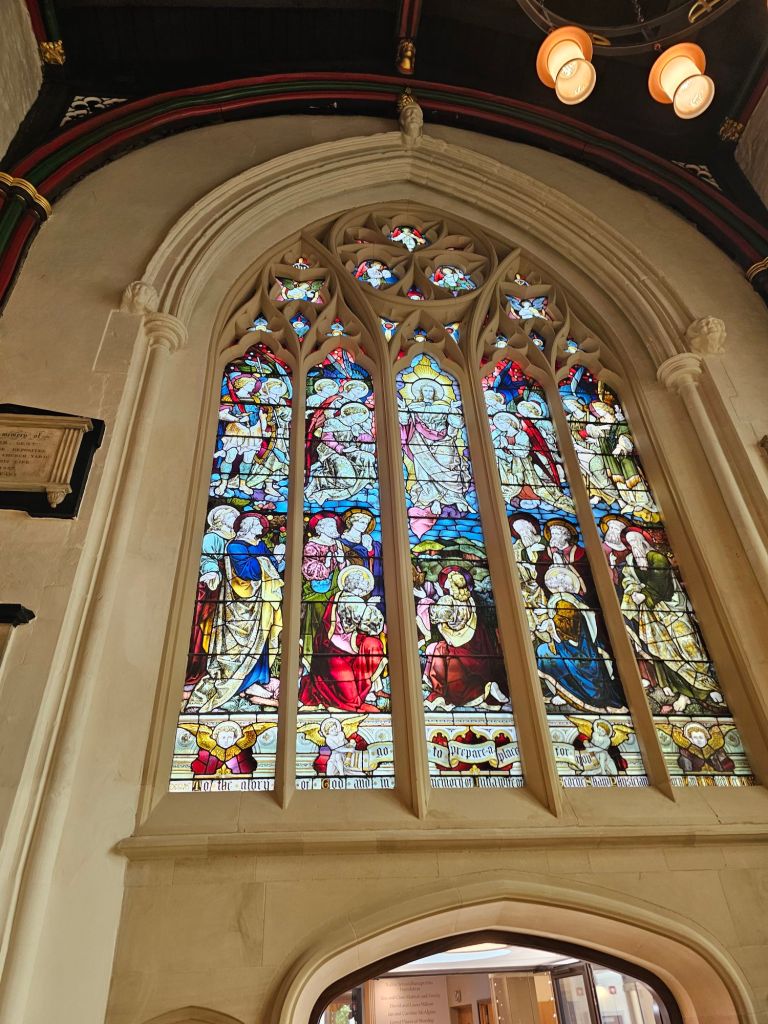
Stained Glass and Other Delights
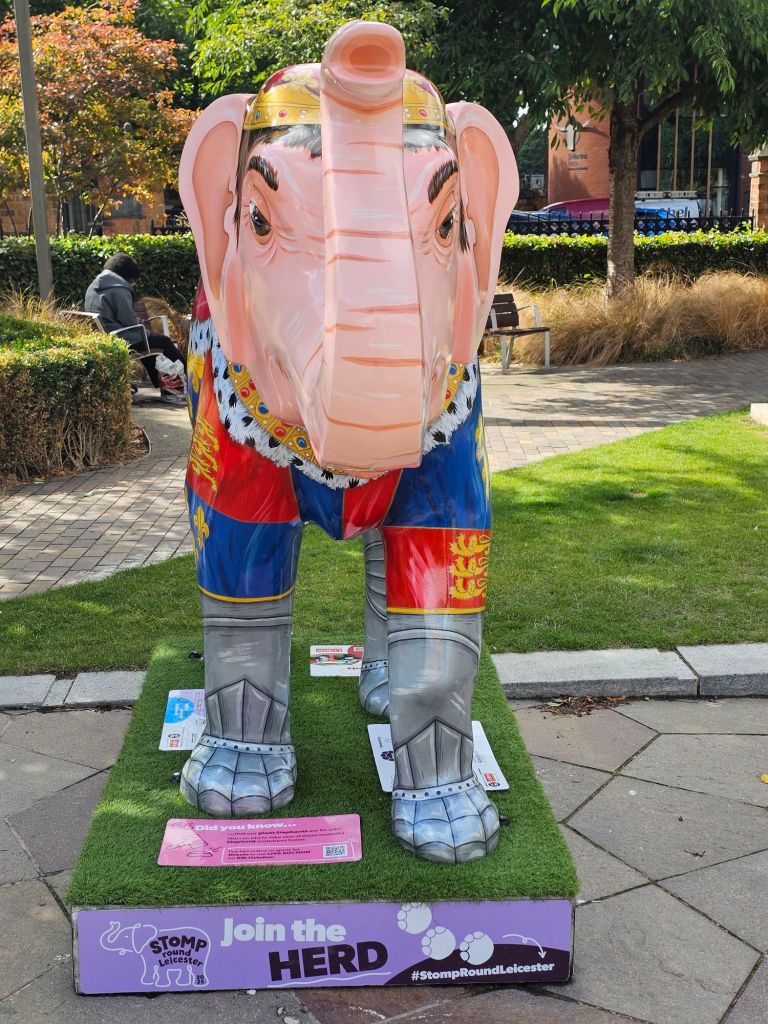
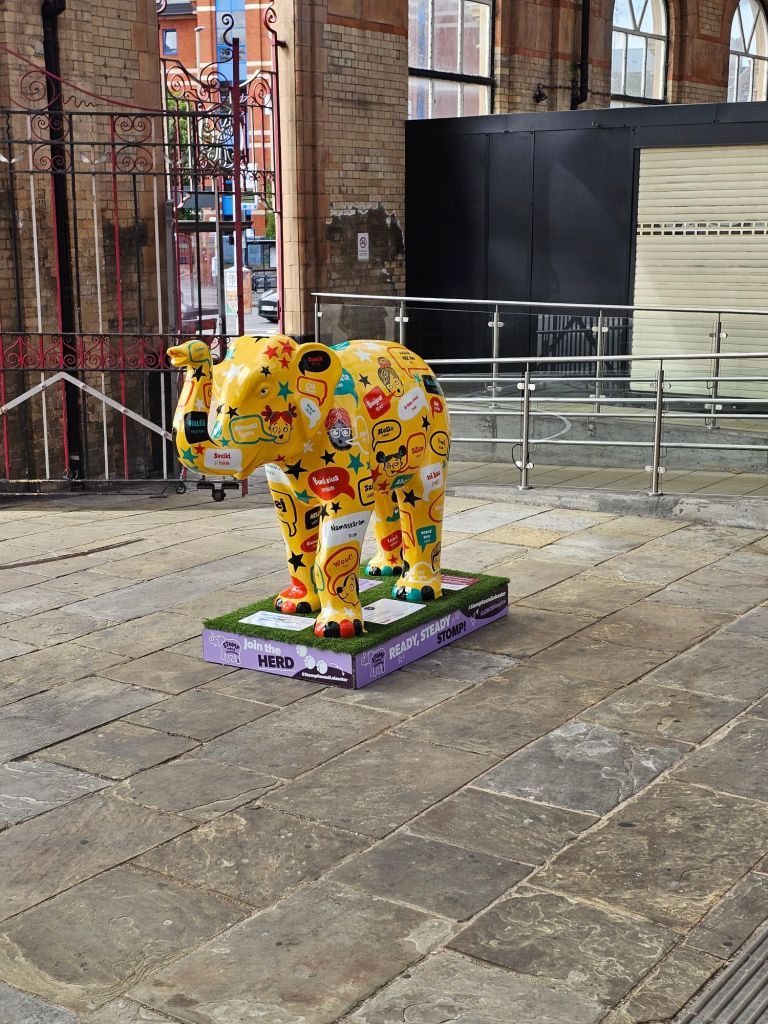
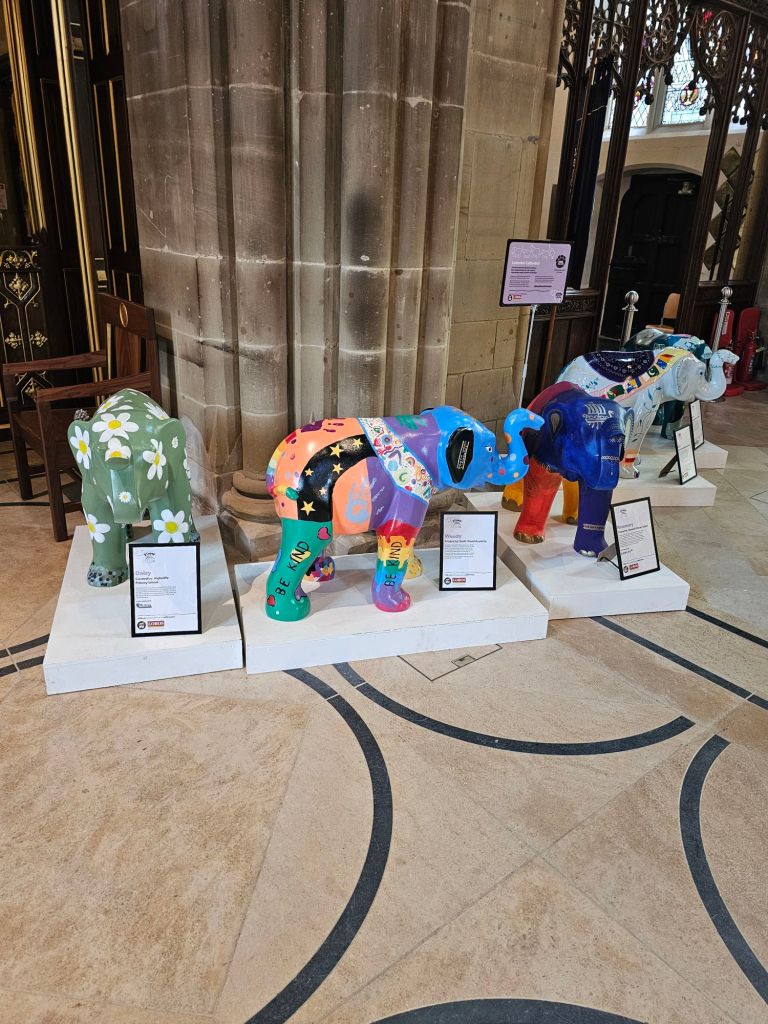
Elephants Galore
I thought it a bit strange to see an elephant sculpture outside the Cathedral. Inside, I found more. It was all part of a fundraising campaign for a local hospice.
One final note for train travellers to Leicester. Their station restrooms are clean and safe.


























 Mark In London