Category: Uncategorized

Wait A Minute, Did They Have An Election?

Wait A Minute, Did They Have An Election?

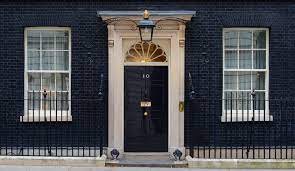
This entry is really for my American readers who woke up this morning to find that that the United Kingdom (UK) has a new Prime Minister, Liz Truss (more formally, Mary Elizabeth Truss). She replaces Boris Johnson. The answer to my title question is, no, and yes. The U.K. did not have a national parliamentary election. But yes, the Conservative Party did vote, twice. First, a majority of the Conservative (or Tory) Party, Members of Parliament (M.P.’s) voted in the House of Commons that they no longer had confidence in the leadership of Boris Johnson as Prime Minister. This ended Mr. Johnson’s term as leader of the party and thus he would have to tender his resignation to the Queen. But because the Tories were clearly the majority party and were going to stay in power, Mr. Johnson remained as Prime Minister from June 6th until today, when Boris flew to Scotland and offered his resignation to the Queen. Her Majesty asked Ms. Truss to form a government during Ms. Truss’s audience with her at Balmoral Castle in Scotland. These audiences would normally happen in London at Buckingham Palace. But due the Queen’s mobility issues, she has elected to stay at Balmoral her summer residence longer this year.

How does this whole thing work? (Remembering that this is what Newt Gingrich wanted to do to America when he took that contract out on us). Wikipedia provides this fairly concise description of the UK governmental system: “The United Kingdom is a constitutional monarchy in which the reigning monarch (that is, the king or queen who is the head of state at any given time) does not make any open political decisions. All political decisions are taken by the government and Parliament. This constitutional state of affairs is the result of a long history of constraining and reducing the political power of the monarch, beginning with Magna Carta in 1215.” In reality, this means that while the sovereign does have defined powers, the majority of day-to-day governance to governance takes place in the House of Commons in the Parliament. The head of the majority party is asked by the sovereign to form a government and becomes the Prime Minister. Unlike the US, rather than the head of government choosing the heads of the “cabinet” departments, the PM appoints other members of her or his party to these positions. If there is a coalition with smaller parties, as there was several years ago, when neither major party had a majority, then the smaller party(ies) members may receive appointment to head a ministry.
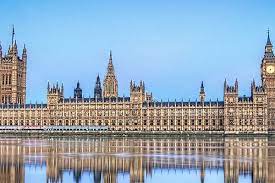
To go back to Newt Gingrich’s dream of being America’s Prime Minister and making the US President something of a figurehead, in parliamentary democracies the opposition has no real power. If you have ever watched “Question Time” from the UK, you see the one opportunity the opposition has to remind the country that it is there. The questioning of the PM is done by the Opposition Leader. When there is no need for bipartisanship, this may be a way of developing debating skills. In the pre-Newt era, in America’s Congress, the two parties’ leaders regularly met and worked together to find ways to best serve their nation. This is why when former House Minority Leader Gerald R. Ford, America’s only President to have been appointed Vice President, and then became President (when Richard M. Nixon resigned) without ever being elected by the people of the US, his first night in the White House, his first dinner guest was House Majority Leader Thomas P. “Tip” O’Neil, one of his closest friends. In the US Senate, there were many “across the aisle friendships, like the very liberal Edward Kennedy and the very conservative Oren Hatch. This was how American democracy worked in the pre-Gingrich era.
Now you are thinking, there you go, Mark, off on one of your tangents. Let’s get back to the UK. What about the House of Lords, did they get rid of them? No, they are still around, but they have “been reformed.” Until the reforms of recent years, the House of Lords was composed of Hereditary Peers (titled men, and Bishops of the Church of England) and from the 1950’s Life Peers who could be men or women, appointed by the sovereign at the recommendation of the PM. Various reforms have been proposed in recent years with the goal that the upper house of the British parliament eventually being elected.

A session of Parliament can last 5 years. The last national election took place in 2019. While Boris Johnson could have asked the Queen to dissolve Parliament and call an election when he lost the “no confidence vote” in June, his party most likely did not want to risk the chance of losing the election and perhaps Labour did not mind waiting either. So, the only people in the UK that had any say in choosing Johnson’s successor were Conservative Party members who voted around the country for their new leader. There had been 8 members of Parliament who were initial candidates. These were quickly brought down to two, Ms. Truss and Rishi Sunak. Rishi has said he will remain in Parliament, but some say he may return to Silicon Valley where he made his fortune.

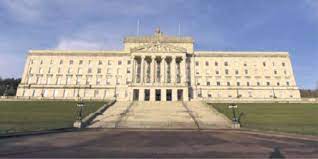
What else might you need to know about the UK Government? Well, by now you must have heard that the UK left the EU. That means that many powers that they had given to the European Parliament came back to them. I suspect this has really just meant more work for civil servants (some things are the same all over the world, says this former American civil servant.) And I should mention devolution. The last Labour government introduced, devolved legislatures to the UK’s component countries. The Scottish Parliament is perhaps the best known of these with its stunning new building near the Palace of Holy Rood in Edinburgh, and the Welsh Senedd Cymru has also been successful. The Northern Ireland Assembly has had more issues seemingly due to leftover sectarian power sharing problems that have plagued that province for so long. Each of these has specified control over certain specific local issues.

In order above, Scottish Parliament, Senedd Cymru, Northern Ireland Assembly.

Prime Minister Liz Truss has some big problems to deal with, the biggest is probably the coming fuel crisis that her country is facing. I hope that the men and women of all parties can work together with the energy companies and find a solution to keep the lights on, keep businesses running and keep UK homes warm this winter.

Riding In An Antique Railroad Car

Riding In An Antique Railroad Car

The United Kingdom is lucky to have many groups of railroad aficionados. They buy and restore old train engines (especially steam engines), railcars, rail lines, even old stations. The result is the chance for folks to have the opportunity to experience train travel as it was in another time. Today, I had the chance for one of those adventures.

As so many of my adventures do, this one involves an interesting coincidence. At several points in my Nuclear Regulatory Commission career, I came across a company called Amersham plc, that manufactured radiopharmaceutical products used in diagnostic and therapeutic nuclear medicine procedures. Before the company was sold to General Electric Healthcare in 2004, it had a major presence near Amersham, England. Amersham Train Station was the start and end point of my train antique rail journey today.

To the Metropolitan Line took me on a what was known as a “semi-fast” train from Kings Cross out to Amersham, the last stop on the line. It took me from the urban center of London through more suburban seeming towns and even some rather rural settings with large fields with horses and cows grazing. The journey took me through two towns that I have special memories of: Pinner, the setting of a 1980s British sitcom called “May to December,” and Watford (turnaround point for the antique train ride), where I saw my first live English Premier League Football match. Very memorable about the Watford football match was my inability to find the Tube station after the match and wandering around Watford endlessly, until I was finally able to describe a landmark a kind lady was able to point me to. I definitely got all my steps in that day!

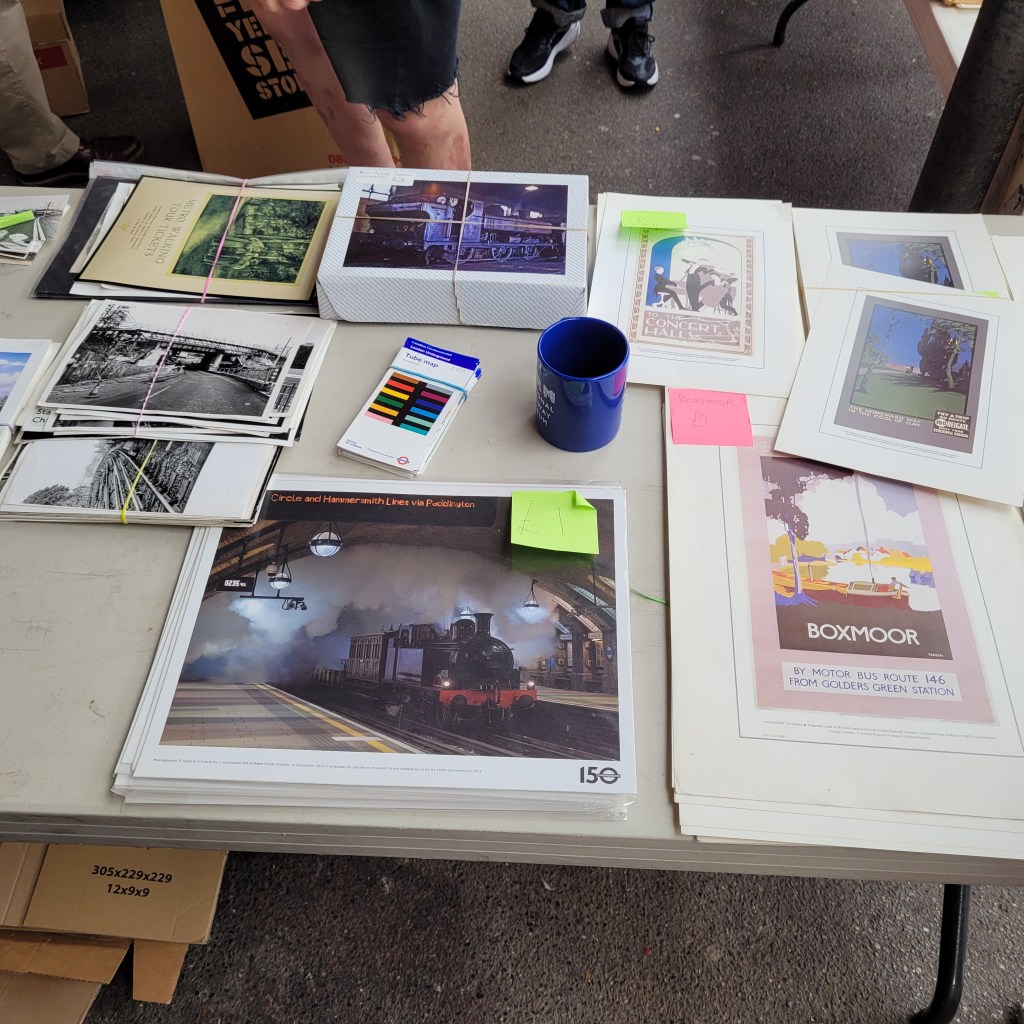
The volunteers along with folks from the London Transport Museum made sure that the Amersham Train Station and the platform where the restored train would run were fully staffed with knowledgeable people to help us all have a good day. They also had several tables set up with all kinds of train memorabilia for serious collectors.

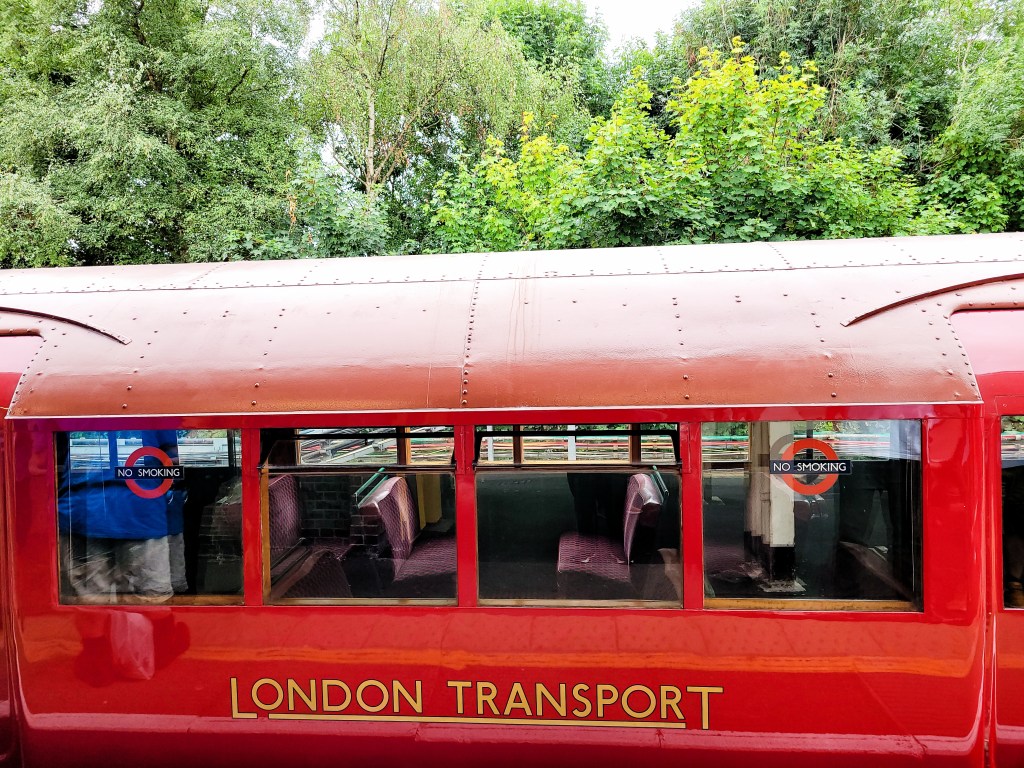
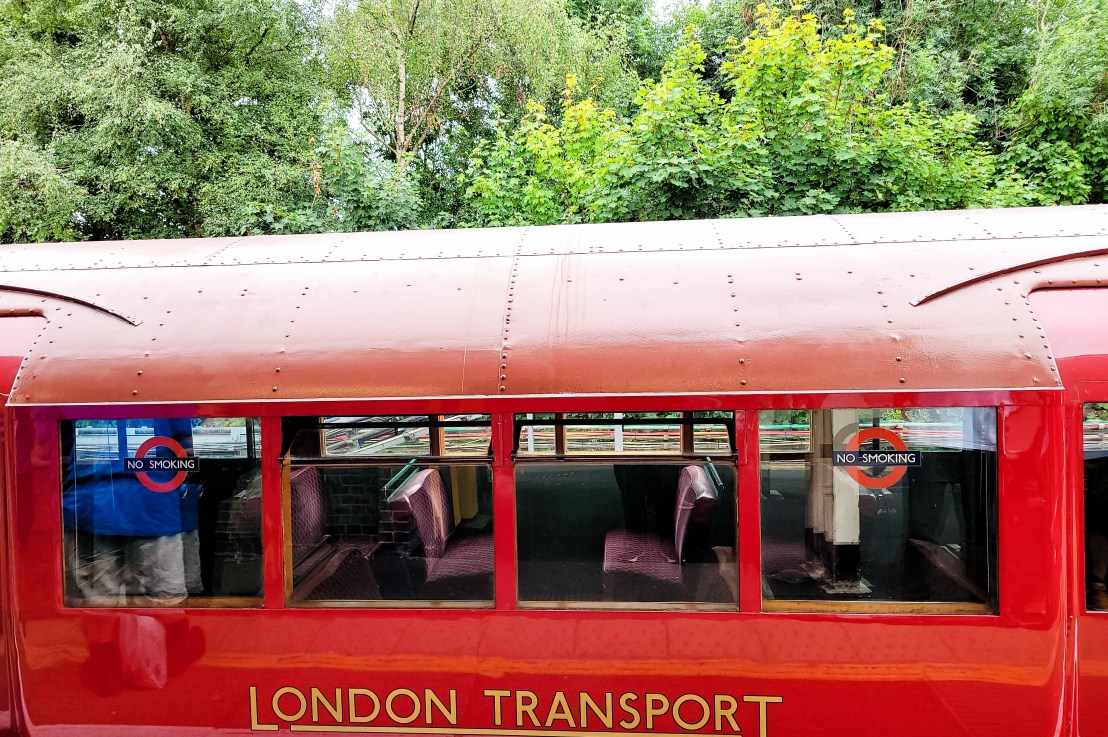
But, of course, the star of the day, was the train itself. The exterior had a certain nostalgic charm to it. I got a great chuckle when the gentleman standing next to me noted (in his Shefield accent) that there was

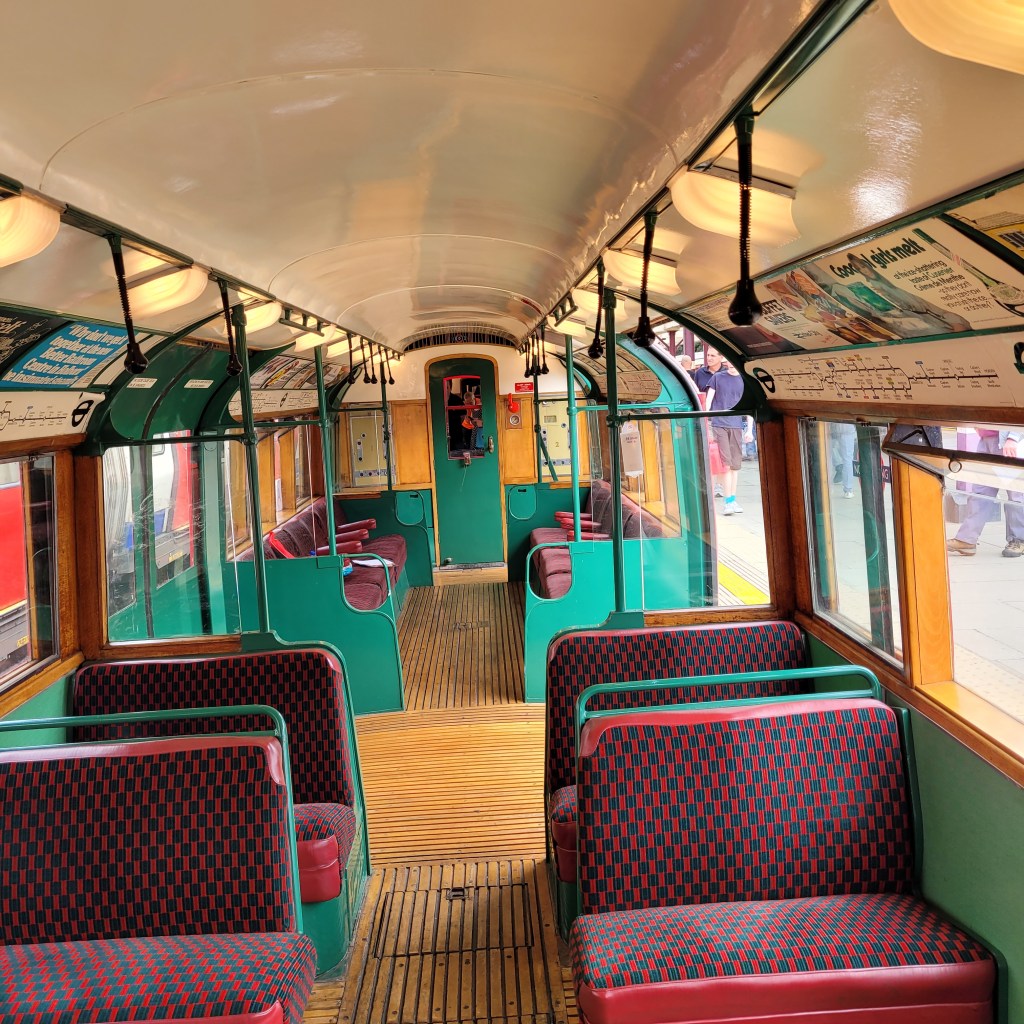
change the name from London Transport to (its current name) Transport for London). “Some new one came in and felt they had to make a change!” This fellow became my travel companion for the next hour or so and kept me delighted with his views on things. Back to the trains, the interior, as I hope you can see, had fairly comfortable seat, the moquette colors of a deep burgundy and blue with the green walls and the wooden trim around the windows and the wooden floor slats spoke of an early, perhaps more mannered time. Not a spot of graffiti, carved or written, was to be seen anywhere. We weren’t packed in so tightly that anyone had to use the overhead hangers to hold on either. My Sheffield friend had taken quite a few of the “Hidden London” tours of the Underground stations and he recommended them to me. In the course of his discussions, we slipped into talk of World War II museums and places of interest, and he had and interesting story about his 103-year-old uncle who had been a navigator in a bomber during the Battle of Britain. Being about the same age, we also both mused at how very young the boys who made the assault on Normandy, both by air and sea were and how, by contrast, we were very lucky to have not had to have been called to make such a sacrifice.

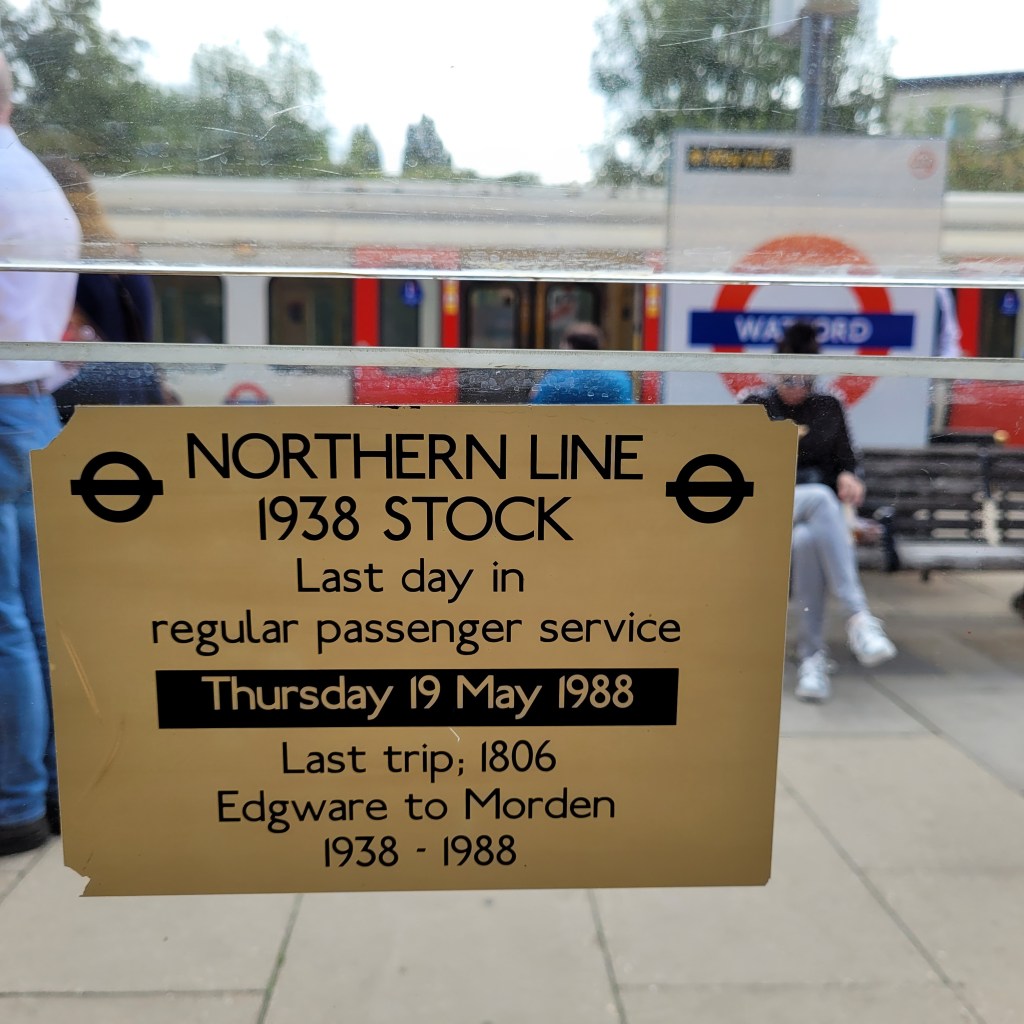
As the last picture above shows, this “stock” last ran on the London underground in 1988, but it did not stop running completely them. The last trains are still in service and just now getting ready to be retired on Isle of Wight off the South Coast of England, near Portsmouth and Southhampton.

After a 20-minute stop at Watford Train Station, we made our return trip to Amersham and, as luck would have it, I was able to catch another “semi fast” train back into King’s Cross before things closed up for the day on Sunday. All in all, it was a trip worth taking and it lessened the sting of my Fulham All Whites falling short of the mark this weekend, but Fulham’s goal scoring machine Aleksandar “Mitro” Mitrovic‘ did score a goal in the effort against Harry Kane and the Tottenham Hotspur.

Old Favorites New Friends

I had a slow start on Saturday, but eventually got to Half Cup for brunch (well, breakfast at lunch time). I had a nice chat with a young fellow who had lived in the US, London and Scotland. The chat took place while his companion was visiting “the facilities.” We were discussing accents and how our times in various places moderated ours. When she returned, I enjoyed listening to her mixed Nigerian and West London accent as they chatted at a table only 18 inches from mine on the pavement outside where we all enjoyed the late summer sun. After running a few errands, I stopped at Caffe Tropea for a decent coffee. I saw my new friends Jack, the film maker, Jackie and Jackie’s husband Tom, newly returned from a visit to Devon, with another lady sitting next to an empty table. They invited me over and, while Tom had to leave, the four of us remained and had a wide-ranging chat on politics and the world. We all share a similar world view and were interested in my views on President Biden, the similarity and differences between the supporters of the man that preceded him and the UK’s soon to be former Prime Minister. We also discussed various US cities we all knew well. As we were winding up our conversation, Jackie mentioned how much she was enjoying her granddaughter’s ‘rebellious phase’ using the term schadenfreude to describe her feelings toward her and Tom’s daughter who now was dealing with what she put Jackie and Tom through.

As it was late afternoon on Saturday, I thought I would walk over to the British Museum and visit some “old friends” there. It is so easy to become complacent when one has a place like that right on your doorstep. One of the gate guards assured me that the crowds were pretty low when I arrived, so I went in and headed directly for the Parthenon Marbles (formerly known as the Elgin Marbles for the man who removed them from Greece). It is amazing to look at the detail carved into these by people, just like us,

thousands of years ago, in a society long passed. Should we not remember how easily a society can fall to ruin?

Being in the museum, surrounded by so much beauty, so carefully made by people who had such gifts is truly a blessing. Venus, below, could have been carved as early as 200 BCE!

Before finishing this awe-inspiring visit, I had to pay respect to ancient Egypt, the place that my great friends Steve Krahn and Sally Kernick Krahn love and have visited often. Steve and Sally, these are for you.

The first statue is Amenhotep. Steve, you will have to read the Hieroglyphics on the second one.

A Visitor from the Past

A long-planned visit from Rhonda Campbell occurred yesterday. Rhonda and I have been Facebook friends via our mutual Oceanside (NY) High School (OHS) friend Debra Pasvol Donahue. They both live in California now but all three of us attended OHS at the same time and then, Rhonda and I were at SUNY Oneonta at the same time. We met in front of Kings Cross Saint Pancras and made out way to Camden Market via the Northern Line. There are several markets in the area, and we visited almost all of them. The markets were a chaotic, crowded, and colorful world selling all kinds of souvenirs, food, supplies and clothing.

Rhonda and I found a nice cafe with some outside seating overlooking one of the canal locks with houseboats on either side of it. We stopped at their indoor pavilion to request the one open table. The host directed us to the table, but another woman tried to steal it from us. Rhonda, showing her true New York roots was not letting that happen! Before the host could get to us to shoo the interloper away, Rhonda had us comfortably seated! During our beverage we were able to get to know each other better. We both had a connection with the nuclear power industry over the course of our careers! During the afternoon, we found that we did have mutual friends and acquaintances in addition to Debra. We both had been friends with a fellow named Danny Cohen who was another alumnus of both OHS and SUNY Oneonta. We were both disappointed that he seems to have dropped off the radar. I was able to Rhonda about my OHS classes recent reunion and she recognized some of my classmates that attended.

After we completed our exploration of the markets, we made our way back to Camden Town Tube Station and headed back to Kings Cross where I took Rhona on a tour of “my” neighborhood, pointing out some of my favorite haunts. Like everyone visiting the area, she was quite impressed with the Saint Pancras Hotel.

From there we walked down Judd Street, past the Half Cup, a delightful local cafe, Clare Court, where my flat is located, and through the neighborhood where I could show her the array of shops and restaurants, including The Observatory, the combined cafe and art photography gallery, and to Rhonda’s delight, an international bazaar shop that she disappeared into while I took the chance to rehydrate. Next, Rhonda had the chance to experience a London post office, located within a “general store.”

We continued into The Brunswick Centre, the local shopping centre, for Rhonda to buy a few items for her plane trip home from the neighborhood Waitrose. No trip to my corner of Kings Cross and Bloomsbury would be complete without a visit to Russell Square itself and, of course, Caffe Tropea. We were just in time for a late afternoon coffee (for me) and herbal tea (for Rhonda).

All that was left for us as the afternoon moved toward early evening was dinner back at Brunswick Centre at the new and interesting restaurant, Riding House Bloomsbury. One reviewer described the menu, in part, as: “dishes like Earl Grey cured trout with citrus kosho & sour cream; flat iron steak & comte yakitori; caraway harissa chicken & cassava chips with fennel & cardamom gravy; teriyaki rabbit legs with shiitake mushroom & sweet potato champ; miso grilled sea bass with nuoc cham & pickled cucumber; and hot doughnuts with milk jam.” The menu and the food did not disappoint. The service was good. We chose to dine outside under a canopy. It was a very comfortable and enjoyable dinner.

After dinner, it was a brief walk over to the Russell Square Tube Station for Rhonda’s ride back to get some rest before her flight back to San Jose. Life is grand when you make new friends. Rhonda is a delightful lady who is a great listener (anybody who knows me, knows you have to be when I get wound up and start yacking). We had a great day together.