Category: Uncategorized

Searching for A Jab/’Bagging’ another Church

Last year, getting my Covid seasonal shot (or ‘jab’ as it’s called here) was incredibly easy on the NHS. Not so much this year, but I persevere. My first attempts were to seek out the pharmacies and drop in sites listed on the NHS Site. Alright, I thought, let’s get on the trusty Tube and head up to Camden Town. If nothing else, Camden Town, home of the Camden Market, is always an interesting place.
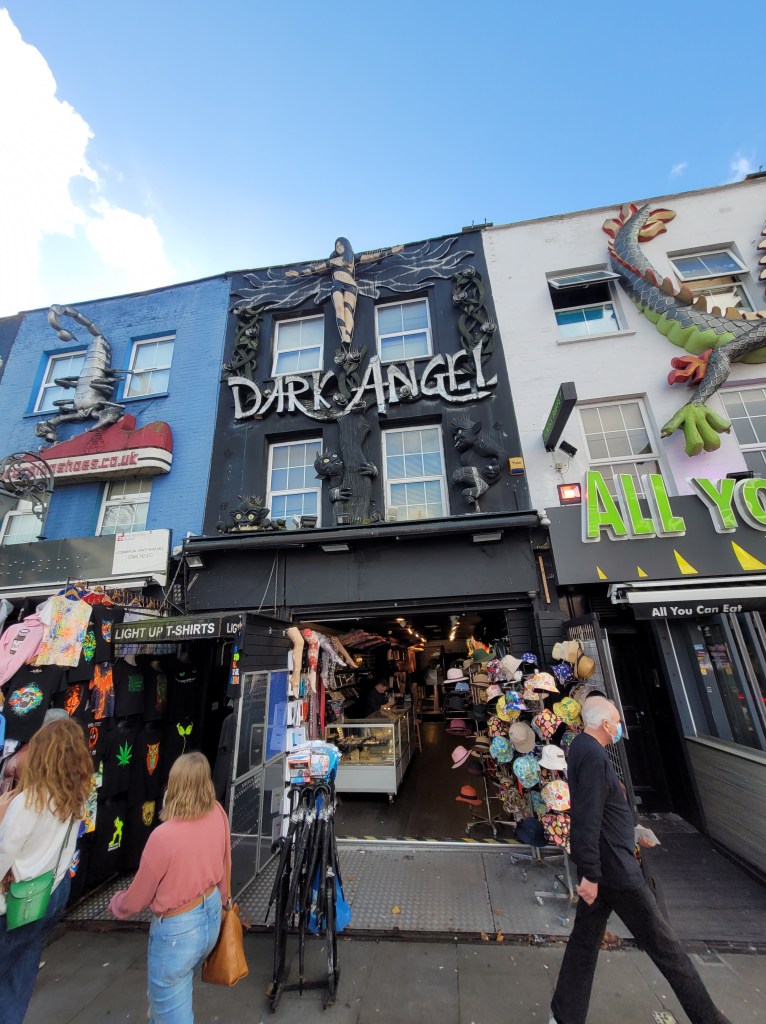
There were many shops like these, even a fellow from the Ministry of Silly Walks, but alas, no Covid jabs on offer in Camden. In fact, the site recommended on the NHS site was a building now undergoing complete renovation! Slightly dazed and confused people walking near the Camden Town Tube station do not garner even a second look, though and I just moved on. So, I got back on the tube and headed south. As it was a pleasant afternoon, I decided to get off at Euston Station and walked back down the Euston Road toward my flat. As I did, I noticed a lovely older building and, in the distance, the spires of Saint Pancras Hotel and Rail Station.

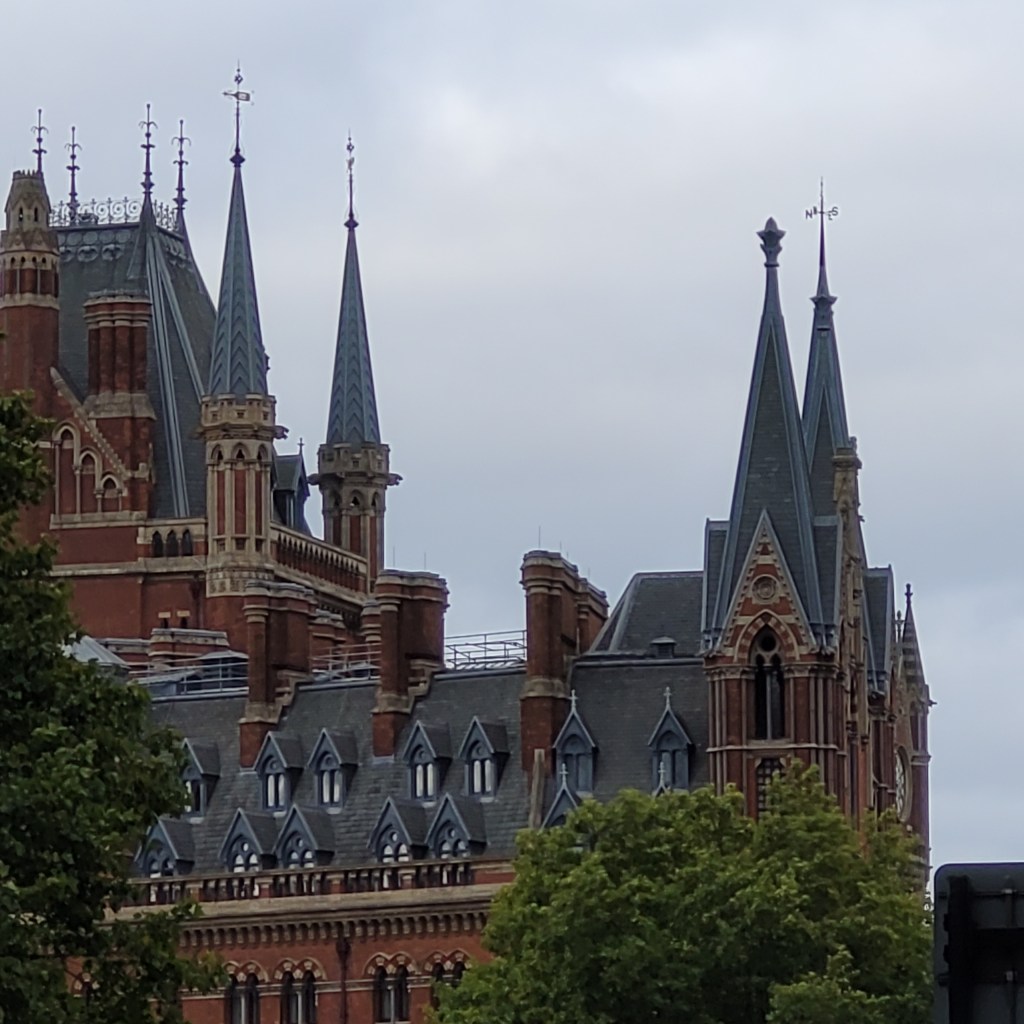
I think I am now at that point in my annual London sojourn where I start getting attacks of “pre-nostalgia.” The two photos above are signs of that. I begin to notice the beauty of the urban settings I have been living in and near. To me, that is the joy that I find in London and most European cities. In spite of wars, and civil unrest, these cities have survived and maintained their beauty. Bostonians, New Yorkers, and Philadelphians have done a good job at home saving some of America’s oldest post-European contact cities. Far too much was destroyed in DC in the name of “urban renewal.” So many of the cities of the south and the west in the US are simply new. But the US is a stunningly beautiful country too. I can recall the magic of driving up Interstate 395 toward Washington, DC each morning and never tiring of the view of our national monuments and the U.S. Capitol. I guess this “little meander” is just ,y way of urging all to travel, find places you love and love the place you live.

So, the “jab hunt” continued the next day. This trip took me to Drury Lane in the heart of Covent Garden and the West End, the London theatre district. This time, the pharmacy, part of a local chain, was there and open. It advertised flu jabs on one window but on another had a sign that said, “no inoculations.” When I asked, they said that they might have some vaccines in a week, maybe not. “Oh well,” as my friend Sally would say.

“Well then”, I said, what’s the next church on my list?” I hopped onto the Tube and after a few up and down the stairs at transfer points, I arrived at Sloane Square. People of a certain age may immediately associate this place with the Sloane Ranger, a certain, young, wealthy person from that area. One only needs to admire the lovely architecture and homes to appreciate that this is not a place for the common folk. It is the home of many fancy stores and the Royal Court Theatre where I have seen many fine productions.
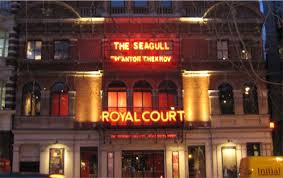
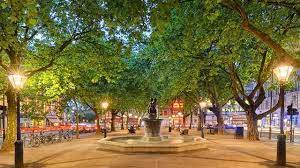
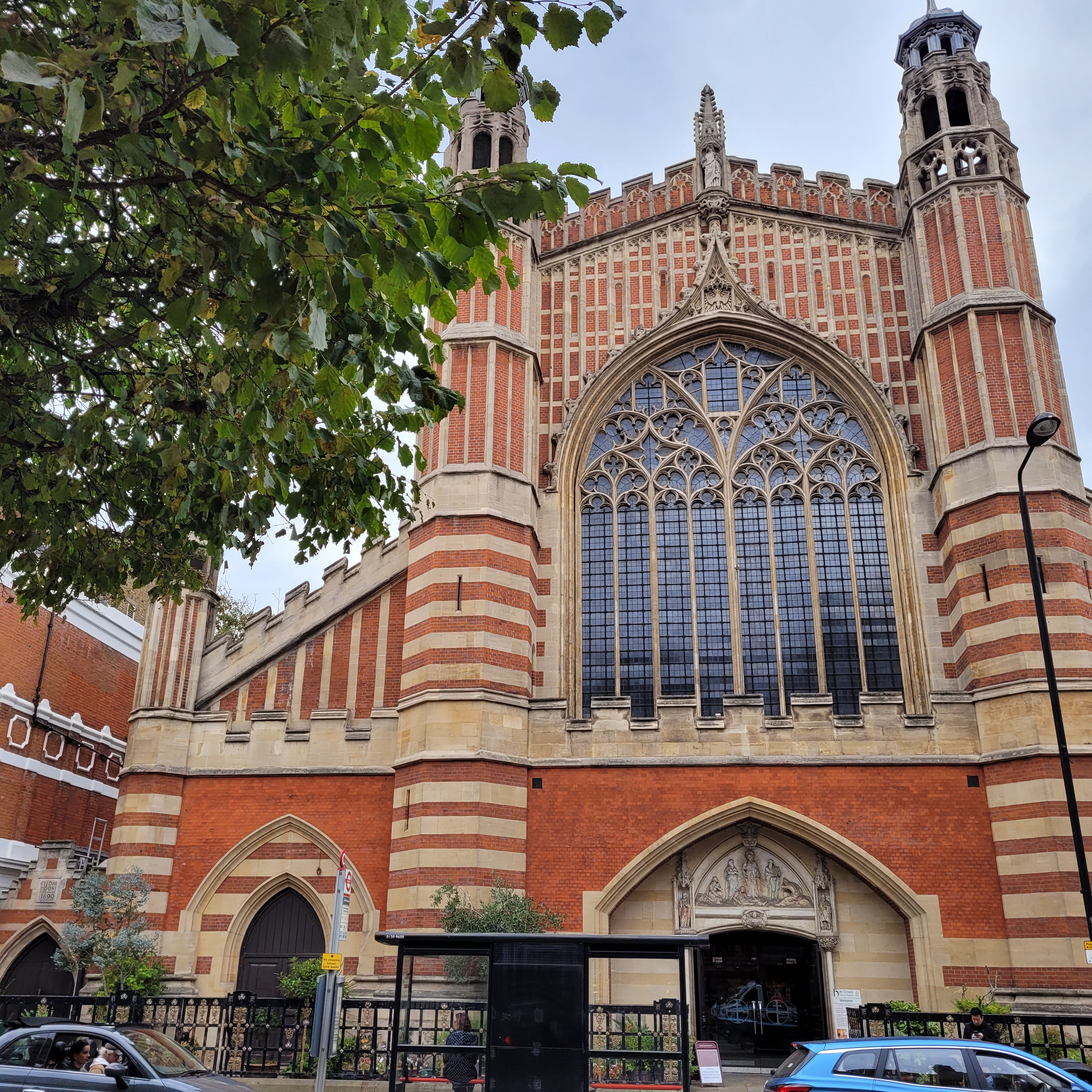
I, however, was there to find Holy Trinity Church, another Anglo Catholic Church rumored to have some lovely, stained-glass windows and internal features. This first picture is taken from the internet because

the church is on a busy narrow road, difficult to capture the entire building. On the church’s website Peyton Skipwith describes the building this way (I use a rather significant portion of the History section from their sight because it is so full of historical names and dates):

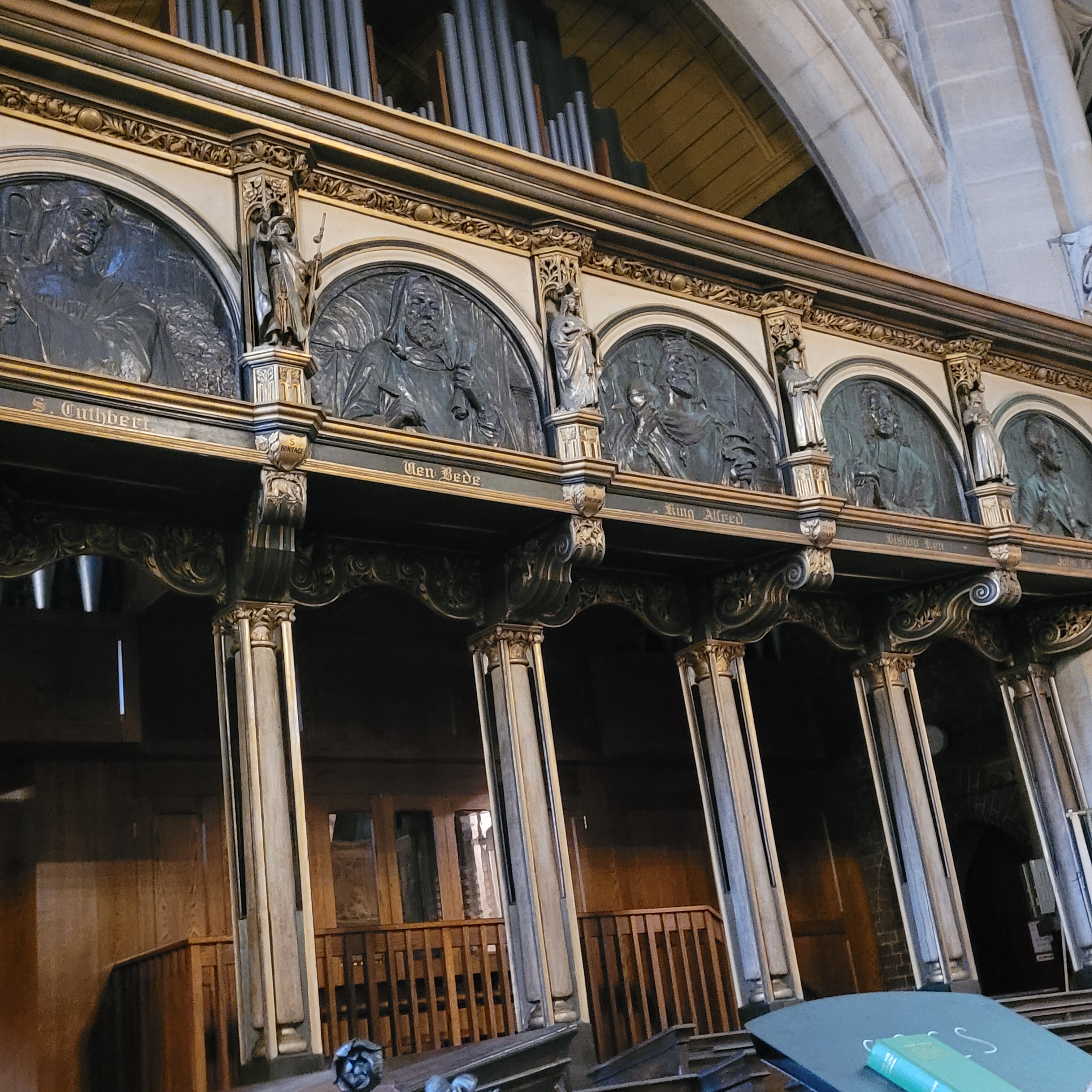
“Behind its magnificent red brick and stone facade, reminiscent of collegiate architecture of the late 16th and early 17th-century, is a veritable jewel-box of stained glass, sculpture and highly wrought metalwork by many of the finest artists and craftsmen of the late nineteenth century. The 5th Earl Cadogan and his wife Beatrix were responsible for the decision to replace an earlier church building and, presumably, for the choice of the architect, John Dando Sedding (1838-1891). They couldn’t have chosen better.

Sedding had trained in the offices of G.E Street (1824-1881), the most prolific and influential ecclesiastical architect of the previous generation, in whose offices William Morris, Philip Webb and Norman Shaw had also trained. Sedding was one of the prime movers of what became known as the Arts and Crafts Movement, which drew much of its early inspiration from the example and teachings Pugin and Ruskin. At the 1888 Liverpool Art Congress Sedding, in a veritable roll-call of the advanced architects and designers of the day, declared ‘We should have had no Morris, no Burges, no Shaw, no Webb, no Bodley, no Rossetti, no Crane, but for Pugin.’

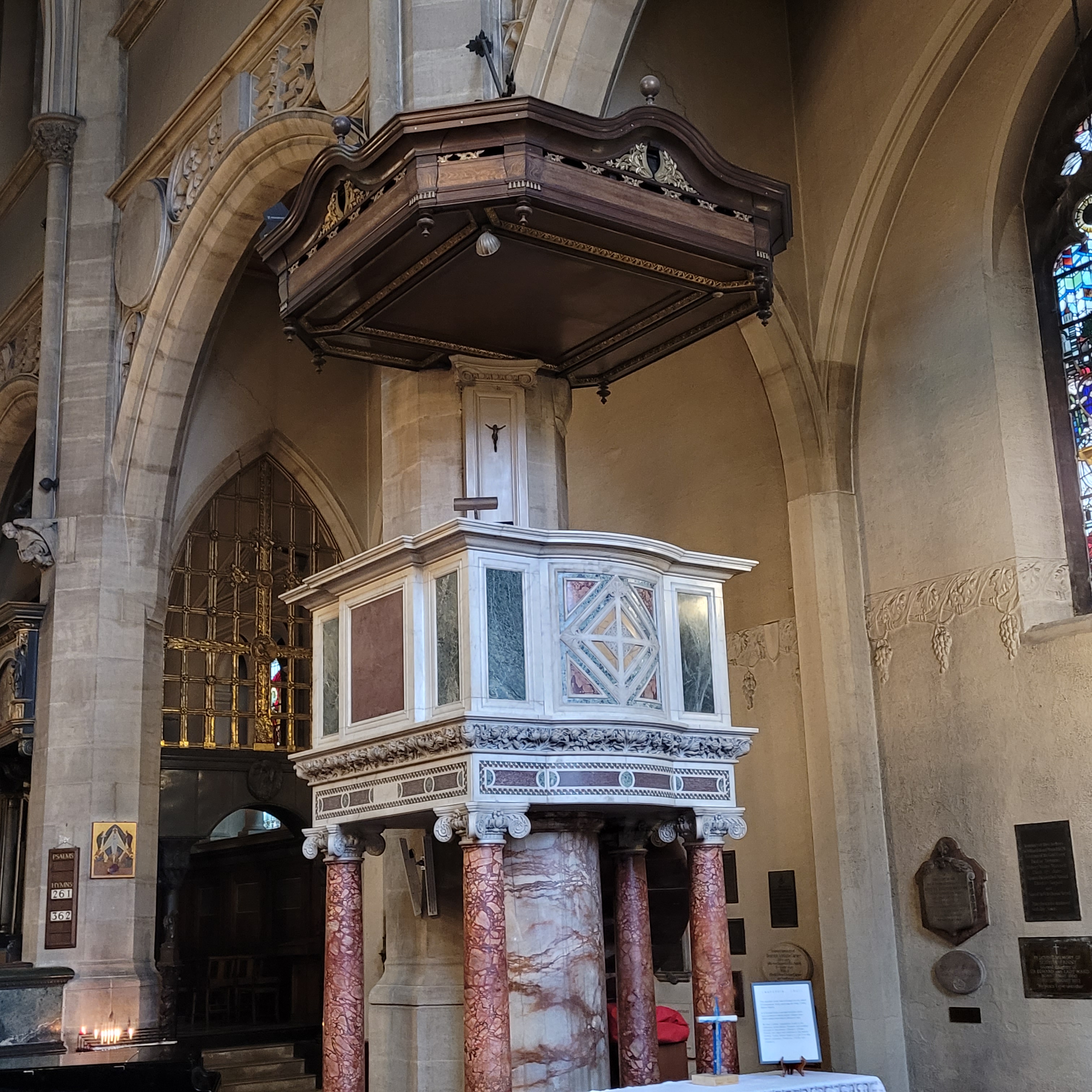
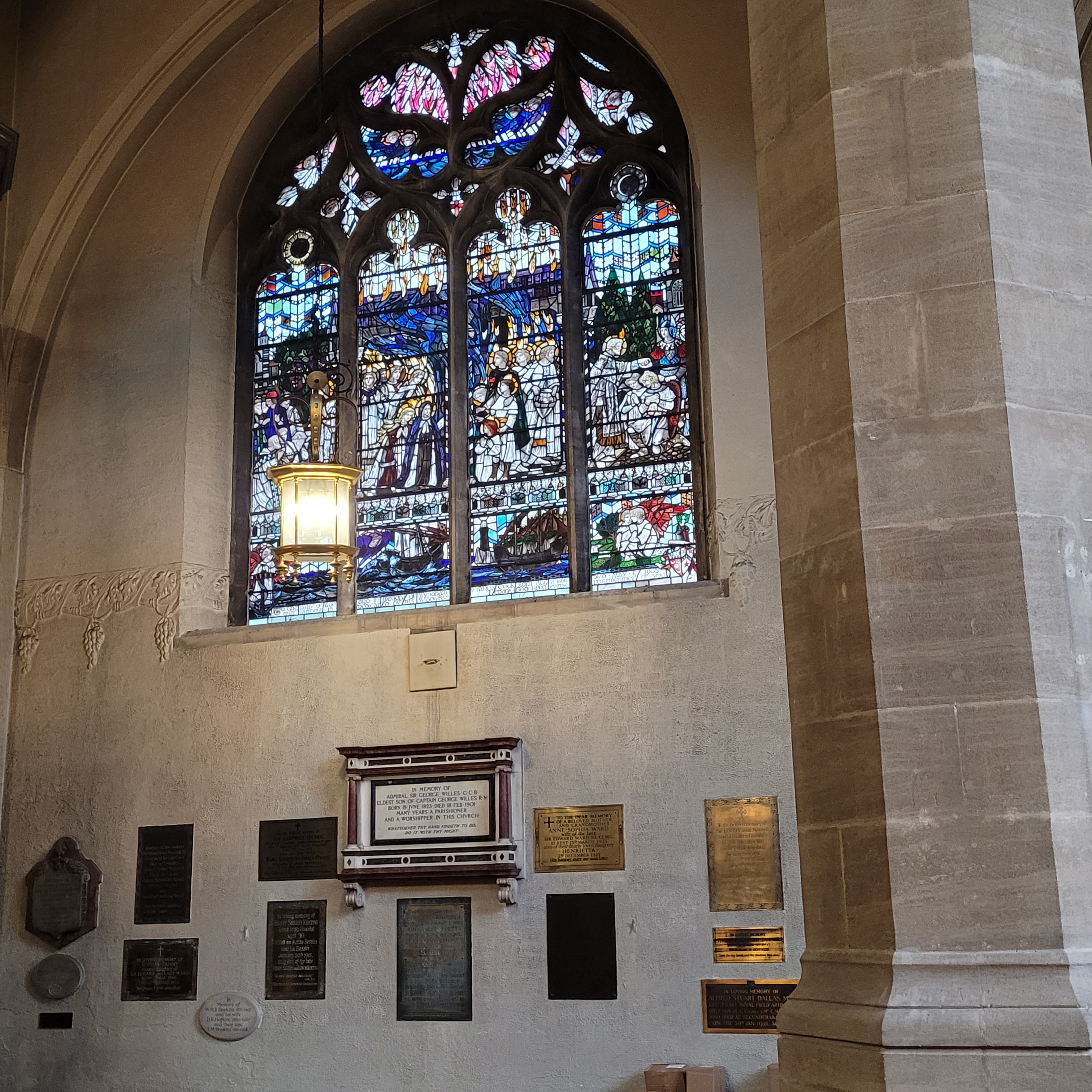
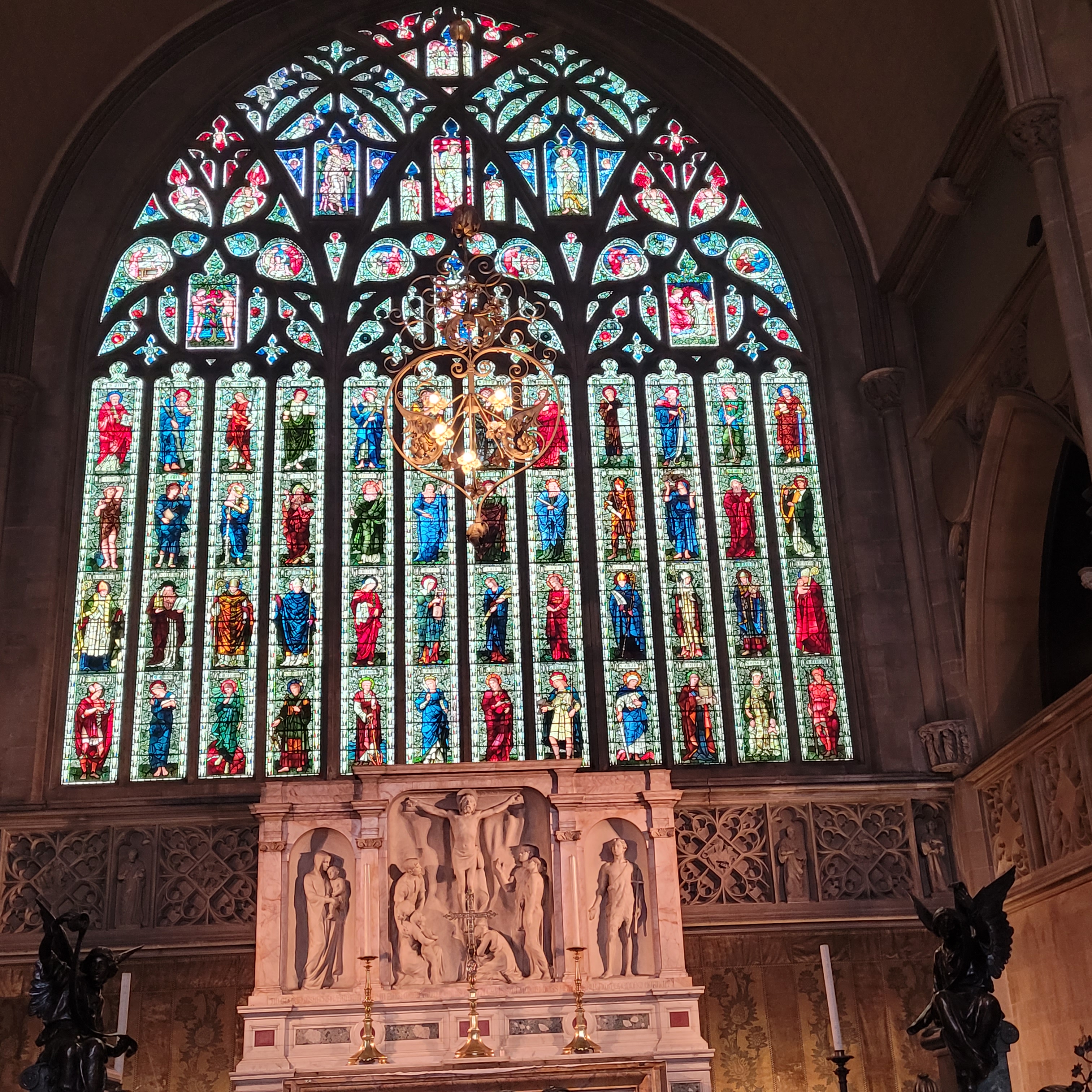
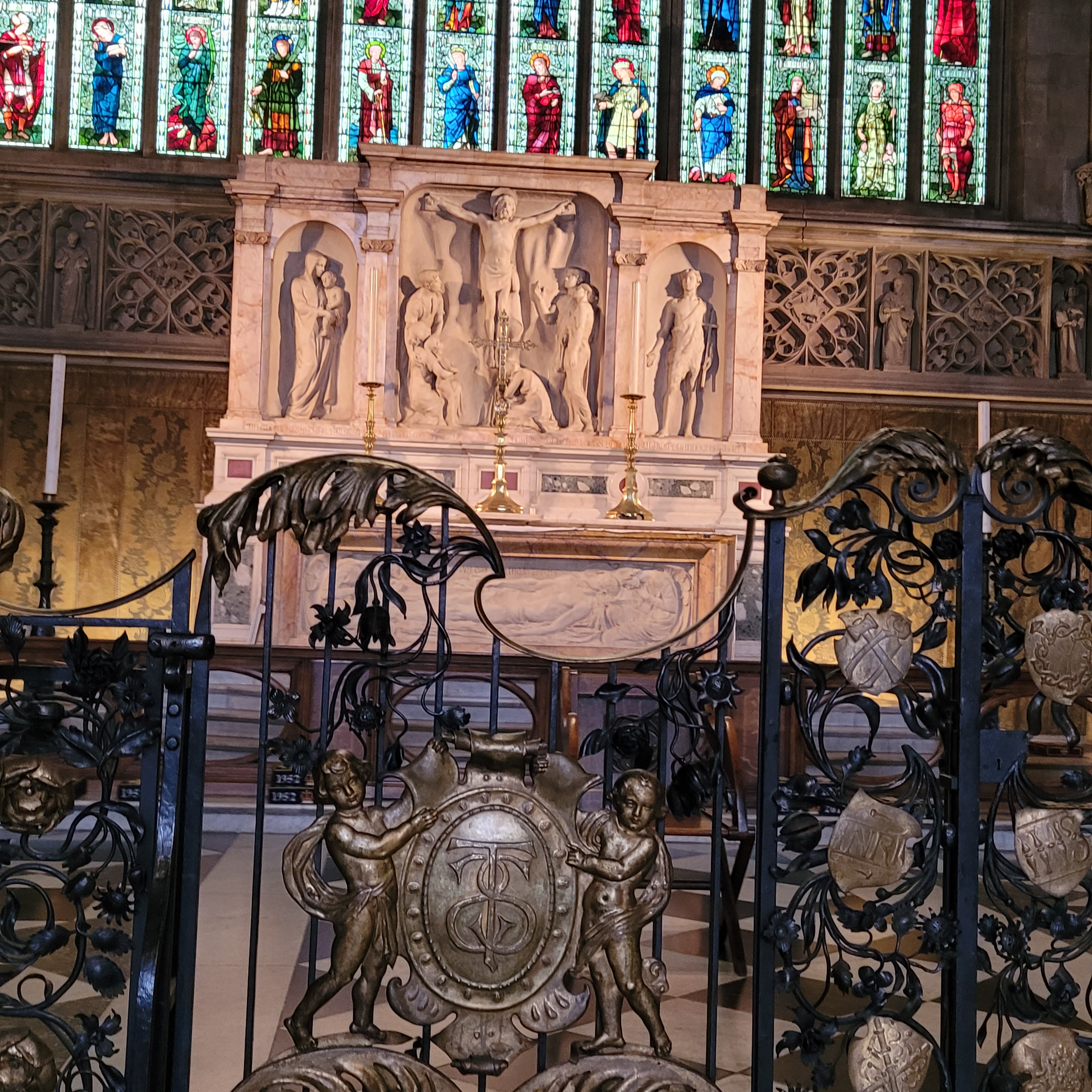
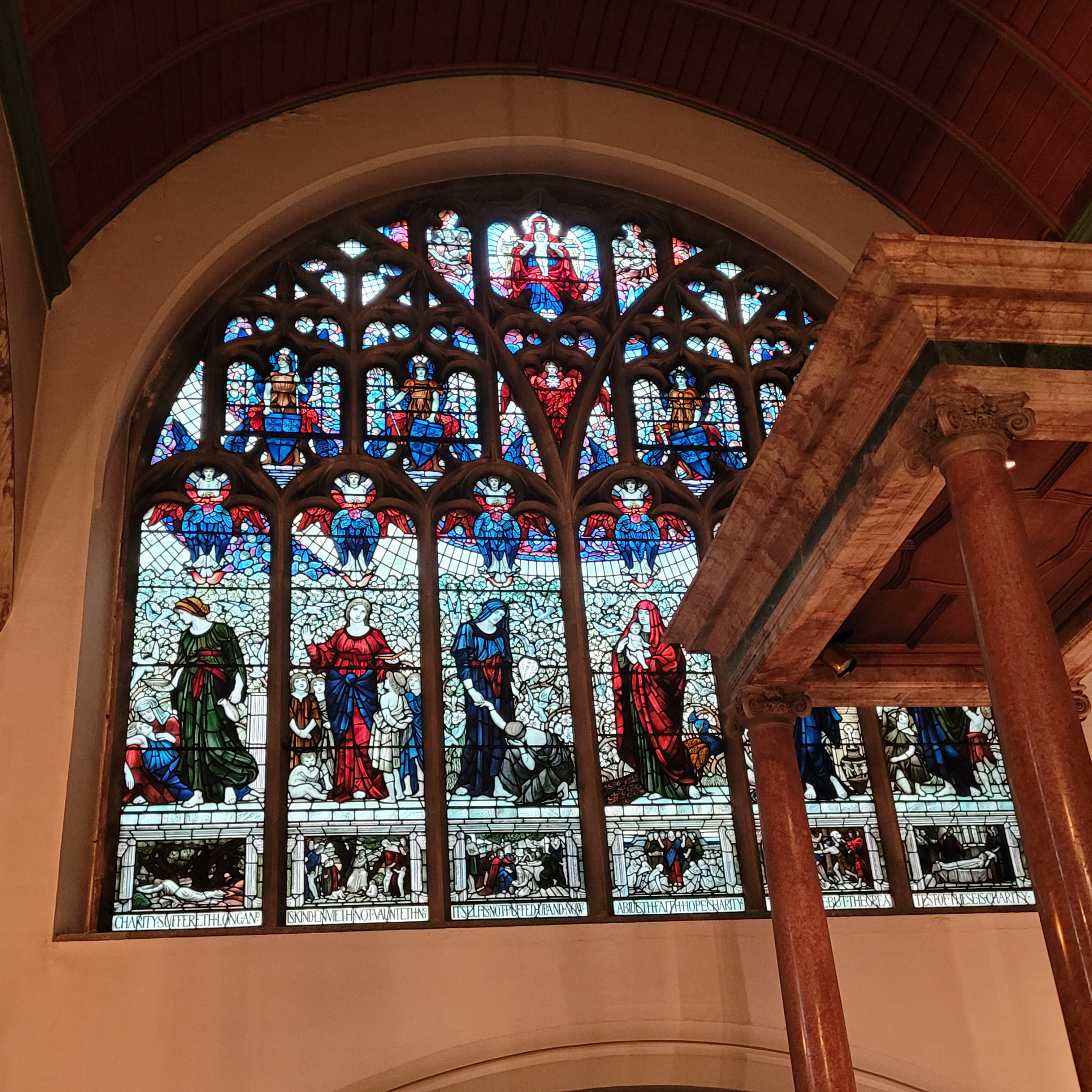
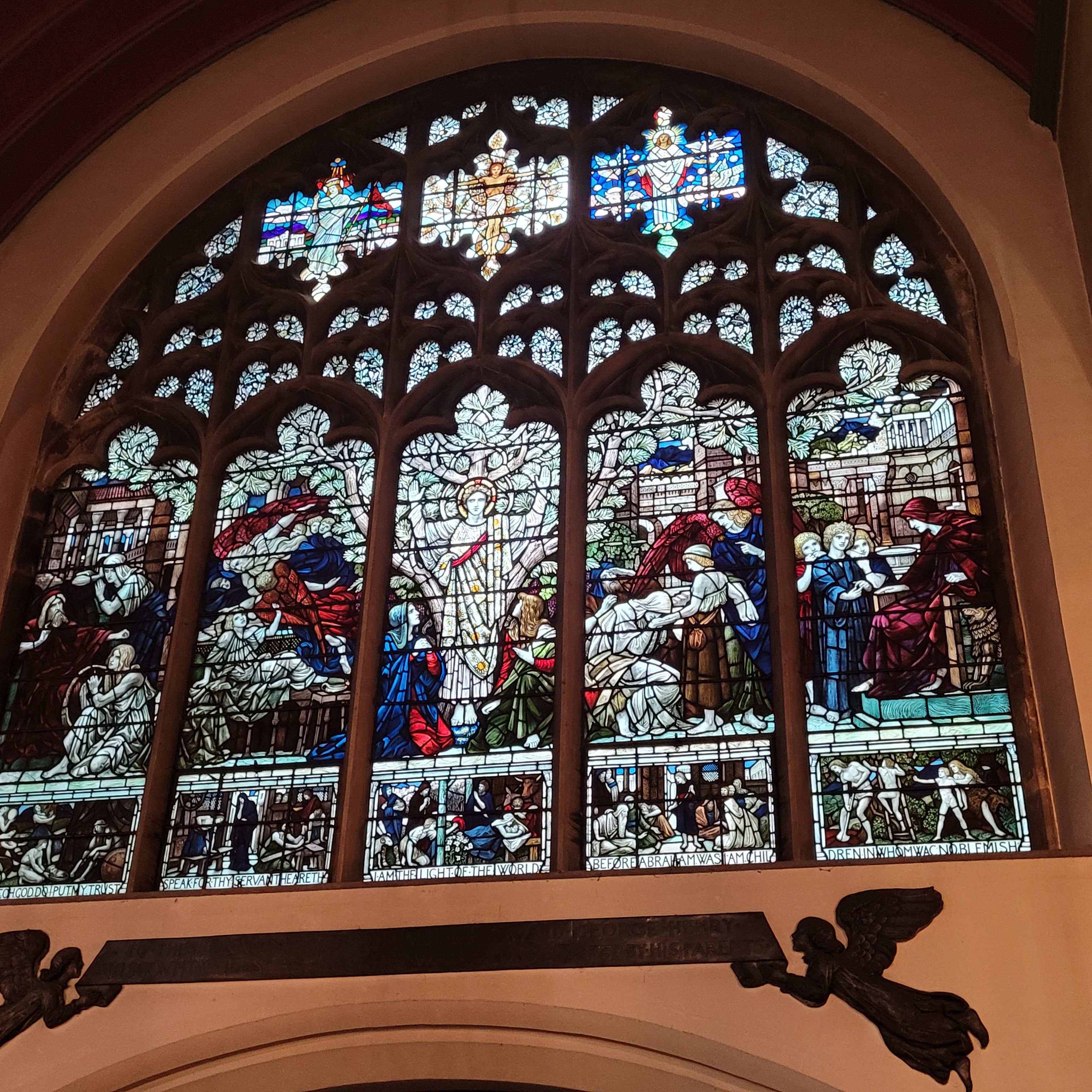
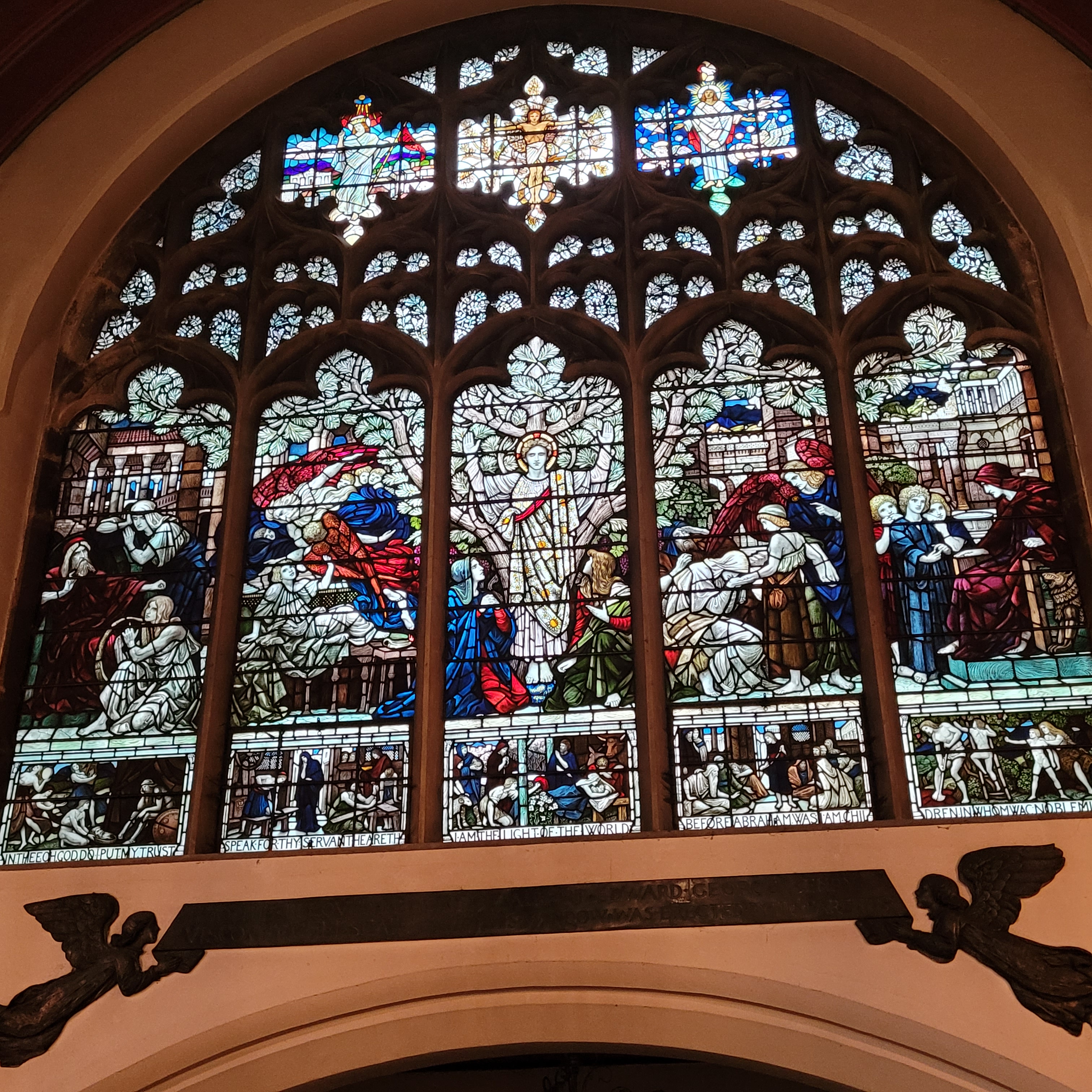
The first thing that impresses visitors to Holy Trinity is the wealth of stained glass, particularly the great east window designed by Burne-Jones, the largest window Morris & Company ever made; equally impressive are the windows by William Blake Richmond and Christopher Whall in the North and South aisles respectively. Not quite as showy, but just as impressive, is the range of sculpture, particularly F.W Pomeroy’s bronze angels on the chancel screen and his sculptured reliefs above and on the choir stalls. The work of other major sculptors from what became known as the ‘New Sculpture’ movement are also well represented – Onslow Ford, H.H Armstead, Harry Bates and John Tweed, who carved the marble reredos – all add to the richness of the interior, as does the wealth of different marbles employed, especially on the pulpit and in the Lady Chapel….

During World War Two the church was hit by several incendiary bombs, one at least bursting in the nave, causing considerable structural damage. Shortage of money and materials post-war meant that it took several decades of work to effect repairs and the church was closed except for sunday matins. Given the expense and the deep unfashionability of Victorian architecture at that period, there was considerable pressure to demolish rather than restore the building, and it was only saved from this second threat by a vigorous campaign mounted by the Victorian Society and Sir John Betjeman who penned the following pointed and poignant verse:

Bishop, archdeacon, rector, wardens, mayor Guardians of Chelsea’s noblest house of prayer.You your church’s vastness deplore
‘Should we not sell and give it to the poor?’
Recall, despite your practical suggestion
Which the disciple was who asked that question.

This hit home and Chelsea’s ‘noblest house of prayer’ was saved for the benefit of all and the glory of God.

Peyton Skipwith

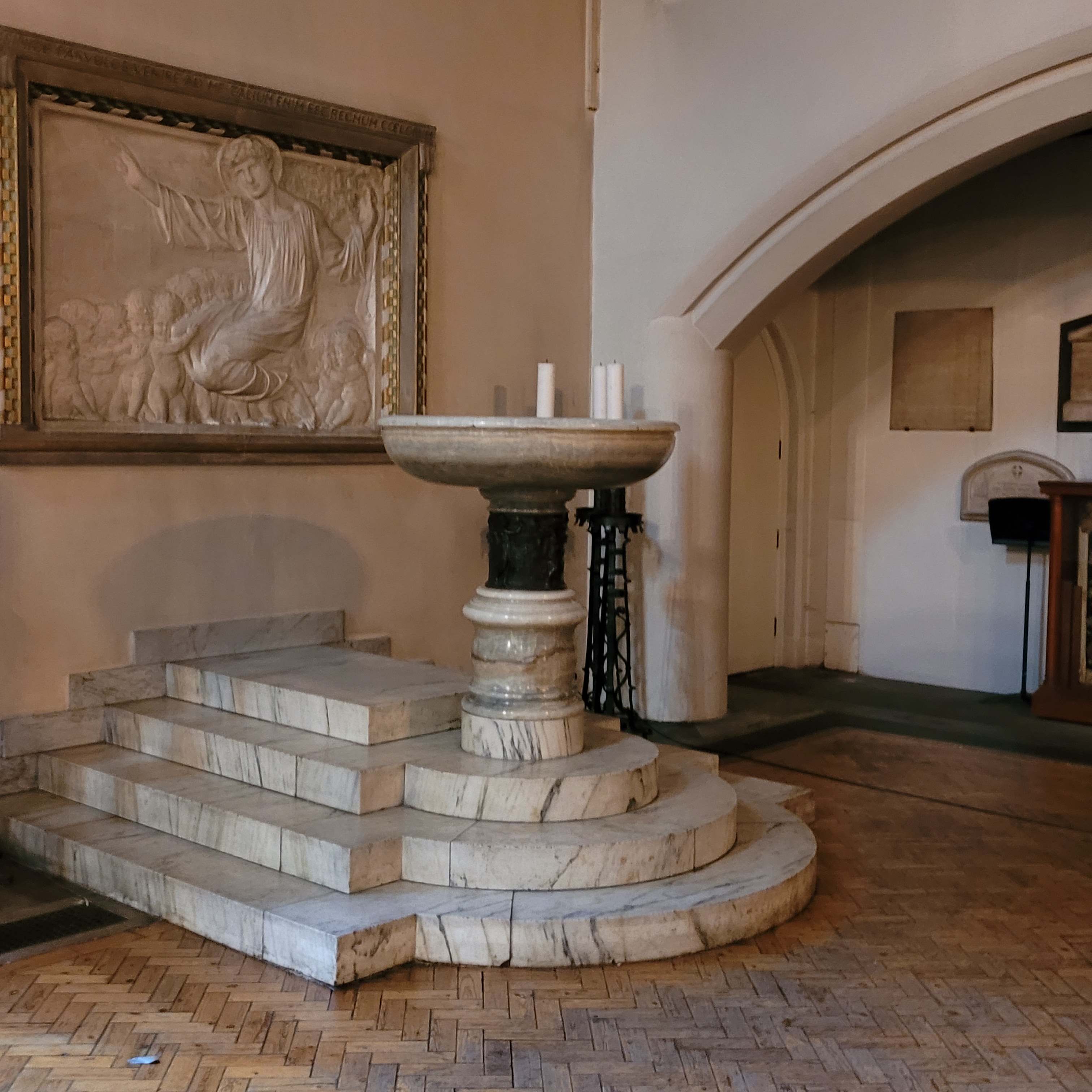
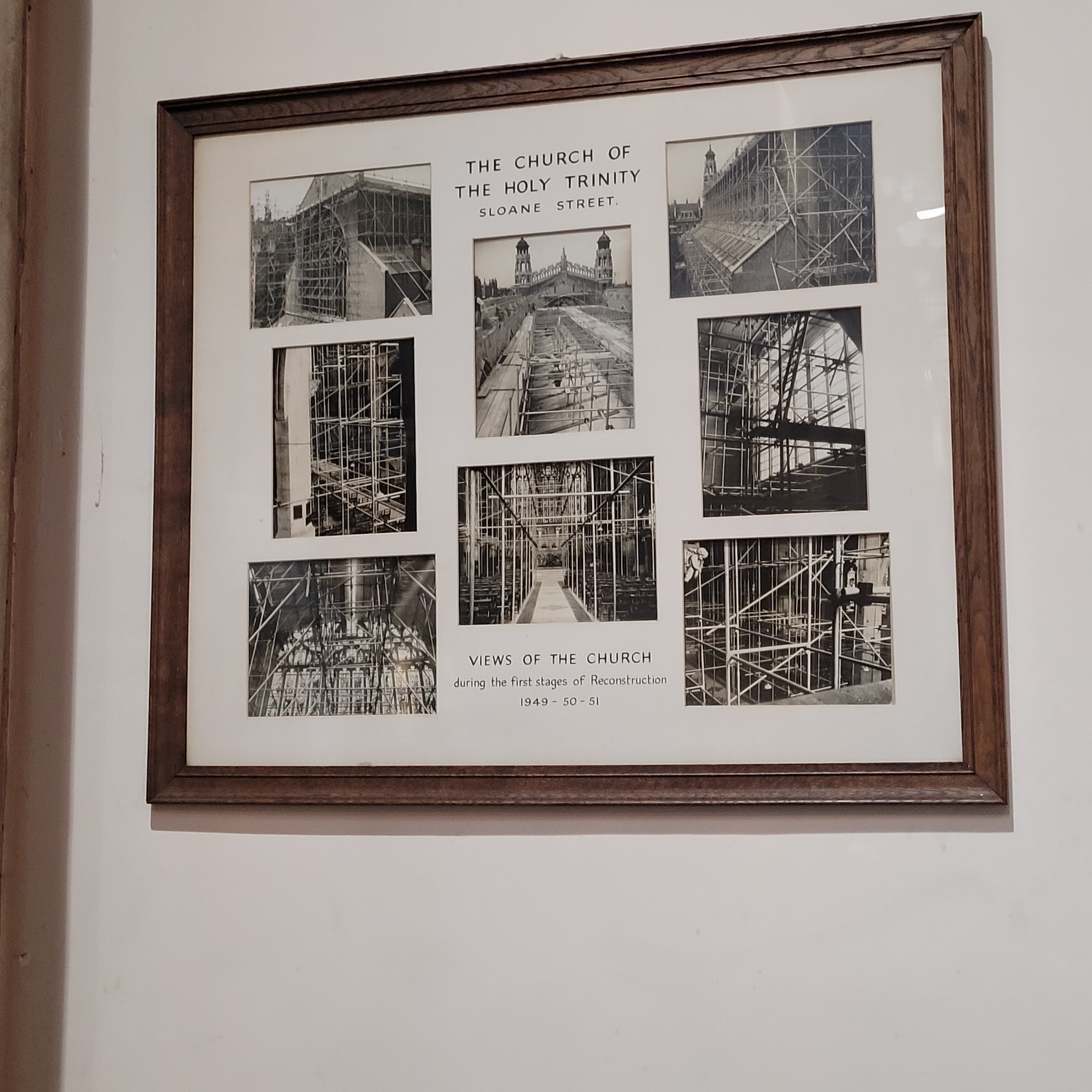
OK, it ‘Mark in London’ again. I just loved Sir John Betjeman’s little zinger at the end, “sure, you can follow Judas Iscariot’s lead…or you can rebuild this unique and beautiful church destroyed by Nazi bombs.” Putting guilt and shame to their very best uses. The pictures below start with one I took upon entering. These are followed by the windows to the right of the altar, and the old pulpit. Then we see the lovely metal and fillagree work around and above the choir. The magnicient stained-glass above the altar is given a close-up, as is the metal work in front of the altar. Then we come down the other aisle and see more stained-glass and metal work around the organ. There is a lovely Baptismal Font in the back of the church suggesting that this Anglo-Catholic community, as many Roman Catholic Communities do now, welcome new members at the entry of the church as they enter their new lives, cloaked in white garments and cloaked in the protection of Christ. It is a lovely tradition, with many variations, but one that still touches my heart. Two “pictures of pictures” showing the damage wrought by the WWII bombings and the reconstruction work, and finally, my best attempt at an outside view of this lovely church’s Arts and Crafts exterior.
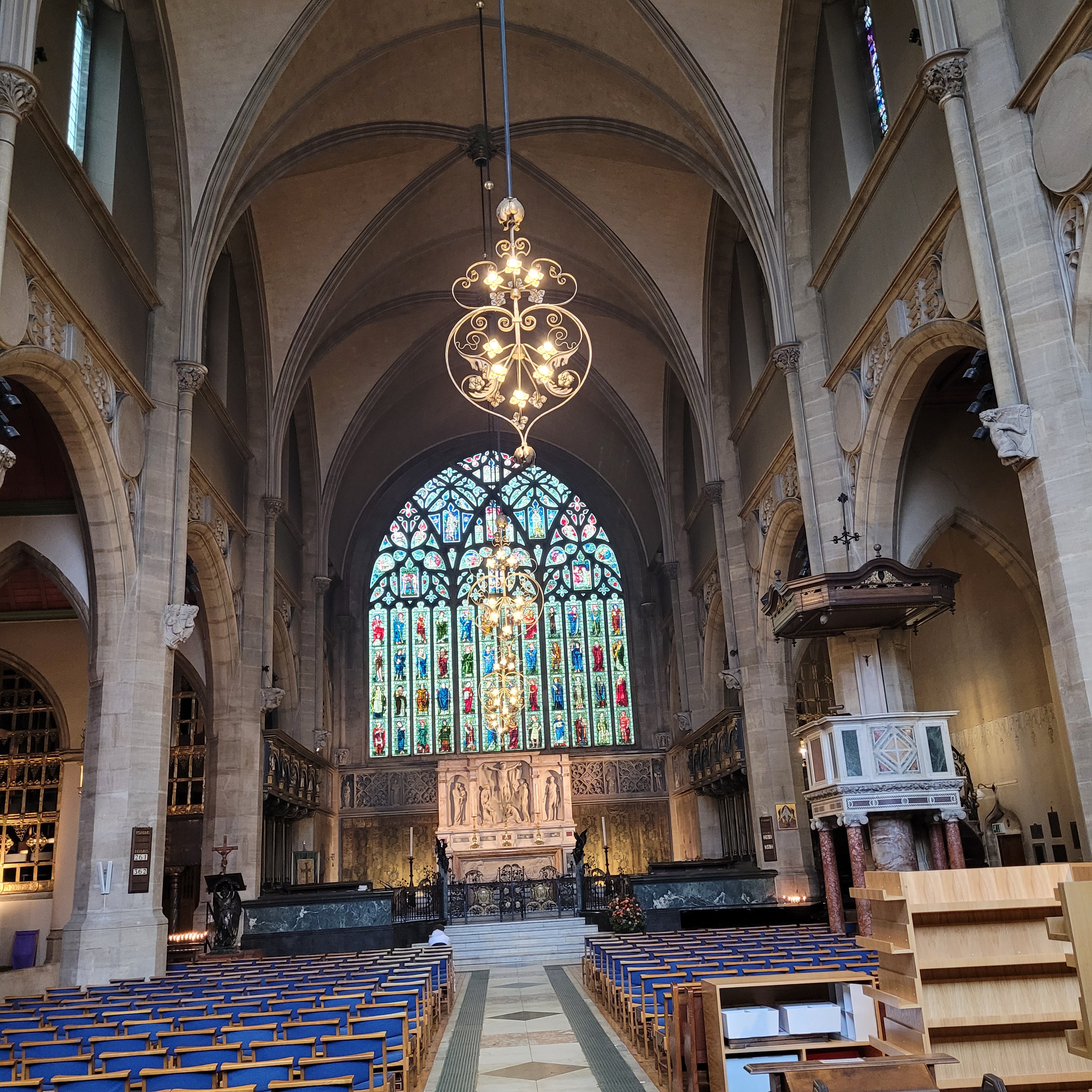
This is very much a working parish community. It has an elementary school attached to it and it was alive with volunteers and staff working during my visit. There was a sense of life within the worship space, and I felt that the beauty of the art was still alive and being appreciated daily, not always the case in underused or underappreciated places of worship.


Sunday, Monday Happy Days

If it’s Sunday, it must be another morning concert at Wigmore Hall. What a great coincidence! Three of the concerts I chose came so close together!

Before getting to this week’s performers, let me talk about my Uber trip to Wigmore. Once again, I was running late, and Uber seemed the best solution. The driver was a charming man of East Asian descent. He noted the Fulham crest on my jacket, leading to a discussion of my team’s unfortunate defeat the previous day. He was knowledgeable about the players and tactics. Then things got a bit interestingly weird. [Note, was having a good hair day, I guess] I should say, he was quite bald on top with tightly cropped sides. He said to me said to something along the lines of “your hair, is all ???” I responded, “is it all mine, yes, I’ve just had some of it moved around a bit and it is the natural color?” [who would choose this crazy mix of silver, brown and grey?] Then he asked, “Was it…?” I replied, “Was it painful, no I slept through it.” “Was it expensive.” “Well, that depends” “It is very pretty, maybe you find new lady at your concert?” At this point we arrived at the Hall.

The Viano Quartet were this week’s performers. Their website describes their beginnings as: “Praised for their “huge range of dynamics, massive sound and spontaneity” (American Record Guide), the Viano String Quartet is the First Prize Winner of the 2019 Banff International String Quartet Competition and the current Nina von Maltzahn String Quartet-in-Residence at the Curtis Institute of Music. Formed in 2015 at the Colburn Conservatory of Music in Los Angeles, the quartet has performed all over the world in venues such as Wigmore Hall, Place Flagey, Izumi Hall, Konzerthaus Berlin, and Segerstrom Center for the Arts.”

The two selections were: Felix Mendelsohn’s String Quartet in A minor Op. 13 and Edvard Grieg’s String Quartet No. 1 in G Minor Op. 27. Each was played to perfection by these four gifted performers. The two pieces allowed each musician to demonstrate their significant abilities and talent. The violins and violas blended beautifully and cello both complemented and responded to the other instruments, as well as “singing” with them. The Quartet graciously played an encore after the strong applause and “bravos” they received.

One of the especially great things about this concert was that it was part of the CAVATINA Chamber Music Trust. CAVATINA has worked in partnership with Wigmore Hall for over 20 years, and now forms a major part of the Hall’s ongoing commitment to new audiences and its strategy to make tens of thousands of tickets available to young people every season, either for free or for just £5.

From Wigmore, I headed South, via London’s famed Underground network. Taking “the Tube” to today’s destination of “Tooting Broadway Station” is a familiar one to me. This is the home of dear friends who were hosting an 8th birthday party for their older daughter. The birthday girl’s paternal grandparents are my longest standing English friends, having met when they invited me to share a table at a crowded restaurant many years ago. This kind of English hospitality is what I have found over the years in this wonderful country.

The birthday party (I’ve been to all of the young lady’s, except for the Covid one) because her birthday falls during my annual London sojourn) was lovely. While her dad who is a great musician who appears on social media from time to time and her mum and her mum’s twin sister were child stars well-remembered and beloved by many in the UK, I will save her from social media fame. I am honored to be included in these family parties and to see the birthday girl, her sister and her cousins grow and thrive over the years.

“Monday, Monday, so good to me!” Unlike the song, Monday was morning brought me continued Facebook access issues. What is it about technology and me? I spent far too much time diddling around trying to find some way to gain access to my own account on either my laptop or phone. Luckily, I was able to maintain my Facebook account on my Kindle Fire. But the day was saved with the knowledge that I would be meeting a high school classmate and his partner for dinner Monday evening. We attended a large suburban high school on Long Island, NY. Our class had 777 students in it! That was down from 800 in some of the larger ‘Baby Boomer classes that preceded us. We were from Nassau County in is Hey Day of suburbanization. I lived in one of the earliest developed areas in a house built before WWII. Jack lived in the post-WWII Levitt-inspired part of area where our Oceanside Senior High School was located. As Jack described it beautifully to his partner, a lovely lady from Georgia, “there was the Italian crew, the Jewish crew, and the Irish crew,” we all got along, we were all friends, we all celebrated each other’s holidays.” That, in a nutshell, described our world. We may have our separate ways to Hebrew School, Sunday School, or CCD, but we knew and respected the customs and traditions of each other’s ethnicities and traditions. We played together on sports teams, were in clubs together, and so on. So, how did we manage to go through those years, and barely know each other? We laughed as we considered that!

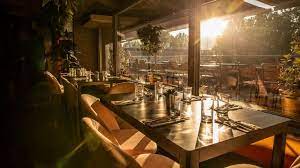
Jack and I had mutual friends, several of whom, we had each stayed in touch with over the decades since we left Oceanside High School, both gone off to different branches of the State University of New York (me to SUNY Oneonta, him the SUNY Buffalo). We each went off to graduate studies. He eventually settled in San Diego where his dental career is legendary and me, of course, in Alexandria, Virginia for my career in Federal service. Our later life friendship had bloomed on Facebook, as so many have, particularly during the recent year of planning for our 50th high school class reunion that covid fears postponed until July of 2021. Jack did not make it ‘back east’ for the reunion but suggested we might meet in London this Autumn. And so, we did. It has been a few years since I have been to the National Theatre at Southbank. The first picture demonstrates the ‘brutalist style’ of the theatre complex, a true sign of that mid 20th century modernist style. The second shows the modern style of the restaurant looking out onto the Terrace which gives views out to the river Thames. The Terrace Restaurant now

teams with a successful food truck called Bob’s Lobster. So, we dined at Bob’s Lobster at the Terrace Restaurant. The dinner was very good. The service was stellar, and hostess was absolutely charming. We finished before the theatres let out, so it was quite easy to grab a Taxi at the upper ground, thhe place where taxis and other cars services drop off and pick up theatre customers. This is also a quick walk to the cab stand at Waterloo Train Station. I’m hoping to see Jack again when he returns to London from his next port of call.

And Who Can Forget the Royal Academy of Art

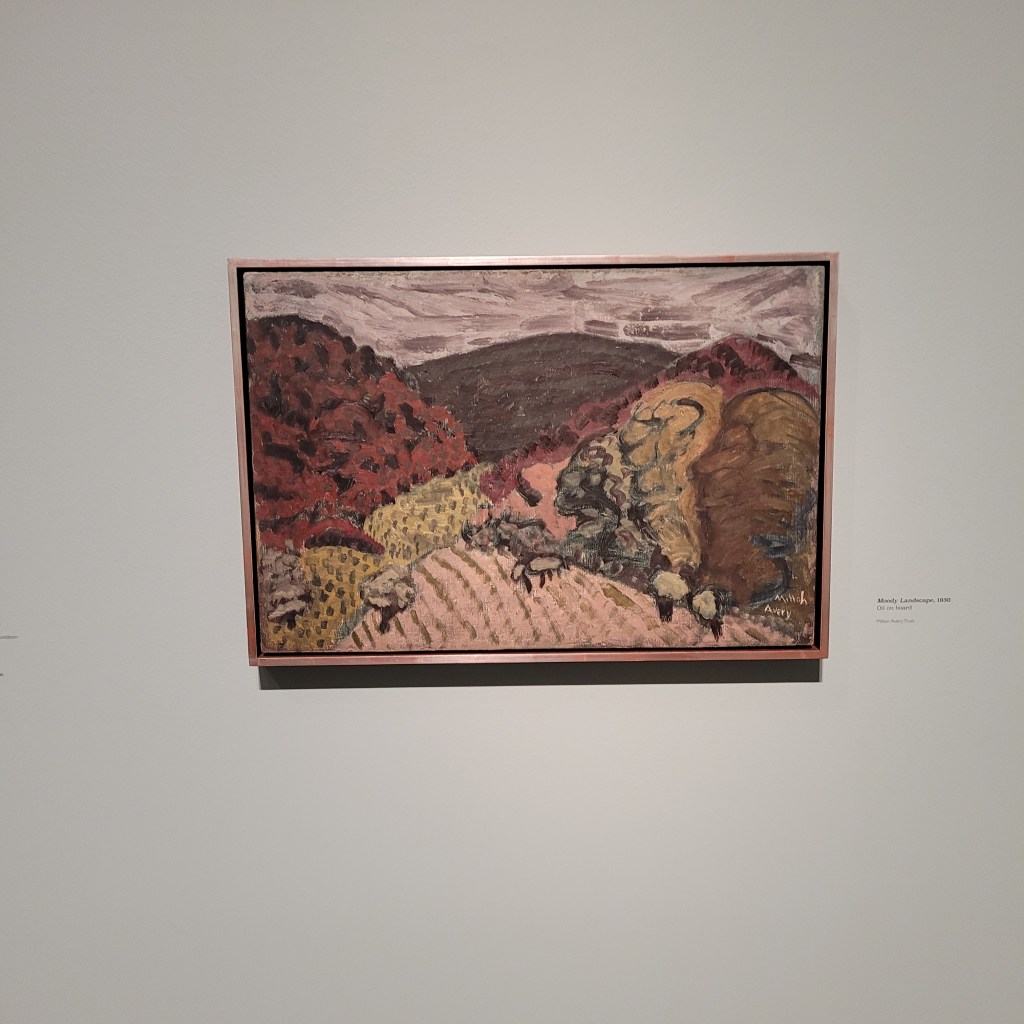
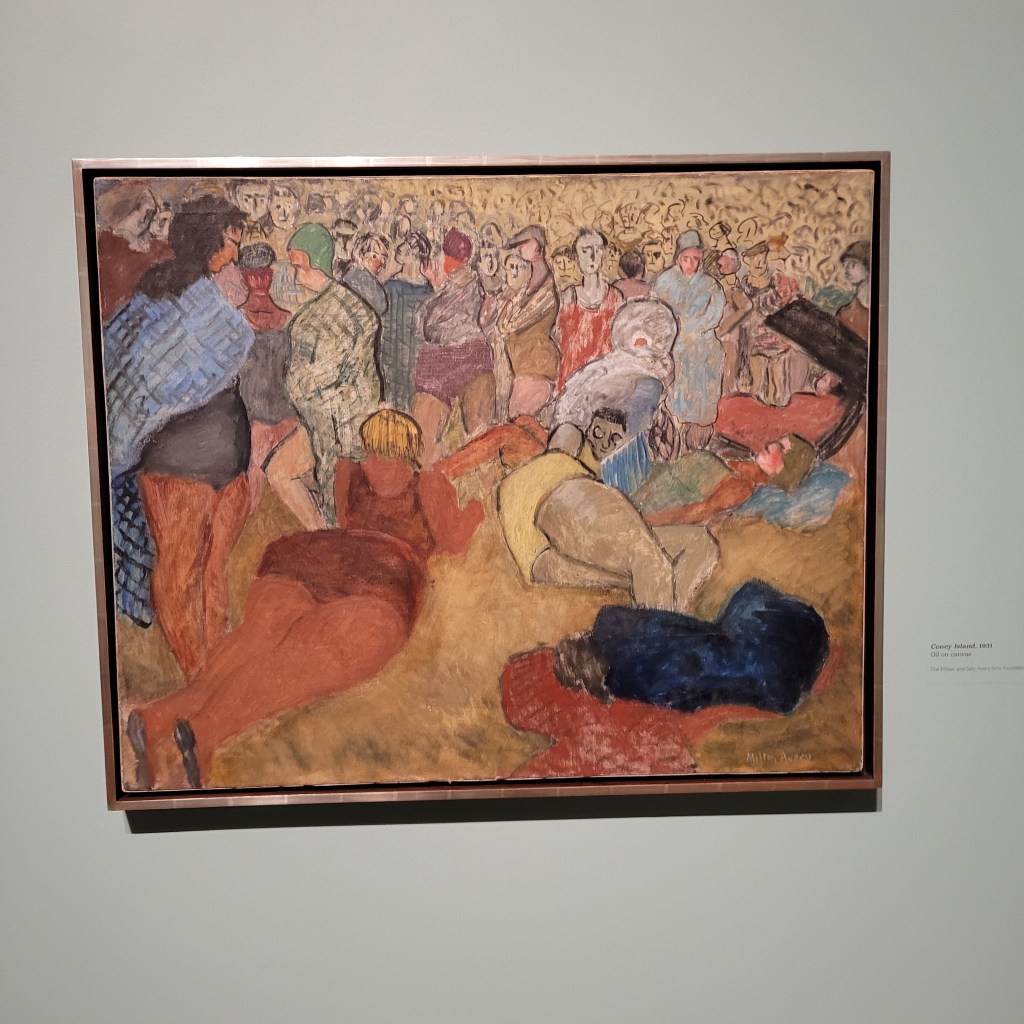
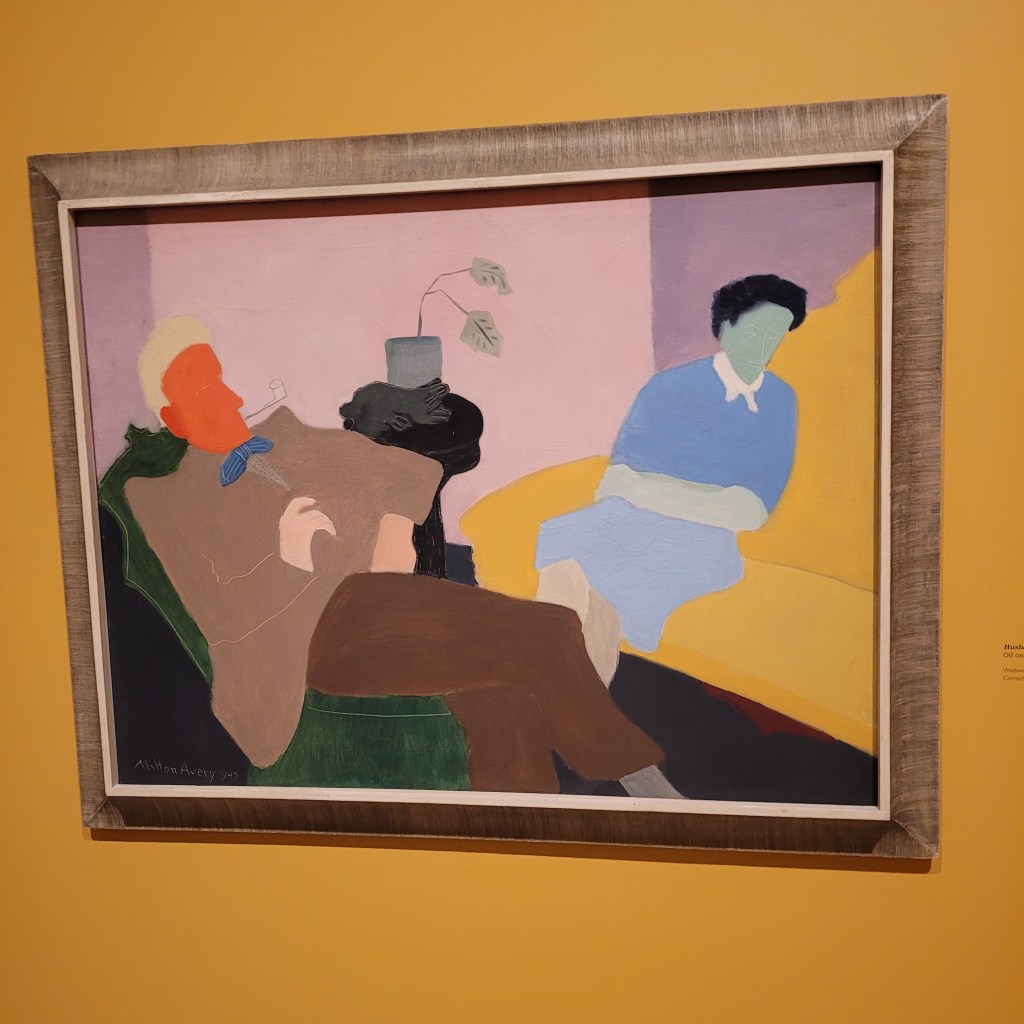
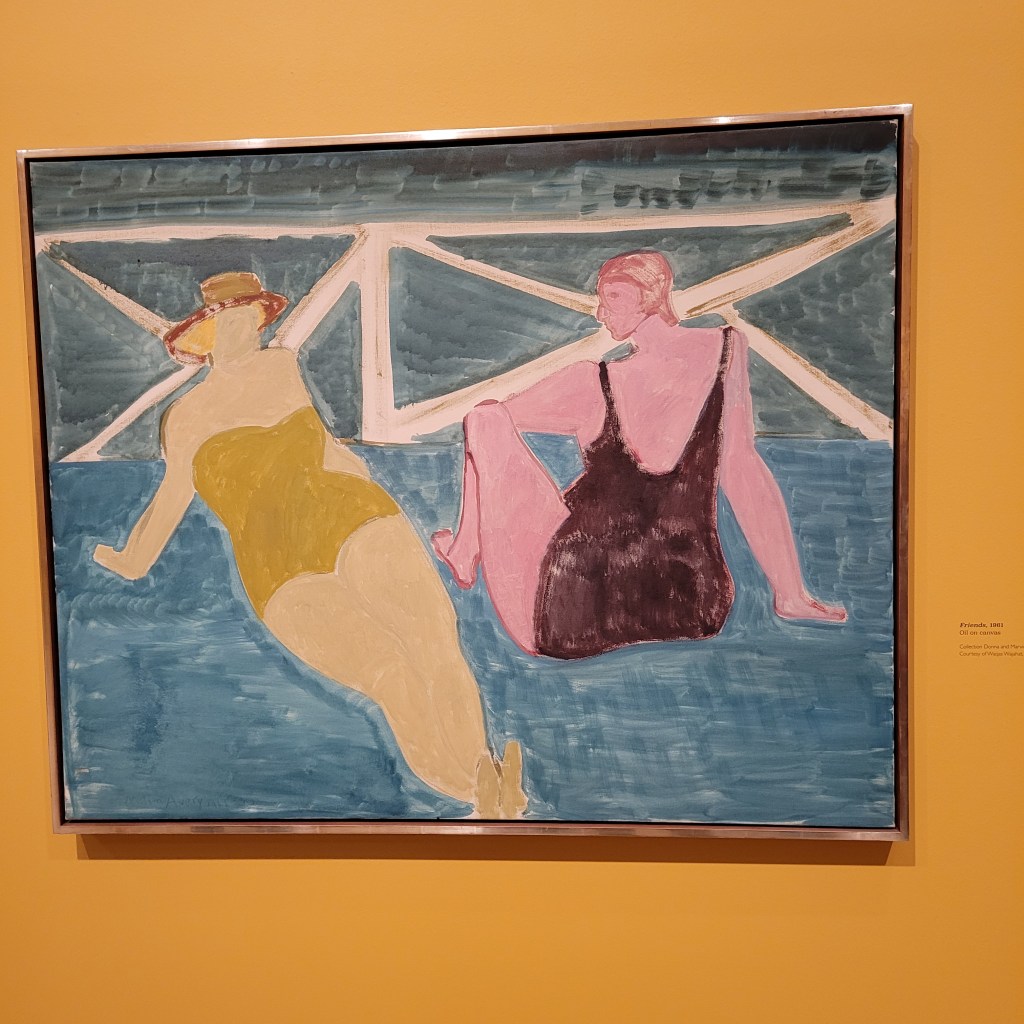
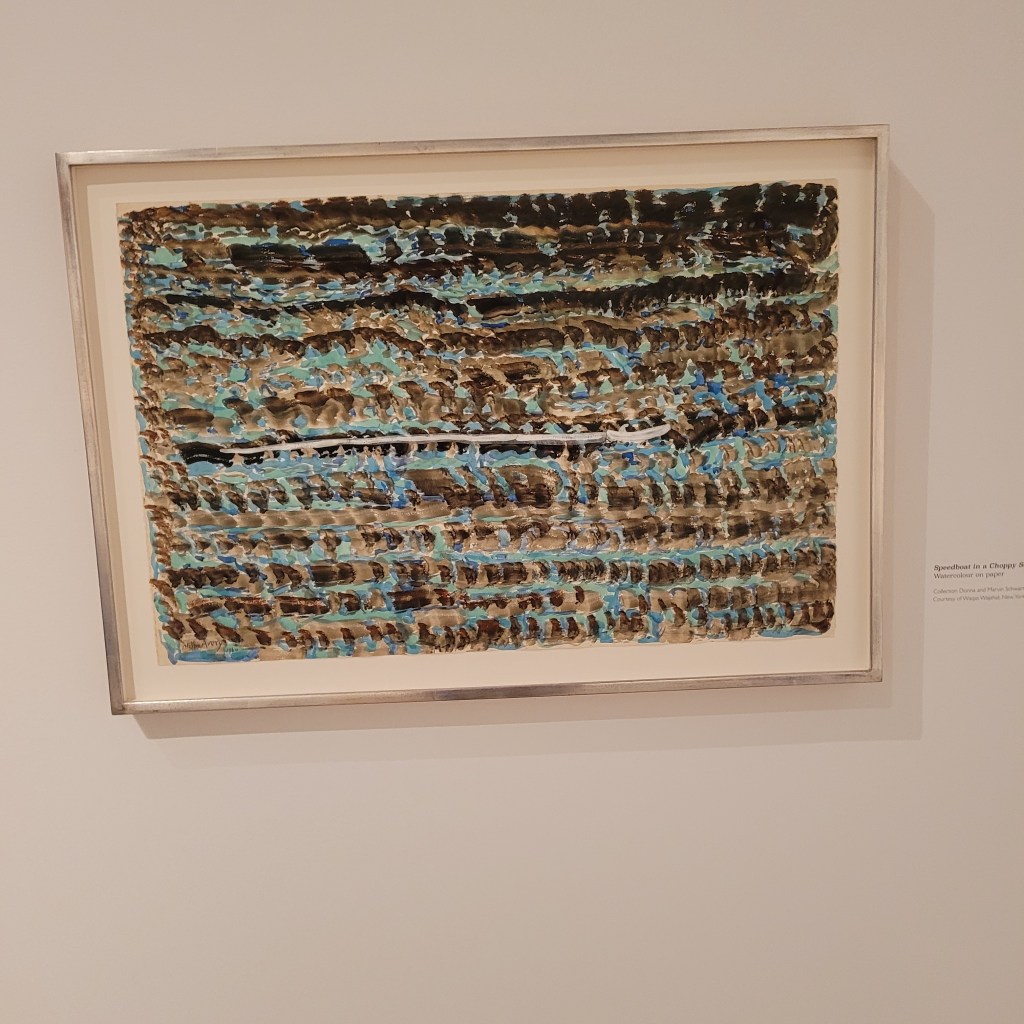
Well, obviously, I did. I guess an alternative definition for IBS must be “I be stupid,” because I completely forgot about the incredible visit that I had to the venerable “RA” in London the morning before things took a turn for the unpleasant in my inner regions. But, happily, the memory of a wonderful and amazingly well curated exhibit of the works of “Milton Avery, American Colorist” returned. The exhibition covered his work from the 1930s to the 1960s. His early days were certainly influenced by the American Impressionists, but his later works showed his close relationship with Rothko and other of the Abstract Impressionists. As I hope you will see in the selection of works that I show, his growth is clearly phenomenal, as is the expansive increase in color and the way he experimented with form.

Early Landscape

Coney Island, shortly after family move to New York City.

In person, these two still life studies showed a beginning of enhanced use of color and more of a use of three-dimensional depth.

Portrait showing a use of color and form with little concern for facial features.

Friends The colors catch the eye and seem to leave room for stories to be formed by each who view the painting or for one to simply enjoy the color play.

These final three images above all reflect the time Avery spent with the Abstract Expressionists, living and working with them. For me, a certain joy comes from viewing these paintings where the artist seems freed from any constraint of convention.

Over the years of my travels, I have seen some incredible art in large and small museums and galleries. Those that often surprised me most were artists I never knew before I took a chance on visiting their exhibition. Patrick Heron, the great English colorist comes to mind. I cannot imagine my life without the moments of joy that seeing his work have given to me. I now Milton Avery to this list. Great art, great music, great drama, great athletic performances, great literature. Seek them out. Make them part of your life.

Hurricanes and Knock Outs

I had planned another adventure for this week, and I had a Whisky event to attend, but as the old saying goes, “man plans, God laughs. So, while my friends in Florida prepared for the devastation of Hurricane Ian, I had no way of knowing that I would have a visit from a nasty old friend too. My doctor calls it IBS, and let’s just say when it decides to challenge a hurricane for my attention, it wins. So, I have been out of commission for most of this week but am starting to feel a bit like myself again, thank goodness. From what I have been able to garner from the news out of Southwest Florida, my little piece of paradise does not seem to have been hit as hard as those right along the coastline. It appears that my house was far enough east and north to avoid the storm surge, which did make its way up Naples’ Fifth Avenue shopping district and apparently took out half of the just renovated fishing pier on the Gulf.

Above are two examples of the damage wrought by the hurricane to this usually idyllic city on Florida’s Gulf Coast. For many years, Naples was a small city that catered mostly to retirees from the Midwest of the US, New England, and Canada. As a Virginian/New Yorker of Pennsylvanian descent, I was a rarity. But since my grandparents were Napolitano from the original Naples and my parents before me had found retirement happiness here, I thought it a good place to relocate. In normal times its warm and friendly. In recent years, we have been found out and the real estate boom has hit us. Over development has followed. I suspect that many more will have been affected, not only by the strength of this storm, but by the density of the population. I pray for the doctors, nurses, and first responders in Naples and Collier County-police, fire fighters, EMS, and all those long-suffering technicians who will be working countless hours getting cables, satellite connections, mobile phone towers, etc. operational again.

I hope to be out and about again next week with something more enjoyable and positive to write about.