Category: Uncategorized

Ascents, Descents and a bit in the Middle

One of the friends I have made on this trip, a delightful lady named Elaine had been urging me to view a new statue placed in front of Saint Paul’s Cathedral, the iconic cathedral that has been the site of many events in British history and which is known for the heroic steps taken by Londoners to save it from bombs and fires during the German Blitz of World War II. I finally got to Saint Paul’s this week. In a sad statement on the times, we live in, security at the cathedral has greatly increased. I approached a rather dour looking guard at a side entrance who, before I could even ask a question, informed me that, ‘tourists pay twenty-one Pounds, worship is free’. I thanked her for the information and asked her if she could direct me to the new statue. “There is no new statue. There was a statue this summer, but it was temporary.” I asked if I could enter there where she was standing guard, but was sent to the main entrance.

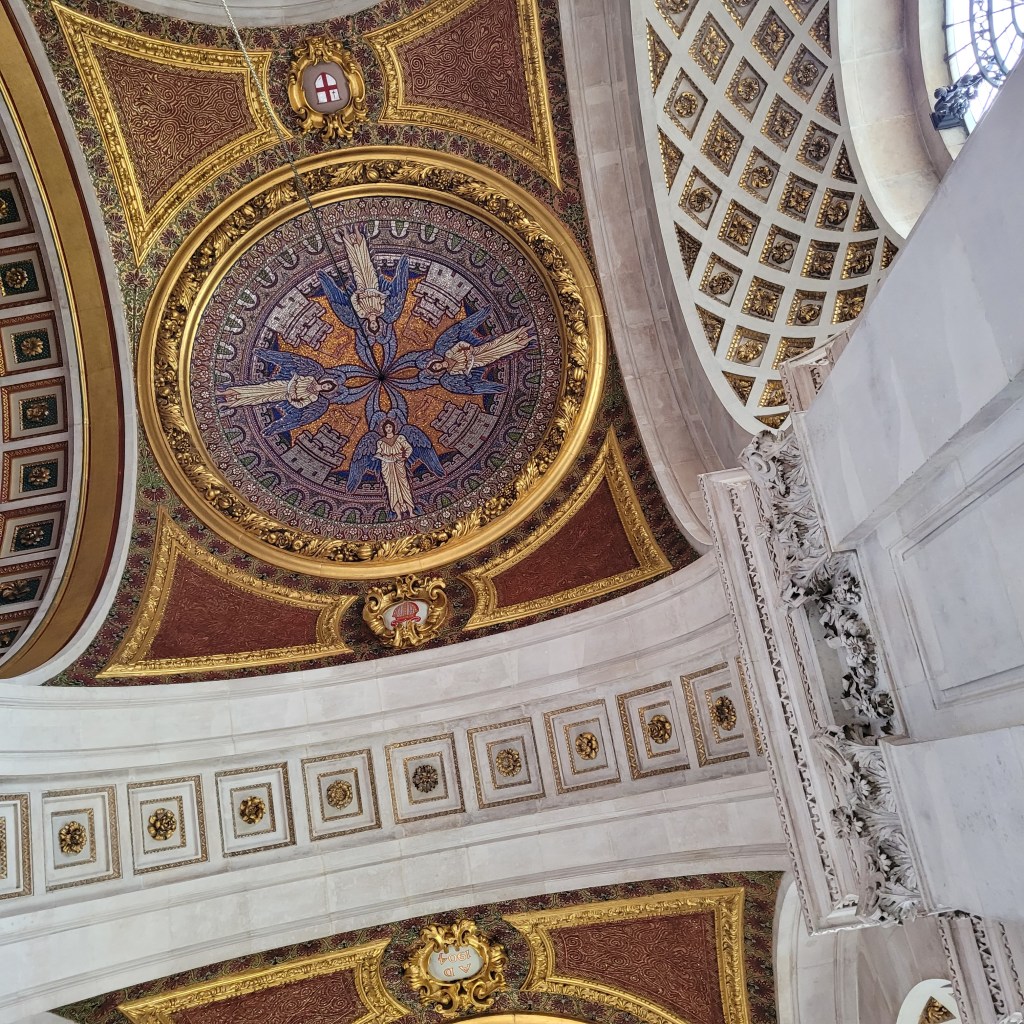
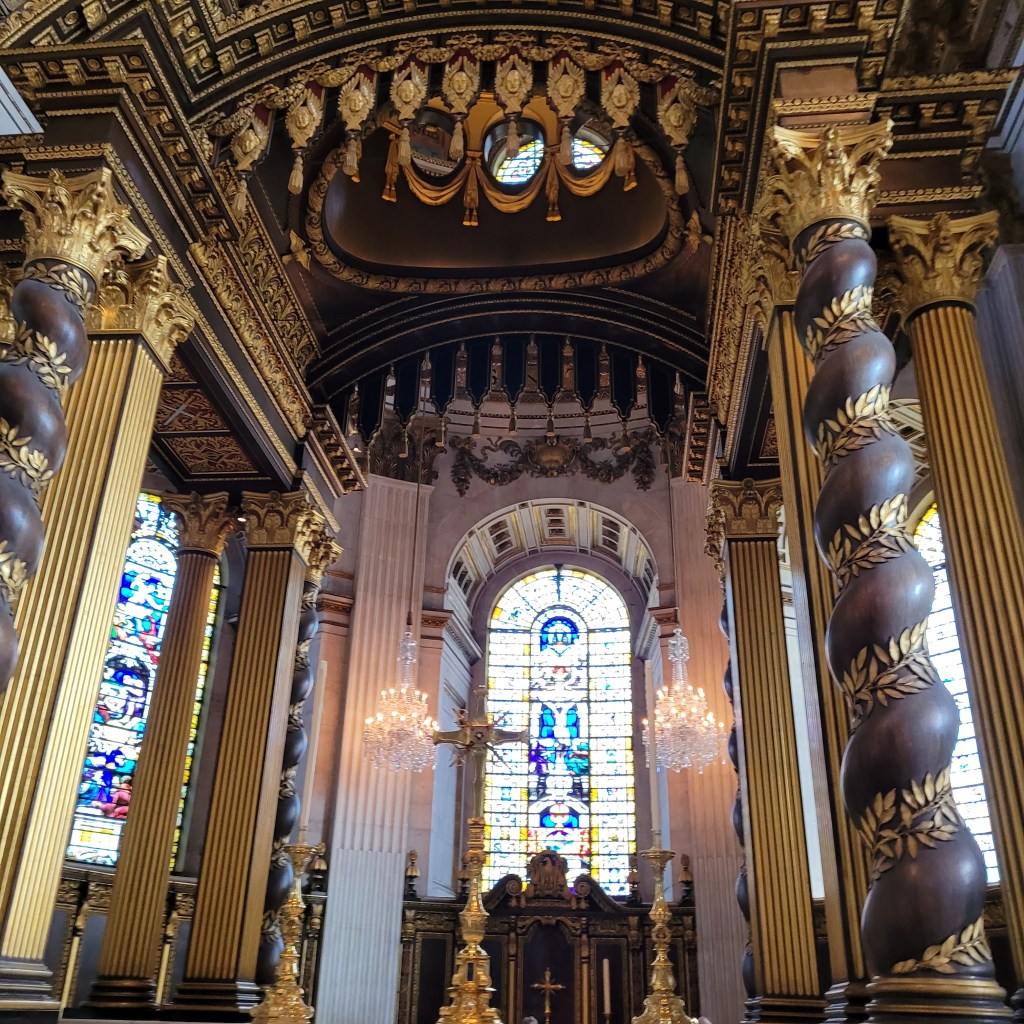
The main entrance to Saint Paul’s is the best way to visit this Christopher Wren masterpiece, another of the churches he designed after the great fire. This is very much a working church. I was lucky to happen upon a Eucharist service as I entered. The Anglican priest was welcoming to all who were present, and he spoke in a way that made people comfortable. It was a lovely experience, and it made the time I spent enjoying the beauty of the church’s art and architecture all the more enjoyable.

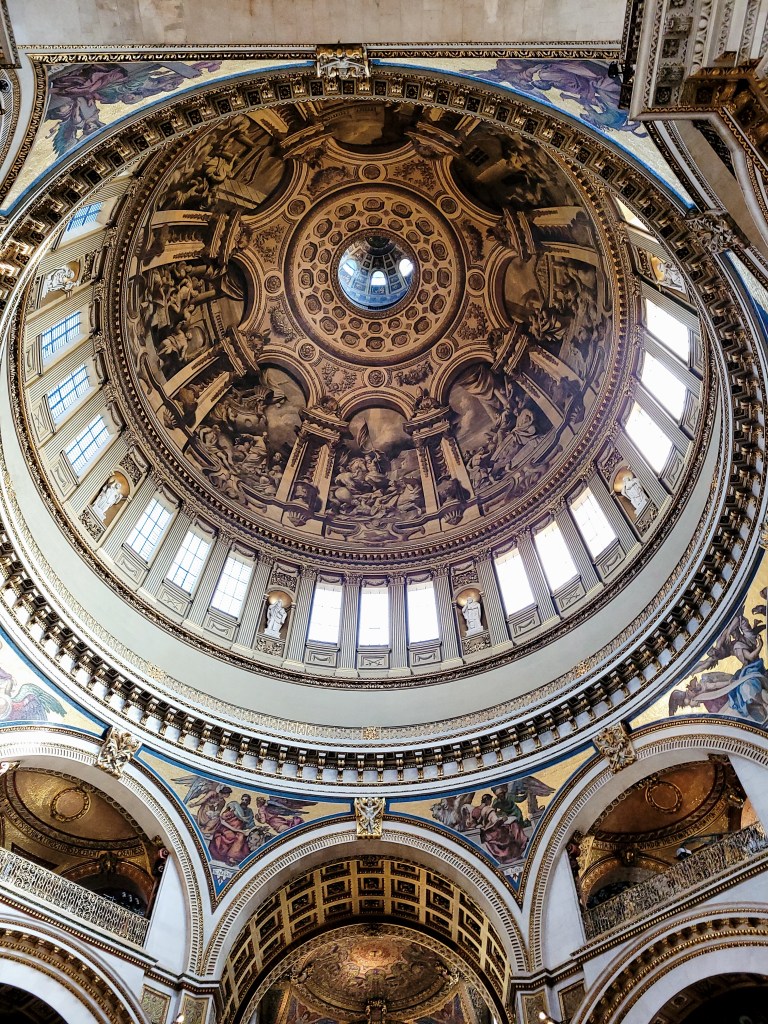
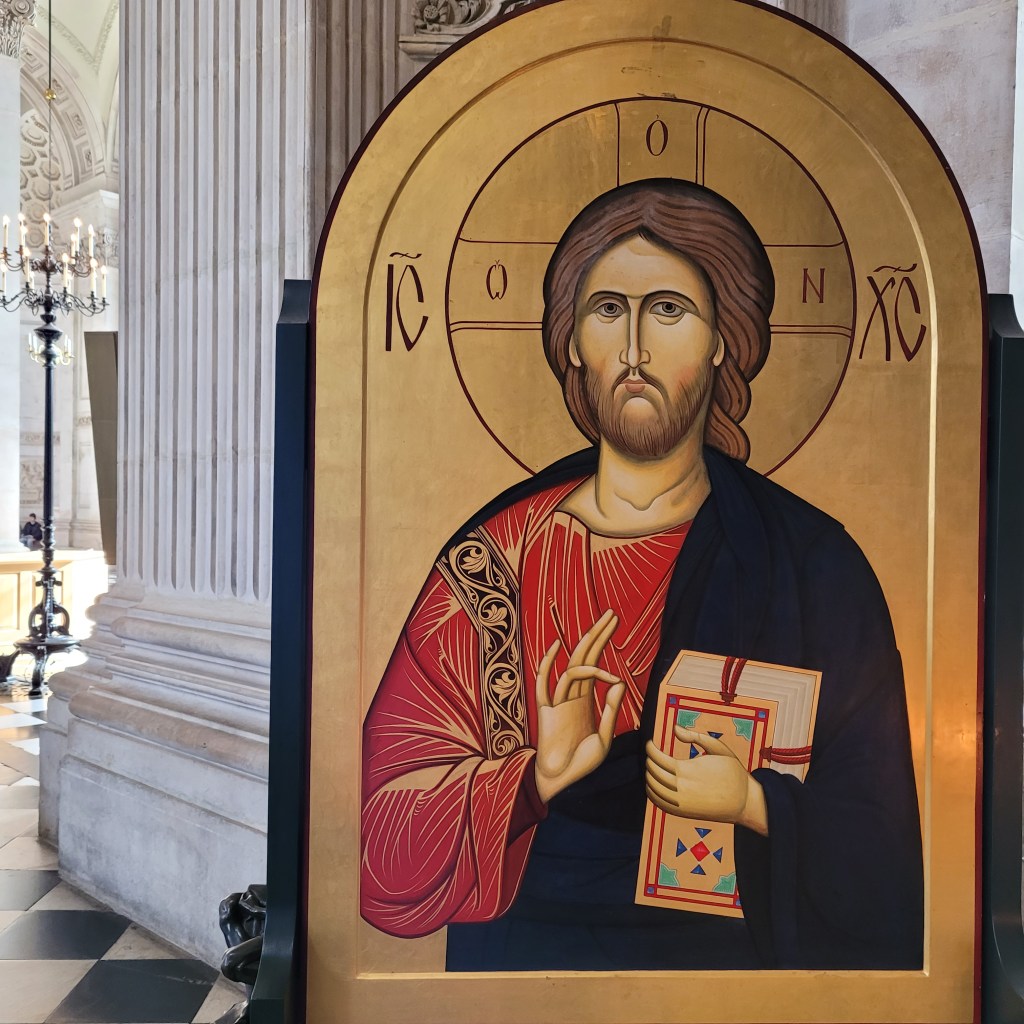
As these pictures show, this is a place of worship that does call out to all. It feels very familiar to me, coming from the Roman Catholic tradition, and seeing the Icon suggests to me that it is honoring the Eastern Catholic and Orthodox Christian traditions as well. The Moore sculpture speaks to the continuing growth and evolution of how we express our faith and how the faith community grows.

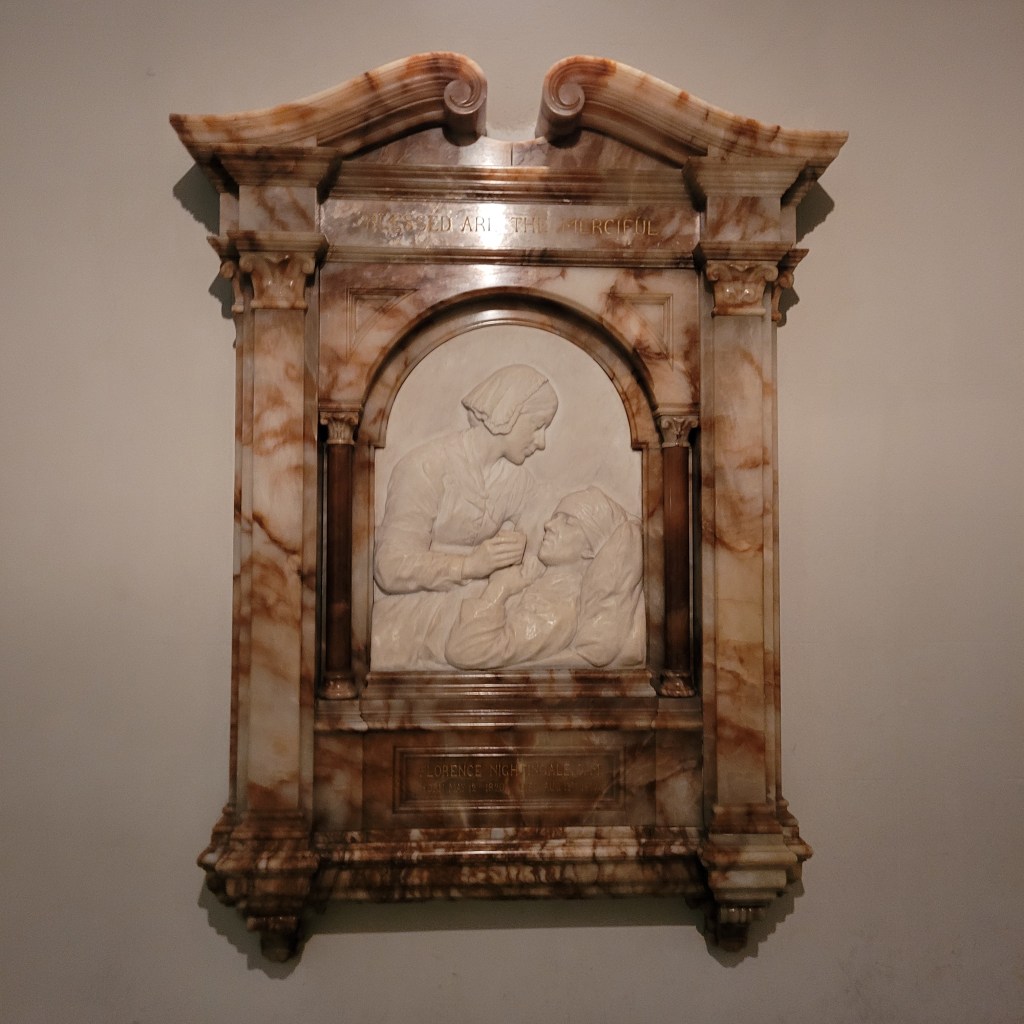
A descent to the cathedral’s crypt was another interesting experience. It is a huge labyrinth containing the remains of any of Britain’s great and good that, it seems did not make it to Westminster Abbey. I present to you, just three that I encountered there.
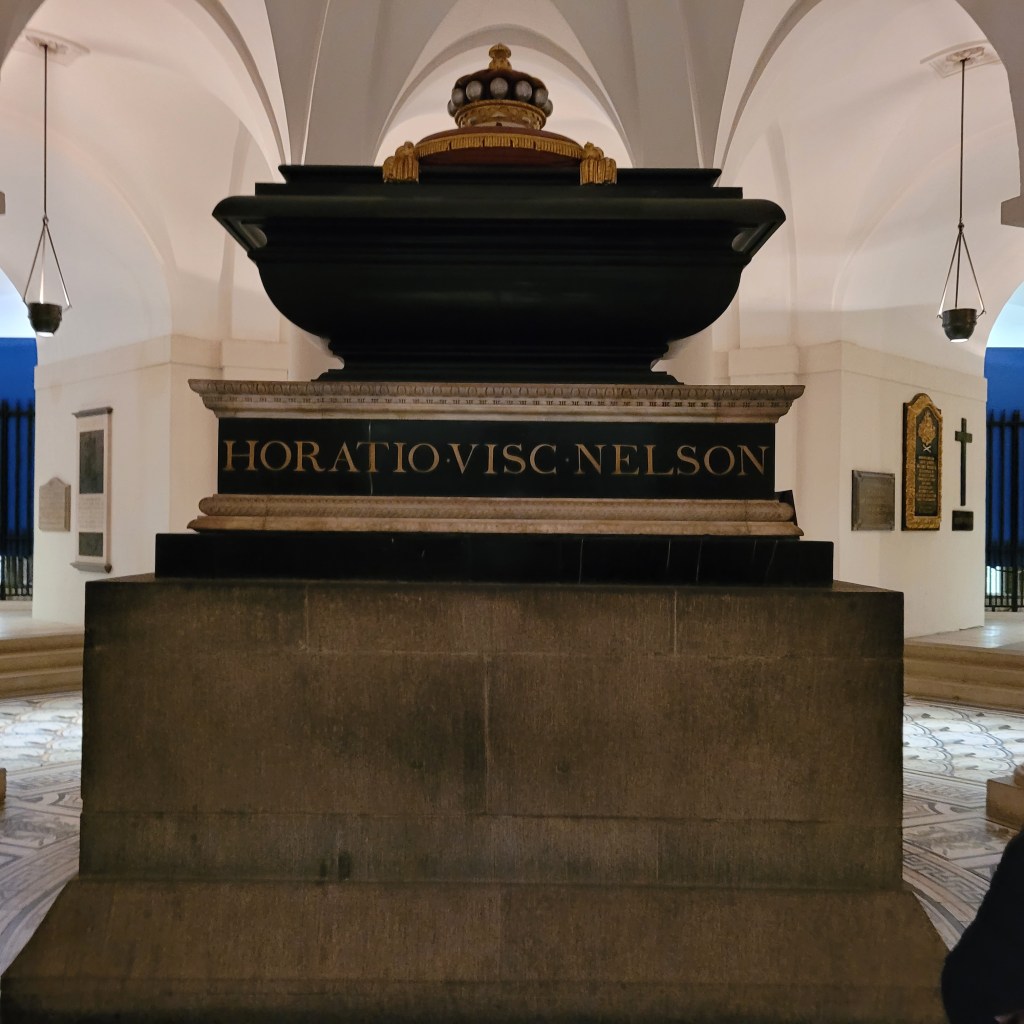
Once again, it took some searching, but there was a woman to be found and a pretty important one.

Before I go on to my next subterranean adventure, a small sidenote. I had hoped to report next on a visit to the Chelsea Art Show where I was going to view the works of my SUNY Oneonta classmate Madeline, a fine artist whose works I have admired for some years. Chelsea can be a difficult place to reach by any mode of transportation in the middle of the day, and it was for me on the day I chose to make the journey by Uber. When I finally arrived, it was to find that Madeline’s works were all sold and no longer on display! Congratulations Madeline! She does have another show coming up and I shall be at the opening and hope to report on it soon. But. I chose to take a brisk walk to the South Kensington Tube station to return to my part of London and was greeted by this charming statue of Béla Bartók, who once in a house adjacent to the station.
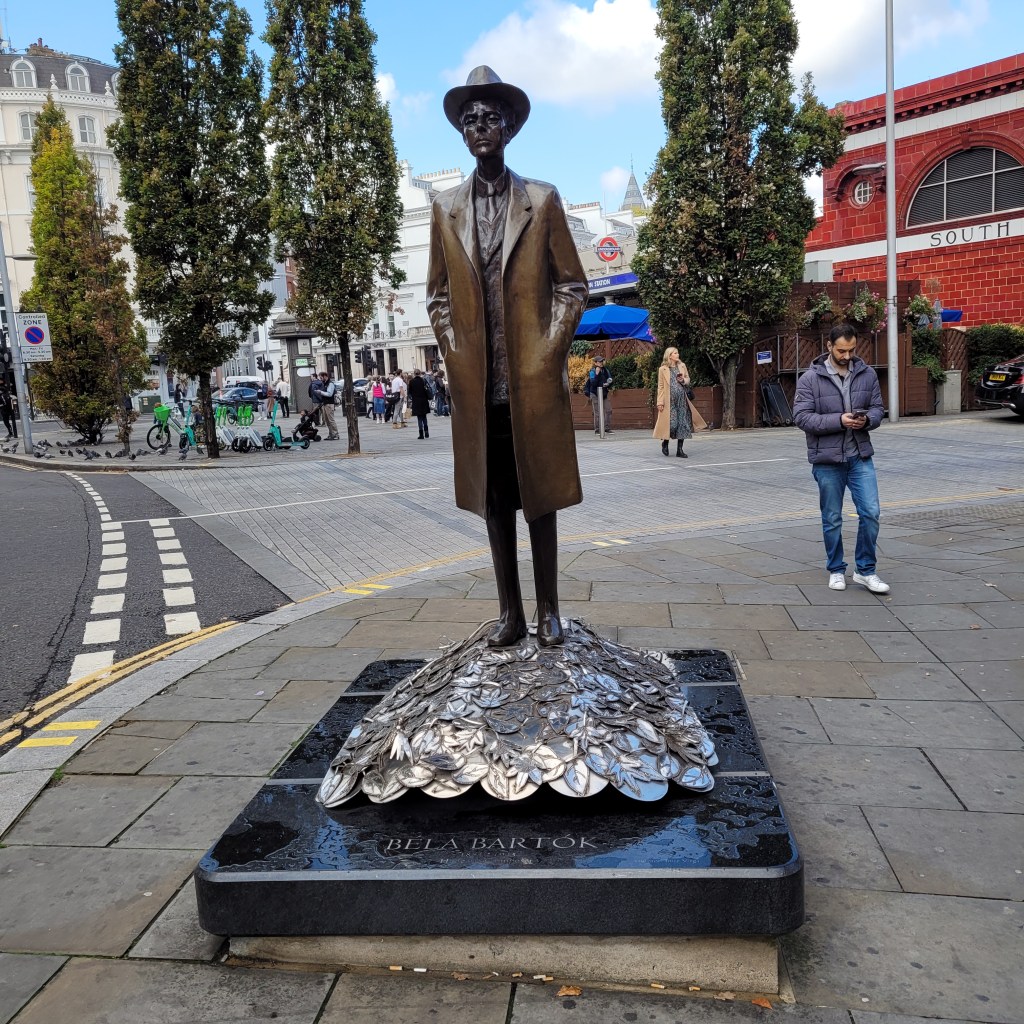
London, an unexpected treat around every corner.

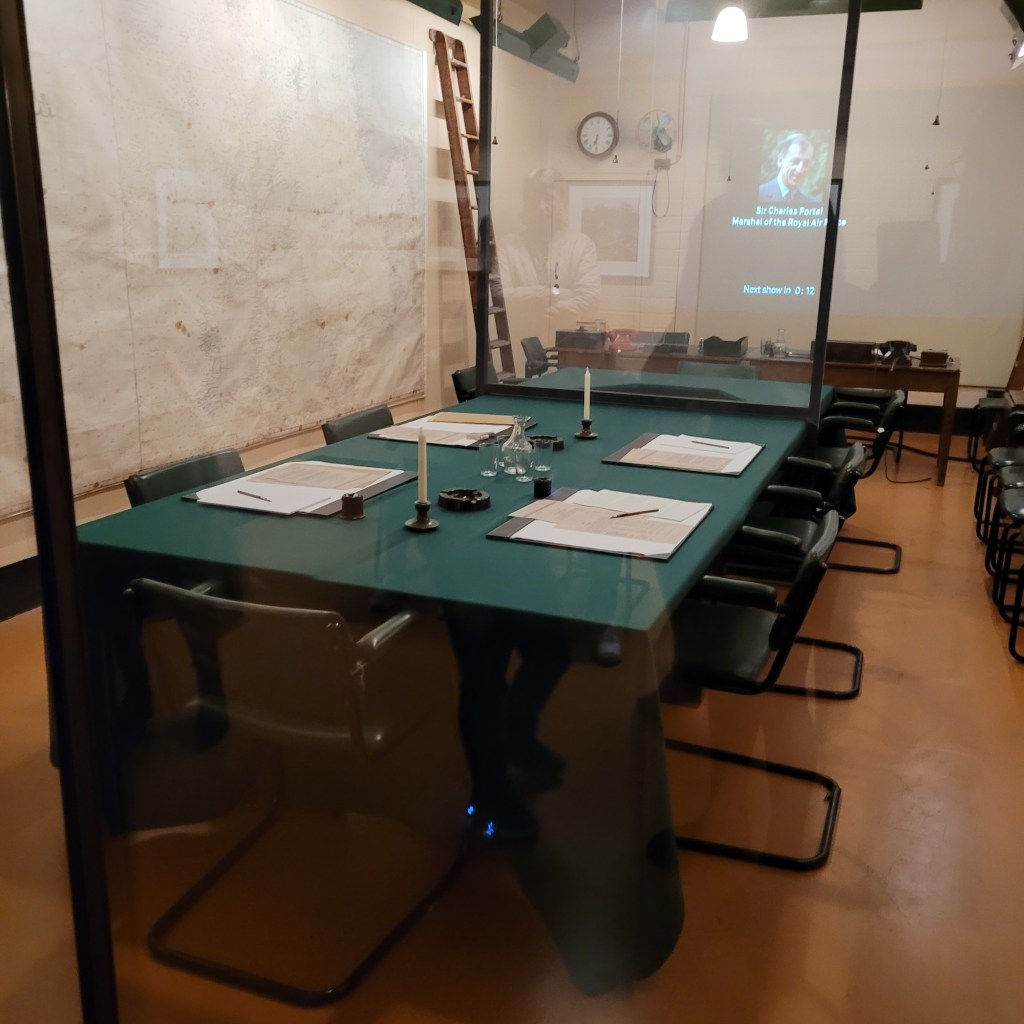
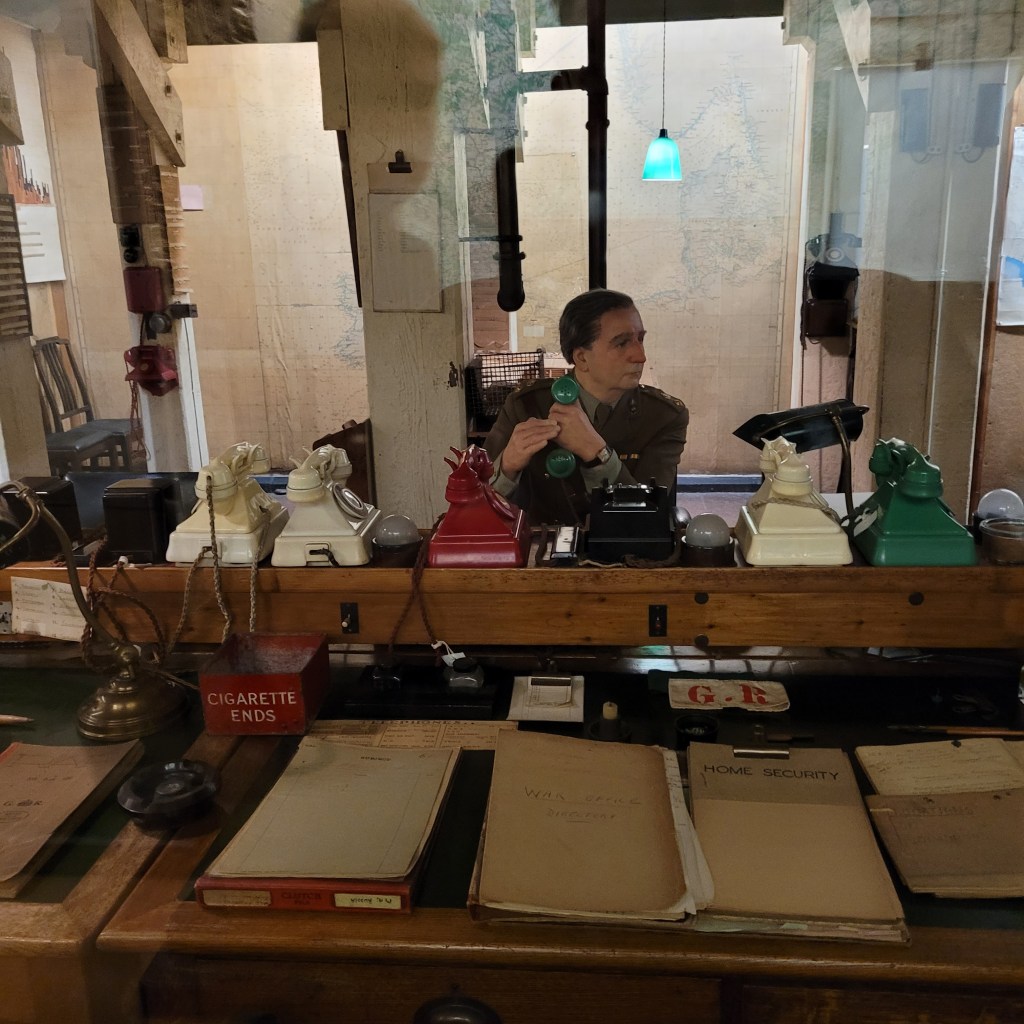
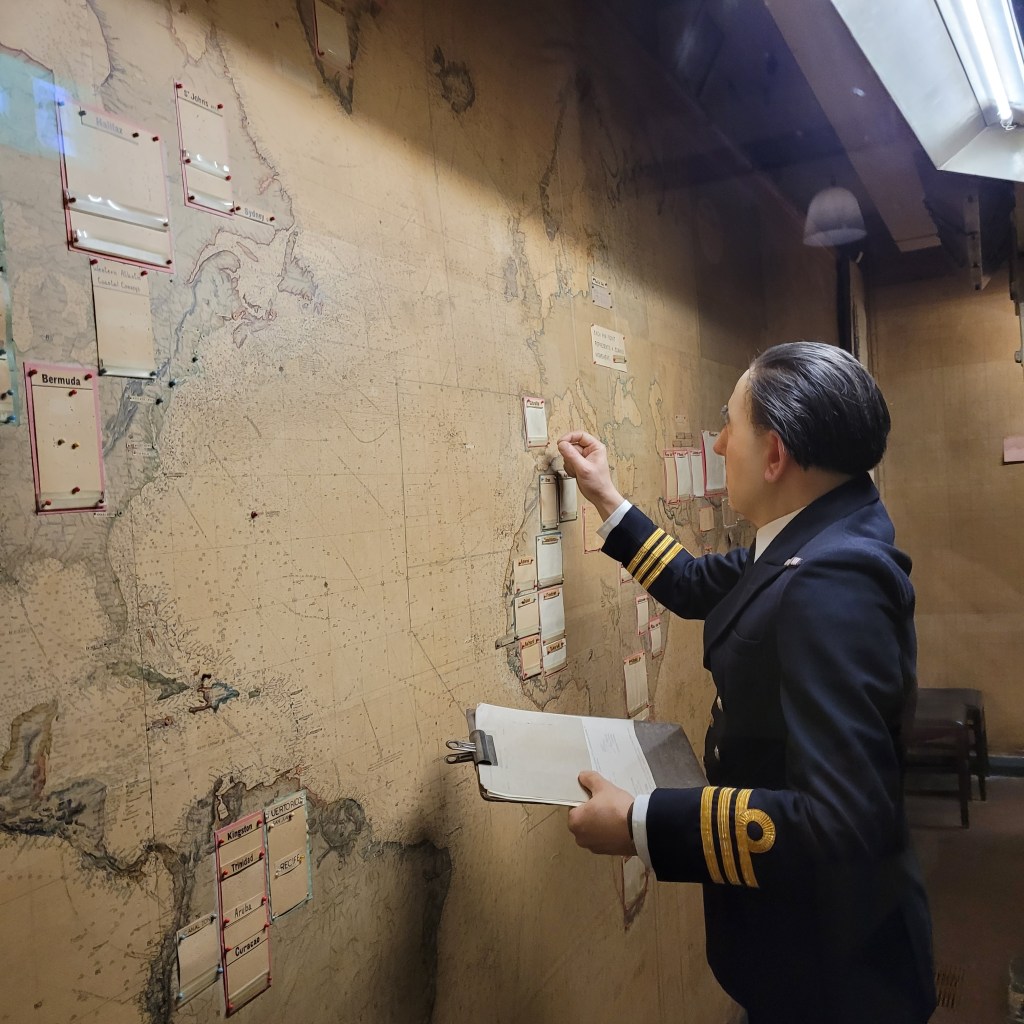
Finally, for today’s blog, back underground. I had been trying to meet with my good friends Stewart and Kerry for some time, but we just couldn’t make things work until today when we agreed to meet and tour Churchill’s War Rooms, a must see for history buffs and anyone with a child who you want to understand what happens when the world let’s mad men get too much power. I had not been down into this incredible set of rooms for well over a decade and it still is an enthralling place with a story to tell us all.
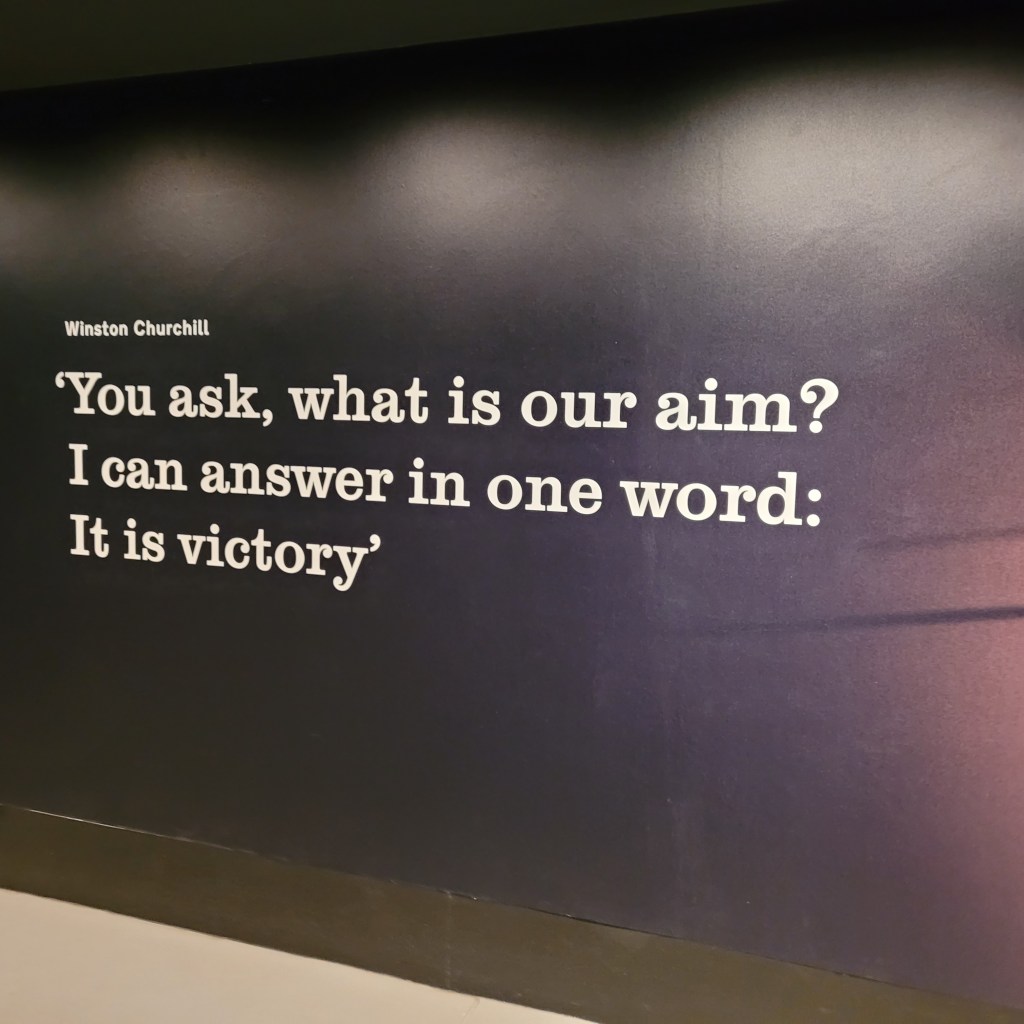
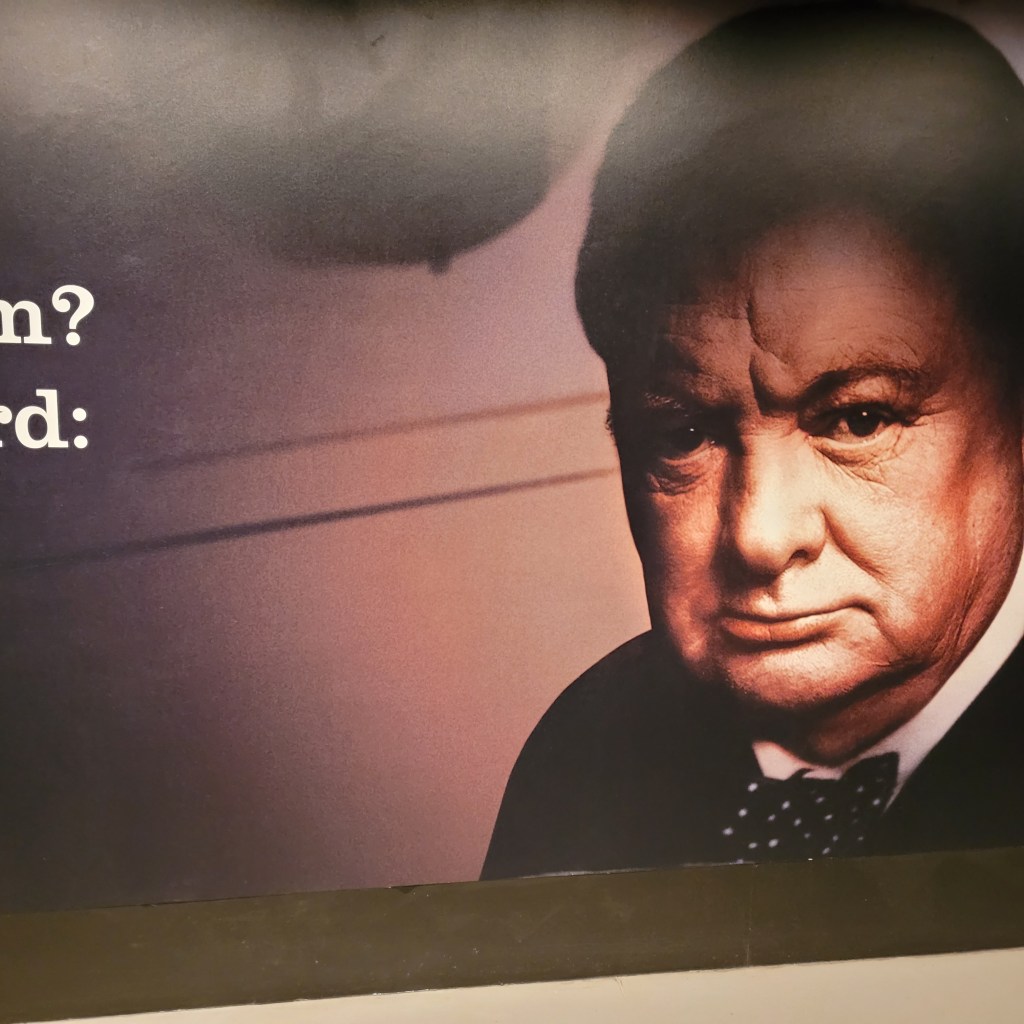
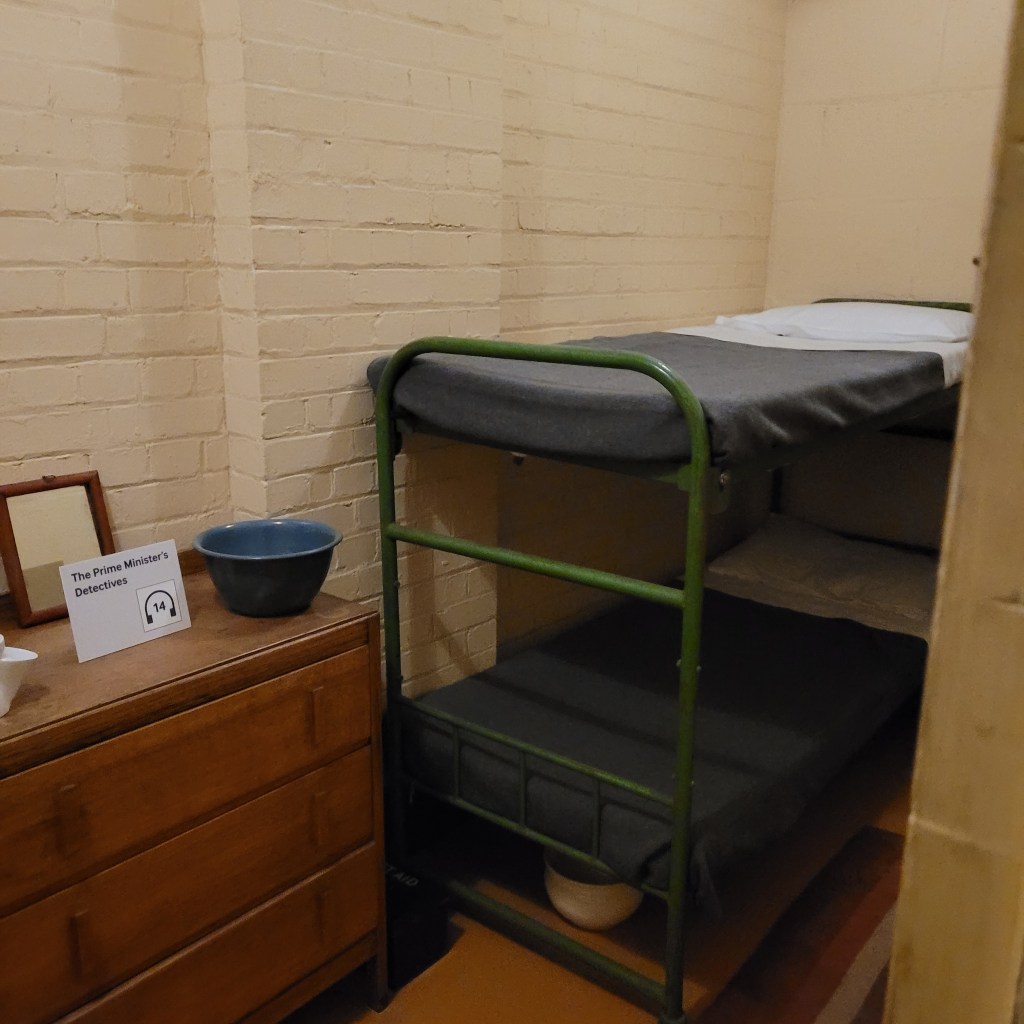
Imagine, if you can, living, eating, sleeping, showering underground for weeks on end. Most of the staff slept in rough quarters below this level. They were required to have “sunlamp sessions” because of their lack of exposure to sunlight. The conditions were difficult, but they worked on, through the Blitz. Churchill’s cabinet contained members of the three main political parties of the time and independents. Imagine! This is the kind of lesson we all must remember and teach the next generations.

Sometimes History Just Overwhelms You

It was a chilly morning so, I hopped on the Picadilly Line for the quick trip to Covent Garden Tube Station on my way to the Courtald Gallery at Somerset House. I had left myself some extra time so that I could check around the stalls at Covent Garden for an item one of my SUNY Oneonta besties had asked me to look out for and to give myself some time to visit the shop at the London Transport Museum, just outside the old Covent Garden Market. With great forbearance, I escaped the shop without buying anything, a rare occurrence for me.

The Covent Garden area is rich in history. Most people know that Eliza Doolittle, the flower seller from Shaw’s ‘Pygmalion’ and Lerner’s adaption ‘My Fair Lady.’ But its literary references include Dickens and many others. The Bow Street Magistrates Court (now a hotel and museum), the Theatre Royal on Drury Lane, Saint Paul’s Church are all historic building in the streets around the former flower and vegetable market that is now a popular tourist attraction selling all kinds of souvenirs. It has restaurants, musicians and the Royal Opera house is nearby too.

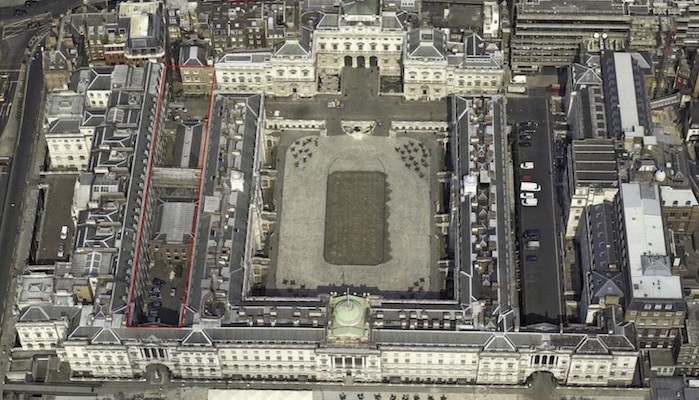
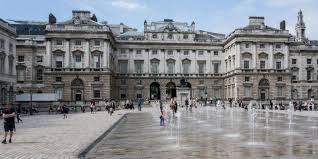
As I left the London Transport Museum, I passed the Marquess of Anglesey Pub in the upstairs restaurant of which I met my UK best pals Nigel and Gwynne many years ago. I also passed the former locations of restaurants I fondly recall. But that too is London, the city that has some landmarks that stay and some that stay only in our memories. I soon made my way to the Strand and across that busy road and walked through an unassuming arch into a courtyard for which I was not prepared. It had been enough years since my last visit to the Courtald Gallery that I had completely forgotten about the splendor of Somerset House in which it is located. Somerset House has a long and illustrious history. Earlier versions were royal residences and important sites in English and UK history. Today’s building has more of a governmental history, but an important one. It was so important that the German’s saw fit to damage it severely during World War II. Here are two exterior views of this beautiful historic building.

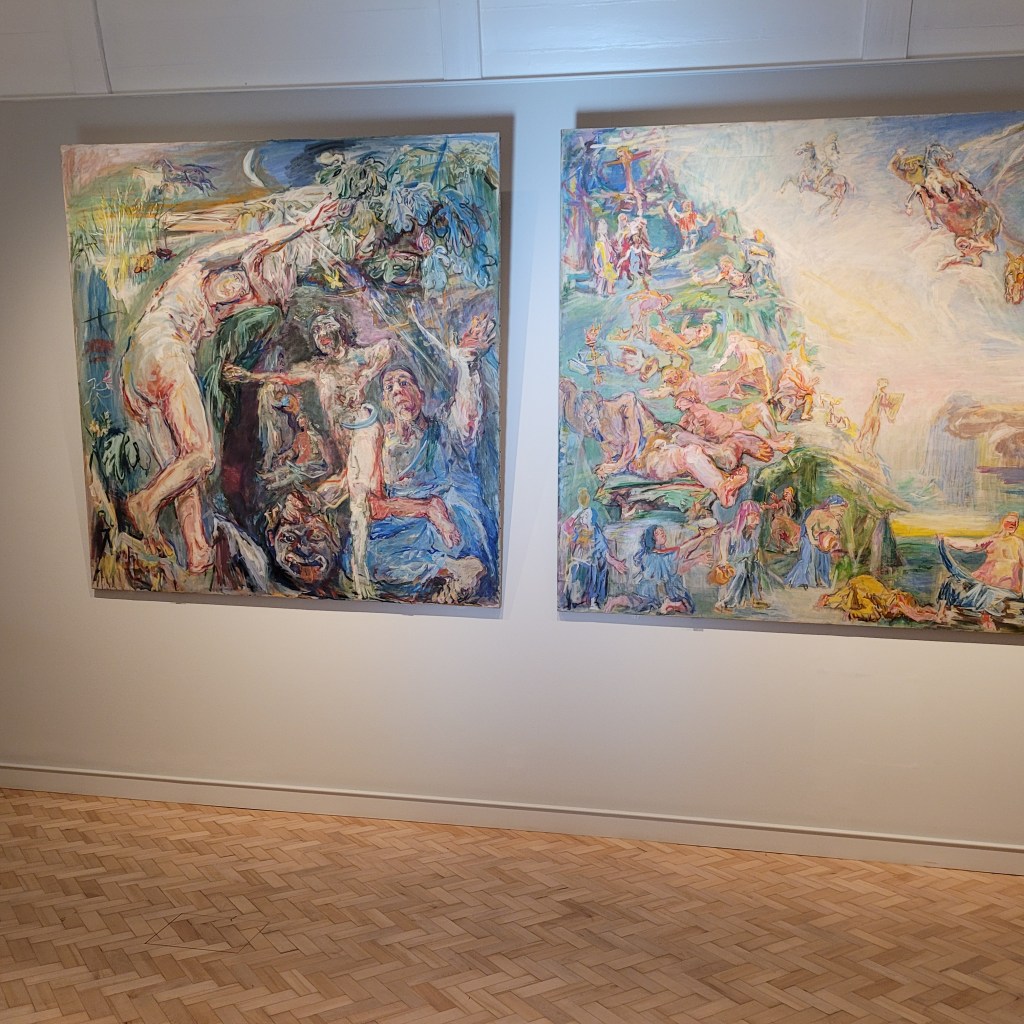
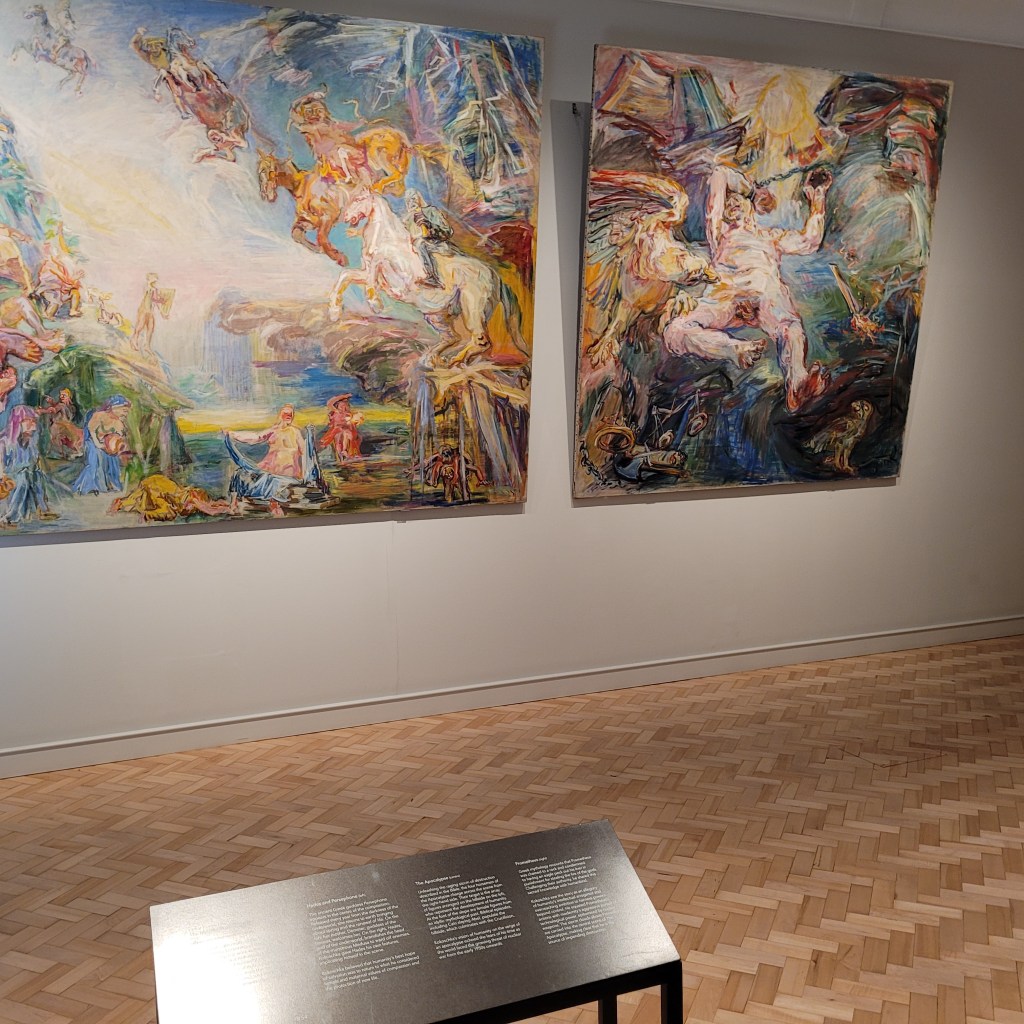
The Courtald’s collection contains masterpieces from the Middle Ages into the Twentieth Century. My visit focused on the Impressionists and Post-Impressionists. I found a three-piece depiction of the Prometheus Myth to be quite interesting. It was painted by the Austrian Oskar Kokoschka, a contemporary of Klimt.

The Impressionist collection contains paintings and some small sculptures by many favorites. I found the way they were presented, a bit too formal. The lighting seemed too dark. Some that I should have enjoyed more, seemed “flat.”

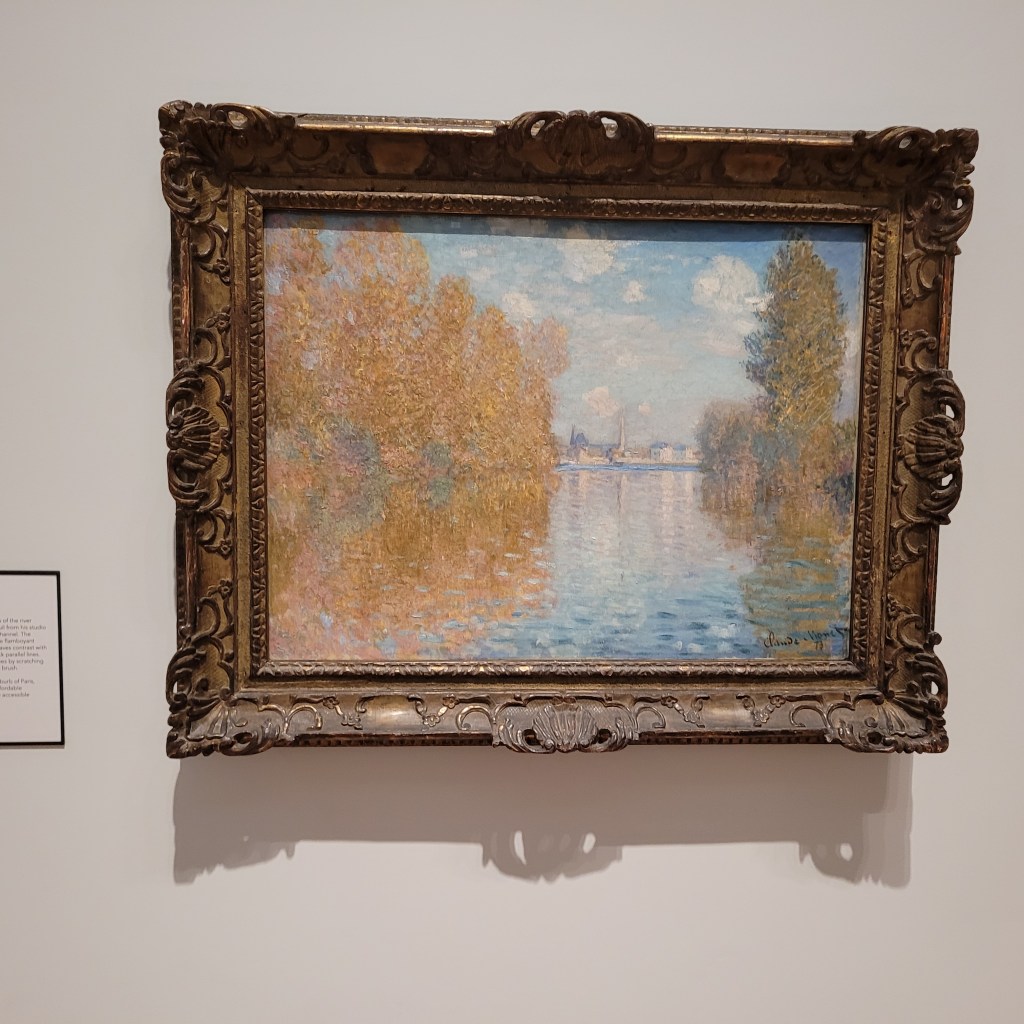
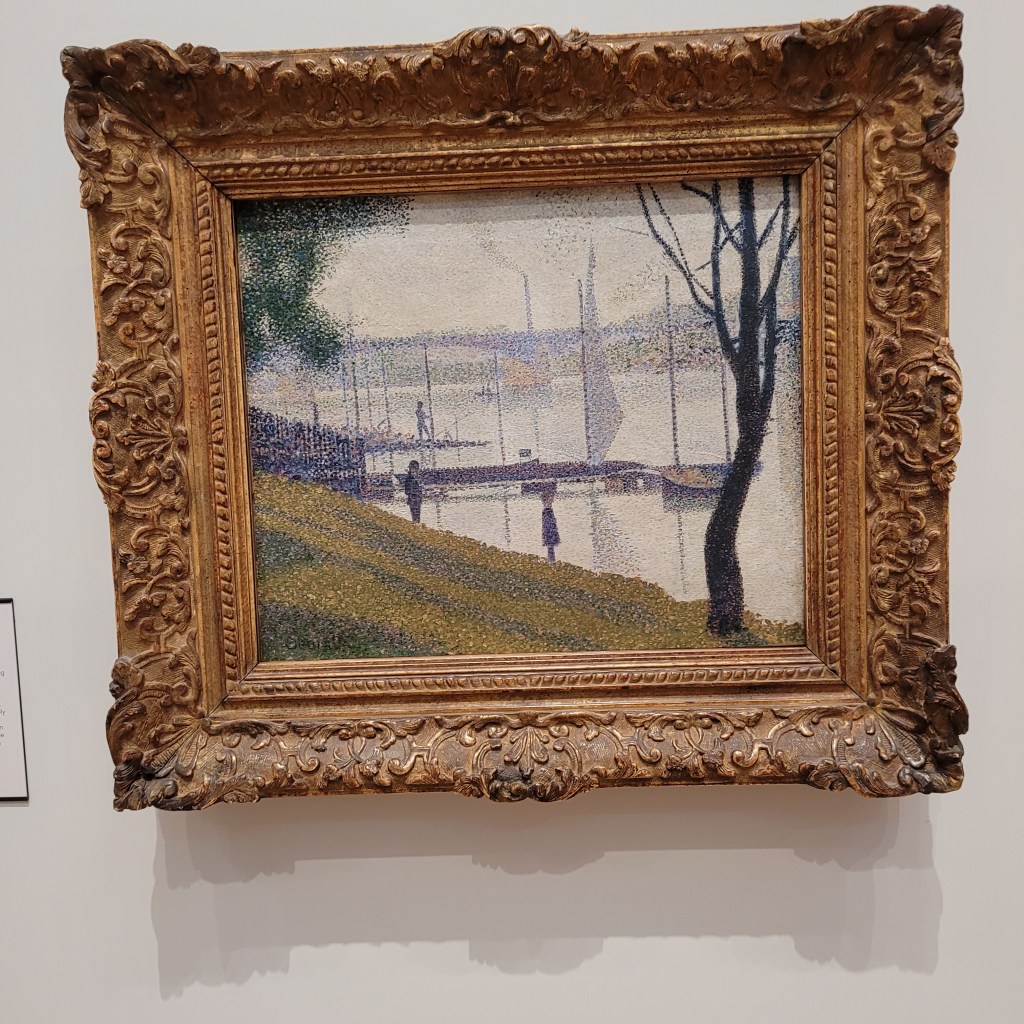
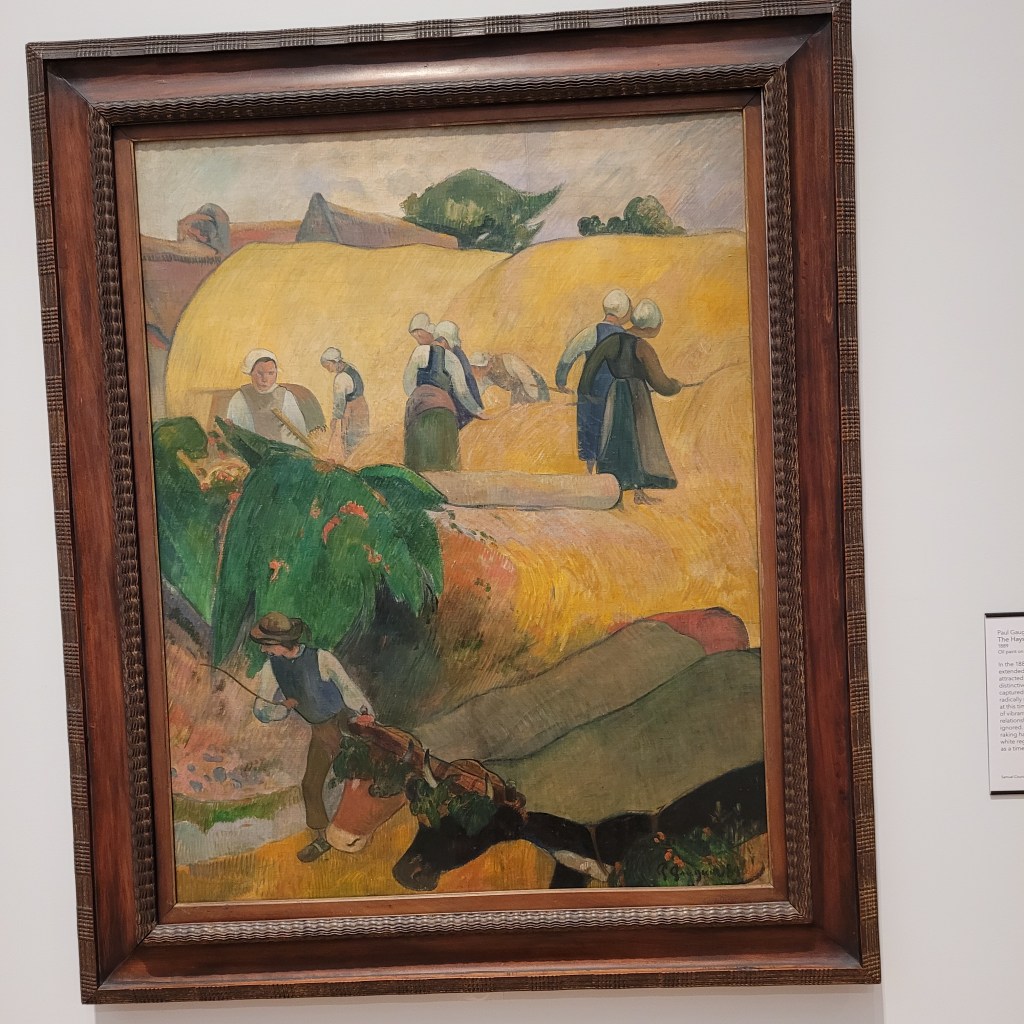
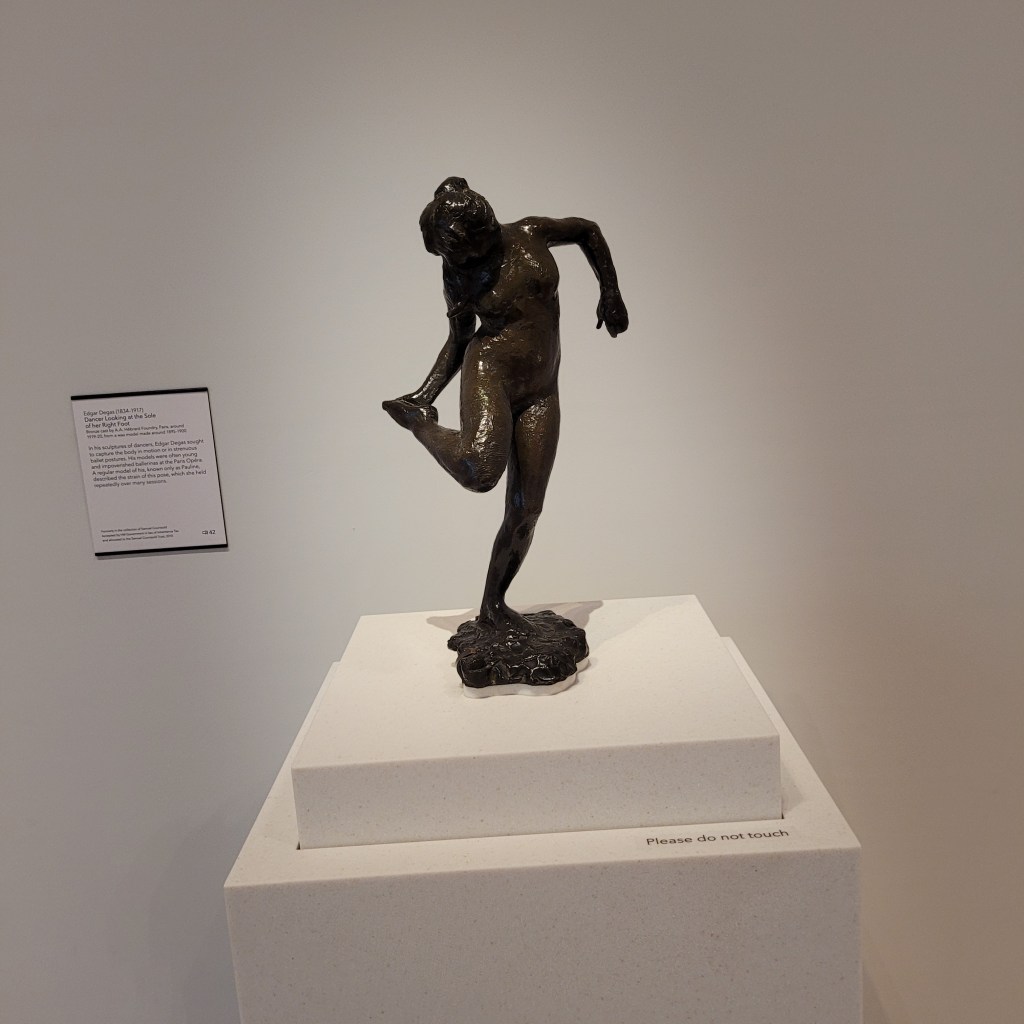
“Autumn Effect at Argenteuil” by Monet did standout to me. Seurat’s “The Bridge at Courbevoie” was excellent example of pointillist technique and Seurat’s unique style and detail, a delight to visit. I also thought that “The Haystacks: by Gauguin stood out in the collection. Degas’ “Dancer looking at the Right Sole of Her Foot,” is one of his exquisite small sculptures that made this visit a pleasing one too.

The final piece I want to mention is the large piece that hangs over the grand staircase that leads to the top Collections floor where the Impressionist and Post-Impressionists are located. This piece is called “Unmoored from Her Reflection it is a 2021 work by Cecily Brown (born 1969). I found it innovative and exciting, a piece that speaks to the future of art, filled with color and wonder.

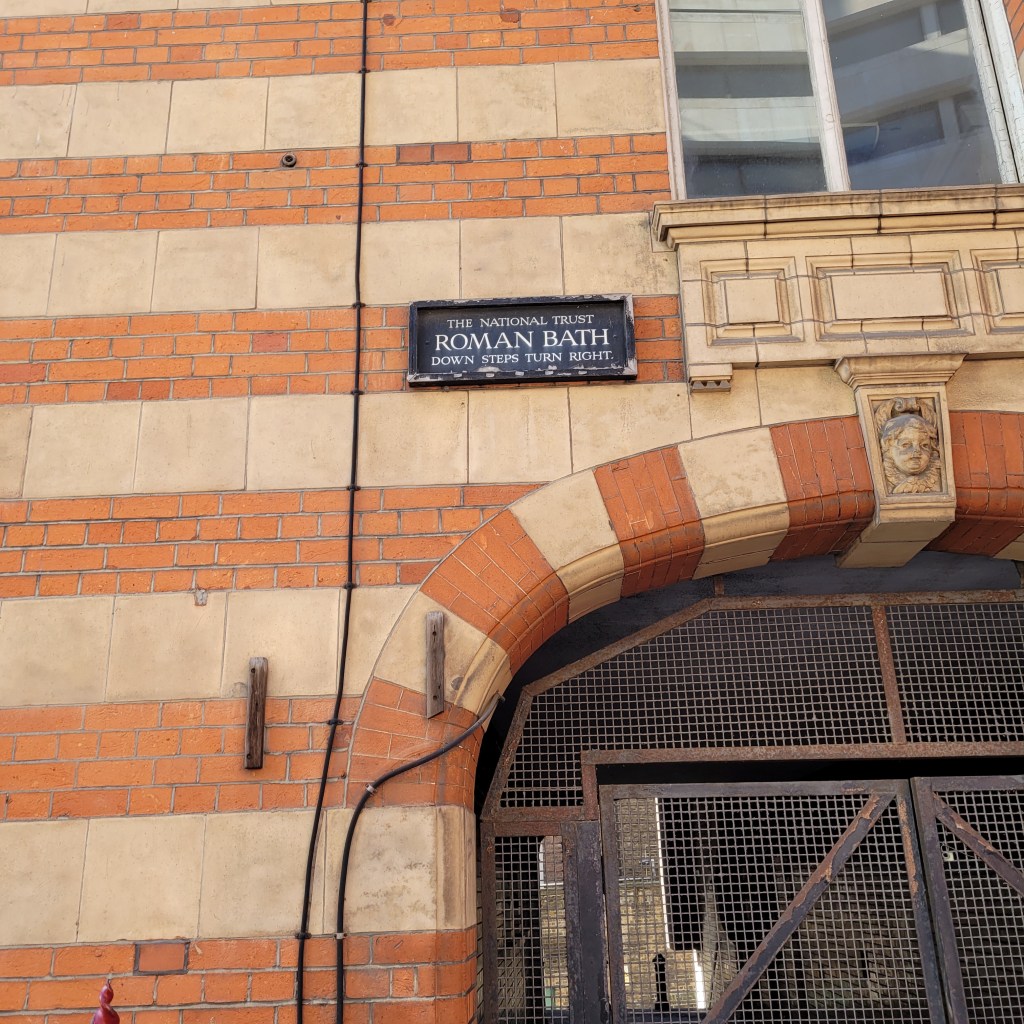
After a quick visit to the Art Cafe on the Ground Level of the Courtald (a lovely facility with good coffee), I made my way toward the Temple Tube Station, passing, as I made the short walk, this interesting sign above a locked gateway on a building at King’s College, London.

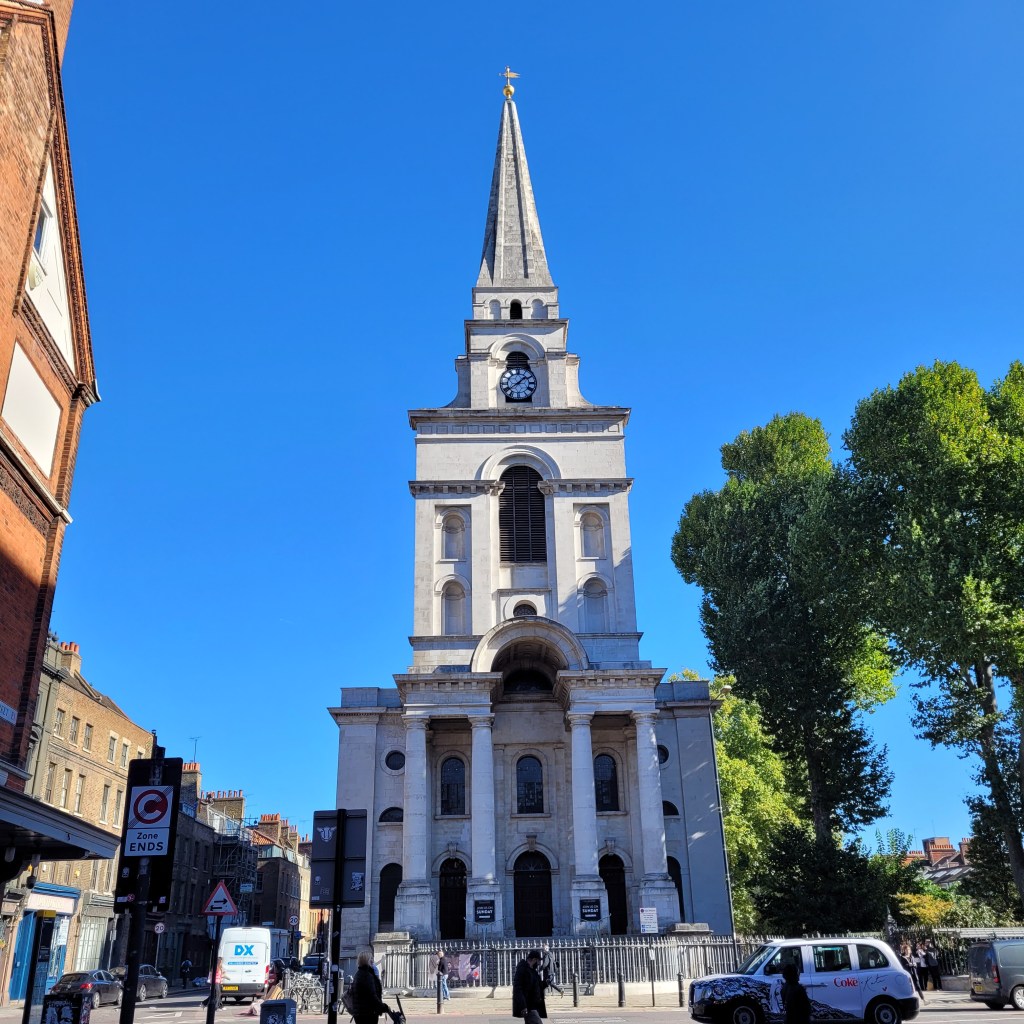
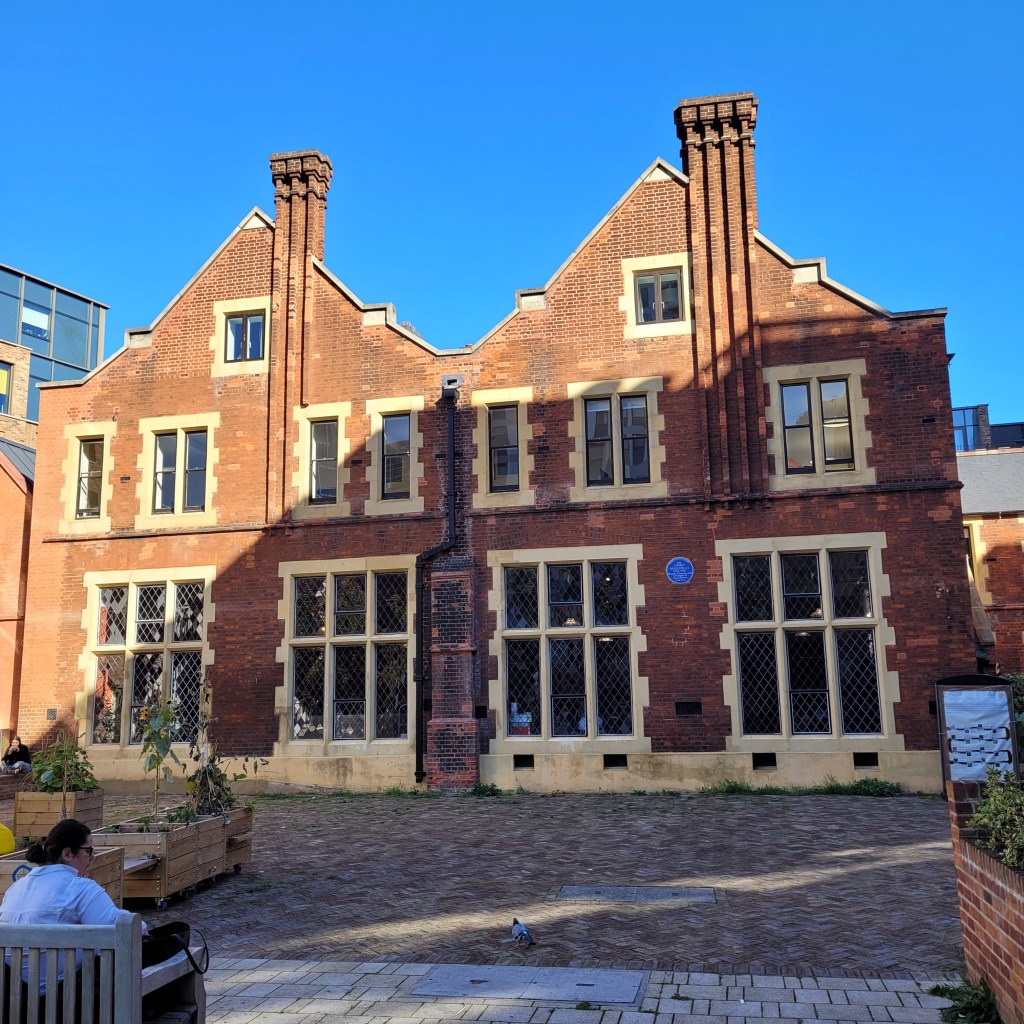
According to the National Trust, they are not “Roman, but in fact the remaining portion of a cistern built in 1612 to feed a fountain in the gardens of the old Somerset House, then a royal palace. After a long period of neglect and decay, following the demolition of the fountain, they were brought back into use in the 1770s as a public cold plunge bath. They can be viewed by making a request to the Westminster Council. I took the Tube on to visit another favorite London market, Spitalfields, that I have visited and posted about before on my Facebook page. I will post this picture of Christ Church Spitalfields, designed by Nicholas Hawksmoor and consecrated in 1729. And the picture of this interesting Arts and Crafts building that was the home of Dr. Jimmy Mallon, CH, Warden of Toynbee Hall, Champion of Social Reform (according to the Blue Plaque erected there.

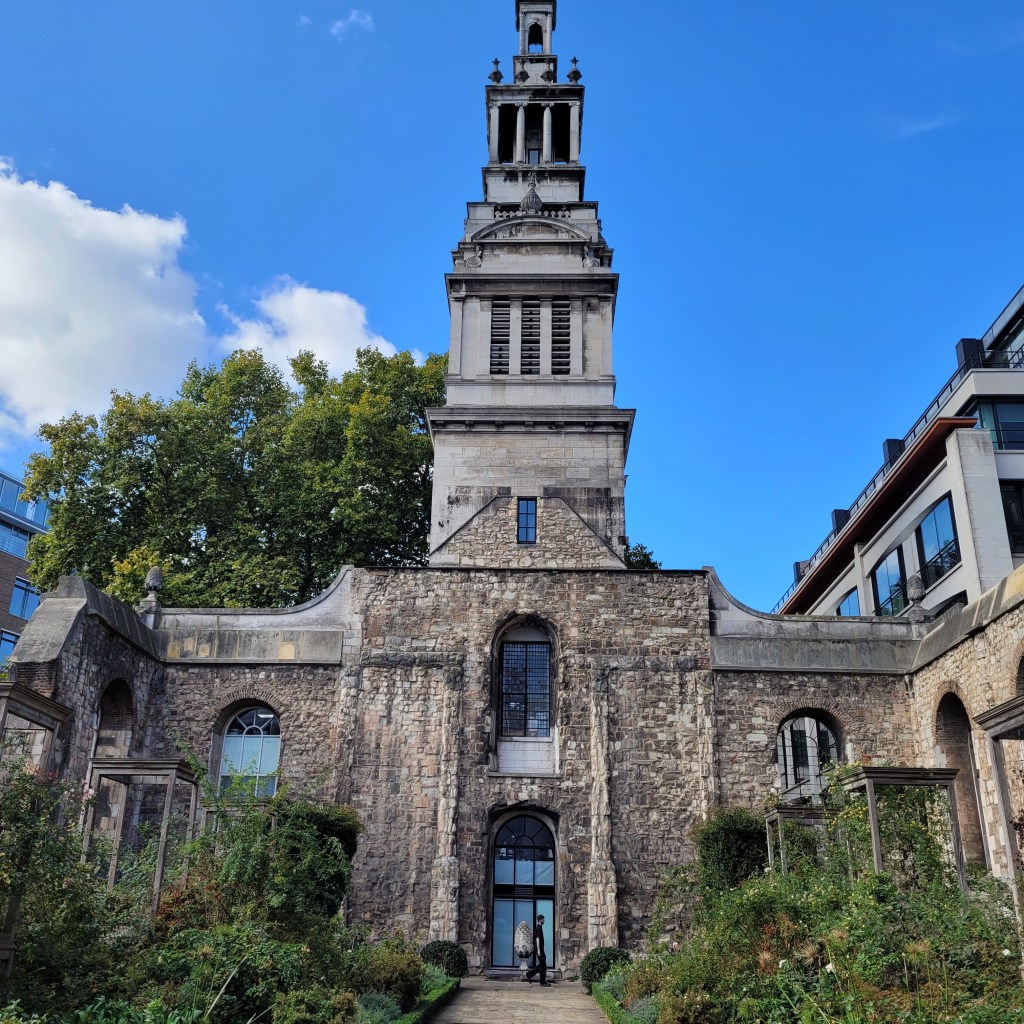
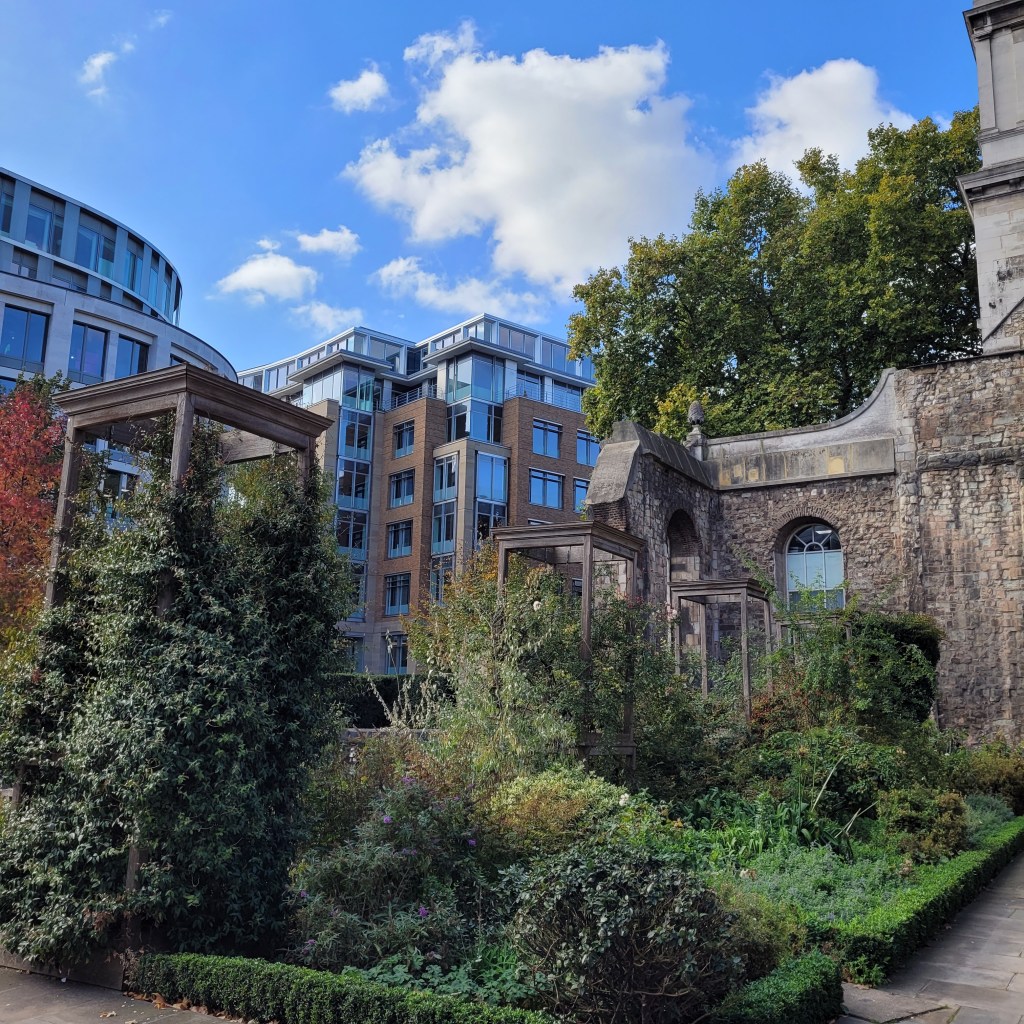
As I neared the Tube Station for my return to Bloomsbury, I noticed a lovely garden built in the midst of the ruins of a church of some kind, I thought. After taking a few pictures, I found a plaque identifying the place as remaining parts of the Christophen Wren designed Christ Church built to replace the Greyfriars Church, left after the dissolution of the monasteries. The Greyfriars church was destroyed in the Great Fire of London. Christ Church was one of 14 Wren churches destroyed by Nazi bombing during WWII. The garden funded by a private company is a peaceful haven in the busy center of the city.

And so, it goes in a city where history is around every corner.

A Jab and A Witch Trial

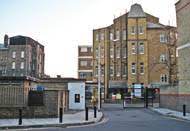
I travelled into the unchartered waters of Hackney in East London for the first time since the Patio Set, the band my friend James Grant was then a member of had a record launch there, around 15 years ago! Today’s visit involved records, but more record keeping, as my local NHS surgery in Bloomsbury sent me off to Saint Leonard’s Hospital in the Borough of Hackney to clarify some record keeping and, possibly, get my Covid-19 Booster. Part year residents, it seems, get special treatment. When my Uber driver turned into this place, my only thought was of Paddy Chayefsky’s 1971 dark comic classic movie, “The Hospital.”

I wondered how long my future would be. From the barred front entrance, there was adequate signage to both the Covid clinic, for me, and the Polio vaccination clinic for the nice Romanian family I met. After our excursion around the huge complex, we found our way inside and the always remarkably friendly and capable NHS staff helped me through the paperwork process. Two different women were patient with me as I tried to remember my UK post code, a jumble of letters and numbers that I always struggle with and then trying to find my UK pay-as-you-go phone’s number. This is my ’emergency phone that I only bought for NHS calls because they can’t call international numbers. Anyway, I finally found it and eventually, was able to be jabbed! Its Moderna this time, a big change for this guy. I’d been a Pfizer man before this.

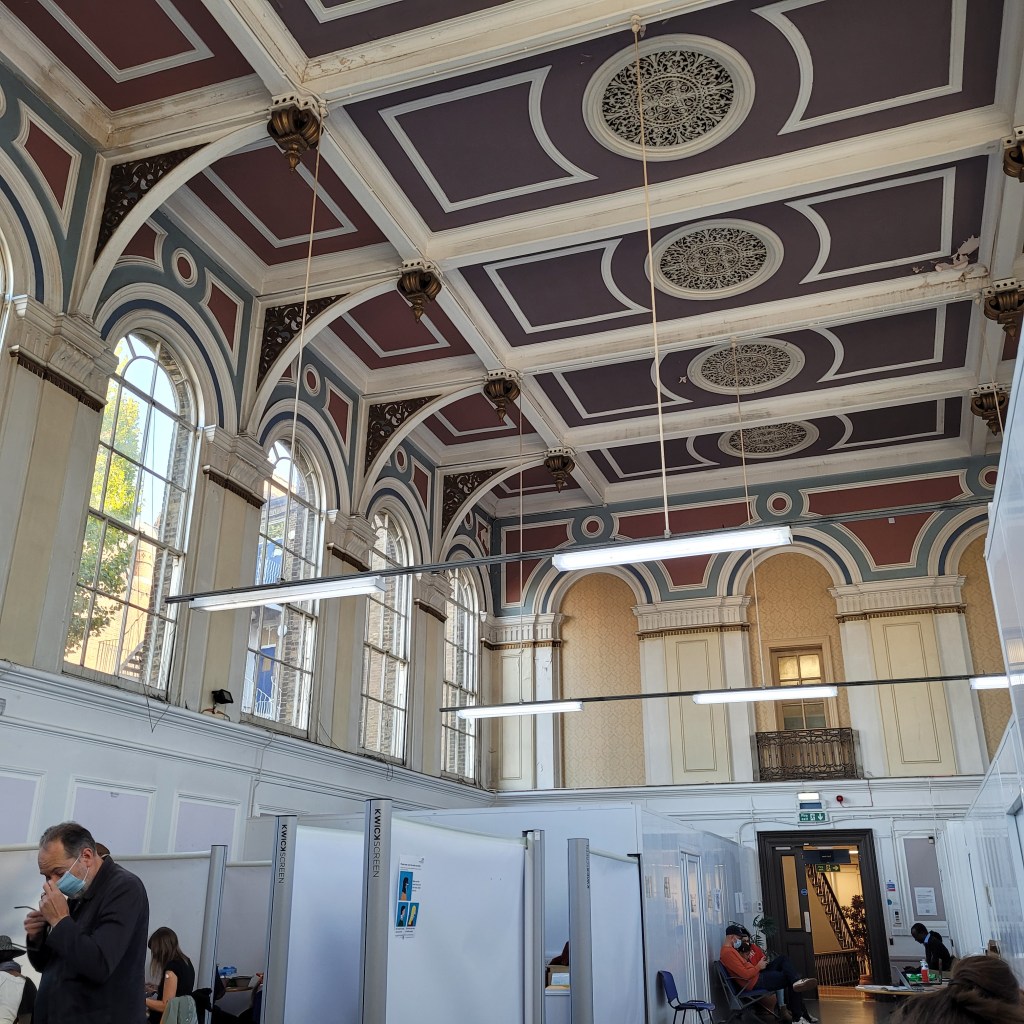
As I mentioned, this is an old hospital. It has roots as a workhouse for the poor of Shore ditch, London. The building where the clinic was held was a grand old 19th Century one. I noticed the details of the high ceilings and large windows. I mentioned this to the woman who was about to “jab” me. She told me that

the room was once the hospital cafeteria.

The jab search completed; it was on to the cultural activity of the day. Today, this involved a trip to the Southbank of Thames to the National Theatre complex where I would be seeing a matinee performance of Arthur Miller’s classic, “The Crucible” at the Olivier Theatre. This play, for people of my age, is one of those touchstones. I was born during the McCarthy era. Senator Joseph “Tail Gunner Joe” McCarthy, his henchman Roy Cohn, and journalist Edward R. Murrow and the roles they played in the tragedy and triumphs of the rise and fall of McCarthy’s bizarre crusade against non-existent communist cells in the Federal government, including the U.S. Army were the place and time where Arthur Miller saw history repeating itself. His words, as true today, as they were when Mr. Miller first published the play in 1953. Generations of people have seen its relevance in America, and I am sure, around the world. We certainly turned to it during the Viet Nam War and Civil Rights Protests of the 1960s and early 1970s, the attempts at political repression culminating with the police riot at the Democratic Convention in Chicago in 1968. Many have seen the parallels again when free speech has been denied to the people of countries around the world From Russia to China, to the Middle East. Today, Americans, again feel that our freedoms are again being threatened by the hysteria of those who claim to wish to protect the civil law by using what they believe to be their holy laws.

This was a good production. I lament the diminution of the character of Tituba, the young, enslaved girl who, in earlier version was given a much clearer role in bringing the magic and spells she had learned from her elders to the young Puritan daughters. chafing under the restrictions under the restrictions on which they lived. This was a “Crucible,” focused on the crime of failing to see what one does not wish to see and the sins of omission that often worse than commission. These, of course are the problems that we see eating our societies and democracies away today. I cannot stress, enough, though, that any production of this particular work still has the words of this great American playwright to sustain it. Whatever the issues may have been with accents, I left that theatre, reminded that we must find a way to awaken the minds of those who cannot see where we are headed or we, too will live with devastating consequences.

An Italian Job and A Step toward a Jab

Shall we discuss the latest step toward my Covid booster? I finally got through to the NHS information line after a frustrating several hours figuring out the strange rules and rubrics of my UK pay-as-you-go phone’s top-up process. This morning, I called a special Covid Vaccination line and found that because I had received my Spring 2023 booster in Florida, I would first have to visit a hospital several miles away with several pieces of information. If all the information added up and they had an appropriate vaccine available, I might get vaccinated on the spot. If not, a wait of 10 days shall ensue. If nothing else, it will get me out of bed and dressed early on a Saturday.

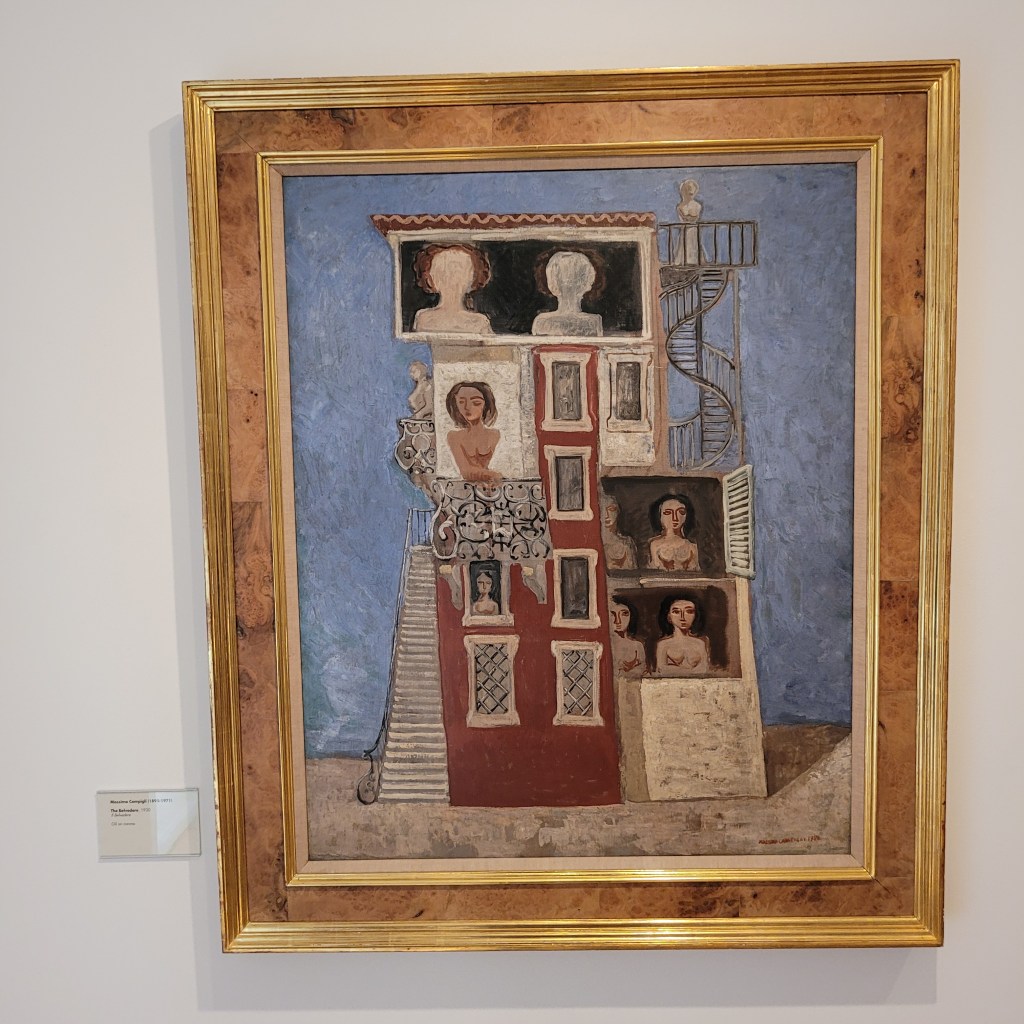
My adventure of the day was my journey to the Estorick Collection of Modern Italian Art. If you plan a visit, it’s an easy trip on the Victoria line to Highbury and Islington, (one stop past Kings Cross) on the train toward Walthamstow . There are quite a few steps to ascend from the train to exit the station. You exit the station to a large plaza with a restaurant, shops and nearby cafes. I crossed a well-marked set of crosswalks to start down Canonbury Road, I passed Highbury Corner Garden, a strip of garden adjacent to

the roundabout at the north end of Compton Terrace, it commemorates those who were killed, injured or bereaved as a result of a 1944 bomb that caused significant loss of life. The Estorick Collection is just a short walk away.

Once I reached the building, my memory of a previous visit several years ago with my friends Nigel and Gwynne was confirmed. I entered the building through a lovely conservatory that led into a lovely caffe, offering wonderful Italian specialties. The walls were adorned with a wonderful collection of posters from previous exhibitions.
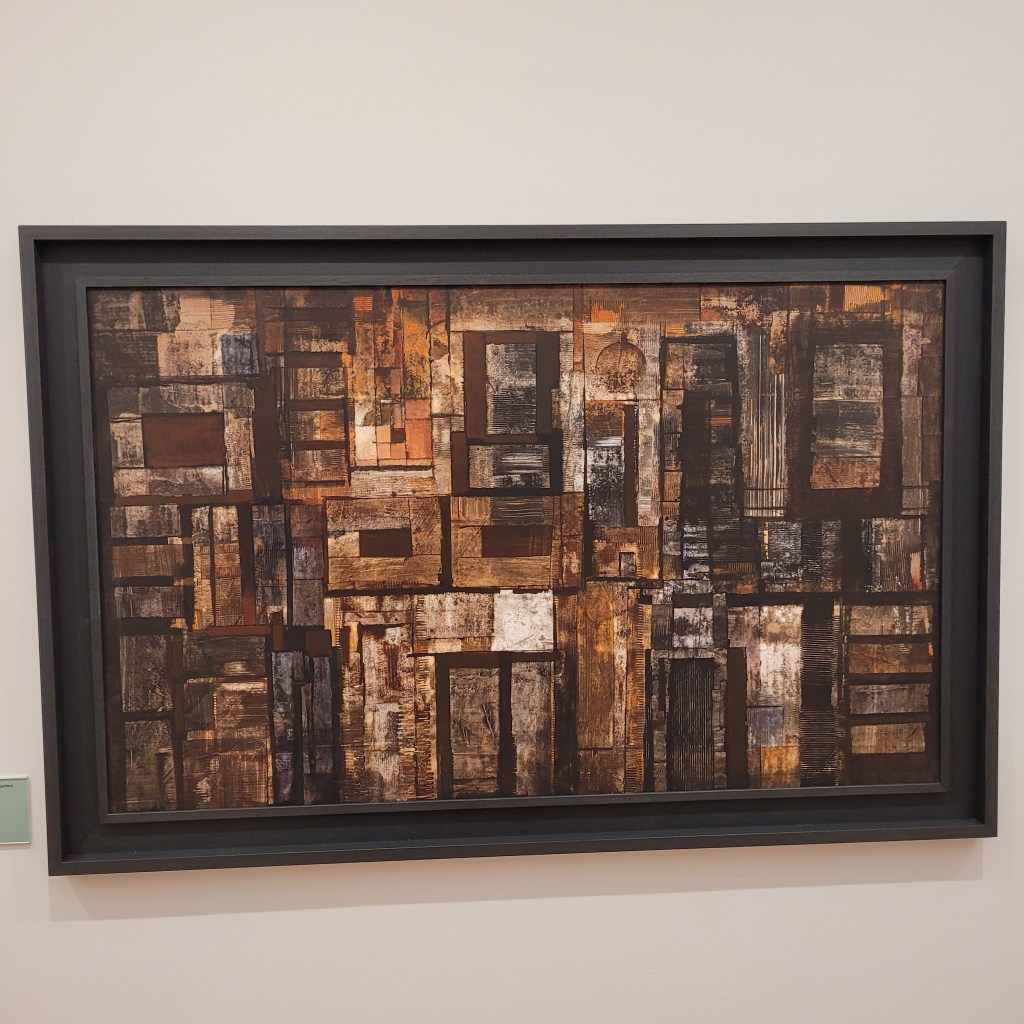
I particularly liked these because they were so evocative of the style that I always associate with the Italian cinema during its neo-realism or golden age after the second world war.

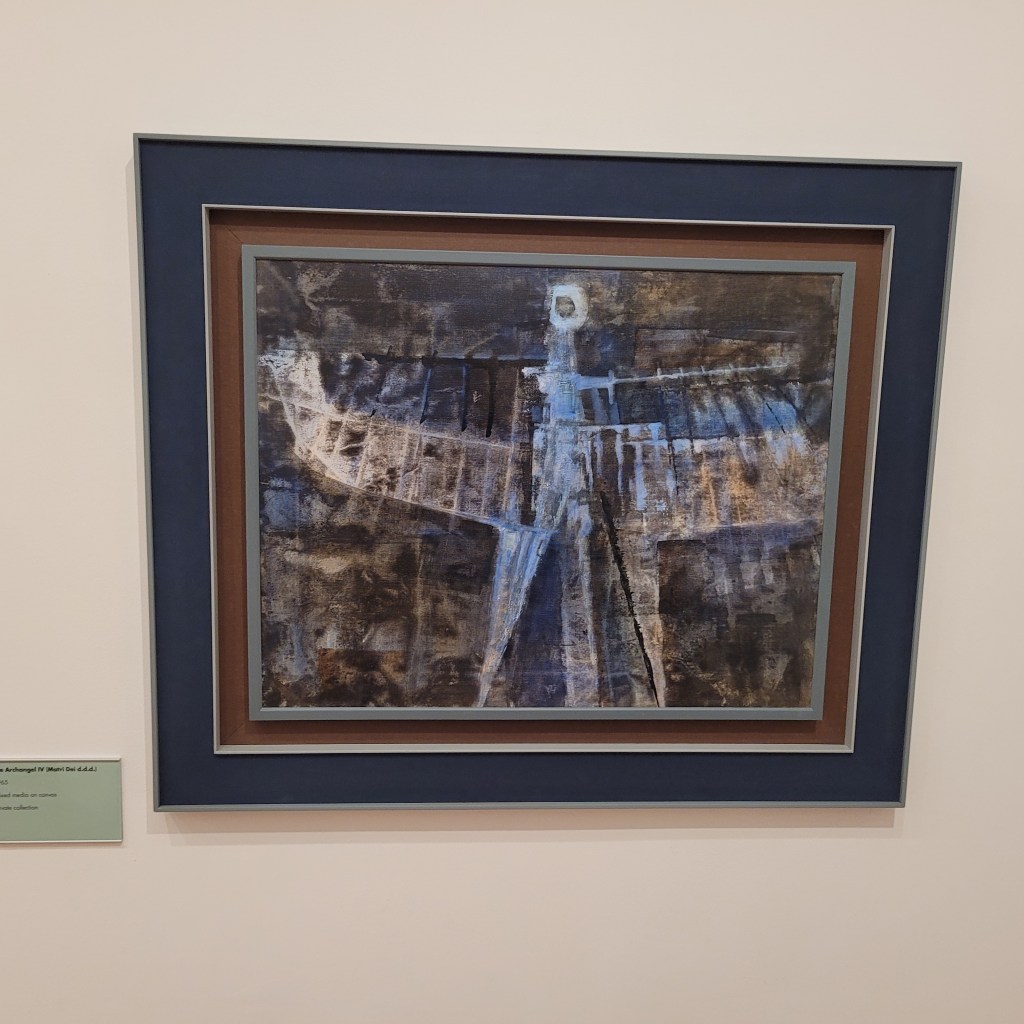
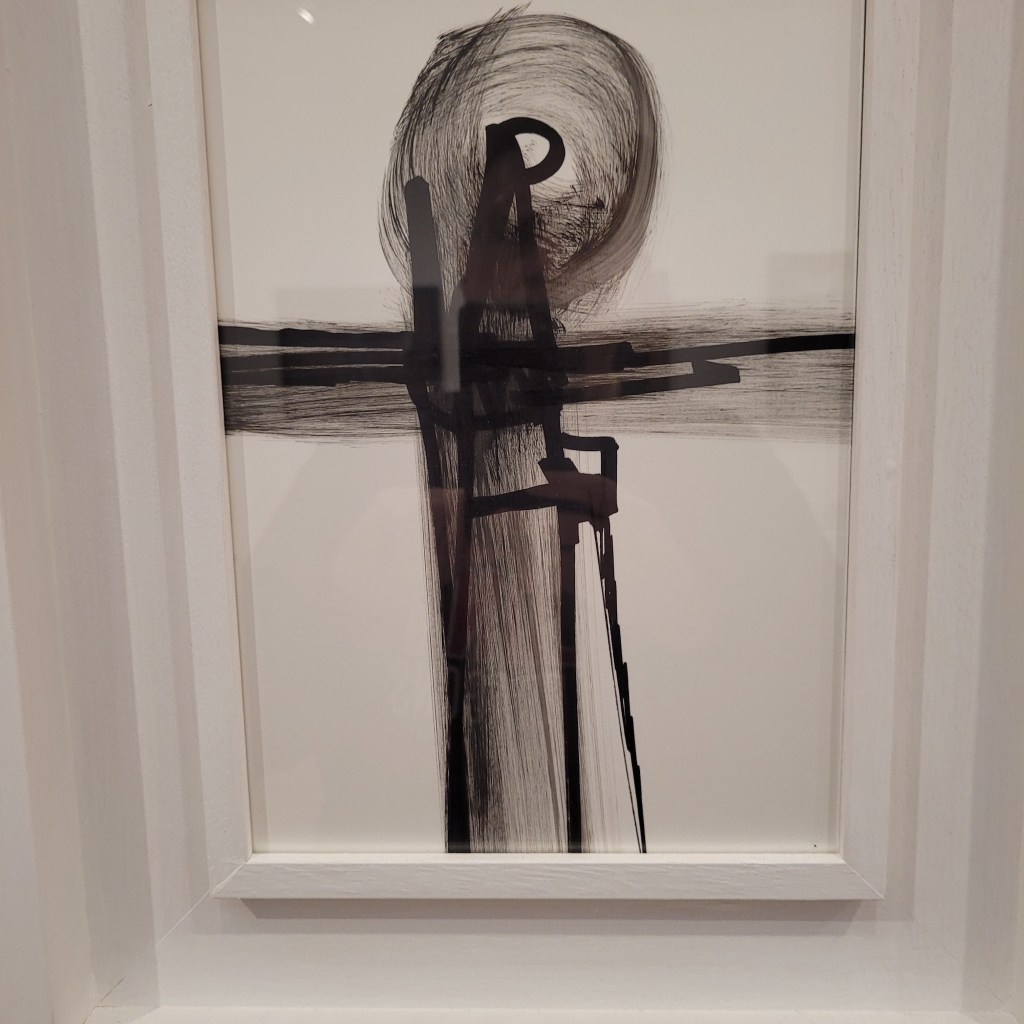
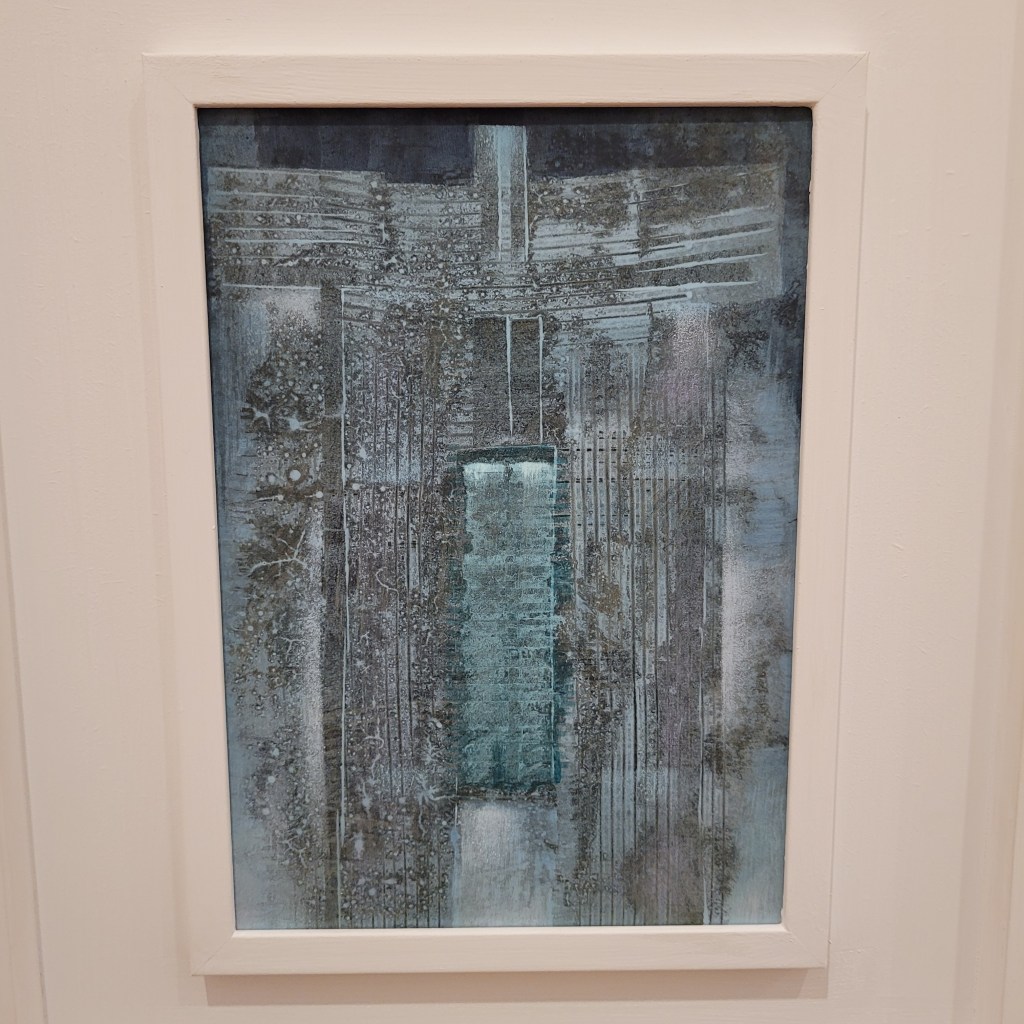
The special exhibition on the main floor of the Collection’s rather impressive, listed premises was titled “Luigi Pericle Rediscovered”. The Collection’s website and material provided to visitors describes Pericle in this way: “Luigi Pericle (1916-2001) was a fascinating and singular artist. A Swiss painter of Italian origin, he was also an illustrator, writer and a scholar of esoteric philosophies such as astrology, theosophy and alchemy. During the early 1960s his intense, enigmatic and multilayered imagery was the subject of numerous exhibitions in Britain, where it was greatly admired by important figures such as Herbert Read and Ben Nicholson.” He seemed to have stopped public appearances in the last part of his life, while maintaining contact with friends and fellow artists. But the exhibition’s use of the term “Rediscovered” seems appropriate in that they say that it was when his home was sold in 2016, ‘a treasure trove’ of his work was discovered, beginning the process of bringing it to public view. For me, his work was fascinating, but a bit like coming to terms with a new engineering or scientific concept, as I often did in my career at the U.S. Nuclear Regulatory Commission. I could see that there was elegance to the concept, and I could understand how the process or procedure, but getting to a real understanding was hard work. At the end, it was worthwhile. Below are some examples of pieces from various periods in his career.
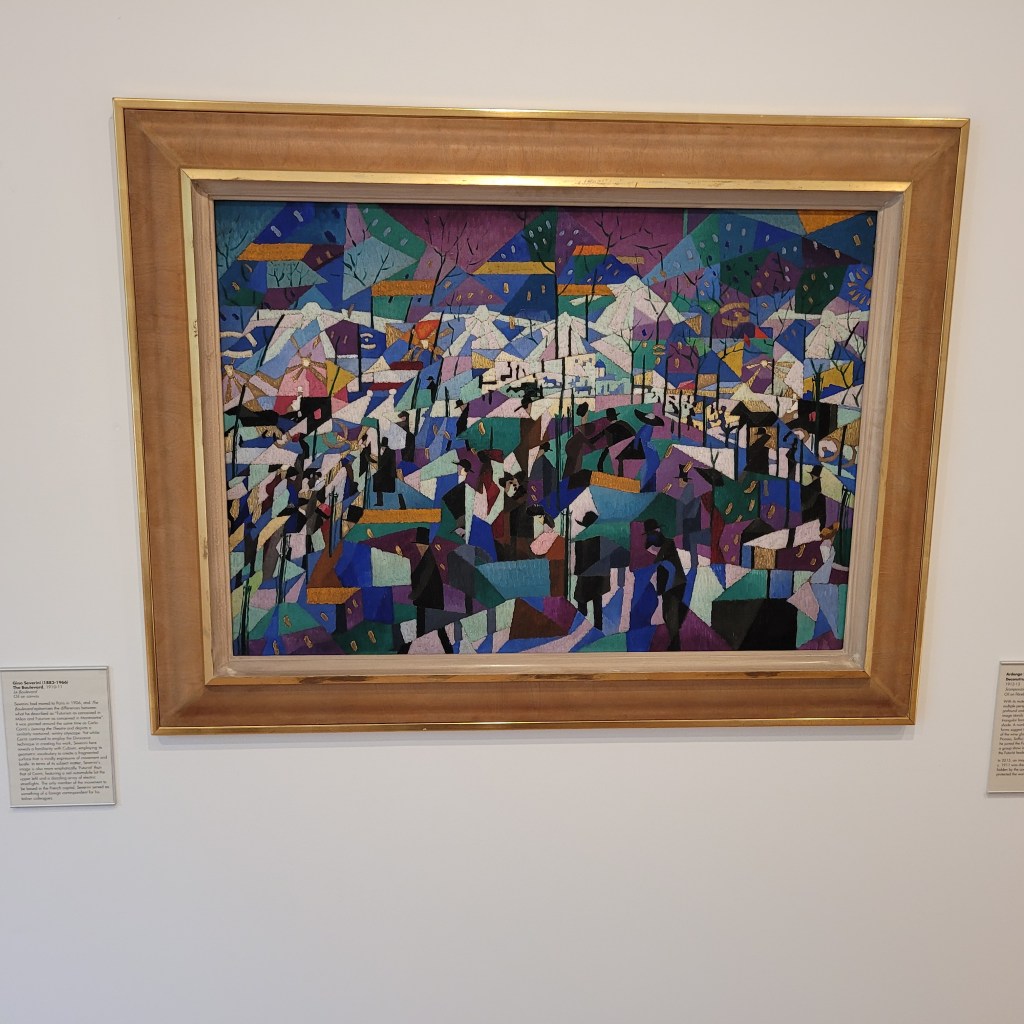
These designs obviously meant a great deal to him. The later ones increasingly reminded me of Science Fiction movies of the decades following his death. I can only wonder if his communication with like-minded artists might have resulted in some cross-pollination into the entertainment world.

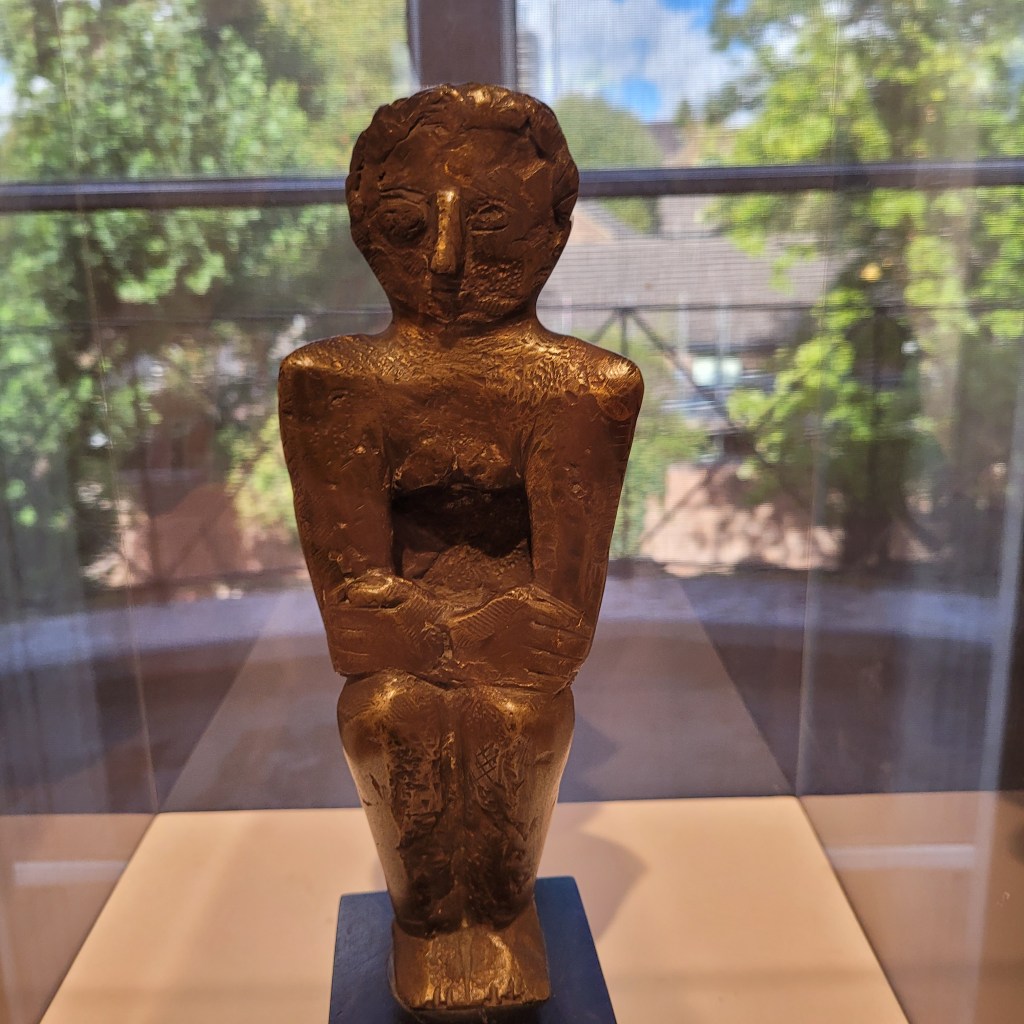
This wonderful collection also provides a bit of aerobic exercise as it challenges visitors to visit its permanent collection on two additional levels with more Modern Italian Art.

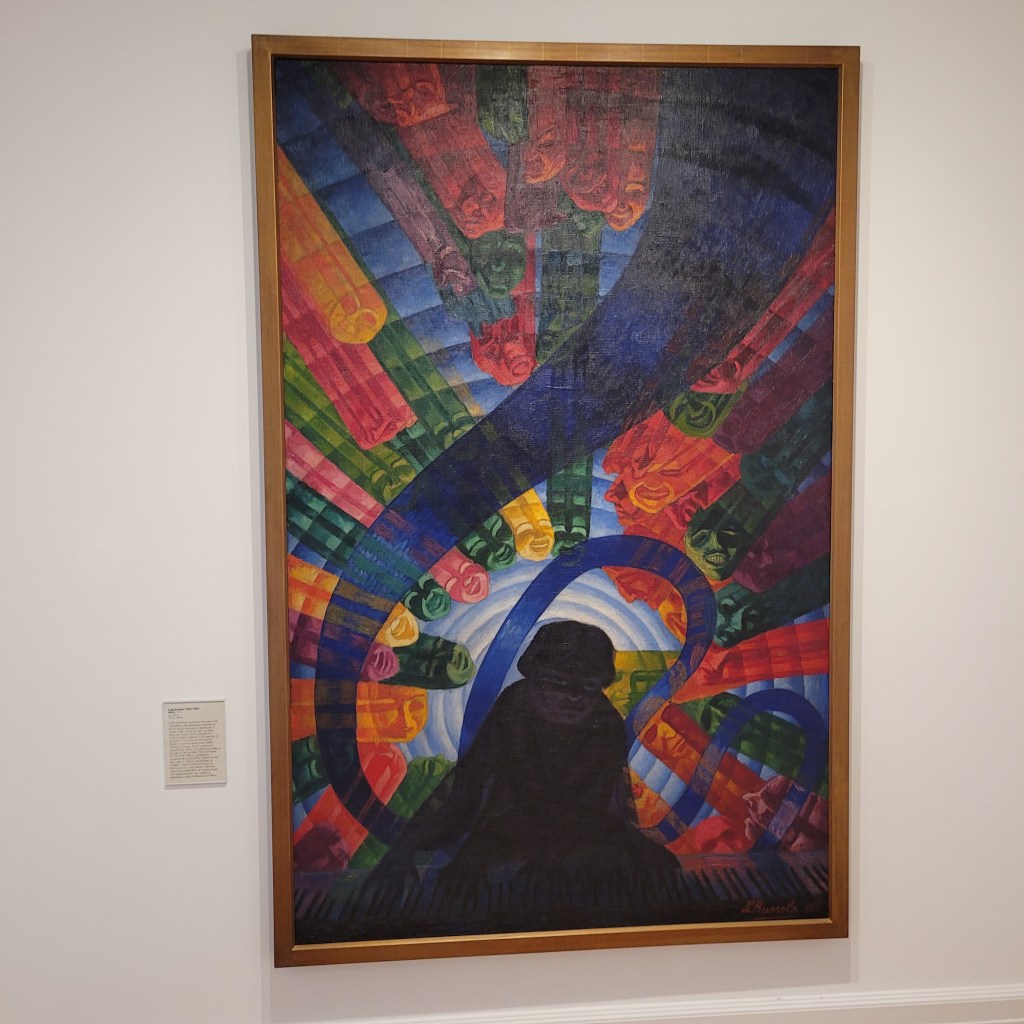
This is just a sampling of the wonderful collection on the upper floors. I recommend a visit to this lovely place. You can get a great snack or lunch and their shop is outstanding. The fellow staffing it was friendly, and if he wasn’t busy was happy to engage in conversation. I noticed an old favorite book, “Italian Folktales, by Italo Calvino. I mentioned how pleased I was to see it in print and still available. This led us to a brief discussion of Calvino’s works and the period he worked in. I also left with a delightful poster about an Italian Cinema exhibition.

Bonus London Fact

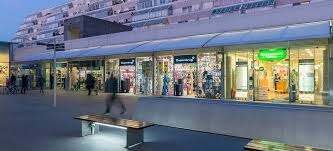
While ‘fact checking’ the information on the memorial sign at the garden mentioned near the beginning of this blog, I came across an interesting fact the neighborhood in Bloomsbury, London, that I have called home for three months of the year, for each of the last several years. I’ve mentioned The Brunswick Centre, a brutalist style complex of accommodations and shopping that sits in the middle of the neighborhood. Here are pictures of some of the stores on the left and the exterior on Marchmont Street Side, showing some of the flats.

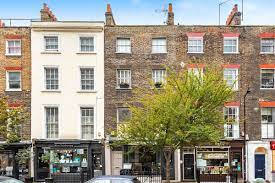
What I found in my surfing was that the original urban plan was to basically demolish the whole neighborhood of lovely 18th and 19th Century buildings and replace them with more structures like the Brunswick Centre.

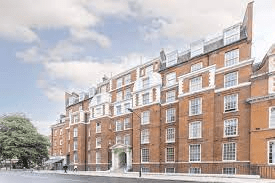
Building like these would be gone. How the good guys finally won, to borrow a from an old Jimmy Breslin book title, is because Britain’s Territorial Army (like America’s Army Reserves), owned a building right across the street from the Brunswick Center and refused to move. They are still there, and I think every neighbor owes them a debt of gratitude for saving this lovely place.