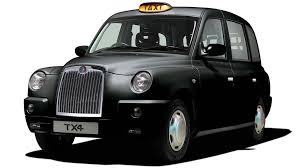
It has been a tough couple of weeks, as my plantar fasciitis has continued to slow me down. In aid of saving steps, I decided to take a Black Cab down to the Tate Britain. I’m always amused at the discussions I have with London cabbies. This fellow wanted to make sure I knew where I wanted to go. “Now you do want to go to the ‘Tate Britain,’ not the ‘Tate Modern?’ He explained that many visitors confuse the two. I assured him that I wanted to go to the one on Millbank and our adventure began. A big portion of central London was under construction that morning. While I was in no rush and enjoyed people watching out the windows of the cab, as the meter and clock ticked, the cabbie became more and more agitated. When we eventually reached the gallery, he very graciously reduced the fare and urged me to “take the Tube home” (advice I followed).
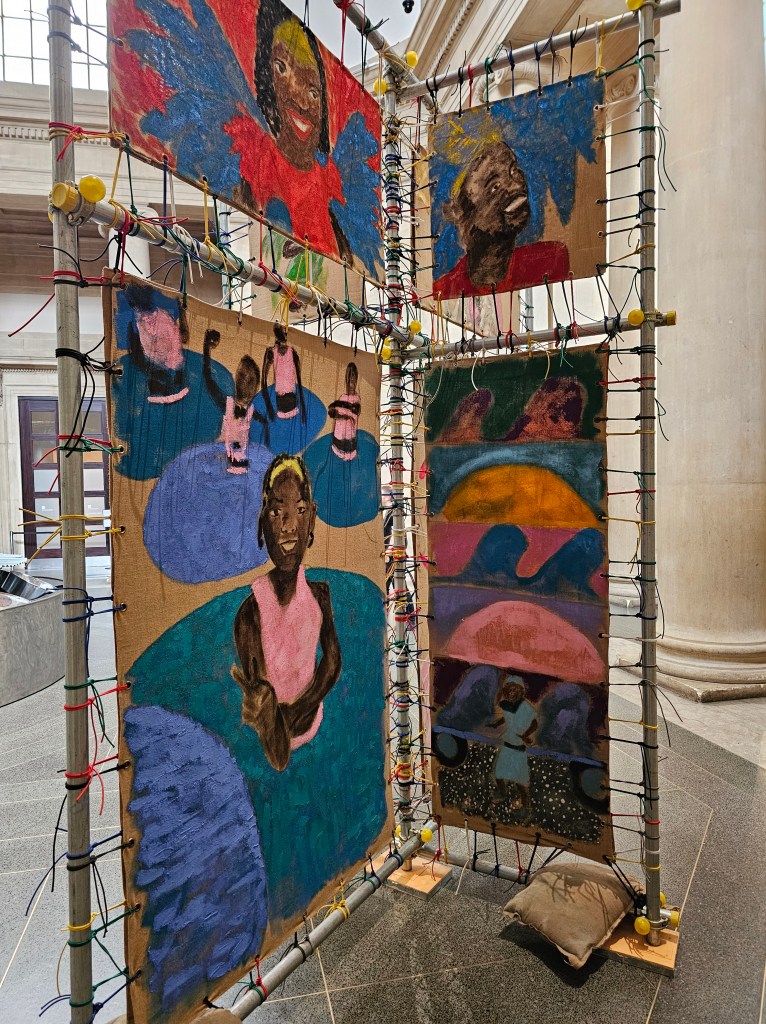
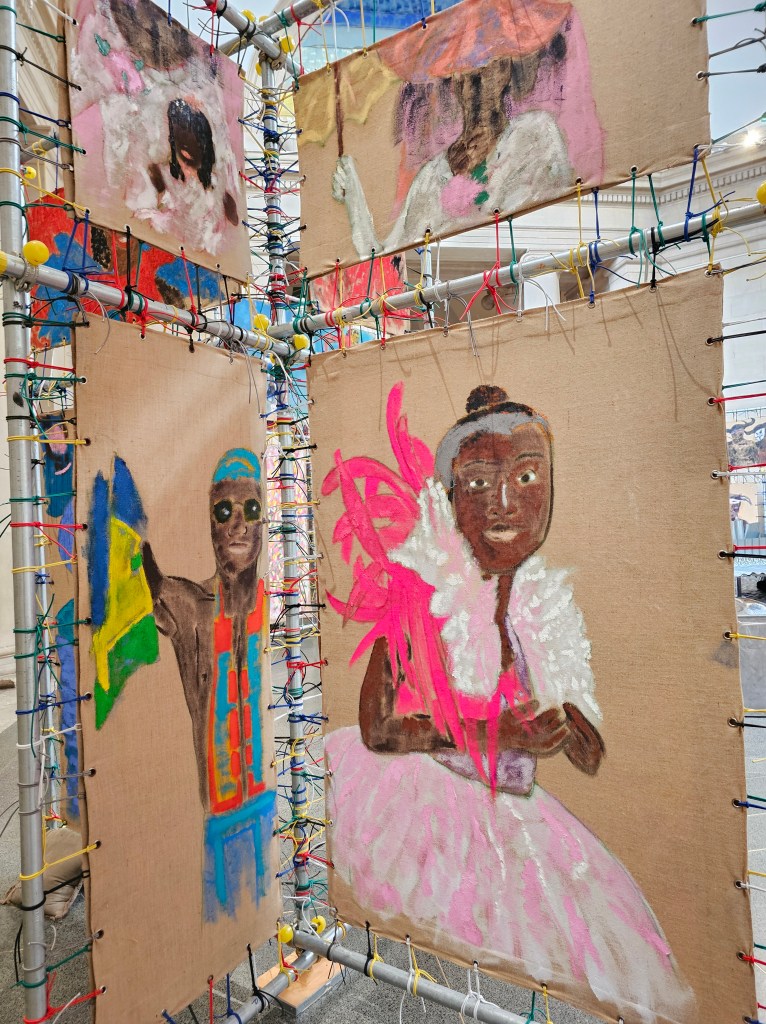
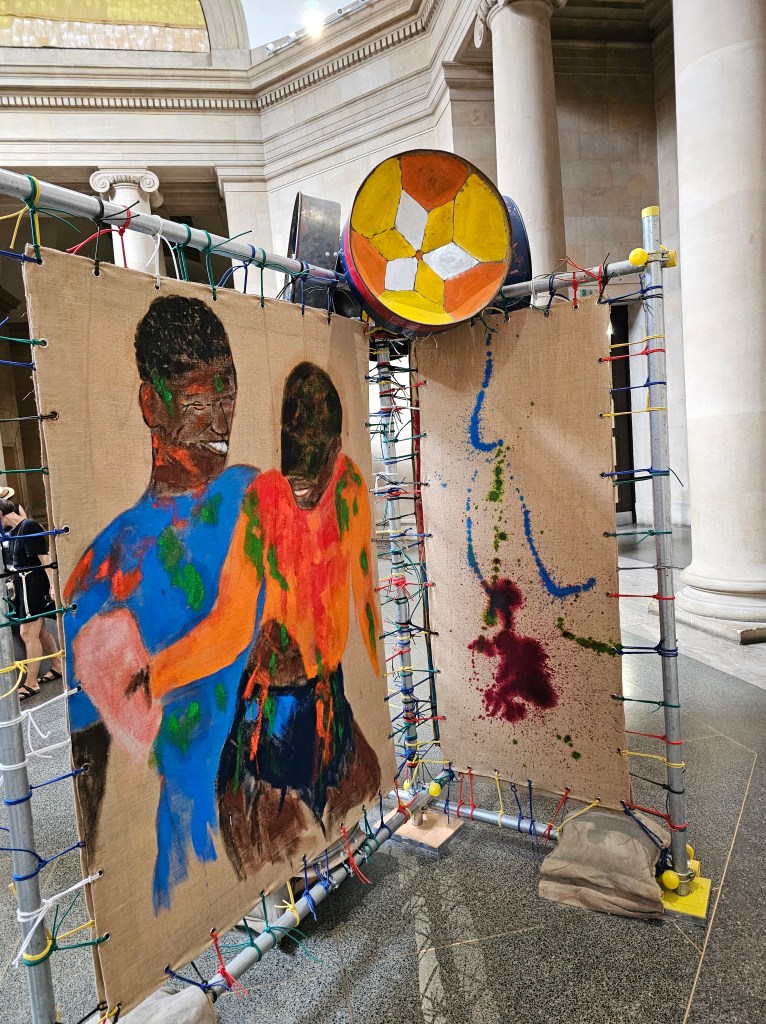
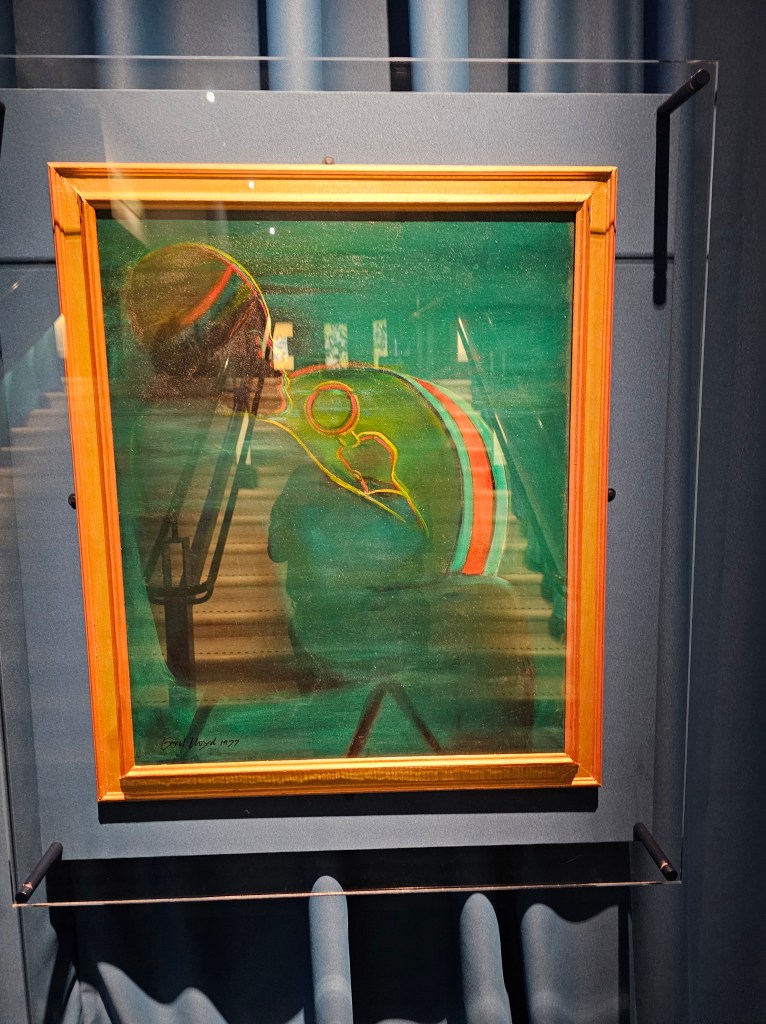
Alvaro Barrington had a colorful display that evoked both his Caribbean family connections and the spirit of Carnival (being celebrated with the Notting Hill Carnival in London).
The colors were vibrant and there was movement and music in each piece.
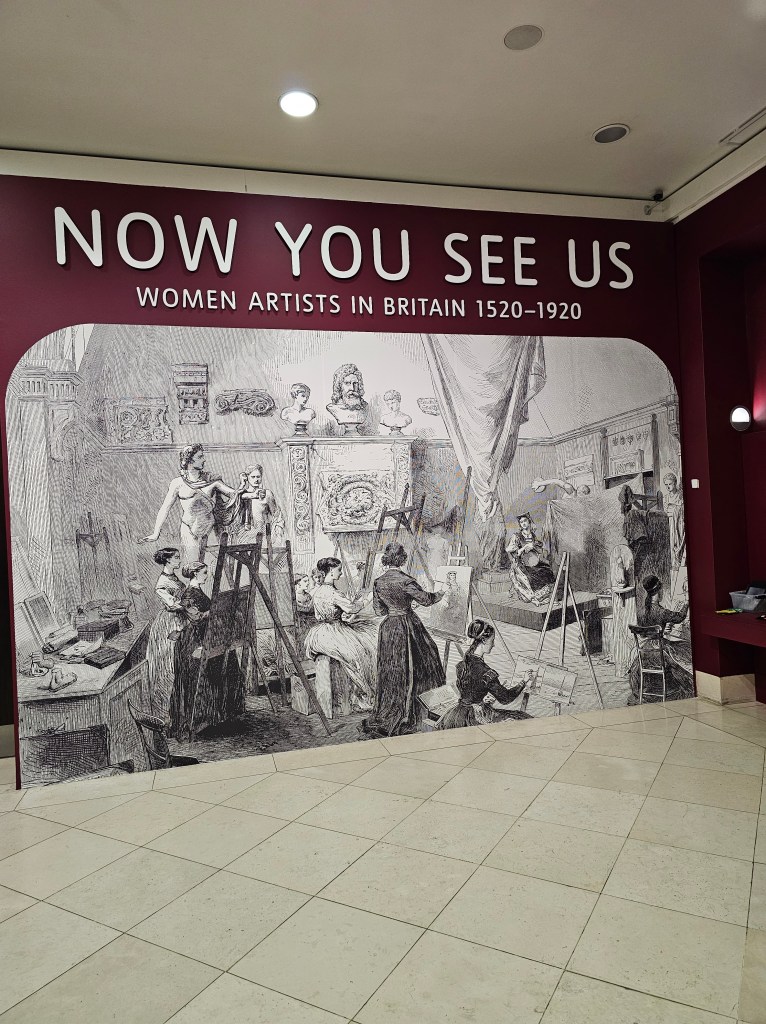
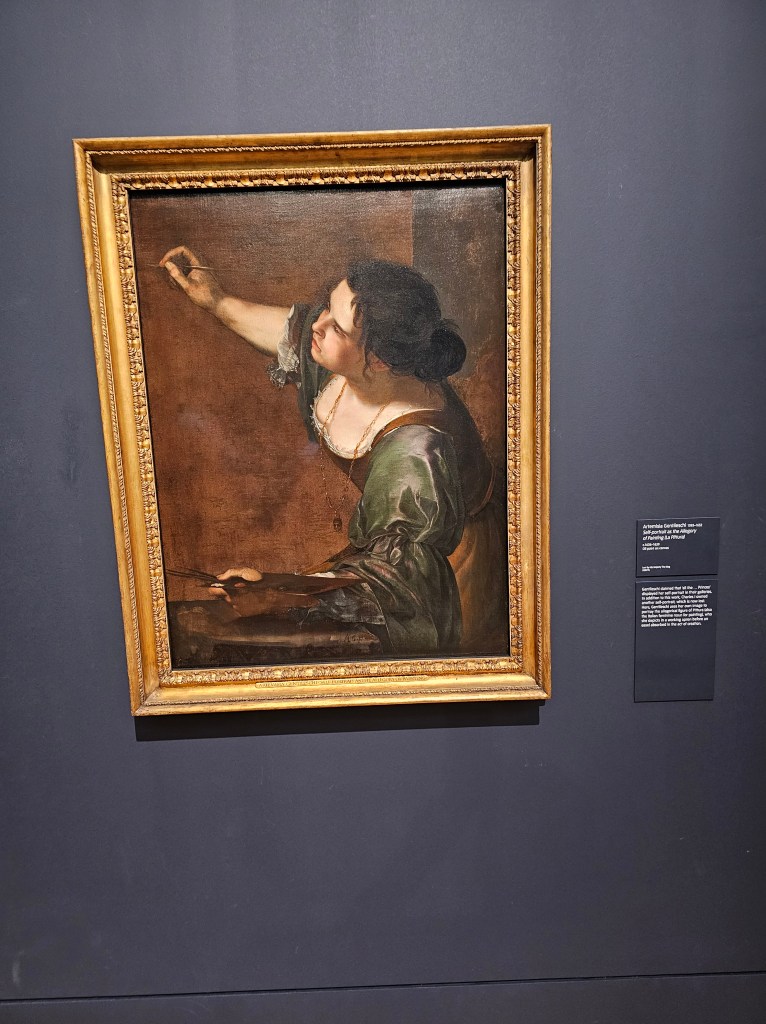
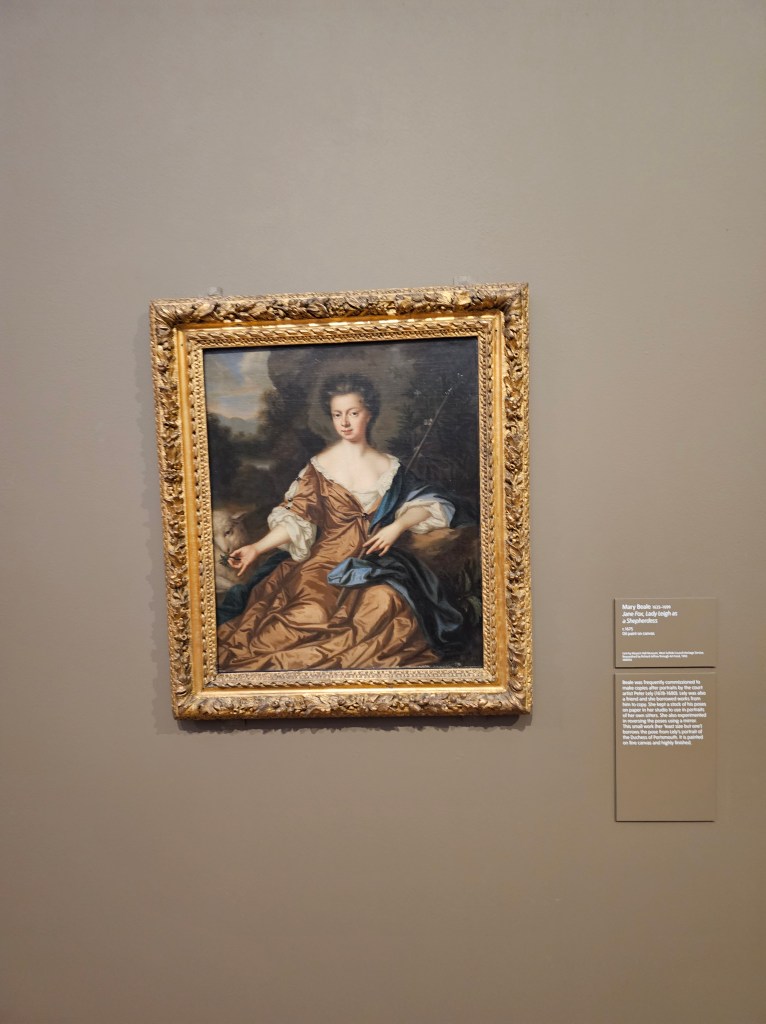
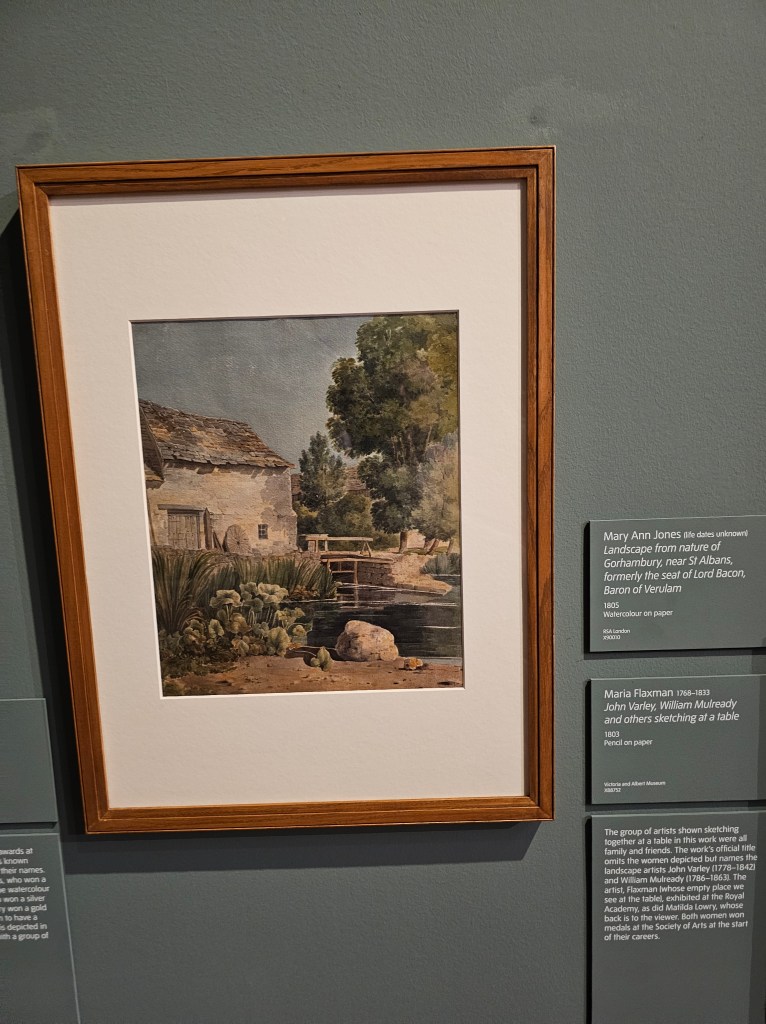
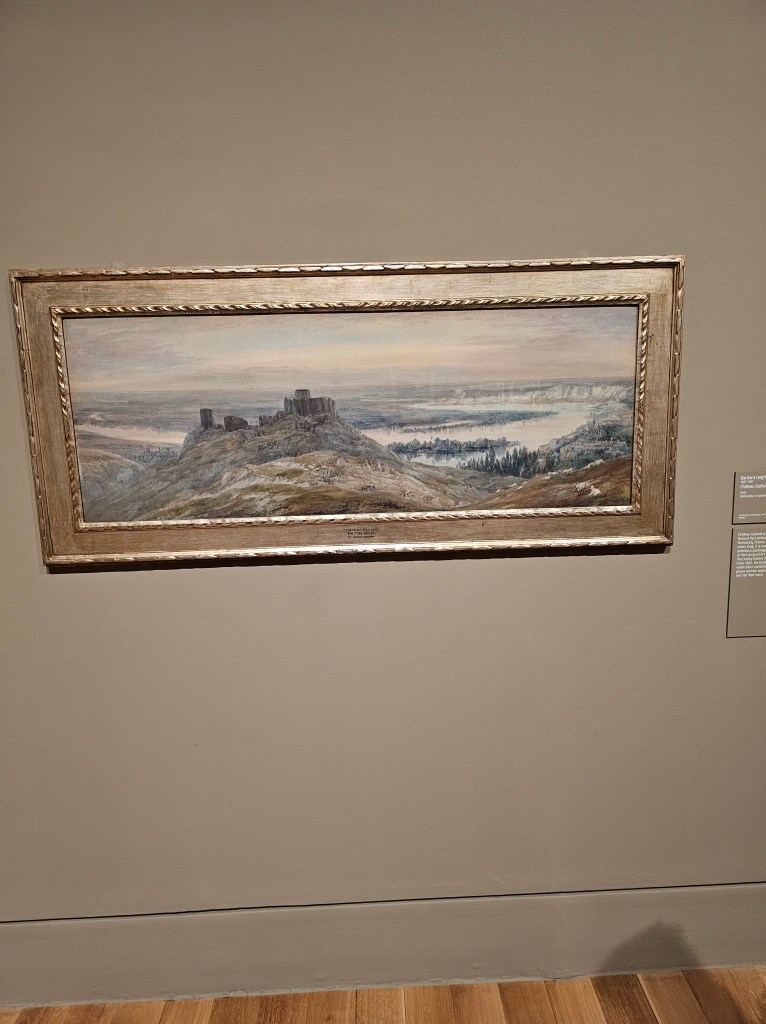
There was also an exhibition, “Now You See Us: Women Artists in Britain, 1520 to 1920.” An exhibit covering 400 years is ambitious and this one certainly covered plenty of ‘artistic ground. Here are a few of the highlights.
Artesmia GentileschiMary BealeMatilda LowryElizabeth ForbesBarbara Leigh Smith Bodichon
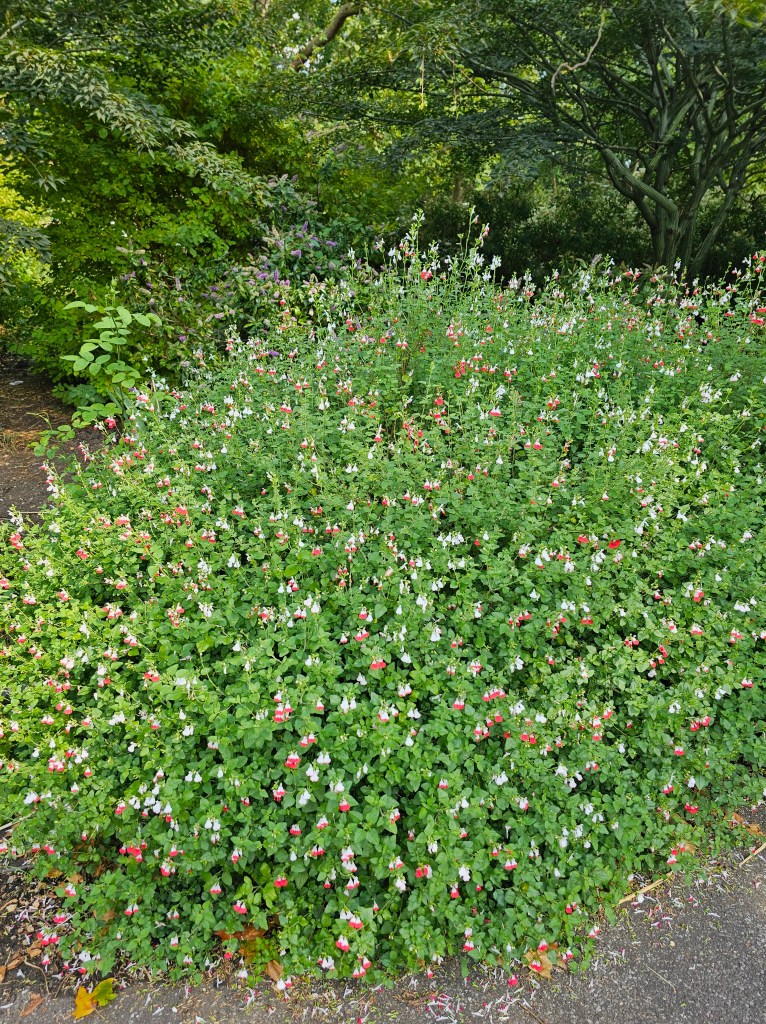
And finally, upon my return to Bloomsbury, I noticed these lovely yellow roses growing in a walking path behind the Brunswick Centre, the local shopping center.
Over the course of two days, I visited two exhibits, “Beyond the Bassline: 500 Years of Black British Music,” at the British Library and “Tropical Modernism” at the Victoria and Albert Museum (V&A). The following day “my theatre season opened with “Skeleton Crew.”
The British Library
The British Library is a wonderful place to visit. Its special exhibits, speakers, workspaces, along with its collections make me happy to have it as a neighbor during my stays in London. This exhibit on Black British Music starts with the surprising depiction of a Black musician in the court of the King Henry VIII.
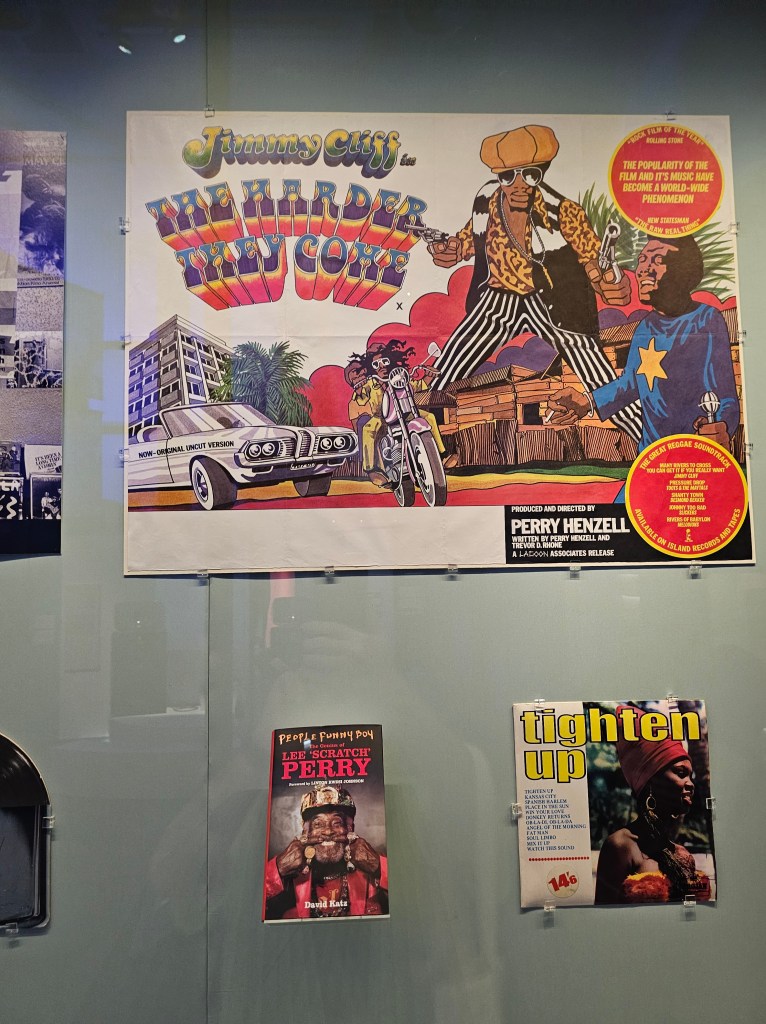
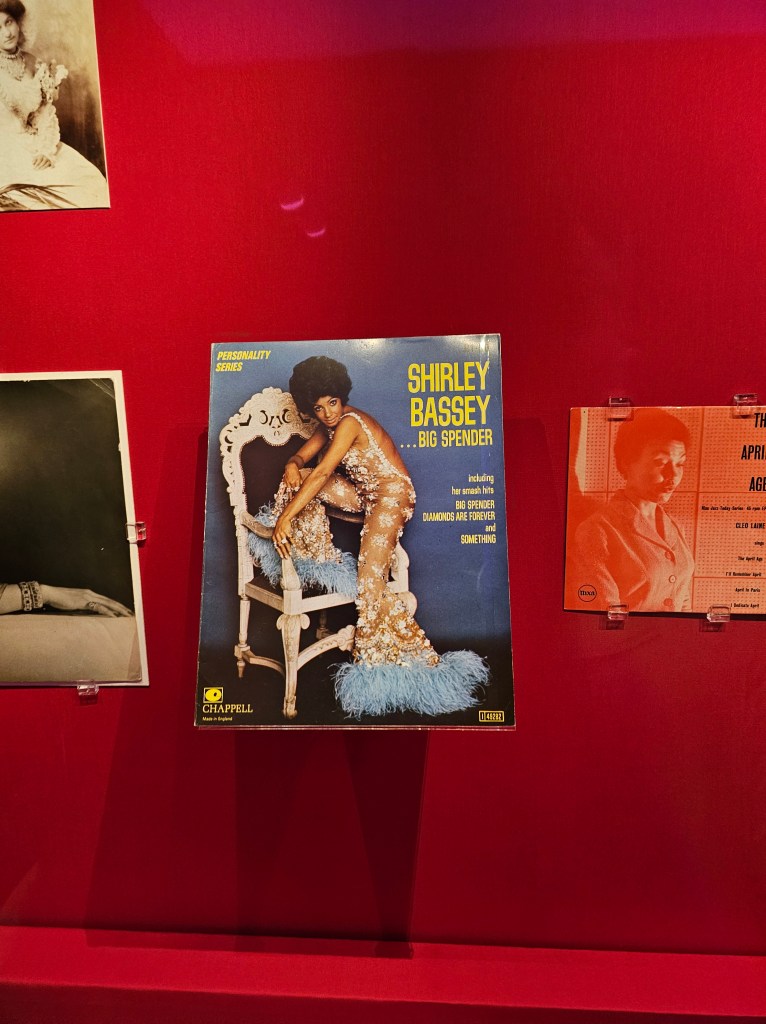
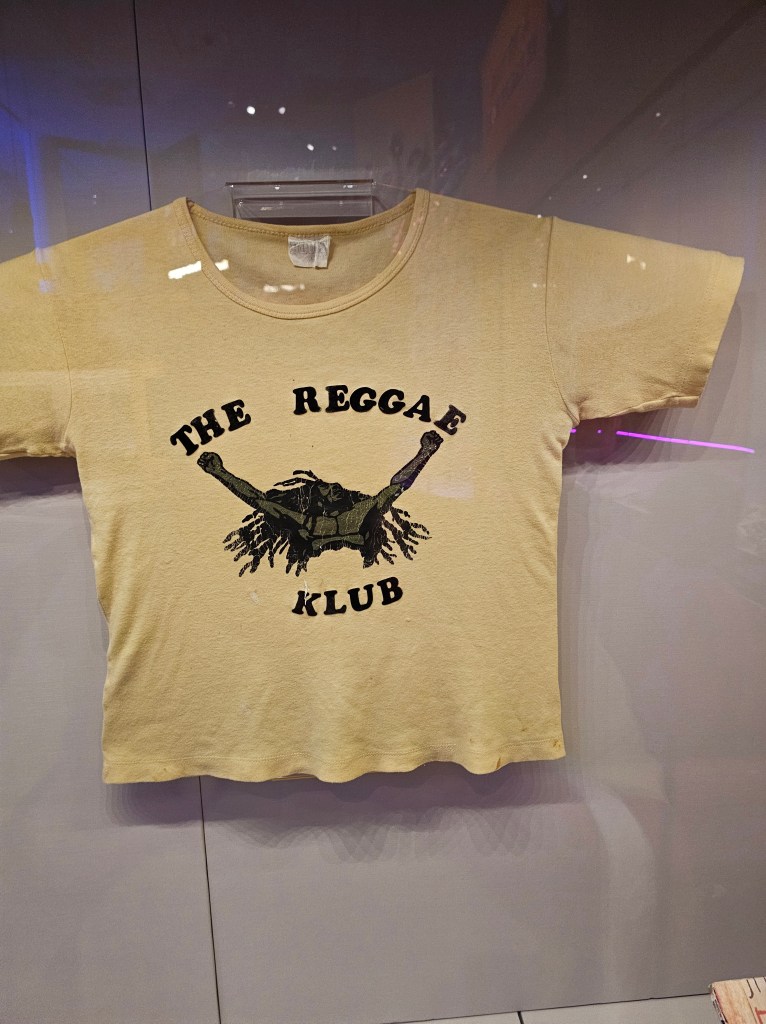
Much of the exhibit, though, focused on the period when Black migration from British colonies brought new sounds, new instruments and new excitement to the music in Great Britain. This led to the Caribbean style carnivals that are now a part of British culture, the success of internationally famous artists like Dame Shirley Bassey (of the “Goldfinger” movie theme fame), and the explosion of Reggae music.
Black Music in the Clubs of LondonThe Era of “Blacksploitation Fims”Shirley BasseyA Carnival CostumeReggaeRastafarian Influences.
The exhibit also contained many filmed interviews with early Windrush immigrants who were part of the music scene. These were people who considered themselves British, having lived under British rule and law for centuries. Yet, upon arrival in Britain, they were asked if they had been naked before they came and were complimented on how well they spoke English. Music, though, the international language has demonstrated how this migration and immigration has helped diversify the British music world.
The Victoria and Albert
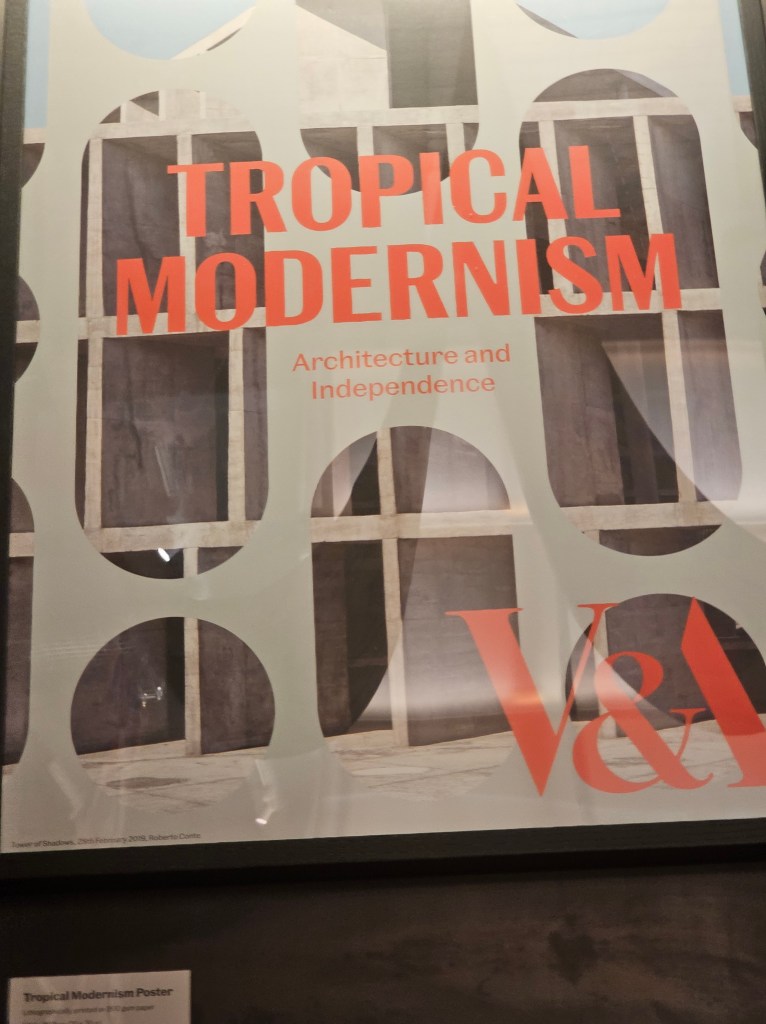
The second exhibit called “Tropical Modernism” was at the V&A. It looks at how British colonialism in Africa and the early years of Ghana’s (formerly known as the British colony of “Gold Coast”) had defined a new kind of architecture that was informed by the climate of West Africa and the traditions of building in the pre-existing culture. The centerpiece of the exhibit was a film about how British architects designed colonial era buildings with an eye toward airflow, screening the sun and heat through lattice-like brick work, and the use of open spaces. As Ghana became the first British African colony to gain independence under revolutionary leader Kwame Nkrumah (1909-1972), as Prime Minister and later, President, new ideas were introduced into Tropical Modernism, largely because of Nkrumah’s insistance that Ghanaian architects lead or have major roles in the design and construction of post-colonial buildings. The end products were exciting and beautiful buildings that often-included elements of well-known western architects like Buckminster Fuller, along with the ideas from Ghanaian architects who introduced local materials and traditional design elements. After Nkrumah’s forced removal from power, a period of turmoil took place, but today Accra, the capital of Ghana, remains an exciting and visually interesting city.
More From the V&A
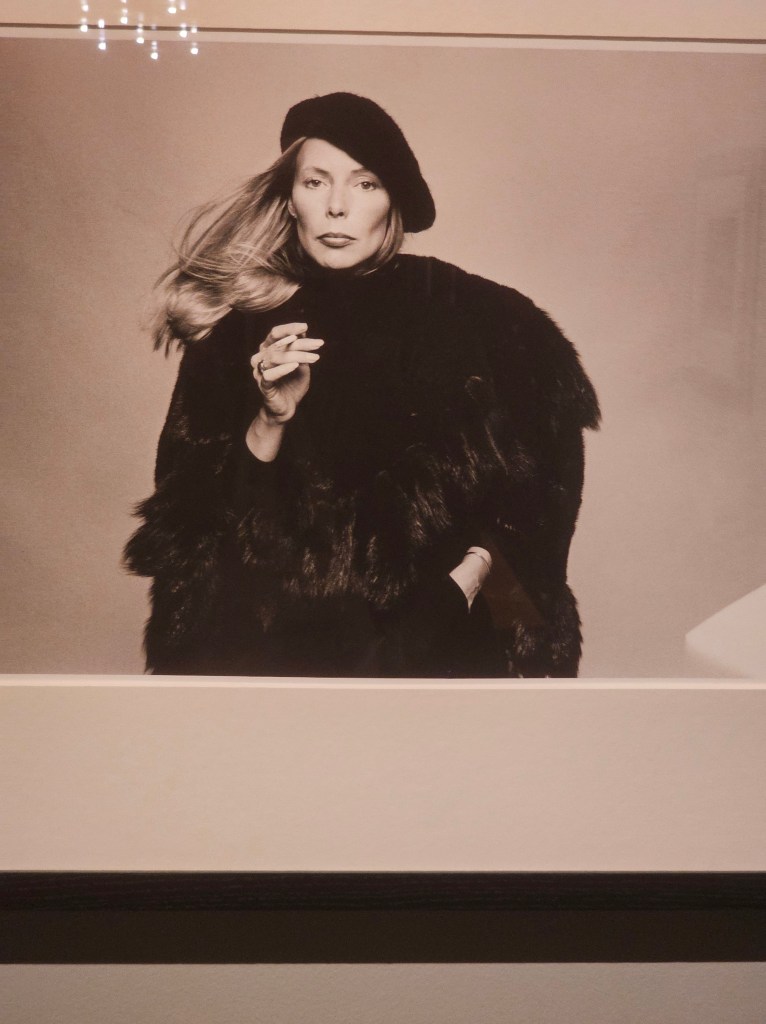
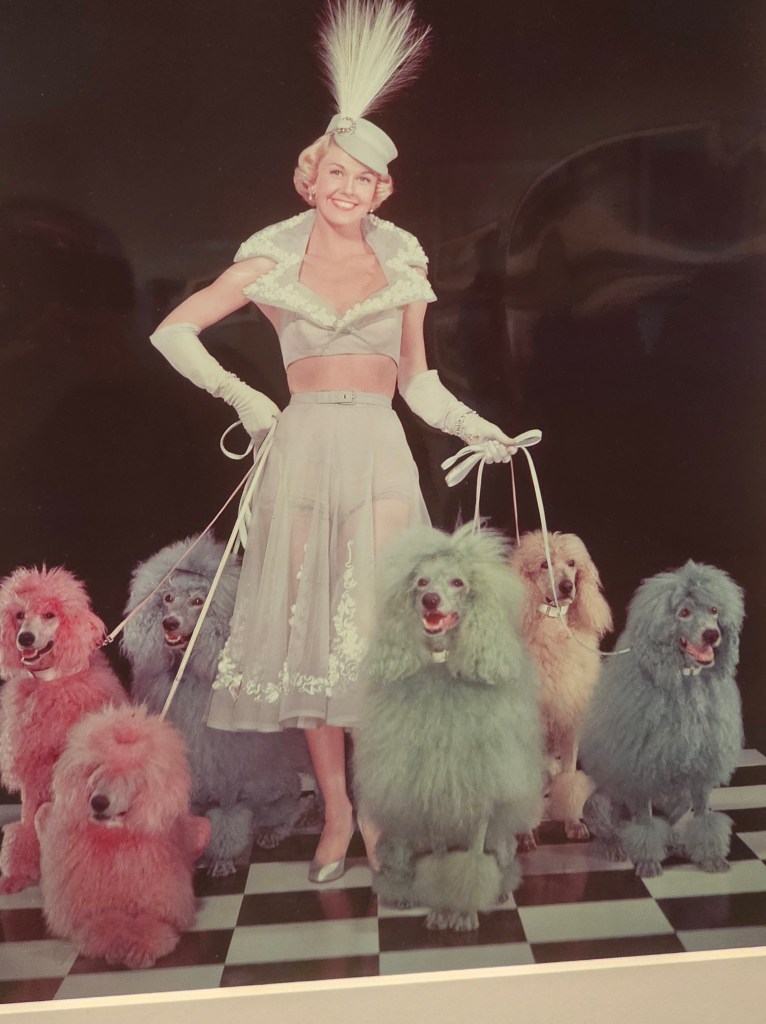
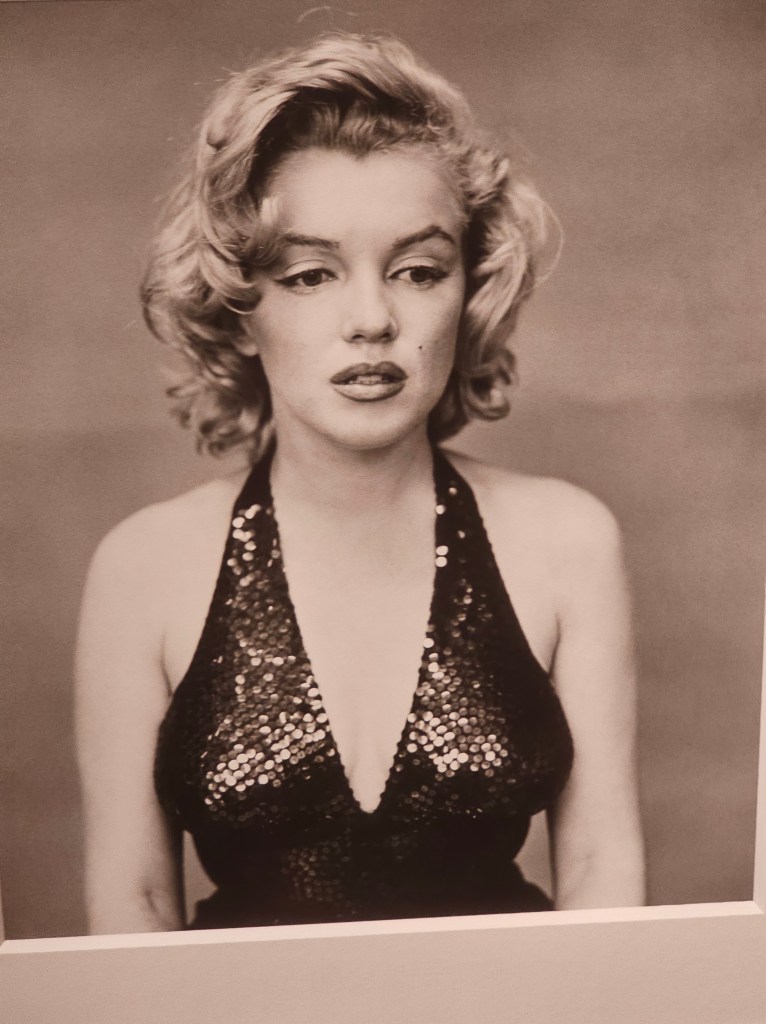
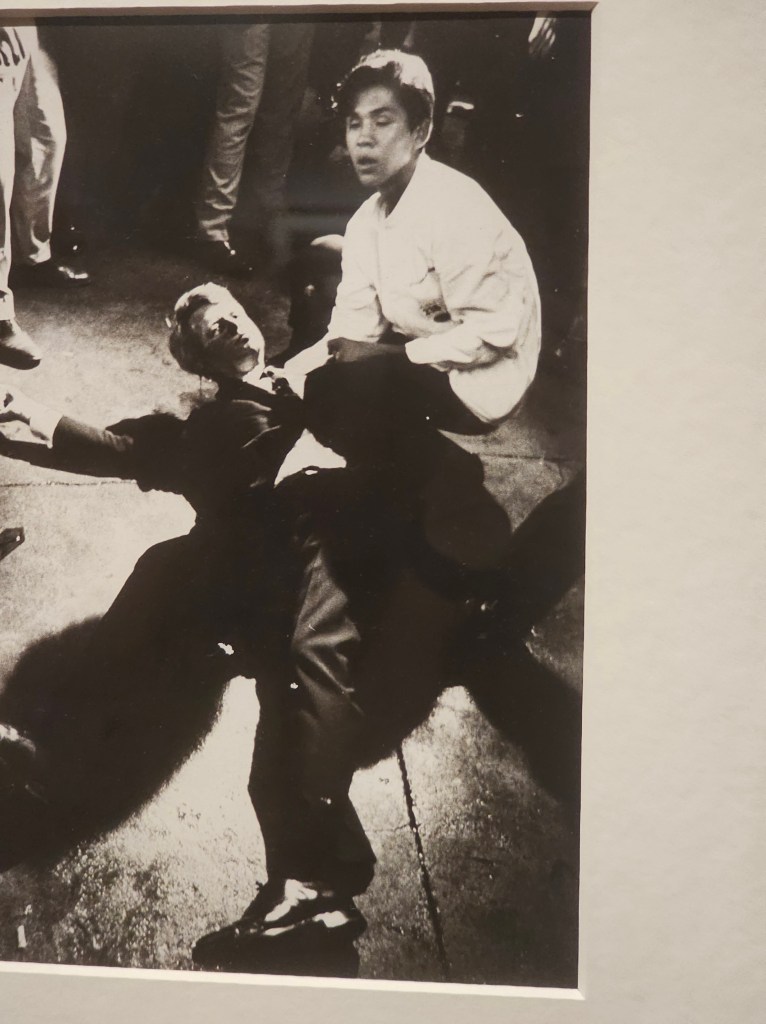
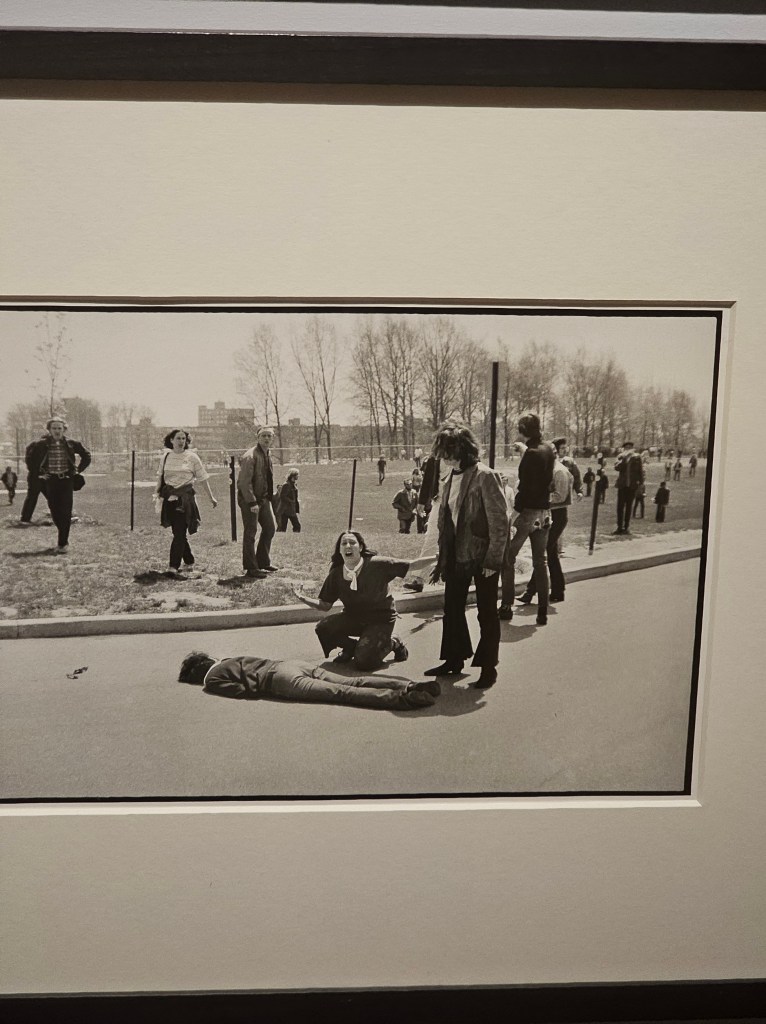
Also, at the V&A was an exhibit of photography called “Fragile Beauty,” from the private collection of Sir Elton John and his husband, David Furnish. The exhibit included beautiful and iconic photos of famous actors and musicians, as well as photos of political figures and events, interspersed with sections of homoerotic photography. I’ve included some highlights from the first two categories. It is particularly amazing that one collection contained the final two pictures below.
I found the Malcolm X photograph intriguing. As is the case with RFK, one can only wonder how different our world might have been if these two, and Dr. Martin Luther King, who was also included, but whose photo my phone seems to have missed, would have lived. For me, the Kent State picture takes me back to that terrible day in May of 1970 and again, one can only wonder how that event changed America.
I know I shall be returning to the V&A during my 2024 sojourn so there may be more from this great institution.
Skeleton Crew
I love the Donmar Warehouse, a theatre in the Covent Garden neighborhood of London. The theatre is intimate, four rows of seating surround three sides of the stage, with a similar number and configuration of balcony seats. As a venue for new and often “edgy” productions, its staff tends to be young and filled with energy. The plays and actors are usually first rate. “Skeleton Crew” by Dominique Morisseau tells the story of four people working at an unnamed automotive factory at the turn of the second Millenium, a period when the implosion of that industry in and near the city of Detroit, Michigan, was taking place.
The four British actors were amazing and word perfect on the American accents that never missed a beat. Music including, “I Say a Little Prayer for You,” “Angel,” and “Get Dis Money,” added to the atmosphere. The story was a sad and dramatic one with some signs of hope for the characters in their journeys through life. We are now far enough removed from those tragic days of rattling “K Cars” and the near collapse of the cities like Detroit and Dearborn, that this reminder of how corporate greed and union denial destroyed the futures of thousands of Americans. Bravo to the cast and crew of this production.
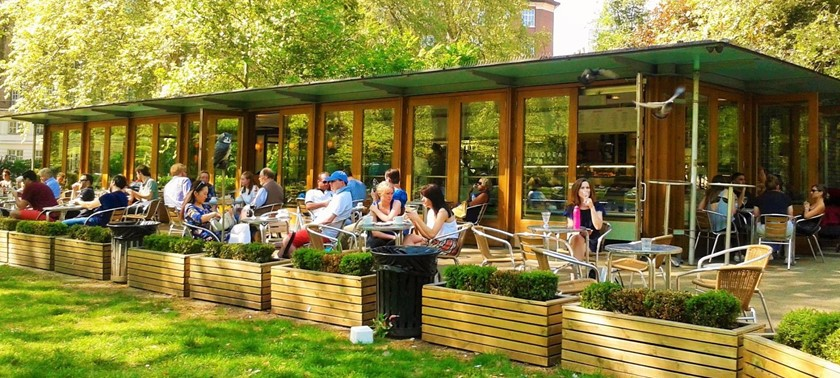
And so, I have returned to London. My first week has been one of slowly working on getting my legs and feet back in shape. An early spring strain of my calf muscles which led to a flare up of plantar fasciitis has meant that I needed to ramp up my London walking life carefully. Even so, one of my first stops was a health walk to my favorite stomping ground, “Caffe Tropea,” in Russell Square Park. I was pleased to find almost my whole
Caffe Tropea in Russell Square, London
gang of coffee drinking friends sitting at an outside table on a beautiful sunny afternoon. There was plenty of catching up and friendly banter. Needless to say, the American Presidential elections were of great interest. Paulo Tropea and his staff greeted me warmly too, really making me feel at home.
I spent a few days getting past the jet lag by simply enjoying Bloomsbury. Here are a few photos of some of the things I saw.
Summer flowers in Brunswick Square Garden and the sculpture “Coreagrafia” by Will Carr that stands at the entrance to the Brunswick Centre.
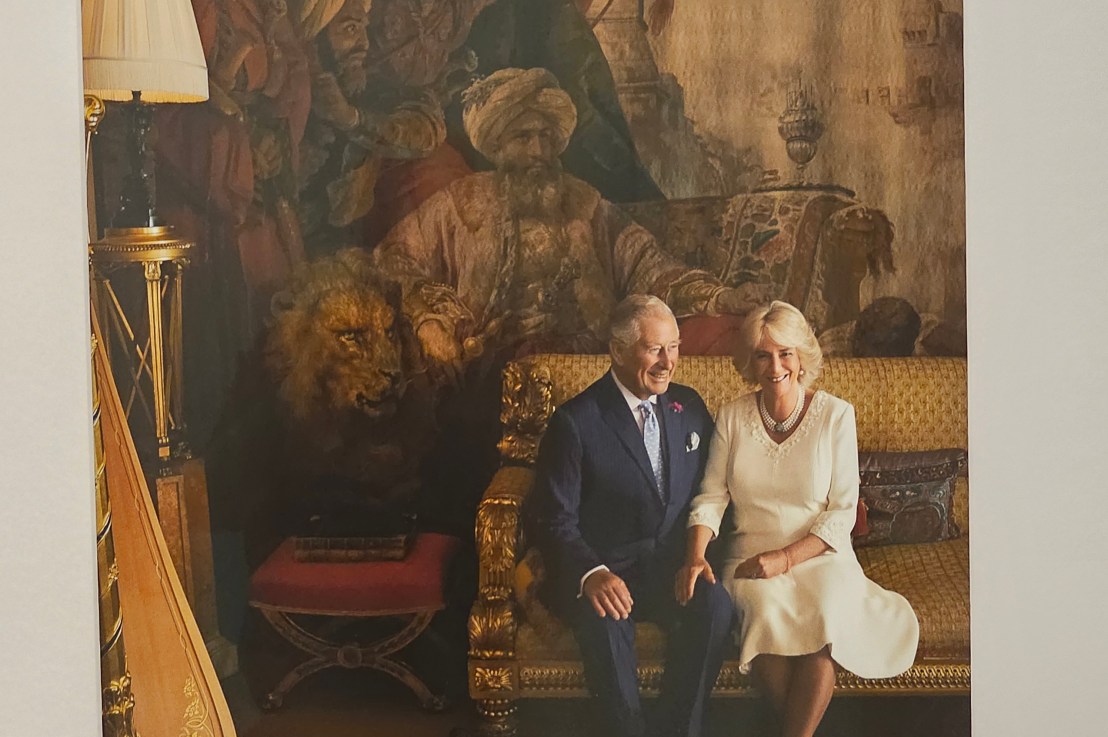
Now was the time for the adventures to begin. I decided that my first stop had to be the National Portrait Gallery where I have been asking them for a decade or more when they were going to have an image of Queen Consort Camilla. I don’t know why I got such a burr under my saddle about this, but I felt like she deserved to be there. Her predecessor was and still is represented and remains very popular. But the Queen Consort has become more popular and is quite a remarkable “royal.” Well, my regular notes and emails must have worked. Because on this visit, I saw this:
Good things come to those who wait!
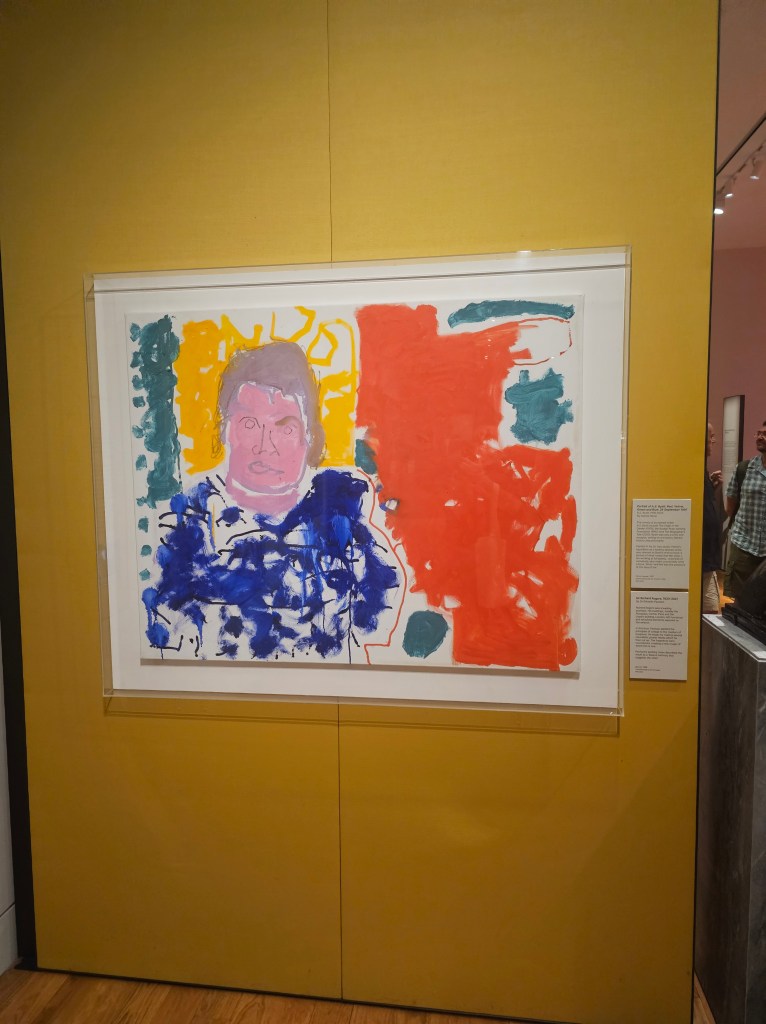
While visiting, I was also happy to see this portrait of novelist A.S. Byatt by one of my favorite artists, Patrick Heron, was back on display.
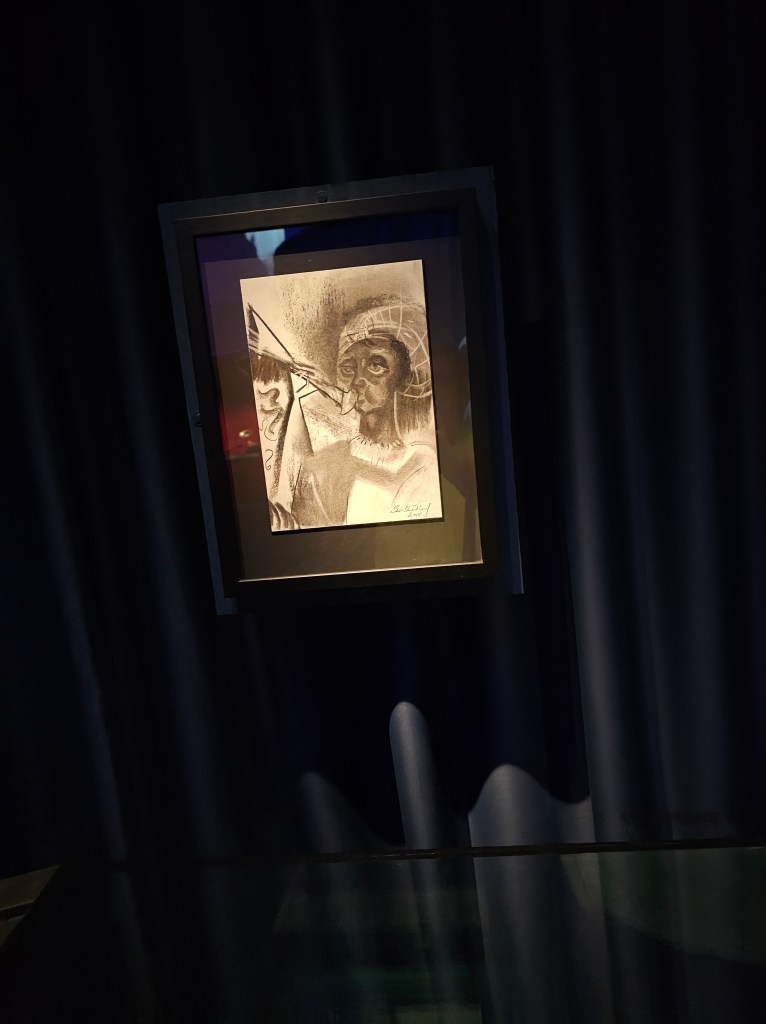
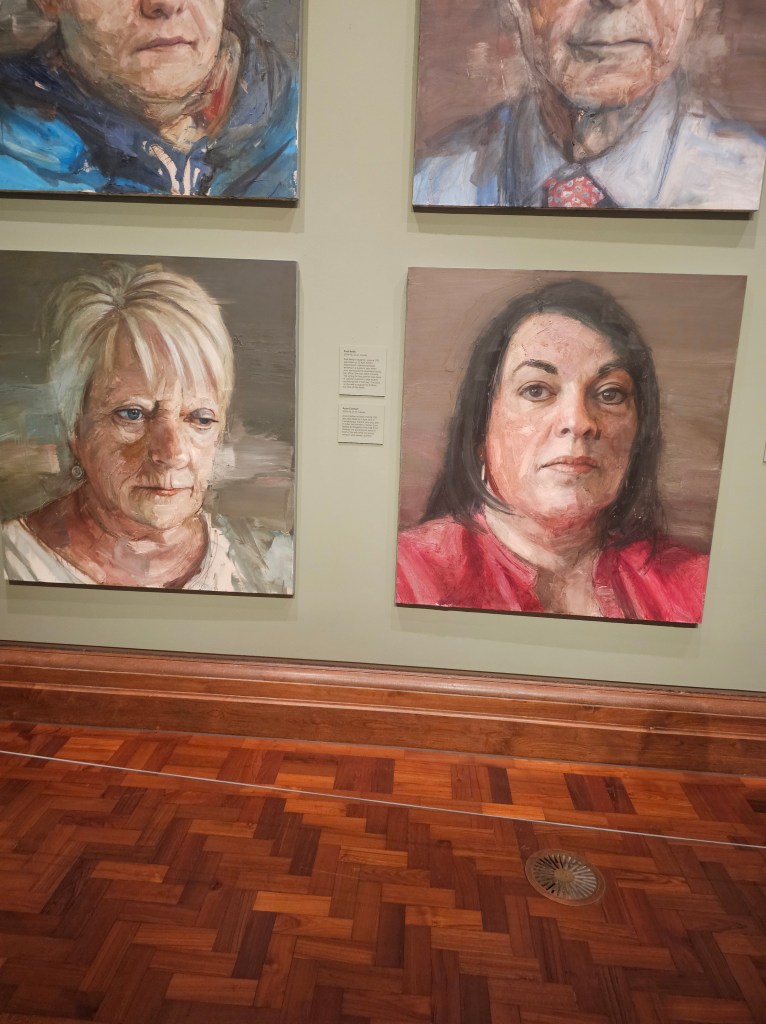
There was also an interesting exhibit at the gallery, “Silent Testimony,” by Belfast artist Colin Davidson. This is a series of paintings of people connected by having suffered loss during “The Troubles” in Northern Ireland. Here are some of those portraits.
The faces seem to tell a story of sorrow, stoicism, and loss. Quite a moving experience.
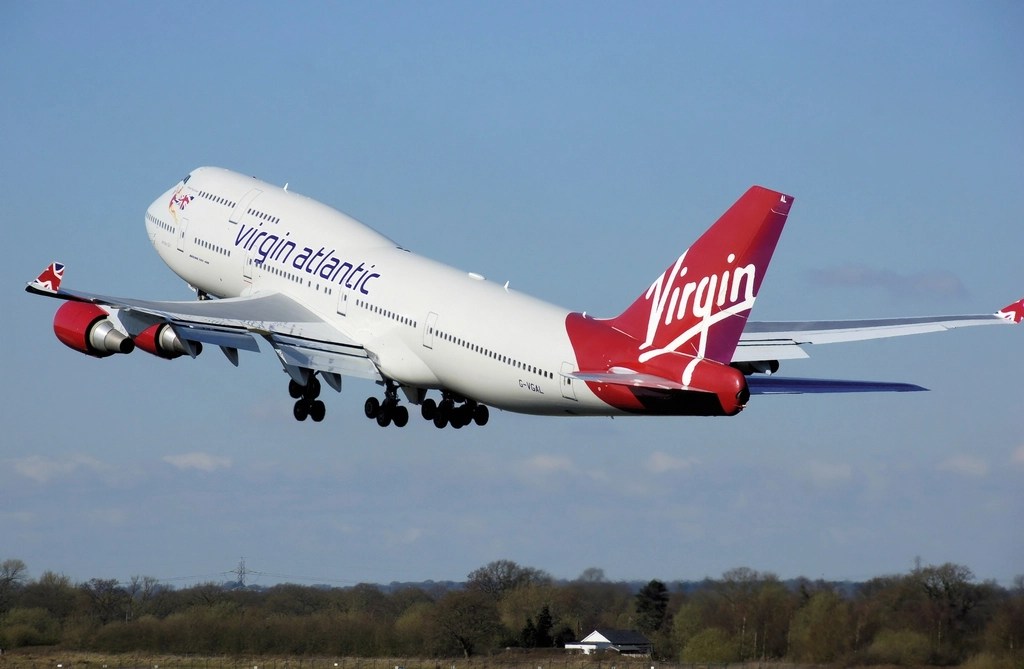
If my Alma Mater invites me to return “to the mother ship,” as my fellow alums of a certain ‘booming’ era call it, I’m likely to respond with a “heck yes, let me see if there is a direct flight.” And so, just days after my trip to Kansas City, I found myself back at Washington National Airport. The 1889 Society at the State University of New York at Oneonta was holding its annual Holiday Reception and that meant a chance for me to see the campus I love and spend several hours more in Canadian Regional Jets. To be honest, though, American Airlines has significantly upped its game and the brief flight from Washington to Albany, New York was as pleasant as could be, featuring one of the nicest flight attendants I have had had serve me on a domestic flight in years.
What the…It’s Snowing in Albany!
One never travels North in December without suitable outerwear, but the shock was real, as I left the passenger terminal to pick up my rental car. Below is a picture of me, suitably bundled up and wearing my new Kansas City hat as I stand in front of my rental in the airport garage, thinking how pleasant it will be to have Sirius Radio to keep me company through the mountains, as I drive West to Oneonta.
Only moments later, as I pulled over on a side road to adjust the radio, were my hopes temporarily dashed when I discovered that Sirius had not be made available except for purchase. Luckily, I remembered that my personal Sirius account was available through my Android phone (some readers will recall the great London phone heist of late October, now (luckily0, a memory). So, after some fiddling with wires, I had the companionship of radio broadcasts all the way down to Oneonta, as snow squalls chased me in the late morning greyness.
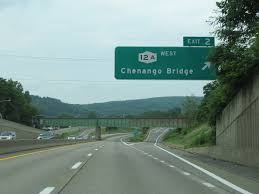
Most of the journey from Albany is made on Interstate Highway-88 (I-88). During the other three seasons of the year, it can be a breathtakingly beautiful drive through a glorious section of the Catskill Mountains with vistas of hills and mountains, verdant green in summer, filled with pinks, yellows, and purples in Spring, and all the palate of Autumn leaves during that season. Unfortunately, Winter is pretty much grey. The highway was quite empty though, so the trip was pretty uneventful. Of course, vigilance is necessary because the deer will get you if you are not careful.
Not a great photo, but to give you an idea of what I-88 is like cutting through the mountains.
A Piece of My Heart Remains Here Always.
My first stop upon coming off of I-88, was the Courtyard Marriott, where I would be staying for two nights. It sits on a hilltop on the opposite side of I-88 from the business district in Oneonta.
Courtyard by Marriott, Oneonta, NY
The hotel was lovely. The staff was absolutely great. My room was very nice. I have stayed at the hotel before, but I must say that like American Airlines, this place has upped its game too.
A Slate Grey Oneonta Day-Wednesday Afternoon Visit to Campus
SUNY Oneonta has acronyms. For the best part of half a century, we referred to the institution as “SUCO,” the acronym for the State University of New York College of Arts and Sciences at Oneonta (later shortened to the State University of New York College at Oneonta). We pronounced the long U and O while SUNY College at Oswego which was also SUCO used the short U and the long O. All went along fine until a lttle over a year ago when SUCO was granted University status within the SUNY system. So now it is SUNY-O until we can think of something better. As for the weather, the snow continued to flurry and to use the term my friend Duke coined, it was a slate grey Oneonta day.
A slate grey Oneonta day. View of Fitzelle Hall and Upper Campus from the Hunt Student Union Parking Lot.
I did a quick reconnoiter of Red Dragon Outfitters to see if any new merchandise was in. I did get the first view of a new Alumni Tee Shirt that will sell like hotcakes on Alumni Weekend this year. I also made my first of two visits to the on-campus Starbucks that is temporarily located across the hall from Red Dragon Outfitters in part of a space that once sold (the now archaic) textbooks. Starbucks, I understand will eventually move back into the Hunt Student Union, once extensive renovations are completed there.
I next had to pick up my parking pass from the newly renovated Alumni Hall. The building was, through my junior year on campus, the original Milne Library. To get there, I drove down the road that separates the majority of the dormitories and dining halls from the academic and administrative buildings. As I mentioned in a message to a friend that day, whenever I see the dorms for the first time on a return to campus, particularly my freshman year residence, I get a frisson. I feel as i did when I was a student, a type of excitement with the world and the possibility it holds.
“The Street of Dreams” as seen through my windshield. Dorms to the left classrooms, etc. to the right.
The Main Events
Thursday dawned cold with a slight frosting of snow. I had time to get a walk around part of the campus before I thought my feet would freeze. Then I had a lunch meeting to discuss, among other things, my class’s upcoming 50th reunion in 2025. I was also given a tour of the newly renovated Alumni Hall. The facilities are fantastic. As always, the Director of Alumni Engagement and the Vice President for College Advancement, two incredibly hard working, incredible people (and people who have become dear friends of mine) provided me with many interesting insights and great discussion, as well as a good lunch.
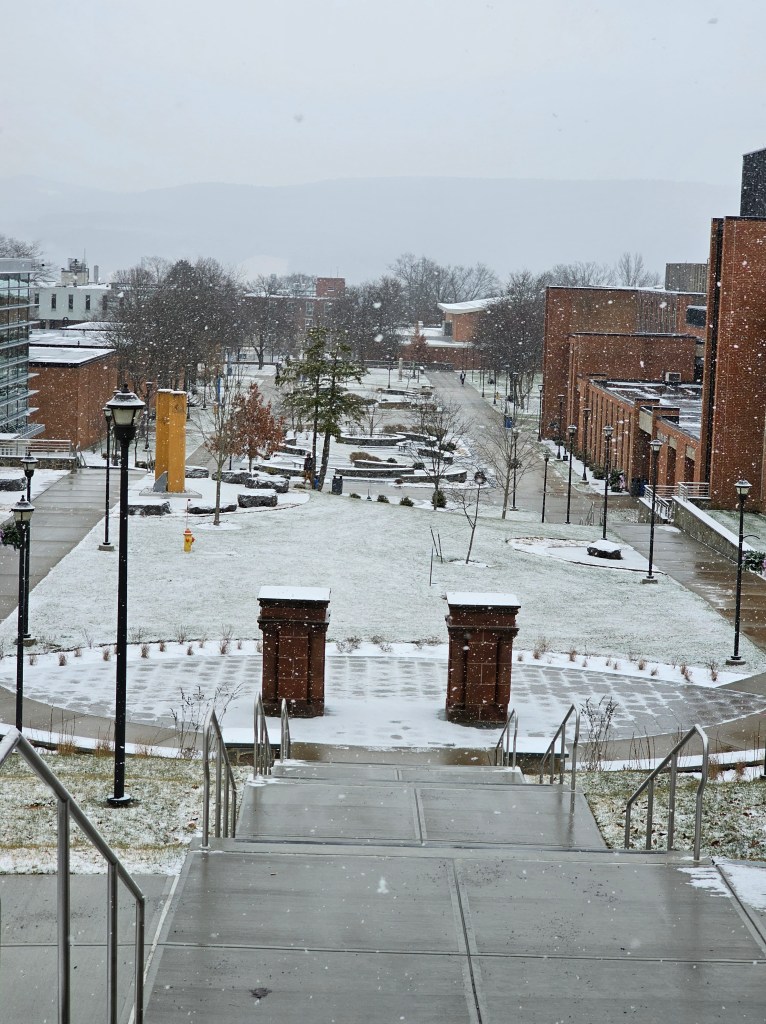
The Campus Quad with the pillars from Old Main in the foreground.
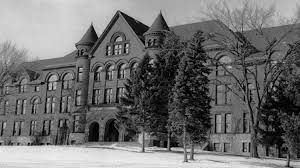
The pillars from Old Main still held up the front entrance of that grand old Victorian building, the original home of the Oneonta Normal School, from which the university grew. Tragically, a fire in the 1970s caused damage too severe to save the structure, but the pillars were brought here. There is now a tradition of students passing through the pillars as they begin and end their studies. See an old photo of the grand old building below.
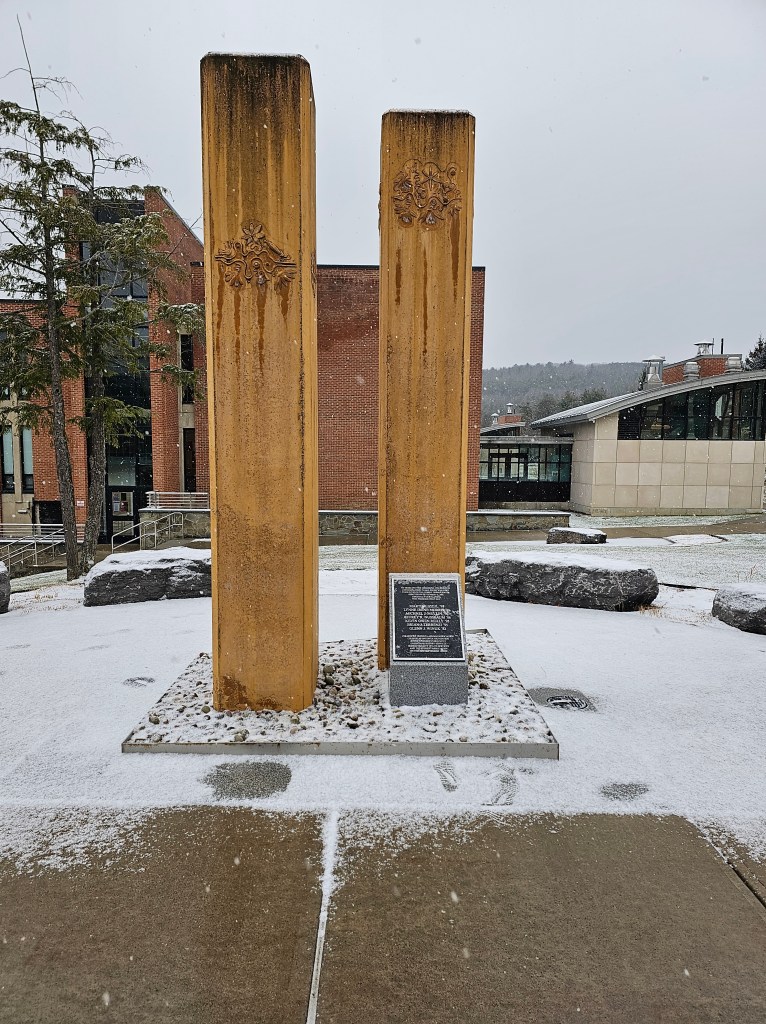
Another monumental reminder on the quad is the one in the picture below, honoring SUNY Oneonta graduates lost in the terrorist attacks on the World Trade Center on September 11, 2001.
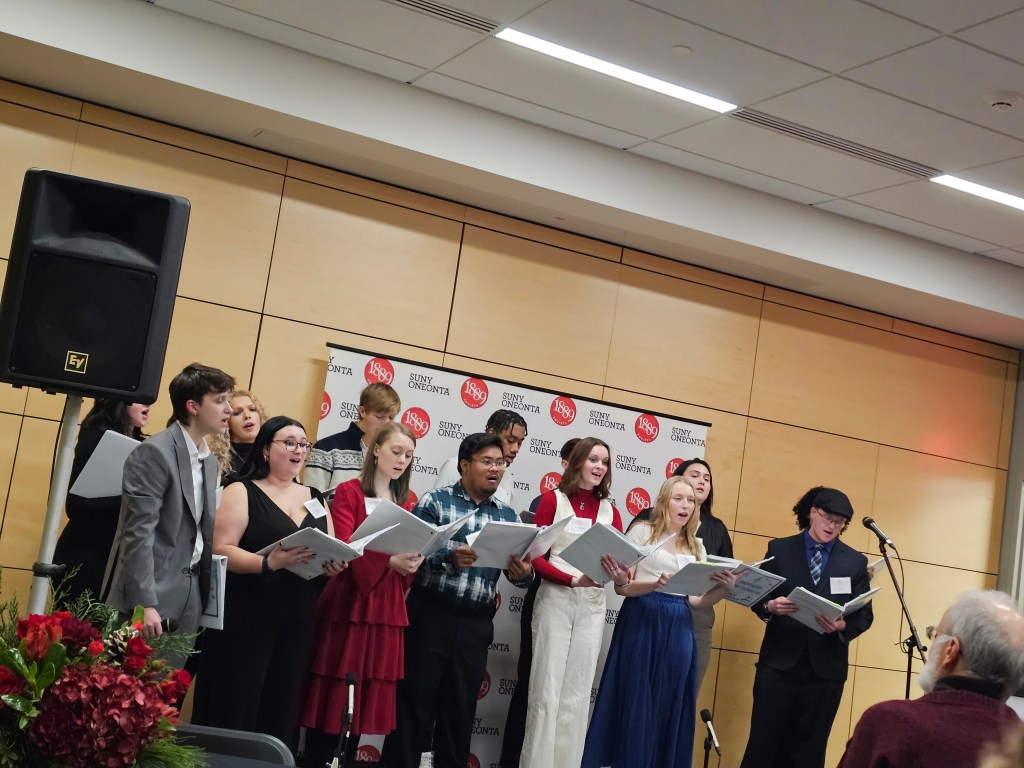
The above two photos are just two reminders of the passage of time since the happy years I spent on this wonderful campus. But perhaps the happiest and most important memory I took away from this visit was the 1889 Society’s Holiday Reception in the lovely Welcome Center on campus. This event is a chance to mingle with faculty, staff, students and other alumni who are members of the society, and we get entertained by students, including the university’s A Capella group “Hooked on Tonics.”
Hooked on Tonics
The incredible Gerry Raymonda took photos at the event. I suspect they will be available on SUNY Oneonta social media.
Over Too Soon
Another uneventful drive back to Albany on Friday morning. I said farewell to the Empire State.























 Mark In London