Fulham Football Club
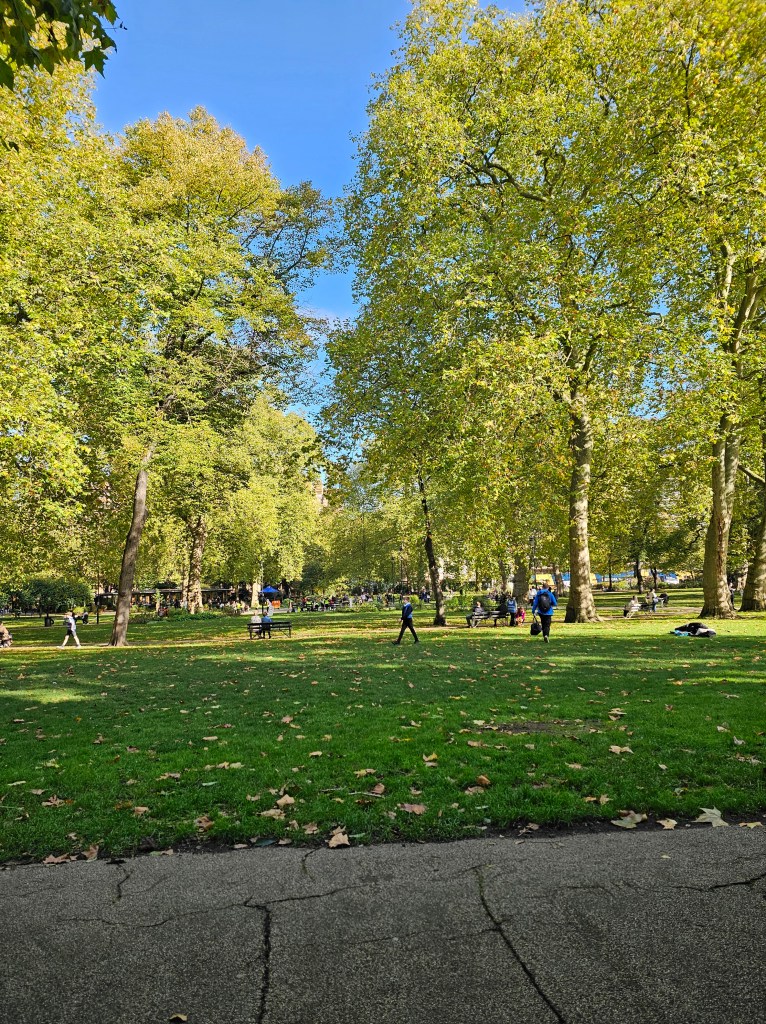
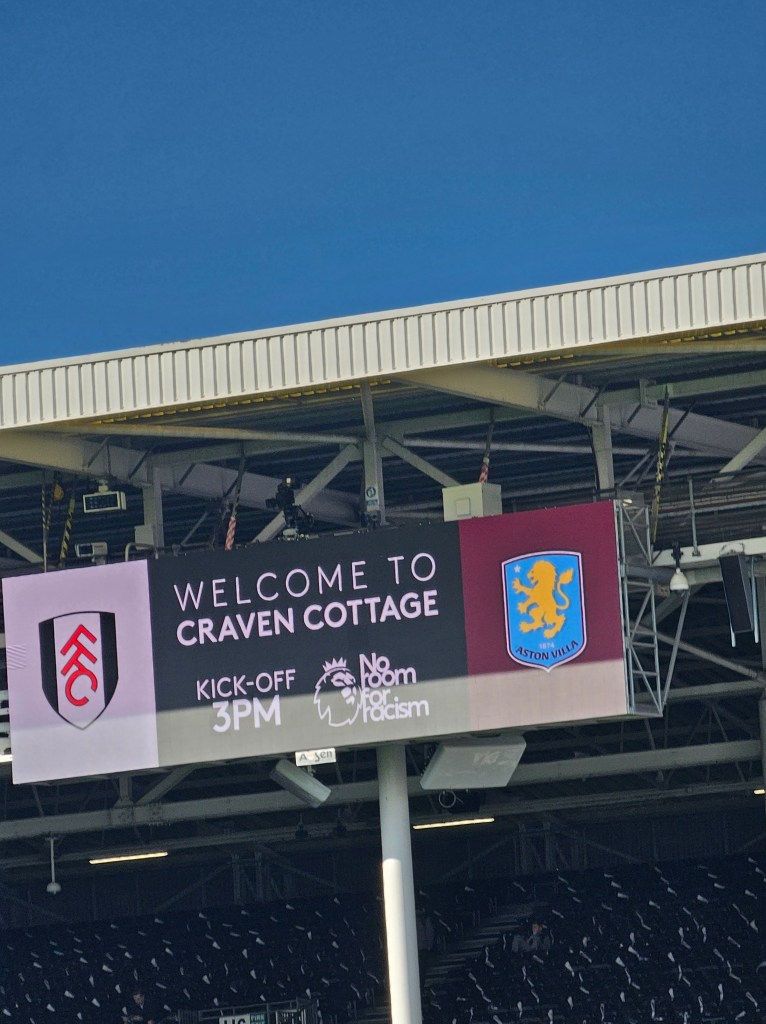
Not to linger on the negatives, but my final visit to Craven College was to see Fulham lose 3-1 to Aston Villa. It was a beautiful day for the beautiful game and, as always, even a loss at Craven College is a good day of football.
I should note, while focusing on Fulham FC, that I had my annual lunch with Dave Daly, fellow Oneonta Alumnus and the man responsible for making me a Fulham fan. Dave told me all about his trip back to “the mother ship,” (SUNY Oneonta) for a reunion of the school’s soccer players from the Golden Era of Division I play under the late great Coach Garth Stam.
Wigging Out at Wigmore Hall for the Last Time This Season
Another magical Sunday morning at Wigmore Hall saw the Doric String Quartet mesmerize a full house with its renditions of Haydn’s String Quartet in B Flat Opus 64 No. 3 and Beethoven’s String Quartet No. 15 in A minor Opus 132. Once again, my only disappointment was that none of Haydn’s work were titled the “Haydn Go Seek Opus.” I blame this on all the black and while cartoons and Three Stooges shorts that I watched as a child that added silly titles like that when classical music was used in the features.
More seriously, the Doric played phenomenally well. The Beethoven piece, one from near the end of his life when he was profoundly deaf and writing works with only the memory of the sounds was particularly touching to me, as I slowly march onward in my life’s journey with the final destination closer than the beginnings.
I can also happily report that unlike last year, at this time, no mobile phones were stolen on my way to Wigmore Hall.
Indian Art at the Barbican Centre (My first time at a major exhibit of Indian Art)
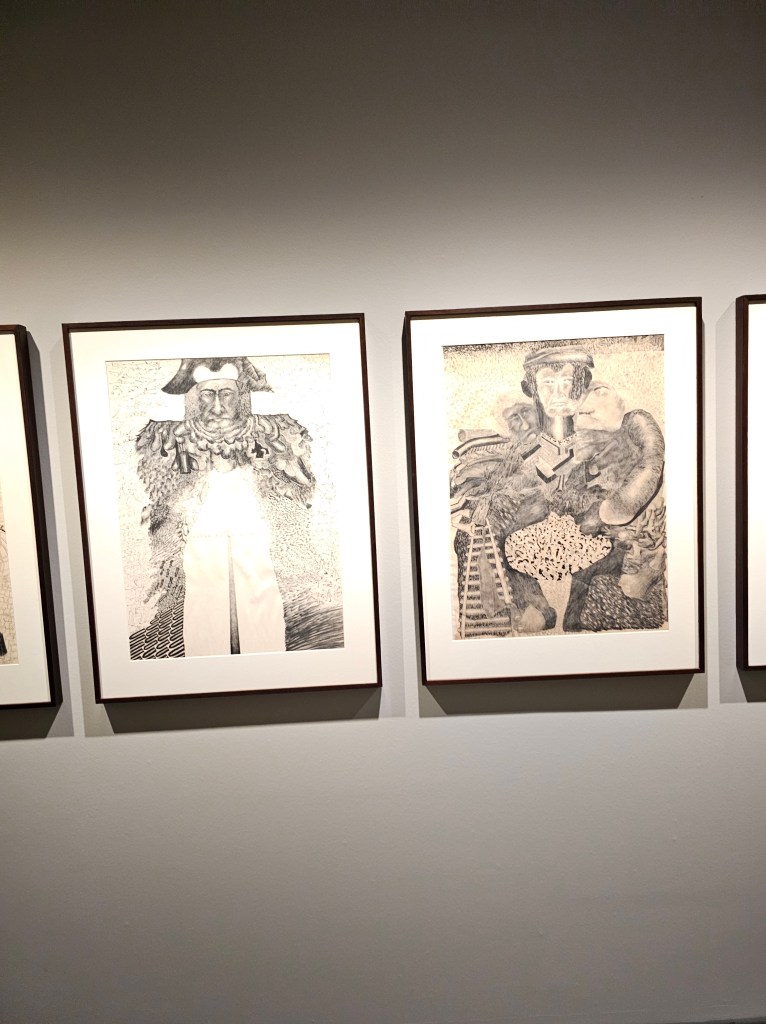
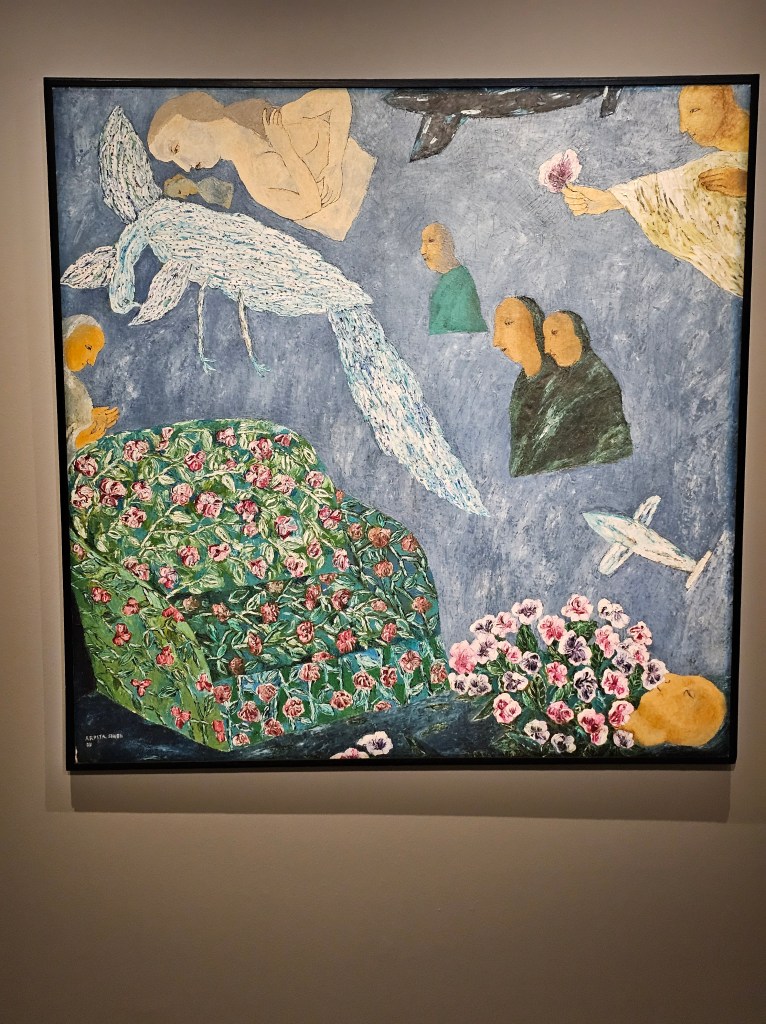
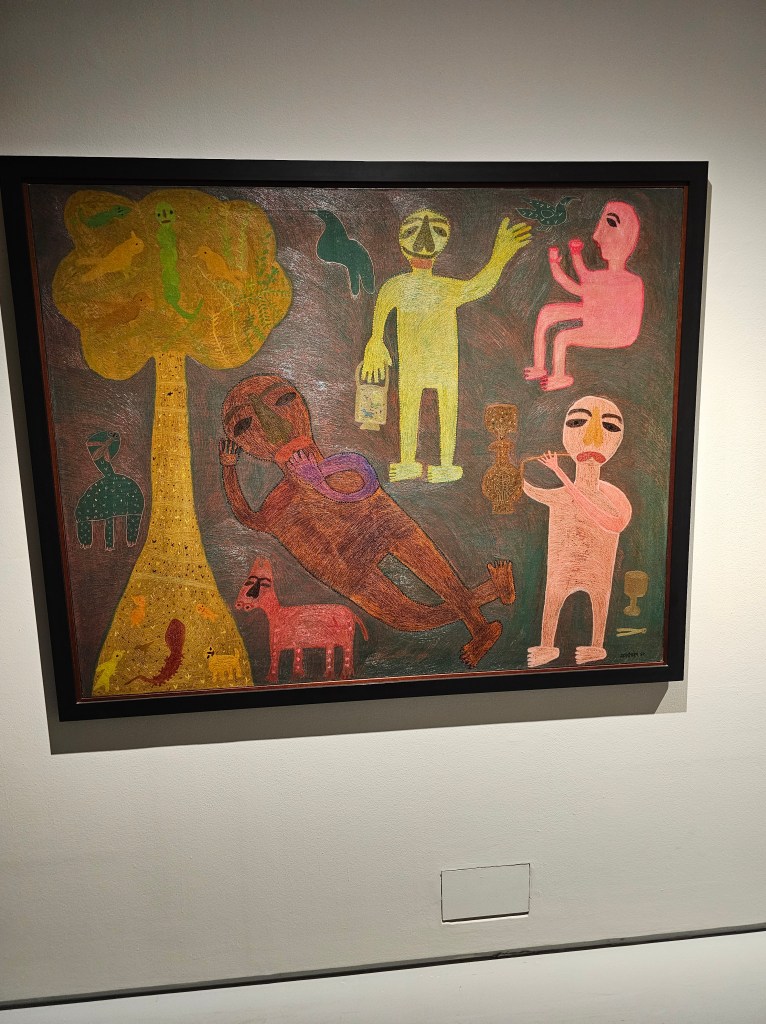
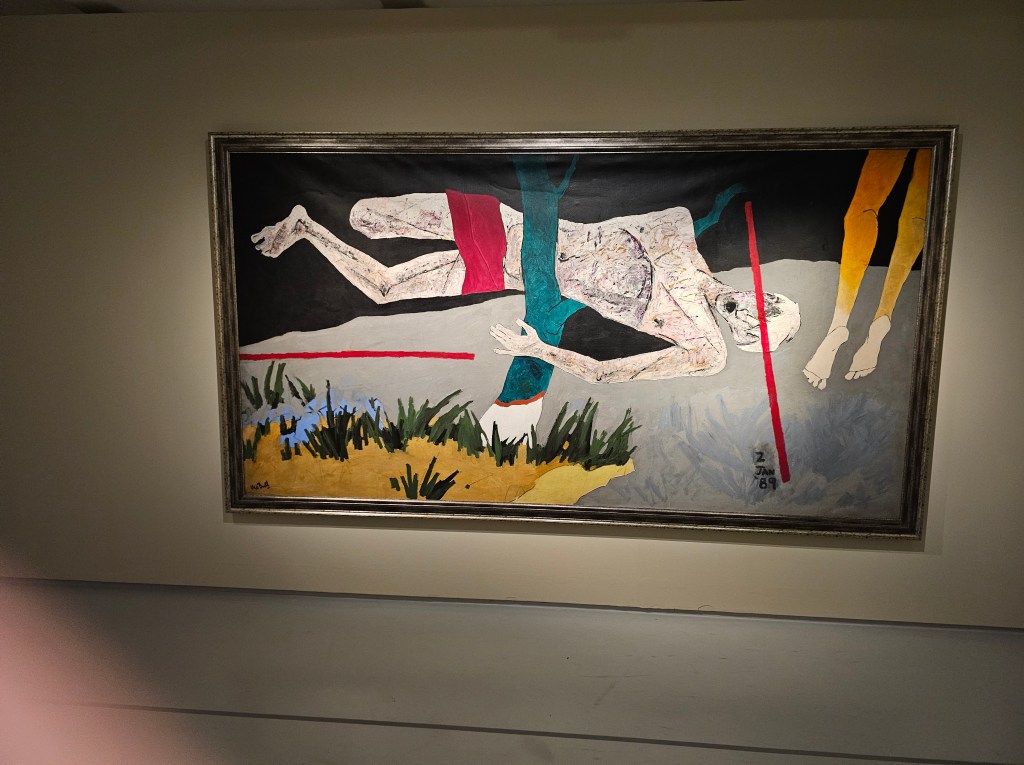
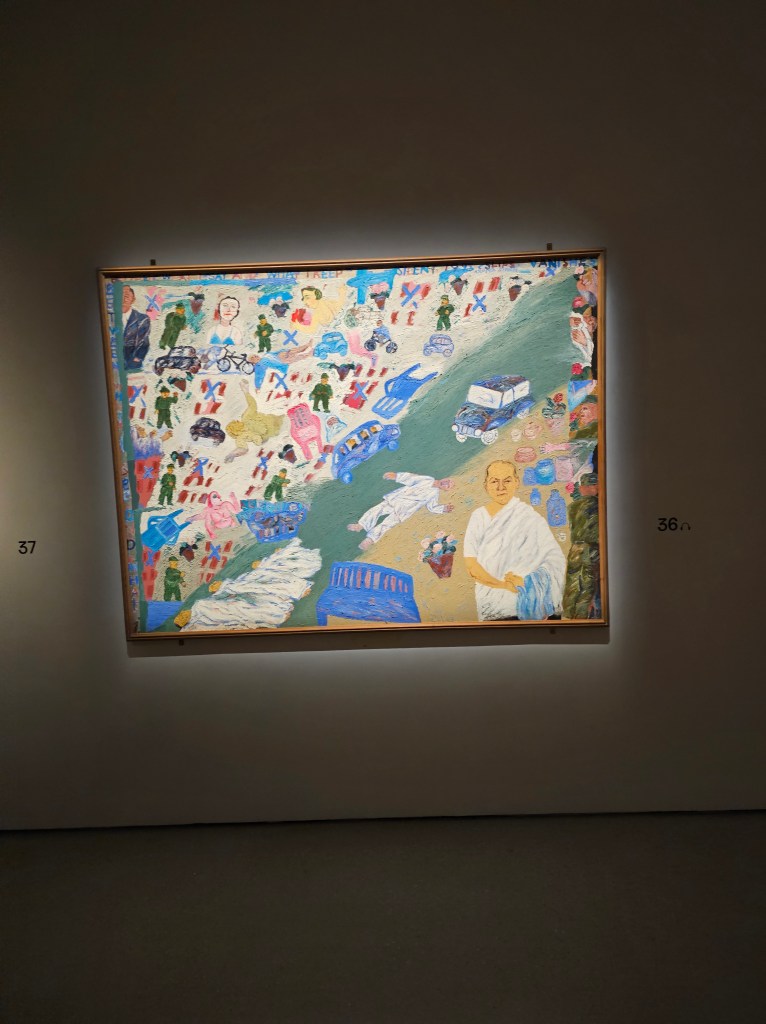
My friends Nigel and Gwynne made the trek in from Gillingham, Kent to join me for a visit to “The Imaginary Institution of India 1975-1998.” The exhibit covers the creation of art across the vast nation of India in a period of political and social unrest and upheaval that began with the Declaration of Emergency in 1975 which suspended democratic rights through the period of nuclear testing in the late 1990s.
Looking at some of the pieces from the period of the Emergency, I could feel (as well as see) the darkness the artists felt.
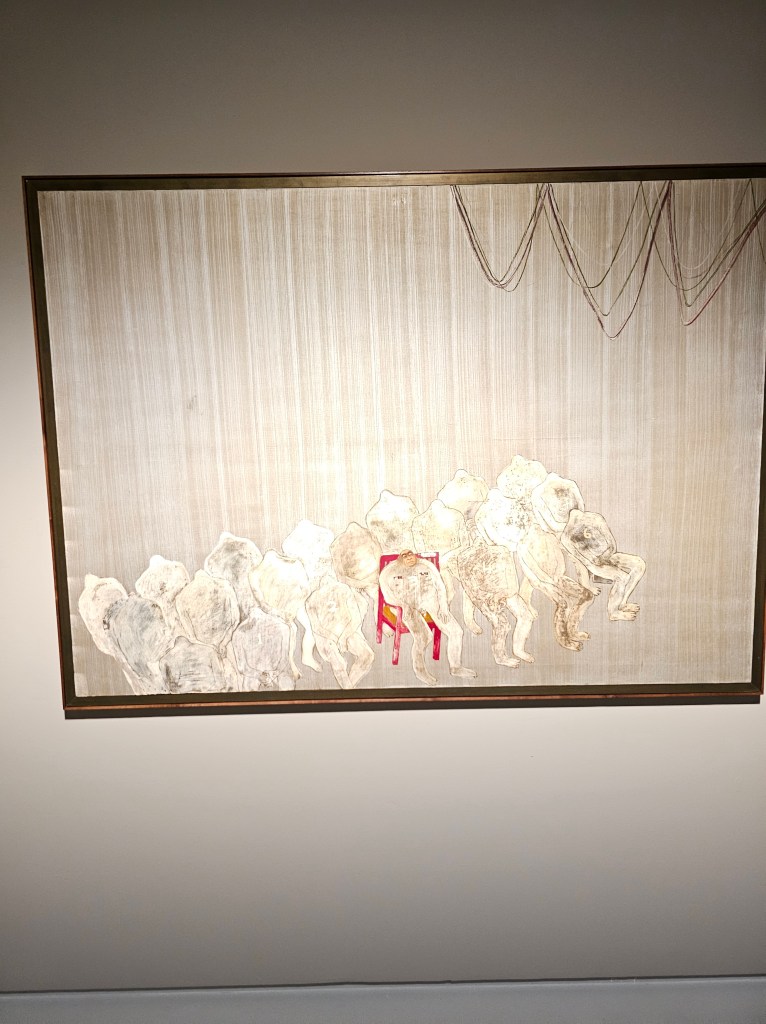
However, as the exhibit continues, we see more color return to the works, some of which deal with the daily struggle for existence and some of which explore traditional Indian cultures and colors, bringing joy among the struggles. There is also some political art. See, for instance, the painting below representing a murdered activist.
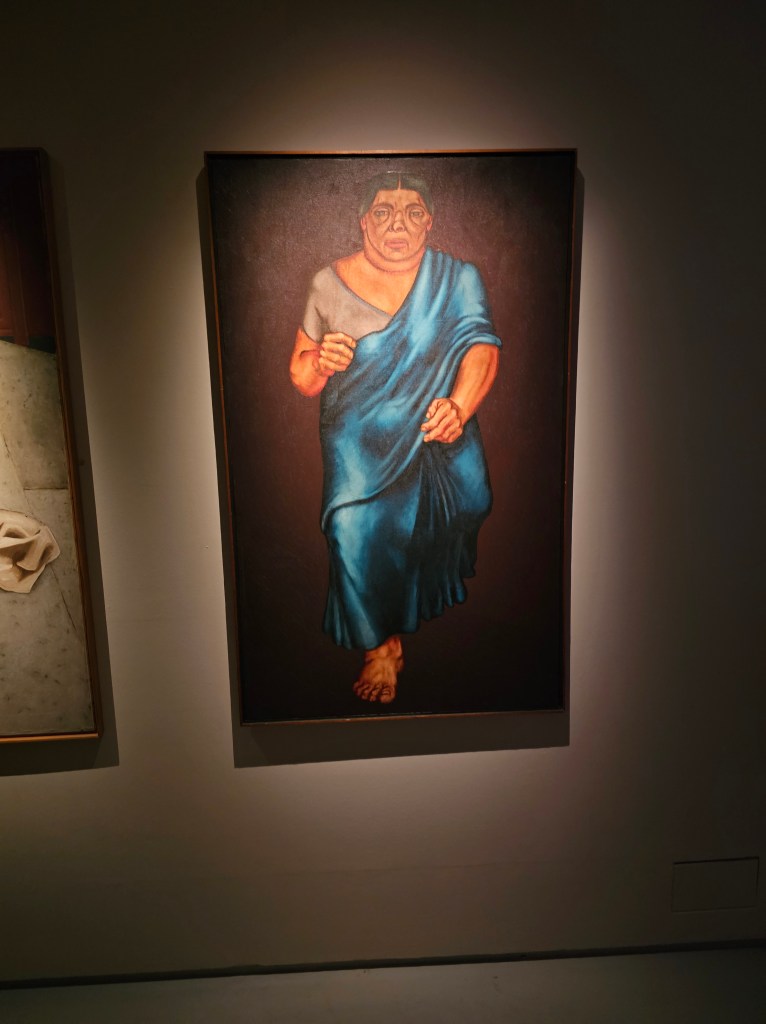
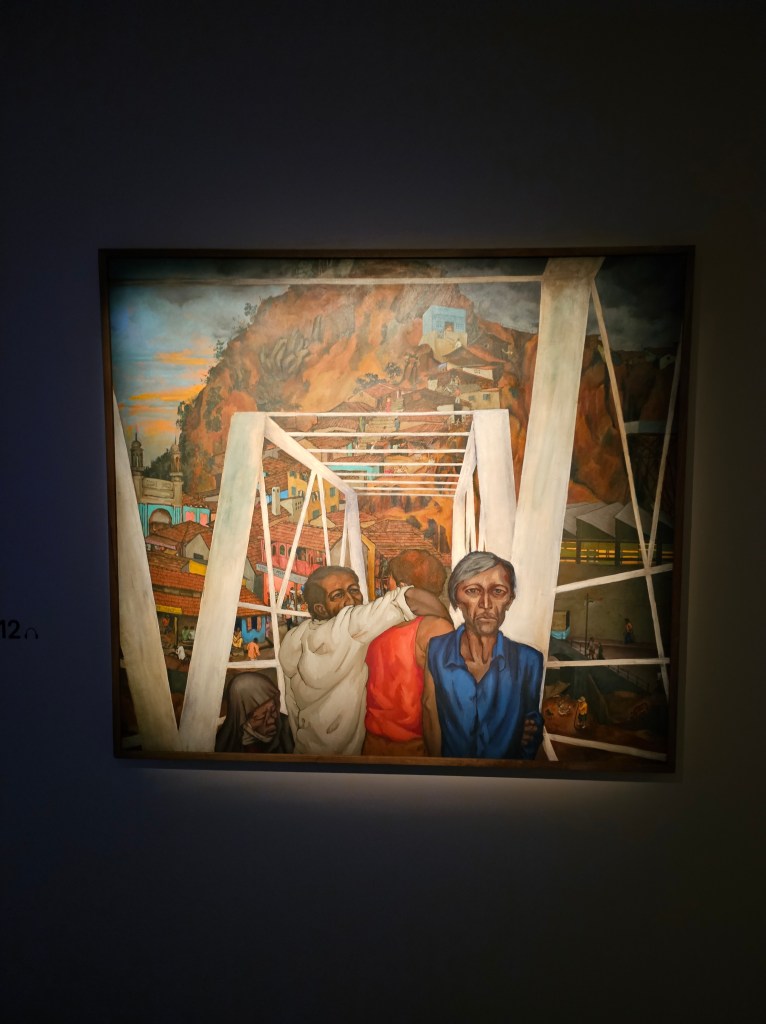
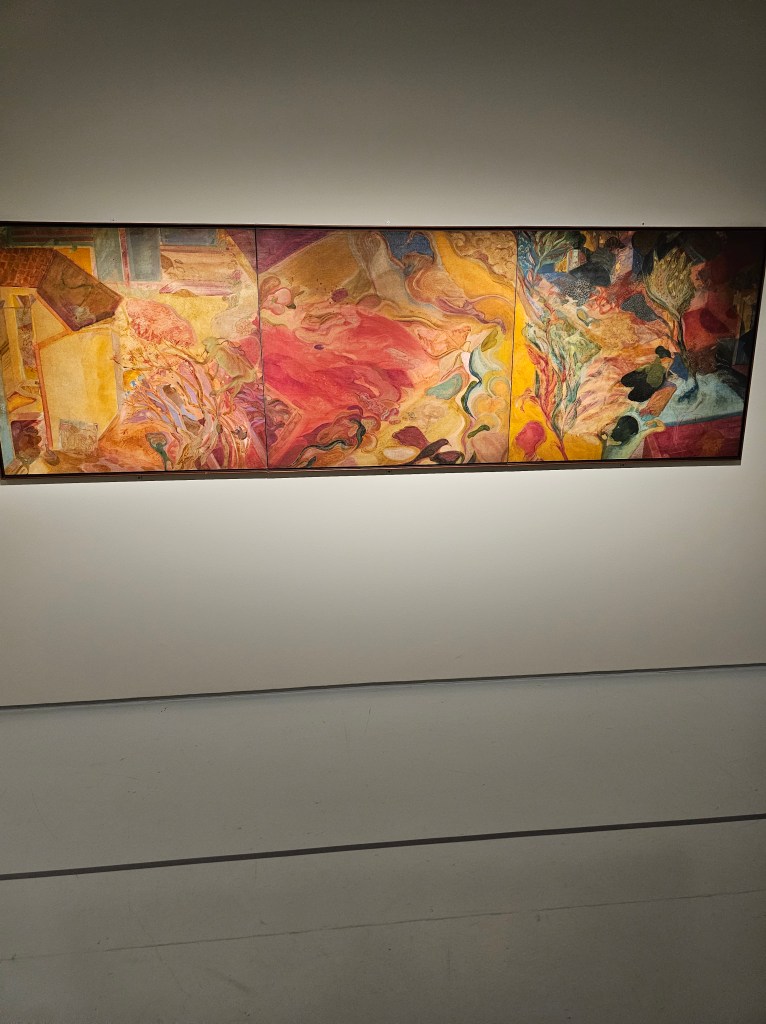
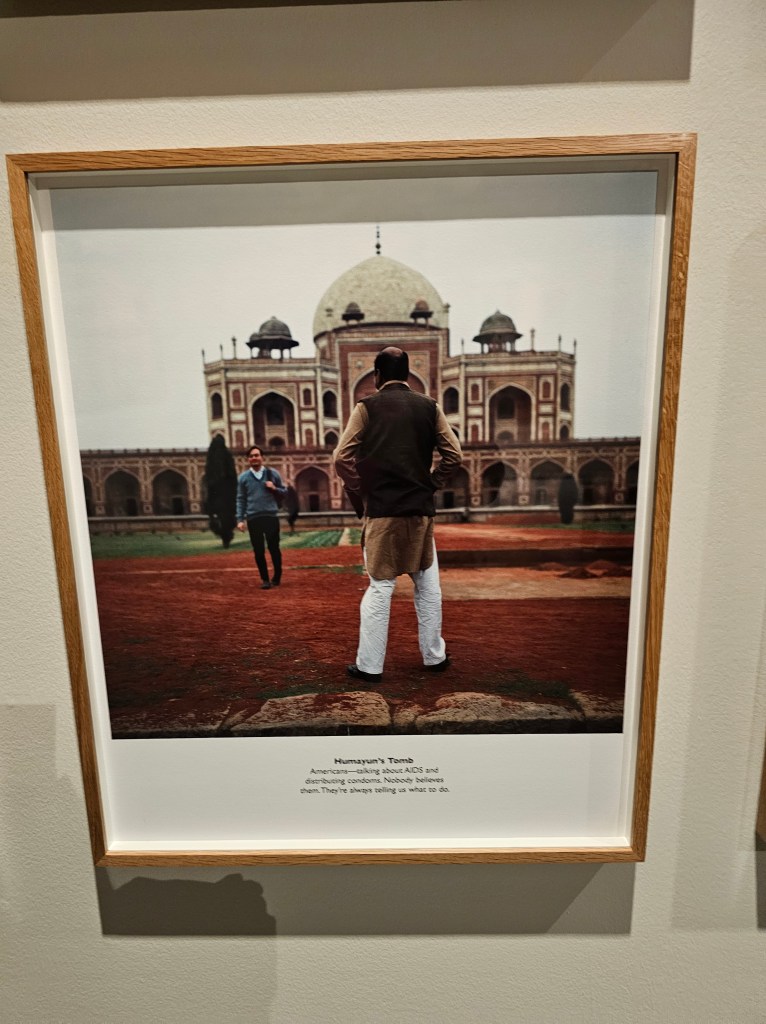

The exhibition also included sculpture.
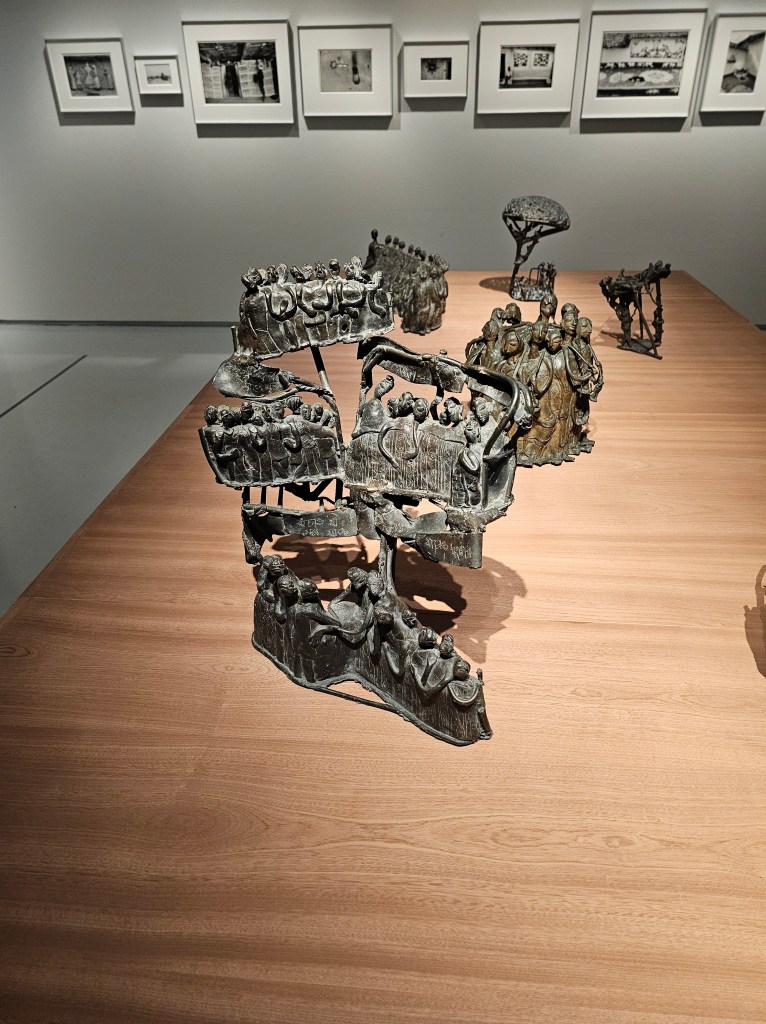
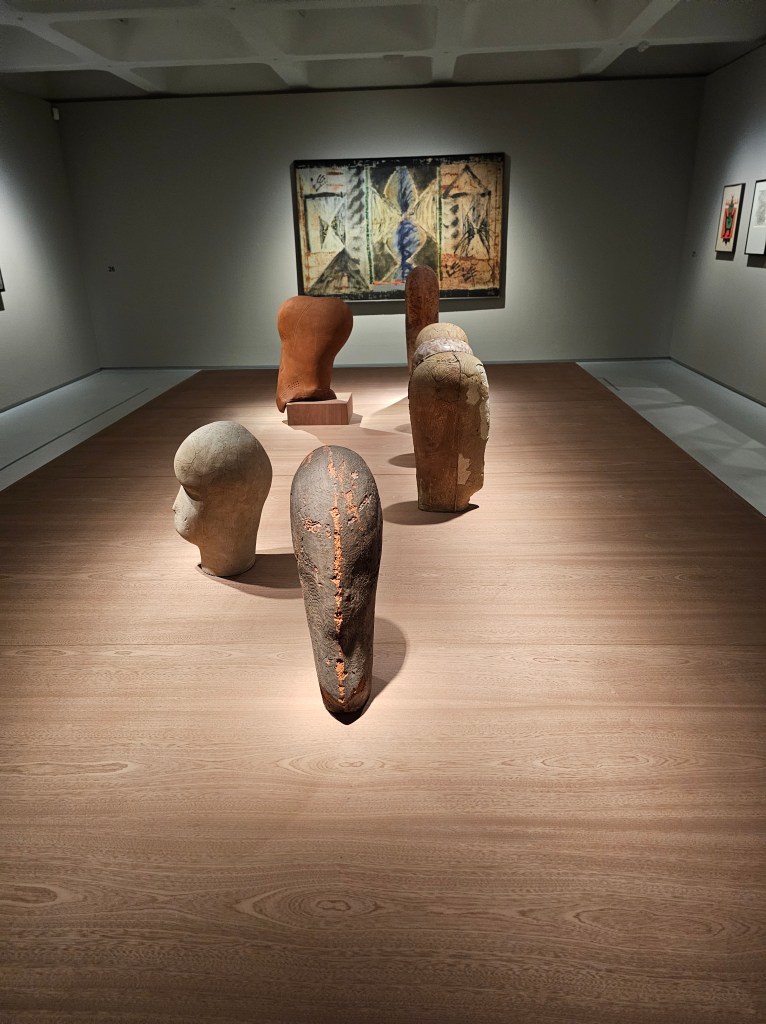

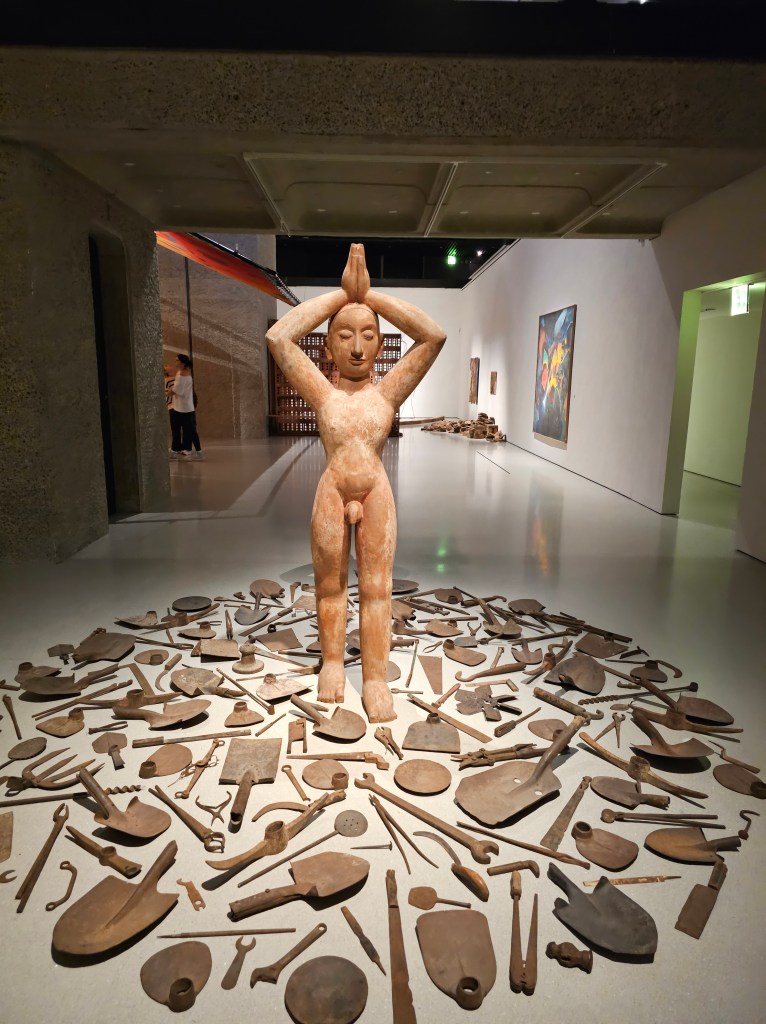
These panels (or kanats) describe “the journeys taken by women for devotion, love, and celebration in the face of hardship.” (below).
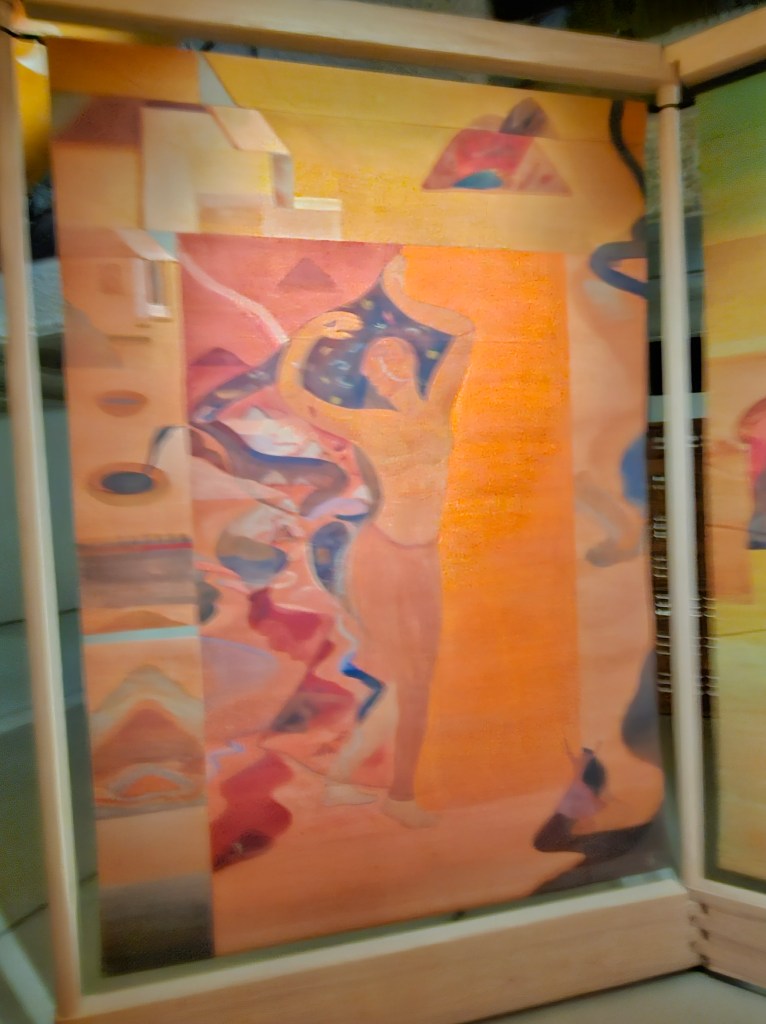
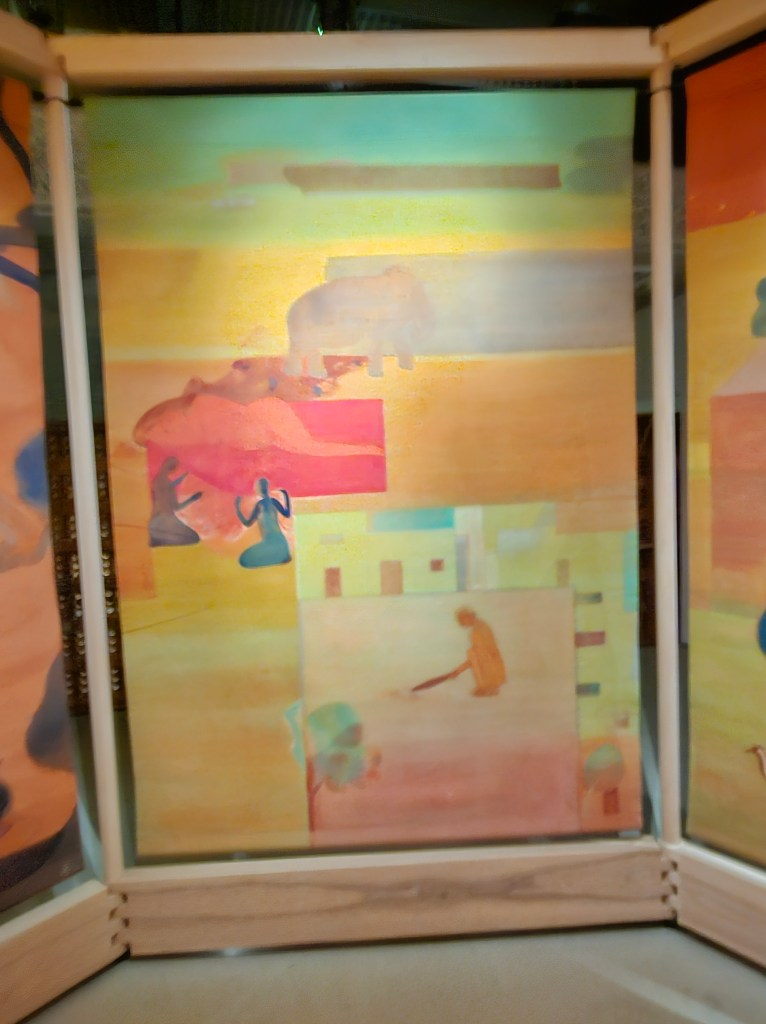
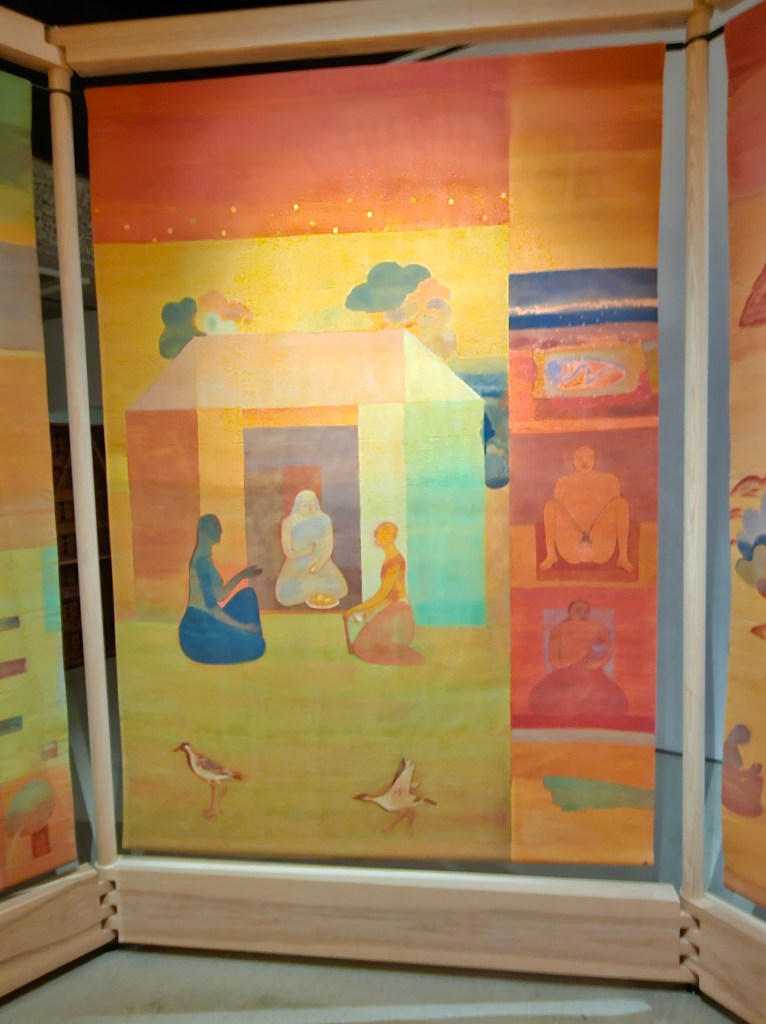
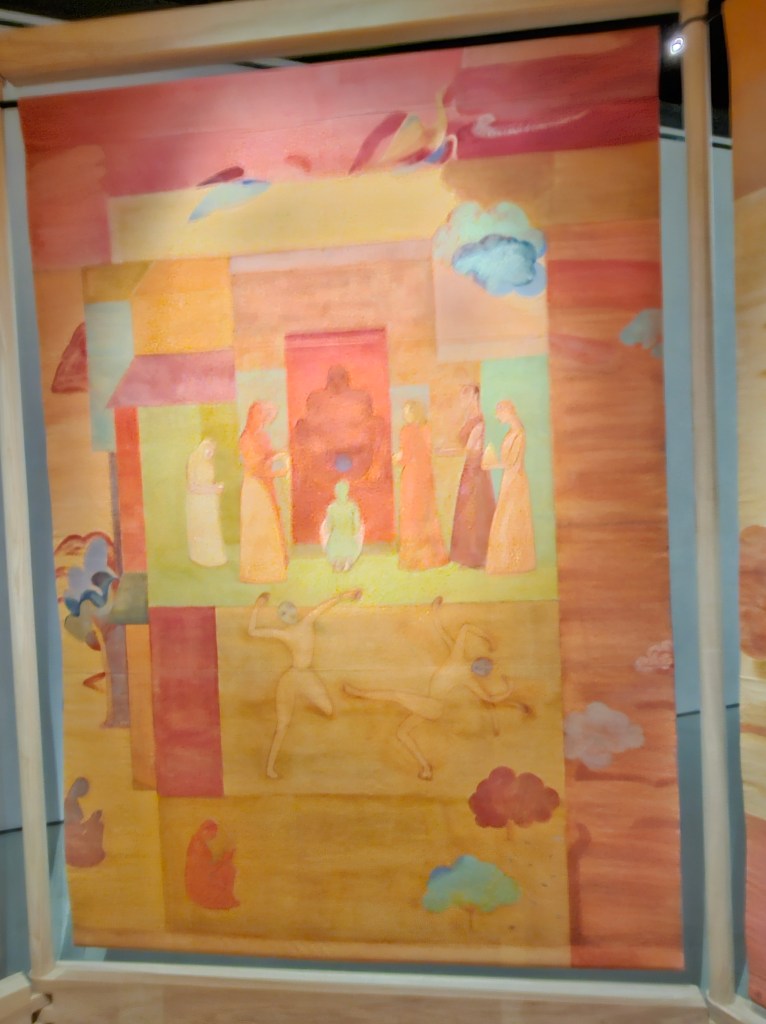
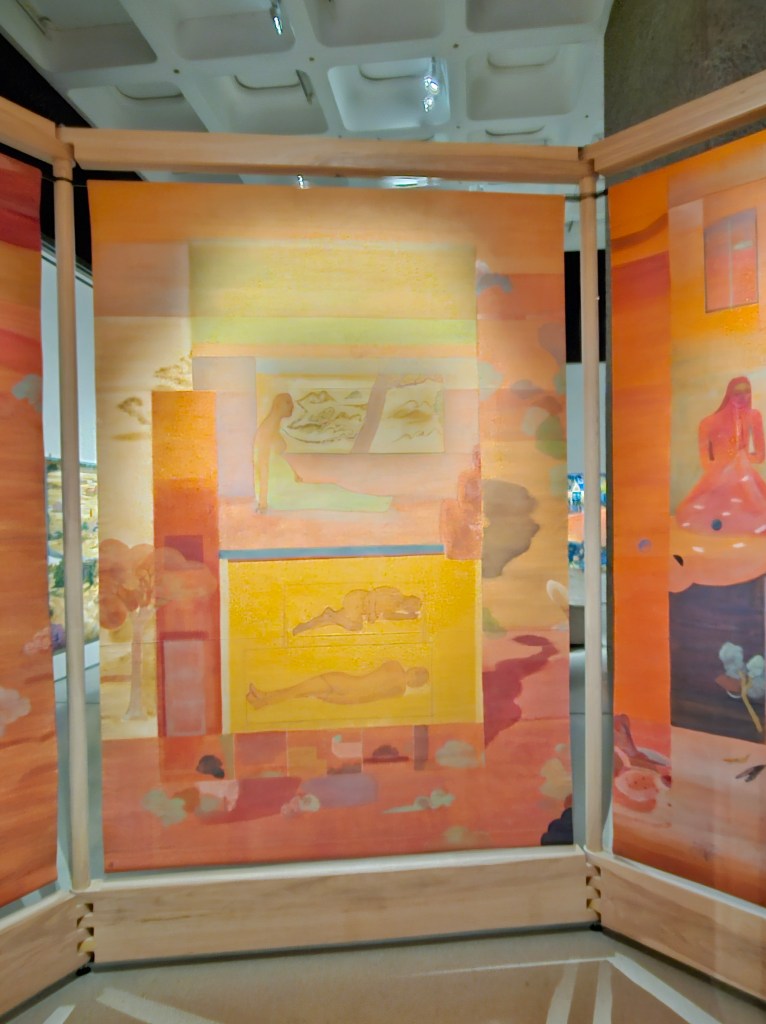
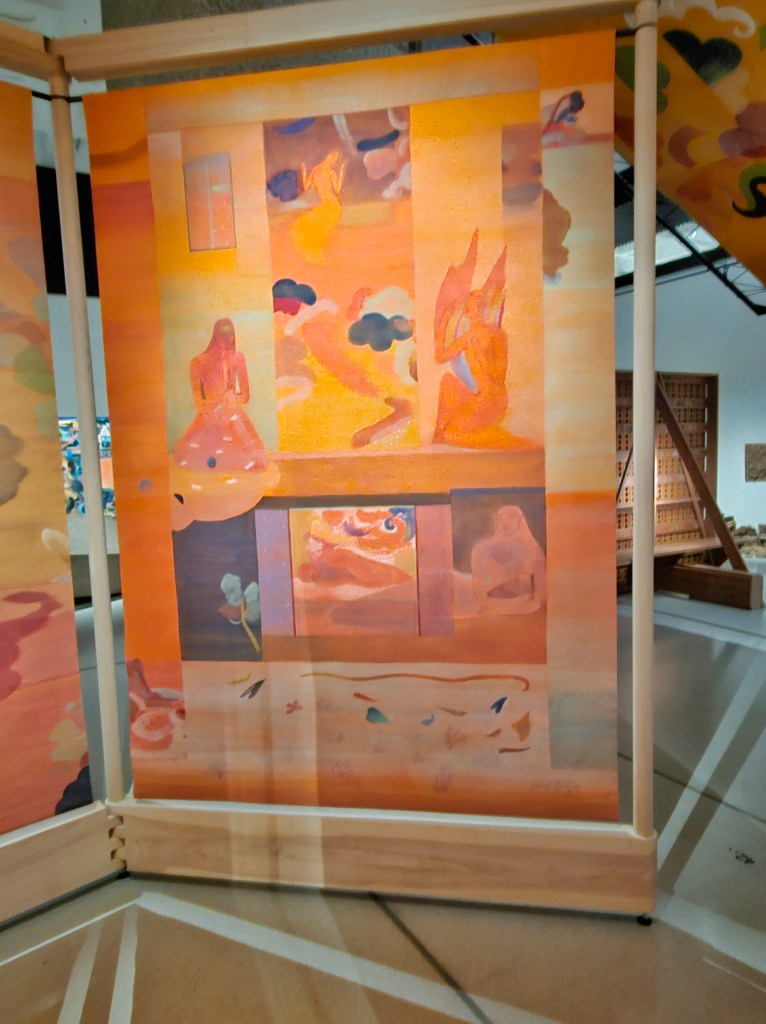
The exhibit was exhaustive, exhausting and intense. One is left with a sense of awe at all the creative talent and the incredible expressions of the human spirit that are shown in the art from this huge country’s artistic sector. Nigel, who was born in India and arrived in the UK with his family at around 5 years old, Gwynne a London born east ender, and I all experienced the exhibition in different ways and were left with different impressions, I am sure, but we all found it to be a profound experience.
A First Day Look at “Medieval Women in Their Own Words” at the British Library

One of the great things about my lodgings in London these last two years has been their proximity to the British Library on Euston Road. Google maps say it is a 5-minute walk. I’ve taken advantage of the programs and workspaces there.
As I entered the large brick square at the front of the library, I took the two photos below.

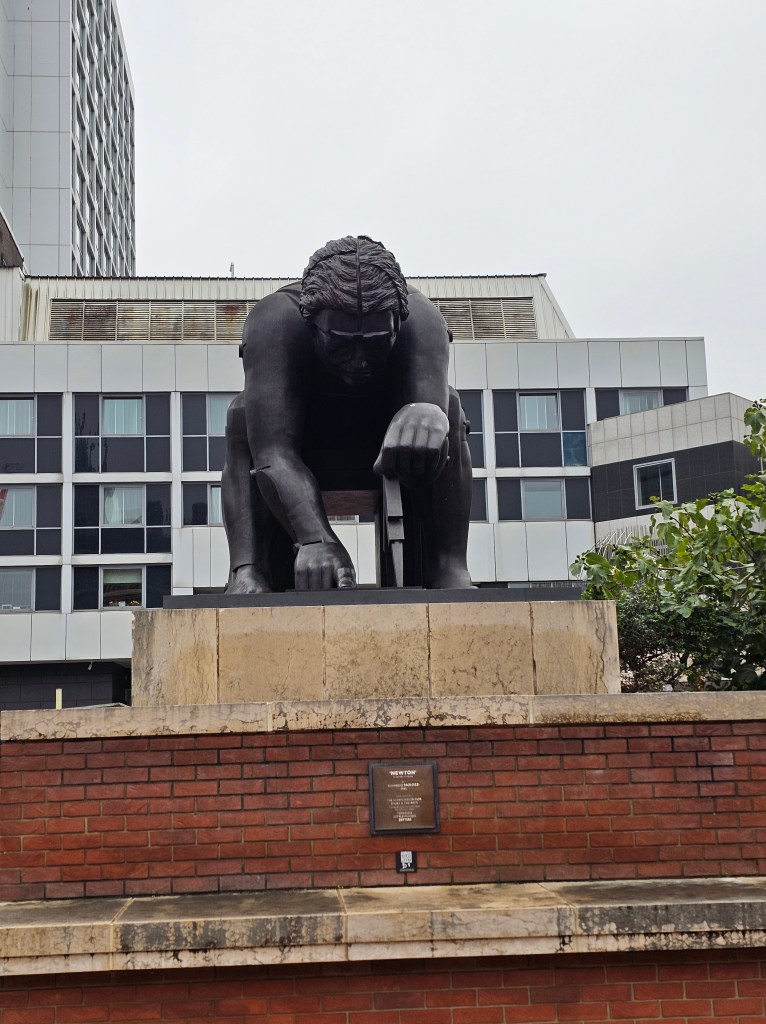
The first shows the Victorian era spires of the Saint Pancras Hotel which sits just across the road from the Library, and is next door to Saint Pancras International Train Station. That is “the Anne Frank tree” with the red leaves below the circular window. The second picture is the sculpture of Newton. The sculpture by Eduardo Paolozzi, according to Wikipedia, “is based on William Blake‘s 1795 print of Newton: Personification of Man Limited by Reason, which depicts a nude Isaac Newton sitting on ledge beside a mossy rock face while measuring with a pair of compasses or dividers. The print was intended by Blake to criticise Newton’s profane knowledge, usurping the sacred knowledge and power of the creator Urizen, with the scientist turning away from nature to focus on his books.”
This exhibition relies strongly on written materials, by or about women of the Medieval era. It reminds us of the real but hidden history of women’s lives and contributions throughout history.
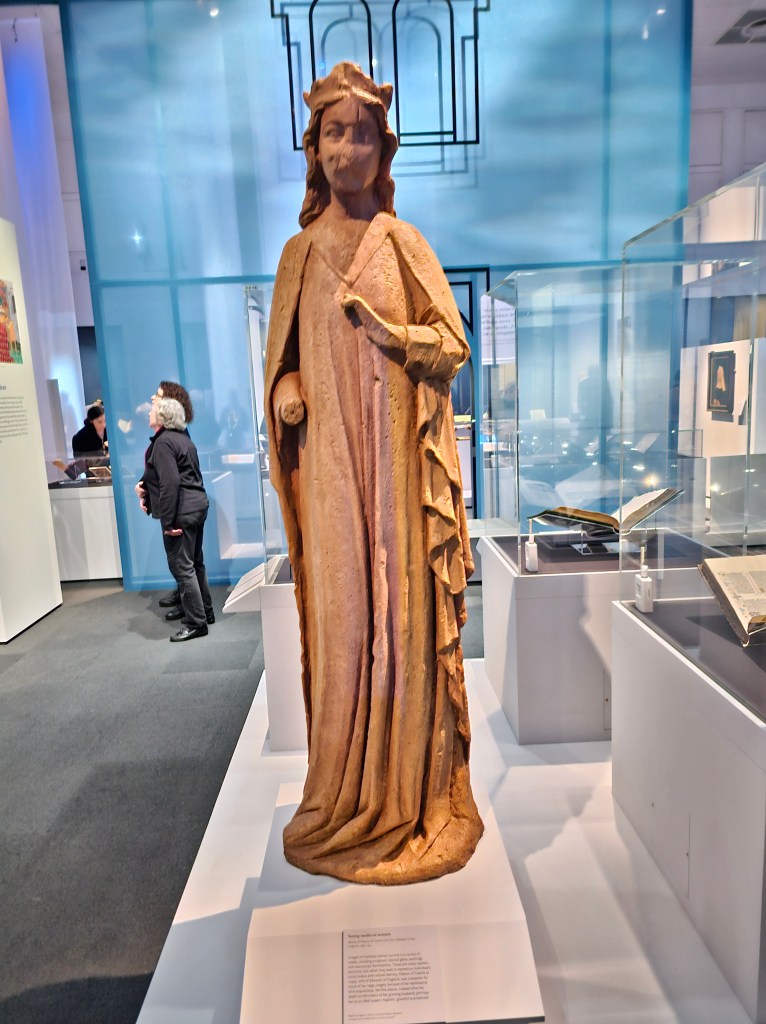
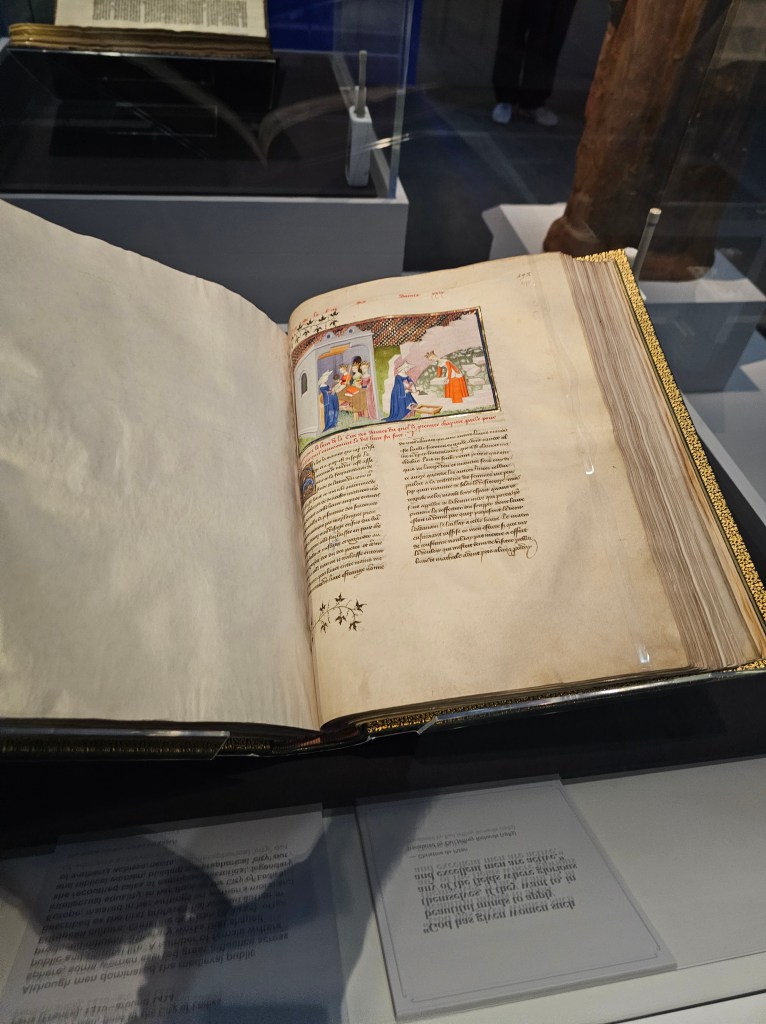
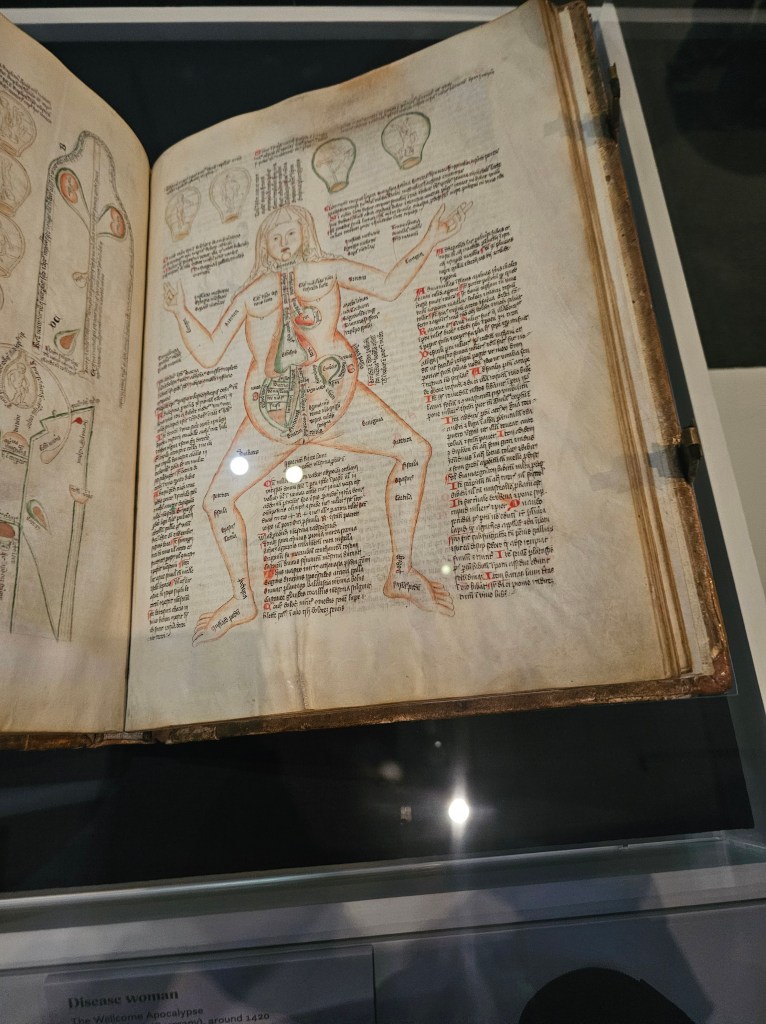
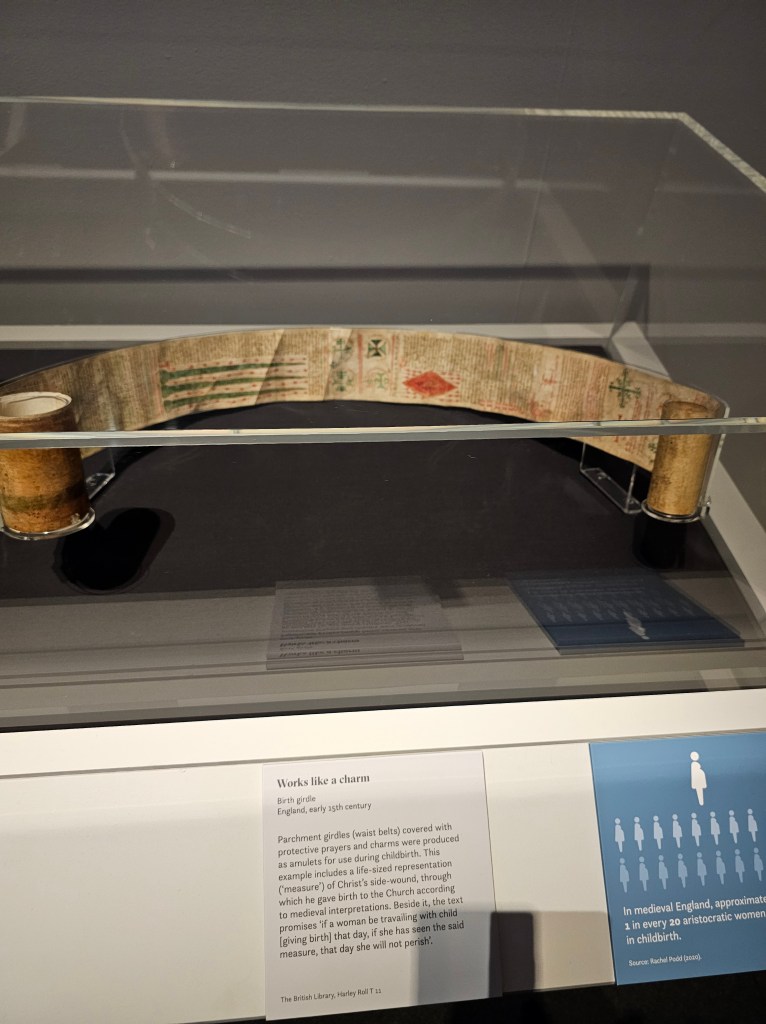
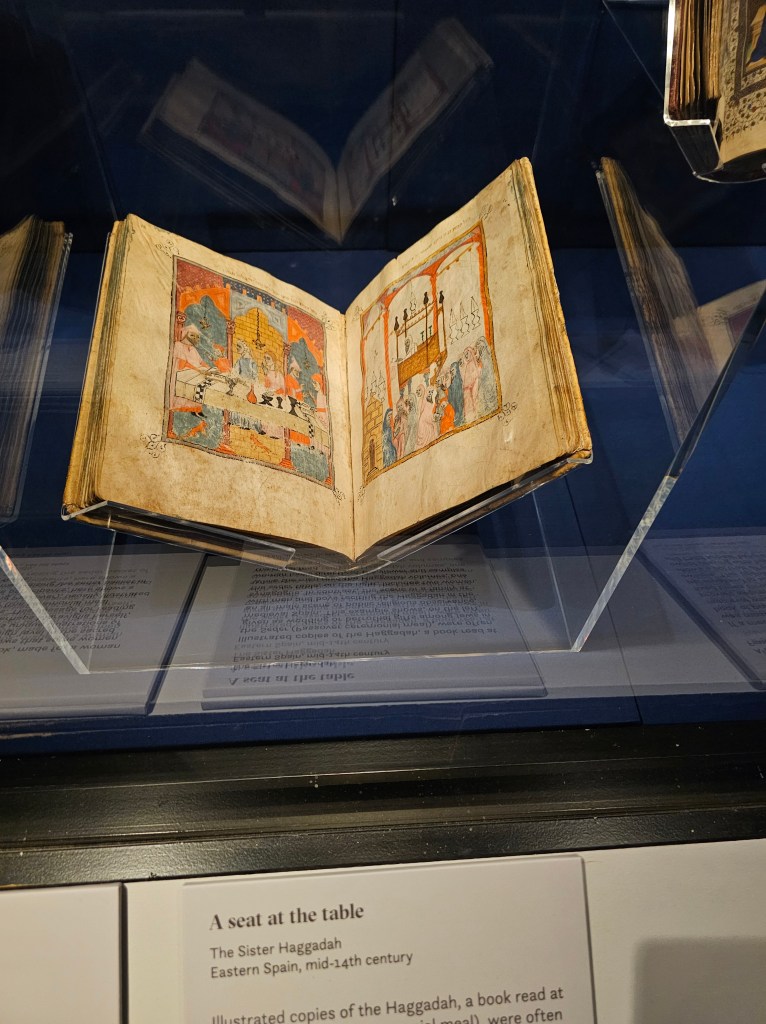
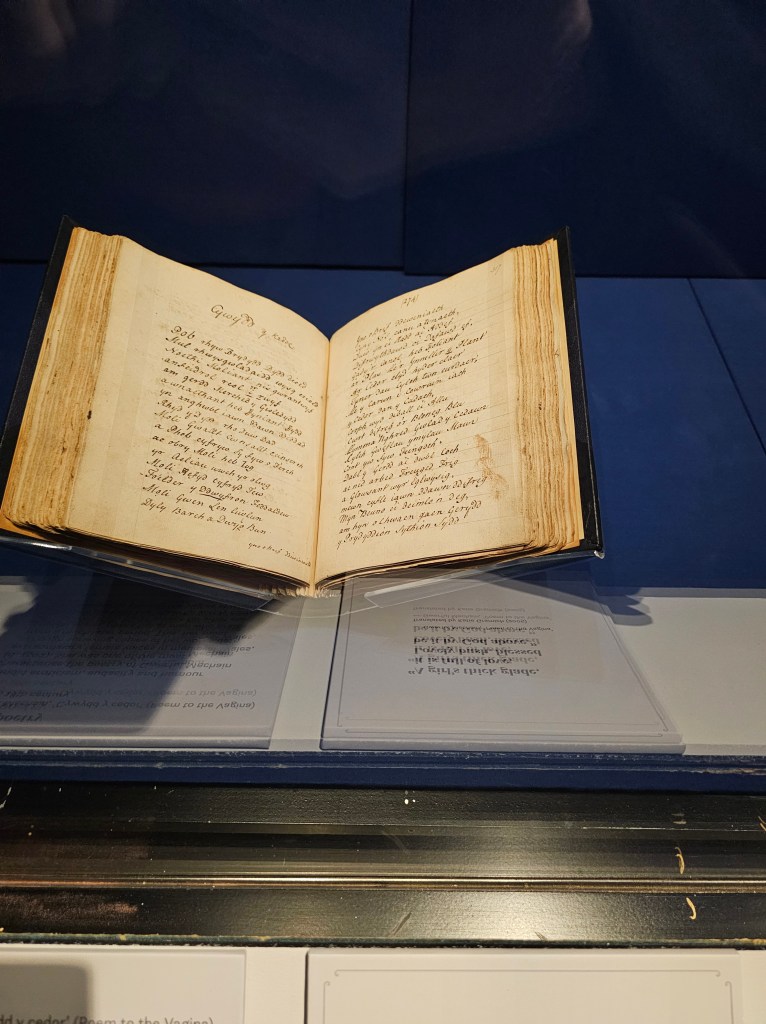
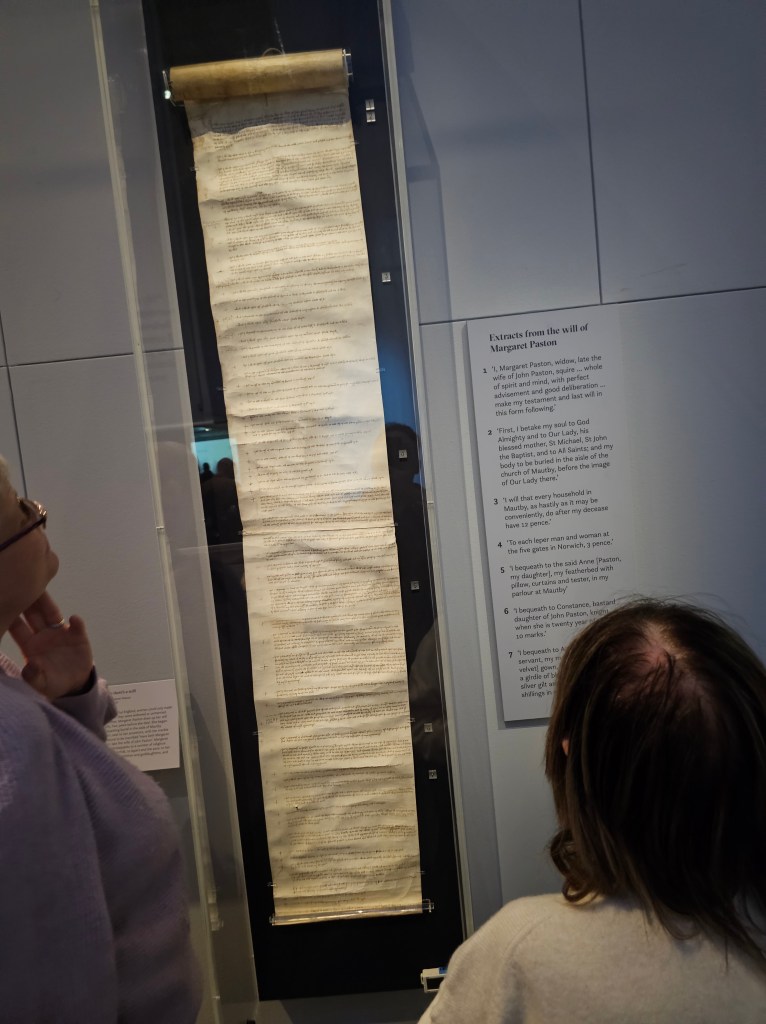
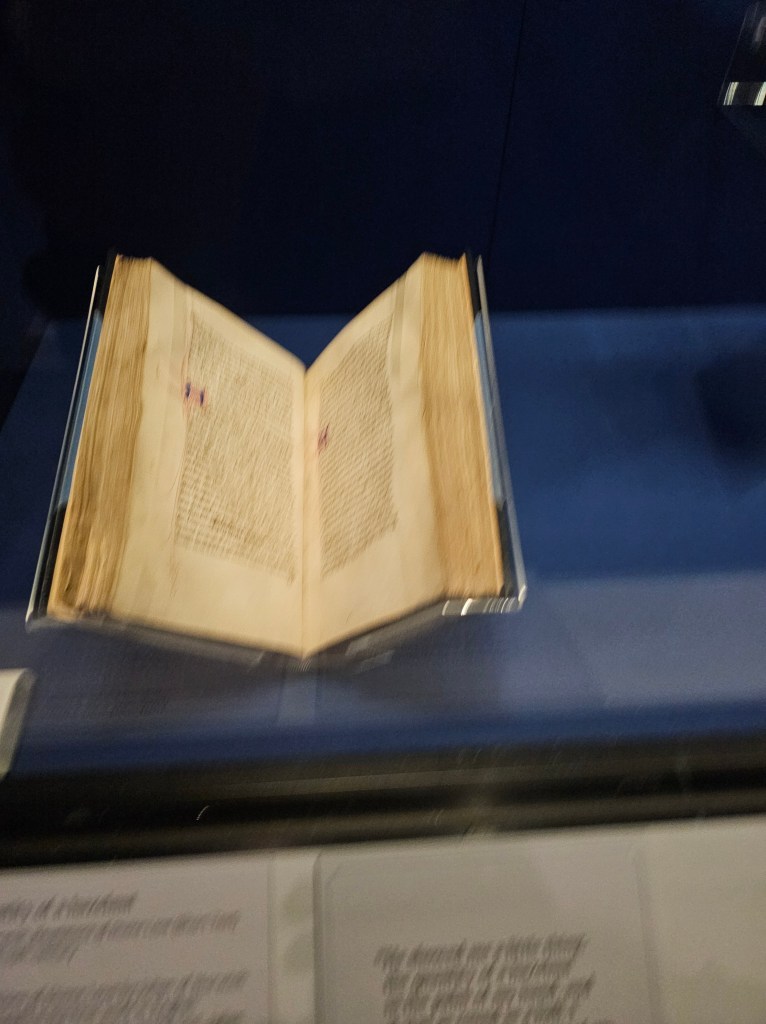
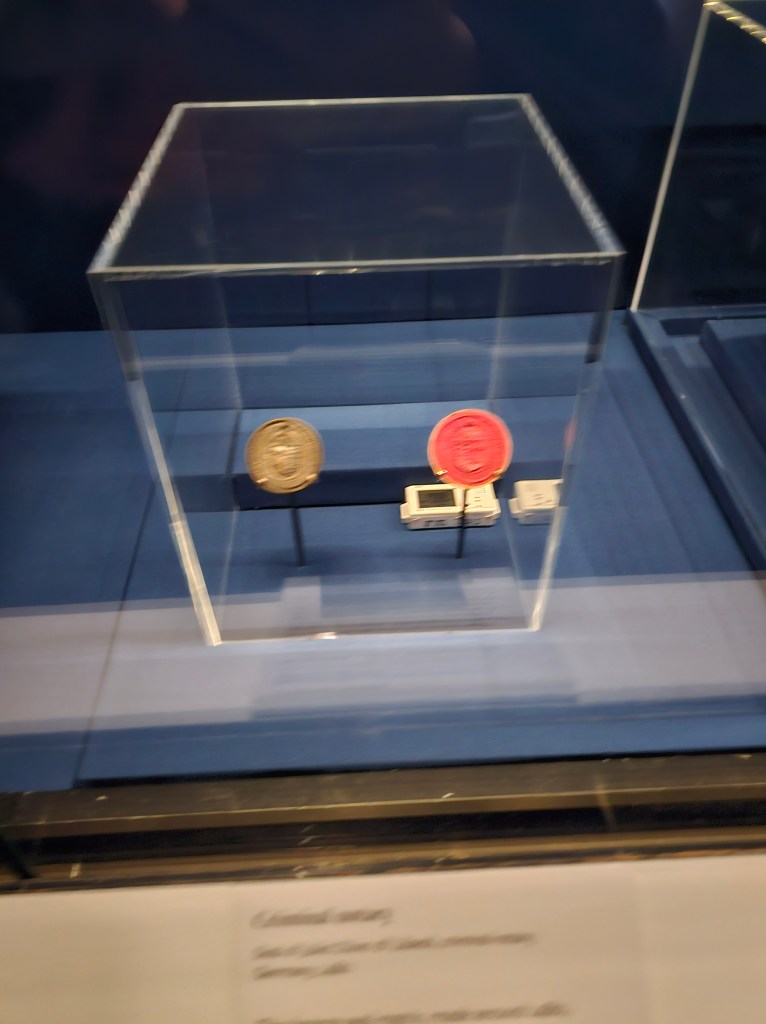
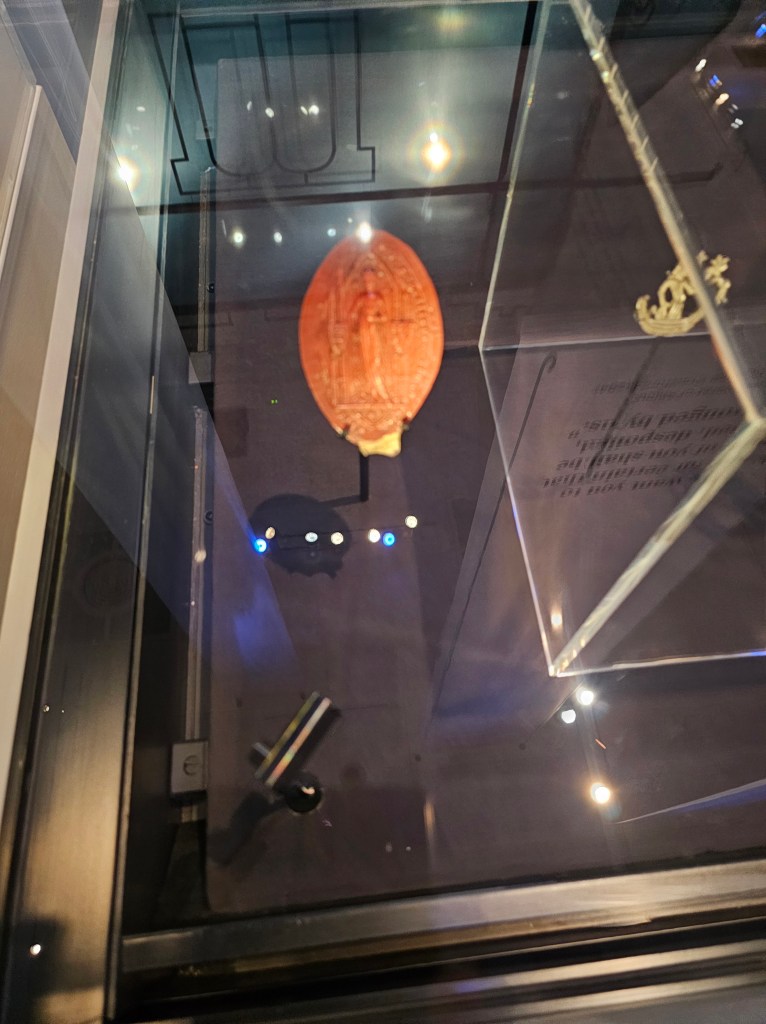
I really enjoyed this exhibit and the story it had to tell as well continue to bring to light women’s history throughout time. If you are living in or near London or visit while the exhibit is one, please go and see it.
 Mark In London