Finally, a chance to visit another Cathedral, and a great way to get there!
The Thames Link

The Thames Link is a relatively new train service that provides service between the town of Bedford, 46 miles North of London) to the seaside resort town of Brighton, 47 miles South of London. But the route the train takes through central London has provided great improvements to getting to places within London, as well. Saint Pancras International Train Station is one of its stops, so I am lucky to have easy access to it.
St. Alban’s Cathedral is located in the eponymous city, 19 miles from London and a quick and pleasant ride on the Thames Link. The city of some 86,000 is in Hertfordshire County. Two friends had separately recommended visiting St. Albans Cathedral, one an American who had lived there for two years and the other a Londoner, my friend Tom, who has recommended many of the churches I have visited.. I knew little about its history or its namesake, Alban, the first Christian martyr in England, recognized as a saint by Catholics, Anglicans and Orthodox Christians. Construction of the Cathedral began in 1077 and was eventually part of an Abbey, until the dissolution during the reign of King Henry VIII.
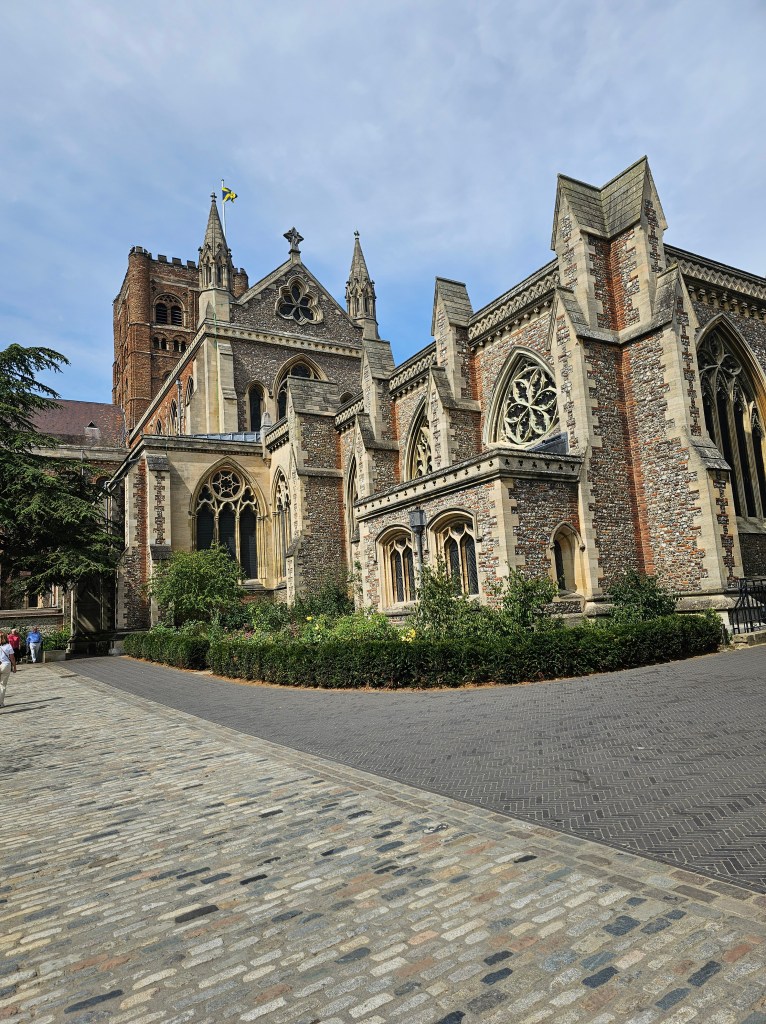
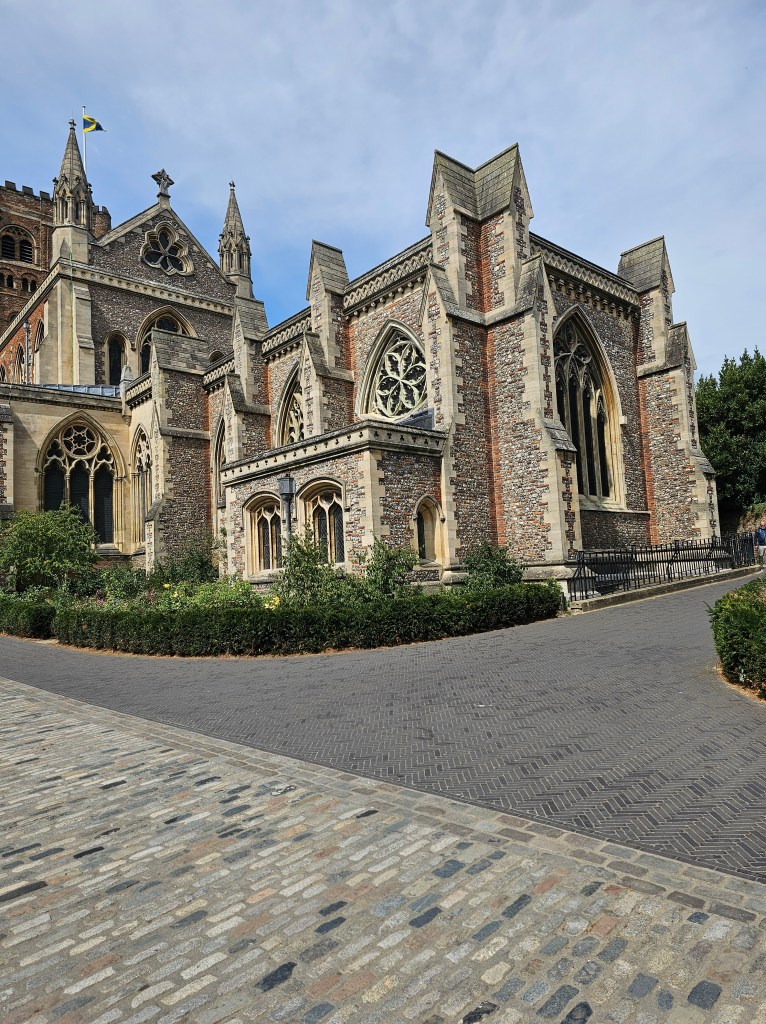
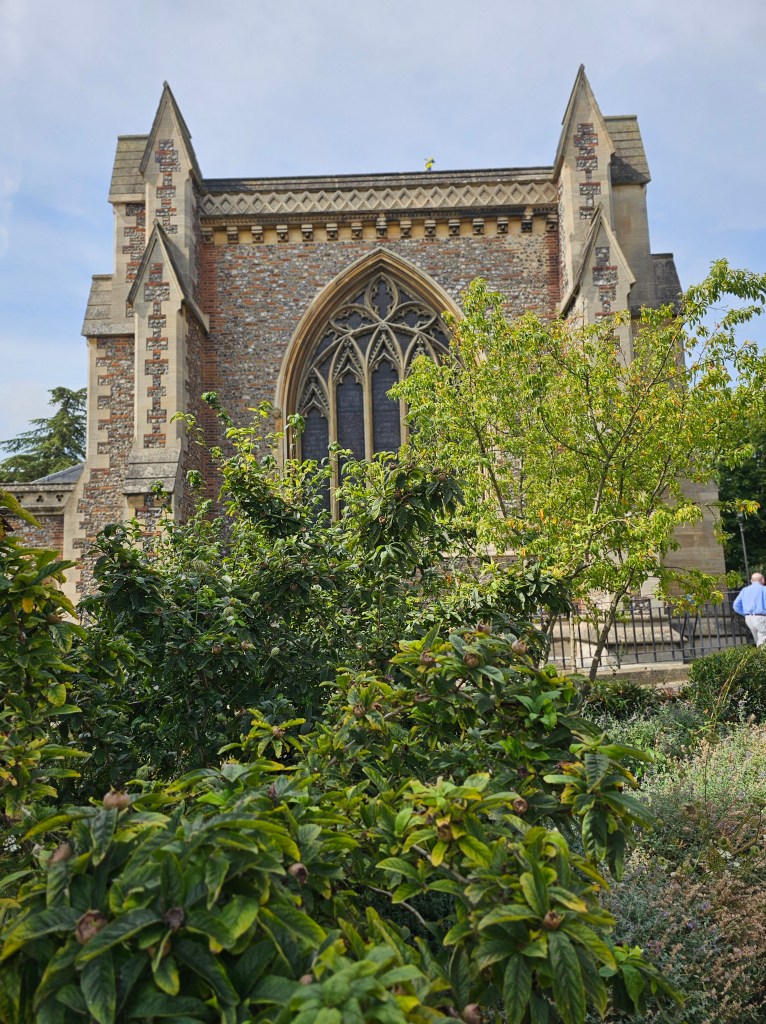
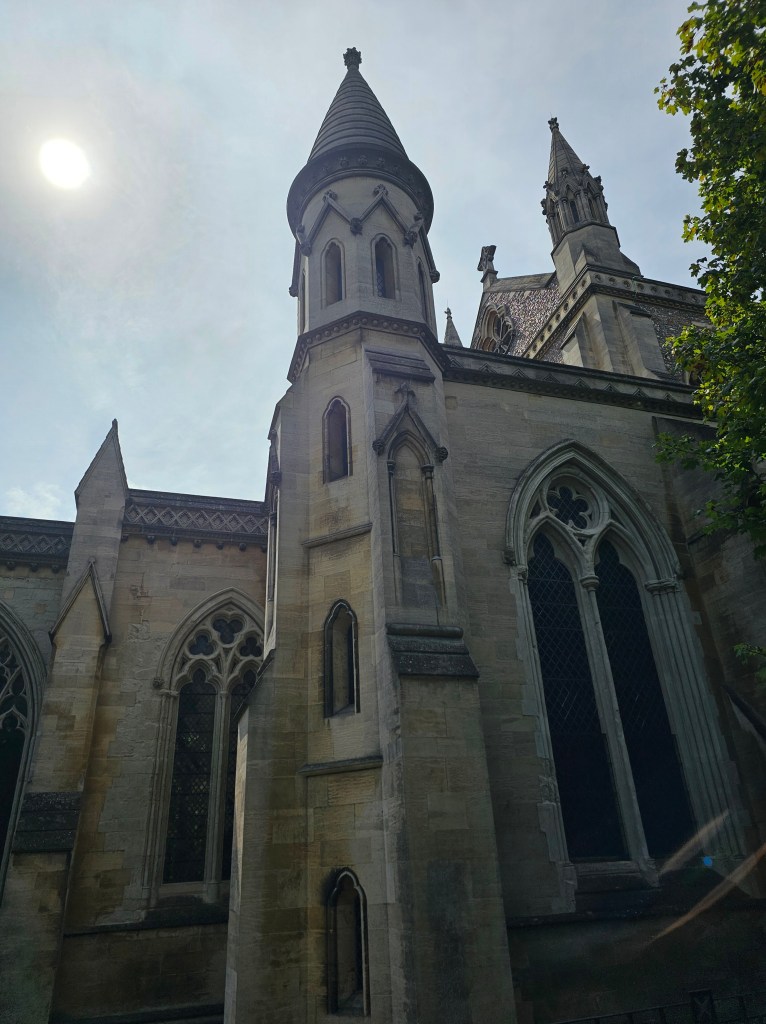
Four views of the exterior of St. Albans.
There is so much history associated with this place. The earliest structures were built on the spot where St. Alban was said to be martyred, and the Cathedral held relics of his body until the dissolution and further destruction during the religious unrest of the Reformation. I found the history of the cathedral’s Lady Chapel (honoring Mary, the mother of Jesus) to be quite interesting. This part of the Cathedral had been built with contributions of the city’s residents and businesses at a time when pilgrimages were an important economic driver. When King Henry’s men came to take control and pillage the buildings, the people of St. Alban’s closed off the chapel and claimed it as separate from the abbey. They turned it into a boys’ school and thus saved it from damage and destruction. The Lady Chapel today is the only Anglican place of worship in which all Christian denominations may pray and celebrate. Thus, Catholic and Orthodox services are held there, along with Anglican and other Protestant one. Below are some views of the Lady Chapel, starting with a close up of the altar.
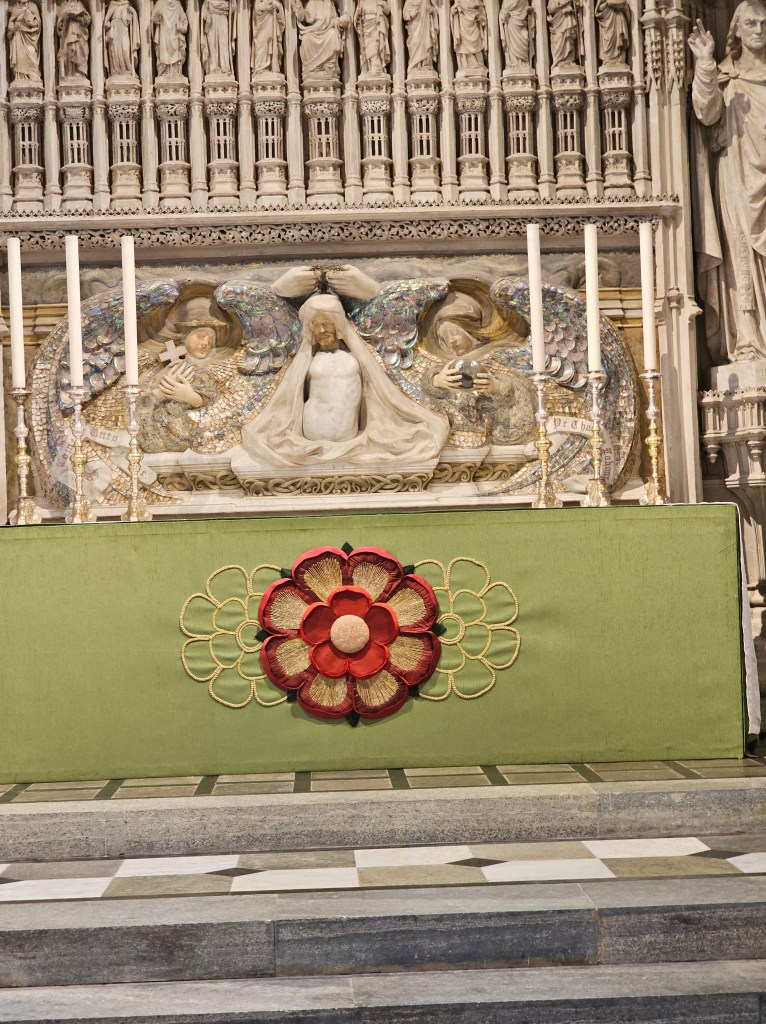
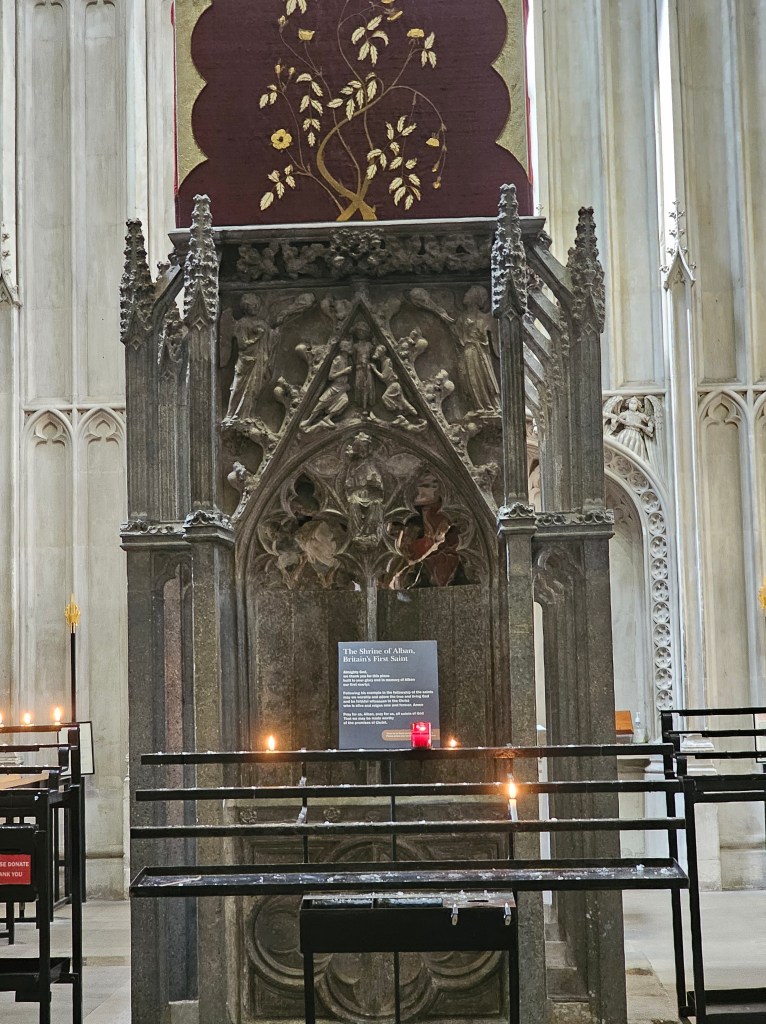
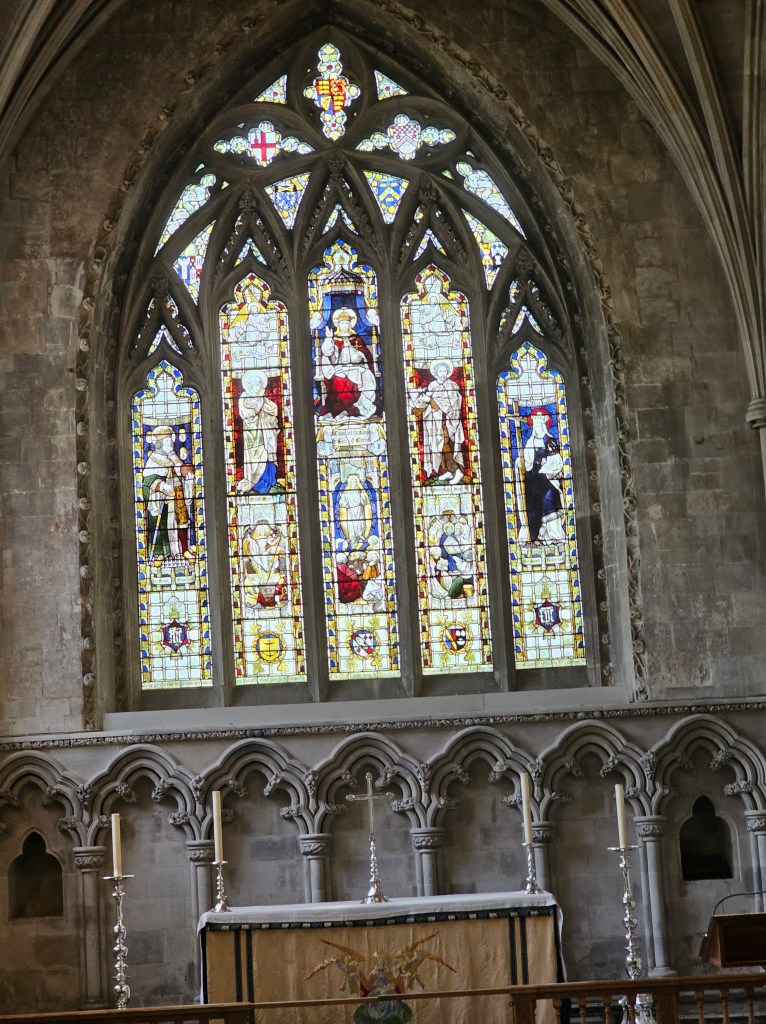
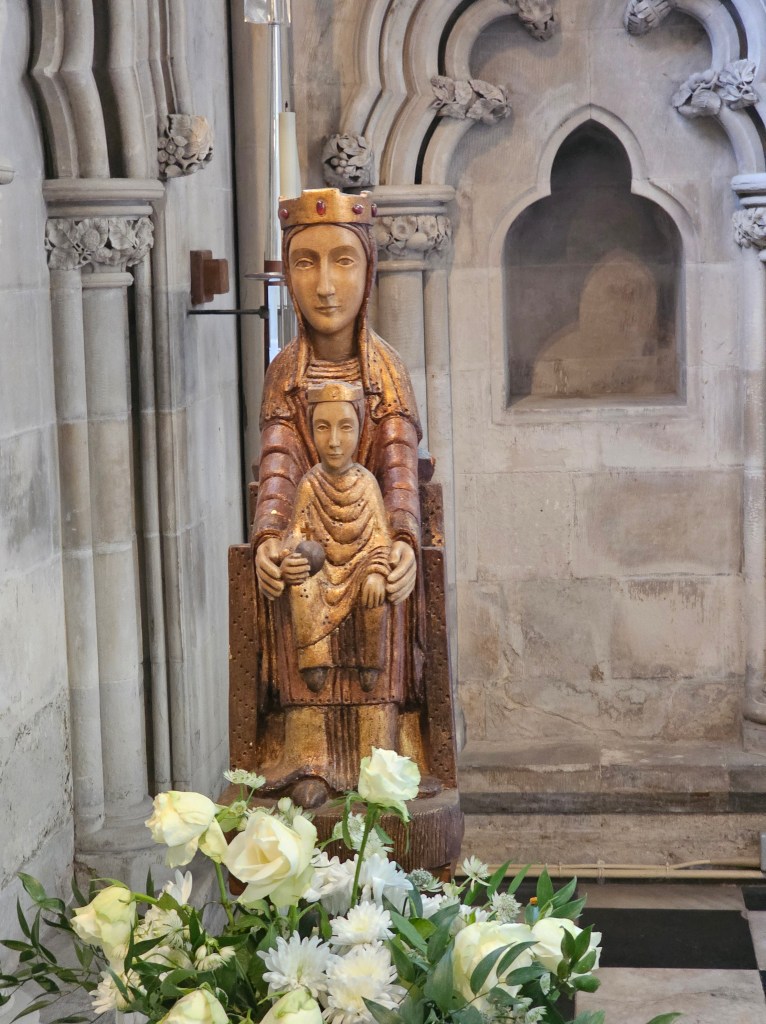


The reliquary has been restored, though St. Alban’s relics were lost during the turbulent years. A separate shrine


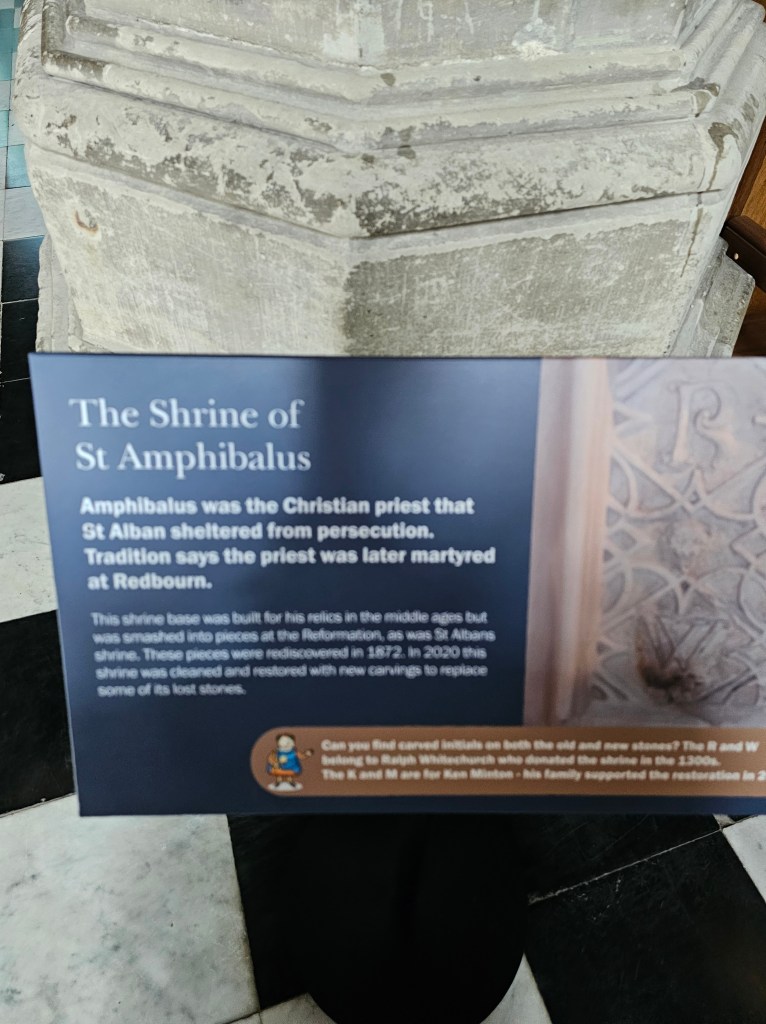
The first two pictures above are the shrine of St Alban. The third, sadly, is the only picture I have for the other shrine, the Shrine of St. Amphibalus who sheltered Saint Alban from persecution.
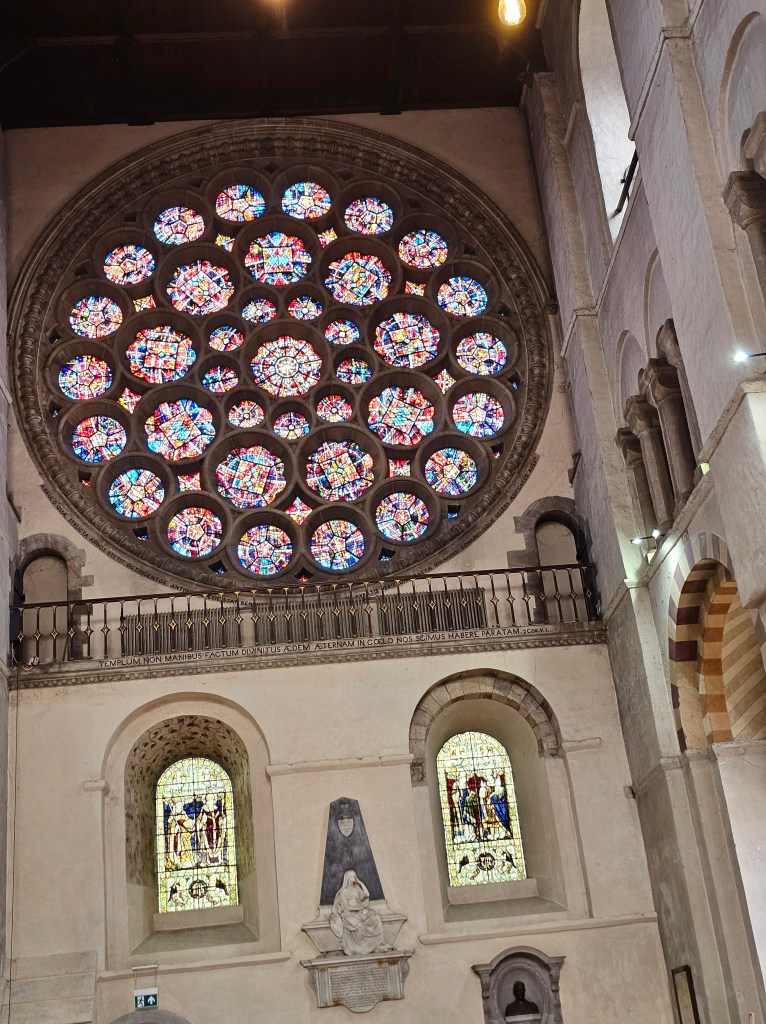
Here are two pictures of the lovely stained glass windows in the Cathedral.


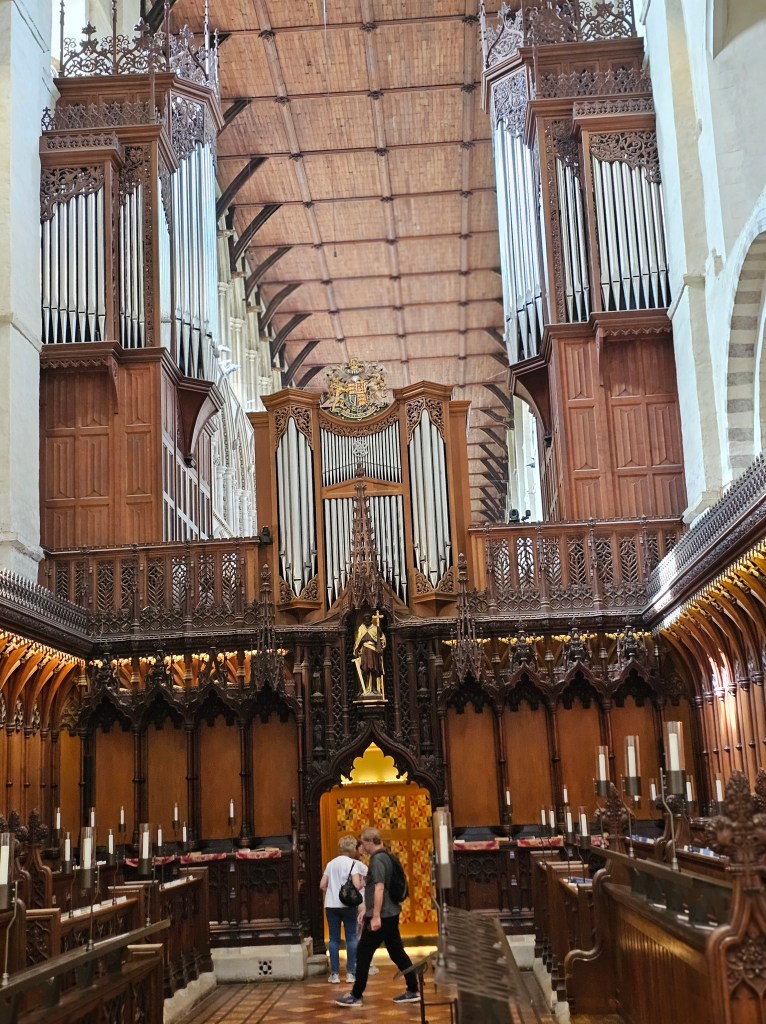
Finally, a picture of the Choir and the main altar with its beautiful painted statues of ancient and modern saints, in the style that it is believed all statuary would have been in the Middle Ages.
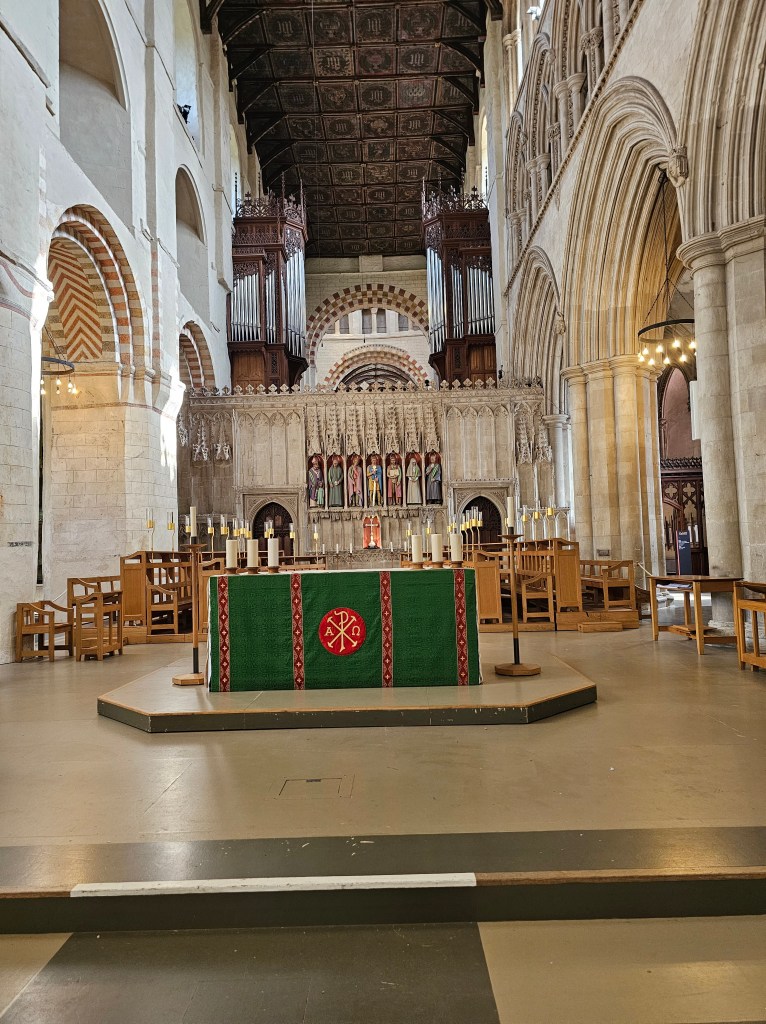
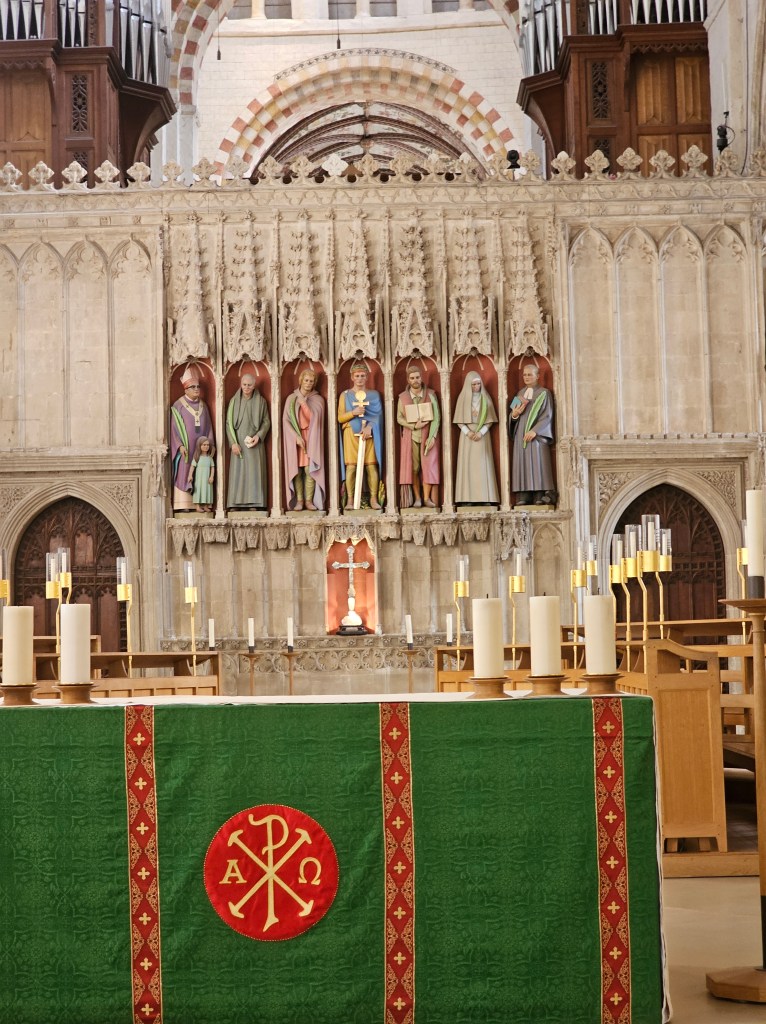
If you look at the arches on the left. you will notice patterns on the top. What you cannot see on the flat surface of this arch and others on that side are faded Medieval scenes from the Bible. These are being carefully restored.
A Thames Rail Journey to the Tate Modern
I was thrilled to find that Thames Rail could take me much closer to the entrance of the Tate Modern on the South Bank of the Thames than the Tube could. So, with my annoying foot forcing me to consider how many steps I might take, I hobbled (not really) up to Saint Pancras and headed to the Tate Modern. I was short on time though, so I had to choose among several interesting exhibitions. I chose, “The Expressionists: Kandinsky, Munter, and the Blue Rider”. As you will see below, the exhibition was a celebration of color and creativity during the often-bleak years of war and privation in the late 19th and early 20th centuries.






I am looking forward to more adventures in the coming two months and hope to share them with you.
 Mark In London