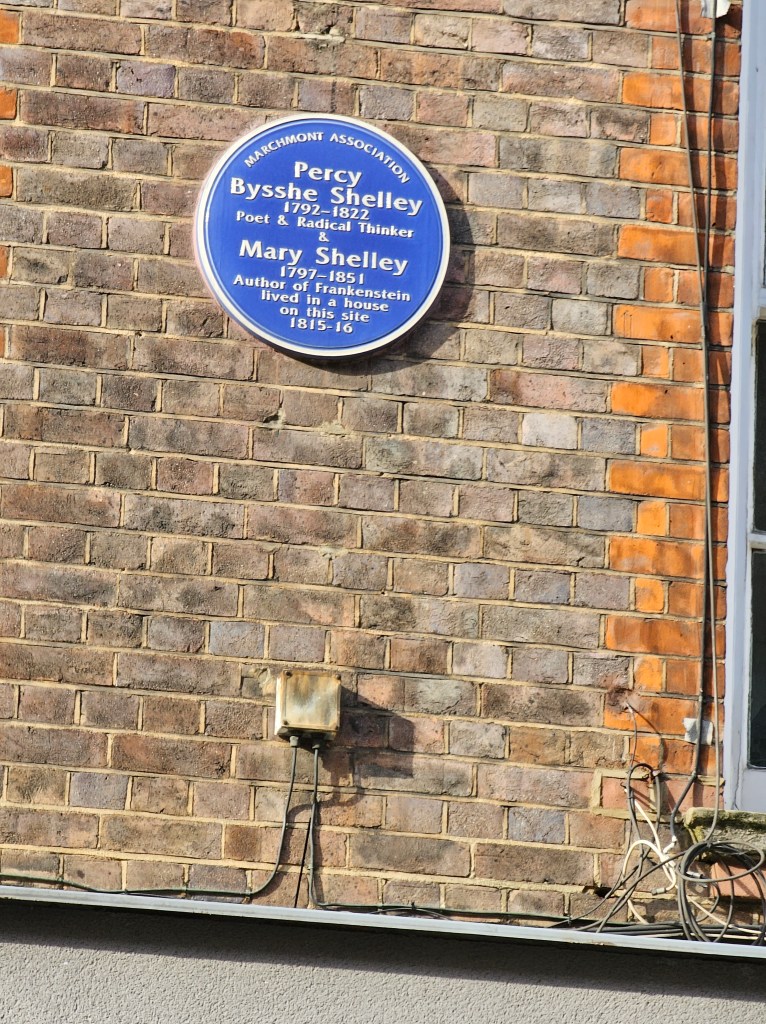
We had a rainy week in London. It did start on a nice enough note and I was able to start the week with a very nice walk down to Wigmore Hall for the only Monday midday concert on this trip. Before I left, I dropped my laundry off at the local launderette (EastEnders fans may shed a tear her for Pauline Fowler and Dot Cotton-others may scratch their heads). As I walked out, I noticed a Blue Plaque across the road. I may have seen it before, but I had to take a picture of it.
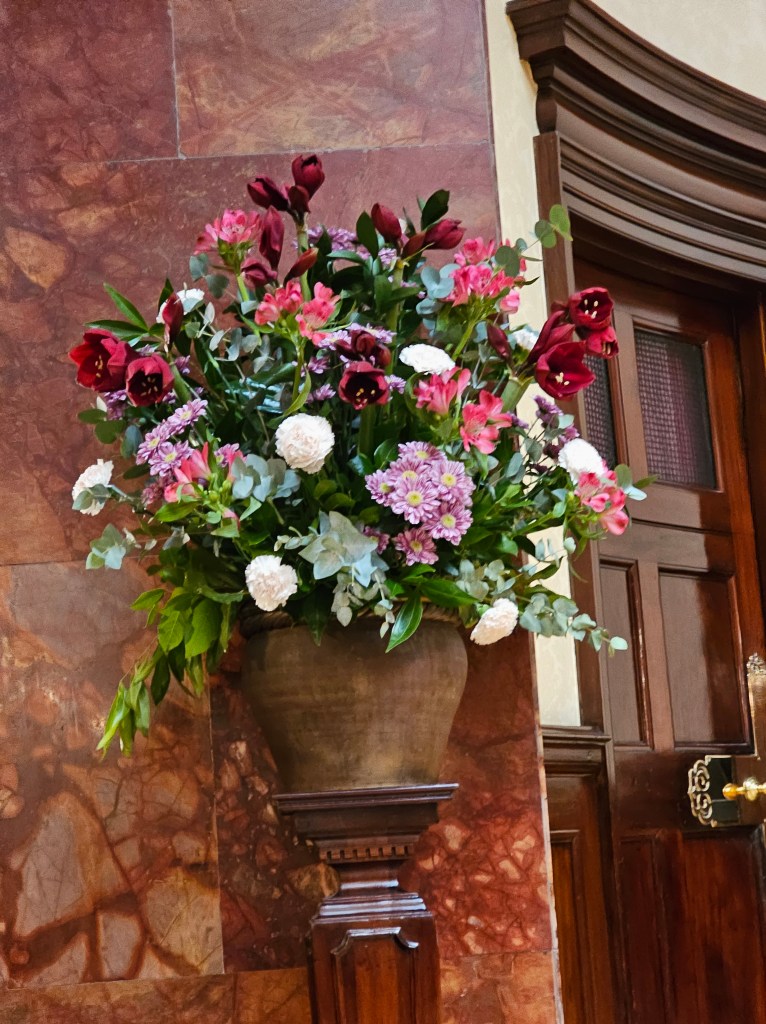
I arrived at Wigmore Hall in time to have a coffee and relax a bit in the cafe before going upstairs for the performance. Below is the on-stage bouquets for this performance.
The performers were Théotime Langlois de Swarthon-violin and Justin Tayor-harpsichord.

They played a program of French and English music from the late 17th and early 18th centuries. I found the harpsichord to be a more versatile instrument in the hands of this young musician. The pair were obviously very comfortable together and their trust in each other was obvious in the way that they played and relied upon each other. You can look them up on Google and check out some of their delightful music.
At the Victoria and Albert and Seeing What I Could Find
Facing a rainy day, I decided that a visit to the V&A might give me a chance to stay dry and “get my steps in,” killing two birds with one stone. My adventure started in the Cast Halls. Well, actually, it started in the lobby. I had assumed that since it was such a wet day, the entrance to the museum from the tunnel at the South Kensington Tube Station would be open. It wasn’t. So, while waiting to discuss this with one of the docents, I overheard a couple of Americans asking her about what to see and where to go. After I discussed the entrance issue with the docent (we had a good laugh about it), I caught up with the Americans and told them about the Cast Courts that they did not know existed.
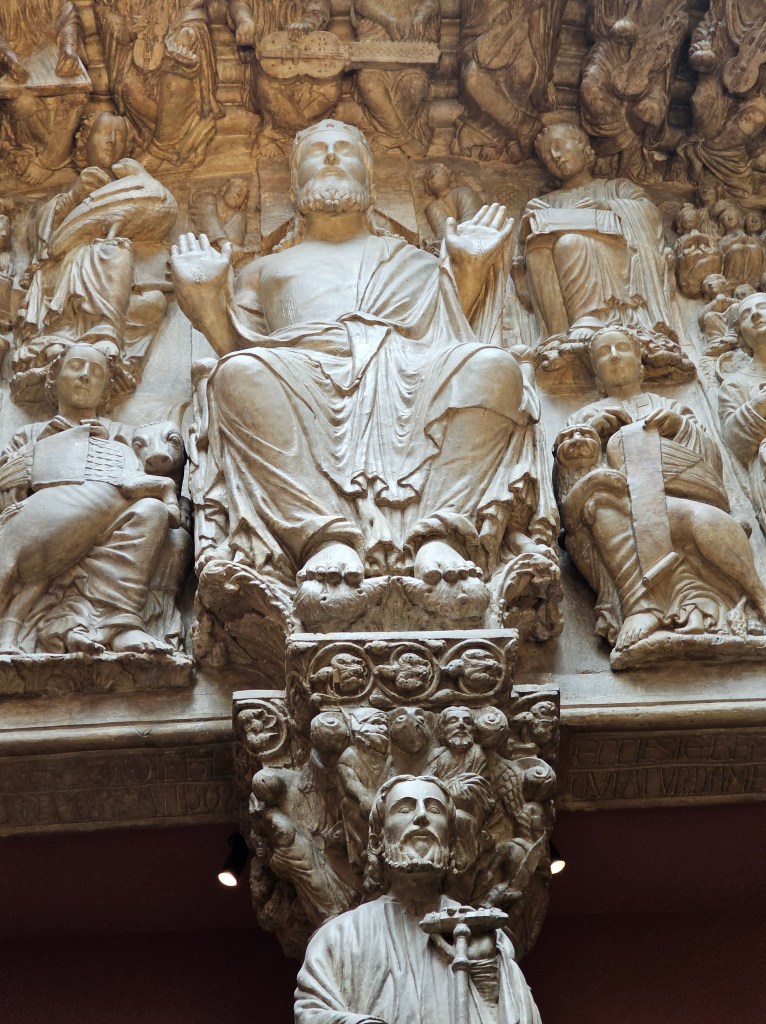
Anyway, I was looking at one of the largest structures in one of the Courts, a portico from the cathedral in the Cathedral de Santiago de Compostela in Spain. It depicts a number of biblical figures. I first noticed this smiling fellow.

There is also this interesting depiction of Jesus. The originals figures were vividly colored. The film that is provided in the cast court shows them being restored. One can see the red blood from the wounds to the feet and hands of Jesus.
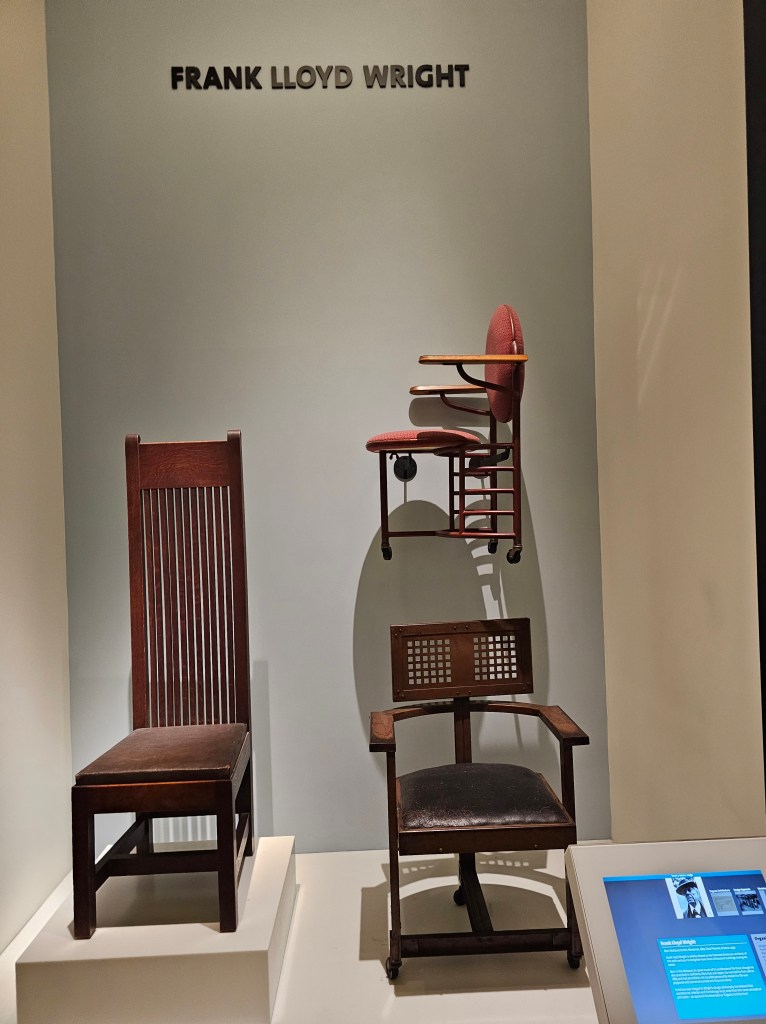
l continued upstairs to the ceramics and furniture collections and was delighted to view these classic Frank Lloyd Wright Chairs in their collection.
Here are a few of the thousands of Ceramic pieces on display. It is an overwhelming collection.
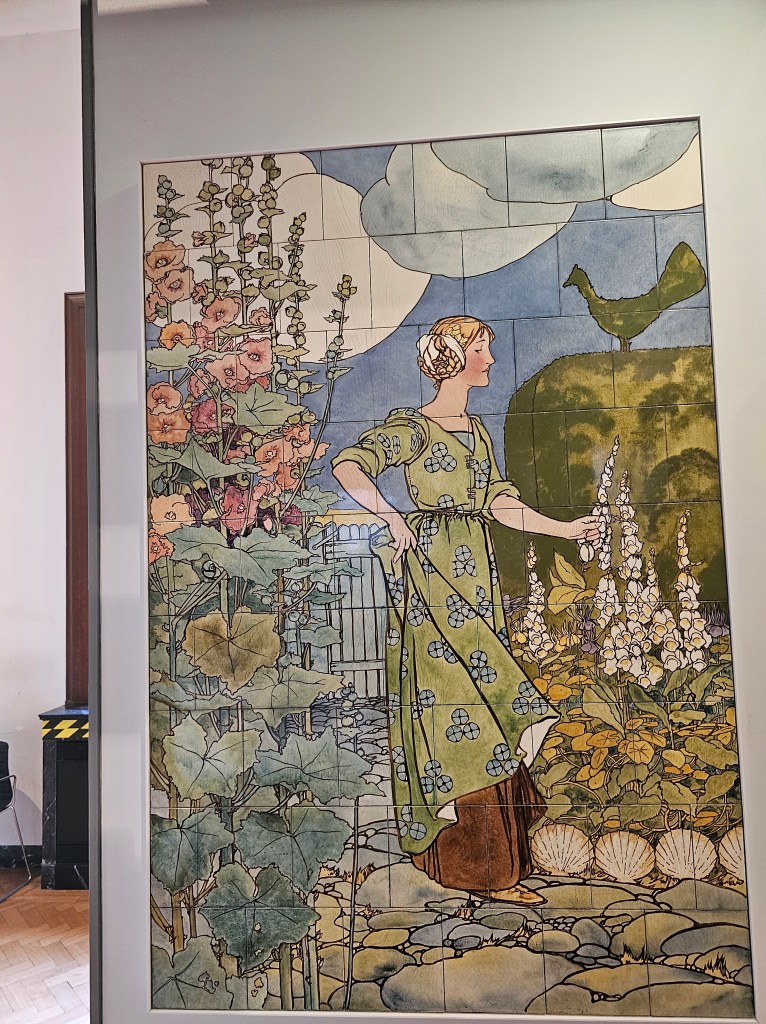
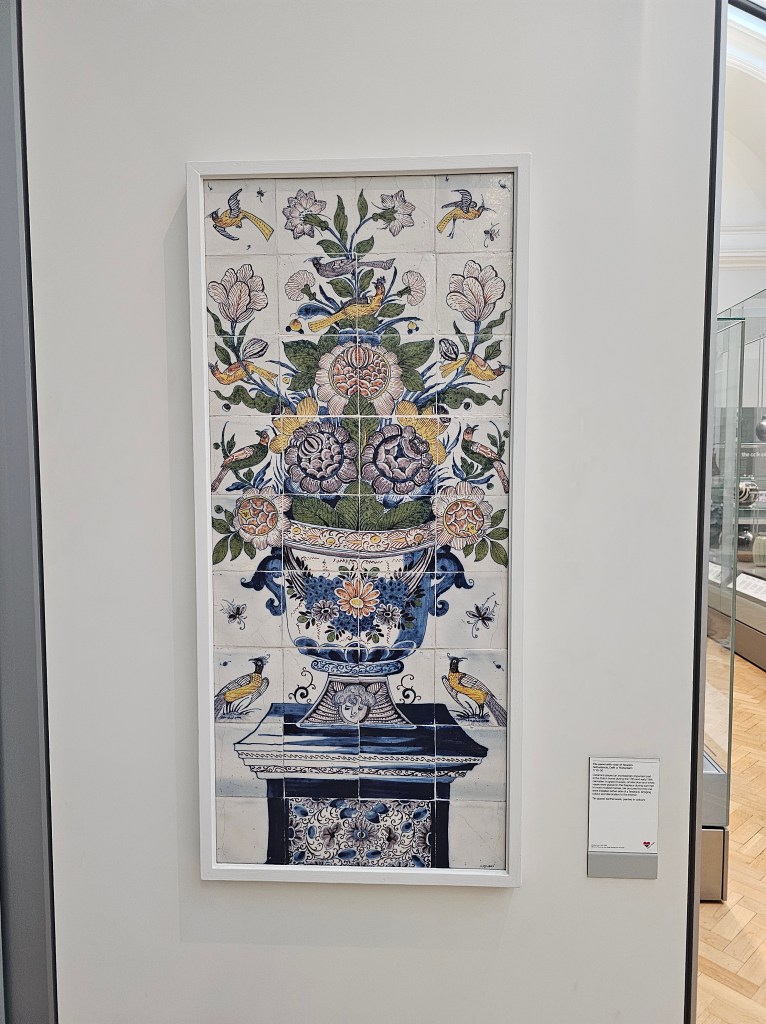
On to the National Gallery of Art
As the rainy week continued, I visited the National Gallery of Art on Trafalgar Square. The Gallery is finally trying to make itself more accessible to people who cannot easily climb up and down the stairs throughout its many levels and it has somewhat improved its flow. I came across this very interesting William Hogarth painting of the Graham Children from 1742 that I must have seen before, unless it had been off display.
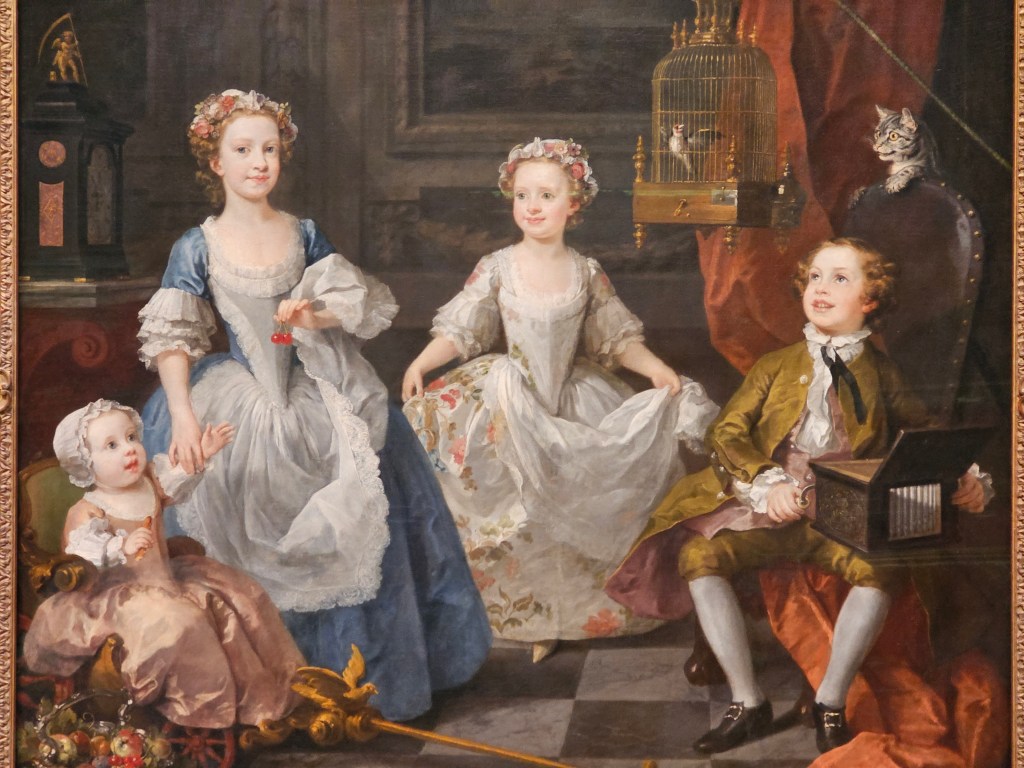
Everyone, even the cat, is smiling. But, if you look at the clock above and to our left, you will see Cupid holding the scythe that indicates death. This may be because the baby Thomas Graham died before the painting was completed. Wouldn’t that have been a pleasant “memento mori” to hang above the mantle piece!
The Fourth Plinth in Trafalgar Square
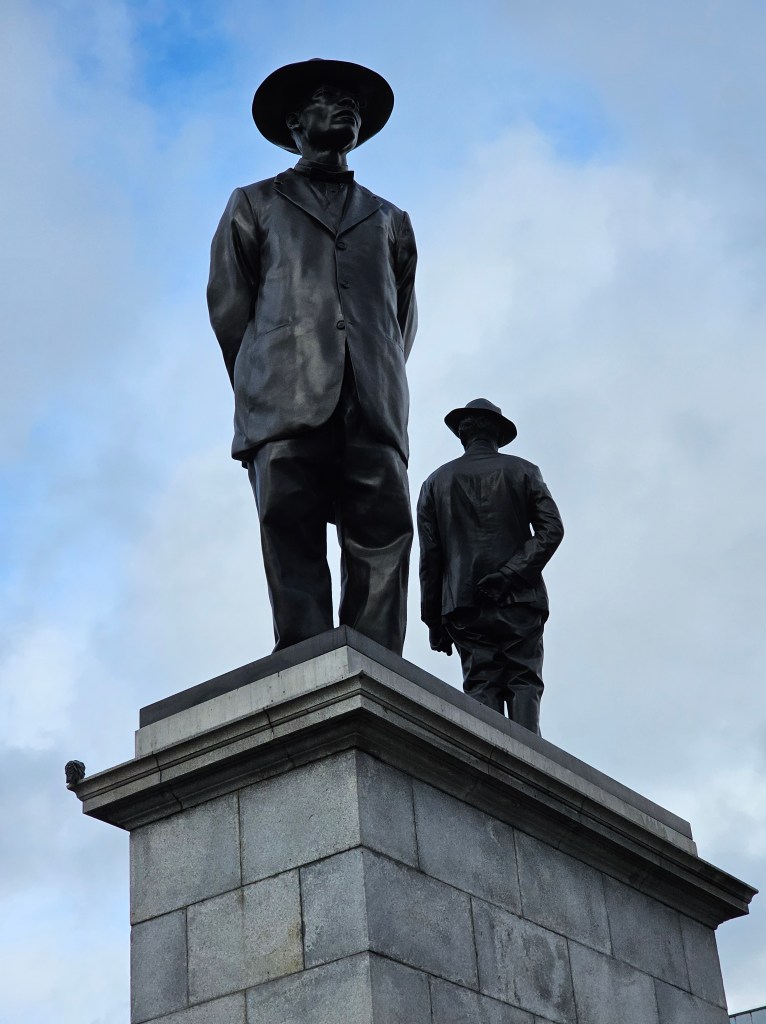
There are four plinths in the corners of Trafalgar Square outside the British Museum. According to Wikipedia, The two southern plinths carry sculptures of Henry Havelock and Charles James Napier. The northern plinths are larger than those in the southern corners, as they were designed to have equestrian statues, and indeed the northeastern plinth has one of George IV. The fourth plinth on the northwest corner, designed by Sir Charles Barry and built in 1841, was intended to hold an equestrian statue of William IV but remained empty due to insufficient funds.
Over recent years, that fourth plinth has had a number of interesting and sometimes provocative statues on it. One of the most inspiring ones was “Alison Lapper Pregnant which graced the fourth plinth from 2005 to 2007. Again, this description comes from Wikipedia. A 3.6 metres (12 ft), 13-tonne[1] Carrara marble torso-bust of Alison Lapper, an artist who was born with no arms and shortened legs due to a condition called phocomelia.[8] It explores representations of beauty and the human form in public space, and was remade on an even larger scale for the closing ceremony of the London 2012 Summer Paralympic Games.
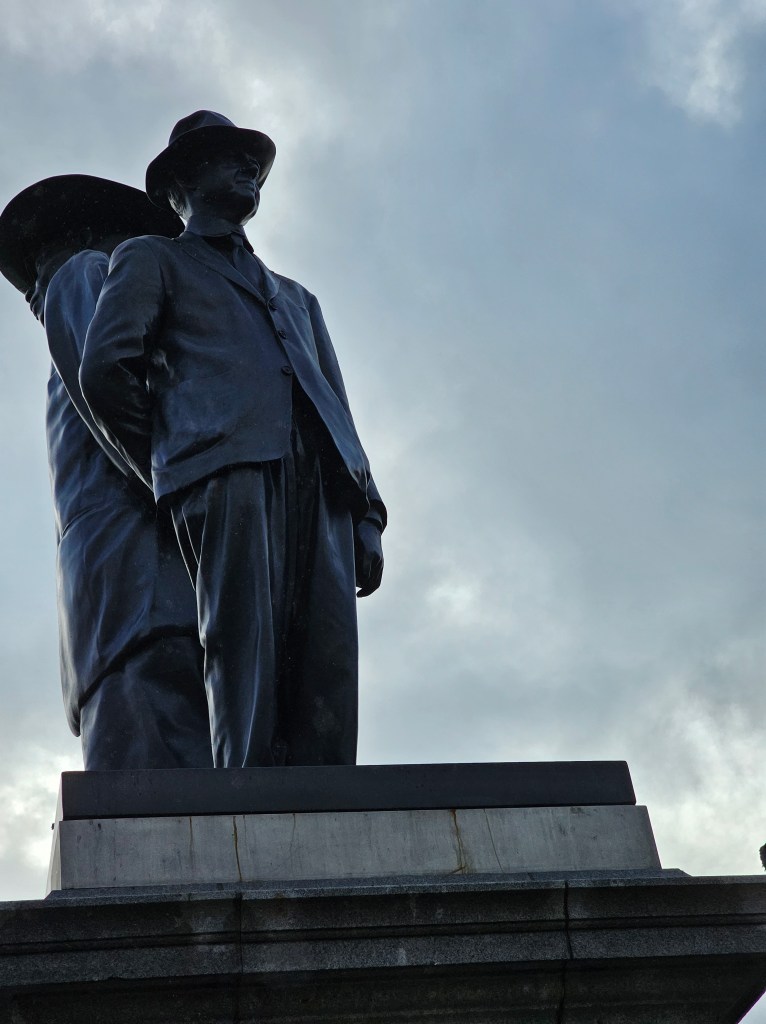
Currently, two statues appear on the fourth plinth. The larger than life figure is Jonathan Chilembwe, a preacher in what is now Malawe. He is wearing a hat. This was not allowed in front of white people during British colonial rule. The second figure is John Chorley, a European missionary who is depicted as a sculptor. The scu;pture is based on a 1914 photograph taken at the opening of Johathan Chilembwe’s first church. He was killed a year later during an uprising against colonial rule.
CLYDE’S
Washington, DC area friends may be thinking of “Sky rockets in flight” and “afternoon delights” when they see the word “Clyde’s.” It is, after all, the name of the restaurant, now a chain and restaurant group, from whose menu Bill and Taffy Danoff were inspired to write their 1970’s hit song “Afternoon Delight.” This West End delight, however, was a completely different Clyde’s. The Donmar Warehouse in Covent Garden is a theatre that often shows experimental or unusual productions. This dramatic story with moments of high comedy as well is written by Lynn Nottage who is a very important young playwright. She tells the story of four convicted felons who can only find work after release from prison at Clyde’s, a truck stop diner run by Clyde, another convicted felon and she seems to be controlled by some bad people.

This is a play that deserves the intimacy of the Donmar where patrons sit close to the stage and almost feel part of the action. We see the artists as they do their work, and we know that they are aware of us. These actors each have to unfold a story of a life that went off track. The four kitchen workers have dreams and hopes of somehow “fixing” things. Clyde only seems to want to keep them down and keep them what she sees as real. You want to laugh, you want to cry, you know this is more real than you want to believe. This was a wonderful night of theatre.
“Foreign Friends”
This wet week came to an end with a return trip to Soho, that once hedonistic corner of London that has mostly become more “acceptable,” unless (I suspect) you know where to look. I was there to meet my friend Rose and her friend Catherine who were in town for a convention. We had agreed to meet at “Little Italy,” the delightful restaurant my friend David Daly had introduced me to earlier in this sojourn.
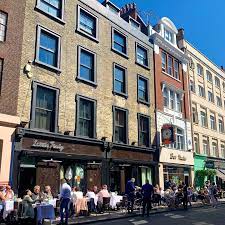
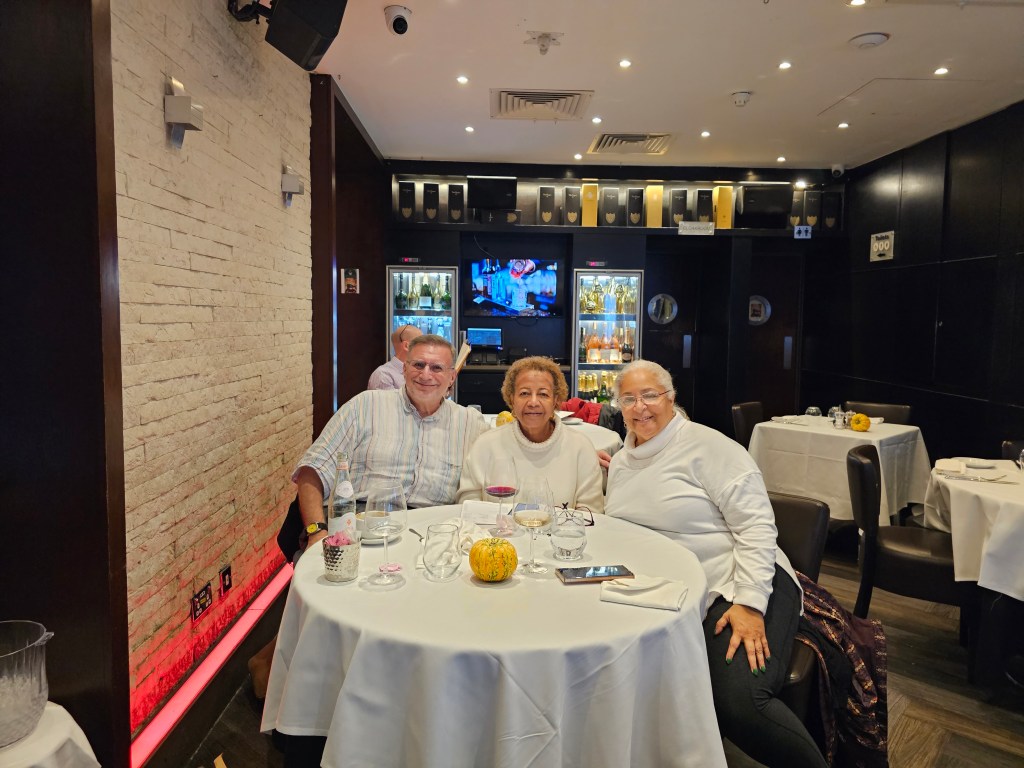
I cannot recommend this restaurant highly enough. The staff is top notch. The food is perfect. The wine is absolutely great. Rose and Catherine were troupers too. Their hotel happened to be on the route of a major protest march and the concierge was holding back people from exiting. They finally got him to agree to take them out through a safer exit and found a taxi on a side road. Rose and I are old friends from my days working on the Alexandria, VA-Caen France Sister City Committee. Rose, among the myriad of responsibilities she had at City Hall, was in charge of shepherding all four sister city committees. Catherine is a wonderful person, and we all enjoyed the food and conversation. Our waiter kindly took this photo for us.
About 9 days to go and lots to do. I hope to get one more post up before I get on the big bird.
 Mark In London