Chile 50 Years After the Coup
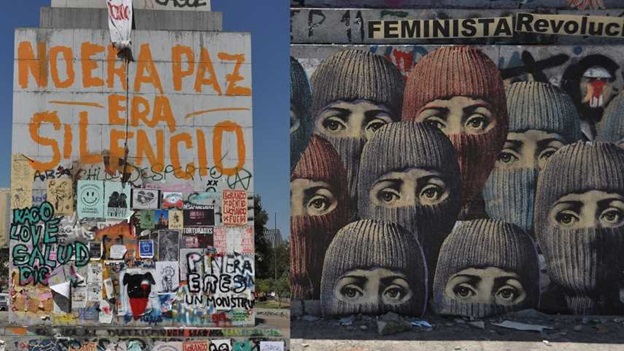
When I arrived in London, I heard about a lecture at the nearby British National Library. The lecture’s title, “Chile 50 Years After the Coup” intrigued me, so I signed up for a ticket. The weeks quickly passed, as they always do during my three-month sojourns, and I found myself in the first soaking downpour of my stay splashing my way across the Euston Road to the library one evening. Names from long ago came forward in my head Eduardo Frei, Salvador Allende, Augusto Pinochet. Orlando Letelier.
This evening’s discussion centered on the coup by Pinochet and the Chilean military that overthrew the elected socialist President Allende. The story was told completely from the view of the political left which had suffered greatly under the dictator Pinochet, including exiles, “disappearances,” murders, loss of livelihoods, etc. There was an elected Congress that had supported many of Allende’s reforms, including
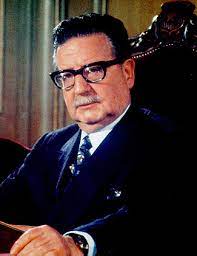
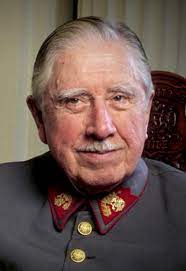
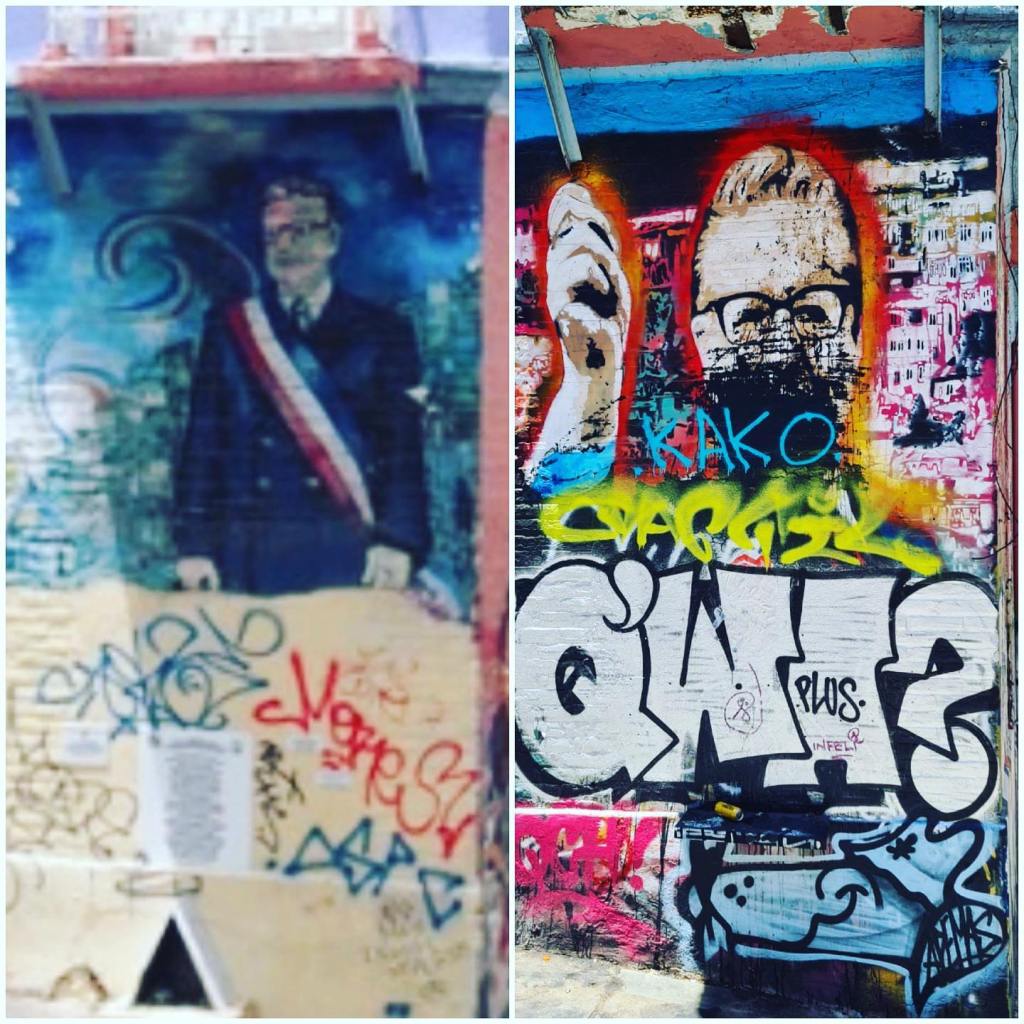
nationalization of mining industries. However, the extent to which his intentions to move further from a social democracy to a communist system was not fully understood. What was known was that the poor and landless were pushing ahead of the legal reforms and outside groups, now acknowledged by the CIA, for instance, were involved in helping to destabilizing the political situation that led to the coup. The aftermath of coup, besides the repressive regime of Allende, was the growth of an underground music and artistic scene during and after the coup and then an exile culture that remains alive today. With children of the political exiles now becoming the new voices of the Chilean cultural diaspora. The wonderful Chilean historian who lead the discussion, is at least two decades my junior. It is both exciting
and daunting to see one so full of knowledge and so ready to defend her subject. The two “survivors, shall we say, were a few years my senior, I like to think and were remarkably resilient and positive in their discussion of the times of the Allende Presidency and their lives since. It was an expectedly great evening. It reminded me of my very first political science class at SUNY Oneonta during the time of Allende’s presidency. I was unable to get into any of the introductory courses and Professor Kathleen Kenney allowed me to take her course on Cuba and Chile. Our next-door neighbors in Rockville Centre, NY, for several years had been exiles from Castro’s Cuba, so I had a first-hand view of a middle-class Cuban family who had to start over in America and I was interested in learning about the developing situation in Chile where Eduardo Frei had been the President and represented a significant period of stable Presidential governance in Chile. In fact, my neighbor wrote me a letter documenting his experiences in
Cuba and in Florida when the Family started over. It was helpful to me in that college class.
A few years later, after the coup in Chile, Orlando Letelier, the exiled Chilean Ambassador to Washington during the Allende presidency, and his associate Ronni Karpen Moffitt were killed in a car-bombing in Washington, DC, where I was attending graduate school. A colleague in the office where I was serving an internship, was a friend of Ambassador Letelier and spoke very highly of him. The murders were traced back to Pinochet. And so, a cycle of history and events in my own life sort of came full circle with the presentation at the library. As an American living through these years where we are a nation divided with such different views on what our national values are and to whom (a person) or what (the Constitution) we owe allegiance, I look back on Cuba, Chile, and look at Ukraine and Russia. I hope our great experiment with democracy survives and that we do not sink into the chaos of authoritarianism that so many nations have faced. Now on to happier topics.
A Night Out With James
Regular readers may be familiar with tales of my friendship with the Grant family. This started with Nigel and Gwynne and bloomed to include much of their family. A particularly warm friendship has grown between their son James and me who enjoy many of the same kinds of pursuits, one of which is drinking good ales in interesting pubs as we argue the finer points of politics, environmental policy, housing, and immigration (I know, right, a couple wild and crazy guys). This trip started at the Black Friar.
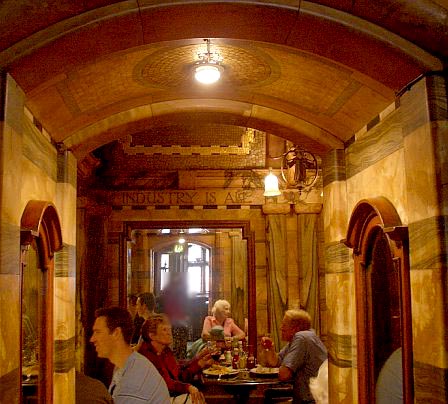
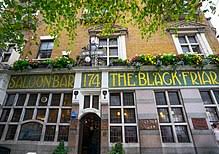
The pub is across the street from Black Friars Tube Station which gave me a chance to try the Thameslink rail service to Black Friars, saving much time from the comparable tube journey. Unfortunately, Thursday is the new Friday for the Tuesday, Wednesday, Thursday office workers (TWT ), known by a crude acronym with an “A” strategically placed between the ‘w’ and the second ‘t,’ according to my barber. So, the place was heaving with drinkers and we moved on, checking out several places locally, before James braved the crowd in “Ye Olde Cheshire Cheese and found us a small table in the cellar bar. It is a place we had met at
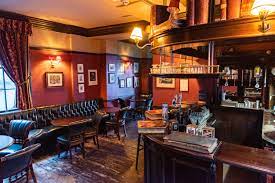
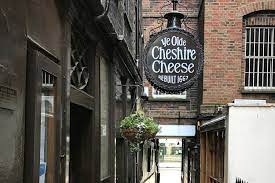
on one of our first drinking excursions, to use a phrase from the late great Jesse Winchester, “as somewhat younger men.” After a pint an James explaining to me the latest permutations in the world of cricket and how cricket can be seen as a paradigm for the change in the class system and the movement of wealth from the former colonial powers to the now independent colonies, we decided to head back above ground and give the Black Friar another try. It was still bursting, so we made our way a few blocks to another 19th century gem, the Cockpit. This was a smaller venue, but great for conversing and for drinking.
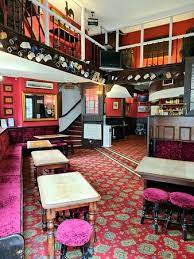
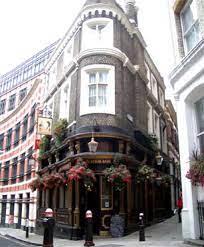
We finished off solving most of London’s problems and enjoying some very nice ale along the way. I am looking forward to seeing the rest of James’ family before too long.
Fulham Wins, Fulham Wins, Fulham Wins
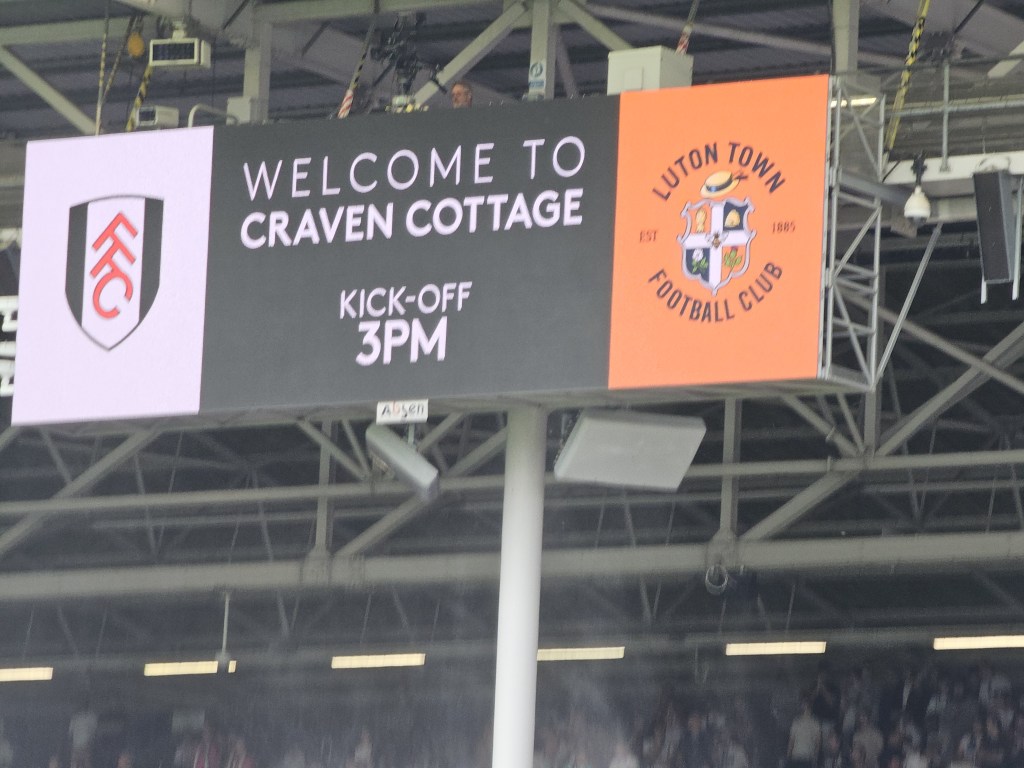
OK, it was just a 1-0 win over the newly promoted Luton Town, but it was sweet none-the-less. First, though, it was a beautiful day, in spite of the crazy Transport for London Tube closures “for essential works” that had tourists scratching their heads trying to figure out how to get to their destinations. The walk through Bishopsgate Park to get to Craven Cottage where Fulham plays was lovely. The rose gardens still looked pretty good for mid-September and there were boat races on the Thames.


Before the match began wreaths were laid on the field by SUNY Oneonta alumnus David Daly, representing Fulham FC, one Mr. Al Fayed’s sons, and a member of the Fulham Supporters Association, honoring the late Mohammed Al Fayed who bought Fulham FC in the 90s and brought it from the 3rd division of British Football to contention. He was well loved by Fulham fans. If his name sounds familiar,
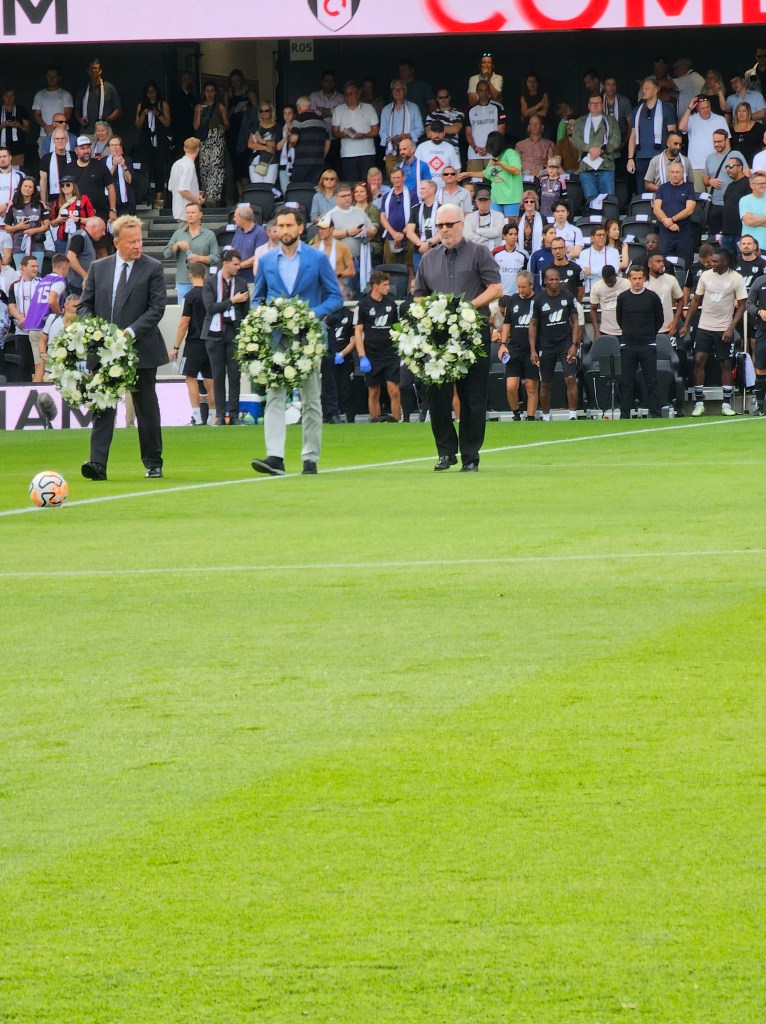
he was the father of Dodi Al Fayed who died in the car crash in paris, along with Diana, Princess of Wales. He was also the owner of Harrods Department Store in London. The wreath-laying was followed by a moment of silence.
The match was somewhat harrowing, with Fulham’s one goal not coming until the 65th minute of play. The goal was by Carlos Vinicius coming in as a substitute. 38-year-old American Tim Ream was chosen as Fulham Player of the Match.
Fulham FC presents the Fulham Forever award to players and staff who exemplify the standard of excellence that the club seeks to represent. Below, we see this week’s awardee was Paul Konchesky (right). He was escorted by Dave Daly, once again, making SUNY Oneonta proud.

Finally, below is an interesting building I saw this week while walking up to the Camden from Bloomsbury. Thought you might enjoy it.

It was once a music venue where the Beatles, the Stones and many other famous groups performed.
 Mark In London