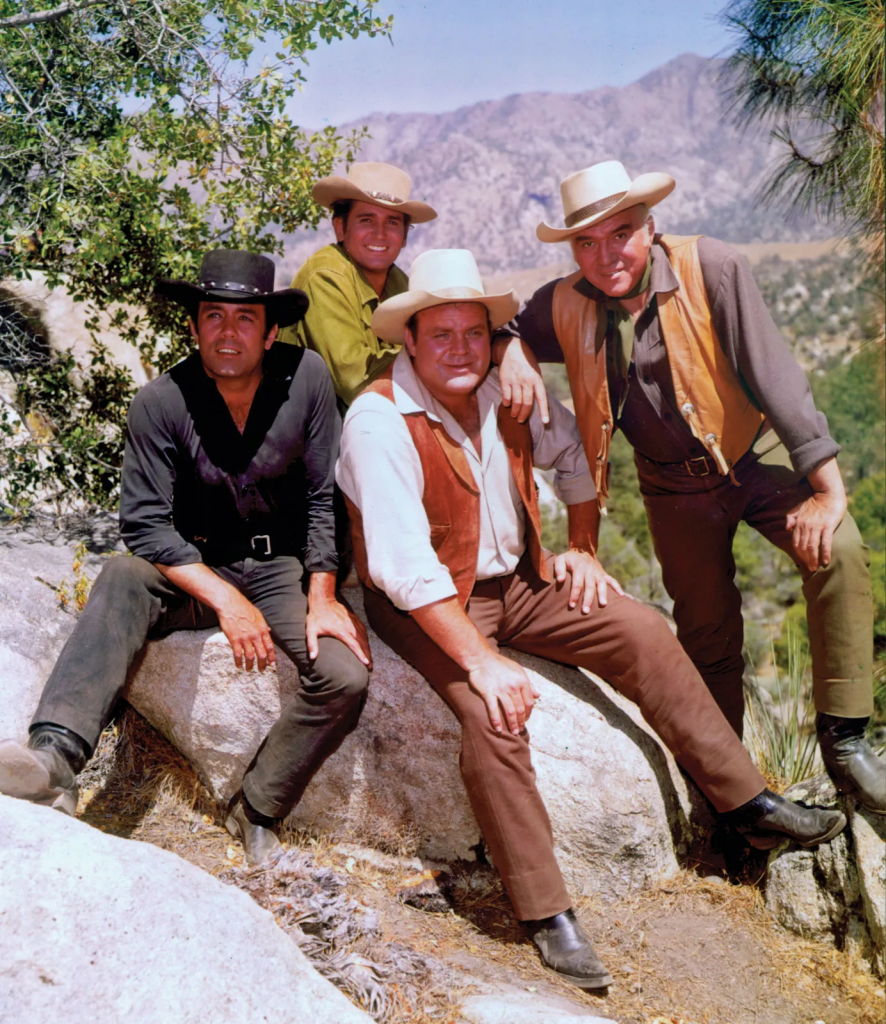
Yes, those are the Cartwrights from Bonanza in the very first picture of the August 2023 edition of “Mark In London and the World.” For those too young to remember the TV classic. The line above is from the seldom heard vocal version of the show’s opening theme. Keep reading to get the context.
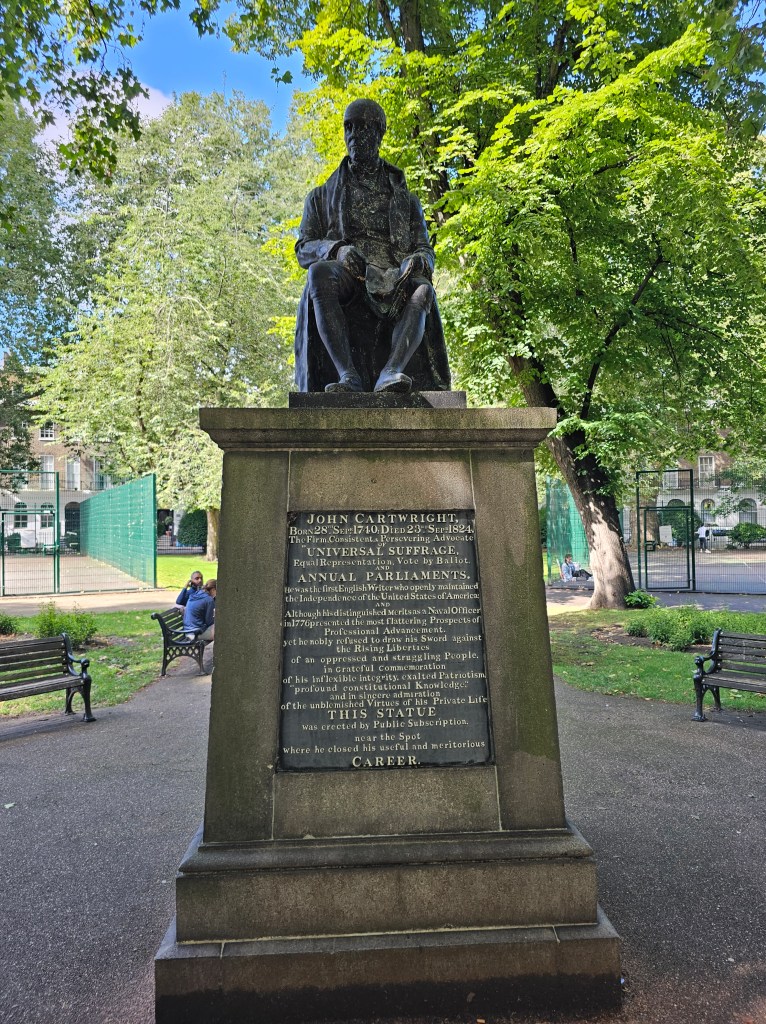
As you can see, this second picture “ties the room together nicely” with this statue of John Cartwright that stands in the square in the middle of Cartwright Gardens a semicircular street on which the flat I have rented for this year’s London adventure is located. It’s not Clare Court, my beloved London home of the last several years but it is suitable for the purpose. It is actually a bit closer to “the Blessed Pancreas,” as my friend Sally and I call Saint Pancras International Train Station and very close to the home of my friends Tom and Jaquie.
These first few days have been filled with all the small things that need doing like food shopping, picking up essentials for the flat that even the best landlords don’t provide enough of (enough hangers, the kitchen gadget you can’t live without, the one thing you forgot from your home toiletry collection). Luckily, the Brunswick Centre, our local shopping precinct has all the stores one needs.
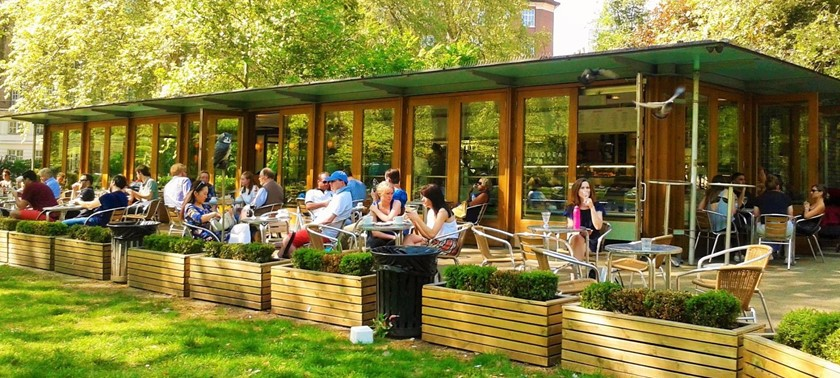
Needless to say, I also made haste to visit my favorite neighborhood haunts. Caffe Tropea in Russell Square’s beautiful park was one of my first stops. Not only was I greeted with the lovely Italian warmth of the Tropea family, but I was also reunited with a great group of local folks who have become my friends over many cups of coffee and tea at the tables you see in the picture above. In the last several days we have laughed and teased and talked about everything from politics to “the Royals” to TV and movies. It has been great to catch up with the gang.
In case you think that the unsettling state of America’s politics is not on the minds of our British “cousins” you are very mistaken. They are completely mystified by the continued support that a certain former President maintains. They don’t understand Ron DeSantis either. But, then again, who does?
I’ve also been happy to visit another local favorite, “Half Cup”, a great restaurant on Judd Street, with lovely murals on its walls.
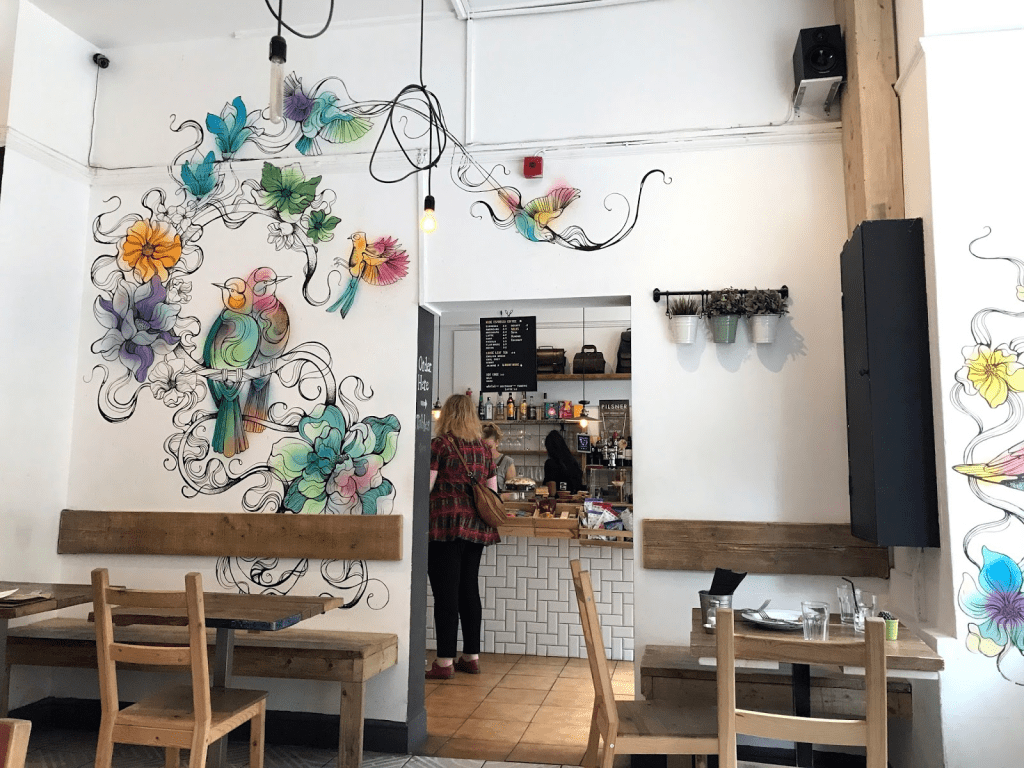
It was a drizzly Sunday and I feared that the place would be packed, but I got there just late enough to miss the usual brunch crowd. I had an excellent meal, served by delightful staff. As I was eating, two young men sat next to me. I heard one of them say that he thought that another European country was like the UK, only nicer until he got to know the other country better. I leant over and said, I thought that Australia was like both the UK and the US, only nicer. I was wearing my Tasmania tee shirt. That led us to a chat about Australia and we ended up talking for about an hour. The first fellow was English, the other was Latvian. I told them of my long-time fascination with the Baltics because of the legations in Washington during the Soviet era. Somehow the discussion got onto environmental issues and of course, my nuclear past. There were nearly 50 years of age between us and there was something great about our connection. I am always energized and given great hope for the future when I meet intelligent young people who are engaged and well-read.
My first cultural excursion of this visit to London was to the British Museum where an exhibition called “China’s Hidden Century” is on. The museum’s webpage describes it this way:
“In a global first, the resilience and innovation of 19th-century China is revealed in a major new exhibition.
Between 1796 and 1912 Qing China endured numerous civil uprisings and foreign wars, with revolution ultimately bringing an end to some 2,000 years of dynastic rule and giving way to a modern Chinese republic. This period of violence and turmoil was also one of extraordinary creativity, driven by political, cultural and technological change. In the shadow of these events lie stories of remarkable individuals – at court, in armies, in booming cosmopolitan cities and on the global stage.“
While the exhibition contained some beautiful items (see the photos), I found it contextually disappointing. The first three photos are examples of the clothing displayed. The first is a coat of the child emperor. While they are beautifully made, I did not get a sense of the life of these people.
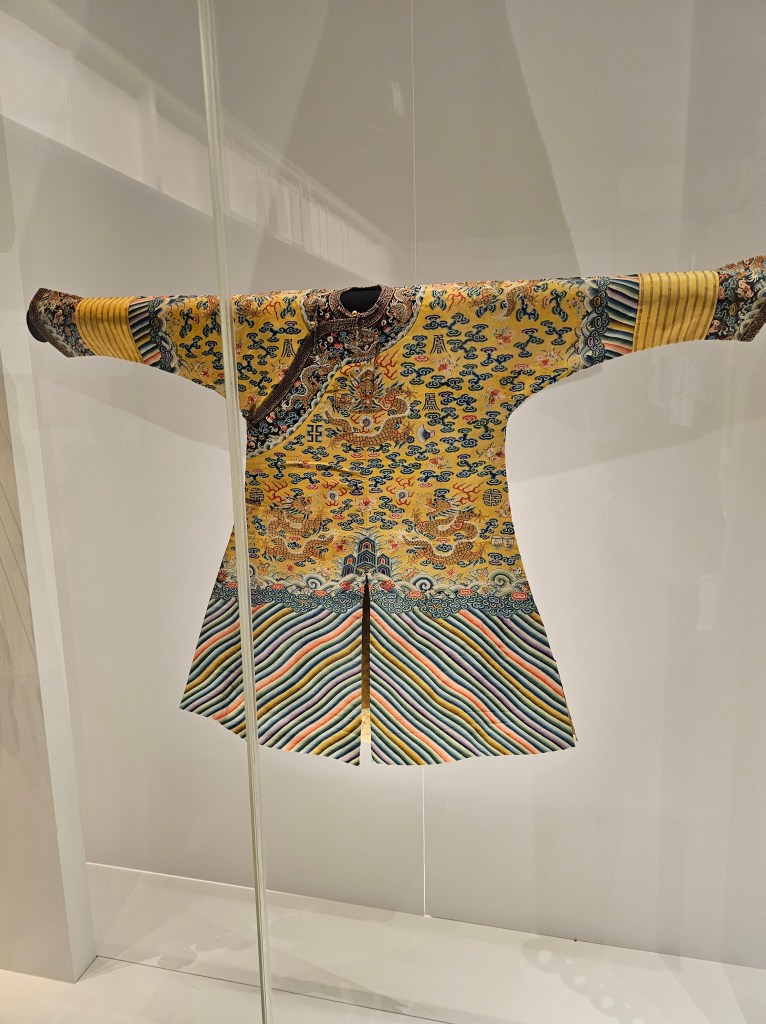
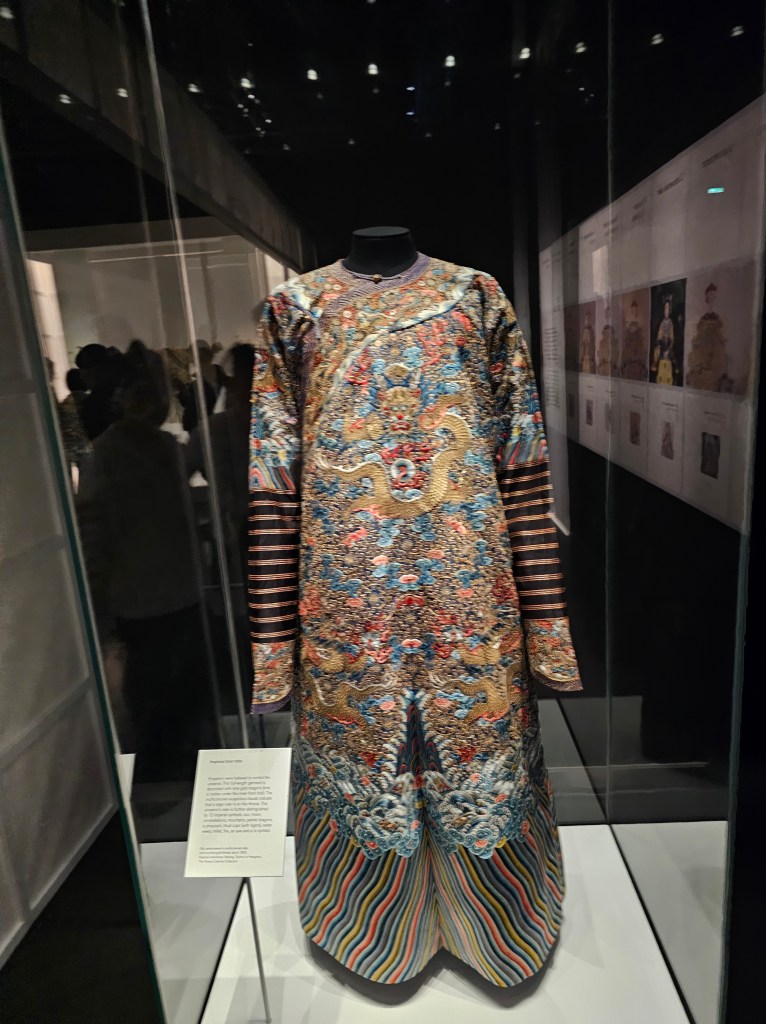
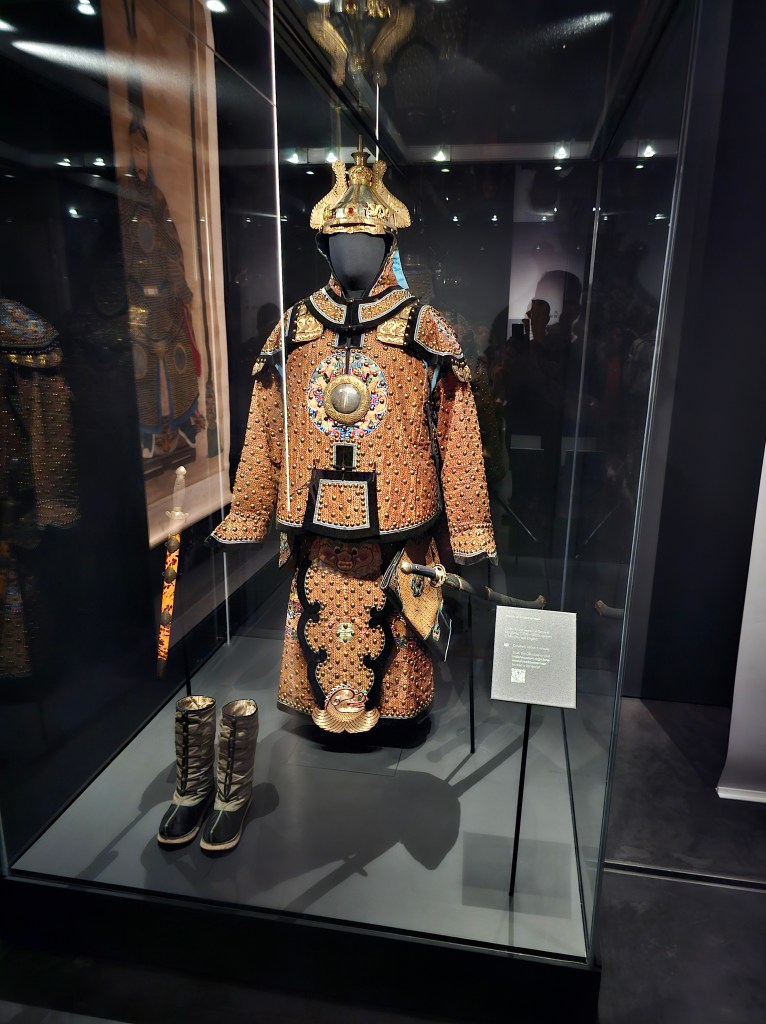

These Ming Vases are stunning, and their huge size did speak to the skill and craftmanship of the makers, but, once again, I wish there was more of the story about the rise and fall of the craft, how they were made, etc. Another reason that I had to include these vases goes back nearly half a century. A group of us rode home together From Oneonta State College, as it was then, for either Thanksgiving or the end of semester vacation. One of the group, Mindy, lived in Far Rockaway. We stopped briefly at her house when we dropped her off. Her parents owned two large, lovely vases that were displayed in a room just off the entry to the house. I immediately dubbed them the “Ming Vases”. We teased Mindy about them for the rest of our years together.
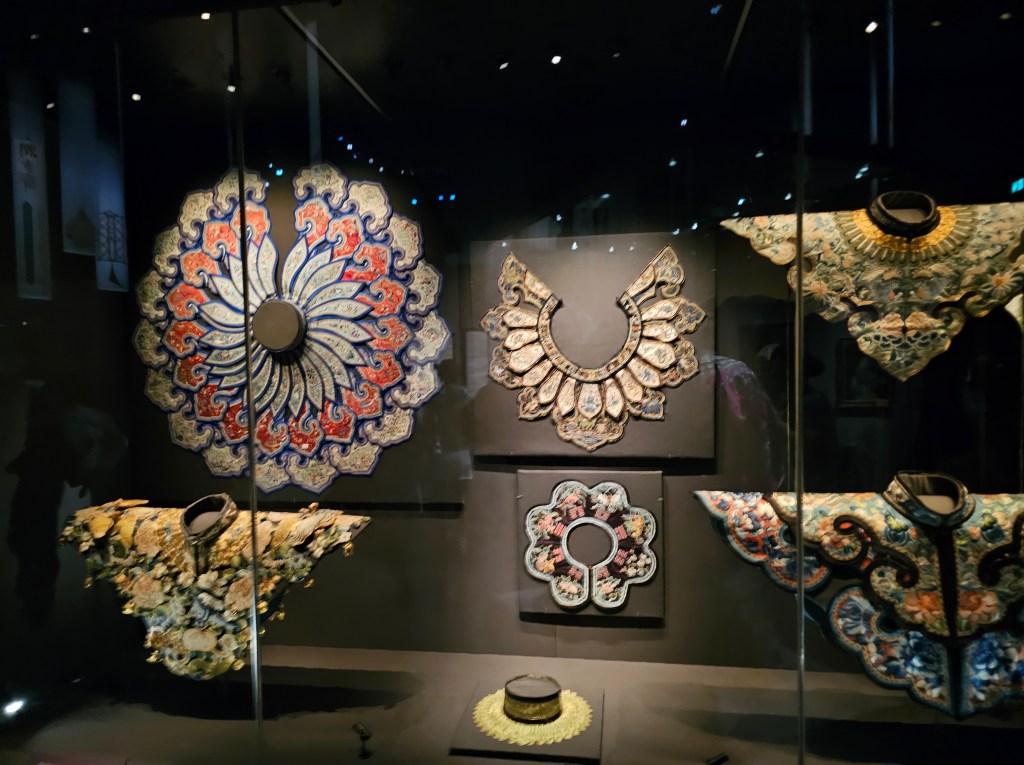

Above are two more examples of delicately crafted items that were presented, but without sufficient context. The second, a Mahjong Set, I also selected for my friend Gail who has in the last year or two become an avid player.
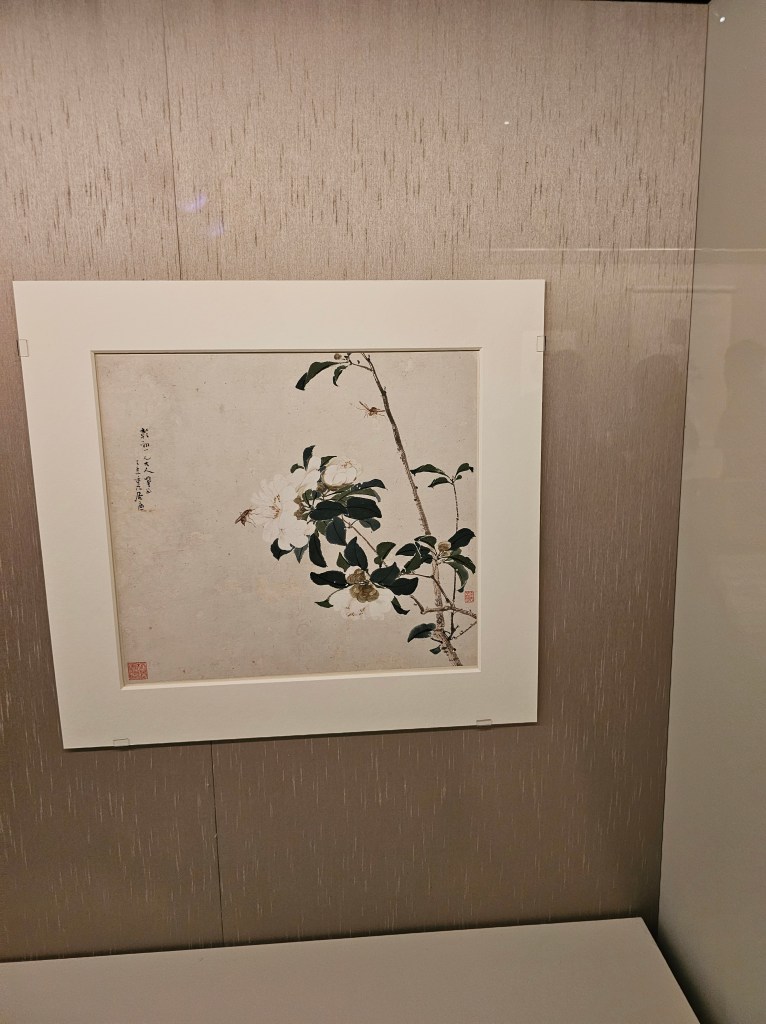

Excuse the poor quality of the photos above. The first is a lovely example of a Chinese watercolor executed to near perfection. The second is a depiction of a typical Chinese home of the period.
Throughout the exhibition there was narration from overhead speakers in Chinese. There was also limited text in English, accompanying the exhibits. It spoke in cryptic terms of the slow decline of the imperial system of governance, of the involvement of foreign nations, of military actions of other nations and of revolution. I thought that I might have heard the word Kuomintang spoken once in the Chinese narration, but there was no mention of the way that the revolution in China happened, only that there was a revolution after the emperor resigned. Similarly, one set of women’s clothing included tiny shoes that would have been worn on bound feet, no discussion of this custom was included. There was not discussion of the life of Puyi, the last Emperor, after his abdication, nor of the Eunuchs who raised him. I was left with a feeling that those who funded the exhibition controlled its content.
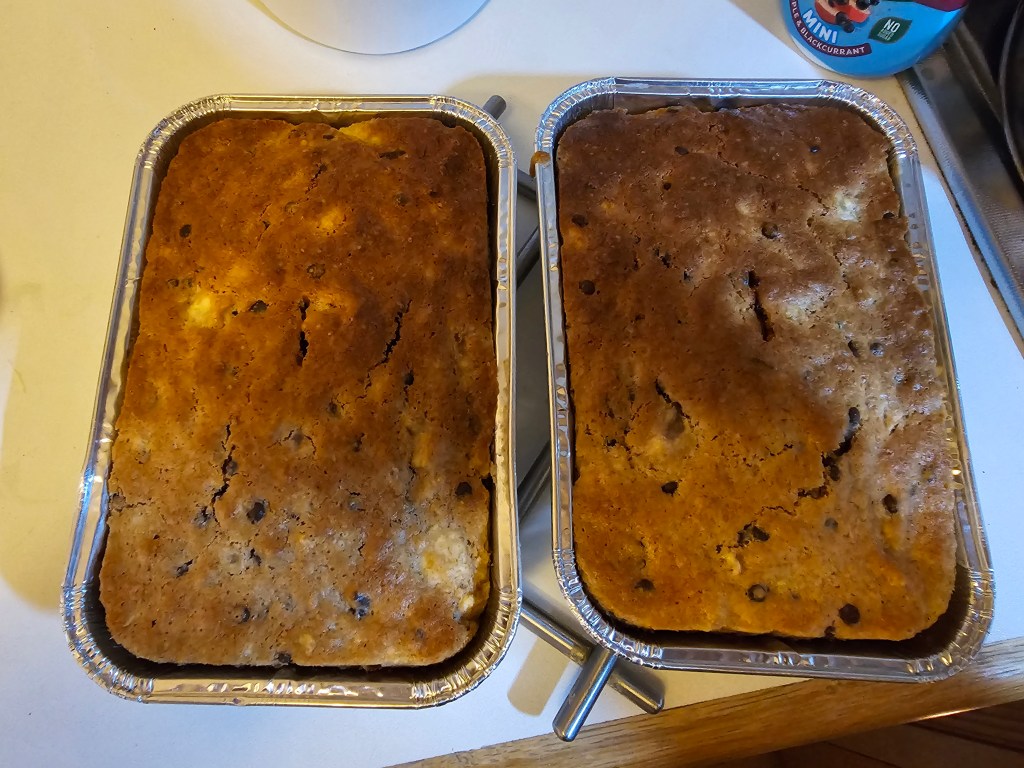
Finally, to end on a lighter note. I am gradually settling into Cartwright Gardens. While I do miss some of the amenities of Clare Court, I like having an oven to play with. To prove that point. Here is my first attempt at Centigrade cooking, banana bread.
 Mark In London