We are staying in a beautiful part of town called Darling Harbor. Steve, my intrepid pal, had done some exploring at the end of the first day while I lay prostrate in my bed trying to catch up on sleep. He led me on our second day in an incredible walk that made my Fitbit very happy. As we walked along the waterfront, there was a remarkable amount to see. There was a great deal of very interesting reuse of old industrial buildings, now remade into housing or restaurants and retail space. One example is this group of buildings.

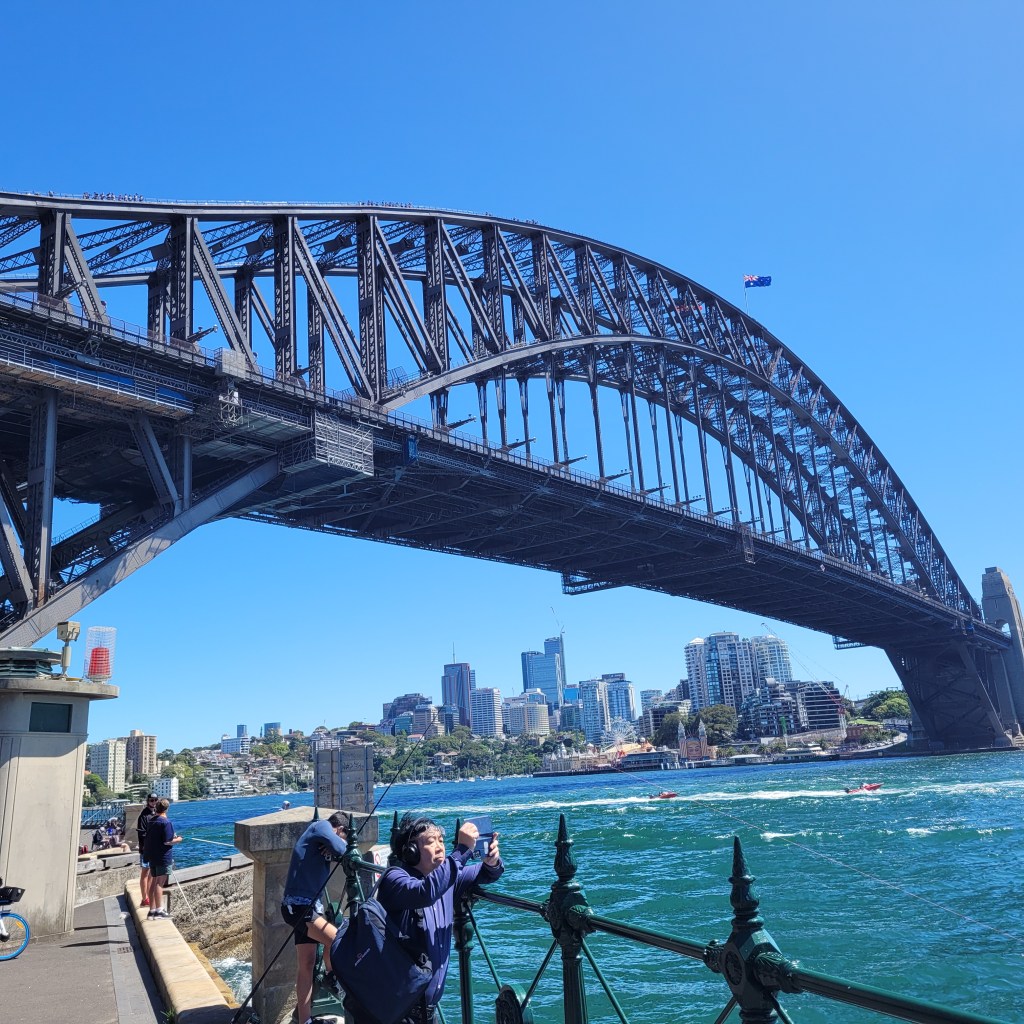
After seeing several peeks of the iconic Sydney Harbor Bridge, we finally turned around a curve and saw it in its glory. We noticed some tiny figures near the top of the span of the bridge that we finally realized were people making the bridge walk. We both agreed that this was definitely an activity we both enjoyed watching from a distance.
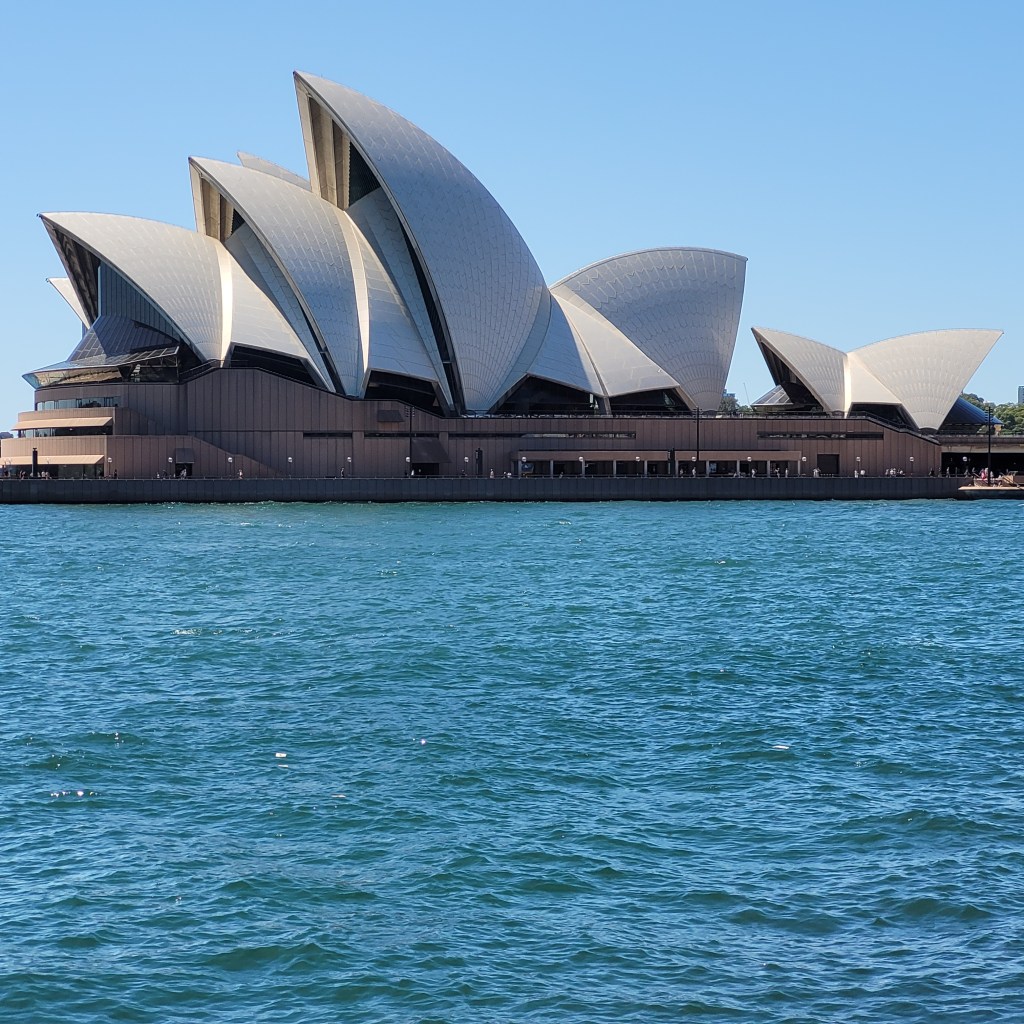
I have to admit that the long march from our flat through Darling Harbor, past the bridge and to the Opera House was not the stuff dreams are made of. But I made it. My remarkably fit companion who is only a few years my junior (the dirty dog) was still as fresh as a daisy, as I dragged my sorry butt through the lower restaurant level of the Opera House. We managed to get tickets for a tour of the incredible edifice for the next day (if I lived to see it, I thought) and then we chose the Sydney Opera House Bar for lunch.
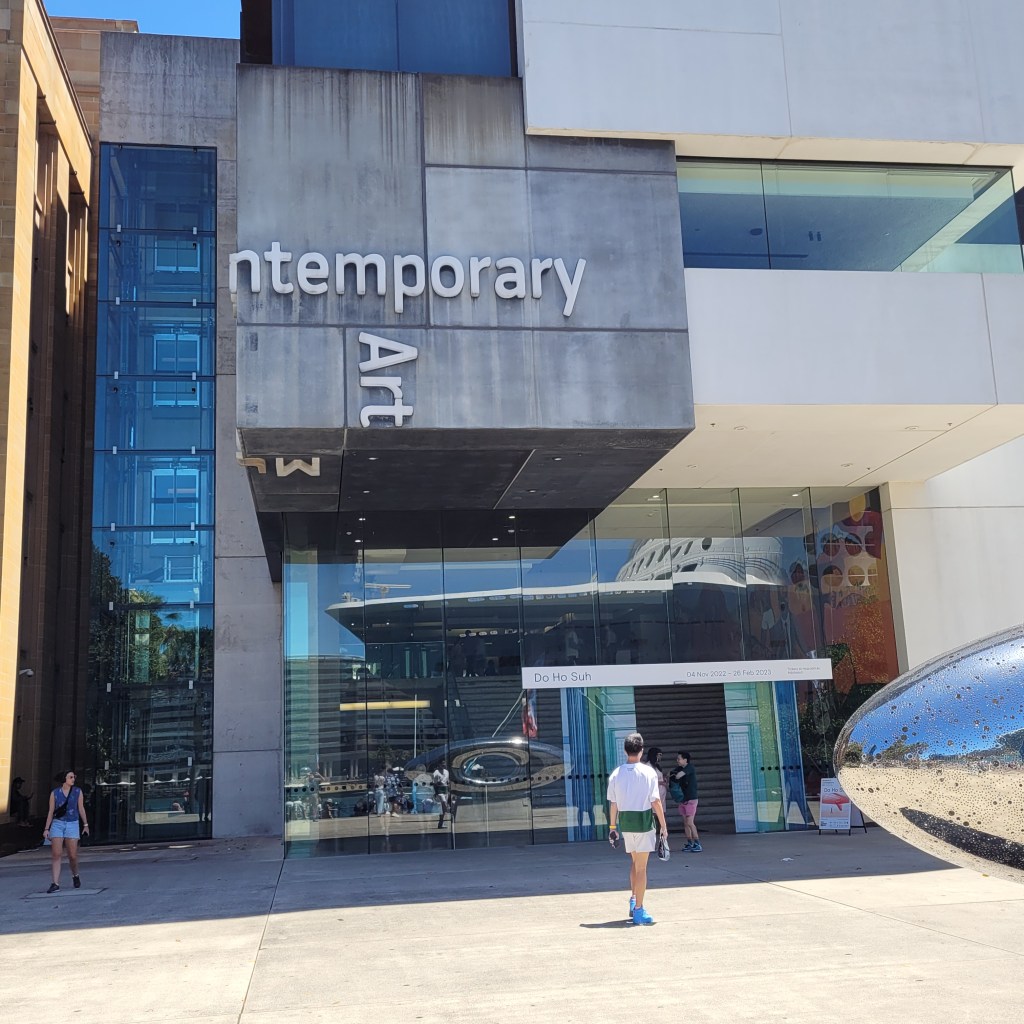
After lunch, I decided that I had not punished myself with enough walking for one day and so Steve and I chose to visit the Australia Museum of Contemporary Art located close to the Opera House, but with plenty of stairs and with acres of walking to be done inside. The museum is actually quite a pleasant place with a small collection of some very fine art by native Australian artists. There was a special exhibition on by a South Korean artist Do Ho Suh whose work is characterized by its exploration of concepts around home and identity.
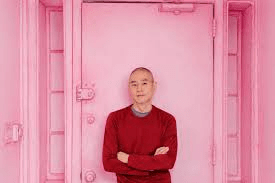
His work is interesting and appears substantial, in parts and ethereal in others. He has lived through a turbulent time of change in his native South Korea but moved on to create much of his work in New York, where he studied and London where he later settled. One of this most touching works, which is not shown here dealt with the protesters, many of whom were ‘disappeared’ during the student uprisings that led to the end of the military dictatorship in South Korea and the gradual development of a democracy there.
Perhaps the most interesting and exciting part of the permanent collection of the museum are the works of Aboriginal or native artists, living and working today in Australia. Here are some of these.
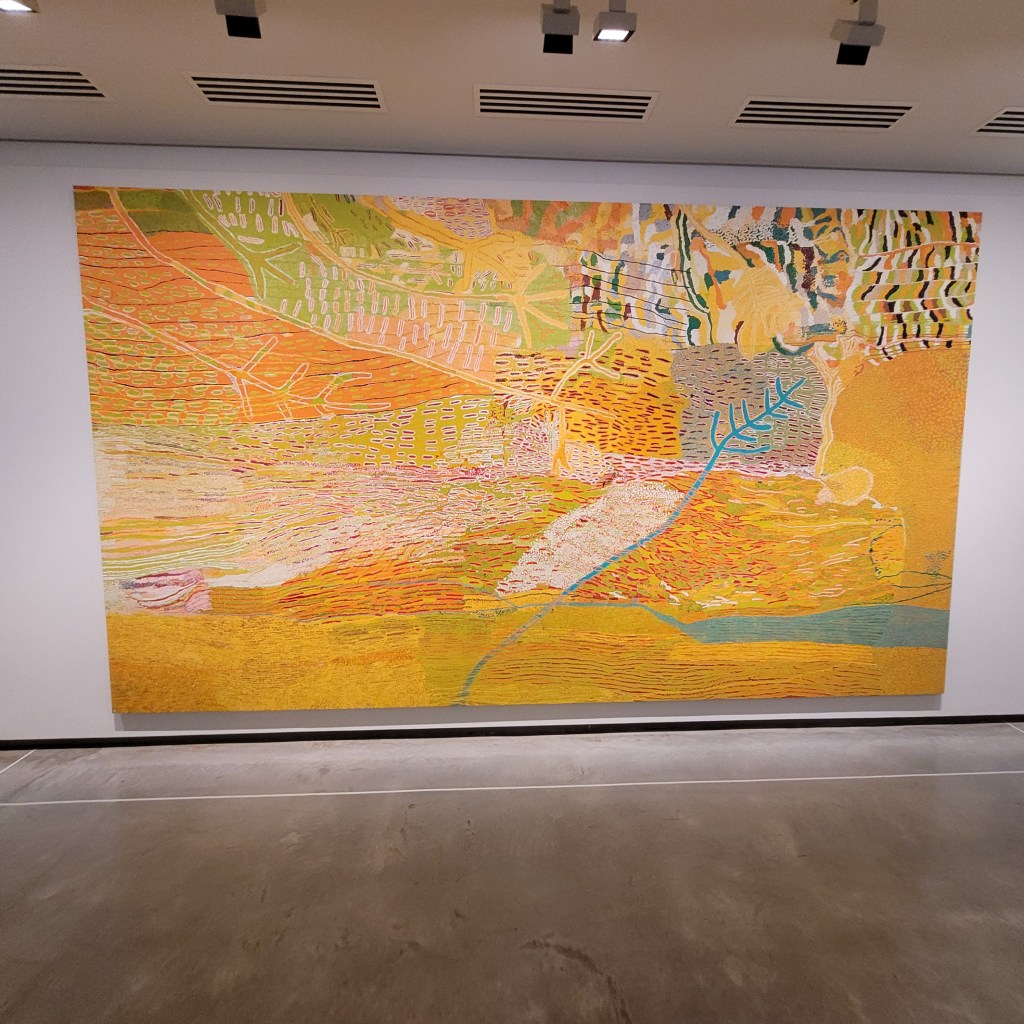
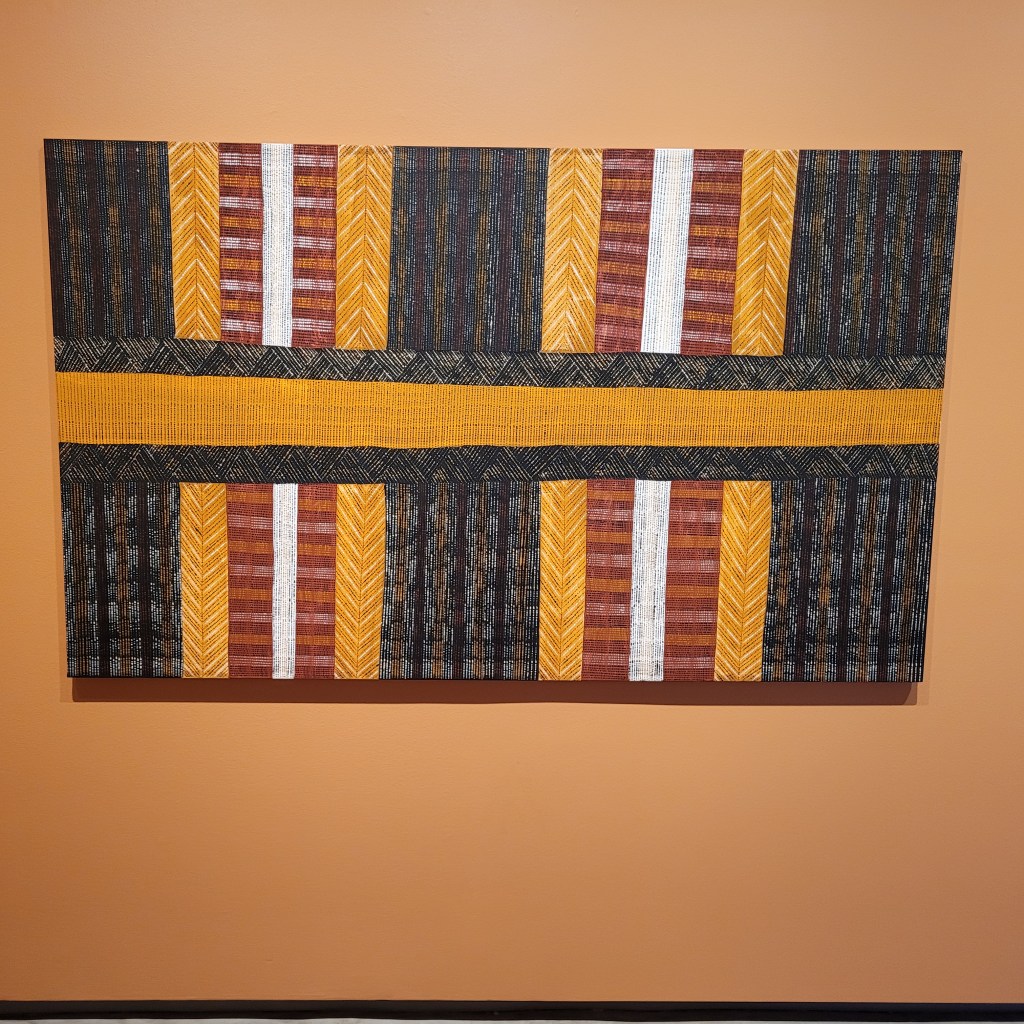
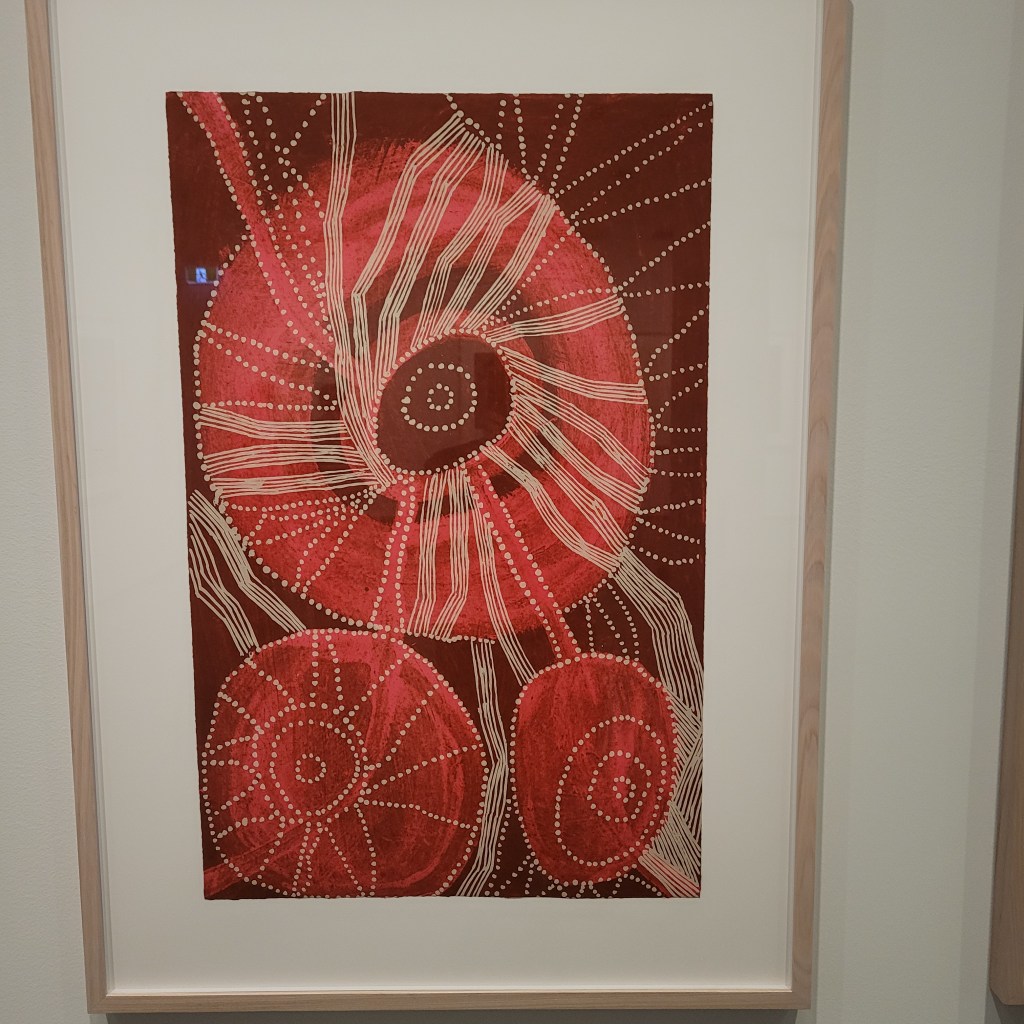
I find these works wonderful and I hope that you too enjoy them.
 Mark In London