It was a chilly morning so, I hopped on the Picadilly Line for the quick trip to Covent Garden Tube Station on my way to the Courtald Gallery at Somerset House. I had left myself some extra time so that I could check around the stalls at Covent Garden for an item one of my SUNY Oneonta besties had asked me to look out for and to give myself some time to visit the shop at the London Transport Museum, just outside the old Covent Garden Market. With great forbearance, I escaped the shop without buying anything, a rare occurrence for me.
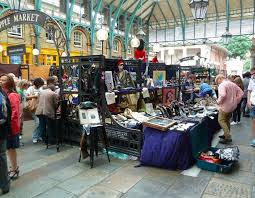

The Covent Garden area is rich in history. Most people know that Eliza Doolittle, the flower seller from Shaw’s ‘Pygmalion’ and Lerner’s adaption ‘My Fair Lady.’ But its literary references include Dickens and many others. The Bow Street Magistrates Court (now a hotel and museum), the Theatre Royal on Drury Lane, Saint Paul’s Church are all historic building in the streets around the former flower and vegetable market that is now a popular tourist attraction selling all kinds of souvenirs. It has restaurants, musicians and the Royal Opera house is nearby too.
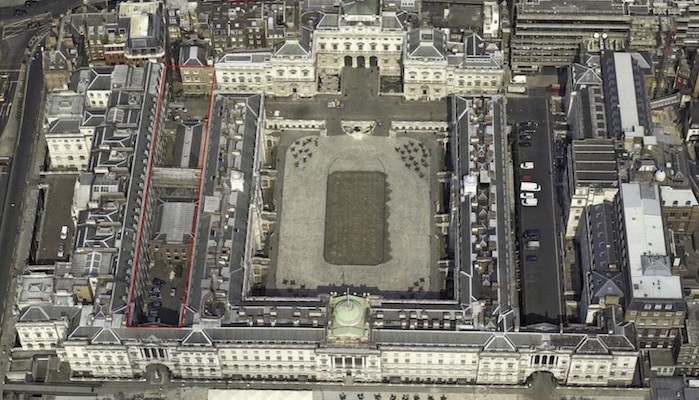
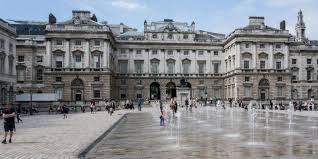
As I left the London Transport Museum, I passed the Marquess of Anglesey Pub in the upstairs restaurant of which I met my UK best pals Nigel and Gwynne many years ago. I also passed the former locations of restaurants I fondly recall. But that too is London, the city that has some landmarks that stay and some that stay only in our memories. I soon made my way to the Strand and across that busy road and walked through an unassuming arch into a courtyard for which I was not prepared. It had been enough years since my last visit to the Courtald Gallery that I had completely forgotten about the splendor of Somerset House in which it is located. Somerset House has a long and illustrious history. Earlier versions were royal residences and important sites in English and UK history. Today’s building has more of a governmental history, but an important one. It was so important that the German’s saw fit to damage it severely during World War II. Here are two exterior views of this beautiful historic building.
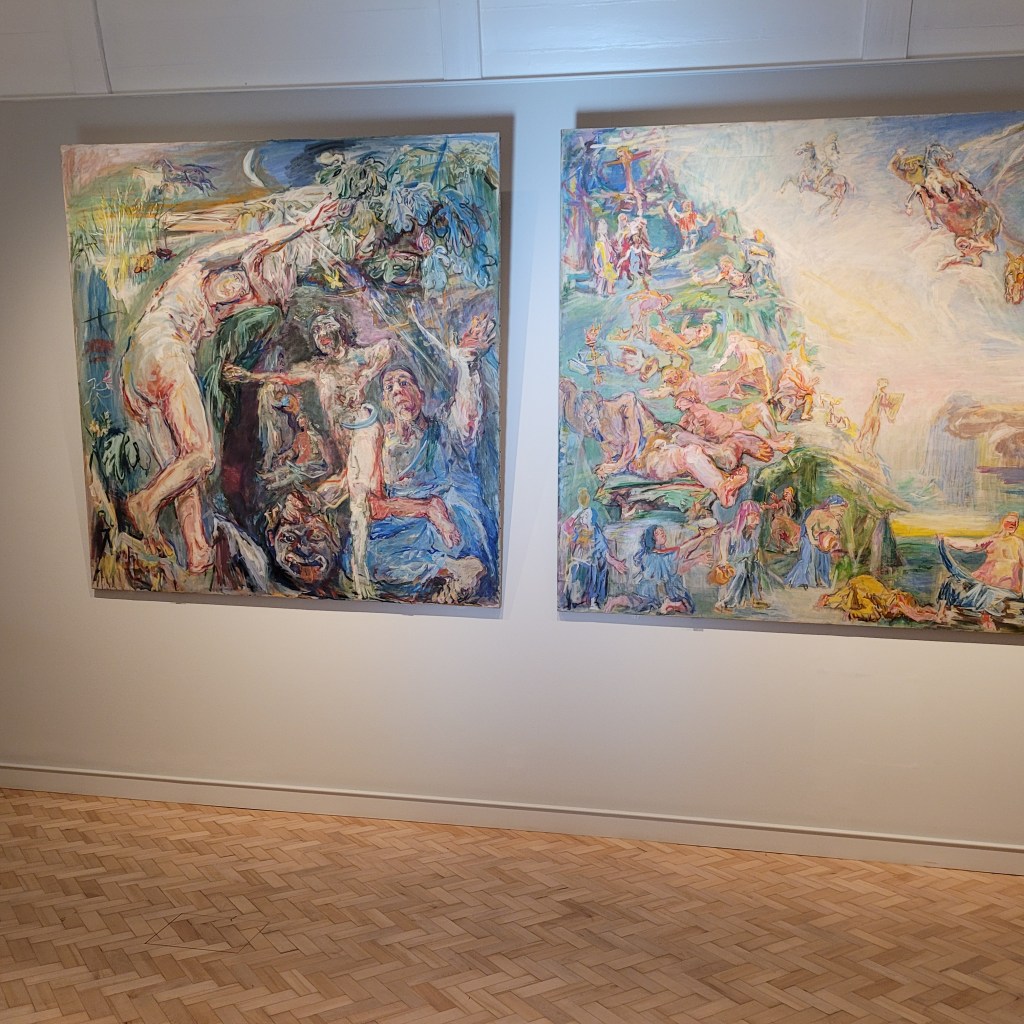
The Courtald’s collection contains masterpieces from the Middle Ages into the Twentieth Century. My visit focused on the Impressionists and Post-Impressionists. I found a three-piece depiction of the Prometheus Myth to be quite interesting. It was painted by the Austrian Oskar Kokoschka, a contemporary of Klimt.

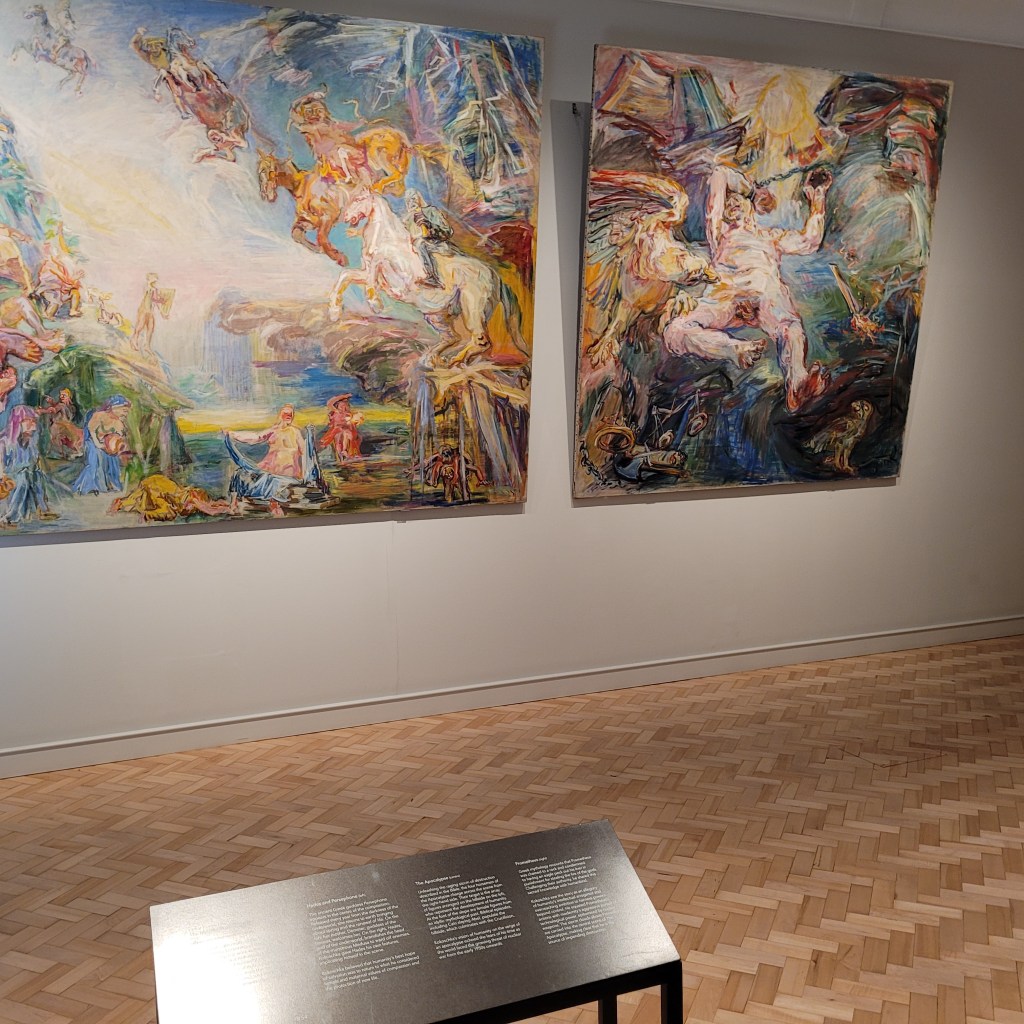
The Impressionist collection contains paintings and some small sculptures by many favorites. I found the way they were presented, a bit too formal. The lighting seemed too dark. Some that I should have enjoyed more, seemed “flat.”
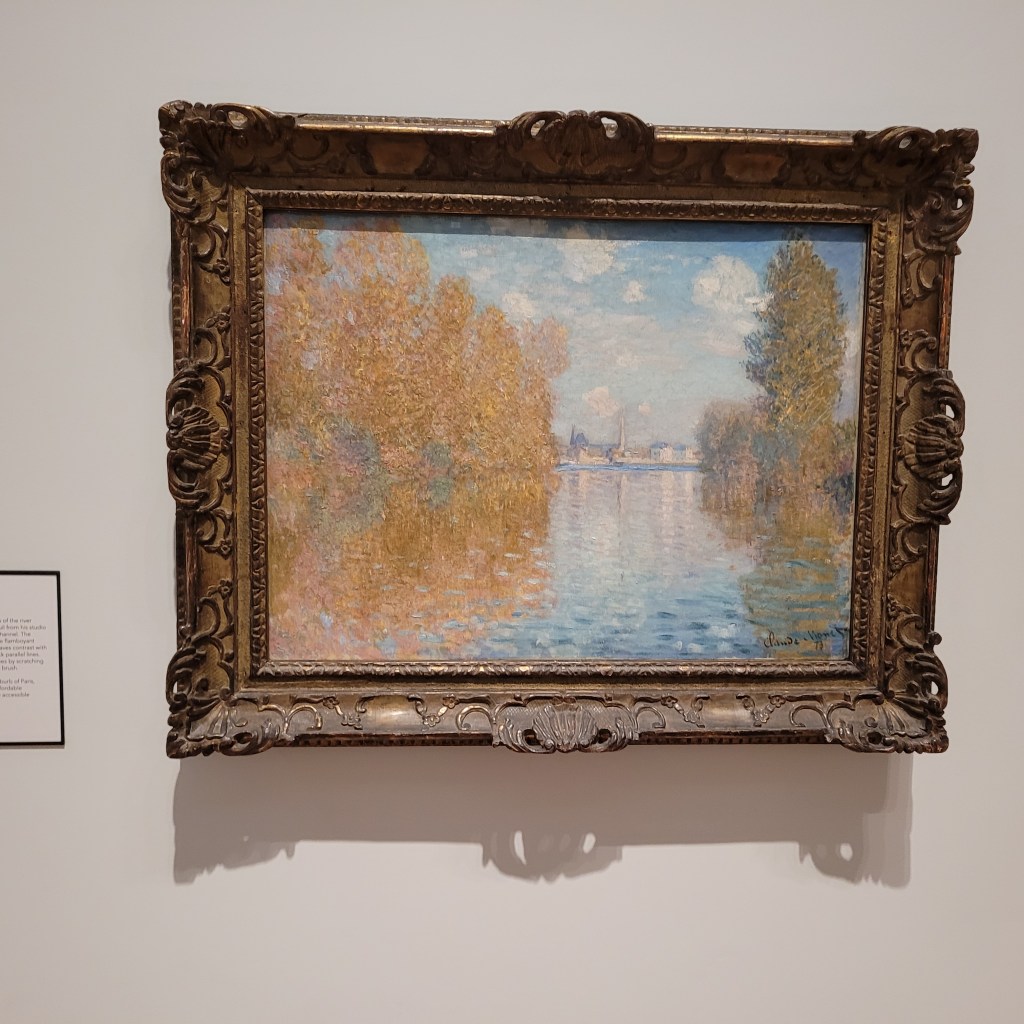
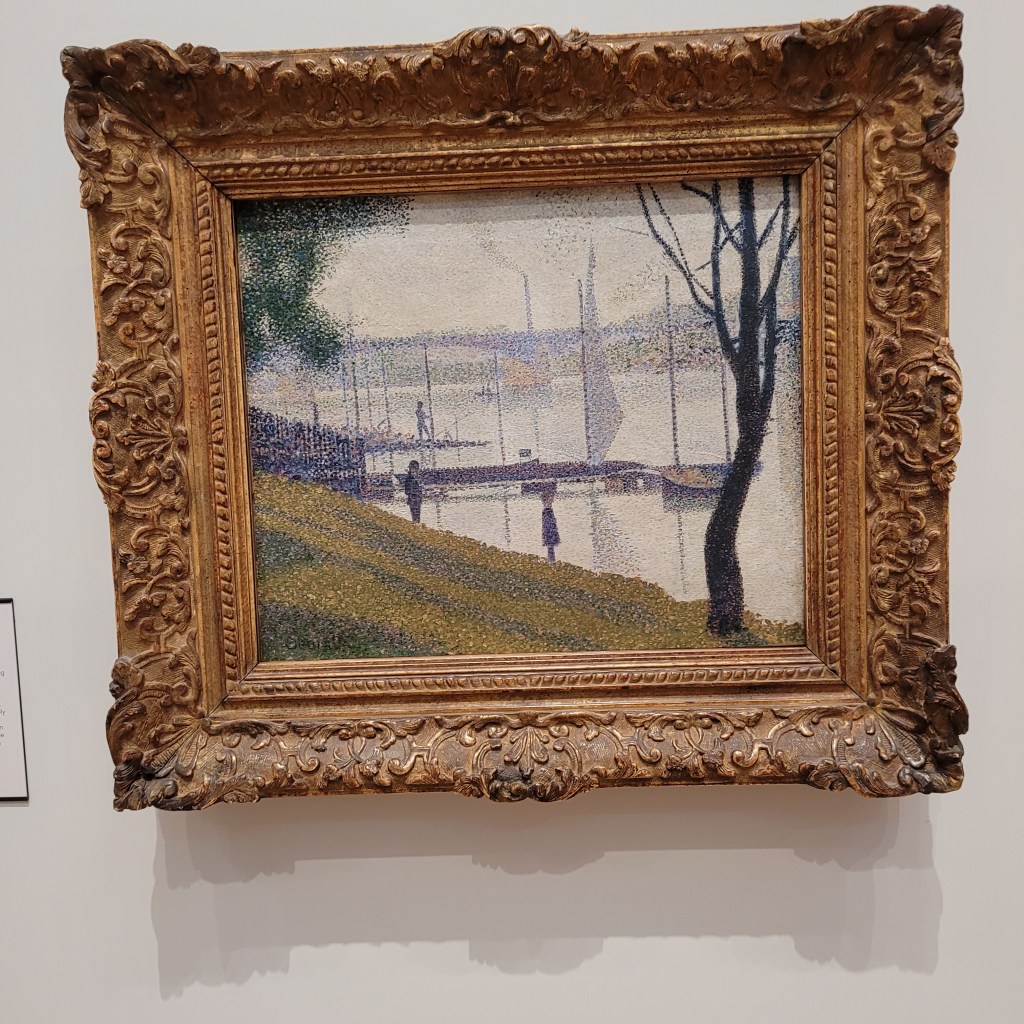
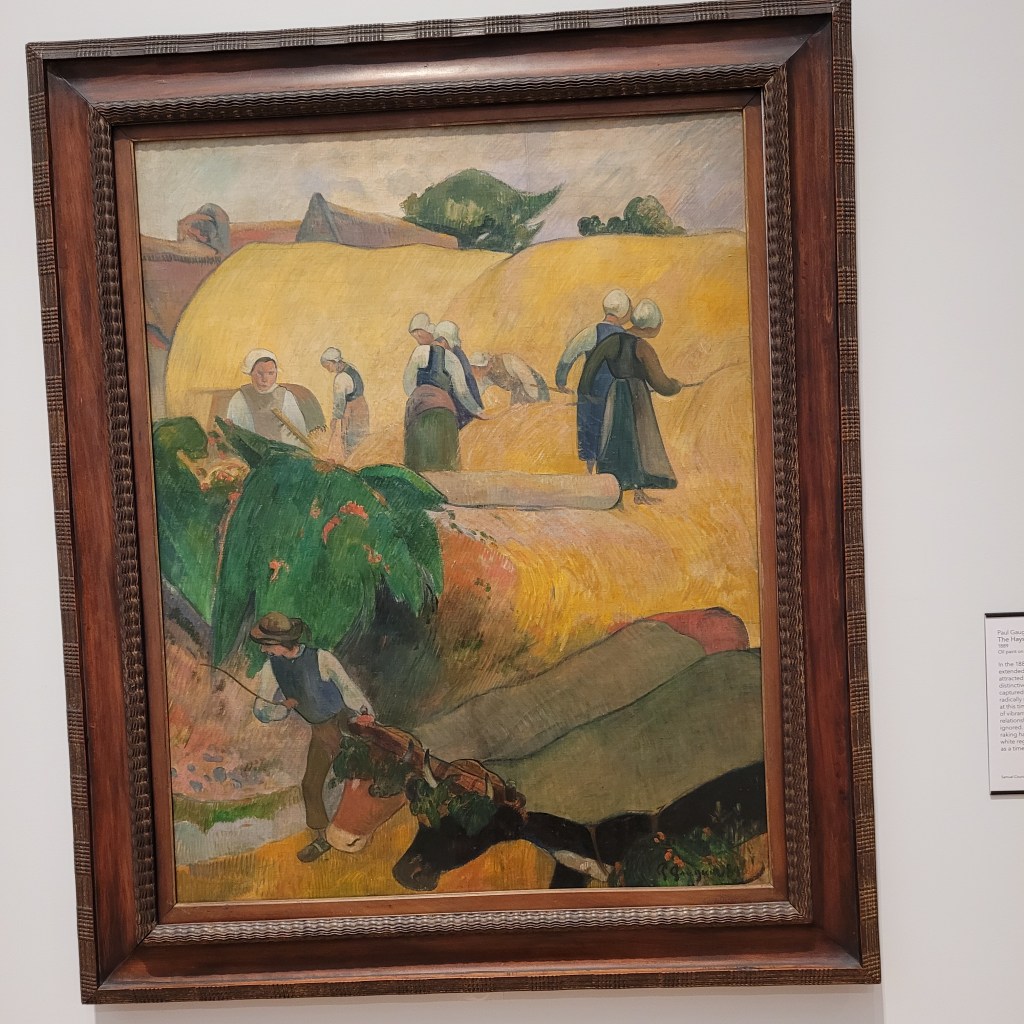
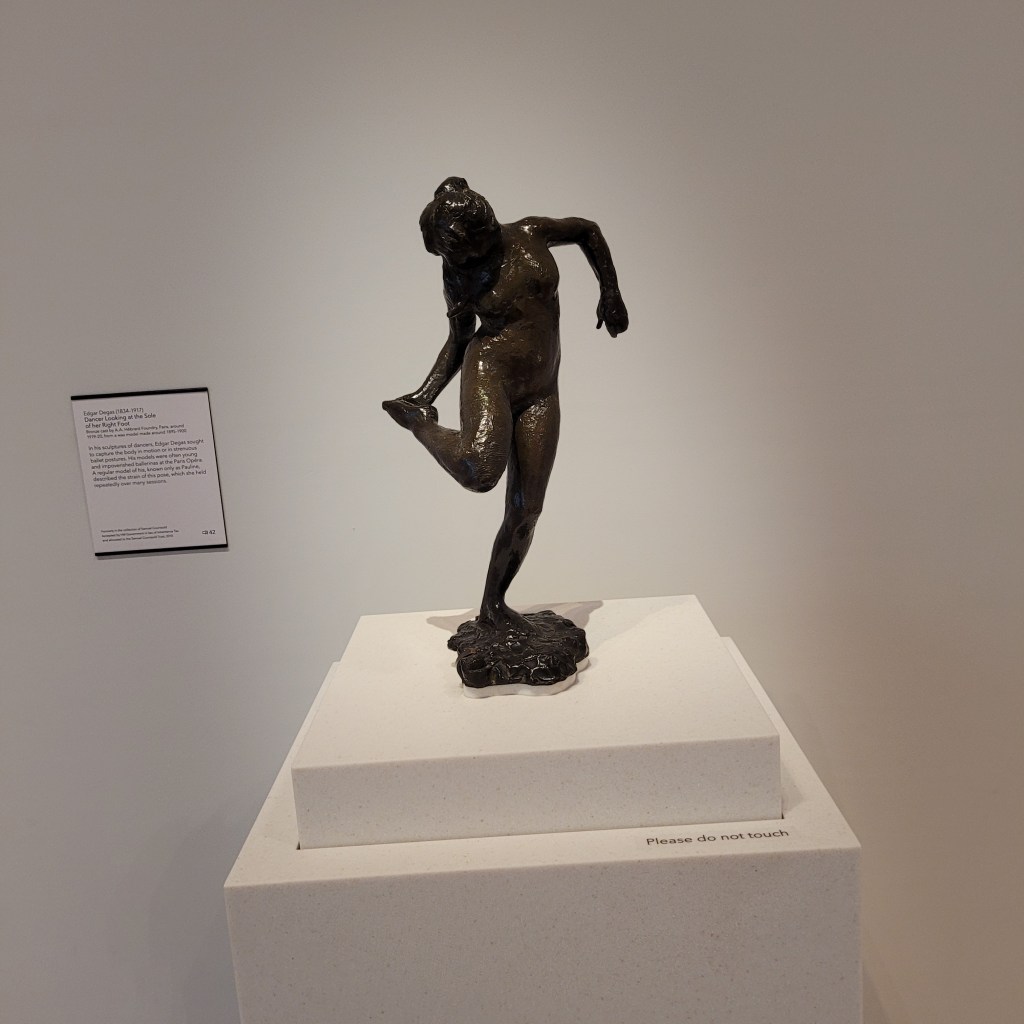
“Autumn Effect at Argenteuil” by Monet did standout to me. Seurat’s “The Bridge at Courbevoie” was excellent example of pointillist technique and Seurat’s unique style and detail, a delight to visit. I also thought that “The Haystacks: by Gauguin stood out in the collection. Degas’ “Dancer looking at the Right Sole of Her Foot,” is one of his exquisite small sculptures that made this visit a pleasing one too.
The final piece I want to mention is the large piece that hangs over the grand staircase that leads to the top Collections floor where the Impressionist and Post-Impressionists are located. This piece is called “Unmoored from Her Reflection it is a 2021 work by Cecily Brown (born 1969). I found it innovative and exciting, a piece that speaks to the future of art, filled with color and wonder.

After a quick visit to the Art Cafe on the Ground Level of the Courtald (a lovely facility with good coffee), I made my way toward the Temple Tube Station, passing, as I made the short walk, this interesting sign above a locked gateway on a building at King’s College, London.
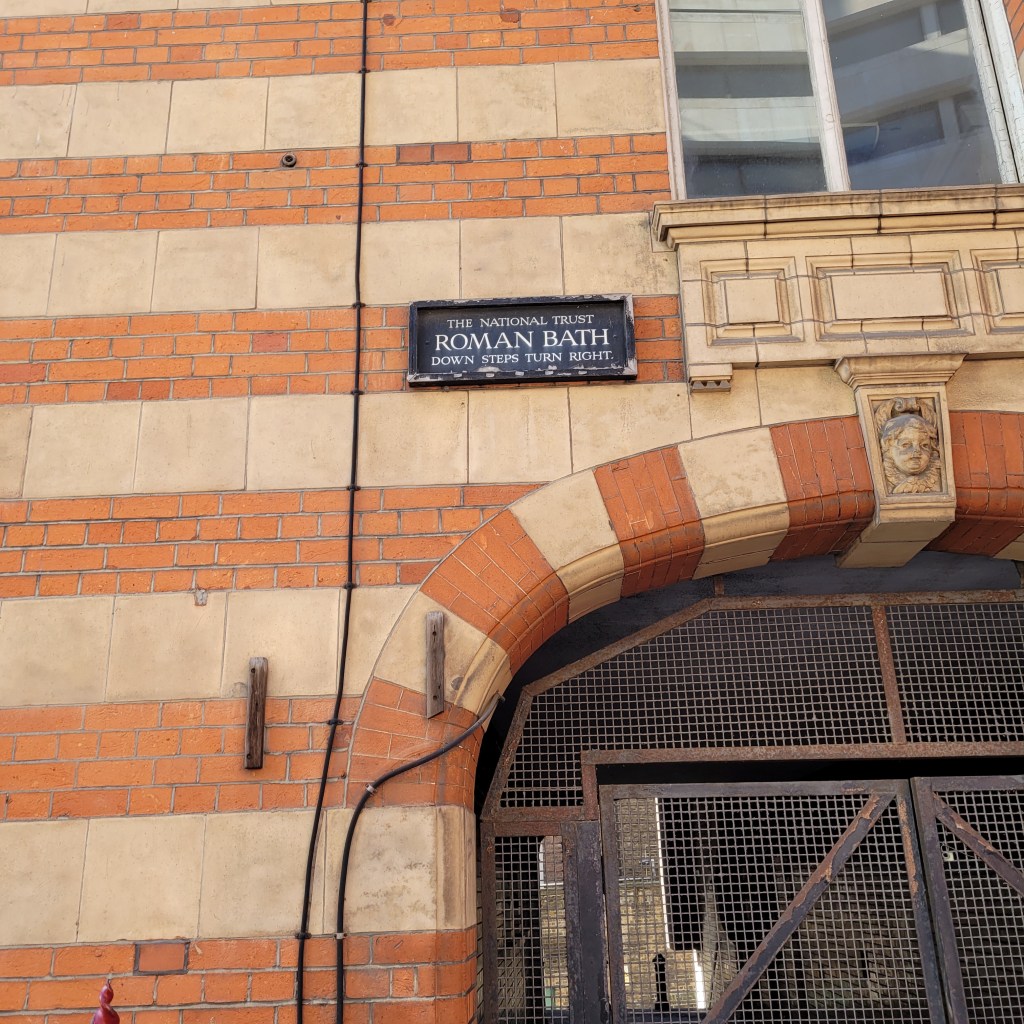
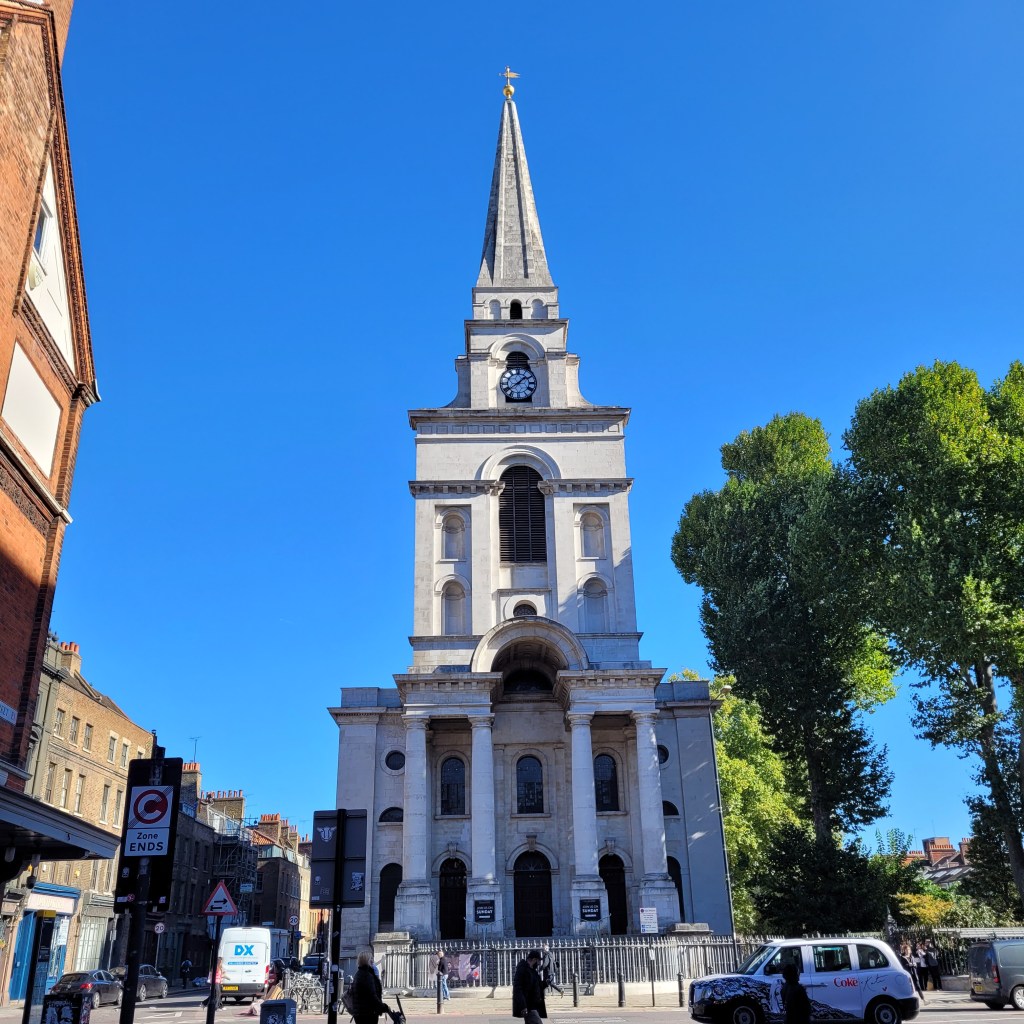
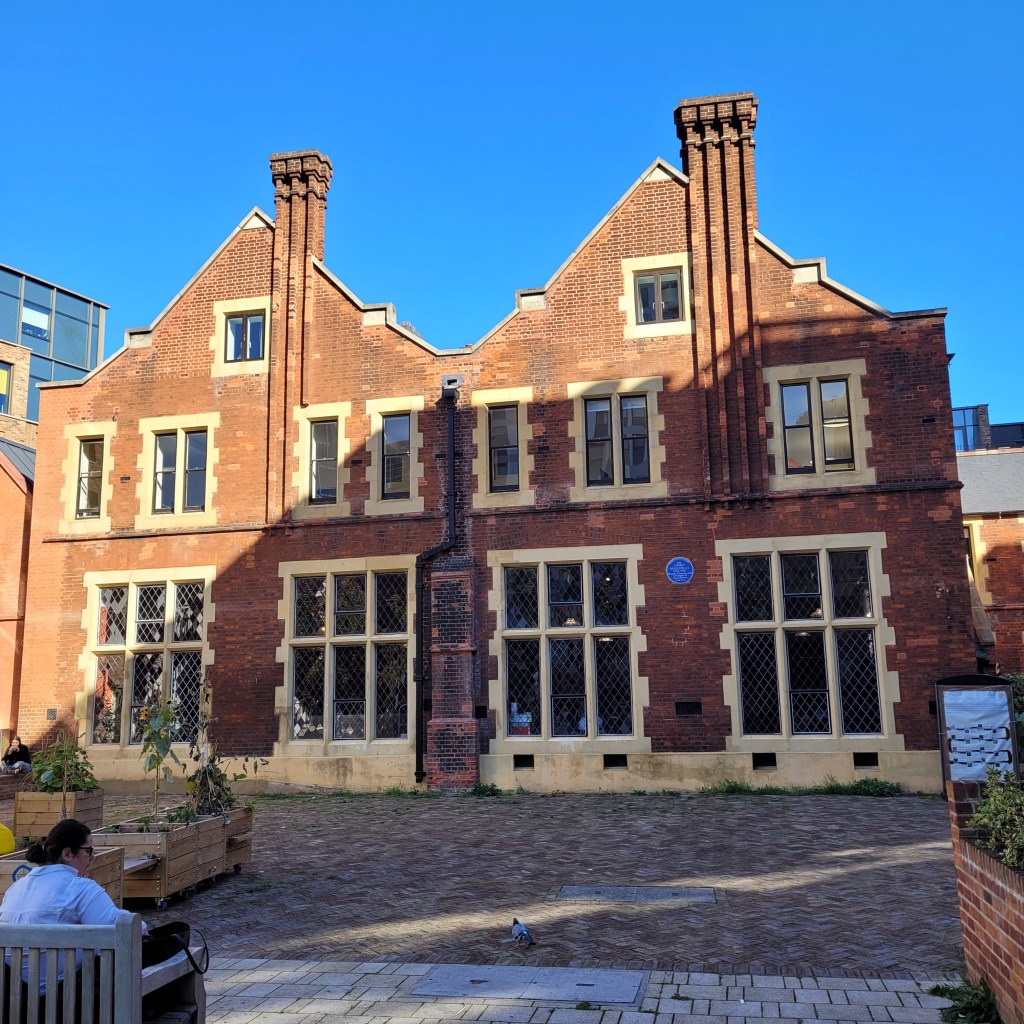
According to the National Trust, they are not “Roman, but in fact the remaining portion of a cistern built in 1612 to feed a fountain in the gardens of the old Somerset House, then a royal palace. After a long period of neglect and decay, following the demolition of the fountain, they were brought back into use in the 1770s as a public cold plunge bath. They can be viewed by making a request to the Westminster Council. I took the Tube on to visit another favorite London market, Spitalfields, that I have visited and posted about before on my Facebook page. I will post this picture of Christ Church Spitalfields, designed by Nicholas Hawksmoor and consecrated in 1729. And the picture of this interesting Arts and Crafts building that was the home of Dr. Jimmy Mallon, CH, Warden of Toynbee Hall, Champion of Social Reform (according to the Blue Plaque erected there.
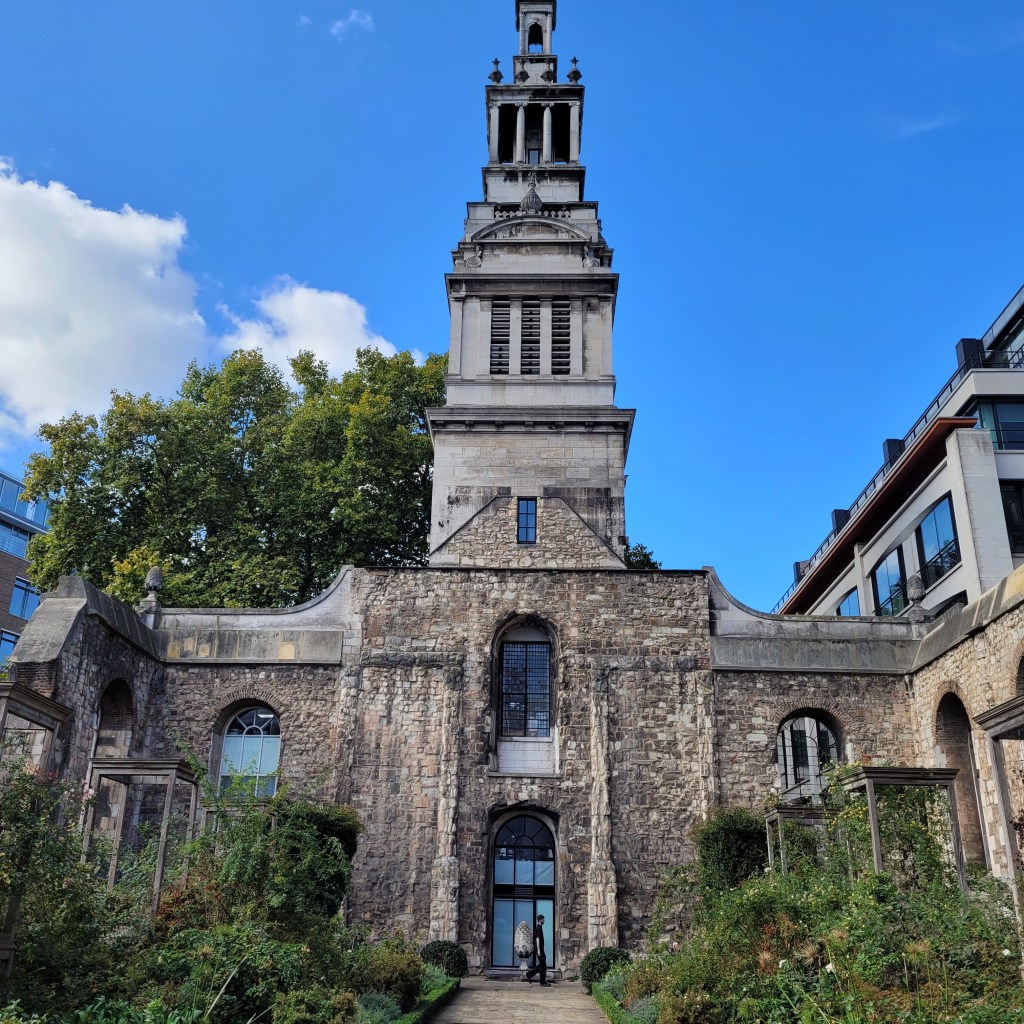
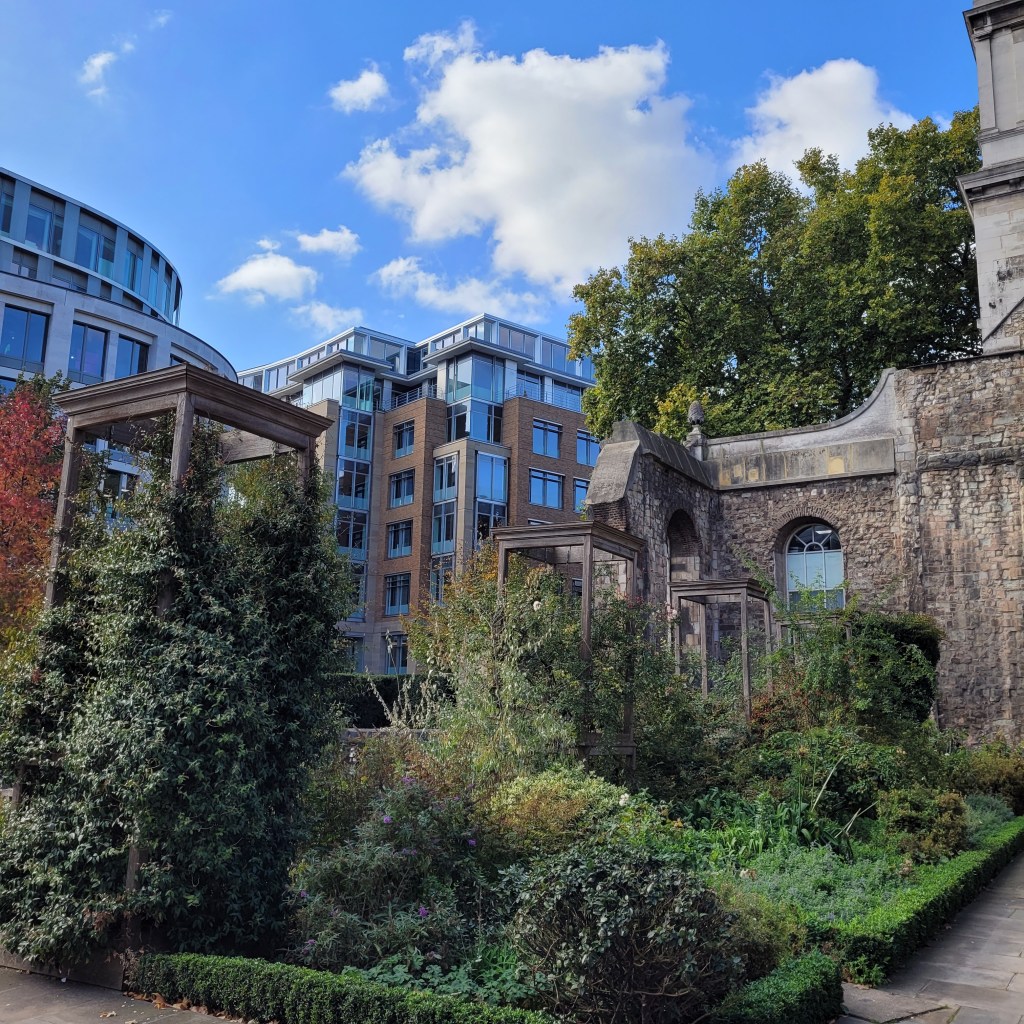
As I neared the Tube Station for my return to Bloomsbury, I noticed a lovely garden built in the midst of the ruins of a church of some kind, I thought. After taking a few pictures, I found a plaque identifying the place as remaining parts of the Christophen Wren designed Christ Church built to replace the Greyfriars Church, left after the dissolution of the monasteries. The Greyfriars church was destroyed in the Great Fire of London. Christ Church was one of 14 Wren churches destroyed by Nazi bombing during WWII. The garden funded by a private company is a peaceful haven in the busy center of the city.

And so, it goes in a city where history is around every corner.
 Mark In London