Last year, getting my Covid seasonal shot (or ‘jab’ as it’s called here) was incredibly easy on the NHS. Not so much this year, but I persevere. My first attempts were to seek out the pharmacies and drop in sites listed on the NHS Site. Alright, I thought, let’s get on the trusty Tube and head up to Camden Town. If nothing else, Camden Town, home of the Camden Market, is always an interesting place.
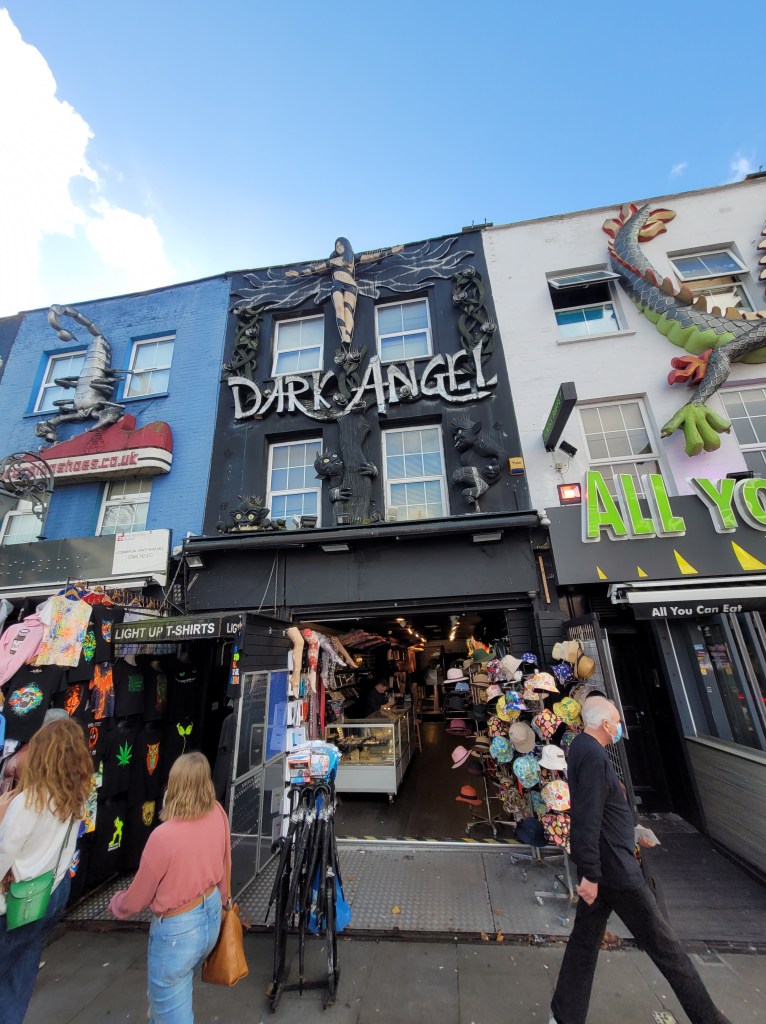
There were many shops like these, even a fellow from the Ministry of Silly Walks, but alas, no Covid jabs on offer in Camden. In fact, the site recommended on the NHS site was a building now undergoing complete renovation! Slightly dazed and confused people walking near the Camden Town Tube station do not garner even a second look, though and I just moved on. So, I got back on the tube and headed south. As it was a pleasant afternoon, I decided to get off at Euston Station and walked back down the Euston Road toward my flat. As I did, I noticed a lovely older building and, in the distance, the spires of Saint Pancras Hotel and Rail Station.

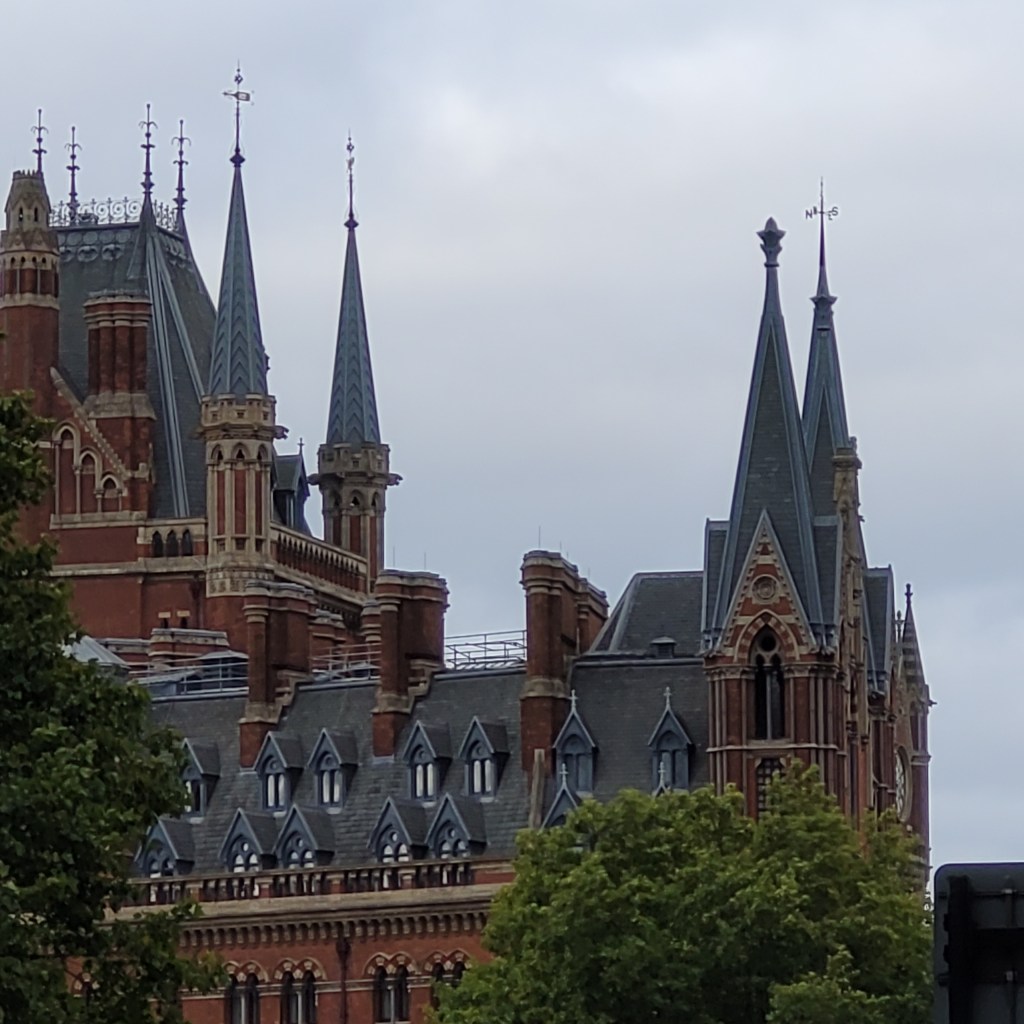
I think I am now at that point in my annual London sojourn where I start getting attacks of “pre-nostalgia.” The two photos above are signs of that. I begin to notice the beauty of the urban settings I have been living in and near. To me, that is the joy that I find in London and most European cities. In spite of wars, and civil unrest, these cities have survived and maintained their beauty. Bostonians, New Yorkers, and Philadelphians have done a good job at home saving some of America’s oldest post-European contact cities. Far too much was destroyed in DC in the name of “urban renewal.” So many of the cities of the south and the west in the US are simply new. But the US is a stunningly beautiful country too. I can recall the magic of driving up Interstate 395 toward Washington, DC each morning and never tiring of the view of our national monuments and the U.S. Capitol. I guess this “little meander” is just ,y way of urging all to travel, find places you love and love the place you live.
So, the “jab hunt” continued the next day. This trip took me to Drury Lane in the heart of Covent Garden and the West End, the London theatre district. This time, the pharmacy, part of a local chain, was there and open. It advertised flu jabs on one window but on another had a sign that said, “no inoculations.” When I asked, they said that they might have some vaccines in a week, maybe not. “Oh well,” as my friend Sally would say.
“Well then”, I said, what’s the next church on my list?” I hopped onto the Tube and after a few up and down the stairs at transfer points, I arrived at Sloane Square. People of a certain age may immediately associate this place with the Sloane Ranger, a certain, young, wealthy person from that area. One only needs to admire the lovely architecture and homes to appreciate that this is not a place for the common folk. It is the home of many fancy stores and the Royal Court Theatre where I have seen many fine productions.
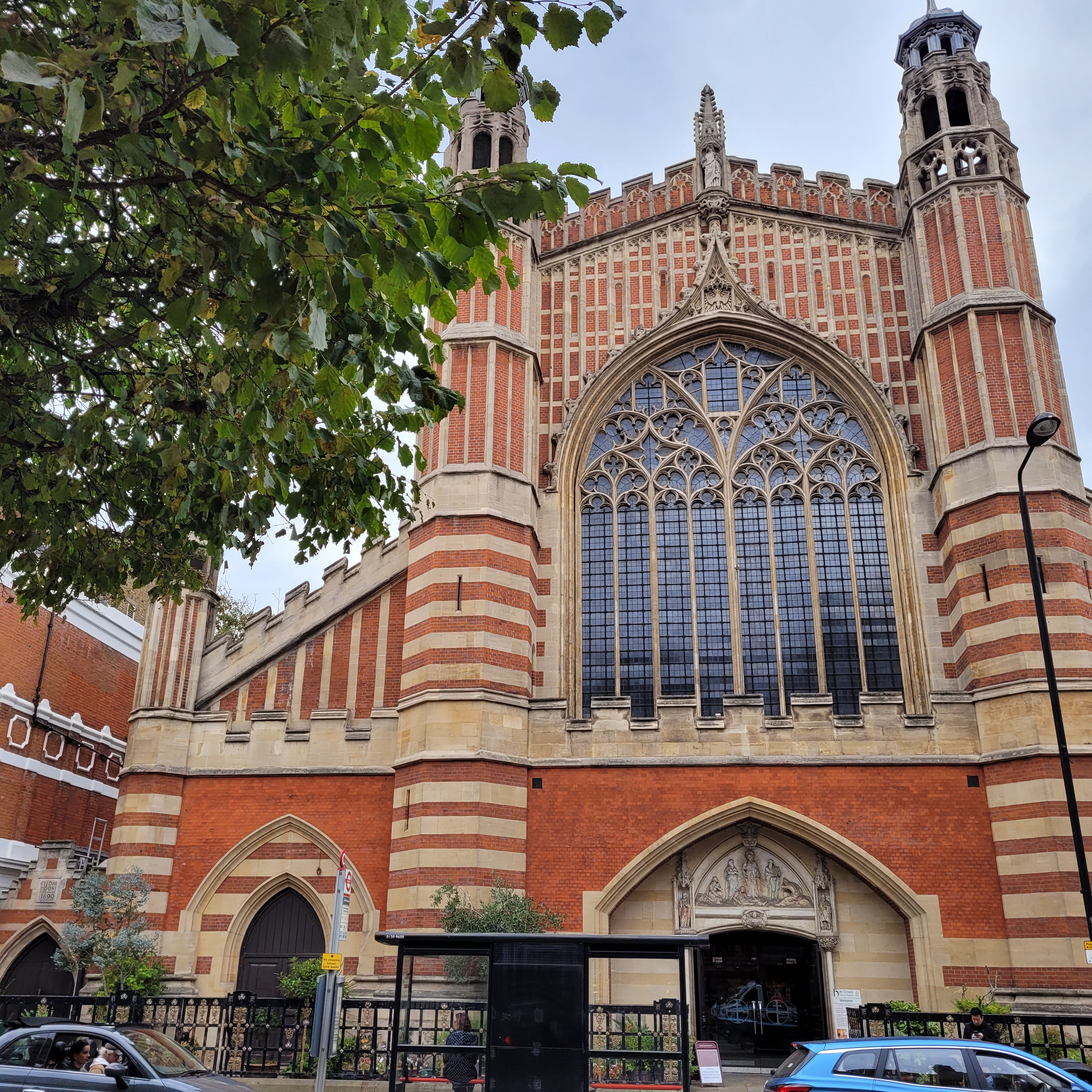
I, however, was there to find Holy Trinity Church, another Anglo Catholic Church rumored to have some lovely, stained-glass windows and internal features. This first picture is taken from the internet because

the church is on a busy narrow road, difficult to capture the entire building. On the church’s website Peyton Skipwith describes the building this way (I use a rather significant portion of the History section from their sight because it is so full of historical names and dates):
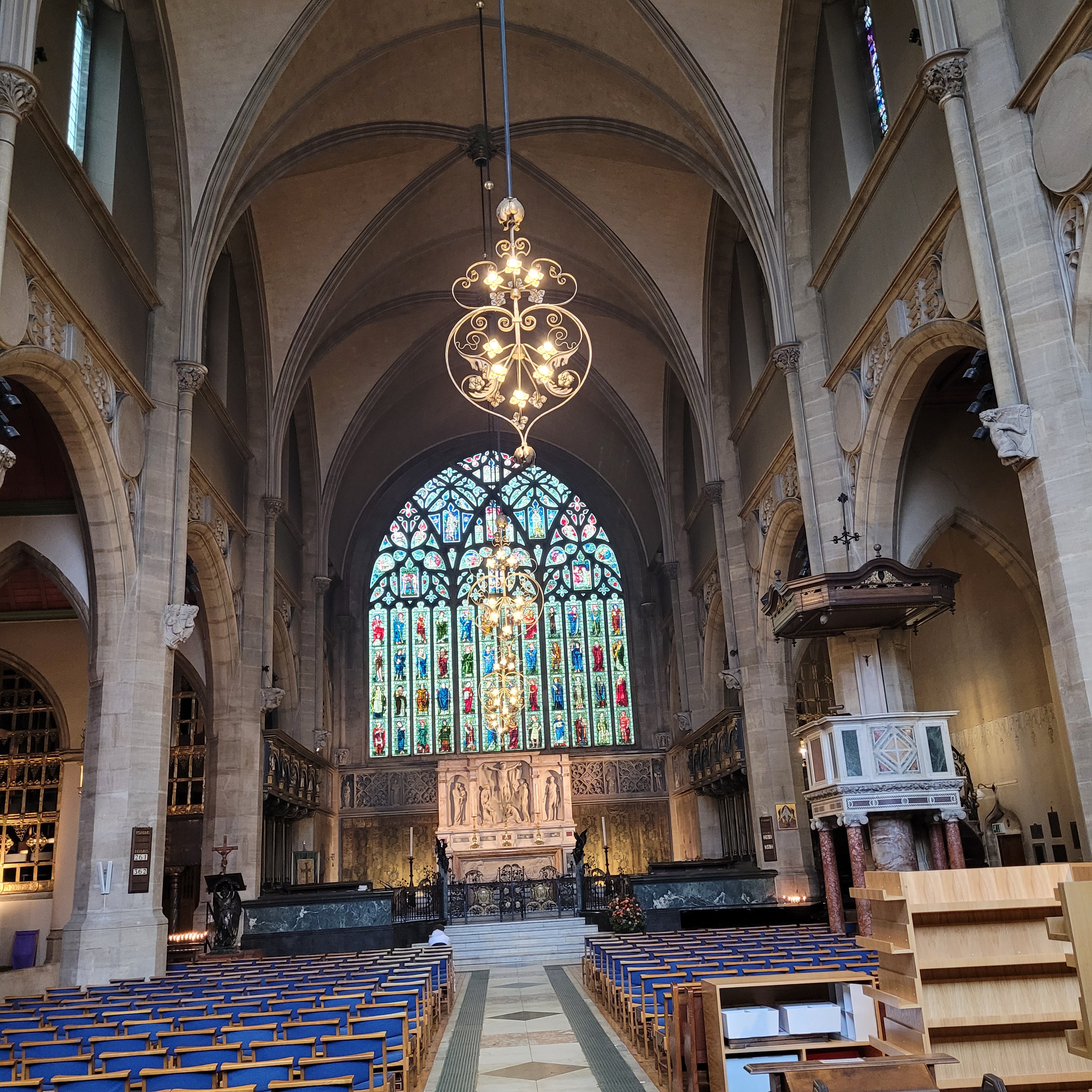
“Behind its magnificent red brick and stone facade, reminiscent of collegiate architecture of the late 16th and early 17th-century, is a veritable jewel-box of stained glass, sculpture and highly wrought metalwork by many of the finest artists and craftsmen of the late nineteenth century. The 5th Earl Cadogan and his wife Beatrix were responsible for the decision to replace an earlier church building and, presumably, for the choice of the architect, John Dando Sedding (1838-1891). They couldn’t have chosen better.
Sedding had trained in the offices of G.E Street (1824-1881), the most prolific and influential ecclesiastical architect of the previous generation, in whose offices William Morris, Philip Webb and Norman Shaw had also trained. Sedding was one of the prime movers of what became known as the Arts and Crafts Movement, which drew much of its early inspiration from the example and teachings Pugin and Ruskin. At the 1888 Liverpool Art Congress Sedding, in a veritable roll-call of the advanced architects and designers of the day, declared ‘We should have had no Morris, no Burges, no Shaw, no Webb, no Bodley, no Rossetti, no Crane, but for Pugin.’
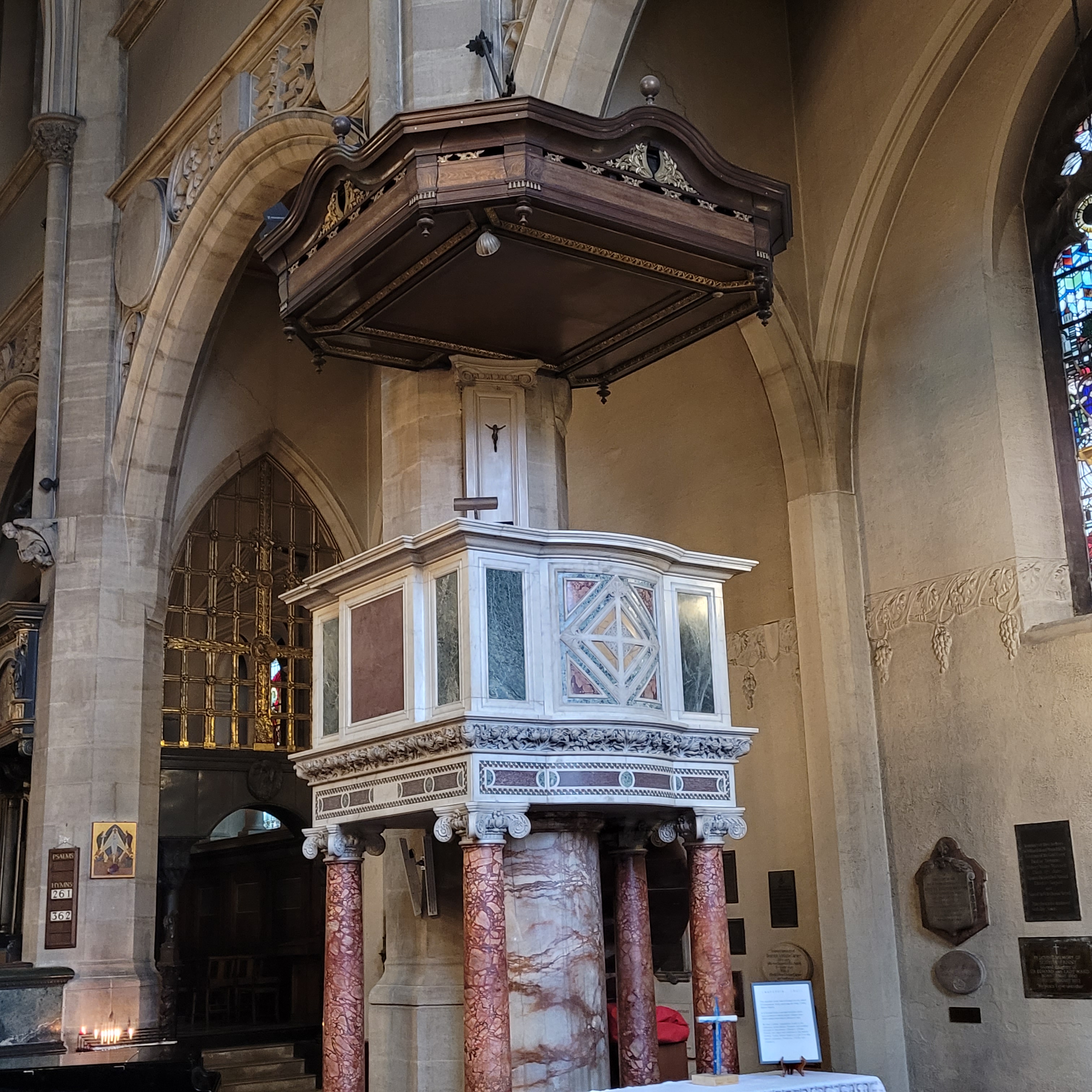
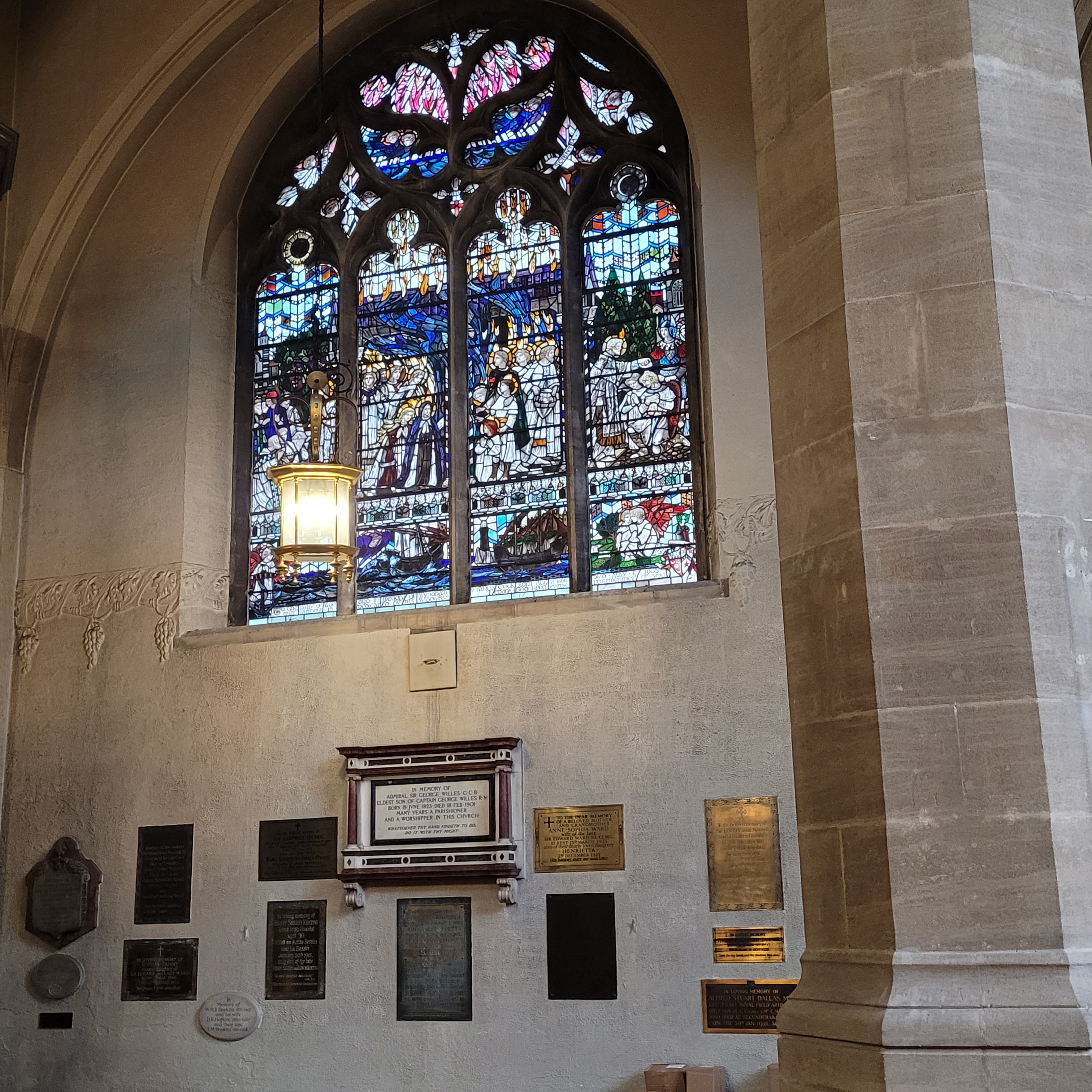
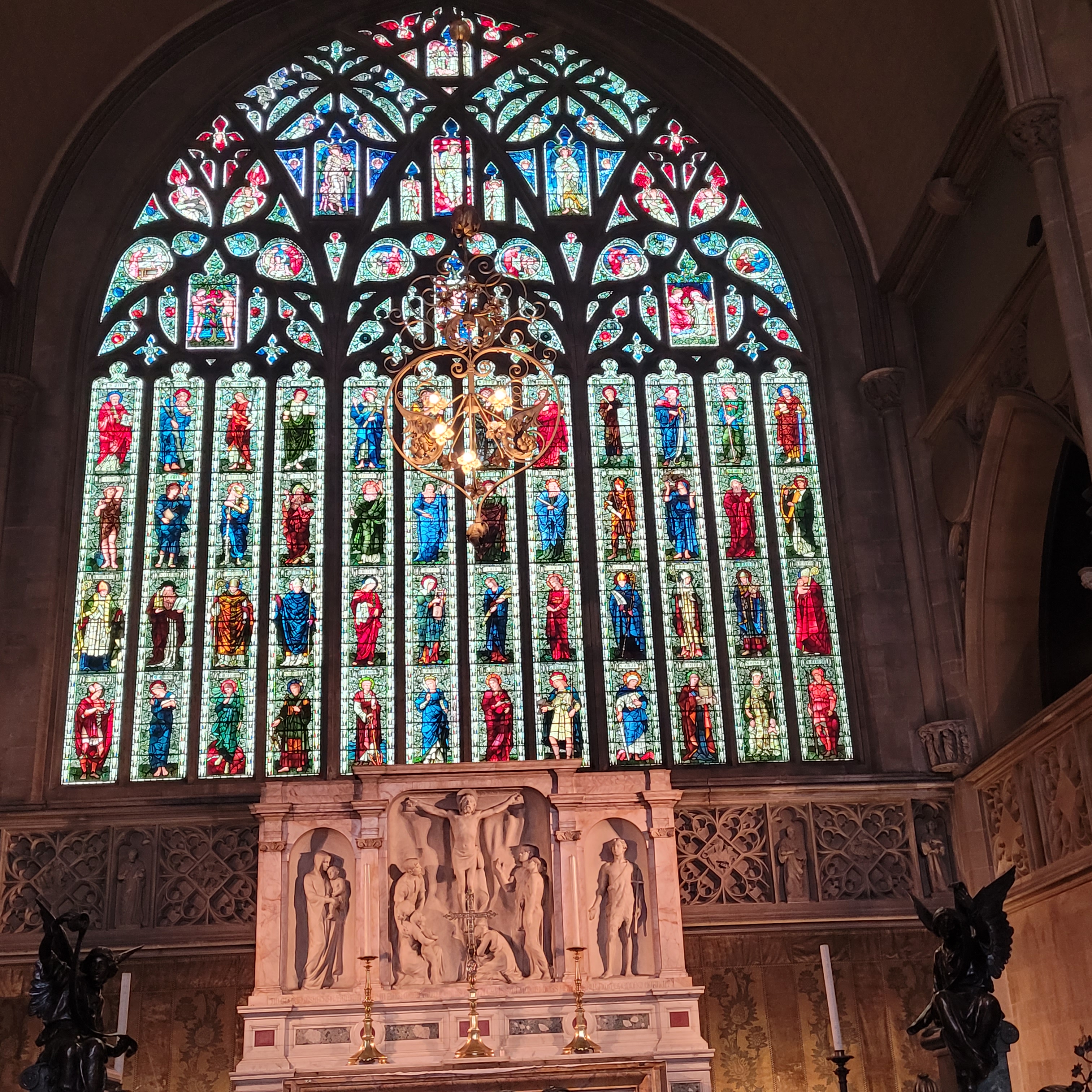
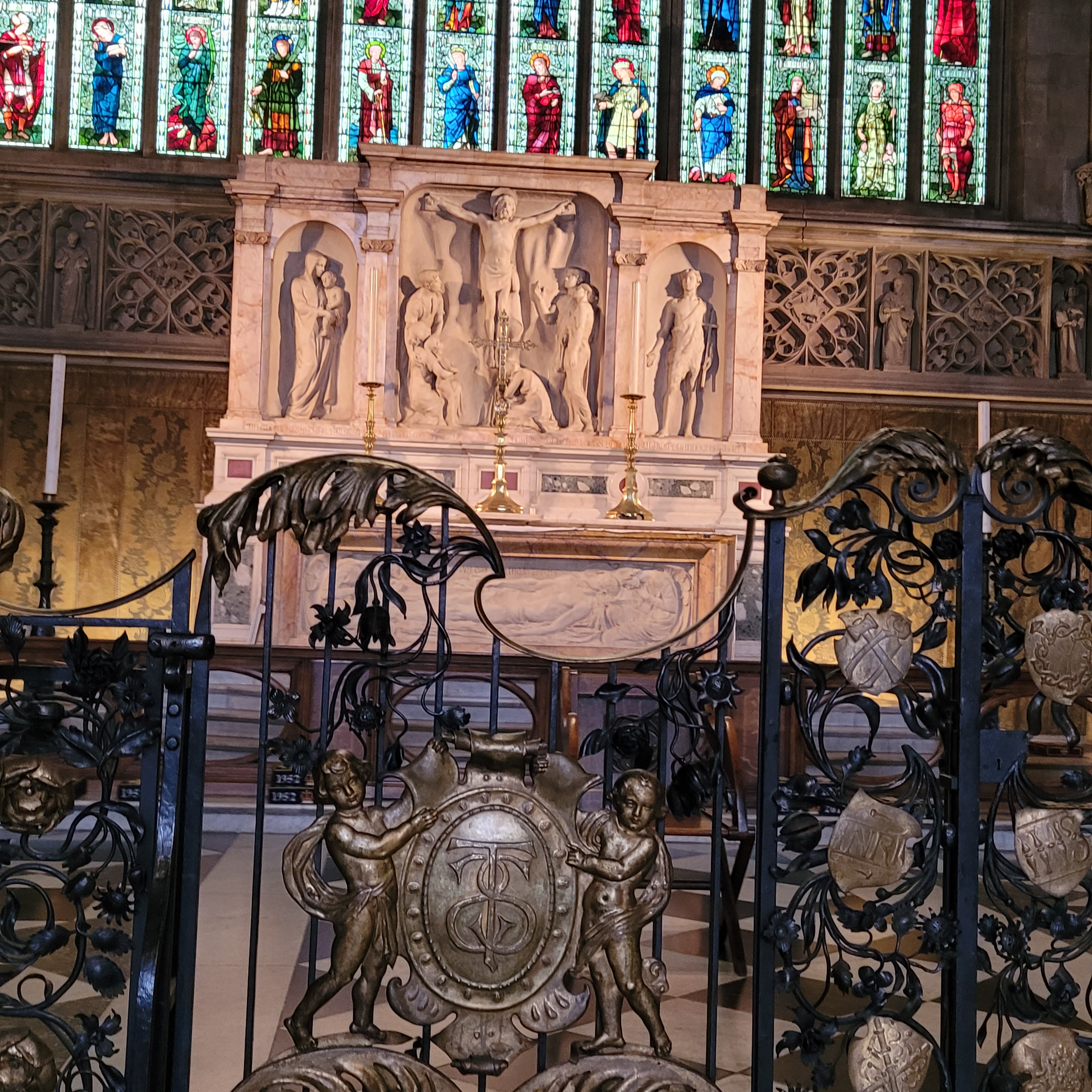
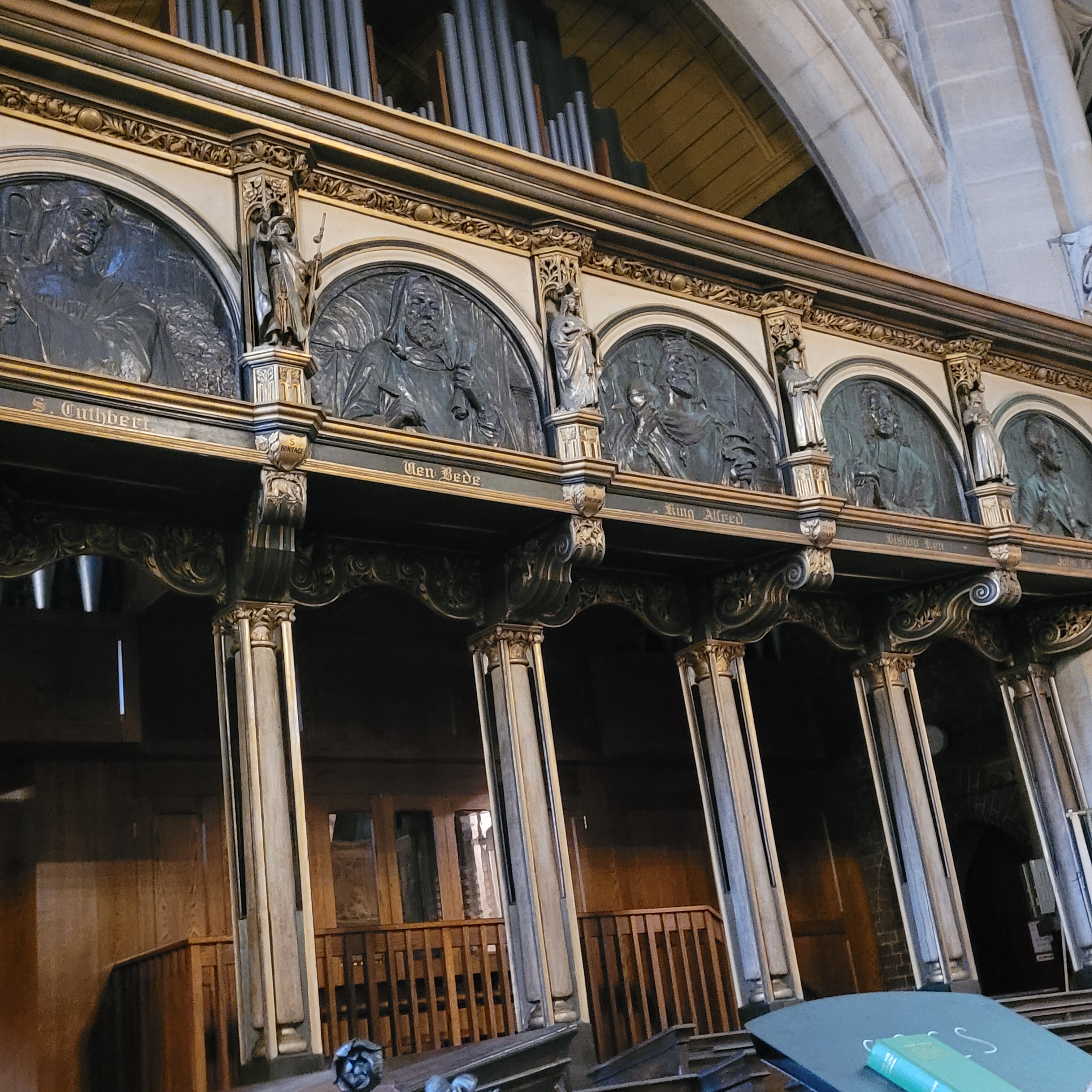
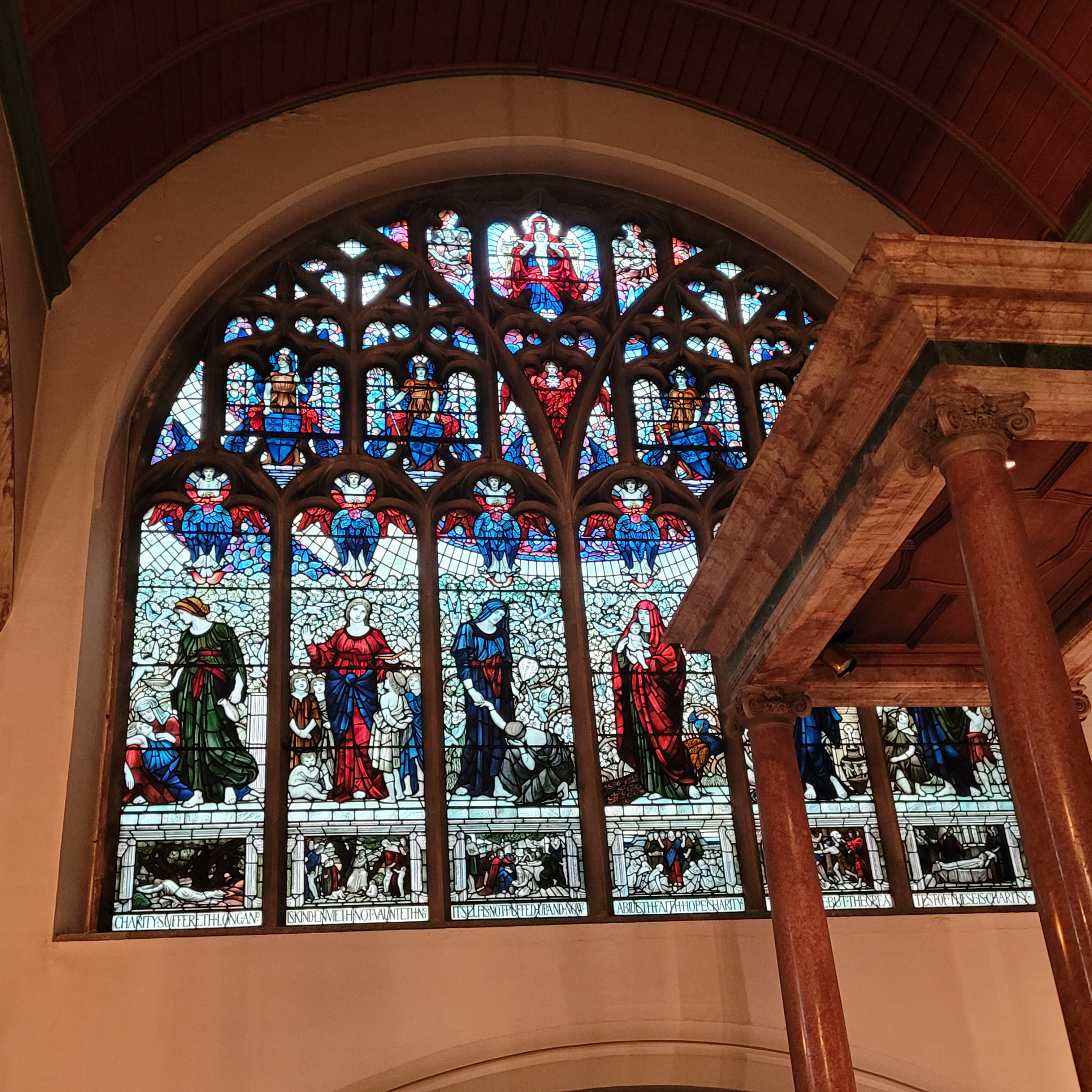
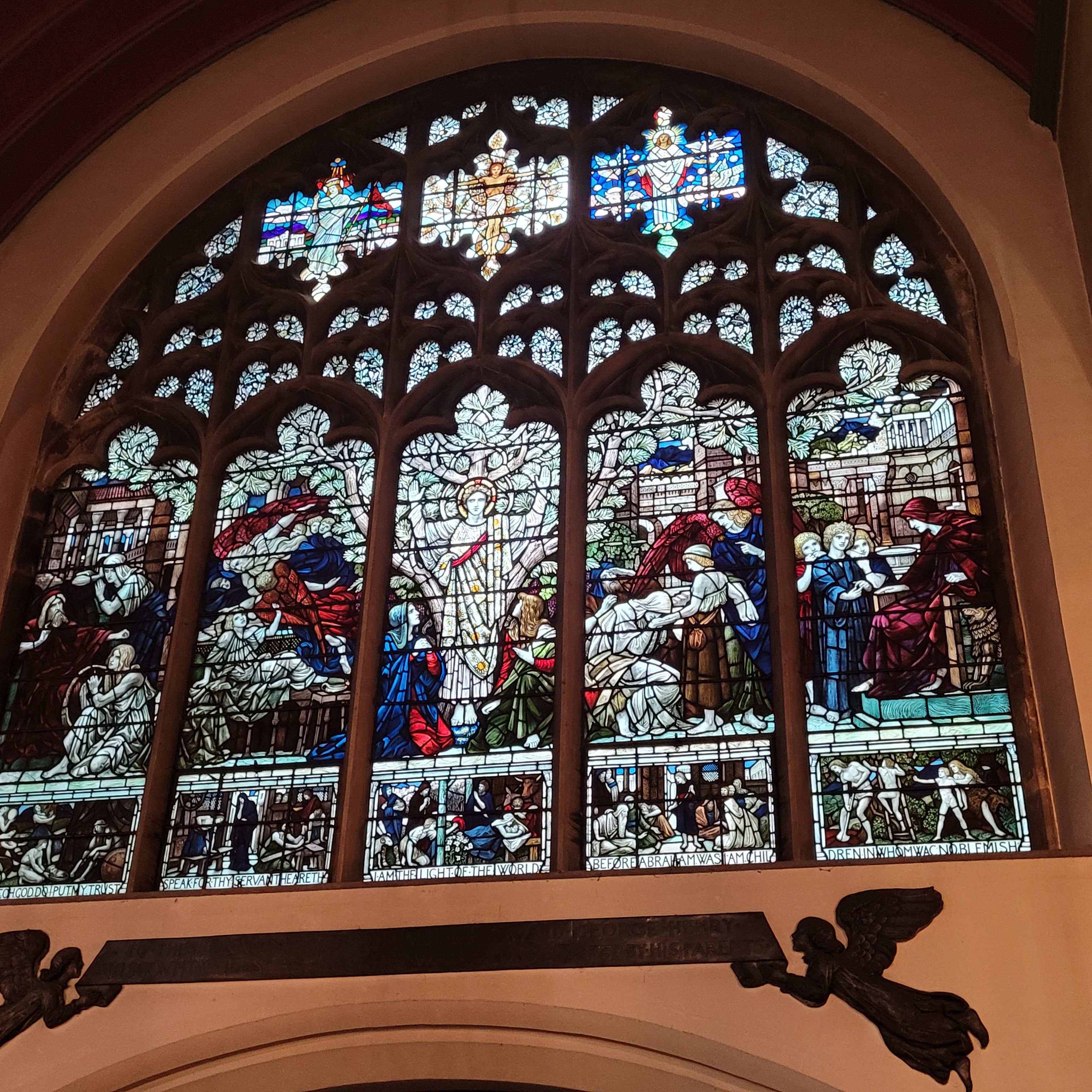
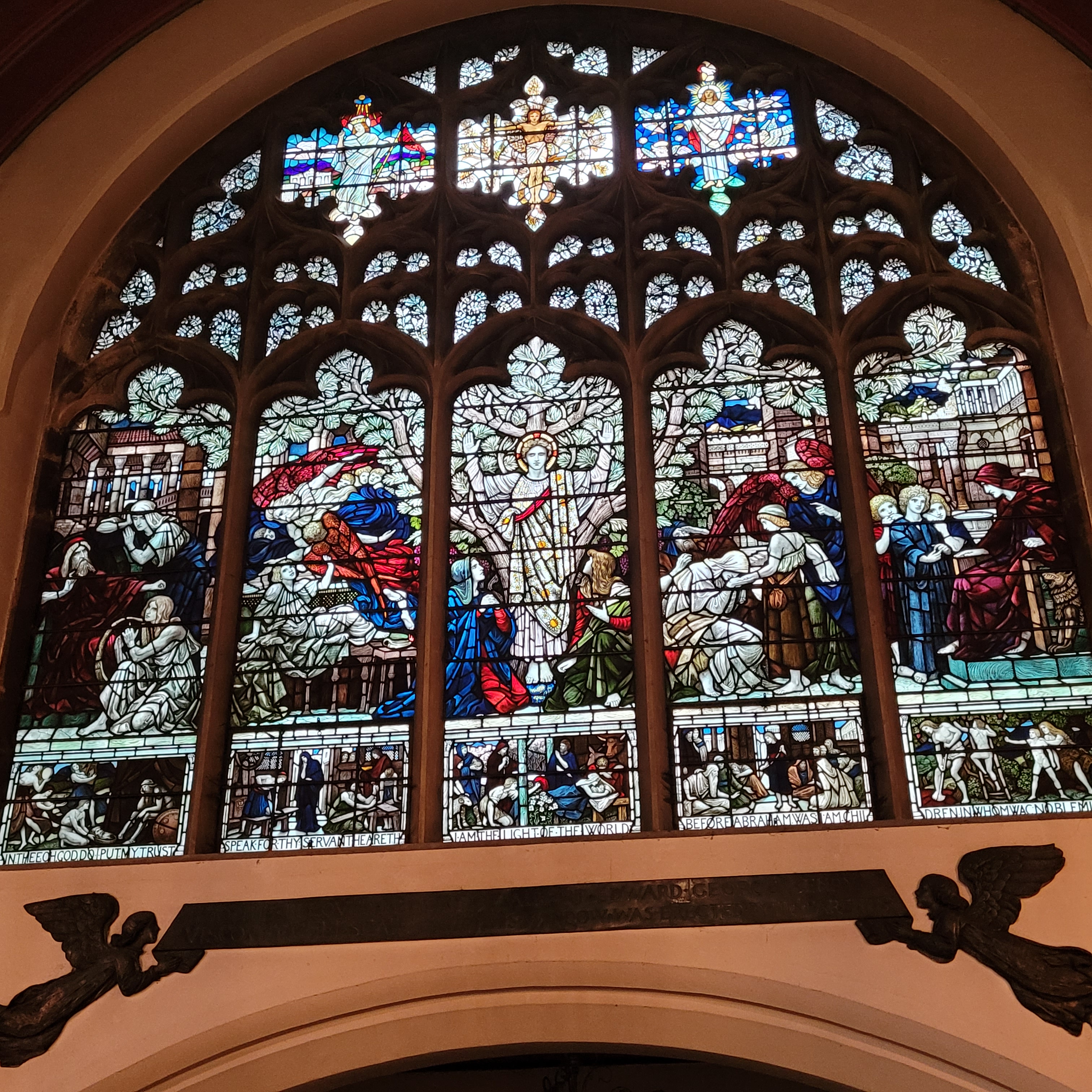
The first thing that impresses visitors to Holy Trinity is the wealth of stained glass, particularly the great east window designed by Burne-Jones, the largest window Morris & Company ever made; equally impressive are the windows by William Blake Richmond and Christopher Whall in the North and South aisles respectively. Not quite as showy, but just as impressive, is the range of sculpture, particularly F.W Pomeroy’s bronze angels on the chancel screen and his sculptured reliefs above and on the choir stalls. The work of other major sculptors from what became known as the ‘New Sculpture’ movement are also well represented – Onslow Ford, H.H Armstead, Harry Bates and John Tweed, who carved the marble reredos – all add to the richness of the interior, as does the wealth of different marbles employed, especially on the pulpit and in the Lady Chapel….
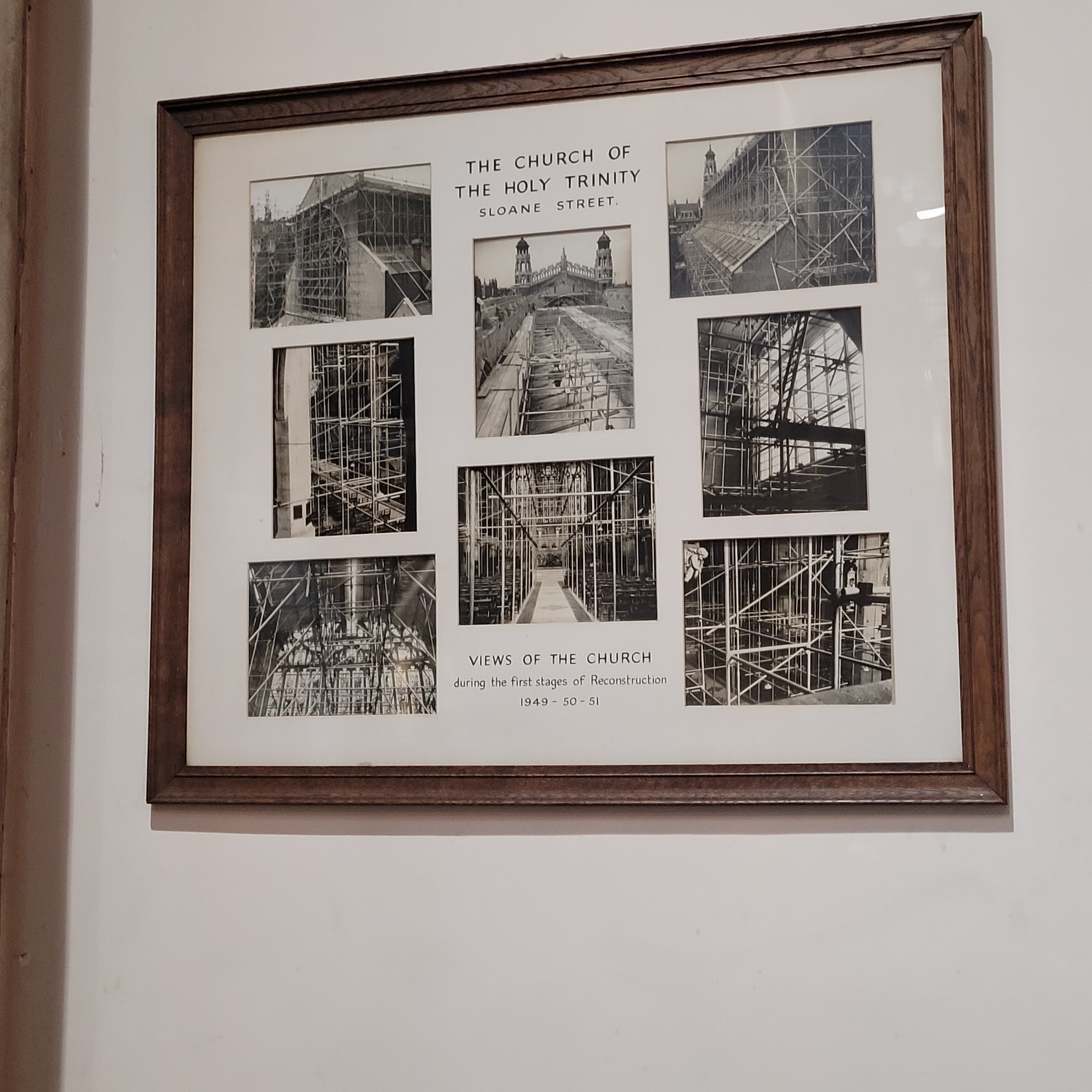
During World War Two the church was hit by several incendiary bombs, one at least bursting in the nave, causing considerable structural damage. Shortage of money and materials post-war meant that it took several decades of work to effect repairs and the church was closed except for sunday matins. Given the expense and the deep unfashionability of Victorian architecture at that period, there was considerable pressure to demolish rather than restore the building, and it was only saved from this second threat by a vigorous campaign mounted by the Victorian Society and Sir John Betjeman who penned the following pointed and poignant verse:
Bishop, archdeacon, rector, wardens, mayor Guardians of Chelsea’s noblest house of prayer.You your church’s vastness deplore
‘Should we not sell and give it to the poor?’
Recall, despite your practical suggestion
Which the disciple was who asked that question.
This hit home and Chelsea’s ‘noblest house of prayer’ was saved for the benefit of all and the glory of God.
Peyton Skipwith“
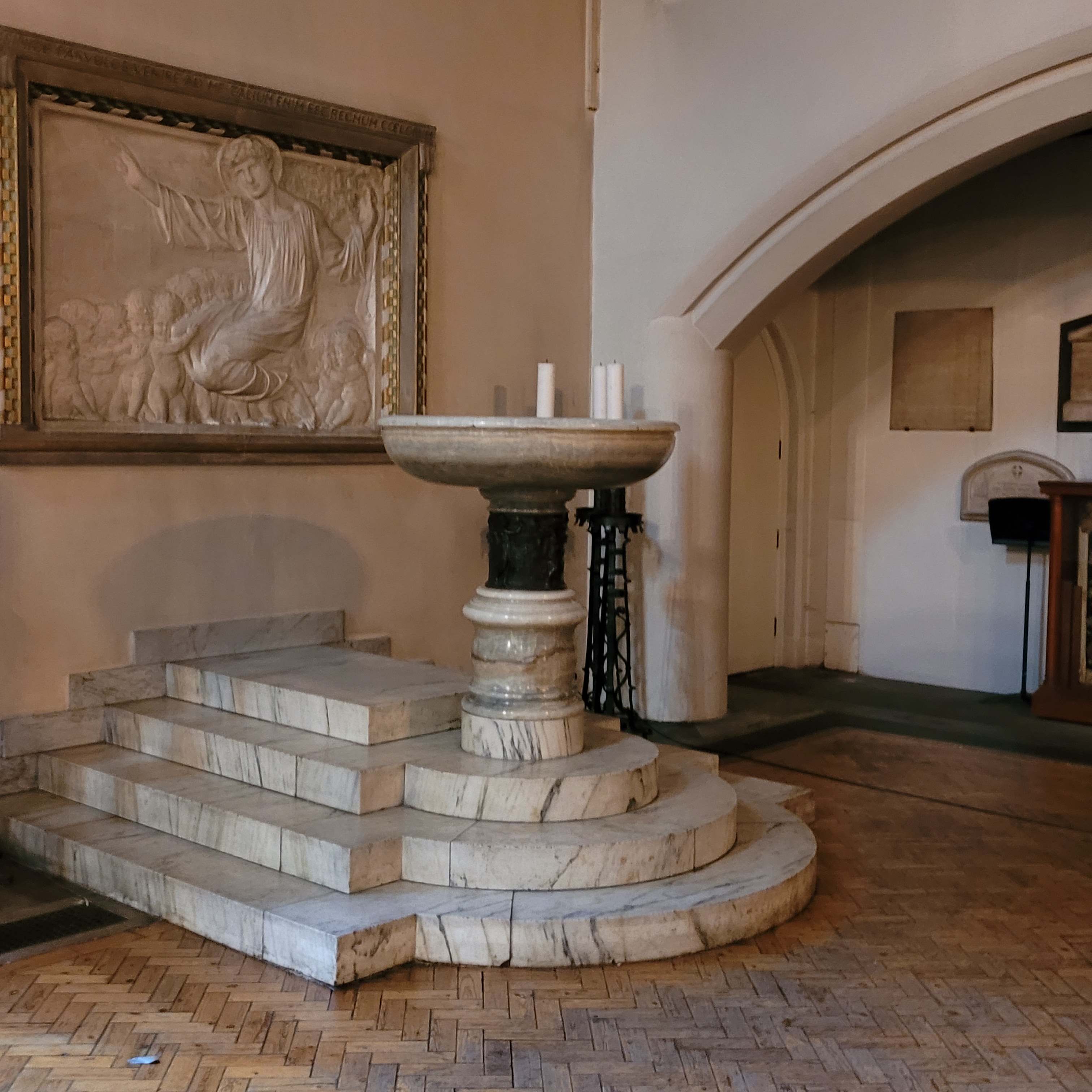
OK, it ‘Mark in London’ again. I just loved Sir John Betjeman’s little zinger at the end, “sure, you can follow Judas Iscariot’s lead…or you can rebuild this unique and beautiful church destroyed by Nazi bombs.” Putting guilt and shame to their very best uses. The pictures below start with one I took upon entering. These are followed by the windows to the right of the altar, and the old pulpit. Then we see the lovely metal and fillagree work around and above the choir. The magnicient stained-glass above the altar is given a close-up, as is the metal work in front of the altar. Then we come down the other aisle and see more stained-glass and metal work around the organ. There is a lovely Baptismal Font in the back of the church suggesting that this Anglo-Catholic community, as many Roman Catholic Communities do now, welcome new members at the entry of the church as they enter their new lives, cloaked in white garments and cloaked in the protection of Christ. It is a lovely tradition, with many variations, but one that still touches my heart. Two “pictures of pictures” showing the damage wrought by the WWII bombings and the reconstruction work, and finally, my best attempt at an outside view of this lovely church’s Arts and Crafts exterior.




This is very much a working parish community. It has an elementary school attached to it and it was alive with volunteers and staff working during my visit. There was a sense of life within the worship space, and I felt that the beauty of the art was still alive and being appreciated daily, not always the case in underused or underappreciated places of worship.
 Mark In London