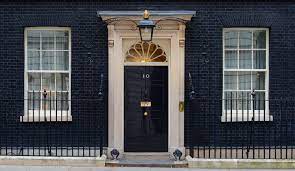
This entry is really for my American readers who woke up this morning to find that that the United Kingdom (UK) has a new Prime Minister, Liz Truss (more formally, Mary Elizabeth Truss). She replaces Boris Johnson. The answer to my title question is, no, and yes. The U.K. did not have a national parliamentary election. But yes, the Conservative Party did vote, twice. First, a majority of the Conservative (or Tory) Party, Members of Parliament (M.P.’s) voted in the House of Commons that they no longer had confidence in the leadership of Boris Johnson as Prime Minister. This ended Mr. Johnson’s term as leader of the party and thus he would have to tender his resignation to the Queen. But because the Tories were clearly the majority party and were going to stay in power, Mr. Johnson remained as Prime Minister from June 6th until today, when Boris flew to Scotland and offered his resignation to the Queen. Her Majesty asked Ms. Truss to form a government during Ms. Truss’s audience with her at Balmoral Castle in Scotland. These audiences would normally happen in London at Buckingham Palace. But due the Queen’s mobility issues, she has elected to stay at Balmoral her summer residence longer this year.
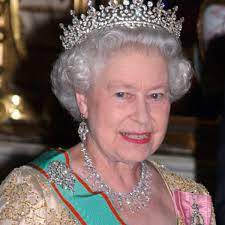


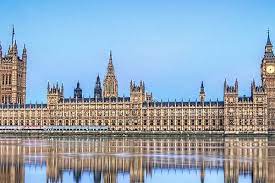
How does this whole thing work? (Remembering that this is what Newt Gingrich wanted to do to America when he took that contract out on us). Wikipedia provides this fairly concise description of the UK governmental system: “The United Kingdom is a constitutional monarchy in which the reigning monarch (that is, the king or queen who is the head of state at any given time) does not make any open political decisions. All political decisions are taken by the government and Parliament. This constitutional state of affairs is the result of a long history of constraining and reducing the political power of the monarch, beginning with Magna Carta in 1215.” In reality, this means that while the sovereign does have defined powers, the majority of day-to-day governance to governance takes place in the House of Commons in the Parliament. The head of the majority party is asked by the sovereign to form a government and becomes the Prime Minister. Unlike the US, rather than the head of government choosing the heads of the “cabinet” departments, the PM appoints other members of her or his party to these positions. If there is a coalition with smaller parties, as there was several years ago, when neither major party had a majority, then the smaller party(ies) members may receive appointment to head a ministry.
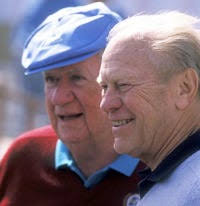
To go back to Newt Gingrich’s dream of being America’s Prime Minister and making the US President something of a figurehead, in parliamentary democracies the opposition has no real power. If you have ever watched “Question Time” from the UK, you see the one opportunity the opposition has to remind the country that it is there. The questioning of the PM is done by the Opposition Leader. When there is no need for bipartisanship, this may be a way of developing debating skills. In the pre-Newt era, in America’s Congress, the two parties’ leaders regularly met and worked together to find ways to best serve their nation. This is why when former House Minority Leader Gerald R. Ford, America’s only President to have been appointed Vice President, and then became President (when Richard M. Nixon resigned) without ever being elected by the people of the US, his first night in the White House, his first dinner guest was House Majority Leader Thomas P. “Tip” O’Neil, one of his closest friends. In the US Senate, there were many “across the aisle friendships, like the very liberal Edward Kennedy and the very conservative Oren Hatch. This was how American democracy worked in the pre-Gingrich era.
Now you are thinking, there you go, Mark, off on one of your tangents. Let’s get back to the UK. What about the House of Lords, did they get rid of them? No, they are still around, but they have “been reformed.” Until the reforms of recent years, the House of Lords was composed of Hereditary Peers (titled men, and Bishops of the Church of England) and from the 1950’s Life Peers who could be men or women, appointed by the sovereign at the recommendation of the PM. Various reforms have been proposed in recent years with the goal that the upper house of the British parliament eventually being elected.

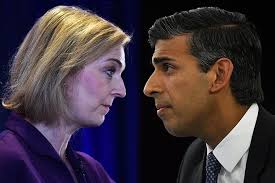
A session of Parliament can last 5 years. The last national election took place in 2019. While Boris Johnson could have asked the Queen to dissolve Parliament and call an election when he lost the “no confidence vote” in June, his party most likely did not want to risk the chance of losing the election and perhaps Labour did not mind waiting either. So, the only people in the UK that had any say in choosing Johnson’s successor were Conservative Party members who voted around the country for their new leader. There had been 8 members of Parliament who were initial candidates. These were quickly brought down to two, Ms. Truss and Rishi Sunak. Rishi has said he will remain in Parliament, but some say he may return to Silicon Valley where he made his fortune.
What else might you need to know about the UK Government? Well, by now you must have heard that the UK left the EU. That means that many powers that they had given to the European Parliament came back to them. I suspect this has really just meant more work for civil servants (some things are the same all over the world, says this former American civil servant.) And I should mention devolution. The last Labour government introduced, devolved legislatures to the UK’s component countries. The Scottish Parliament is perhaps the best known of these with its stunning new building near the Palace of Holy Rood in Edinburgh, and the Welsh Senedd Cymru has also been successful. The Northern Ireland Assembly has had more issues seemingly due to leftover sectarian power sharing problems that have plagued that province for so long. Each of these has specified control over certain specific local issues.


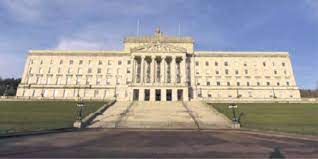
In order above, Scottish Parliament, Senedd Cymru, Northern Ireland Assembly.
Prime Minister Liz Truss has some big problems to deal with, the biggest is probably the coming fuel crisis that her country is facing. I hope that the men and women of all parties can work together with the energy companies and find a solution to keep the lights on, keep businesses running and keep UK homes warm this winter.
 Mark In London